Table of Contents
- Why Egypt Has So Many Reptiles
- Quick Reference Table
- Nile Crocodile
- Egyptian Cobra
- Saw-Scaled Viper
- Horned Desert Viper
- Sand Boa
- Egyptian Spiny-Tailed Lizard (Dabb)
- Ornate Dabb Lizard
- Sinai Agama
- Starred Agama
- Egyptian Fan-Toed Gecko
- Bosc’s Fringe-Toed Lizard
- Egyptian Tortoise
- Green Sea Turtle
- Staying Safe Around Egypt’s Reptiles
Egypt sits where three worlds collide: the Nile splitting a continent of sand, the Mediterranean lapping one coast, the Red Sea another. That’s a strange amount of geography for one country, and reptiles have exploited every inch of it. Researchers have catalogued 118 reptile and amphibian species within Egypt’s borders, including 39 snakes and 61 lizards — a number that surprises people who picture the country as one long stretch of dune.
Most of those species never make it onto a travel blog. This list narrows things down to 13 you’re actually likely to encounter, hear about, or need to recognize — from the crocodile that gave the Nile its ancient reputation to a gecko that runs across dunes using toe fringes instead of claws. Where it matters, we’ve flagged what’s dangerous and what’s just misunderstood.
Why Egypt Has So Many Reptiles
Reptiles thrive on temperature extremes and low water needs, which makes Egypt’s desert interior close to ideal. But the country isn’t uniformly dry. The Nile corridor supplies permanent freshwater habitat, the Sinai Peninsula’s granite mountains create cooler microclimates at altitude, and the Red Sea and Mediterranean coasts add marine species to the tally. Layer a desert specialist fauna on top of a river ecosystem and a coastline, and you get a reptile list that punches well above what “mostly Sahara” would suggest.
Quick Reference Table
| Species | Habitat | Venomous/Dangerous | IUCN Status |
|---|---|---|---|
| Nile crocodile | Nile River, Lake Nasser | Yes — physically dangerous | Least Concern |
| Egyptian cobra | Nile Delta, agricultural land | Yes — highly venomous | Least Concern |
| Saw-scaled viper | Sinai, Eastern Desert | Yes — highly venomous | Least Concern |
| Horned desert viper | Sinai, Western Desert | Yes — venomous | Least Concern |
| Sand boa | Desert sand, Sinai | No | Least Concern |
| Egyptian dabb lizard | Desert, semi-arid scrub | No | Vulnerable |
| Ornate dabb lizard | Sinai rocky desert | No | Least Concern |
| Sinai agama | Sinai mountains | No | Least Concern |
| Starred agama | Rocky outcrops, ruins | No | Least Concern |
| Egyptian fan-toed gecko | Rock crevices, walls | No | Least Concern |
| Bosc’s fringe-toed lizard | Sandy desert, wadis | No | Least Concern |
| Egyptian tortoise | Coastal dunes (functionally extinct in Egypt) | No | Critically Endangered |
| Green sea turtle | Red Sea coast | No | Endangered |
Nile Crocodile
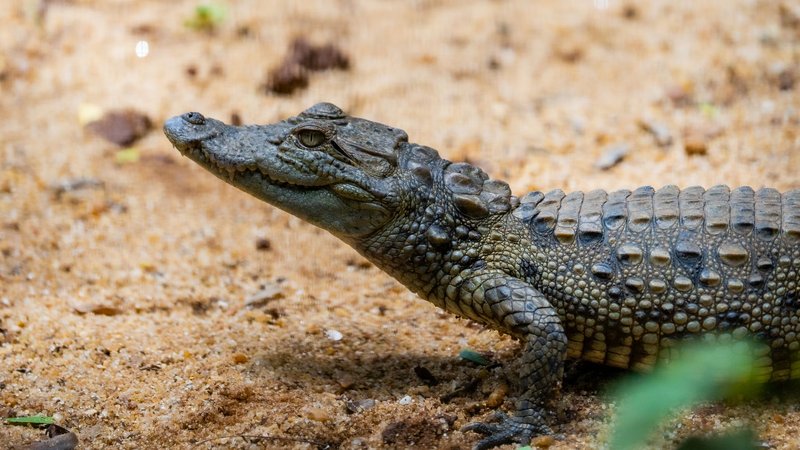
The Nile crocodile is the reason ancient Egyptians gave the god Sobek a crocodile head. Adults regularly top 4 meters and can hit 750 kilograms, with a bite force that can crush turtle shells without slowing down. In the wild Nile, they’re now mostly confined to Lake Nasser and the far south, since the Aswan High Dam cut off the river habitat that once let them roam as far as the Delta.
They’re ambush predators — motionless in water for hours, then a lunge that ends the encounter in under two seconds. Attacks on people happen almost exclusively near Lake Nasser’s shoreline, where crocodiles have learned that boat traffic and fishing sites mean food. The IUCN lists the species as Least Concern globally, though Egypt’s population is a fraction of what it once was.
Egyptian Cobra
The Egyptian cobra is the snake most likely behind Cleopatra’s asp — though historians now think a smaller, less theatrical species did the actual job. It’s Africa’s second-largest cobra, capable of exceeding 2 meters, and its venom is a neurotoxin potent enough to cause respiratory failure in an untreated adult within hours.
You’ll find it in the Nile Delta and irrigated farmland far more often than deep desert — it likes the rodents that congregate around crops and canals. Like other cobras, it rears and hoods when threatened rather than striking first; most bites happen when someone steps on one in the dark or corners it accidentally. It’s classified Least Concern, and its range extends across much of Africa outside Egypt too.
Saw-Scaled Viper
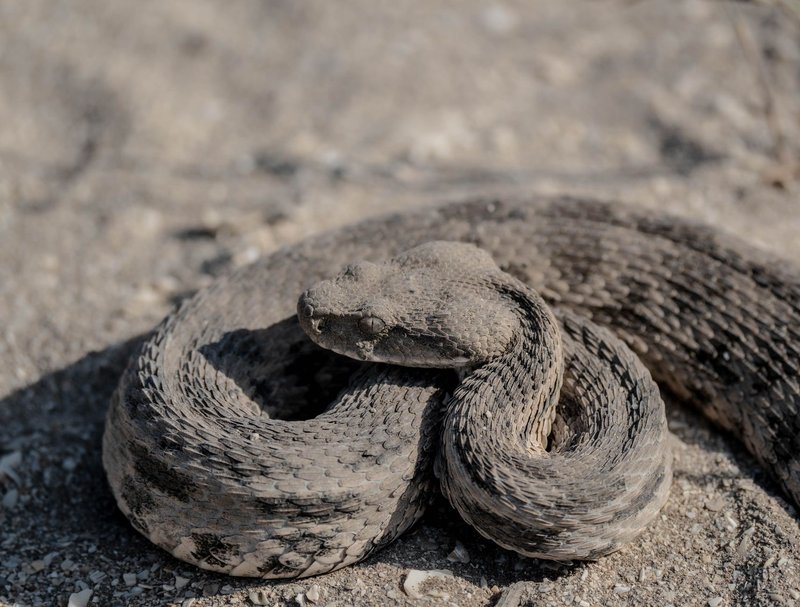
Small, sandy-colored, and responsible for more snakebite deaths worldwide than any other snake genus — the saw-scaled viper earns its reputation through sheer abundance near human settlement, not size. It rarely exceeds 60 centimeters. The name comes from the keeled scales along its sides, which it rubs together to make a distinctive rasping warning sound before it strikes.
In Egypt it turns up across the Sinai and Eastern Desert, often near rocky wadis where it buries into loose sand with just its eyes exposed. The venom causes severe blood-clotting disruption, and unlike cobra venom, effects can be delayed by hours — a genuine reason this species accounts for a disproportionate share of snakebite hospitalizations in North Africa and the Middle East.
Horned Desert Viper
The horned viper (Cerastes cerastes) is instantly recognizable: a pair of scaled “horns” over each eye, likely there to shield the eyes from windblown sand. Ancient Egyptian art used its sidewinding S-shaped track as the hieroglyph for the letter “f” — this is a snake that’s been part of Egyptian visual language for over 4,000 years.
It hunts by sidewinding across loose dunes, leaving a track of parallel diagonal marks, and buries itself to ambush lizards and rodents. Found through the Sinai and Western Desert, it’s venomous but rarely fatal to healthy adults if treated. Bites are uncommon simply because the snake’s camouflage and burying behavior mean most people never see one before it moves away.
Sand Boa
The Egyptian sand boa is the harmless cousin in this lineup — non-venomous, docile, and built like a smooth, blunt-tailed cylinder for pushing through sand. It has small eyes set high on the head, letting it stay buried with just enough exposed to watch for prey.
It hunts geckos and small rodents by ambush, striking upward from just under the sand’s surface. You’re more likely to find one in the pet trade than to spot one in the wild, since it spends most of its life submerged in loose substrate. Despite the “boa” name and thick body, it poses no danger to people — it’s a constrictor built for animals a fraction of human size.
Egyptian Spiny-Tailed Lizard (Dabb)
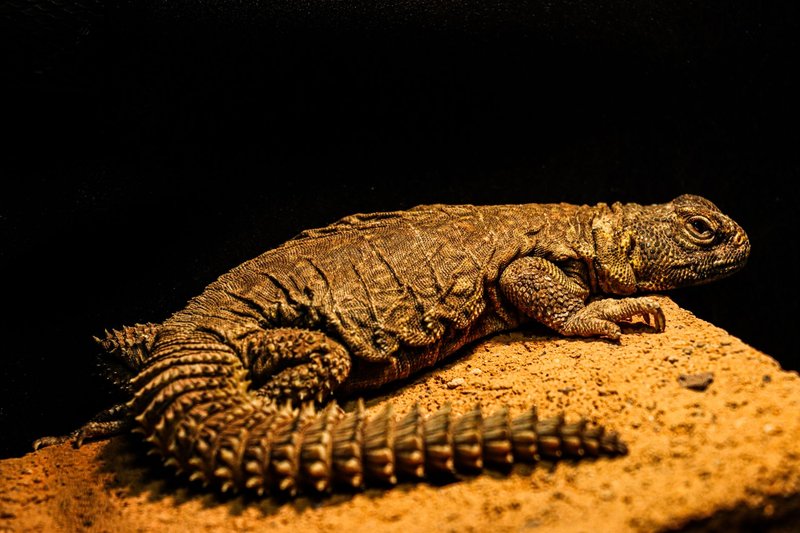
The Egyptian dabb lizard is a genuine heavyweight among desert lizards, reaching up to 75 centimeters and built low and armored, with a thick tail ringed in defensive spines. Ancient Egyptians hunted it for meat and fat, and it still appears in some Bedouin diets today — a detail that separates it from the purely ornamental reptiles on this list.
It’s strictly herbivorous as an adult, grazing on desert plants and flowers, which is unusual among lizards this size. Burrows can run more than a meter deep, giving it thermal shelter from surface temperatures that would otherwise cook it alive. Habitat loss and hunting pressure have pushed the species to Vulnerable on the IUCN Red List — one of the few reptiles on this list where conservation status is a genuine concern rather than a footnote.
Ornate Dabb Lizard
Smaller and far more colorful than its mainland cousin, the ornate dabb lizard is a Sinai specialty — males develop a striking pattern of blue-green and orange during breeding season that makes them look almost painted. It sticks to rocky terrain rather than open sand, using crevices for shelter instead of burrows.
Like the Egyptian dabb, it’s primarily plant-eating, though it supplements with insects when available. It’s diurnal and heat-tolerant to a degree that puts most reptiles to shame, remaining active on rock surfaces that would be unbearable to touch by midday. It’s currently Least Concern, though its range is narrower and more localized than the widespread Egyptian dabb.
Sinai Agama
The Sinai agama is one of the most reliably spotted reptiles for anyone hiking St. Katherine or the high granite peaks of southern Sinai — it perches on boulders in full sun and barely moves until you’re a few feet away. Males in breeding condition shift to a striking blue head and throat, a color change tied to hormone levels rather than temperature or mood, as is the case with some other agamids.
It favors elevation more than most Egyptian lizards, showing up at altitudes where fringe-toed and dabb species don’t bother going. Diet is mostly insects, taken from a still perch with a short, precise lunge. It’s common enough within its Sinai range to carry a Least Concern rating without much debate.
Starred Agama
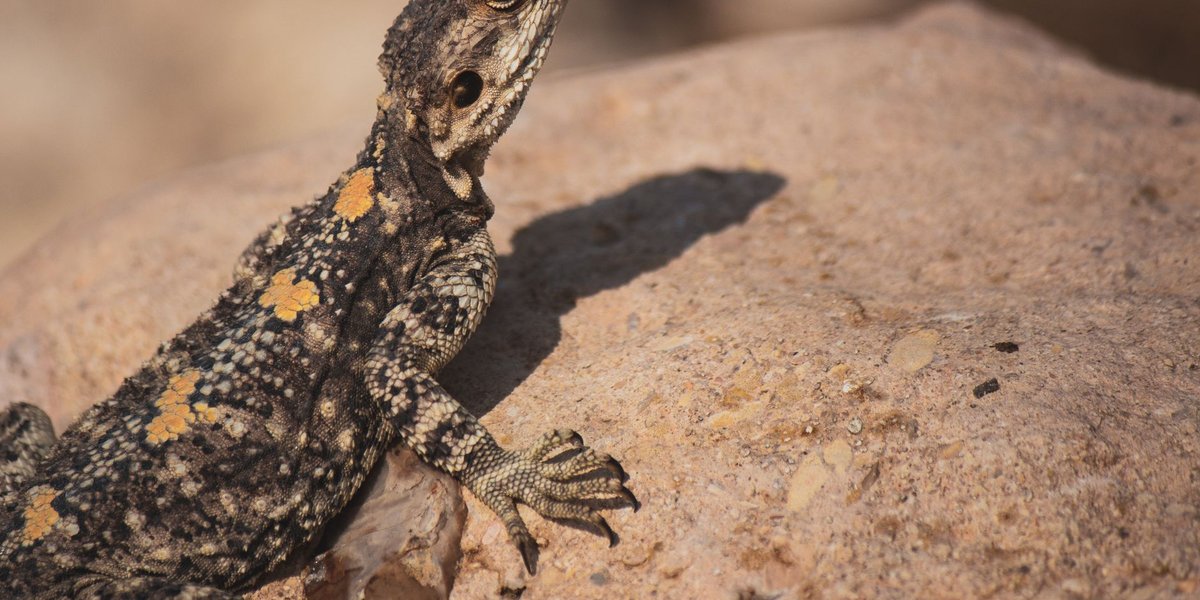
The starred agama takes readily to human structures — old walls, ruins, rock piles near villages — making it one of the easier reptiles to see without a dedicated desert trip. Its body is covered in small, star-shaped spiny scales that give the species its name and a slightly bristled look under close inspection.
It’s territorial and will often hold a favored rock or wall gap for an entire season, defending it against rival males with head-bobbing displays rather than physical fights. Diet skips between insects and, opportunistically, softer plant matter. Its comfort around ruins and settlements means it turns up in archaeological sites across Egypt more often than almost any other lizard on this list.
Egyptian Fan-Toed Gecko
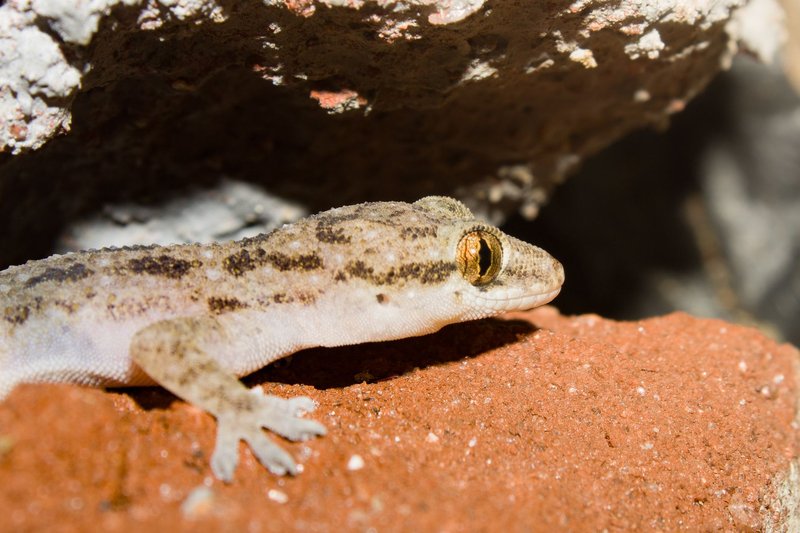
Fan-toed geckos are built for vertical surfaces — their toes end in expanded, adhesive pads that let them scale sheer rock faces and stone walls with the same ease most lizards reserve for flat ground. They’re nocturnal, with huge eyes and no eyelids, relying on a lick of the eye surface to keep it clean instead of blinking.
In Egypt they’re near-omnipresent across rocky and semi-arid terrain, including old buildings and archaeological ruins where crevices offer daytime shelter from heat. At night they hunt insects drawn to any available light source, which is why a gecko clinging near a lit doorway in the Sinai or Upper Egypt is a near-guaranteed sighting for anyone paying attention after dark.
Bosc’s Fringe-Toed Lizard
This lizard’s signature feature is exactly what the name promises — fringes of elongated scales along each toe that act like built-in snowshoes, spreading out its weight so it can sprint across loose sand without sinking. Watch one move and the trick becomes obvious: it can cross open dune faces at speed that would leave a normal lizard floundering.
It buries itself when threatened rather than fleeing into open ground, vanishing into loose sand in under a second using a shimmying motion. Found through Egypt’s sandy wadis and dune fields, it’s diurnal and most active during the hottest parts of the day when most other animals have gone to ground — a niche it shares with only a handful of other desert specialists.
Egyptian Tortoise
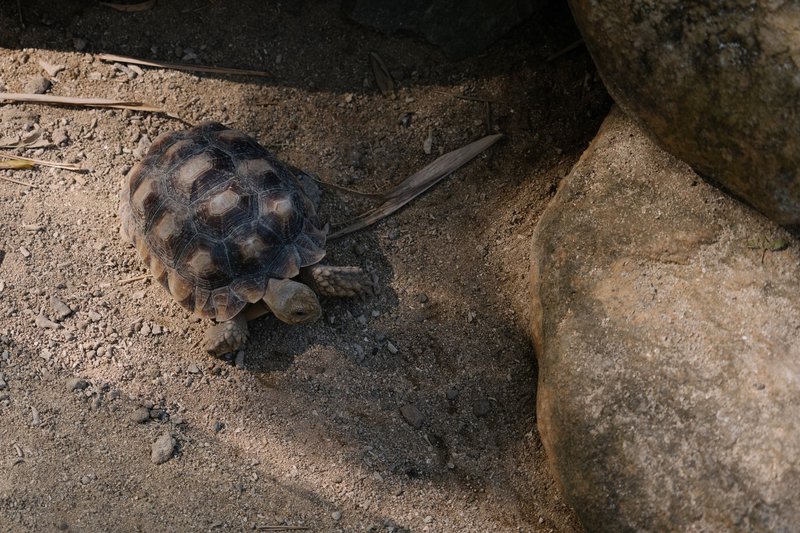
The Egyptian tortoise is the smallest tortoise species in the Northern Hemisphere, topping out under 14 centimeters, with a pale golden shell that once camouflaged it perfectly against coastal dune sand. It’s also the most endangered reptile on this list by a wide margin: the IUCN classifies it as Critically Endangered, and the species is now considered functionally extinct within Egypt itself.
Population estimates have collapsed from roughly 55,000 adults three tortoise generations ago to an estimated 7,500 individuals today, spread across a couple of deliberately undisclosed sites in Libya and Israel rather than Egypt. Habitat loss along the Mediterranean coast and decades of collection for the international pet trade did the damage; it’s been under CITES Appendix I protection since 1994, but the recovery has been slow. If you see one advertised for sale, it’s very likely illegal.
Green Sea Turtle
Not every reptile on this list lives on land — the green sea turtle nests and forages along Egypt’s Red Sea coast, particularly around protected sites near Marsa Alam and the Ras Mohammed area. Adults can weigh over 150 kilograms and are unusual among sea turtles for eating mostly seagrass and algae as adults, which gives their fat a greenish tint and the species its name.
Egypt’s Red Sea coast is one of the more important Mediterranean-adjacent nesting corridors for the species, and it’s listed as Endangered by the IUCN globally. Divers and snorkelers around Egypt’s reef systems have a genuinely good chance of spotting one grazing a reef edge — a far gentler encounter than anything else on this list involving “endangered” and “large reptile” in the same sentence.
Staying Safe Around Egypt’s Reptiles
Most tourists worry about the wrong animal. Scorpions and the saw-scaled viper cause far more medical incidents in Sinai than anything with teeth the size of a crocodile’s. A few practical rules cover almost every risk: don’t put hands into rock crevices or under stones without looking, shake out shoes and bedding left outside overnight in desert camps, and give any snake room rather than trying to identify it up close.
If a bite happens, the standard advice from health authorities worldwide applies here too — keep the person calm and still, immobilize the limb, and get to medical care rather than attempting to suck out venom or apply a tourniquet, both of which do more harm than good. Egyptian hospitals in tourist areas including Sharm el-Sheikh and Hurghada stock antivenom for the region’s most medically significant species. The reptiles themselves aren’t looking for a confrontation — nearly every bite on record follows a human stepping on, reaching for, or cornering an animal that would rather have been left alone.