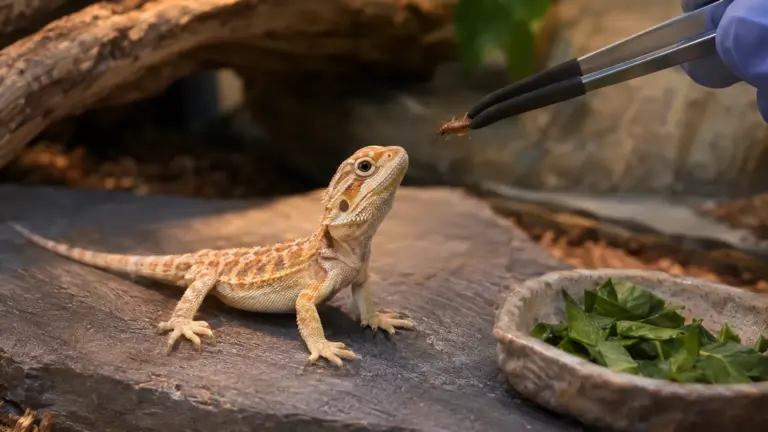
Most baby lizards eat small live insects, gut-loaded and dusted with calcium. Bearded dragons add daily greens, iguanas eat only plants and crested geckos eat a powdered diet. A safe and unsafe foods chart, a species table, a schedule by age and a printable cheat sheet.
Reptiles of Yemen: Species, Hotspots and Endemics
TLDR Table of Contents How many reptiles live in Yemen? About 100, give or take a dozen, depending on who is counting. The national biodiversity clearinghouse lists 103 reptile species:…
Congaree National Park Snakes: A Visitor’s ID Guide
Congaree National Park has 21 snake species, and only three of them are venomous: the timber rattlesnake, the copperhead and the cottonmouth. Bites are rare. Snakes here want nothing to…
Poisonous Forest Animals: 12 to Know Before You Hike
TLDR Contents Poisonous vs venomous: the difference Poisonous animals are toxic to touch or eat. The toxin sits in the skin or tissue, and you only get hurt if you…
Reptiles of Tanzania: A Field Guide by Group
Tanzania has somewhere between 320 and 360 reptile species, and sources can’t agree on the exact number. One assessment counts 321 species with about 90 endemic. Another counts 360 with…
Wetland Omnivores: Animals That Eat Plants and Prey
Wetland omnivores are animals that eat both plants and other animals, and in a marsh or swamp they’re the ones doing the most switching. A sandhill crane digs up tubers…
Reptiles of Cuba: A Field Guide to Its Wildest Species
Cuba is an island shaped like a crocodile, and it’s not a coincidence that one of the world’s rarest crocodiles calls it home. Isolated from the mainland for millions of…
Forest Crocodiles: The Species That Actually Live There
TL;DR Yes — several crocodile species live in and around forests, just not in the open rivers most people picture. The West African dwarf crocodile and the slender-snouted crocodile both…
Reptiles of South America: 15 Species to Know
South America split off from the other continents early enough, and stayed isolated long enough, that its reptiles had millions of years to go their own way. The result is…