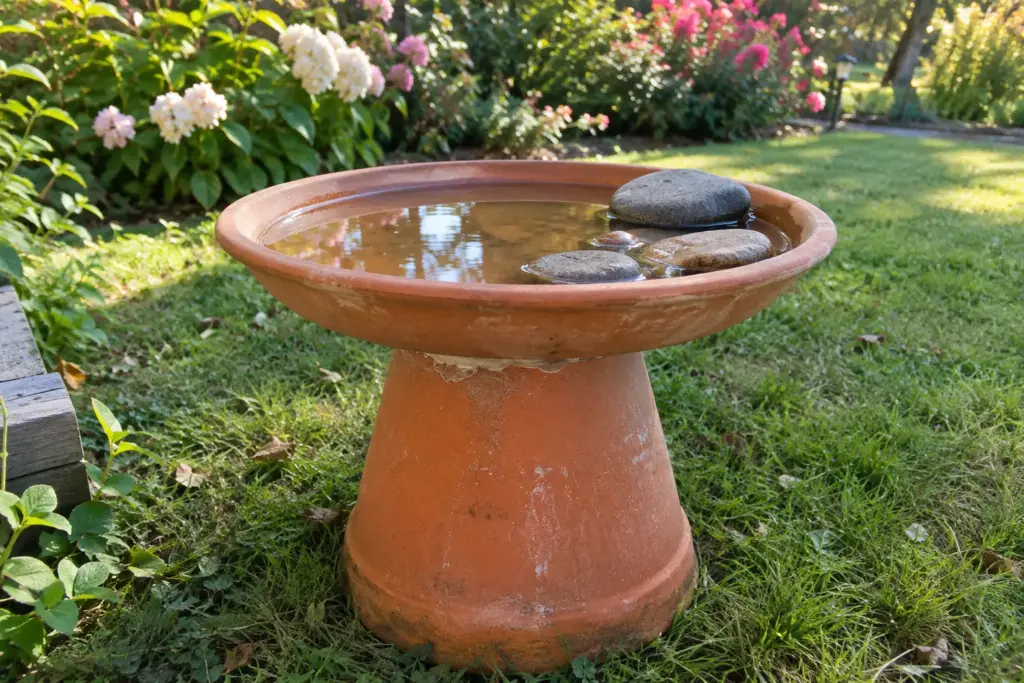
Short answer: Turn a large terracotta pot upside down, glue a wide, shallow, unglazed saucer on top with exterior adhesive, let it cure for 24 hours and add a few flat stones. Fill it with 1 to 2 inches of water, set it about 10 feet from shrubs and change the water every day or two.
Any container can hold water, but birds use only the ones that feel safe: shallow, rough enough to grip and placed where a cat cannot ambush them. The most common mistake is a bowl that is too deep or too slick, which birds ignore. This guide covers the specs birds look for, two builds (terracotta and a concrete leaf cast), quick versions from things you already own, and how to keep the water clean.
This article contains Amazon affiliate links. Florafaunafun earns a commission on qualifying purchases. See our affiliate disclosure.
What makes a good bird bath
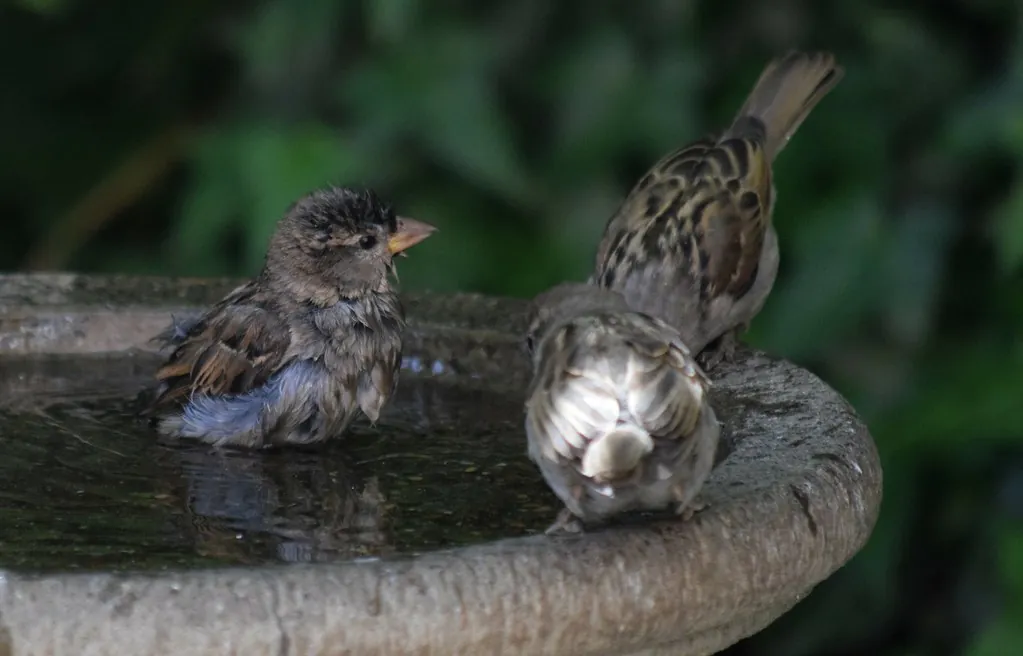
A good bird bath is shallow, sloped and rough. Songbirds wade in to bathe rather than swim, so they avoid water deeper than they can stand in. The Oklahoma Department of Wildlife Conservation notes that birds often refuse store-bought baths because the sides are too steep. Get these four things right and the material matters far less.
If the only dish you have is deeper than 2 inches, pile flat stones on one side to make a shallow shelf. The stones also give birds and bees a dry spot to stand while they drink.
How to make a terracotta pot bird bath
A pot and saucer is the quickest bath that looks finished, and it is the version the Natural History Museum and BBC Gardeners’ World both recommend. Buy the saucer first, then pick a pot whose base is a little narrower than the saucer bottom. A wide unglazed terracotta saucer gives birds grip; a glazed one is too slick unless you line it with stones.
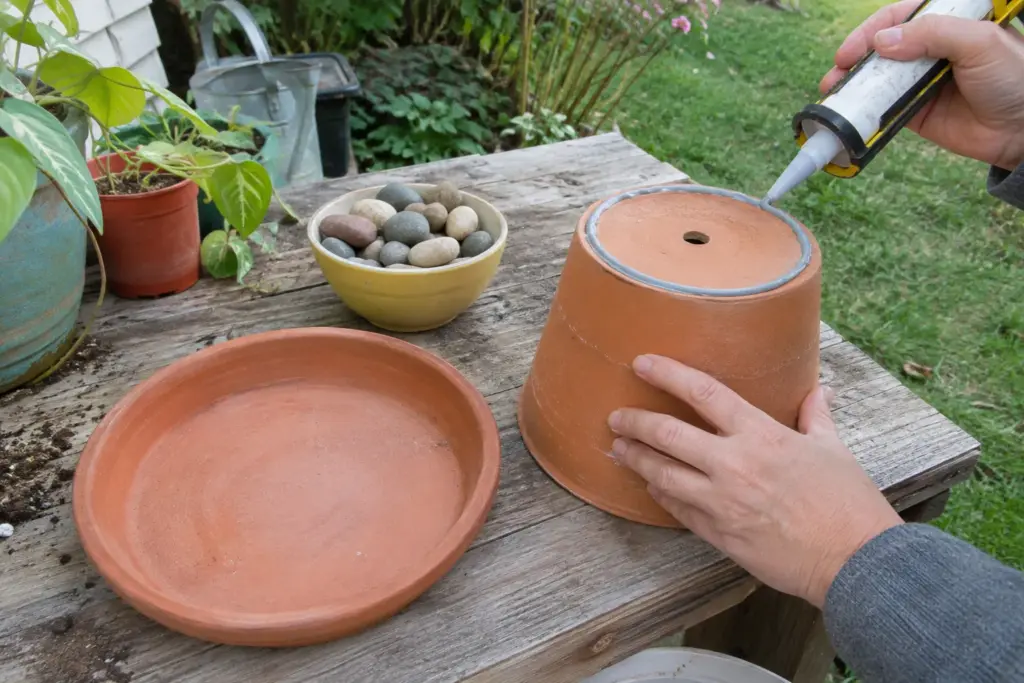
If you do not want to glue it, the bath still works with the saucer simply resting on the pot, as long as it sits on level ground. The glued version survives a bump from a dog or a squirrel jumping off the rim.
How to make a concrete leaf bird bath
A concrete leaf cast takes a weekend and gives you the rough, gently sloped basin birds like best. You pack concrete over a large leaf laid on a mound of sand, and the leaf leaves its veins in the surface. Rhubarb, hosta, burdock and elephant ear leaves all work; the bigger the leaf, the bigger the bath.
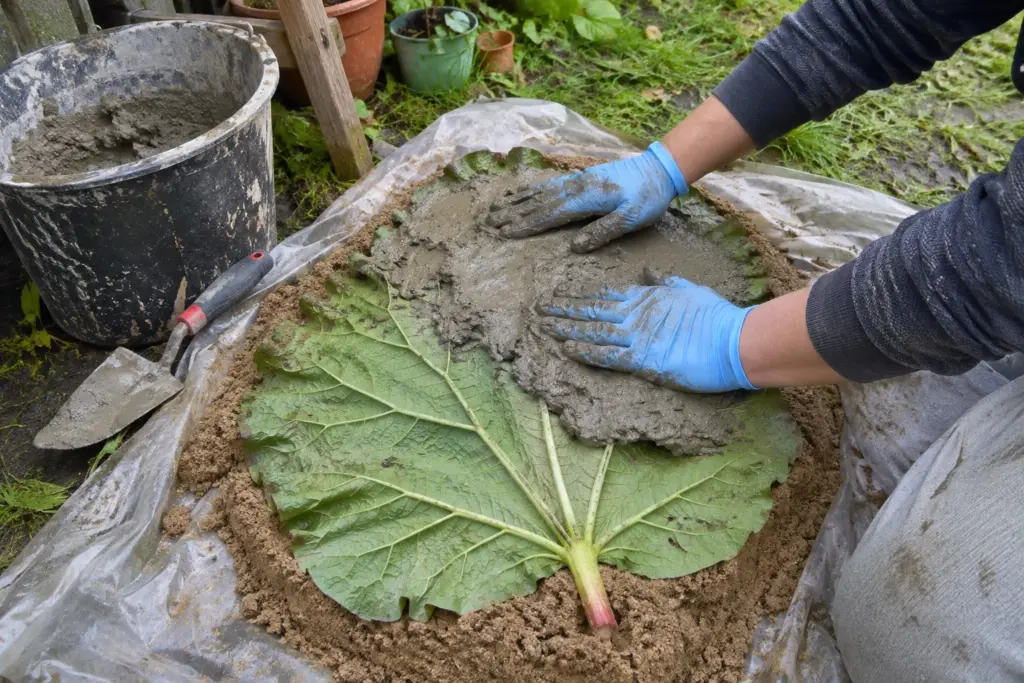
Paint the outside and rim if you like, but leave the inside of the basin bare. Paint and sealer inside the water make the surface slicker and add chemicals to the water birds drink.
Five-minute bird baths from things you already have
You do not need to build anything. Audubon points out that a cake pan works, and the Oklahoma wildlife department says an upside-down garbage can lid does as well as a commercial bath. Any of these does the job if it is shallow and sits steady.
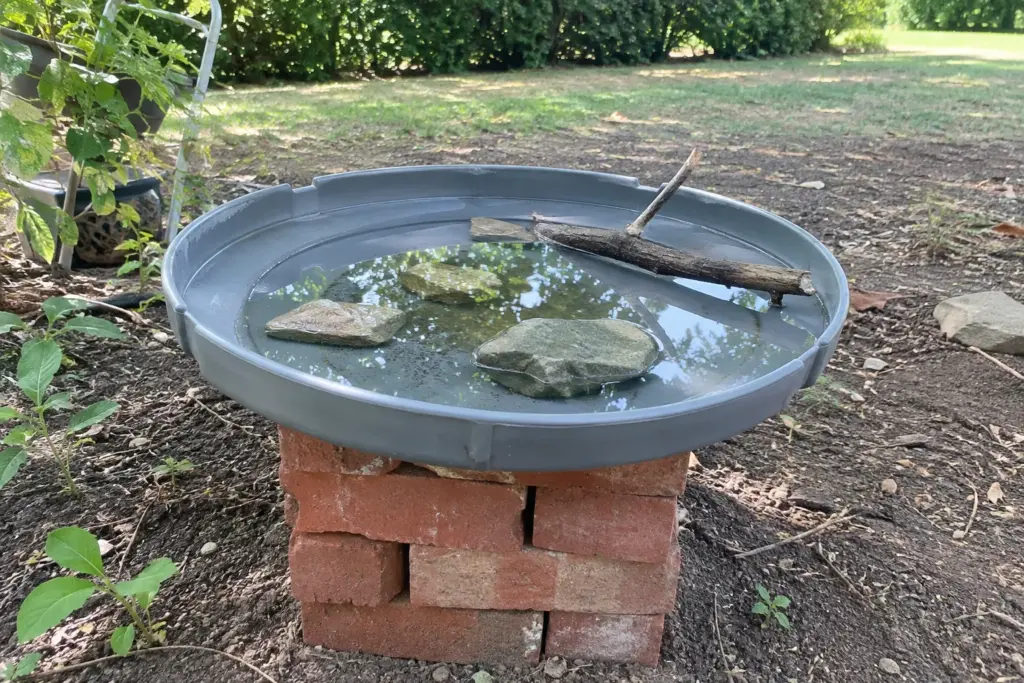
Where to put a homemade bird bath
Put it in the open, about 10 feet from shrubs or trees. That is close enough for birds to escape into cover when a hawk passes and far enough that a cat cannot hide and pounce. The Oklahoma wildlife department suggests raising it about 3 feet off the ground in light shade; the RSPB adds that the area around it should have no long grass or low bushes.
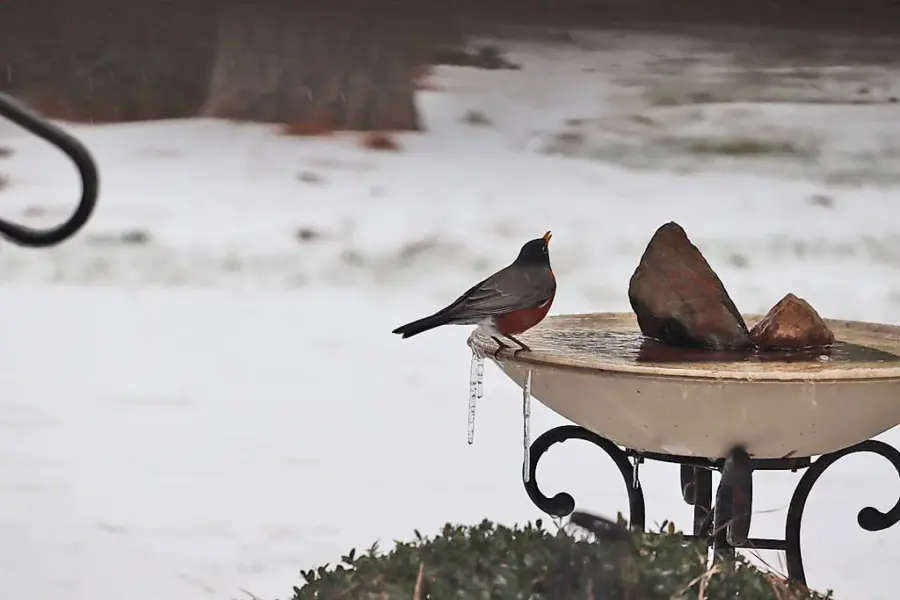
A ground-level bath attracts ground feeders such as doves, robins and juncos, and it is fine in a yard without cats. Raise it if cats visit, and keep shy birds in mind: Audubon recommends having evergreens or other shrubs nearby so birds have somewhere to go after bathing.
What not to use for a DIY bird bath
Avoid anything slick, deep, toxic or prone to heating up. Most problems come from finishes rather than from the container itself.
| Material | Use it? | Why |
|---|---|---|
| Unglazed terracotta | Yes | Good grip; cracks if it freezes |
| Rough concrete or stone | Yes | Best grip and stability; heavy |
| Heavy plastic or resin | Yes | Survives winter; add stones for grip |
| Glazed ceramic or glass | Only with stones | Too slick on its own |
| Bare metal | Shade only | Gets hot in direct sun |
| Painted or sealed basin interior | No | Slick and can leach into the water |
| Treated or painted wood | No | Preservatives and paint leach into water |
| Deep buckets or planters | No | Too deep for songbirds to stand in |
How to keep a homemade bird bath clean
Change the water every day or two and scrub the basin weekly. Stale water grows algae, collects droppings and spreads disease between birds at a busy bath. Dump the water, scrub with a stiff brush or plastic scouring pad, and refill. When algae builds up, the Oklahoma wildlife department recommends a solution of 1 part bleach to 9 parts water. Rinse until you cannot smell any bleach before refilling.
A dedicated scrub brush kept by the bath makes the weekly clean a one-minute job. Never use dish soap or cleaning sprays you cannot rinse away completely.
Why birds are not using your bird bath
New baths often sit unused for a week or two while birds find them. If nothing visits after that, one of these is usually the reason.
| Problem | Likely cause | Fix |
|---|---|---|
| No birds at all | Too deep or too slick | Lower the water to 1 inch or add flat stones |
| Birds land, then leave | Too exposed or too close to cover | Move it about 10 feet from shrubs |
| Only big birds use it | No shallow edge | Pile stones to make a shallow shelf |
| Green, slimy water | Water left too long in sun | Scrub weekly and move it into light shade |
| Water disappears fast | Unsealed clay soaks it up or birds splash it out | Top up daily or switch to a plastic saucer |
| Bath wobbles | Uneven base or soft ground | Set it on bricks or a paver and glue the saucer |
Frequently asked questions
Any wide, shallow container that holds water and sits steady works. An upturned trash can lid, a large plant saucer, a cake pan or a terracotta pot and saucer are the most common choices.
About 1 inch at the edge and no more than 2 inches in the middle. Songbirds stand in the water to bathe and avoid anything deeper.
Use an exterior construction adhesive or a waterproof tile adhesive. Let it cure for at least 24 hours before adding water.
Light shade is best in summer because it keeps the water cooler and slows algae. In winter, full sun helps keep the water from freezing.
Both work. Ground-level baths suit doves and robins, but a raised bath about 3 feet high is safer where cats roam.
Rocks give birds a dry place to stand and drink, make a deep dish shallower and give small birds and bees a safe landing spot.
Paint the outside and the base only. Leave the inside of the basin unpainted so the surface stays rough and nothing leaches into the water.
Only if the water sits for about a week or more. Changing the water every day or two, or adding a small fountain, keeps mosquitoes from breeding.
Sources
- National Audubon Society. How to make a birdbath
- Oklahoma Department of Wildlife Conservation. Birdbath tips
- RSPB. Make the perfect bird bath
- Natural History Museum. How to make a bird bath
- BBC Gardeners’ World. How to make a bird bath
- BBC Wildlife. How to make a bird bath
- CDC. Preventing mosquito bites
- South Dakota Department of Health. Mosquito life cycle and prevention
- OSHA. Preventing skin problems from working with portland cement
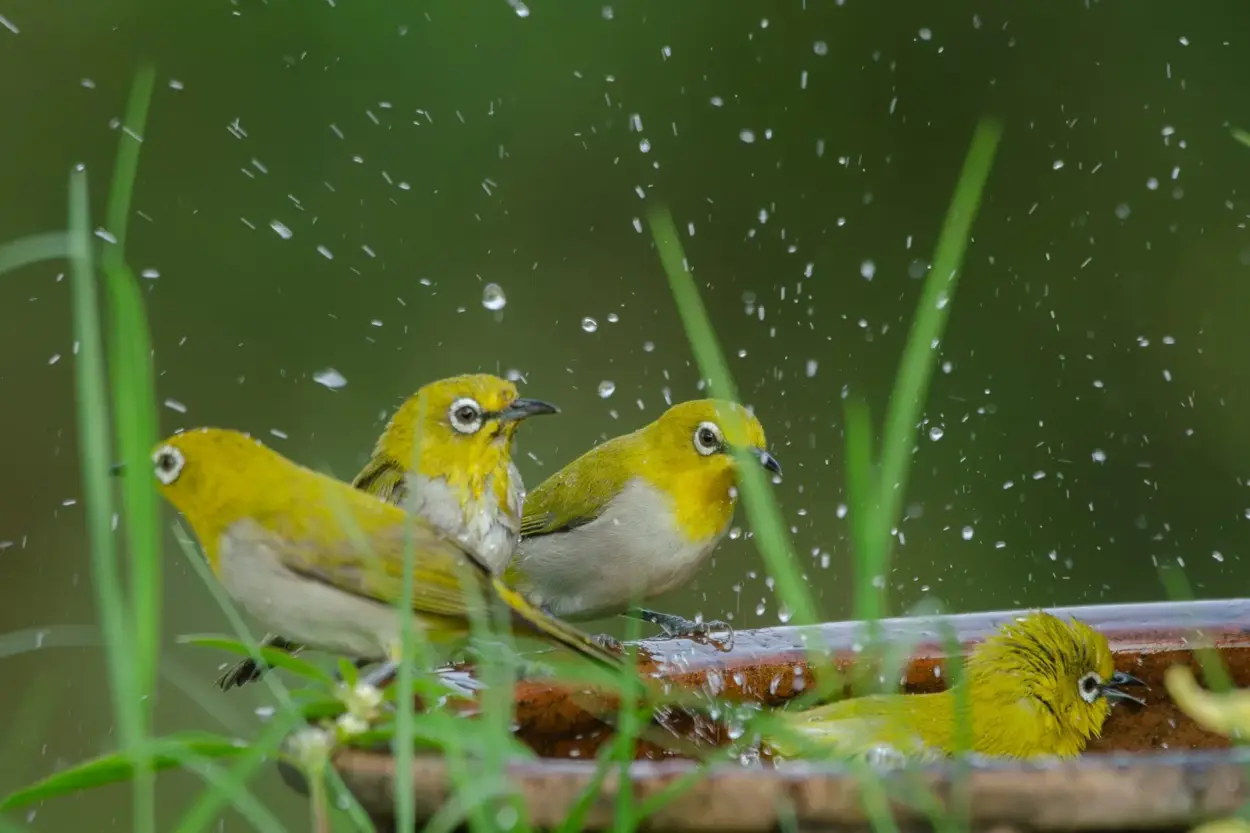
Featured photo: white-eyes bathing in a terracotta bird bath by Nilesh Shiragave, CC0.