How to use the fish weight calculator
- Pick the species. Type a name or tap a shortcut. Each species has its own girth divisor and its own length-to-weight curve, so the choice changes the answer.
- Enter the length. Measure from the tip of the closed mouth to the tip of the tail, with the tail lobes pinched together. Switch between inches and centimeters with the toggle.
- Add the girth if you have it. Girth roughly halves the error. Skip it and you still get an estimate, with a wider range.
The result shows the weight in pounds and ounces and in kilograms, a likely range, how the fish’s build compares with an average fish of the same length, and how it stacks up against the world record. The link button copies a URL that reopens the same result, which is handy for logging a catch.
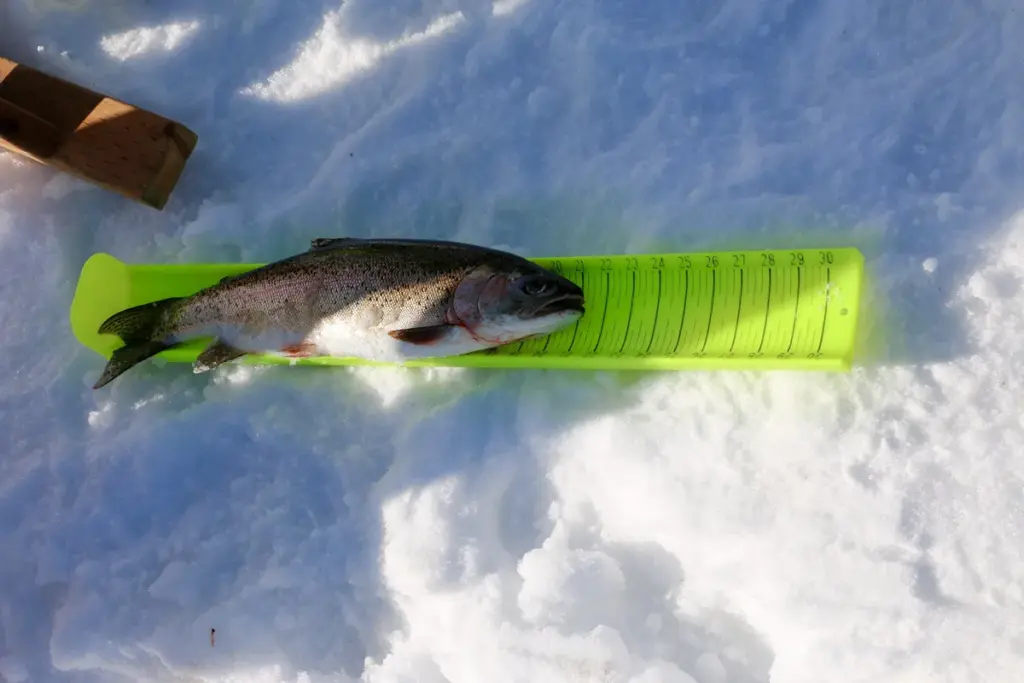
How to measure a fish for a weight estimate
Length
Lay the fish flat on a measuring board or a flat tape with its mouth closed and against the end. Pinch the tail lobes together and read the longest point. This is total length, the measurement most state agencies and the calculator use. A curved tape laid over the top of the fish adds length and inflates the estimate.
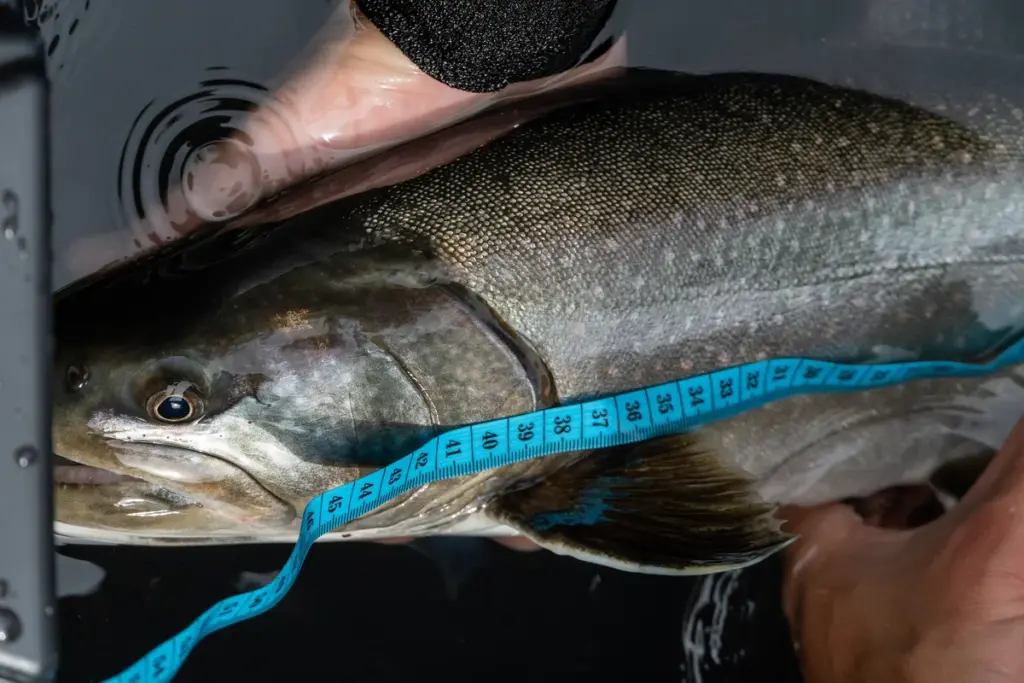
Girth
Wrap a soft tailor’s tape around the thickest part of the body, which on most fish sits just in front of the dorsal fin. Pull it snug against the scales without squeezing. If you have no flexible tape, wrap a piece of fishing line around the fish, pinch the spot where it meets and measure the line against your ruler afterward.
Work fast and keep the fish wet. Measuring takes about 20 seconds once the tape is ready.
How the calculator estimates weight
With length and girth
The calculator uses the girth formula anglers have relied on for decades:
The formula treats the fish as a tapered cylinder. Girth squared tracks the area of the body’s cross-section, length stretches it out, and the divisor accounts for how much the body tapers toward the head and tail. A torpedo-shaped pike tapers less than a deep-bodied bass, so the two need different divisors.
Worked example: a largemouth bass 20 inches long with a 14-inch girth.
- 20 × 14 × 14 = 3,920
- 3,920 ÷ 860 = 4.56 lb
- 0.56 × 16 = 9 oz, so the bass weighs about 4 lb 9 oz (2.07 kg)
Why our divisors differ from the ones you’ve seen
The classic numbers are 800 for most fish and 1,200 for bass. We tested both against 186 fish that had a measured length, a measured girth and a certified scale weight, drawn from state record lists, agency reports and tournament weigh-ins. The 1,200 bass divisor came in 17% light on those fish. Dividing by 860 matched them far better.
For each species with at least 10 measured fish we used the median divisor of those fish. Species with fewer fish borrow the median from their group (all bass, all trout and salmon). Panfish, carp and saltwater species without enough data keep the published divisor: 1,200 for crappie and bluegill, 800 for the rest.
| Species | Girth divisor | Length-only formula |
|---|---|---|
| Largemouth bass | 860 | Standard weight (Ws) |
| Smallmouth bass | 870 | Standard weight (Ws) |
| Spotted bass | 870 | Standard weight (Ws) |
| Striped bass | 870 | Standard weight (Ws) |
| White bass | 870 | Standard weight (Ws) |
| Walleye | 870 | Standard weight (Ws) |
| Sauger | 870 | Standard weight (Ws) |
| Yellow perch | 870 | Standard weight (Ws) |
| Northern pike | 790 | Standard weight (Ws) |
| Muskellunge | 790 | Standard weight (Ws) |
| Chain pickerel | 790 | Standard weight (Ws) |
| Rainbow trout | 840 | Standard weight (Ws) |
| Steelhead | 840 | Length-weight relationship |
| Brown trout | 840 | Standard weight (Ws) |
| Brook trout | 840 | Standard weight (Ws) |
| Lake trout | 840 | Standard weight (Ws) |
| Chinook salmon | 840 | Standard weight (Ws) |
| Coho salmon | 840 | Length-weight relationship |
| Atlantic salmon | 840 | Length-weight relationship |
| Channel catfish | 840 | Standard weight (Ws) |
| Blue catfish | 840 | Standard weight (Ws) |
| Flathead catfish | 870 | Standard weight (Ws) |
| Black crappie | 1200 | Standard weight (Ws) |
| White crappie | 1200 | Standard weight (Ws) |
| Bluegill | 1200 | Standard weight (Ws) |
| Common carp | 800 | Standard weight (Ws) |
| Red drum | 800 | Length-weight relationship |
| Spotted seatrout | 800 | Length-weight relationship |
| Common snook | 800 | Length-weight relationship |
| Tarpon | 800 | Length-weight relationship |
| Bonefish | 800 | Length-weight relationship |
| Summer flounder | Length only | Length-weight relationship |
| Southern flounder | Length only | Length-weight relationship |
| Pacific halibut | Length only | Length-weight relationship |
| Other fish | 800 | None (girth needed) |
With length only
Fisheries biologists publish a standard weight equation for most game fish. It gives the weight of a typical well-fed fish at any length, and agencies use it to judge whether a lake’s fish are thin or healthy. The calculator uses these equations (from the American Fisheries Society literature for freshwater species and the FishBase length-weight database for saltwater species) when you leave the girth blank.
A length-only answer describes an average fish. Two 20-inch bass can differ by more than a pound: one thin after spawning, one heavy with eggs in early spring. Girth captures that difference, length alone cannot.
How accurate is it?
We scored each method against real scale weights. For the girth formula, every fish was scored with a divisor fitted without it, so the test fish never shaped its own answer.
| Method | Fish tested | Median error | 80% of fish within |
|---|---|---|---|
| Length and girth (our divisors) | 186 | 6.3% | 13.3% |
| Length and girth (classic divisors) | 186 | 12.3% | 20.6% |
| Length only (standard weight) | 1,235 | 12.4% | 23.3% |
The range under each result comes from these tests: 80% of real fish landed inside it. Most of the test fish were trophy and record catches, which are heavier than average for their length, so for big fish the length-only estimate runs low. Bass ran 20% light on length alone. If the number matters, add girth.
Is my fish fat or skinny?
When you enter a girth, the calculator compares your fish’s weight with the standard weight for its length. Biologists call this relative weight. A score of 100 is a standard fish.
- Below 85: thin. Common after spawning, in crowded lakes and in late winter.
- 85 to 95: lean.
- 95 to 105: average.
- 105 to 115: well fed.
- Above 115: heavy. Pre-spawn females full of eggs often score here.
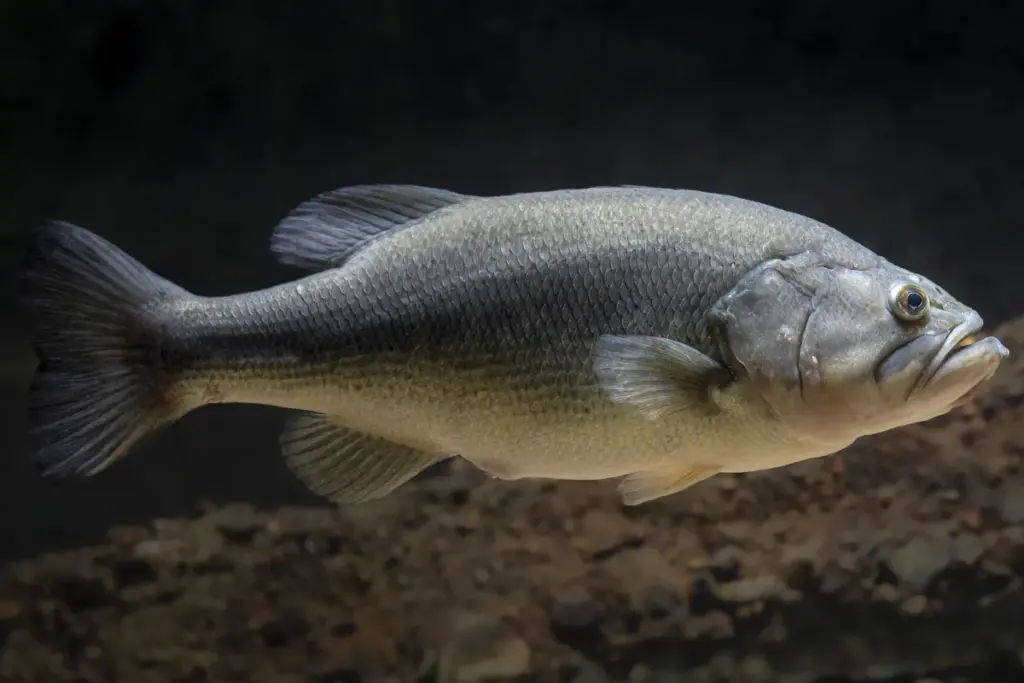
Length to weight charts
These charts list the standard weight at each length, plus what a lean and a heavy fish of the same length would weigh. The typical girth column helps you sanity-check your own measurement.
Largemouth bass length to weight chart
| Length | Standard weight | Lean fish (Wr 85) | Heavy fish (Wr 115) | Typical girth (in) |
|---|---|---|---|---|
| 6 in15.2 cmGirth 3.6 in | 1 oz41 g | 1 oz35 g | 2 oz48 g | 3.6 |
| 8 in20.3 cmGirth 5 in | 4 oz106 g | 3 oz90 g | 4 oz122 g | 5 |
| 10 in25.4 cmGirth 6.5 in | 8 oz220 g | 7 oz187 g | 9 oz253 g | 6.5 |
| 12 in30.5 cmGirth 8 in | 14 oz400 g | 12 oz340 g | 1 lb460 g | 8 |
| 14 in35.6 cmGirth 9.5 in | 1 lb 7 oz663 g | 1 lb 4 oz563 g | 1 lb 11 oz762 g | 9.5 |
| 16 in40.6 cmGirth 11 in | 2 lb 4 oz1.03 kg | 1 lb 15 oz872 g | 2 lb 10 oz1.18 kg | 11 |
| 18 in45.7 cmGirth 12.6 in | 3 lb 5 oz1.51 kg | 2 lb 13 oz1.28 kg | 3 lb 13 oz1.73 kg | 12.6 |
| 20 in50.8 cmGirth 14.2 in | 4 lb 11 oz2.13 kg | 4 lb1.81 kg | 5 lb 6 oz2.45 kg | 14.2 |
| 22 in55.9 cmGirth 15.8 in | 6 lb 7 oz2.91 kg | 5 lb 7 oz2.47 kg | 7 lb 6 oz3.35 kg | 15.8 |
| 24 in61 cmGirth 17.5 in | 8 lb 8 oz3.87 kg | 7 lb 4 oz3.29 kg | 9 lb 13 oz4.45 kg | 17.5 |
| 26 in66 cmGirth 19.1 in | 11 lb 1 oz5.03 kg | 9 lb 7 oz4.27 kg | 12 lb 12 oz5.78 kg | 19.1 |
| 28 in71.1 cmGirth 20.8 in | 14 lb 2 oz6.41 kg | 12 lb5.44 kg | 16 lb 4 oz7.37 kg | 20.8 |
| 30 in76.2 cmGirth 22.5 in | 17 lb 11 oz8.03 kg | 15 lb 1 oz6.82 kg | 20 lb 6 oz9.23 kg | 22.5 |
| 32 in81.3 cmGirth 24.2 in | 21 lb 14 oz9.92 kg | 18 lb 9 oz8.43 kg | 25 lb 2 oz11.40 kg | 24.2 |
Walleye length to weight chart
| Length | Standard weight | Lean fish (Wr 85) | Heavy fish (Wr 115) | Typical girth (in) |
|---|---|---|---|---|
| 8 in20.3 cmGirth 4.3 in | 3 oz77 g | 2 oz65 g | 3 oz88 g | 4.3 |
| 10 in25.4 cmGirth 5.5 in | 6 oz156 g | 5 oz133 g | 6 oz180 g | 5.5 |
| 12 in30.5 cmGirth 6.7 in | 10 oz279 g | 8 oz237 g | 11 oz321 g | 6.7 |
| 14 in35.6 cmGirth 7.9 in | 1 lb456 g | 14 oz388 g | 1 lb 3 oz525 g | 7.9 |
| 16 in40.6 cmGirth 9.1 in | 1 lb 9 oz697 g | 1 lb 5 oz593 g | 1 lb 12 oz802 g | 9.1 |
| 18 in45.7 cmGirth 10.4 in | 2 lb 4 oz1.01 kg | 1 lb 14 oz862 g | 2 lb 9 oz1.17 kg | 10.4 |
| 20 in50.8 cmGirth 11.7 in | 3 lb 2 oz1.42 kg | 2 lb 11 oz1.21 kg | 3 lb 10 oz1.63 kg | 11.7 |
| 22 in55.9 cmGirth 12.9 in | 4 lb 4 oz1.92 kg | 3 lb 10 oz1.63 kg | 4 lb 14 oz2.21 kg | 12.9 |
| 24 in61 cmGirth 14.2 in | 5 lb 9 oz2.53 kg | 4 lb 12 oz2.15 kg | 6 lb 7 oz2.91 kg | 14.2 |
| 26 in66 cmGirth 15.5 in | 7 lb 3 oz3.27 kg | 6 lb 2 oz2.78 kg | 8 lb 4 oz3.76 kg | 15.5 |
| 28 in71.1 cmGirth 16.8 in | 9 lb 2 oz4.13 kg | 7 lb 12 oz3.51 kg | 10 lb 8 oz4.75 kg | 16.8 |
| 30 in76.2 cmGirth 18.1 in | 11 lb 6 oz5.15 kg | 9 lb 10 oz4.38 kg | 13 lb 1 oz5.92 kg | 18.1 |
| 32 in81.3 cmGirth 19.5 in | 13 lb 15 oz6.32 kg | 11 lb 14 oz5.37 kg | 16 lb7.27 kg | 19.5 |
| 34 in86.4 cmGirth 20.8 in | 16 lb 14 oz7.66 kg | 14 lb 6 oz6.51 kg | 19 lb 7 oz8.81 kg | 20.8 |
| 36 in91.4 cmGirth 22.1 in | 20 lb 4 oz9.19 kg | 17 lb 4 oz7.81 kg | 23 lb 5 oz10.57 kg | 22.1 |
| 38 in96.5 cmGirth 23.5 in | 24 lb 1 oz10.92 kg | 20 lb 7 oz9.28 kg | 27 lb 11 oz12.55 kg | 23.5 |
| 40 in101.6 cmGirth 24.8 in | 28 lb 5 oz12.85 kg | 24 lb 1 oz10.92 kg | 32 lb 9 oz14.78 kg | 24.8 |

Northern pike length to weight chart
| Length | Standard weight | Lean fish (Wr 85) | Heavy fish (Wr 115) | Typical girth (in) |
|---|---|---|---|---|
| 10 in25.4 cmGirth 4.2 in | 4 oz102 g | 3 oz87 g | 4 oz117 g | 4.2 |
| 15 in38.1 cmGirth 6.4 in | 13 oz358 g | 11 oz304 g | 15 oz411 g | 6.4 |
| 20 in50.8 cmGirth 8.7 in | 1 lb 15 oz872 g | 1 lb 10 oz741 g | 2 lb 3 oz1.00 kg | 8.7 |
| 25 in63.5 cmGirth 11 in | 3 lb 13 oz1.74 kg | 3 lb 4 oz1.48 kg | 4 lb 7 oz2.00 kg | 11 |
| 30 in76.2 cmGirth 13.3 in | 6 lb 12 oz3.06 kg | 5 lb 12 oz2.60 kg | 7 lb 12 oz3.52 kg | 13.3 |
| 35 in88.9 cmGirth 15.7 in | 10 lb 14 oz4.93 kg | 9 lb 4 oz4.19 kg | 12 lb 8 oz5.67 kg | 15.7 |
| 40 in101.6 cmGirth 18 in | 16 lb 7 oz7.45 kg | 13 lb 15 oz6.34 kg | 18 lb 14 oz8.57 kg | 18 |
| 45 in114.3 cmGirth 20.4 in | 23 lb 11 oz10.73 kg | 20 lb 2 oz9.12 kg | 27 lb 3 oz12.34 kg | 20.4 |
| 50 in127 cmGirth 22.8 in | 32 lb 13 oz14.87 kg | 27 lb 14 oz12.64 kg | 37 lb 11 oz17.10 kg | 22.8 |
| 55 in139.7 cmGirth 25.2 in | 44 lb 1 oz19.98 kg | 37 lb 7 oz16.98 kg | 50 lb 10 oz22.97 kg | 25.2 |
| 60 in152.4 cmGirth 27.6 in | 57 lb 11 oz26.15 kg | 49 lb22.23 kg | 66 lb 5 oz30.08 kg | 27.6 |
Rainbow trout length to weight chart
| Length | Standard weight | Lean fish (Wr 85) | Heavy fish (Wr 115) | Typical girth (in) |
|---|---|---|---|---|
| 6 in15.2 cmGirth 3.6 in | 2 oz43 g | 1 oz36 g | 2 oz49 g | 3.6 |
| 8 in20.3 cmGirth 4.8 in | 4 oz101 g | 3 oz86 g | 4 oz116 g | 4.8 |
| 10 in25.4 cmGirth 6 in | 7 oz196 g | 6 oz167 g | 8 oz226 g | 6 |
| 12 in30.5 cmGirth 7.2 in | 12 oz338 g | 10 oz287 g | 14 oz389 g | 7.2 |
| 14 in35.6 cmGirth 8.4 in | 1 lb 3 oz536 g | 1 lb456 g | 1 lb 6 oz617 g | 8.4 |
| 16 in40.6 cmGirth 9.6 in | 1 lb 12 oz799 g | 1 lb 8 oz680 g | 2 lb919 g | 9.6 |
| 18 in45.7 cmGirth 10.8 in | 2 lb 8 oz1.14 kg | 2 lb 2 oz966 g | 2 lb 14 oz1.31 kg | 10.8 |
| 20 in50.8 cmGirth 12 in | 3 lb 7 oz1.56 kg | 2 lb 15 oz1.32 kg | 3 lb 15 oz1.79 kg | 12 |
| 22 in55.9 cmGirth 13.2 in | 4 lb 9 oz2.07 kg | 3 lb 14 oz1.76 kg | 5 lb 4 oz2.38 kg | 13.2 |
| 24 in61 cmGirth 14.4 in | 5 lb 15 oz2.69 kg | 5 lb 1 oz2.28 kg | 6 lb 13 oz3.09 kg | 14.4 |
| 26 in66 cmGirth 15.6 in | 7 lb 8 oz3.41 kg | 6 lb 6 oz2.90 kg | 8 lb 10 oz3.93 kg | 15.6 |
| 28 in71.1 cmGirth 16.8 in | 9 lb 6 oz4.26 kg | 8 lb3.62 kg | 10 lb 13 oz4.90 kg | 16.8 |
| 30 in76.2 cmGirth 18 in | 11 lb 9 oz5.24 kg | 9 lb 13 oz4.45 kg | 13 lb 4 oz6.02 kg | 18 |
| 32 in81.3 cmGirth 19.2 in | 14 lb6.35 kg | 11 lb 14 oz5.40 kg | 16 lb 2 oz7.30 kg | 19.2 |
| 34 in86.4 cmGirth 20.4 in | 16 lb 13 oz7.61 kg | 14 lb 4 oz6.47 kg | 19 lb 5 oz8.76 kg | 20.4 |
| 36 in91.4 cmGirth 21.6 in | 19 lb 15 oz9.03 kg | 16 lb 15 oz7.68 kg | 22 lb 14 oz10.39 kg | 21.6 |
| 38 in96.5 cmGirth 22.7 in | 23 lb 7 oz10.62 kg | 19 lb 14 oz9.02 kg | 26 lb 15 oz12.21 kg | 22.7 |
| 40 in101.6 cmGirth 23.9 in | 27 lb 5 oz12.38 kg | 23 lb 3 oz10.52 kg | 31 lb 6 oz14.23 kg | 23.9 |
| 42 in106.7 cmGirth 25.1 in | 31 lb 9 oz14.32 kg | 26 lb 13 oz12.17 kg | 36 lb 5 oz16.47 kg | 25.1 |
| 44 in111.8 cmGirth 26.3 in | 36 lb 5 oz16.46 kg | 30 lb 13 oz13.99 kg | 41 lb 12 oz18.93 kg | 26.3 |
Channel catfish length to weight chart
| Length | Standard weight | Lean fish (Wr 85) | Heavy fish (Wr 115) | Typical girth (in) |
|---|---|---|---|---|
| 8 in20.3 cmGirth 3.8 in | 2 oz63 g | 2 oz54 g | 3 oz73 g | 3.8 |
| 10 in25.4 cmGirth 4.9 in | 5 oz132 g | 4 oz112 g | 5 oz152 g | 4.9 |
| 12 in30.5 cmGirth 6.1 in | 9 oz241 g | 7 oz205 g | 10 oz277 g | 6.1 |
| 14 in35.6 cmGirth 7.3 in | 14 oz401 g | 12 oz341 g | 1 lb461 g | 7.3 |
| 16 in40.6 cmGirth 8.5 in | 1 lb 6 oz622 g | 1 lb 3 oz529 g | 1 lb 9 oz715 g | 8.5 |
| 18 in45.7 cmGirth 9.7 in | 2 lb917 g | 1 lb 11 oz779 g | 2 lb 5 oz1.05 kg | 9.7 |
| 20 in50.8 cmGirth 11 in | 2 lb 14 oz1.30 kg | 2 lb 7 oz1.10 kg | 3 lb 5 oz1.49 kg | 11 |
| 22 in55.9 cmGirth 12.2 in | 3 lb 15 oz1.78 kg | 3 lb 5 oz1.51 kg | 4 lb 8 oz2.04 kg | 12.2 |
| 24 in61 cmGirth 13.5 in | 5 lb 3 oz2.37 kg | 4 lb 7 oz2.01 kg | 6 lb2.72 kg | 13.5 |
| 26 in66 cmGirth 14.8 in | 6 lb 13 oz3.08 kg | 5 lb 12 oz2.62 kg | 7 lb 13 oz3.54 kg | 14.8 |
| 28 in71.1 cmGirth 16.1 in | 8 lb 11 oz3.93 kg | 7 lb 6 oz3.34 kg | 9 lb 15 oz4.52 kg | 16.1 |
| 30 in76.2 cmGirth 17.5 in | 10 lb 14 oz4.93 kg | 9 lb 4 oz4.19 kg | 12 lb 8 oz5.67 kg | 17.5 |
| 32 in81.3 cmGirth 18.8 in | 13 lb 7 oz6.10 kg | 11 lb 7 oz5.19 kg | 15 lb 8 oz7.02 kg | 18.8 |
| 34 in86.4 cmGirth 20.1 in | 16 lb 7 oz7.45 kg | 13 lb 15 oz6.33 kg | 18 lb 14 oz8.57 kg | 20.1 |
| 36 in91.4 cmGirth 21.5 in | 19 lb 13 oz8.99 kg | 16 lb 14 oz7.65 kg | 22 lb 13 oz10.34 kg | 21.5 |
| 38 in96.5 cmGirth 22.9 in | 23 lb 11 oz10.75 kg | 20 lb 2 oz9.14 kg | 27 lb 4 oz12.36 kg | 22.9 |
| 40 in101.6 cmGirth 24.3 in | 28 lb 1 oz12.73 kg | 23 lb 14 oz10.82 kg | 32 lb 4 oz14.64 kg | 24.3 |
| 42 in106.7 cmGirth 25.7 in | 32 lb 15 oz14.95 kg | 28 lb12.70 kg | 37 lb 14 oz17.19 kg | 25.7 |
| 44 in111.8 cmGirth 27.1 in | 38 lb 6 oz17.42 kg | 32 lb 10 oz14.81 kg | 44 lb 3 oz20.03 kg | 27.1 |
| 46 in116.8 cmGirth 28.5 in | 44 lb 7 oz20.17 kg | 37 lb 13 oz17.14 kg | 51 lb 2 oz23.19 kg | 28.5 |
| 48 in121.9 cmGirth 29.9 in | 51 lb 2 oz23.20 kg | 43 lb 8 oz19.72 kg | 58 lb 13 oz26.68 kg | 29.9 |
| 50 in127 cmGirth 31.4 in | 58 lb 8 oz26.54 kg | 49 lb 12 oz22.56 kg | 67 lb 5 oz30.52 kg | 31.4 |
Black crappie length to weight chart
| Length | Standard weight | Lean fish (Wr 85) | Heavy fish (Wr 115) | Typical girth (in) |
|---|---|---|---|---|
| 5 in12.7 cmGirth 3.7 in | 1 oz26 g | 1 oz22 g | 1 oz30 g | 3.7 |
| 6 in15.2 cmGirth 4.6 in | 2 oz48 g | 1 oz41 g | 2 oz56 g | 4.6 |
| 7 in17.8 cmGirth 5.5 in | 3 oz81 g | 2 oz69 g | 3 oz93 g | 5.5 |
| 8 in20.3 cmGirth 6.5 in | 4 oz126 g | 4 oz108 g | 5 oz145 g | 6.5 |
| 9 in22.9 cmGirth 7.4 in | 7 oz188 g | 6 oz159 g | 8 oz216 g | 7.4 |
| 10 in25.4 cmGirth 8.4 in | 9 oz267 g | 8 oz227 g | 11 oz307 g | 8.4 |
| 11 in27.9 cmGirth 9.4 in | 13 oz367 g | 11 oz312 g | 15 oz422 g | 9.4 |
| 12 in30.5 cmGirth 10.4 in | 1 lb 1 oz491 g | 15 oz417 g | 1 lb 4 oz565 g | 10.4 |
| 13 in33 cmGirth 11.4 in | 1 lb 7 oz642 g | 1 lb 3 oz545 g | 1 lb 10 oz738 g | 11.4 |
| 14 in35.6 cmGirth 12.5 in | 1 lb 13 oz822 g | 1 lb 9 oz699 g | 2 lb 1 oz946 g | 12.5 |
| 15 in38.1 cmGirth 13.5 in | 2 lb 5 oz1.04 kg | 1 lb 15 oz880 g | 2 lb 10 oz1.19 kg | 13.5 |
| 16 in40.6 cmGirth 14.6 in | 2 lb 13 oz1.29 kg | 2 lb 7 oz1.09 kg | 3 lb 4 oz1.48 kg | 14.6 |
| 17 in43.2 cmGirth 15.7 in | 3 lb 8 oz1.57 kg | 2 lb 15 oz1.34 kg | 4 lb1.81 kg | 15.7 |
| 18 in45.7 cmGirth 16.7 in | 4 lb 3 oz1.91 kg | 3 lb 9 oz1.62 kg | 4 lb 13 oz2.19 kg | 16.7 |
| 19 in48.3 cmGirth 17.8 in | 5 lb 1 oz2.28 kg | 4 lb 4 oz1.94 kg | 5 lb 13 oz2.63 kg | 17.8 |
| 20 in50.8 cmGirth 18.9 in | 6 lb2.71 kg | 5 lb 1 oz2.30 kg | 6 lb 14 oz3.12 kg | 18.9 |
When to use a scale instead
An estimate is enough for a logbook, a photo caption or settling a bet at the dock. It is not enough for a state record, an IGFA record or a tournament. Those require a certified scale, and state records usually also need a biologist to identify the species. If you think you have a record fish, keep it alive in a livewell if regulations allow and contact your state wildlife agency right away.
For everyday weighing, a digital lip-grip or hanging scale reads to the ounce and fits in a tackle bag. Our guide to the best fish scales compares 12 of them.
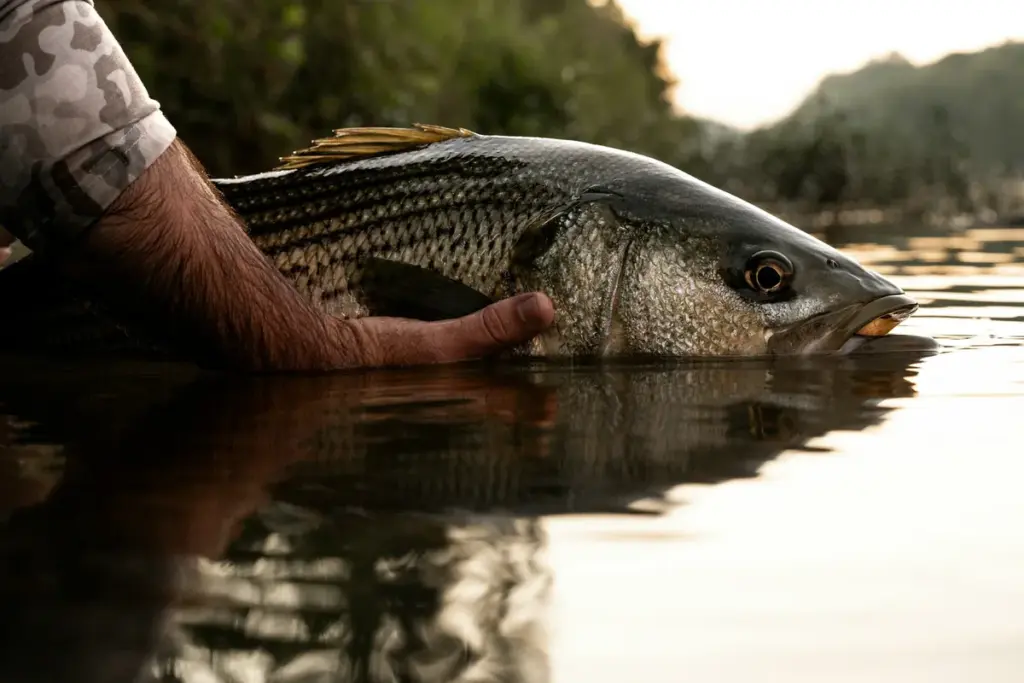
Measuring a fish you plan to release
- Wet your hands and the measuring board before touching the fish. Dry hands and surfaces strip the slime coat that protects it from infection.
- Keep the fish horizontal and support its belly. Hanging a heavy fish vertically by the jaw can injure it.
- Have the board and tape out before you land the fish.
- Keep it out of the water for less time than you can hold your breath.
- Revive it facing into the current or moving it gently forward until it swims off on its own.
Length and girth with a quick photo is a gentler record of a catch than hanging the fish on a scale, which is one reason catch-and-release anglers use the girth formula.
Frequently asked questions
How do you calculate a fish's weight from length and girth?
What is the 800 fish weight formula?
What is the bass weight formula?
How accurate are fish weight calculators?
Can I estimate fish weight without girth?
How do I measure the girth of a fish?
How much does a 20-inch largemouth bass weigh?
How much does a 30-inch walleye weigh?
How much does a 40-inch pike weigh?
Should I use total length or fork length?
Sources
- Neumann, R. M., C. S. Guy and D. W. Willis. 2012. Length, weight and associated indices. In Fisheries Techniques, 3rd edition. American Fisheries Society.
- Standard weight equations as compiled in the FSA package (Ogle et al.), including Henson 1991 (largemouth bass), Murphy, Willis and Springer 1990 (walleye), Anderson and Neumann 1996 (northern pike), Brown, Murphy and Willis 1995 (channel catfish) and Neumann and Murphy 1991 (black crappie).
- Froese, R., J. T. Thorson and R. B. Reyes. 2014. A Bayesian approach for estimating length-weight relationships in fishes. Journal of Applied Ichthyology 30: 78-85.
- Wisconsin Department of Natural Resources, Florida Fish and Wildlife Conservation Commission and Texas Parks and Wildlife Department fish weight guidance and record lists.
- International Game Fish Association world records.