As an Amazon Associate we earn from qualifying purchases. Disclosure
The best heated bird bath for most yards is the API 600: a 20-inch plastic bowl with a 150-watt heater and a built-in thermostat that keeps the water open on the coldest nights, with a clamp that fits a deck rail, a post or most bird bath stands. The best budget heated bird bath is the Farm Innovators 75W 3-in-1, which mounts three ways and is rated to keep water open at minus 10°F. If you already own a bird bath you like, skip the new bath and drop in a de-icer such as the K&H Super Ice Eliminator or, for a large concrete basin, the API BDT250.
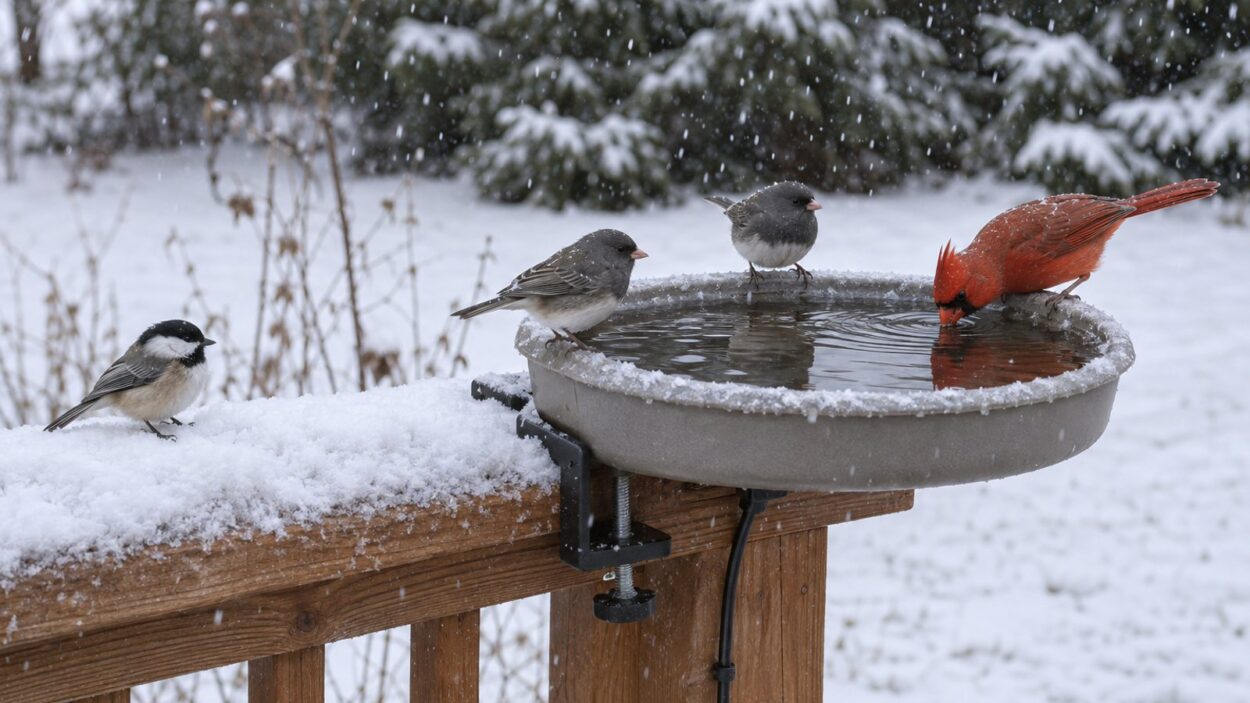
The first winter I lived in a house with a deck, I kept a plain plastic bath on the rail and cracked the ice with my boot heel every morning. By ten o’clock it was a skating rink again. The next November I clamped a heated bowl to the same rail. Within two weeks a small flock of eastern bluebirds came to it every afternoon, birds that never once landed on my seed feeders, and the robins that stay all winter in my part of the country showed up with them. Open water draws birds that seed never will, because every bird drinks.
Every heated bath and de-icer below has a thermostat that turns the heater on near freezing and off once the water is safe, except one that we flag clearly. None of them warm the water for bathing. Their job is to keep a pool of liquid water open when everything else in the yard is ice and snow.
Best heated bird baths at a glance
| Heated bird bath | Best for | Mount | Heater |
|---|---|---|---|
| API 600 20-inch heated bowl | Best heated bird bath overall | Deck, post or stand | 150 W, thermostat |
| Farm Innovators 75W 3-in-1 | Best budget heated bird bath | Deck, clamp or legs | 75 W, thermostat |
| GESAIL 75W heated bird bath | Budget pick with a removable bowl | Deck, clamp or legs | 75 W, thermostat |
| API 650 deck mounted kit | Best for deck railings | Deck rail | 150 W, thermostat |
| API 970 with metal stand | Best heated bird bath with a stand | Pedestal stand | 150 W, thermostat |
| Farm Innovators HBC-120C | Looks like a concrete bath | Pedestal | 120 W, thermostat |
| API 400 with stand | Small yards and small birds | 30-inch stand | 50 W, thermostat |
| Likaney with wireless display | Low-water shutoff and an indoor display | Hang, ground or deck | Set to 41, 50 or 59°F |
| API BDT250 de-icer | Best de-icer for big concrete baths | Sits in your bath | 250 W, thermostat |
| K&H Super Ice Eliminator | De-icer that looks like a rock | Sits in your bath | 80 W, thermostat |
| GESAIL 50W de-icer | Best budget de-icer | Sits in your bath | 50 W, thermostat |
| Farm Innovators Econo 44W | Very shallow and odd-shaped baths | Lies flat in your bath | 44 W, no thermostat |
How a heated bird bath works
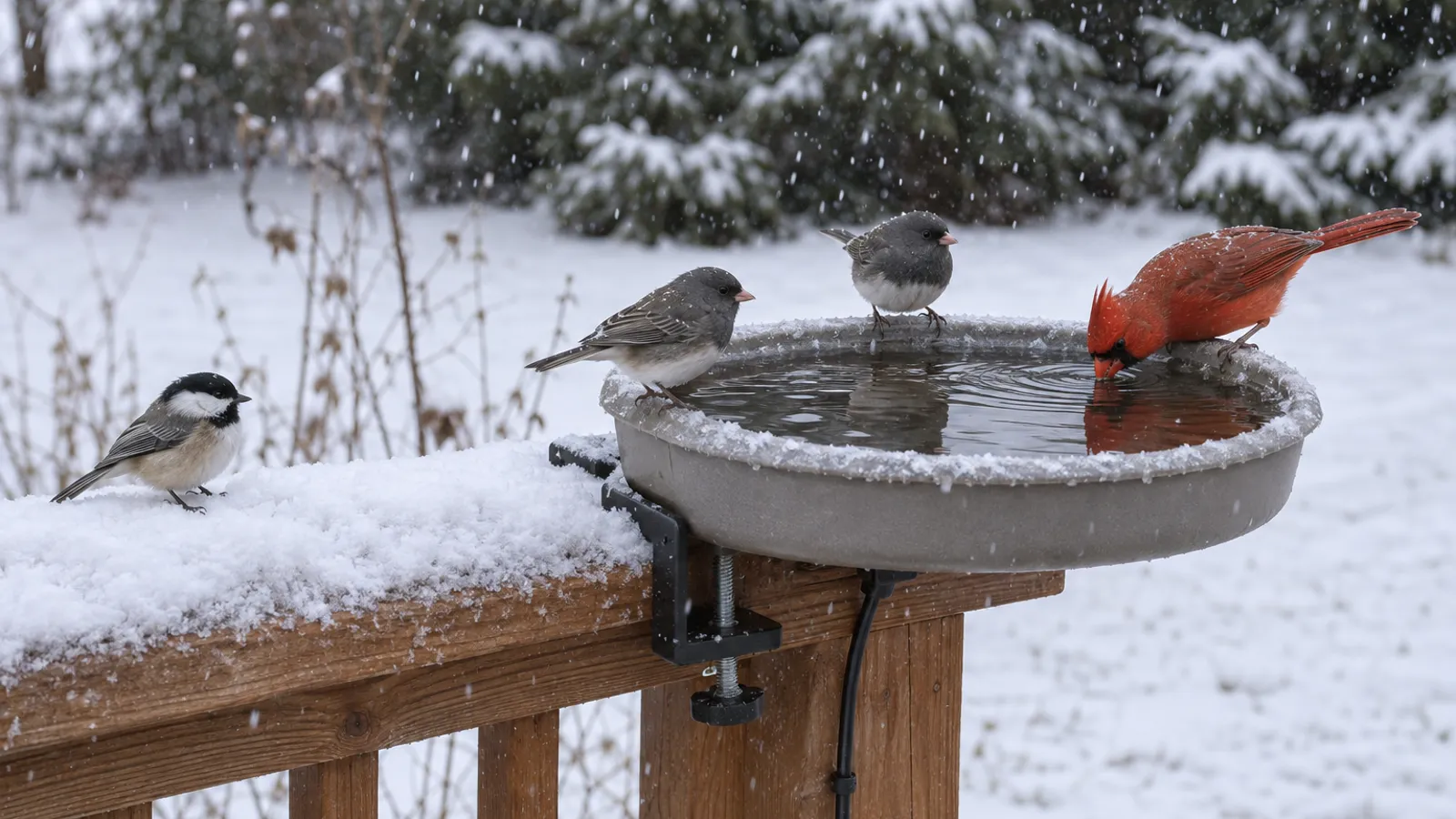
A heated bird bath is a plastic or resin bowl with a sealed heating element molded into the bottom and a thermostat that reads the temperature. When the air or water drops near freezing, the heater switches on. When the water is safely above freezing, it switches off. Most heated baths use 50 to 150 watts. Thermostat settings vary by maker: Duncraft lists one Farm Innovators bath that turns on at 35°F and a deck bath that turns on at 38°F.
The water does not get warm. It stays a few degrees above freezing, which is all a bird needs to drink. National Audubon Society advice is to use a plastic bath with a built-in heater, or to add a heater to the bath you already have, and to avoid ceramic baths in winter because they crack when water freezes in them.
Heated bird bath or bird bath de-icer?
You have two ways to keep water open:
- A heated bird bath has the heater built into the bowl. Nothing sits in the water, birds have the whole bowl to stand in and the cord tucks under the bowl in summer. Buy one if you are starting from scratch or your current bath is ceramic or glass.
- A de-icer is a small heater that sits in the bottom of a bath you already own. It costs less and works in concrete, stone, plastic and metal baths, but it takes up floor space in the bowl, and a deep basin needs a more powerful one. Buy one if you have a concrete or plastic bath you like.
If you have no power outside, neither will work. Our guide on how to keep a bird bath from freezing covers the no-electricity methods and how long each one lasts.
What to look for in a heated bird bath
- Shallow water. Songbirds want water about 1 inch deep at the edge and no more than 2 inches in the middle. Every bath here is 2 inches deep or less. A shallow bowl also helps in very cold weather, because birds drink from it rather than bathe in it.
- A thermostat. A thermostat keeps the heater off on mild days, which saves power and keeps the element from running in an empty bowl all afternoon. Only one product in this guide runs without one.
- Wattage that matches your winters. 50 to 75 watts is enough for a 12- to 14-inch bowl in most of the country. For a 20-inch bowl, or for winters that sit below 0°F for days, choose 120 to 150 watts. For a de-icer in a deep concrete basin, 150 to 250 watts.
- Mounting that fits your yard. Deck-rail baths put the water where you can see it from a window. Pedestal baths keep birds above the reach of cats. Ground baths draw robins, juncos and doves, which feed on the ground anyway. Several baths here mount more than one way.
- A rim birds can grip. A textured or holed rim gives birds secure footing on a frosty edge. A smooth, glazed rim gets slippery.
- Safety listings. Look for CSA, UL, ETL or MET on the listing. Allied Precision, Farm Innovators and K&H all certify their heaters.
- Cord length. Most heated baths have a short cord meant for an outdoor extension cord. Measure the distance to your outlet before you choose where the bath goes.
- A warranty. Thermostats are the part that fails. Allied Precision and Farm Innovators list three-year warranties on several of their bigger baths, and K&H covers its de-icer for three years.
Best heated bird bath overall
Best overall
1. API 600 20-Inch Heated Bird Bath Bowl
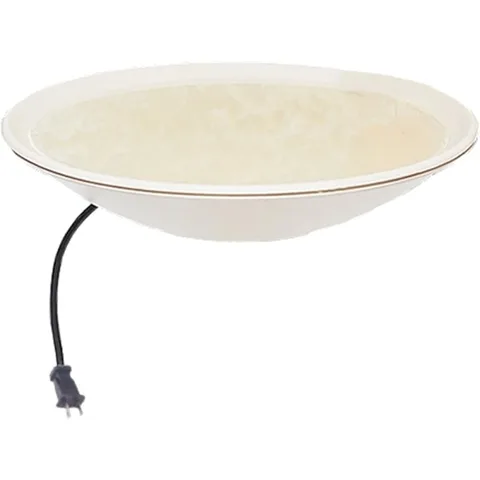
Allied Precision Industries (API) has made heated bird baths longer than almost anyone, and the 600 is the bowl most birders mean when they say “an API bath.” It is 20 inches across, so a robin, a flicker or a small flock of bluebirds can use it at once, and the 150-watt heater has enough power for a big bowl in northern winters. Amazon’s review summary says buyers find it keeps water open even in single-digit temperatures.
It comes without a stand. The included adapter clamp fits a deck rail, a 4×4 post or most existing bird bath pedestals, so you can set the heated bowl on the stand you already own. The rim is shaped for birds to grip.
- 20-inch plastic bowl in a light stone color
- 150-watt heater with built-in thermostat
- Adapter clamp for deck rails, posts and stands
- Allied lists a three-year warranty on the 600
Good: Big bowl, enough heat for hard winters, fits the stand you already have. Not great: No stand in the box; the cord needs an outdoor extension cord.
Best budget heated bird baths
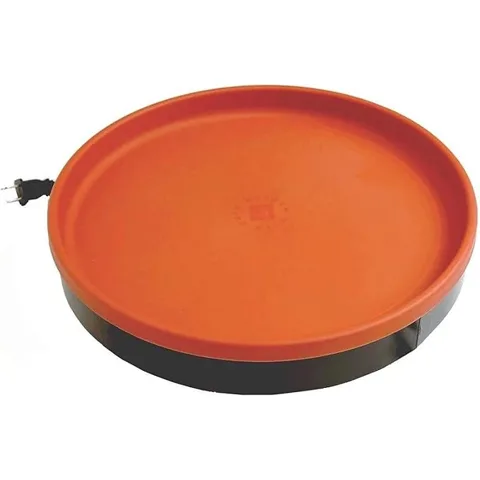
The two baths in this section are the same design: a 14-inch powder-coated bowl with a 75-watt heater and hardware for three mounts. Either is the right first heated bath for a small yard or a deck.
Best budget
2. Farm Innovators 75W 3-in-1 Heated Bird Bath
Farm Innovators’ 3-in-1 is the classic small heated bath. The 14-inch shallow saucer holds about a quart of water, which suits chickadees, titmice, juncos and finches, and the thermostat runs the 75-watt heater only when the water needs it. Farm Innovators rates it to minus 10°F.
The box includes a deck and post mount, a clamp for a rail or pipe and short legs for setting it on the ground. In spring the cord tucks under the bowl and the bath stays out as a summer bath.
- 14-inch bowl, about 1 quart of water
- 75-watt heater with thermostat, tested to minus 10°F
- Deck/post mount, clamp mount and ground legs included
- Powder-coated finish
Good: Three mounts in one box, shallow enough for small songbirds. Not great: Holds little water, so it needs topping up every day or two in dry winter air.
Budget pick
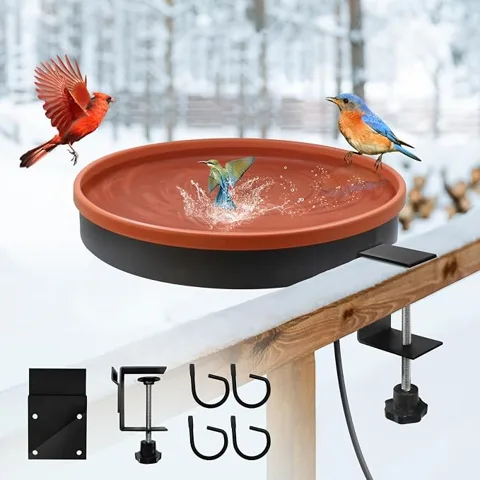
3. GESAIL 75W Heated Bird Bath
GESAIL’s bath copies the Farm Innovators layout and adds a basin that lifts off its metal ring for cleaning. It mounts on a deck, clamps to a rail or stands on its own legs, and its 75-watt element is sealed inside the bowl with a thermostat. It is the most-reviewed heated bath on Amazon in this guide, and it is often the cheaper of the two 14-inch baths.
Three small EVA pads come in the box to stick on the ring if the bowl sits unevenly. Use them only if you need them.
- 14-inch shallow bowl, several colors
- 75-watt sealed heater with thermostat
- Deck, clamp and ground mounts
- Bowl lifts off the stand for cleaning
Good: Removable bowl makes winter scrubbing easy; three mounts. Not great: Small bowl, so expect daily top-ups in a cold, dry spell.
Best heated bird bath for a deck railing
A deck rail is the easiest place to watch a winter bath from a window, and it puts the bath close to an outdoor outlet. Choose a bowl with a bracket made for rails rather than a clamp on a small bowl, because a full 20-inch bowl of water is heavy.
Best for decks
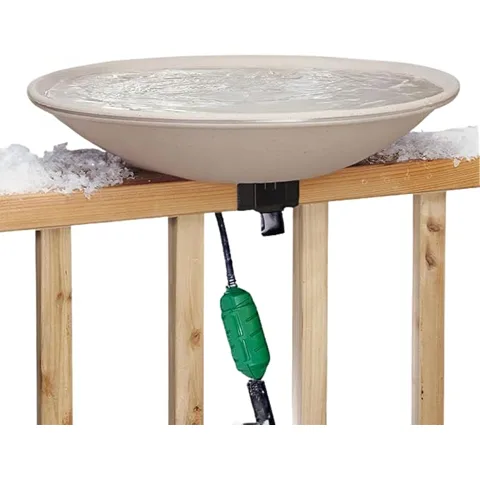
4. API 650 Deck Mounted Heated Bird Bath Kit
This kit pairs Allied’s 650 deck bath with a watertight outdoor cord connector, the part most people forget to buy. The 18.5-inch bowl is 2 inches deep with a gently sloping floor, so small birds stand at the edge while larger ones wade into the middle. A 150-watt heater runs on a thermostat that switches on near freezing.
The bracket screws to a wooden deck rail and tilts the bowl up for draining and cleaning. Allied’s manual says not to place this bath on the ground and to keep it clear of snow drifts.
- 18.5-inch bowl, 2 inches deep
- 150-watt heater with thermostat
- Tilt-to-clean deck rail bracket
- Cord connector included
Good: Comes with the cord connector; tilting bracket makes cleaning quick. Not great: Deck use only; not made for the ground or a stand.
Best heated bird baths with a stand
A pedestal puts the water about waist high, where a cat cannot wait beside it, and it lets you place the bath in the open yard. Audubon recommends pedestal baths where cats are a problem.
Best with a stand
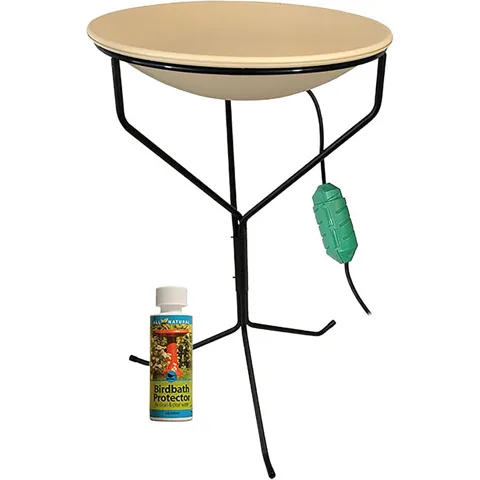
5. API 970 Heated Bird Bath with Metal Stand
The 970 is Allied’s 150-watt heated bowl on a powder-coated steel stand. The bowl is about 18.75 inches across with a textured floor for footing, and the thermostat turns the heater on as the water nears freezing. This kit adds a watertight cord connector and a bottle of API bird bath cleaner.
Allied notes that a thin skin of ice can form on the surface in the coldest weather and that there is no indicator light. Reviews on Amazon are split on assembly: some buyers find the stand easy, others find the instructions confusing.
- About 18.75-inch bowl
- 150-watt heater with thermostat
- Powder-coated steel stand
- Cord connector and bath cleaner included
Good: Full-size heated bowl on a stand, with the cord connector in the box. Not great: Stand assembly frustrates some buyers.
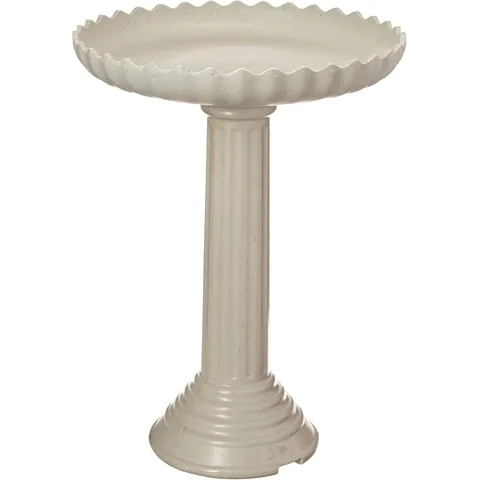
Looks like stone
6. Farm Innovators HBC-120C Heated Bird Bath with Pedestal
If you want a heated bath that looks like a garden bath rather than a plastic bowl, this is it. The compression-molded basin is scalloped and colored like concrete, sits on a matching pedestal and lifts off for cleaning. The 120-watt heater runs on a thermostat.
There is no attached cord. An outdoor extension cord plugs into a socket on the underside of the basin, so plan the cord run before you place it. Farm Innovators covers it with a three-year limited warranty.
- Scalloped basin with a concrete look
- 120-watt heater with thermostat
- Matching pedestal; basin lifts off
- Three-year limited warranty
Good: Looks like a traditional bath; longer warranty. Not great: Needs an extension cord plugged into the base; no built-in cord.
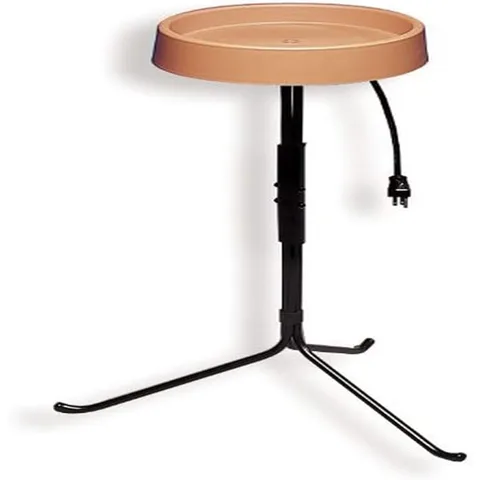
Small yards
7. API 400 Heated Bird Bath with Stand
The API 400 is a 12-inch heated bowl on a 30-inch rust-resistant metal stand. Its 50-watt heater is the lowest wattage of any heated bath here, and the element is fully enclosed so birds and squirrels cannot touch it. It is CSA and UL listed.
Twelve inches is small. It suits chickadees, finches, juncos and titmice in a small yard or patio. A robin or a jay will use it, but a flock of starlings will empty it fast.
- 12-inch plastic bowl
- 50-watt enclosed heater with thermostat
- 30-inch metal stand included
- CSA and UL listed
Good: Low power use, small footprint, stand included. Not great: Small bowl; Allied lists a one-year warranty.
Best heated bird bath with low-water shutoff
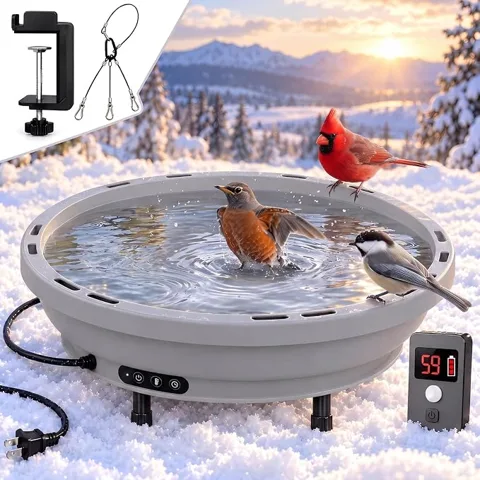
Low-water shutoff
8. Likaney Heated Bird Bath with Wireless Display
Winter wind empties a bird bath faster than people expect, and a heater sitting in an empty bowl is the most common way these units fail. The Likaney has a raised water sensor: when the level drops below it, the heater stops, a separate wireless display inside your house flashes and beeps, and the heater starts again on its own once you refill it. It also has overheat protection.
You can set it to 41, 50 or 59°F and run it continuously or on a 3- to 12-hour timer. Set it to 41°F. Birds need open water, not warm water, and the lowest setting uses the least power. The 3-liter bowl hangs from a branch, sits on the ground or attaches to a deck rail.
- 3-liter bowl with a grip rim
- Low-water shutoff that resumes after a refill
- Wireless indoor display, up to 164 feet in the open
- Settings of 41, 50 or 59°F, timer, memory after power cuts
Good: Tells you when it needs water and protects itself when it runs dry. Not great: Newer brand with a short track record; the display only monitors and cannot change settings.
Best bird bath de-icers for the bath you already have
A de-icer turns a summer bath into a winter one. Match the de-icer to the bowl: low-wattage models for shallow plastic bowls, 150 to 250 watts for deep concrete basins, which soak up cold. Never use one in a glass or ceramic bath that you would not leave out in a freeze, and keep the heater fully under water.
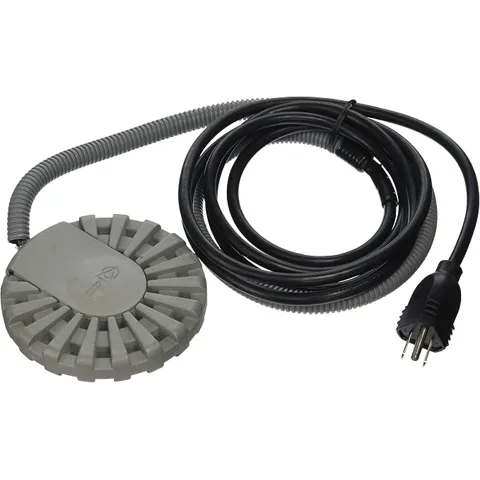
Big concrete baths
9. API BDT250 Bird Bath De-Icer
The BDT250 is the de-icer for a heavy concrete or stone basin that a small heater cannot keep up with. Its 250-watt element is spread across a wide, low aluminum plate, so the surface runs cooler and Allied rates it safe for plastic baths too. Several thermostats control it, and it is made in the USA.
At 4.75 inches across it takes up less of the bowl than its wattage suggests. Distributor listings note a cord chew protector and an automatic shutoff.
- 250-watt aluminum heating plate
- Multiple thermostats
- Low profile, coated for cleaning
- Safe in plastic baths, per Allied
Good: Enough power for deep concrete basins. Not great: Overkill for a small plastic bowl.
Looks like a rock
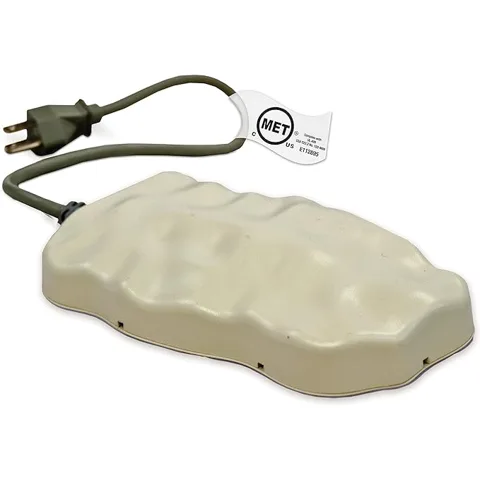
10. K&H Super Ice Eliminator 80W
K&H shaped this de-icer like a stone and finished it in enamel, so it disappears in a garden bath, and you can spray paint it to match. The 80-watt heater is thermostatically controlled, and K&H says it keeps water open to minus 20°F.
K&H has the whole unit tested by MET Labs rather than certifying only the parts, and covers it with a three-year limited warranty.
- 80-watt heater with thermostat
- Rock-shaped, paintable enamel finish
- MET Labs certified
- Three-year limited warranty
Good: Hides in the bath; long warranty. Not great: Not enough power for a deep concrete basin in a hard freeze.
Budget de-icer
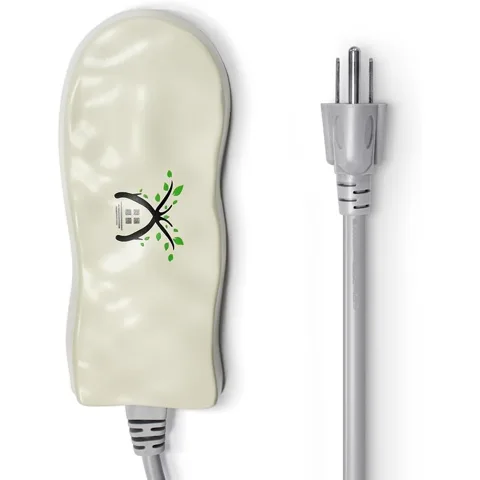
11. GESAIL 50W Bird Bath De-Icer
This is the most-reviewed de-icer in this guide and a sound pick for a standard plastic, metal or stone bath. The 50-watt element is cast inside heavy aluminum, which keeps it from scorching plastic, and the enamel finish resists scale and rust stains. GESAIL is clear that it keeps the water from freezing and does not heat it.
It is heavy enough to stay put when birds land on it. The cord is only 25 inches, so plan on an outdoor extension cord and a connector cover.
- 50-watt cast aluminum heater with thermostat
- Works in metal, plastic, stone and glass containers
- Enamel finish
- 25-inch cord
Good: Low price, low power, works in most standard baths. Not great: Too little heat for big concrete basins in a deep freeze.
Shallow baths
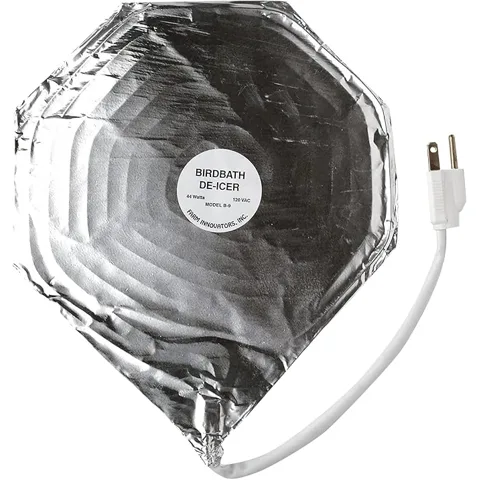
12. Farm Innovators Econo 44W De-Icer
The Econo is a flexible 10-by-10-inch foil pad that you bend to the shape of a shallow basin, so it works in bowls too shallow for a puck-style de-icer. At 44 watts it uses less power than anything else here.
It has no thermostat. It heats whenever it is plugged in, which is why its wattage is so low. Plug it into a plug-in thermostat outlet that switches on near 35°F, or unplug it on mild days, so it never runs in an empty bowl.
- 44-watt flexible foil pad, 10 x 10 x 1 inches
- Bends to fit shallow basins
- No thermostat: runs whenever plugged in
- 10-inch three-prong cord
Good: Fits shallow and odd-shaped bowls; very low power. Not great: No thermostat; needs a plug-in thermostat or a careful owner.
Where to put a heated bird bath

- In sun. Winter sun helps the heater and makes the water easy for birds to spot from the air. The National Wildlife Federation and The Nature Conservancy both recommend a sunny spot.
- Near cover, but not too near. Put the bath 5 to 10 feet from shrubs or a brush pile, close enough for birds to escape a hawk and far enough that a cat cannot ambush them from the branches.
- Where you can see it. A bath outside a kitchen or living room window gets checked and refilled. One at the back of the yard gets forgotten until it runs dry.
- Near an outlet. A short cord run is safer than a long one. Keep the cord off paths and out of places where snow is piled or shoveled.
- Off the ground for deck baths. Deck-mount models such as the API 650 are not made to sit on the ground. Ground baths, such as the Farm Innovators and GESAIL on their legs, should sit level on paving stones or a flat board so they do not tip as the ground freezes and thaws.
A heated bath works best next to food. If you also feed birds, our gifts for bird lovers guide lists feeders and seed setups, and the best hummingbird feeder guide covers the summer side of the same window.
How to set up a heated bird bath safely
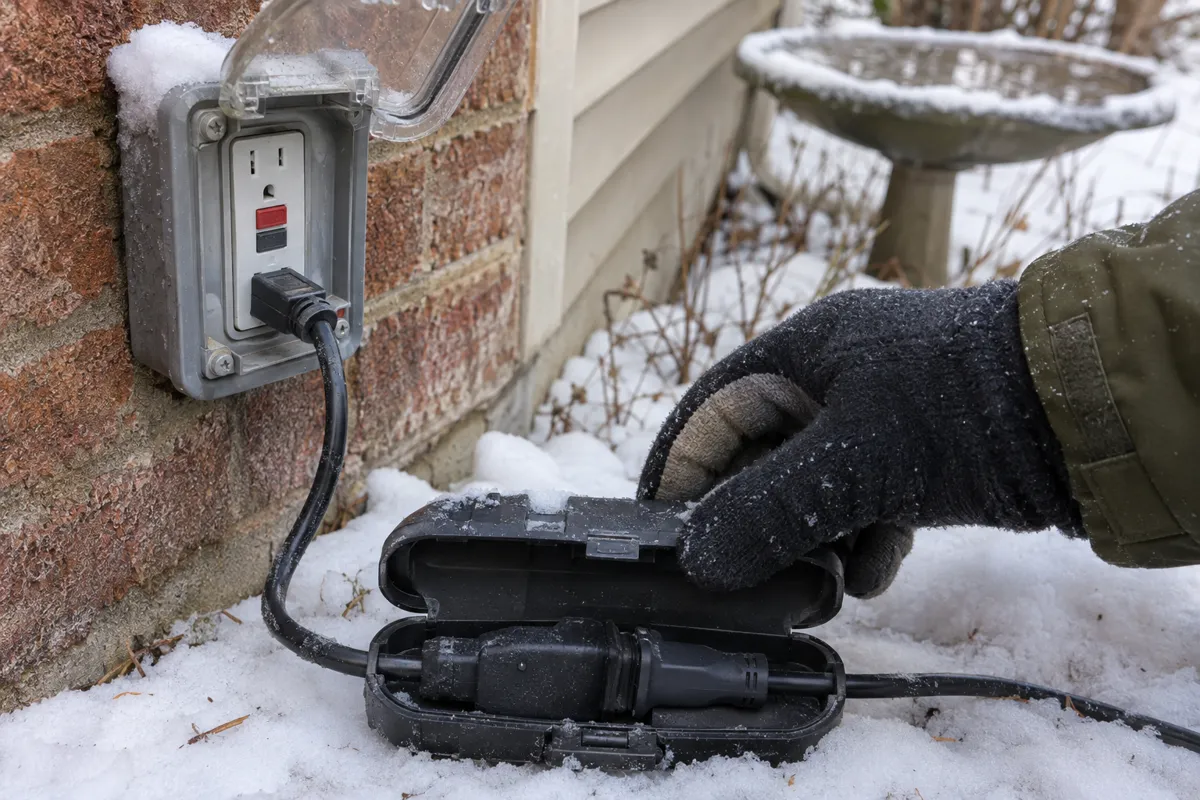
- Use a GFCI outlet. Cornell Lab, the National Wildlife Federation, Allied Precision and K&H all say the same thing: plug into a ground-fault (GFCI) protected outdoor outlet. If yours trips, it has found water where it should not be.
- Use an outdoor-rated extension cord of the right length, and only one. Do not chain cords together. Some heaters, such as K&H’s Thermo-Birdbath, say not to use an extension cord at all: follow the instructions for yours.
- Seal the connection. Put the joint between the bath cord and the extension cord inside a watertight cord connector cover, and keep it off the ground where meltwater pools. The API 650 and 970 kits above include one.
- Fill the bath before you plug it in. Most makers say the heater must stay under water. Top up the bowl every day or two: dry winter air and wind empty a shallow bath fast.
- Check the cord every few weeks for cracks and chew marks, and keep it clear of snow drifts.
- Bring it in for summer storage if the maker says so, or tuck the cord away and use the bowl as a summer bath.
The GFCI on my back porch tripped twice in my first winter with a heated bath, both times after a thaw, when meltwater pooled around the bare plug joint lying in the snow. A clamshell connector cover and a short piece of scrap board to keep the joint off the ground fixed it, and it has not tripped since.
Never add anything to the water to keep it from freezing. Antifreeze is poisonous, glycerin mats feathers and salt is harmful to birds. A heater is the only safe way to keep water open below freezing.
Is it safe for birds to bathe in winter?
Mostly yes. Birds keep their feathers clean in winter because clean, well-arranged feathers hold heat, and Birds & Blooms notes that deaths from winter bathing are rare. In very cold weather most birds drink and do not get in, and the National Wildlife Federation says birds are unlikely to submerge themselves in very cold weather.
The risk is real in extreme cold, though. The Nature Conservancy describes starlings dropping out of the air seconds after leaving a heated bath and mourning doves whose wet tails froze to branches. Starlings are the usual culprits: they bathe in groups in any weather. During a February cold snap a few years ago, when it was minus 8°F at dawn, I watched a dozen of them take turns splashing in my deck bath. I laid three sticks across the bowl that morning and they went back to drinking.
When the temperature drops well below 0°F, make the bath a drinking station:
- Lay sticks or a plastic grate across the bowl so birds can reach the water but not climb in. Avoid metal, which birds’ feet and bills can stick to in hard cold.
- Add a layer of flat dark stones to the bottom so the water is only deep enough to dip a bill.
- Take the grate or sticks off again when the weather moderates.
How to clean a heated bird bath in winter
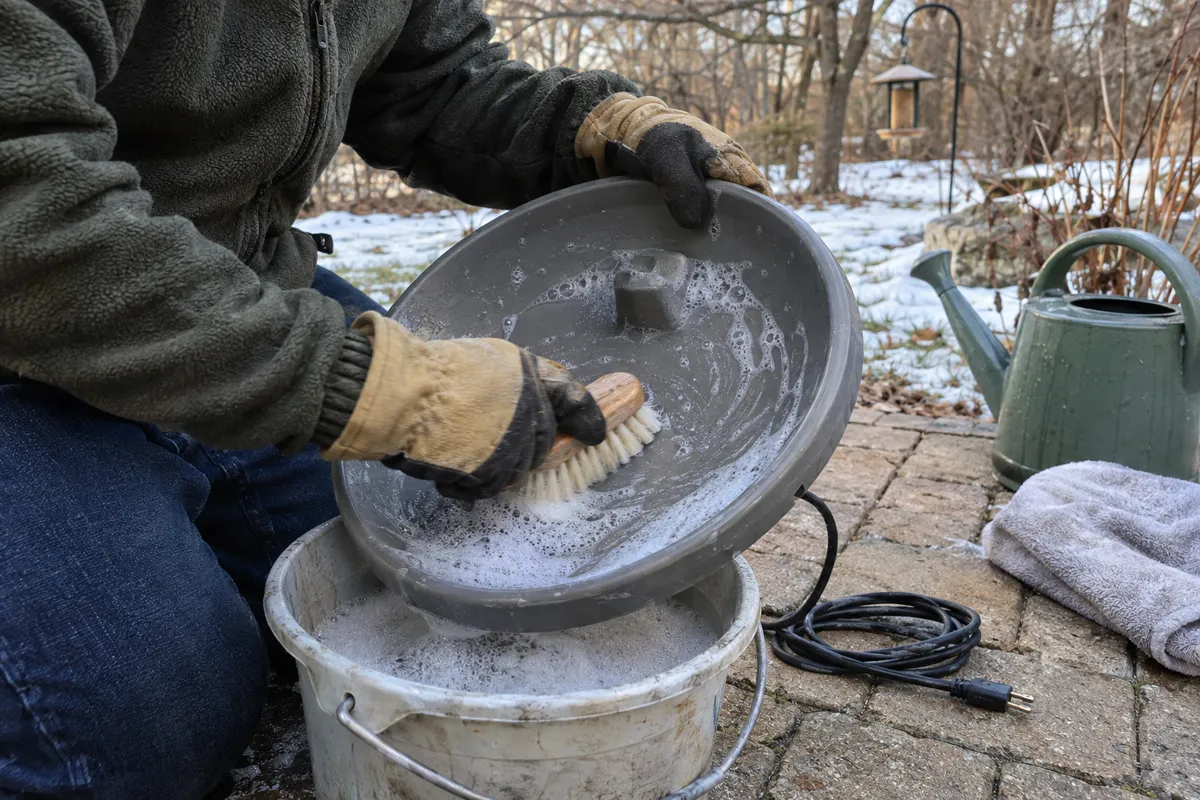
Winter baths get dirty fast. More birds use a single open water source, and droppings and seed hulls collect in a small bowl. Cornell Lab advises cleaning a bird bath weekly with a mild detergent, and Audubon Great Lakes suggests changing the water every other day when you can.
- Unplug the bath at the outlet before you touch it.
- Dump the water and scrub the bowl with a stiff brush and a little dish soap. A 1-to-9 bleach and water solution removes stains; rinse very well afterward.
- Do not soak the cord or the plug. Baths with a removable bowl, such as the GESAIL and the Farm Innovators HBC-120C, are the easiest to wash.
- Refill with fresh water, then plug the bath back in.
The same routine keeps a summer bath clean. Our guide on how to make a bird bath covers the shape and depth birds prefer if you would rather build the bowl yourself and add a de-icer.
How much electricity does a heated bird bath use?
Less than most people expect, because the thermostat keeps the heater off most of the time. Worst case, a 150-watt bath running nonstop uses 3.6 kilowatt-hours a day, or 108 kWh in a 30-day month. A 75-watt bath uses half that, and a 50-watt bath a third. Multiply by the rate on your electric bill for the ceiling; real use is a fraction of it, because the heater only runs in the coldest hours and stops once the water is above freezing.
To use less power, choose the lowest wattage that keeps your bowl open, put the bath in sun and out of the wind, and pick a model with a thermostat. The one product here without a thermostat, the Farm Innovators Econo, makes up for it with very low wattage.
Do solar heated bird baths work?
Not in a real freeze. Solar bird baths sold as “heated” either run a small pump that keeps water moving or rely on a dark bowl soaking up sun. Moving water resists ice down to around 20°F and then freezes, and a winter panel makes little power on short, cloudy days and nothing at night, when water freezes. One bird shop in Pennsylvania wrote that it had never heard of a solar heated bath that works through a winter of nights below freezing. In mild climates where freezes are short and sunny days follow, a solar fountain can keep water open some days. Anywhere with steady freezing nights, buy a plug-in heated bath or de-icer.
Heated bird baths to skip
- Baths sold as “warm water” spas. Some new listings advertise warm bathing water, with thermostats that run until the water reaches 50°F or more. Birds need open water, not warm water. Warm baths use more power and invite birds to soak on days when a wet bird is at risk.
- Deep bowls. Anything deeper than 2 to 3 inches is too deep for most songbirds and wastes heat. Add stones if you already have one.
- Ceramic, glass and concrete baths left full in a freeze with no heater. They crack. Glazed ceramic is also slippery for birds’ feet.
- Heaters with no safety listing. If a listing shows no CSA, UL, ETL or MET mark, pass on it. This is a 120-volt appliance sitting in water outdoors.
A heated bath is one of the best gifts for a backyard birder. For smaller ideas, see our stocking stuffers for birders. For a closer look at the birds that come to it, our best binoculars for bird watching guide starts with budget pairs, and our red birds and yellow birds guides will help you name your winter visitors.
FAQ
What is the best heated bird bath?
The best heated bird bath for most yards is the API 600, a 20-inch bowl with a 150-watt heater, a built-in thermostat and a clamp that fits deck rails, posts and most bird bath stands. The Farm Innovators 75W 3-in-1 is the best budget heated bird bath, the API 650 kit is best for deck railings and the API 970 is the best heated bird bath with a stand.
Are heated bird baths safe for birds?
Yes. A heated bird bath with a thermostat keeps the water just above freezing, not warm, and the heating element is sealed inside the bowl. In extreme cold, below about 0°F, lay sticks or a plastic grate across the bowl so birds drink without bathing, because wet feathers can freeze.
How does a heated bird bath work?
A heated bird bath has a sealed heating element in the bottom of the bowl and a thermostat. The heater turns on when the water nears freezing, usually around 35 to 40°F, and turns off once the water is safely above freezing. It keeps water open; it does not warm it.
Is a heated bird bath or a bird bath de-icer better?
A heated bird bath is better if you are buying a new bath, because the heater is hidden in the bowl and birds have the whole floor to stand on. A de-icer is better if you already have a plastic, metal or concrete bath you like. Use 150 to 250 watts for a deep concrete basin.
How much does it cost to run a heated bird bath?
Very little. A 150-watt heated bird bath running nonstop would use 3.6 kWh a day, but the thermostat keeps it off most of the time, so real use is a fraction of that. A 50- or 75-watt bath uses a third to half as much.
Can I use an extension cord with a heated bird bath?
Most heated bird baths are made for an outdoor-rated extension cord. Use one cord of the right length, plug it into a GFCI outlet and seal the joint in a watertight cord connector cover. Some heaters, such as K&H’s Thermo-Birdbath, say not to use an extension cord, so check your instructions.
How deep should a heated bird bath be?
About 1 inch at the edge and no more than 2 inches in the middle. Shallow water suits songbirds, freezes less and encourages birds to drink rather than bathe in very cold weather. Add flat stones to a deeper bowl.
Do solar heated bird baths work in winter?
Not where nights stay below freezing. Solar baths either move water with a small pump or absorb sun in a dark bowl, and neither keeps water open overnight in a real freeze. A plug-in heated bath or de-icer is the only reliable option.
Can a heated bird bath run dry?
It should not. Most makers say the heater must stay under water, and a heater in an empty bowl can fail. Top up the bath every day or two in dry winter weather, or choose a model with low-water shutoff such as the Likaney.
Where should I put a heated bird bath?
In a sunny spot 5 to 10 feet from shrubs, close to a GFCI outdoor outlet and where you can see it from a window. A pedestal or deck bath keeps birds out of reach of cats. Keep the cord out of paths and snow piles.
Sources
- National Audubon Society. Winterize Your Yard for Birds.
- National Wildlife Federation. Don’t Forget Water for Birds in Winter.
- The Nature Conservancy. Should You Provide Birds Water in Winter?
- Cornell Lab of Ornithology. Bird bath advice from the Cornell Lab.
- Birds & Blooms. How to Help Birds During Extremely Cold Weather.
- Allied Precision Industries. Heated Bird Bath 650 manual.
- K&H Pet Products. Thermo-Birdbath instructions and Super Ice Eliminator.
- Duncraft. ThermoCube thermostatically controlled outlet.
- The Bird House. Solar bird baths don’t work in winter.