Tanzania has somewhere between 320 and 360 reptile species, and sources can’t agree on the exact number. One assessment counts 321 species with about 90 endemic. Another counts 360 with about 85 endemic. The gap comes from taxonomy, since new species keep being split off from old ones, especially in the mountain forests. Either way, only a handful of countries in Africa come close.
This guide covers the reptiles of Tanzania group by group: snakes, lizards and geckos, chameleons, tortoises and turtles, and crocodiles. Each section names standout species, how big they get, and where you can realistically see them.
Key facts
- Species count: roughly 320 to 360, depending on the source, with 85 to 90 endemic.
- Endemic hotspot: the Eastern Arc Mountains, especially the Usambara and Uluguru ranges.
- Most dangerous snakes: black mamba, puff adder, Mozambique spitting cobra, boomslang.
- Most dangerous reptile overall: the Nile crocodile, by a wide margin.
- Best places to see them: Usambara Mountains (chameleons), Serengeti kopjes (agamas, pancake tortoises), Selous/Nyerere and Ruaha (crocodiles, monitors), Mafia Island (sea turtles), Meserani Snake Park near Arusha (snakes, safely).
Contents
- Snakes
- Lizards and geckos
- Chameleons
- Tortoises and turtles
- Crocodiles
- Species at a glance
- Venomous or harmless: staying safe
- Endemic reptiles of Tanzania
- Conservation
Snakes
Tanzania’s snakes range from the thumb-thin vine snake to pythons that can top five meters. Most are shy and nocturnal, and most visitors never see one outside a snake park. Five are worth knowing by name.
Black mamba (Dendroaspis polylepis). The reputation outruns the behavior. Black mambas are long, usually 2 to 3 meters, and fast over short distances, but they run from people when they can. The name comes from the inside of the mouth, which is inky black. They live in savanna and rocky scrub and shelter in termite mounds and hollow trees.
Green mamba (Dendroaspis angusticeps). A slimmer, tree-living cousin found along the coast and in the lowland forests, including Zanzibar. About 2 meters long, bright green, and easy to lose against leaves. Bites are rare because the snake spends its life off the ground.
Puff adder (Bitis arietans). Short, thick, and the one most likely to bite someone, because it doesn’t flee. It freezes, trusts its camouflage, and lets people step on it. It lies across footpaths in grassland and scrub at dusk, which is exactly when people walk them.
Mozambique spitting cobra (Naja mossambica). A medium-sized cobra, around a meter and a half, that sprays venom toward a threat’s eyes from a couple of meters away. It’s common near human settlements, including farms and lodge grounds.
African rock python (Python sebae). Africa’s largest snake, reaching 5 meters or more. It’s non-venomous, it kills by constriction, and it hunts everything from rodents to small antelope. You’ll find it near water and rocky outcrops in Ruaha, Selous/Nyerere and the Serengeti.
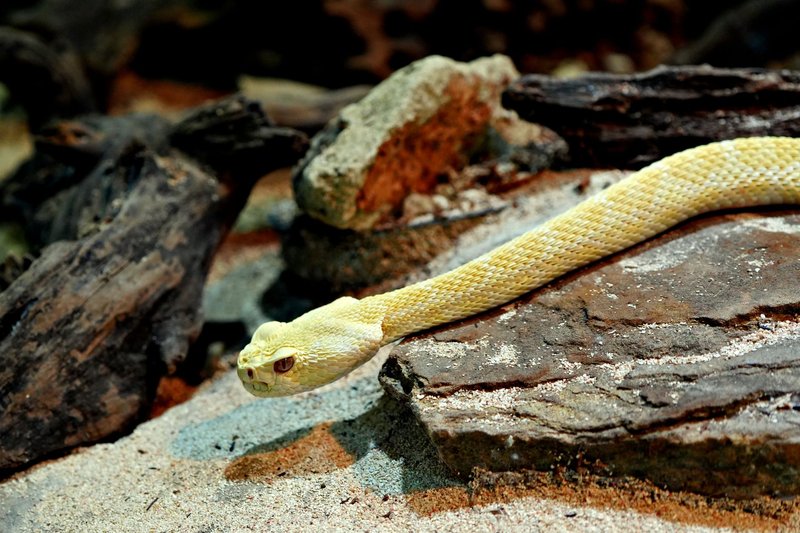
Where to see them: Meserani Snake Park, outside Arusha on the road to Lake Manyara, keeps local species in enclosures and runs guided walks. In the wild, a guide with sharp eyes is your only real option.
Lizards and geckos
Lizards are the reptiles you’ll actually see on a safari, usually sunning on a rock before you’ve finished your coffee.
Mwanza flat-headed rock agama (Agama mwanzae). The Serengeti’s kopjes (the granite outcrops rising from the plains) are covered in these. Breeding males have a blue body and an orange-red head, and they do push-ups on the rock to claim territory. Females and young males are drab brown, so a kopje often looks like it holds two different species.
Nile monitor (Varanus niloticus). Up to 2 meters, long-tailed, and always near water. It raids crocodile nests for eggs and eats just about anything else. Look for it along rivers and lakeshores in Selous/Nyerere and Ruaha.
Savanna monitor (Varanus albigularis). Shorter and stockier than the Nile monitor, and a dry-land animal. It digs and scavenges, and it’s often seen crossing a track with the deliberate walk of something that knows nothing here can hunt it.
Turquoise dwarf gecko (Lygodactylus williamsi). The star of the group. Males are a vivid electric blue, among the most striking of the rare colorful animals, about 8 centimeters long, and found nowhere on Earth except a small area of the Kimboza Forest in the Uluguru foothills, where they live on screw pines. The pet trade pushed it to the brink, and the IUCN Red List classifies it as Critically Endangered.
Day geckos and skinks. Coastal buildings are crawling with house geckos, and the leaf litter of every forest is full of skinks. They’re hard to tell apart, and specialists argue about them.
Chameleons
Tanzania is one of the best countries in the world for chameleons, and the Eastern Arc Mountains explain why. These ancient, isolated forest blocks have let populations drift apart for millions of years, producing species that exist on a single mountain.
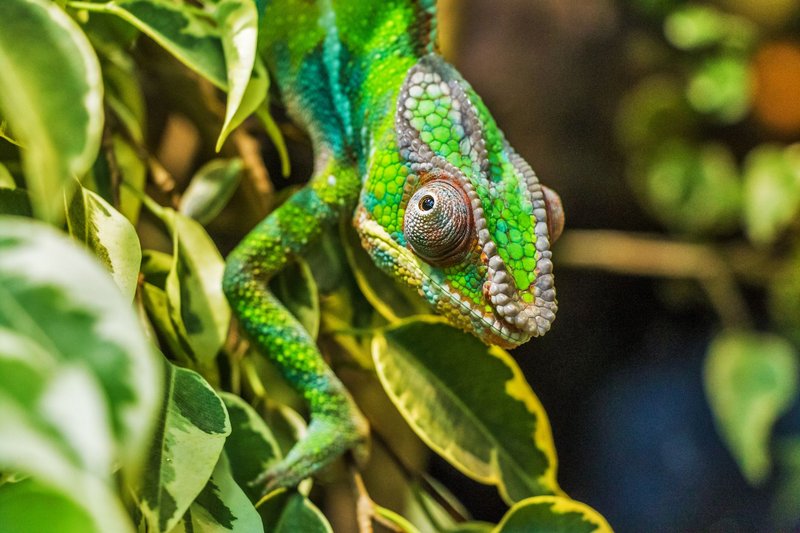
Usambara three-horned chameleon (Trioceros deremensis). Endemic to the Usambara Mountains. Males carry three horns on the snout, which they use in slow-motion wrestling matches over branches. Green with a yellow or orange tinge, up to about 30 centimeters.
Usambara giant two-horned chameleon (Kinyongia matschiei). A big, leaf-green chameleon of the East Usambara forests, with a pair of fleshy nose projections. It’s one of the species that conservation work in the area is built around.
Meller’s chameleon (Trioceros melleri). The largest mainland African chameleon, reaching about 60 centimeters. Brown to green with a wide, heavy body, it’s found in woodland and farmland across southern and eastern Tanzania, including the Selous area.
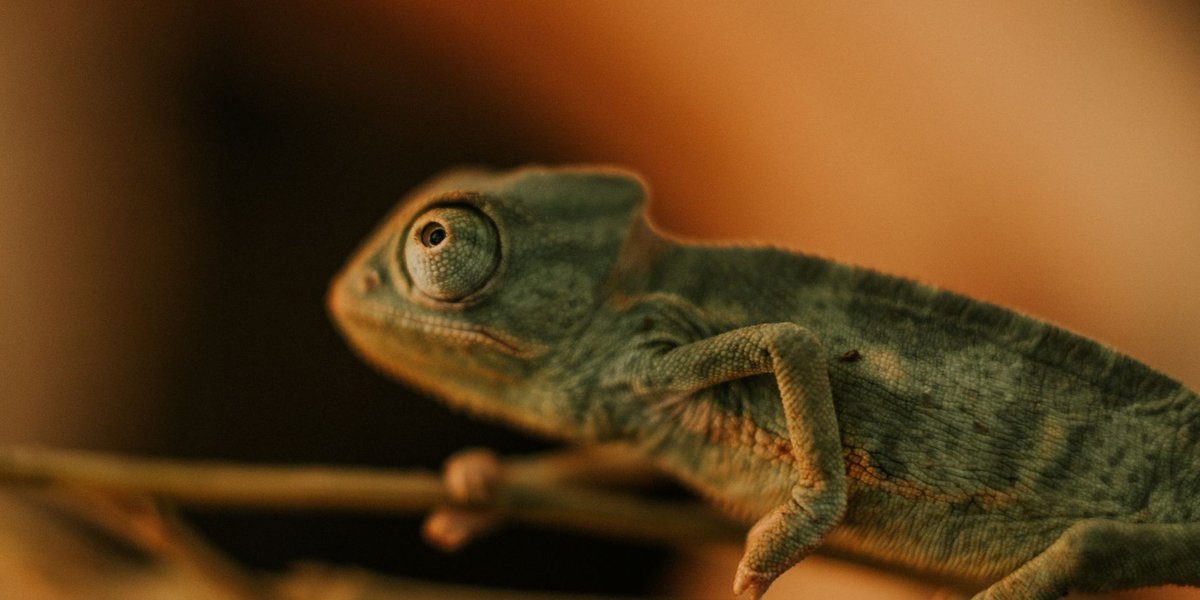
Flap-necked chameleon (Chamaeleo dilepis). The one you’re most likely to meet. It’s widespread across savanna and woodland, has a flap of skin on each side of the head, and turns up on garden hedges and safari-lodge paths.
Pygmy chameleons (Rhampholeon). Tiny, dead-leaf-colored, and the size of a thumb. They sleep on low twigs at night, so a headlamp walk through Usambara forest after dark is the best way to find them.
Where to see them: Amani Nature Reserve in the East Usambaras, and Magamba and Mazumbai in the West Usambaras. Go with a local guide who knows which branches to check.
Tortoises and turtles
Leopard tortoise (Stigmochelys pardalis). The common safari tortoise, with a high domed shell patterned in black blotches on gold. It can reach 40 centimeters or more and walks across the savanna roads of the Serengeti and Tarangire.
Pancake tortoise (Malacochersus tornieri). The odd one. Its shell is flat and flexible, and instead of retreating into it, the tortoise runs into a rock crevice, inflates its lungs, and wedges itself in so a predator can’t pull it out. It lives on rocky kopjes in northern and central Tanzania and southern Kenya. Collection for the pet trade has cut its numbers, and it’s listed as Endangered.
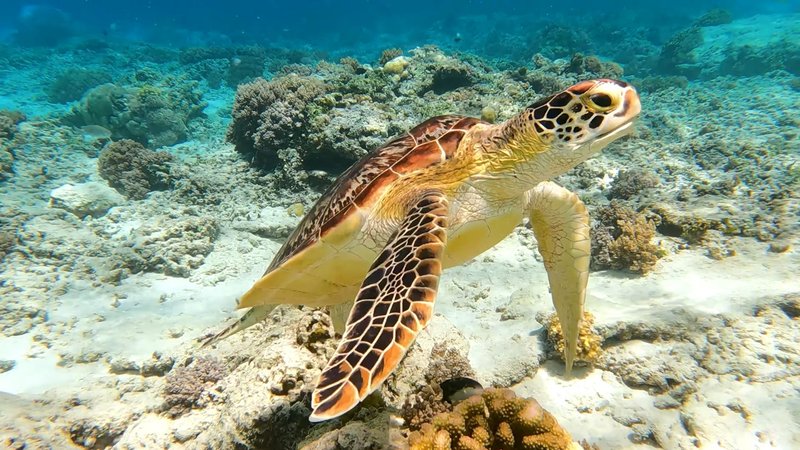
Sea turtles. Green turtles (Chelonia mydas) and hawksbills (Eretmochelys imbricata) nest on Tanzania’s Indian Ocean beaches, with the best-known sites on Mafia Island and around Zanzibar. National Geographic notes that green turtles return to nest on or near the beach where they hatched. Nesting peaks in the cooler months, and local conservation groups on Mafia run guided night walks and hatchling releases.
Freshwater turtles. Hinged-shell terrapins of the genus Pelusios live in swamps and slow rivers. They’re dull to look at and easy to miss.
Crocodiles
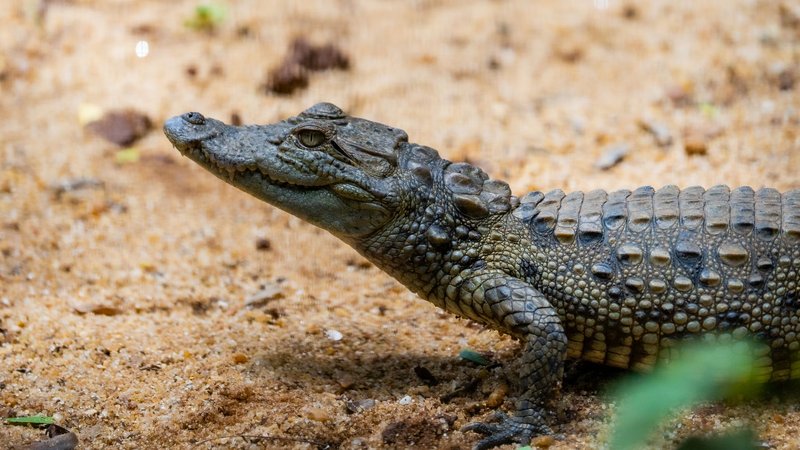
Nile crocodile (Crocodylus niloticus). Tanzania’s only common crocodile, and the largest reptile you can see in the country. Adults average 4 to 5 meters, and the biggest males approach 6. Rivers and lakes across the country hold them, and the Rufiji River in Selous/Nyerere and the Grumeti in the western Serengeti are the places where numbers are high enough to guarantee a sighting.
Nile crocodiles are better parents than their reputation suggests. Females dig a nest, guard it for about three months, and carry the hatchlings to the water in their mouths. The Grumeti crossing sets the other side of the story: when the wildebeest migration arrives, crocodiles that have fasted for months take their share of the herd.
Where to see them: a boat safari on the Rufiji, or a game drive along the Grumeti between June and July. Stay well back from the bank. Crocodiles ambush from the water’s edge, and they cause more human deaths in Africa than any other wild reptile.
Species at a glance
| Species | Group | Size | Habitat | Where to look |
|---|---|---|---|---|
| Black mamba | Snake | 2-3 m | Savanna, rocky scrub | Dry woodland, with a guide |
| Puff adder | Snake | 1-1.5 m | Grassland, scrub | Footpaths at dusk (watch your step) |
| African rock python | Snake | 3-5 m+ | Near water, rock outcrops | Ruaha, Selous/Nyerere, Serengeti |
| Mwanza flat-headed rock agama | Lizard | 25 cm | Granite kopjes | Serengeti |
| Nile monitor | Lizard | Up to 2 m | Rivers, lakeshores | Selous/Nyerere, Ruaha |
| Turquoise dwarf gecko | Gecko | 8 cm | Screw pines | Kimboza Forest, Uluguru foothills |
| Usambara three-horned chameleon | Chameleon | 30 cm | Montane forest | Usambara Mountains |
| Meller’s chameleon | Chameleon | 60 cm | Woodland, farmland | South and east Tanzania |
| Pancake tortoise | Tortoise | 15-18 cm | Rocky kopjes | Northern and central Tanzania |
| Green turtle | Sea turtle | 1-1.2 m | Coastal waters, nesting beaches | Mafia Island, Zanzibar |
| Nile crocodile | Crocodile | 4-5 m | Rivers, lakes | Rufiji, Grumeti, Ruaha |
Venomous or harmless: staying safe
A guide to the reptiles of Tanzania has to include this section, because snakebite is a real public health problem across Africa. The World Health Organization estimates that snakebite kills tens of thousands of people worldwide every year, most of them in rural areas without quick access to antivenom. Visitors on a lodge-based safari face a tiny fraction of that risk, but the rules are simple and worth following.
Dangerous (medically significant venom): black mamba, green mamba, puff adder, Mozambique spitting cobra, boomslang, and several other cobras and vipers.
Harmless or mildly venomous: African rock python (constrictor, no venom), most house snakes, sand snakes, and the many small burrowing species.
What to do:
- Watch where you step. Puff adders bite because someone put a boot on them. Use a flashlight after dark and stay on cleared paths.
- Wear closed shoes and long trousers on bush walks.
- Never handle a snake, even a dead one. Reflex bites after death are real.
- Back away from a spitting cobra and protect your eyes. If venom lands in them, rinse with large amounts of water and get to a clinic.
- If bitten, keep still, keep the limb at heart level, and get to a hospital. Don’t cut the wound, suck it, or tie a tight tourniquet. Photograph the snake from a distance only if it’s safe, because identification helps the doctors.
Most lodges and camps keep a snakebite protocol and know the nearest hospital. Ask on arrival.
Endemic reptiles of Tanzania
About a quarter to a third of the country’s reptile species live nowhere else. The concentration is highest in the Eastern Arc Mountains, a chain of forested ranges running from the Taita Hills in Kenya through the Pare, Usambara, Uluguru and Udzungwa mountains. Some species are restricted to one range.
Examples already covered include the turquoise dwarf gecko, the Usambara three-horned chameleon and the Usambara giant two-horned chameleon. The same forests hold endemic forest cobras, burrowing lizards, tree snakes and dozens of skinks and geckos that have barely been photographed. Biologists describe new ones regularly. The Eastern Arc is also why Tanzania’s total species count keeps shifting.
Conservation
Three pressures hit Tanzanian reptiles hardest: forest loss in the Eastern Arc, collection for the international pet trade, and persecution of snakes. The turquoise dwarf gecko and the pancake tortoise are the best-known victims of collecting, and both are now protected under international trade rules. Sea turtles face nest poaching and fishing nets. Even Nile crocodiles lose habitat as rivers are dammed and drained.
If you visit, hire local guides, pick lodges and reserves that fund anti-poaching and forest protection, and never buy reptile souvenirs. In a country with this many species found nowhere else, small decisions add up.