The Thai elephant is Thailand’s national animal. It is also one of 20 wild species in this guide, which covers mammals, birds, reptiles, amphibians and marine life, each with its IUCN Red List status and one place to look for it.
Most lists of Thailand’s animals stop at mammals and mix in captive tourist-attraction animals. This one sticks to species that evolved in or naturally occur in the country’s forests, wetlands and seas.
TLDR
- The national animal is the Asian elephant (Thai elephant). Wild ones live in Khao Yai and the Western Forest Complex.
- Of the 20 species below, 14 are rated Vulnerable, Endangered or Critically Endangered by the IUCN.
- The best single park for variety is Khao Yai. The best for rainforest and gibbons is Khao Sok. The best for big cats is the Western Forest Complex.
- A rule of thumb: if you can ride it, pet it or take a selfie with it, it is not a wild animal.
Table of contents
- What “native” means
- Mammals
- Birds
- Reptiles
- Amphibians
- Marine life
- Summary table
- Where to see Thailand’s wildlife
- FAQ
What “native” means
A native animal lives in a region as part of its natural range, without humans having moved it there. That rules out a lot of what visitors meet in Thailand: elephants working at trekking camps, tigers in cages, macaques fed by tourists at temples as a business.
Domestic elephants are an odd case. They are the same species as wild Asian elephants, but a captive animal giving rides tells you nothing about the wild population. According to the IUCN Red List, the Asian elephant is Endangered across its whole range, and Thailand holds only a few thousand wild individuals.
The 20 animals below all occur in the wild in Thailand. Some, like the Siamese crocodile, survive only in tiny pockets. Conservation statuses are the global IUCN assessments.
Mammals
1. Asian elephant
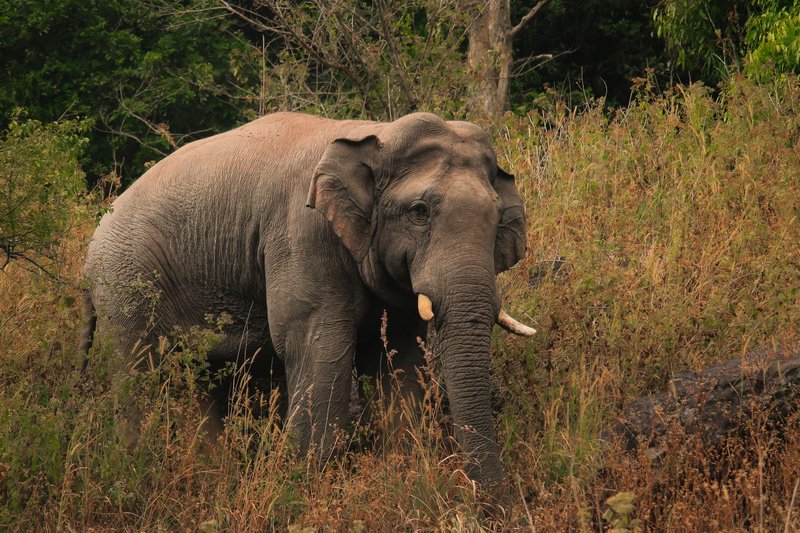
Thailand’s national animal, and the species most people picture first. Wild bulls reach about 3 meters at the shoulder and spend most of the day eating, up to 150 kg of grass, bark and fruit. Only males carry tusks of any size; many females have none visible.
Status: Endangered. Where: Khao Yai National Park and the Western Forest Complex, where elephants often cross park roads at dusk.
2. Indochinese tiger
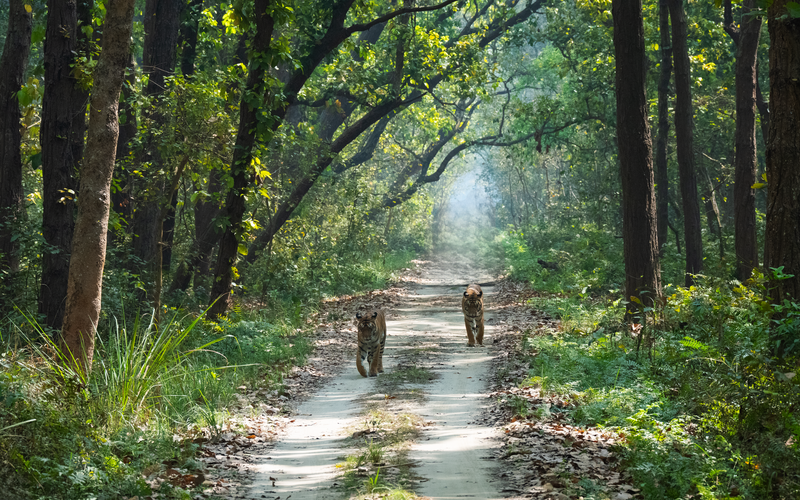
Tigers here are smaller and darker than Bengal tigers, with narrow, closely set stripes. Thailand’s breeding population sits mainly in the Western Forest Complex, a protected block of forest along the Myanmar border centered on Huai Kha Khaeng Wildlife Sanctuary. You will almost certainly never see one. Camera traps do the work.
Status: Endangered (the tiger species as a whole). Where: Western Forest Complex.
3. Clouded leopard
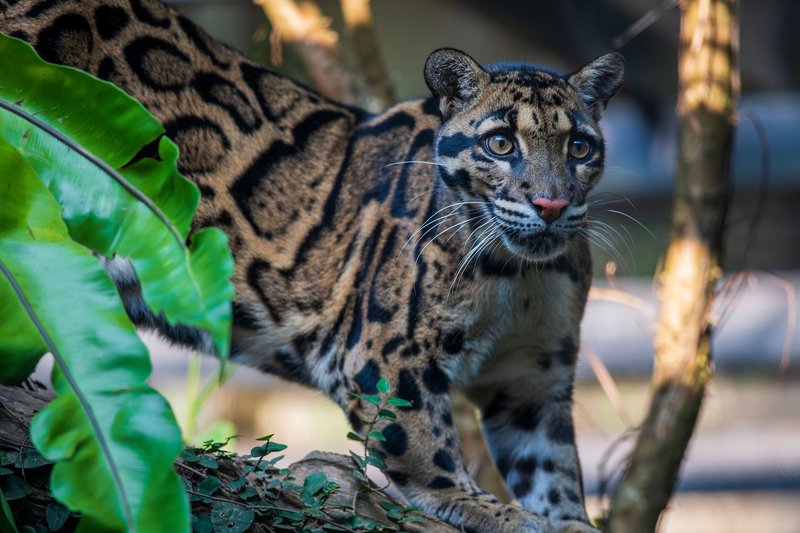
Its canines are proportionally the longest of any living cat, and its ankles rotate enough to let it climb down trees head first. It hunts mostly in the canopy and on the ground at night, so sightings are rare even for rangers.
Status: Vulnerable. Where: Khao Yai and Kaeng Krachan National Parks.
4. Sun bear
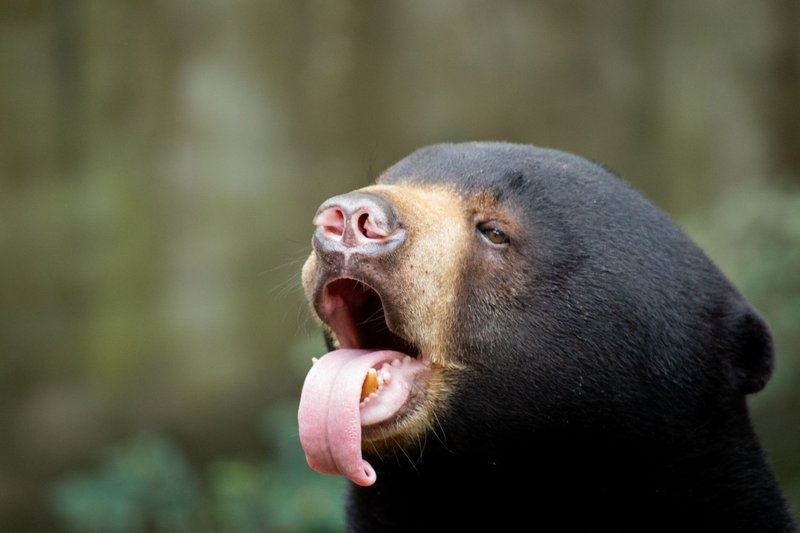
The smallest bear in the world, about the size of a large dog, with a pale crescent on its chest. Its tongue runs 20 to 25 cm so it can reach into bee nests and termite mounds. It spends much of its time in trees.
Status: Vulnerable. Where: Khao Yai and Kaeng Krachan.
5. Gaur
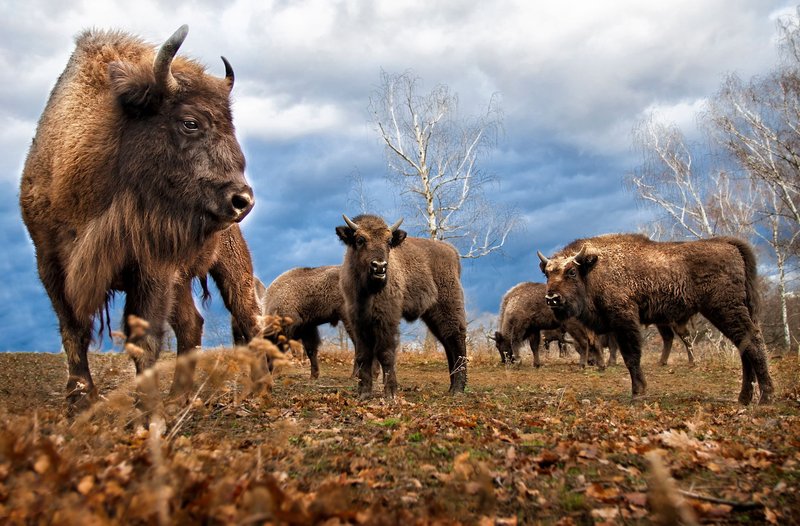
The largest wild cattle on Earth. A bull can stand 1.8 meters tall and weigh over a ton, with a muscular shoulder ridge and pale “socks” on all four legs. Despite the size, gaur are shy and retreat into forest at the first sign of people.
Status: Vulnerable. Where: Khao Yai and Huai Kha Khaeng.
6. White-handed gibbon
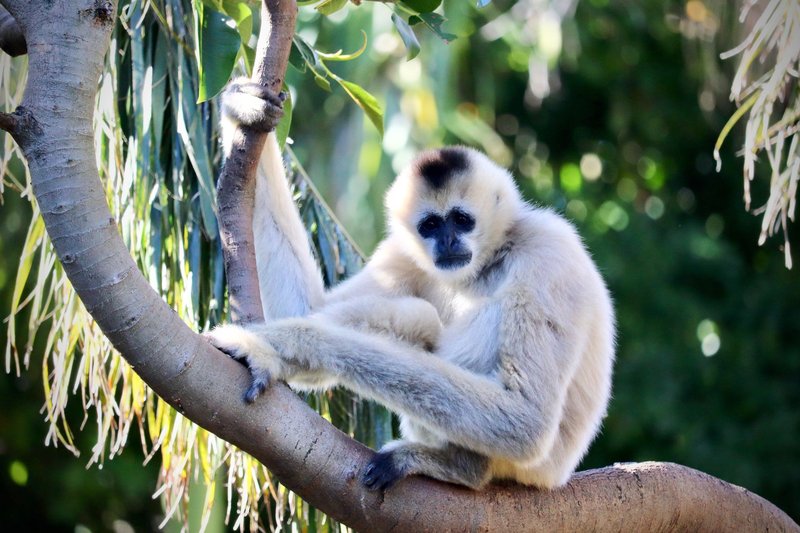
Gibbons swing arm over arm through the canopy and almost never come to the ground. Pairs sing duets at dawn that carry for more than a kilometer. The “white hand” is a pale band on the hands and feet against black or buff fur.
Status: Endangered. Where: Khao Yai, where you can hear them from the trails before sunrise, and Khao Sok.
7. Malayan tapir
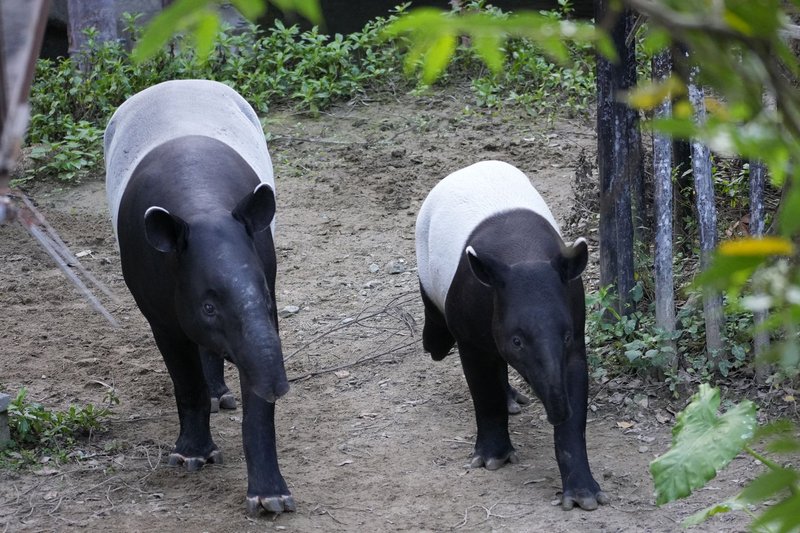
Black front, white back, like an animal half-painted. The pattern breaks up its outline in moonlit forest. Tapirs are solitary, swim well and eat leaves and fruit along streams. Thailand sits at the northern edge of their range.
Status: Endangered. Where: Khao Sok and the southern forests near Hala-Bala.
8. Sunda pangolin
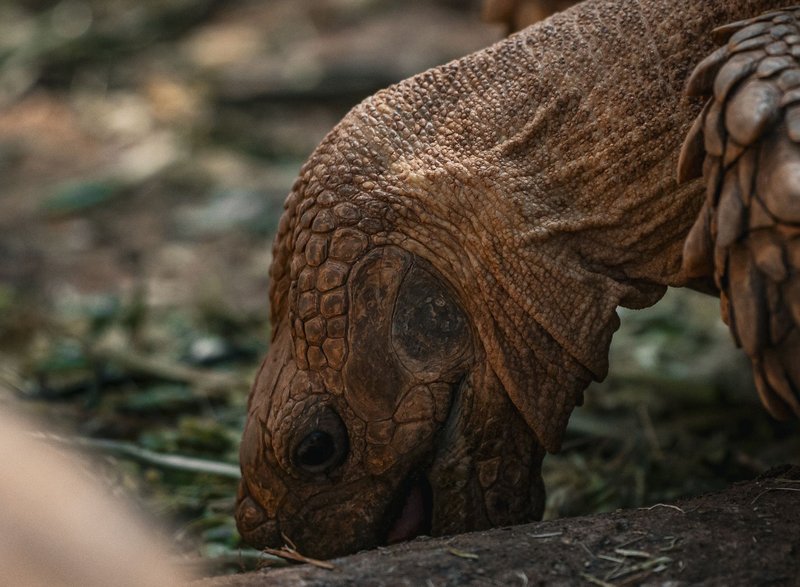
A mammal covered in overlapping keratin scales, the same material as your fingernails. When threatened it rolls into a ball. That defense works against leopards and fails against poachers, which is why pangolins are among the most trafficked mammals in the world.
Status: Critically Endangered. Where: Lowland forests, including Khao Yai and parts of the south. Sightings are very rare.
9. Fishing cat
Roughly twice the size of a house cat and a confident swimmer, with partially webbed paws. It wades into shallow water and scoops up fish, crabs and snails. Habitat loss in wetlands and mangroves is its main threat.
Status: Vulnerable. Where: Wetland edges such as Khao Sam Roi Yot.
Birds
10. Great hornbill
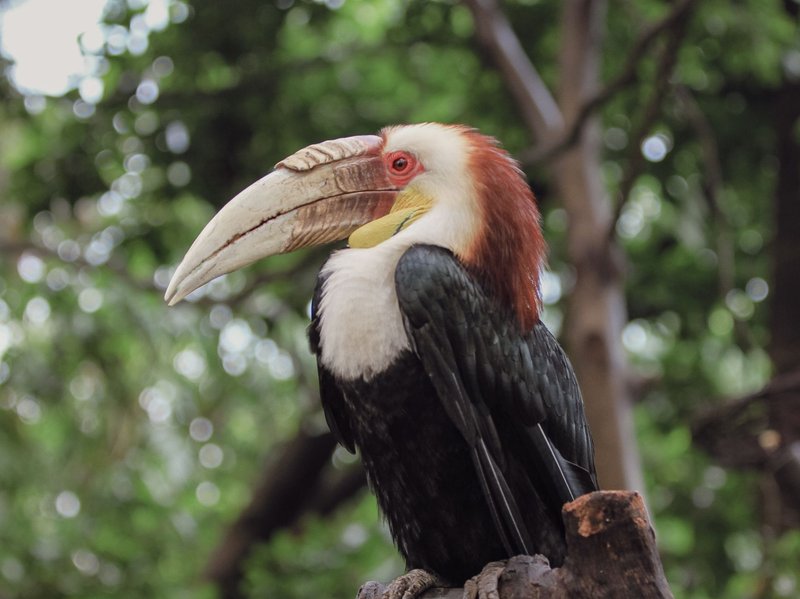
A yellow-and-black casque tops the bill like a helmet. During nesting, the female seals herself inside a tree cavity with mud and droppings, leaving a slit through which the male passes fruit. Hornbills disperse the seeds of big rainforest trees, so a forest without them slowly changes.
Status: Vulnerable. Where: Khao Yai, which has strong hornbill populations, and Khao Sok.
11. Siamese fireback
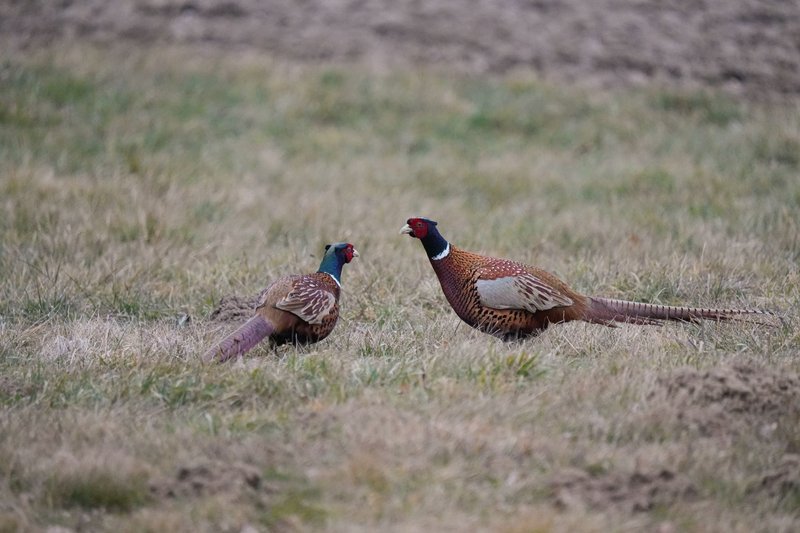
A male has a steel-blue body, a red face and a fiery orange-red patch on its back, with a curled tail. It is Thailand’s best-known pheasant and is commonly referred to as the country’s national bird. It forages on the forest floor in the early morning.
Status: Near Threatened. Where: Khao Yai, along trails and clearings.
12. Gurney’s pitta
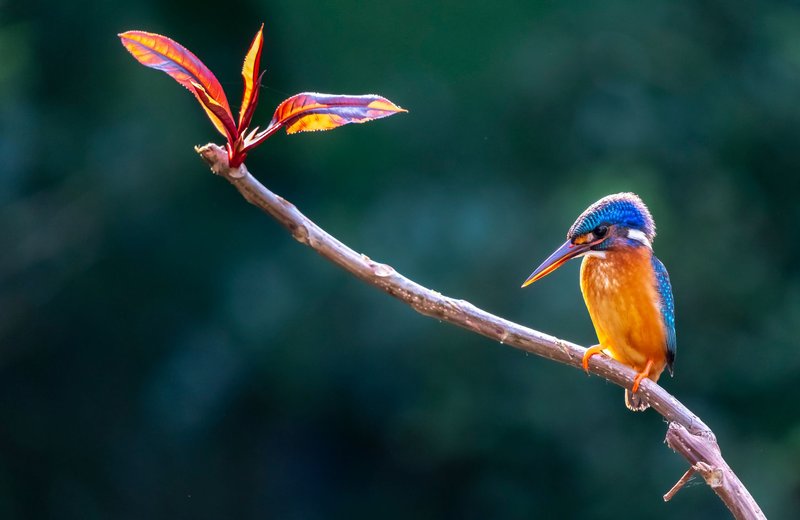
A small, jewel-colored ground bird with a blue crown and a yellow belly marked in black. It was thought extinct after 1952 and was rediscovered in southern Thailand in 1986. The remaining population depends on lowland forest that is now mostly farmland.
Status: Critically Endangered. Where: Khao Nor Chuchi Lowland Forest in Krabi, the last stronghold.
Reptiles
13. King cobra
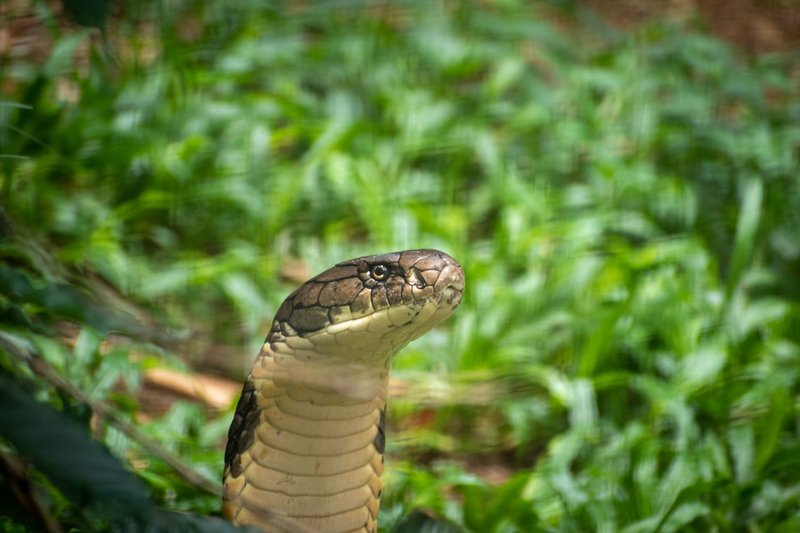
The longest venomous snake in the world, reaching about 4 meters. It is also unusual because the female builds a nest of leaves and guards the eggs. A king cobra eats other snakes, including rat snakes and pythons.
Status: Vulnerable. Where: Forests across the country, including Khao Yai and Kaeng Krachan.
14. Siamese crocodile
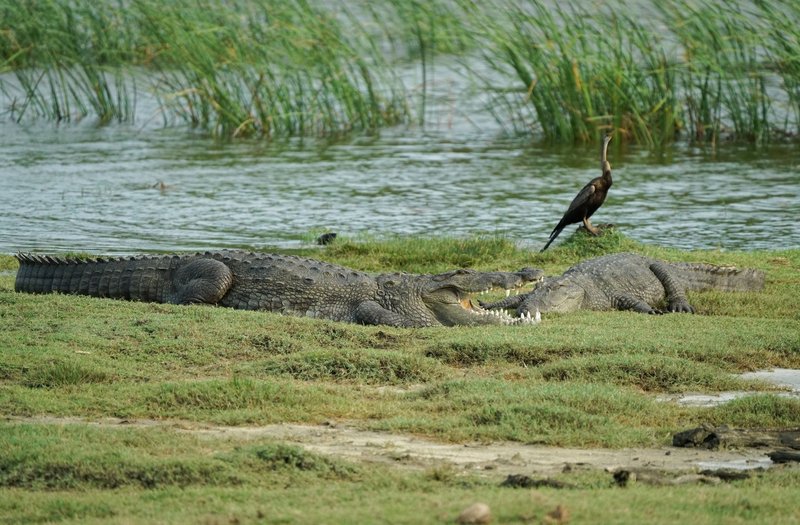
A freshwater crocodile with a broad snout, once common across mainland Southeast Asia and now close to gone from the wild. Thailand has small remaining groups and has reintroduced captive-bred animals into protected wetlands.
Status: Critically Endangered. Where: Kaeng Krachan National Park and Pang Sida.
15. Reticulated python
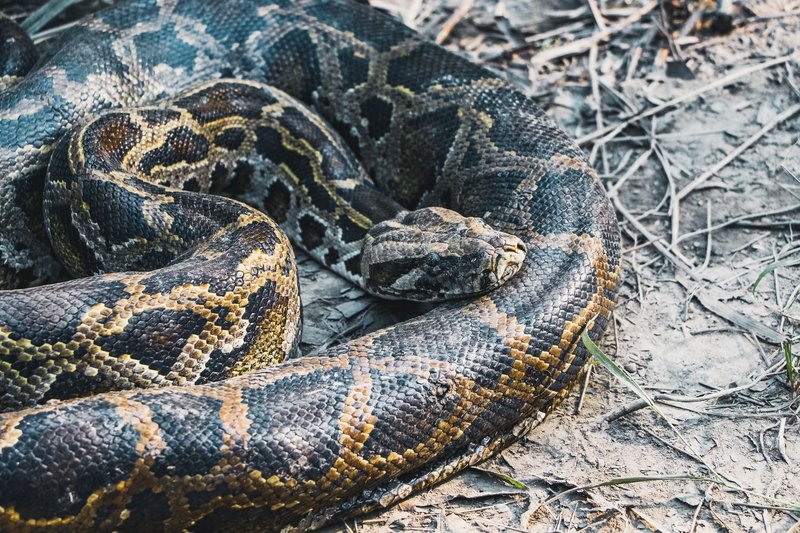
The longest snake in the world, with confirmed lengths over 6 meters. It is a constrictor, eats rats, pigs and civets, and is at home in forests and also around towns where rodents thrive. The geometric pattern is its camouflage.
Status: Least Concern. Where: Widespread, including Khao Sok.
Amphibians
16. Malayan horned frog
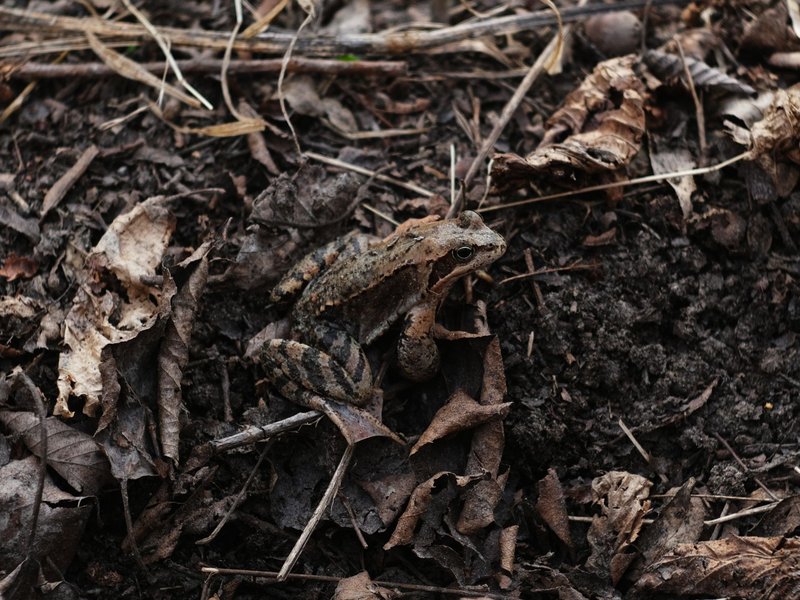
Amphibians are the group travel blogs skip, and Thailand has well over 100 species of them. This one looks like a dead leaf, with pointed “eyebrows” and a mottled brown body that vanishes on the forest floor. It lives near rainforest streams and calls at night after rain.
Status: Least Concern. Where: Khao Sok and other southern rainforests.
Marine life
17. Dugong
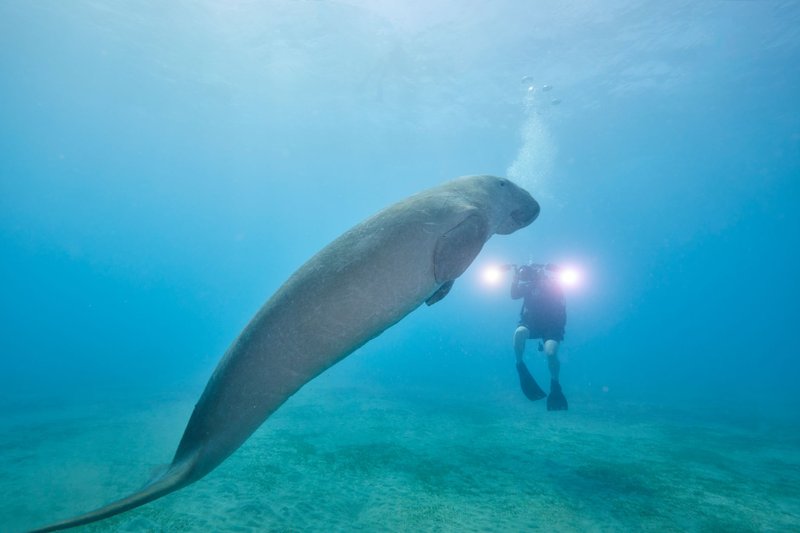
A sea cow that grazes on seagrass beds in the Andaman Sea. Dugongs need extensive meadows, and pollution and fishing nets have shrunk both. The remaining group around Trang Province’s islands is Thailand’s best-known.
Status: Vulnerable. Where: Trang Province, including Libong Island.
18. Whale shark
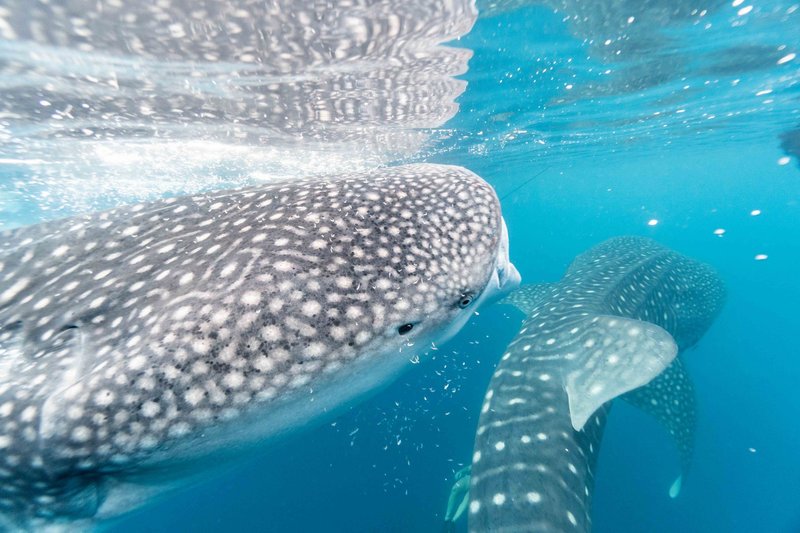
The largest fish in the sea, up to 12 meters or more, and harmless to people because it filters plankton. Individuals are identified by the spot pattern on their flanks, like fingerprints.
Status: Endangered. Where: Offshore sites in the Andaman Sea and Gulf of Thailand, such as Koh Tao waters.
19. Irrawaddy dolphin
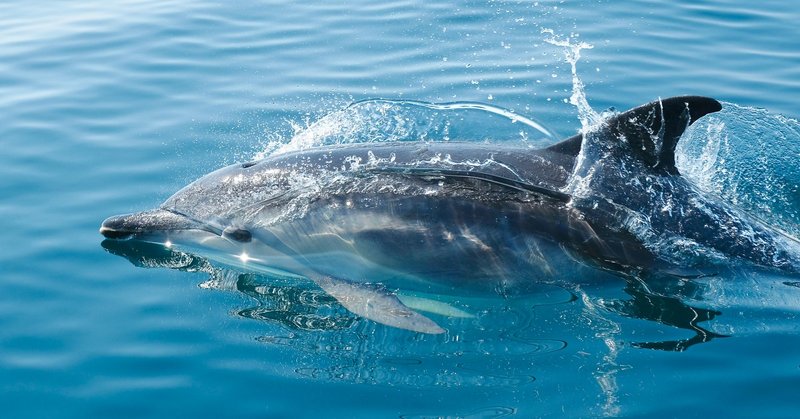
A blunt-headed dolphin with no beak, found in coastal waters and the brackish Songkhla Lake. Several separate populations exist in Thailand, and each one is small.
Status: Endangered. Where: Songkhla Lake and the upper Gulf of Thailand.
20. Green sea turtle
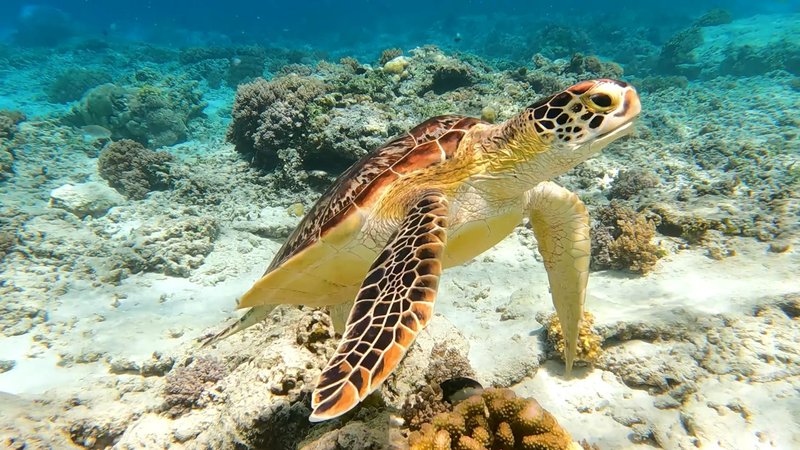
Adults turn vegetarian and graze on seagrass and algae, which gives their fat a greenish tint. Females return to the beach where they hatched to lay eggs. Beach development and nest poaching have cut nesting numbers.
Status: Endangered. Where: Mu Ko Similan and Mu Ko Surin Marine National Parks.
Summary table
| # | Species | Group | IUCN status | Best place to see it |
|---|---|---|---|---|
| 1 | Asian elephant | Mammal | Endangered | Khao Yai, Western Forest Complex |
| 2 | Indochinese tiger | Mammal | Endangered | Western Forest Complex |
| 3 | Clouded leopard | Mammal | Vulnerable | Khao Yai, Kaeng Krachan |
| 4 | Sun bear | Mammal | Vulnerable | Khao Yai, Kaeng Krachan |
| 5 | Gaur | Mammal | Vulnerable | Khao Yai, Huai Kha Khaeng |
| 6 | White-handed gibbon | Mammal | Endangered | Khao Yai, Khao Sok |
| 7 | Malayan tapir | Mammal | Endangered | Khao Sok |
| 8 | Sunda pangolin | Mammal | Critically Endangered | Khao Yai |
| 9 | Fishing cat | Mammal | Vulnerable | Khao Sam Roi Yot |
| 10 | Great hornbill | Bird | Vulnerable | Khao Yai |
| 11 | Siamese fireback | Bird | Near Threatened | Khao Yai |
| 12 | Gurney’s pitta | Bird | Critically Endangered | Khao Nor Chuchi |
| 13 | King cobra | Reptile | Vulnerable | Khao Yai, Kaeng Krachan |
| 14 | Siamese crocodile | Reptile | Critically Endangered | Kaeng Krachan |
| 15 | Reticulated python | Reptile | Least Concern | Khao Sok |
| 16 | Malayan horned frog | Amphibian | Least Concern | Khao Sok |
| 17 | Dugong | Marine | Vulnerable | Trang Province |
| 18 | Whale shark | Marine | Endangered | Koh Tao, Andaman Sea |
| 19 | Irrawaddy dolphin | Marine | Endangered | Songkhla Lake |
| 20 | Green sea turtle | Marine | Endangered | Similan and Surin Islands |
Where to see Thailand’s wildlife
Three places cover most of this list.
Khao Yai National Park is Thailand’s oldest national park and part of a UNESCO World Heritage forest complex. It holds elephants, gibbons, hornbills, sun bears and fireback pheasants within a few hours of Bangkok. Night safaris with a ranger give you the best chance at civets and other nocturnal animals.
Khao Sok National Park in the south protects rainforest older than the Amazon, by some estimates. Gibbons, hornbills and tapirs live here, and Cheow Lan Lake, with its limestone karsts, is the scenic payoff.
The Western Forest Complex is a chain of protected areas on the Myanmar border, among the largest intact forest blocks in mainland Southeast Asia. It is where Thailand’s tigers survive. Access is restricted in the core zones, so most visitors see Kaeng Krachan on the edge instead.
For wildlife viewing, go in the dry season (roughly November to April) and hire a park ranger. Rangers find animals by sound and sign, and you won’t.
FAQ
What is Thailand’s national animal?
The Asian elephant, usually called the Thai elephant. It appears on Thai heraldry and has long been tied to the monarchy. The elephant is also an Endangered species.
What are the most endangered animals in Thailand?
Gurney’s pitta, the Siamese crocodile and the Sunda pangolin are Critically Endangered on the IUCN Red List. Tigers, elephants, tapirs and gibbons are Endangered.
Are there wild animals in Thailand’s national parks that are dangerous?
King cobras and reticulated pythons are present but avoid people. The main practical risks are elephants, which can be aggressive when they have calves or when a bull is in musth, and gaur. Keep your distance and follow your ranger.
What is the best time to see wildlife in Thailand?
The dry season, about November to April, when animals concentrate around water and trails are passable. Dawn and dusk are the best times of day.
Is it okay to ride elephants in Thailand?
Riding does not help wild elephant populations, and animal welfare organizations recommend against it. Observing wild elephants in a park, or visiting a sanctuary that does not offer rides, is a better option.