Contents
- Why Hawaii is so vulnerable
- Invasive mammals
- Invasive reptiles, amphibians and snails
- Invasive insects
- Invasive plants
- Invasive diseases
- Hawaii invasive species at a glance
- What you can do
- The short version
Invasive species are the single biggest threat to Hawaii’s endangered plants and animals, ahead of development and ahead of climate change. According to the IUCN’s Global Invasive Species Database, about half of the world’s 100 worst invasive species are already established in the islands. That’s a remarkable number for a chain of land specks in the middle of the Pacific.
This guide covers the ten invasive species in Hawaii that do the most damage, sorted by type: what each one is, how it got here, which islands it has taken over, and what it ruins.
Why Hawaii is so vulnerable
Hawaii sits about 2,400 miles from the nearest continent. Over millions of years, only a few thousand colonists made the crossing, and the ones that did evolved into something found nowhere else. The islands have more than 10,000 native species, and roughly 90 percent of the native flowering plants exist only here.
Isolation also meant what didn’t arrive. Hawaii has no native land mammals except one bat. No native reptiles, no native amphibians, no native ants, no native mosquitoes. Native plants lost their defenses because nothing was eating them: the Hawaiian raspberry has no thorns, and native mints dropped their bitter oils.
Then people started showing up with ships. Polynesian voyagers brought pigs, rats and dozens of crop plants. Europeans added goats, cattle, deer, mosquitoes and ornamental gardens. Species with no predators and no competitors move fast in a place like that, and the native ones can’t fight back.
Invasive mammals
1. Small Indian mongoose
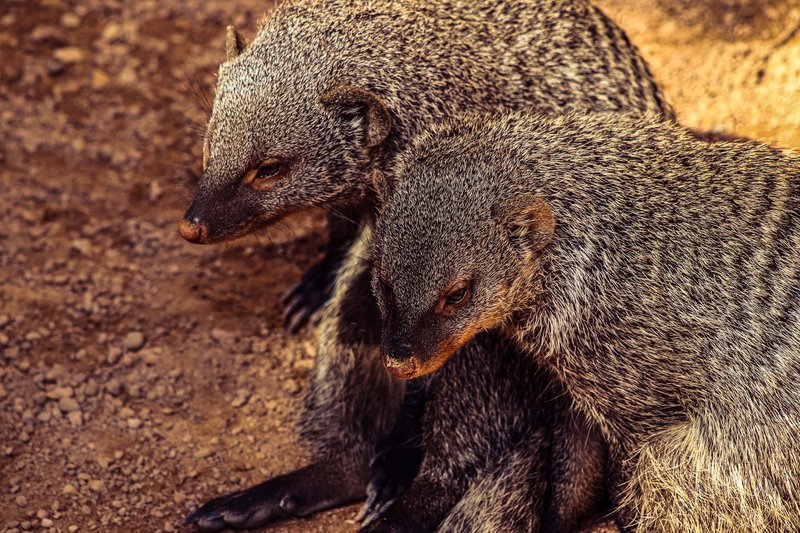
Sugar planters released mongooses on the Big Island in 1883, hoping they’d eat the rats wrecking the cane fields. It was a bad plan from the start. Rats are active at night. Mongooses hunt in the daytime. They rarely met.
What the mongooses found instead was a buffet of ground-nesting birds. They eat the eggs and chicks of the nēnē (Hawaii’s state bird), shearwaters and petrels, and they dig up sea turtle nests on the beach. Mongooses now live on the Big Island, Maui, Molokaʻi and Oʻahu. Kauaʻi and Lānaʻi don’t have them, and the state would like to keep it that way.
2. Axis deer
Axis deer come from India, and they arrived in Hawaii as a gift. Molokaʻi received a few animals in 1868, Lānaʻi followed in 1920, and Maui got its herd in 1959. With no natural predators and a year-round food supply, populations on Maui and Molokaʻi have exploded into the tens of thousands.
They strip native vegetation, trample dry forest, and push erosion onto reefs when rain washes bare soil downhill. They also eat crops and pasture grass, so ranchers on Maui lose real money to them. The tension is real because the deer are also hunted for meat, which complicates every control proposal.
3. Feral pigs
The first pigs came with Polynesian voyagers, but they were small. Larger European pigs arrived after Captain Cook in 1778, and the two bred together. Today’s feral pigs live in wet forests on every main island.
A pig rooting through the understory does damage on three fronts. It tears up native plants. It spreads the seeds of invaders such as strawberry guava in its droppings. And the wallows it digs fill with rainwater and become mosquito breeding pools. That last effect matters more than it sounds. Southern house mosquitoes reached Hawaii on a ship in 1826 and carry avian malaria, which has helped wipe out honeycreepers at lower elevations. Birds like the ʻakikiki on Kauaʻi now survive only in a few high-elevation refuges, and even there they’re running out of room.
Invasive reptiles, amphibians and snails
4. Coqui frog
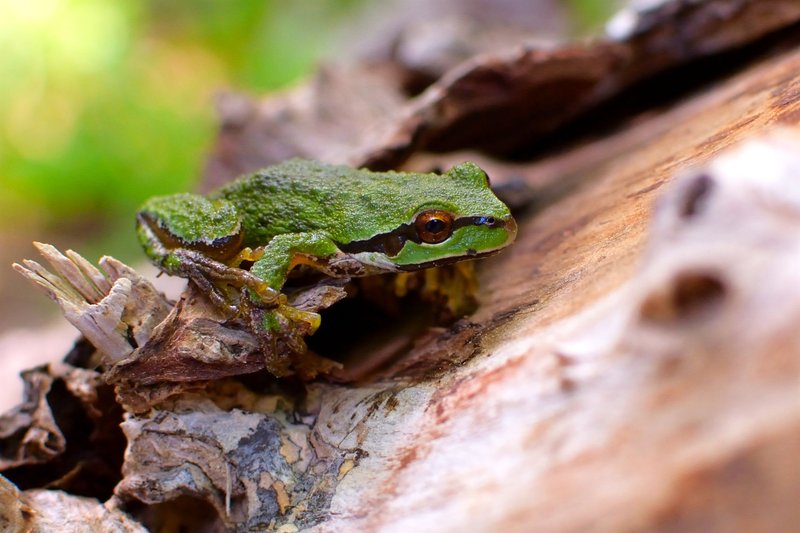
The coqui is a thumb-sized tree frog from Puerto Rico that hitched a ride in nursery plants in the late 1980s. Its call is the problem. A single male can reach 90 decibels, roughly lawnmower volume, and dense populations produce a wall of sound all night. Real estate prices dropped in affected Big Island neighborhoods.
The noise is only the visible part. On the Big Island, coqui densities have been measured at tens of thousands of frogs per hectare, and they eat enormous numbers of insects, including food that native birds and spiders depend on. The frogs are established on the Big Island, Maui and Oʻahu, with smaller populations reported elsewhere.
5. Rosy wolfsnail
The rosy wolfsnail is a lesson in how not to do biological control. Officials brought it to Hawaii in 1955 to eat the giant African snail, another invader. It mostly ignored that target and went after native land snails instead.
Hawaii once had around 750 native land snail species, many of them tiny and found on only one ridge or valley. Hundreds are now extinct or endangered, and the wolfsnail is a main suspect in the losses. The Oʻahu tree snails (genus Achatinella), with their bright striped shells, have been hit hardest. Conservationists now protect the survivors inside predator-proof fenced enclosures.
Invasive insects
6. Little fire ant
Little fire ants are about 1.5 millimeters long and move slowly, which is why people overlook them until it’s too late. They were first found on the Big Island in 1999, probably in imported plants, and they have since spread to Maui, Kauaʻi and Oʻahu.
They sting hard enough to hurt a person, but the nastier effect is on animals. The stings can cloud and damage the eyes of pets and wildlife, and Big Island residents report cats and dogs with hazy, injured eyes. In heavy infestations, farm workers can’t pick crops and families can’t use their yards. Ant colonies hitch rides in potted plants, soil and green waste, so the number one rule is don’t move any of those between islands.
7. Coconut rhinoceros beetle
Adults of this Asian beetle bore into the crown of a palm, chew the growing tip and can kill the tree. Females lay eggs in decaying plant matter such as mulch, compost and rotting logs, so a pile of green waste can raise hundreds of larvae.
It was first detected on Oʻahu at Joint Base Pearl Harbor-Hickam in December 2013. It has since turned up on Kauaʻi, Maui and the Big Island, which means the state’s containment effort has not held. Coconut palms are central to Pacific culture and landscaping, and the beetle is a direct threat to both. Mulch and green waste are now regulated in infested areas.
Invasive plants
8. Strawberry guava
Strawberry guava arrived from Brazil in the 1800s as a fruit tree. It fruits heavily, birds and pigs spread the seeds, and it grows into dense thickets that block sunlight from reaching native seedlings. It has taken over thousands of acres of forest on Maui, the Big Island, Oʻahu and Kauaʻi.
The thickets also hold more water than native forest does, so they can reduce the amount of rainfall that reaches the aquifer below. Hawaii has responded with a biocontrol insect, a scale-feeding gall wasp-like species from Brazil approved after more than a decade of testing, though the effect on large infestations is slow and still being measured.
9. Miconia
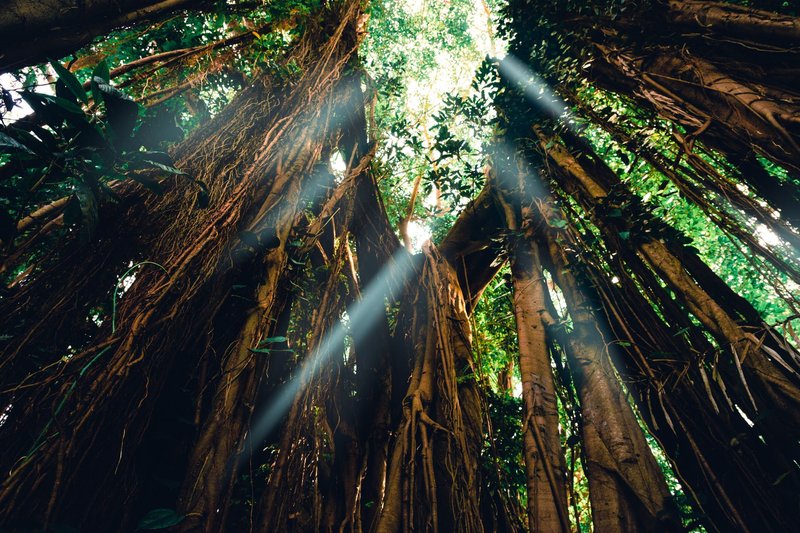
Miconia calvescens, nicknamed the “purple plague,” came from the American tropics. It was brought to Tahiti in 1937, where it has since overrun about two-thirds of the island. Gardeners in Hawaii planted it in the 1960s for its huge purple-backed leaves, which can reach three feet long.
Those leaves create a dense canopy that shades out everything underneath, leaving bare ground. The roots are shallow, which raises the risk of landslides on steep slopes. A mature tree can produce millions of seeds, and the seeds stay viable in the soil for years. Miconia is established on Maui, the Big Island, Oʻahu and Kauaʻi, and crews on Maui have spent decades pulling and spraying it.
Invasive diseases
10. Rapid ʻŌhiʻa Death
ʻŌhiʻa lehua is the most common native tree in Hawaii, making up most of the native forest canopy and anchoring watersheds from sea level to the tree line. It’s also sacred in Hawaiian tradition, tied to the goddess Pele and to the hula.
Rapid ʻŌhiʻa Death is caused by two fungal pathogens, Ceratocystis lukuohia and Ceratocystis huliohia. They clog the tree’s water-carrying tissue, and a healthy-looking crown can turn brown within weeks. The disease was identified on the Big Island in 2014, where it has killed well over a million trees, and it has since been confirmed on Kauaʻi, Maui and Oʻahu.
Spores travel in wood dust, on soil stuck to shoes and tires, and in ʻōhiʻa wood carried from place to place. That’s why Hawaii’s agencies ask hikers to scrub boots and gear between trails, and why moving ʻōhiʻa logs or firewood between islands is prohibited.
Hawaii invasive species at a glance
| Species | Main islands affected | Primary impact |
|---|---|---|
| Small Indian mongoose | Big Island, Maui, Molokaʻi, Oʻahu | Eats eggs and chicks of ground-nesting birds, sea turtle nests |
| Axis deer | Maui, Molokaʻi, Lānaʻi | Overgrazing, erosion, crop loss |
| Feral pigs | All main islands | Forest destruction, seed spread, mosquito breeding pools |
| Coqui frog | Big Island, Maui, Oʻahu | Insect loss, noise, lower property values |
| Rosy wolfsnail | Oʻahu and others | Extinction of native land snails |
| Little fire ant | Big Island, Maui, Kauaʻi, Oʻahu | Painful stings, blinded animals, crop and yard losses |
| Coconut rhinoceros beetle | Oʻahu, Kauaʻi, Maui, Big Island | Kills coconut palms |
| Strawberry guava | Maui, Big Island, Oʻahu, Kauaʻi | Displaces native forest, uses extra water |
| Miconia | Maui, Big Island, Oʻahu, Kauaʻi | Shades out understory, landslide risk |
| Rapid ʻŌhiʻa Death | Big Island, Kauaʻi, Maui, Oʻahu | Kills ʻōhiʻa lehua trees |
What you can do
Most of Hawaii’s worst invaders traveled in luggage, cargo or someone’s garden. That makes ordinary people the front line.
Follow the airport rules. Fill out the agricultural declaration form when you fly in, and stop at inspection. Fresh plants, soil, seeds and many animals are restricted. Snakes are the extreme case: Hawaii has none in the wild, and possessing one is illegal.
Don’t move plants, soil or green waste between islands. Little fire ants, coconut rhinoceros beetles and Rapid ʻŌhiʻa Death all spread this way. If you garden, ask a local nursery which species are banned and buy from certified sellers.
Clean your gear. Before and after a hike, brush mud off your boots, tires and trekking poles. It takes two minutes and it’s the main thing stopping Rapid ʻŌhiʻa Death from reaching new valleys.
Report what you see. Call the statewide pest hotline at 808-643-PEST (643-7378) or file a report online through the Hawaii Invasive Species Council. Take a photo and note the location. Early reports of little fire ants or coconut rhinoceros beetles are what allow crews to treat an outbreak before it’s too big to fight.
Volunteer. Each major island has an invasive species committee, such as the Maui Invasive Species Committee and the Kauaʻi Invasive Species Committee, that organizes pulling days and trail work. The National Tropical Botanical Garden also runs restoration projects where visitors can work alongside staff.
The short version
Invasive species in Hawaii are a story of isolation meeting global trade. Mammals like the mongoose and axis deer rewrote the landscape, frogs and snails erased native wildlife, ants and beetles keep spreading, plants such as miconia and strawberry guava crowd out native forest, and a fungus is now killing the ʻōhiʻa tree that holds the forest together. Not one of these invasions was inevitable. Each one started with a person moving something from one place to another, and that’s also where prevention works best.