TLDR
- Yemen has roughly 100 reptile species. One national count lists 103: 71 lizards, 28 snakes and 7 turtles.
- Many are endemic, meaning they live nowhere else. Socotra, an island group in the Arabian Sea, is the main hotspot.
- The animals most people look up are the veiled chameleon, the Yemen monitor, the Arabian cobra and the sea turtles that nest on the coast.
- Counts differ between sources because of taxonomy changes and thin survey data. Treat any single number as a snapshot.
Table of Contents
- How many reptiles live in Yemen?
- Why Yemen has so many reptiles
- Snakes of Yemen
- Lizards of the mainland
- Sea turtles and other turtles
- Socotra: the endemic hotspot
- Quick reference table
- What nobody knows yet
- Conservation and conflict
How many reptiles live in Yemen?
About 100, give or take a dozen, depending on who is counting. The national biodiversity clearinghouse lists 103 reptile species: 71 lizards, 28 snakes and 7 turtles. A separate endemic checklist names 49 species found only in Yemen. The Socotra archipelago alone accounts for 26 species on the RepFocus regional list.
Why don’t the numbers agree? Reptile taxonomy moves fast. A gecko once counted as one widespread species gets split into three after DNA work, and each new species adds to the tally. Remote areas also get surveyed unevenly, so some lists are years behind others.
Here, the groups are the useful part. Yemen’s reptiles split into four stories: mainland snakes, mainland lizards, turtles on the coast, and Socotra, which deserves its own section.
Why Yemen has so many reptiles
Yemen packs unusual variety into a small area. A hot, humid coastal plain called the Tihama runs along the Red Sea. Behind it the western highlands climb to Jabal an-Nabi Shu’ayb, at about 3,666 meters the highest point on the Arabian Peninsula. To the north and east lie gravel plains and the edge of the Empty Quarter desert. Offshore sits Socotra.
Reptiles are cold-blooded and fussy about temperature, so each of these zones holds its own set of species. Mountains isolate populations from one another. Islands isolate them even more. Over millions of years, isolation produces new species, which is why the endemic count is so high.
Snakes of Yemen
Yemen’s snakes are mostly shy, nocturnal and rarely seen, but the venomous ones draw the attention.
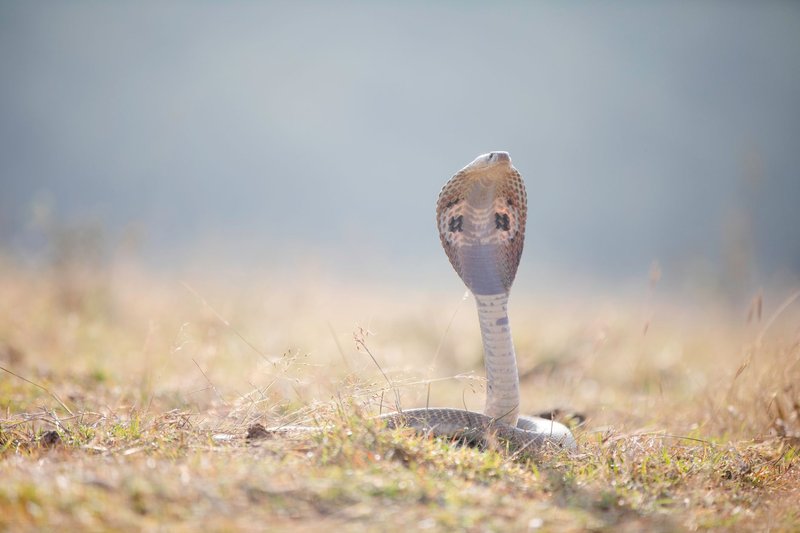
Arabian cobra (Naja arabica). A cobra of the Arabian Peninsula’s dry hills and wadis, reaching about 1.5 meters. It hoods like any cobra, but it usually prefers to slip away. Its venom is neurotoxic and it is among the region’s medically significant snakes.
Arabian horned viper (Cerastes gasperettii). A small, thick-bodied viper with a hornlike scale over each eye. It buries itself in sand, leaving only the eyes exposed, and ambushes lizards and rodents. It moves sideways across loose sand in a looping motion called sidewinding.
Puff adder (Bitis arietans). Best known from Africa, but its range crosses the Red Sea into southwestern Arabia. It’s heavy, camouflaged and sluggish, which is exactly the problem: it relies on staying still and often doesn’t move when a person walks close. Many African and Arabian snakebites come from stepping on one.
Snakebite is a real health issue in rural areas. The World Health Organization estimates that snakebite kills between 81,000 and 138,000 people worldwide each year, with the burden falling on poor, remote communities where antivenom is hard to reach. That describes much of Yemen’s countryside.
Most of Yemen’s 28 or so snake species are harmless to people: sand snakes, racers, blind snakes and small colubrids that eat lizards and insects.
Lizards of the mainland
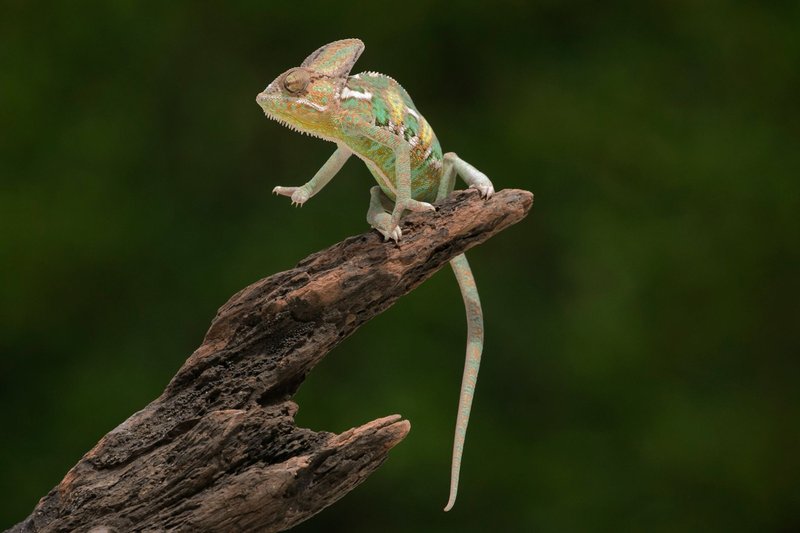
Lizards make up roughly 70 percent of Yemen’s reptiles, so this is where the diversity is.
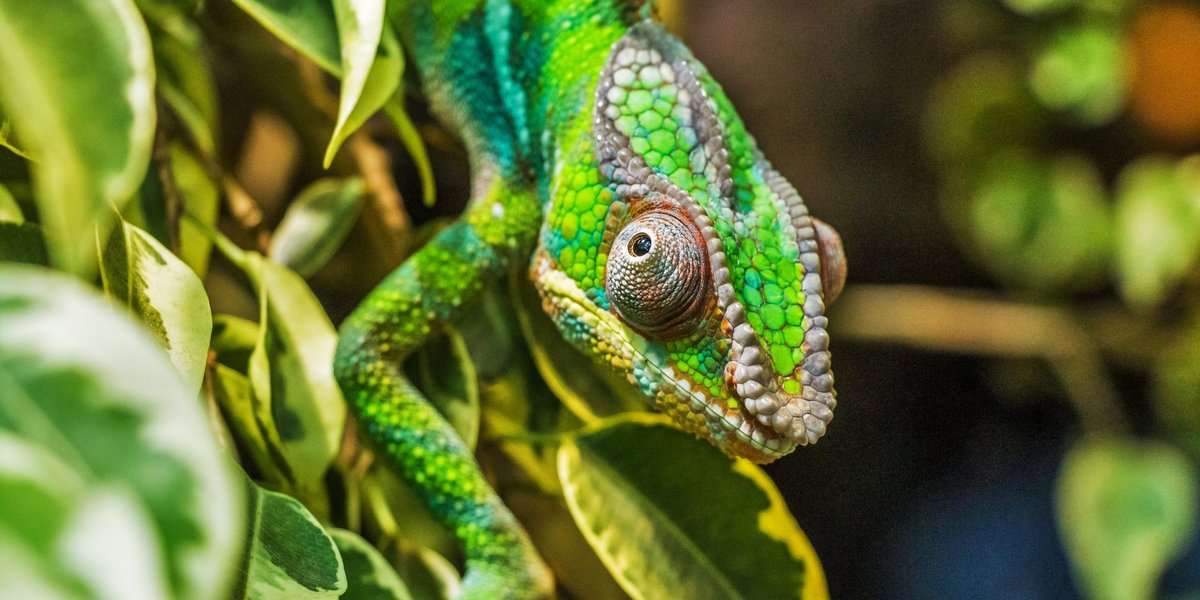
Veiled chameleon (Chamaeleo calyptratus). Also called the Yemen chameleon, and the species that put Yemen on the reptile-keeping map. It lives in the western highlands and coastal foothills, where it climbs acacia and other trees. The tall casque on its head, a bony helmet, helps channel water droplets toward its mouth, and wild individuals drink dew and rain from leaves rather than from standing water. Males can reach about 50 centimeters including the tail. Its color shifts with mood and temperature, not to match its background, which is the common misconception.
Yemen monitor (Varanus yemenensis). A large, long-tailed monitor of southwestern Arabia, growing to roughly a meter. It’s a rocky-hillside lizard that shelters in crevices and hunts insects and small vertebrates. Its range also reaches into southwestern Saudi Arabia, where the full reptile list runs to 74 species. It was only formally described in 1989, which says something about how little fieldwork has been done here.
Spiny-tailed lizards (Uromastyx). Stocky, plant-eating lizards with a club of spikes on the tail. Bent’s spiny-tailed lizard (Uromastyx benti) lives in Yemen and Oman, sheltering in burrows and rock crevices and using its tail to plug the entrance. They bask in the morning until they’re warm, then forage close to the burrow.
Geckos. Geckos are the most species-rich group. They occupy cliffs, house walls, caves and desert gravel. Many have tiny ranges, sometimes a single mountain or wadi, and they account for a large share of the endemic species.
Sea turtles and other turtles

The national count lists seven turtle species, and most of them are marine. The Red Sea and Arabian Sea coasts are visited by green turtles and hawksbills, which nest on beaches along the mainland and on Socotra. Loggerheads and olive ridleys also pass through the region’s waters.
Sea turtles are the most threatened reptiles in the country. Nests are exposed to egg collection, coastal development and beach litter, and adults get caught in fishing nets. Hawksbills are listed as Critically Endangered and green turtles as Endangered by the IUCN Red List, so each nesting beach matters.
Socotra: the endemic hotspot
Socotra sits roughly 240 kilometers from the Horn of Africa and about 380 kilometers from the Yemeni coast. It has been separated from the mainland for millions of years, and its reptiles evolved on their own. The island group is a UNESCO World Heritage site, recognized in 2008 for its biodiversity. Most of Socotra’s reptiles are found nowhere else on Earth.
Socotra chameleon (Chamaeleo monachus). The island’s only chameleon, found nowhere else. It lives in shrubland and on the island’s dragon’s blood trees and rocky slopes, and it can shift from green to brown or orange.
Socotra giant gecko (Haemodracon riebeckii). One of the larger geckos on the island, mostly nocturnal and covered in rough, spiny scales. It shelters under bark and rock.
Leaf-toed geckos (Hemidactylus). Socotra has several endemic species in this group, each adapted to a different habitat: limestone caves, coastal plains or granite mountains.
Socotra desert lizard (Mesalina balfouri). A quick, slender lizard of open ground, seen darting between rocks in the daytime.
Socotra whip snake (Platyceps socotrensis). A slender, fast snake that hunts lizards. Socotra has very few snakes, so it has little competition.
There are no venomous snakes to worry about on the island, though plenty of other things will sting or scratch you.
Quick reference table
| Common name | Scientific name | Habitat | Range |
|---|---|---|---|
| Arabian cobra | Naja arabica | Dry hills, wadis | Arabian Peninsula |
| Arabian horned viper | Cerastes gasperettii | Sandy desert | Arabian Peninsula |
| Puff adder | Bitis arietans | Scrub, rocky plains | Africa and southwestern Arabia |
| Veiled chameleon | Chamaeleo calyptratus | Highland trees, coastal foothills | Yemen and southwestern Saudi Arabia |
| Yemen monitor | Varanus yemenensis | Rocky hillsides | Yemen and southwestern Saudi Arabia |
| Bent’s spiny-tailed lizard | Uromastyx benti | Rocky desert | Yemen and Oman |
| Socotra chameleon | Chamaeleo monachus | Shrubland, rocky slopes | Socotra only |
| Socotra giant gecko | Haemodracon riebeckii | Trees, rock crevices | Socotra only |
| Socotra desert lizard | Mesalina balfouri | Open ground | Socotra and nearby islands |
| Socotra whip snake | Platyceps socotrensis | Shrubland | Socotra only |
| Green turtle | Chelonia mydas | Coastal waters, nesting beaches | Red Sea and Arabian Sea |
| Hawksbill turtle | Eretmochelys imbricata | Reefs, nesting beaches | Red Sea and Arabian Sea |
What nobody knows yet
Some species are known from a handful of specimens. The Arabian worm lizard is a good example: a legless, burrowing reptile that spends its life underground and is rarely recorded. Several of these hard-to-find animals are classed as Data Deficient, which means scientists don’t know enough to judge whether they’re safe or in trouble.
Researchers also still turn up new geckos in Yemen’s mountains and wadis. A reptile list for Yemen is never final. It’s a record of where people have looked so far.
Conservation and conflict
Habitat loss, overgrazing, collection for the pet trade and coastal development all press on Yemen’s reptiles. The country’s war since 2014 has also disrupted field research, funding and protected-area management, so monitoring has fallen behind. Socotra is relatively isolated from the fighting, but goat grazing, new roads and climate change still threaten its habitats.
What this means for readers is simple: reptiles in Yemen are better documented than they were a generation ago, and still less documented than almost any comparable region. Anyone who photographs and records a species with a location helps fill the gap.