The fish of South Asia range from a Himalayan river giant that can outweigh a grown man to a cherry-red barb that fits in a teacup, and they get eaten, fished, farmed and kept in tanks in more ways than any other region on earth can claim. Most lists cover India and stop there. This guide covers the whole region: India, Bangladesh, Pakistan, Nepal, Sri Lanka, Bhutan and the Maldives.
It’s organized by habitat, because that’s how the fish themselves are organized. Freshwater first, then the brackish and salt water species, then the small ones that end up in aquariums.
Table of Contents
- Why the fish of South Asia are so diverse
- Freshwater fish of the great rivers
- Brackish and marine fish
- Small fish for aquariums
- Species at a glance
- Fish, food and fishing across the region
- Threats and conservation
Why the fish of South Asia are so diverse
Geography did the work. The Ganges, Brahmaputra and Meghna drain the Himalaya and meet in Bangladesh to form the largest delta on the planet, a maze of channels where freshwater, brackish water and the Bay of Bengal blend together. The Indus carries snowmelt from the Karakoram across Pakistan to the Arabian Sea. Peninsular rivers like the Godavari and Cauvery run through older, warmer country.
Then there are the isolated pockets. The Western Ghats, the mountain wall along India’s southwest coast, hold around 300 freshwater fish species, and more than half of them live nowhere else. Sri Lanka, cut off from the mainland, has its own endemic fish, including some that live in single streams. Add roughly 10,000 kilometers of coastline between Gujarat, the Bay of Bengal and the Maldives atolls, and you get one of the richest fish faunas in the world.
Freshwater fish of the great rivers
The Indian major carps: rohu, catla and mrigal
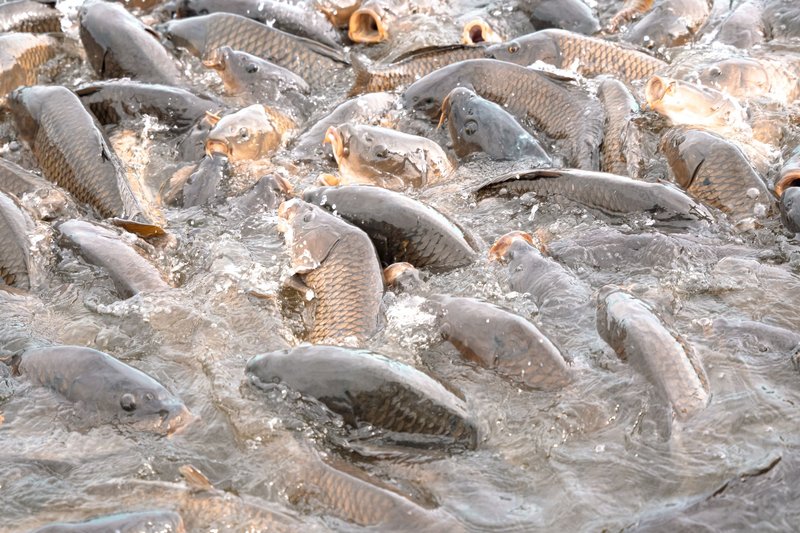
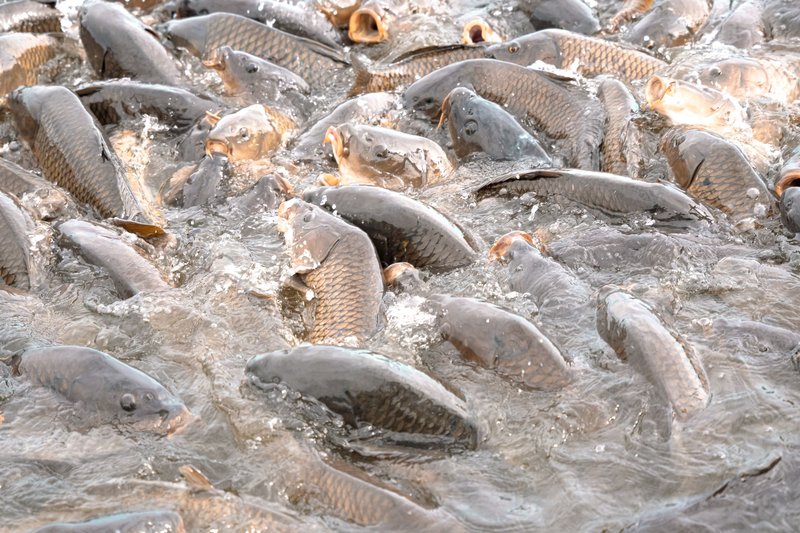
Three carps do most of the work in South Asian freshwater fishing and farming. They’re called the Indian major carps, and they’re usually stocked together in the same pond because they feed at different depths.
Catla (Catla catla, also Labeo catla) feeds near the surface. You can spot it by its huge, broad head and upturned mouth. It grows well past a meter long. Rohu (Labeo rohita; rui in Bengali) feeds in the middle of the water column and is the favorite on most plates, with a long, dark-backed, silver body and reddish fins. Mrigal (Cirrhinus cirrhosus; mrigel or nain) grazes on the bottom and is the smallest of the three.
Because each species takes a different layer of food, one pond supports all three without them competing. That’s the reason carp farming spread across India, Bangladesh, Nepal and Pakistan, and it’s why these three fish show up on market stalls from Lahore to Dhaka. Native range covers the northern river systems of India, Pakistan, Nepal and Bangladesh.
Hilsa
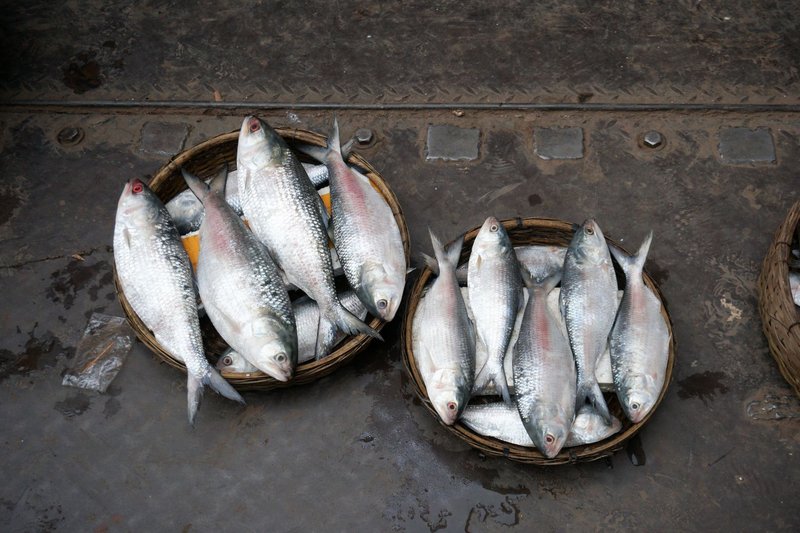
If one fish is the face of the region, it’s hilsa (Tenualosa ilisha), called ilish in Bengali and palla in Sindh. It’s a silvery, herring-like fish that lives in the sea and runs up big rivers to spawn, so a fish you eat in Dhaka may have swum hundreds of kilometers up the Padma. The flesh is rich and oily, and so full of fine bones that eating it properly is a skill.
Bangladesh is its national fish and lands most of the world’s catch. To protect breeding runs, the country closes hilsa fishing for about three weeks around the autumn peak and bans catching juveniles, known as jatka. Upstream, the runs have been hit hard by barrages. The Farakka Barrage in India blocks much of the fish’s old route up the Ganges, and in Pakistan the Indus palla fishery around Sindh declined after dams cut the river’s flow to the delta.
Snakeheads
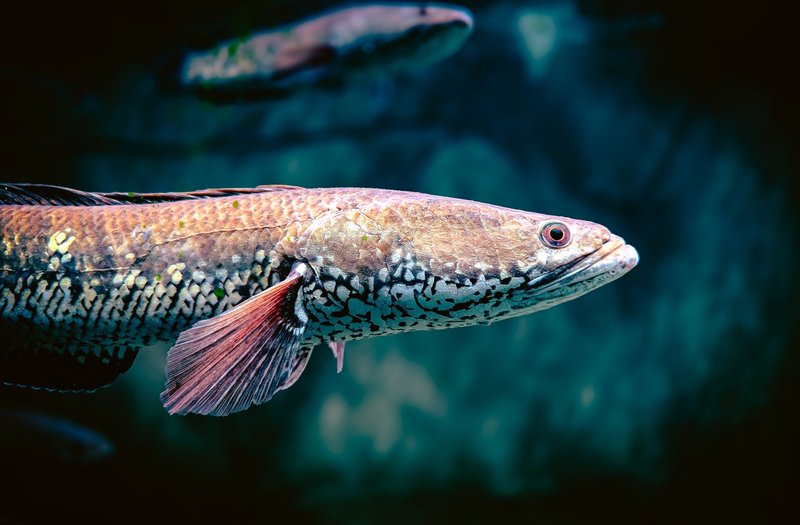
Snakeheads (genus Channa) have a flat head, a long body and a bad temper. The striped snakehead (Channa striata, shol in Bengali) is the one most people eat. The giant snakehead (Channa marulius) grows over a meter and is a prized game fish in India and Bangladesh.
What sets them apart is that they breathe air. A snakehead can survive in a drying pond, wriggle across a muddy bank, and sit out the dry season in damp mud. That’s why vendors sell them alive, in buckets, and why a shol curry is considered a safe meal for the sick.
Walking catfish
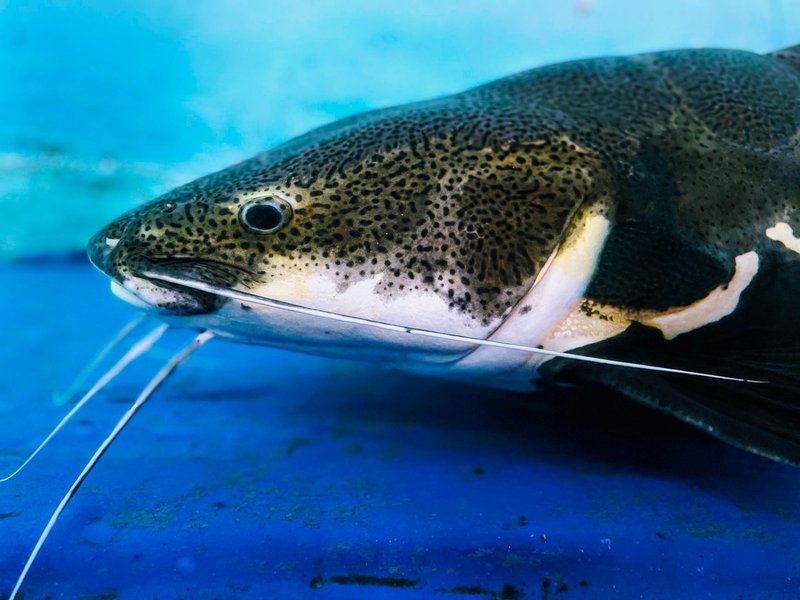
The walking catfish (Clarias batrachus, magur in Bengali and Hindi) is the other air-breather in the market buckets. It has a dark, slimy, eel-like body with whiskers, reaches about 50 centimeters, and can cross wet ground at night by wriggling on its pectoral spines. It “walks” less than the name suggests, but far enough that escapes from fish farms made it an invasive pest in Florida.
South Asian catfish are a broad group. Others include the large Wallago attu (the freshwater shark, or boal), the sturdy Mystus species, and the goonch (Bagarius yarrelli), a bottom-dwelling giant of Himalayan rivers that grows to about two meters and has fed a few local tales of attacks on swimmers.
Mahseer
The golden mahseer (Tor putitora) is the fish that anglers fly across the world to catch. It lives in cold, fast Himalayan rivers across Pakistan, India, Nepal and Bhutan, and fish over 40 kilograms have been reported. Its big, gold scales and powerful run have earned it the name “tiger of the water.”
It’s also in trouble. The IUCN Red List classes the golden mahseer as Endangered, and the humpbacked mahseer (Tor remadevii) of the Cauvery River in southern India is listed as Critically Endangered. Dams block spawning migrations, gravel mining wrecks spawning beds, and dynamite and poison fishing still happen in remote streams. Where fishing is allowed, such as Bhutan and parts of India, catch-and-release is increasingly the rule. The upside of catch-and-release is that a living mahseer in a pool is worth more than a dead one in a market, and some mountain communities have noticed.
Further up the same rivers, the snow trout (Schizothorax richardsonii, asala in Nepal) is the main wild river fish of the Nepalese hills.
Brackish and marine fish
Pearlspot
Pearlspot (Etroplus suratensis) is a brackish cichlid, an oval, green-gold fish with pale pearly spots down its sides. It’s karimeen in Kerala, where it’s the state fish, and it lives in the backwater lagoons of Kerala and Sri Lanka. It’s usually served marinated in spices and wrapped in banana leaf, then fried or steamed. Few fish in South Asia get a dish named after them in the way pearlspot does.
Pomfret
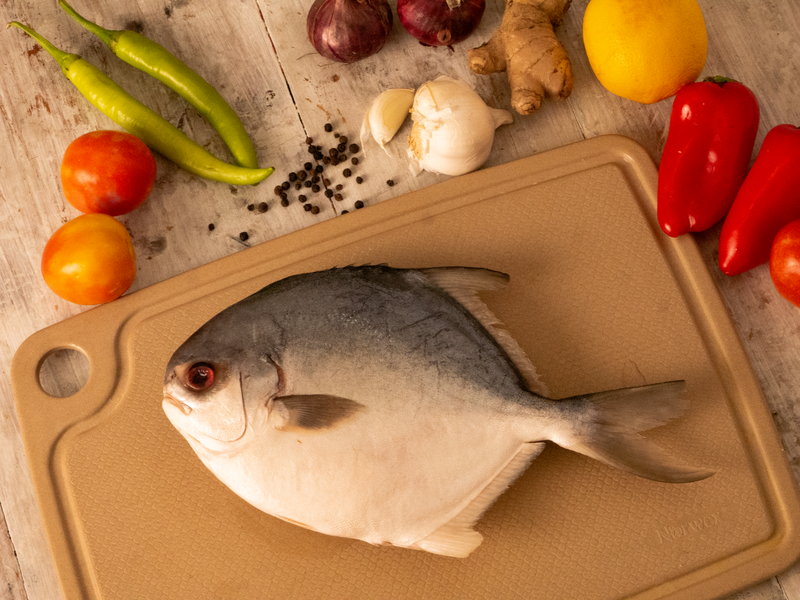
Silver pomfret (Pampus argenteus) and black pomfret (Parastromateus niger) are flat, diamond-shaped fish that sell at some of the highest prices on the west coast. In Mumbai, paplet is the festive fish, fried in a semolina crust or cooked in green masala. They’re small, usually 30 to 40 centimeters, and mostly landed along the Gujarat, Maharashtra and Pakistani coasts, as well as Bangladesh’s.
Bombay duck
Bombay duck is not a duck. Bombay duck (Harpadon nehereus, bombil in Marathi) is a soft, translucent, almost jelly-like fish of the lizardfish family, around 25 to 40 centimeters long, caught in the muddy estuaries of Gujarat and Maharashtra and in the Bay of Bengal. It’s eaten fresh, battered and fried, or sun-dried on racks along the Mumbai coast and sold with a smell that clears a market stall. Nobody agrees on where the name came from, so ignore any confident explanation.
Seerfish
Seerfish (Scomberomorus commerson, surmai in Hindi and vanjaram in Tamil) is a narrow-barred Spanish mackerel, a fast, torpedo-shaped predator that grows to more than two meters. It’s the steak fish of the south: sold as thick cross-cut slices, rubbed with masala and shallow-fried. In Goa and Tamil Nadu a good slice is the benchmark every other fish is judged against.
Skipjack tuna
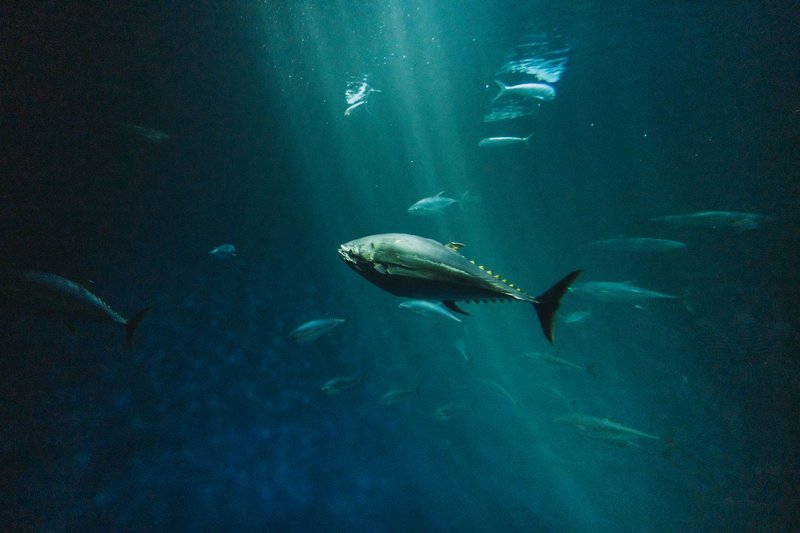
In the Maldives, one fish carries the economy and the table. Skipjack tuna (Katsuwonus pelamis, kandu mas locally) is caught on a pole and line, one fish at a time, from small boats called dhonis, a method that avoids the bycatch of nets. It ends up in mas huni, a breakfast of shredded tuna, coconut, onion and chili eaten with flatbread, and in rihaakuru, a thick fish paste. Sri Lanka also lands a lot of tuna, and its sour, black-pepper-heavy ambul thiyal is made by cooking tuna chunks with goraka, a dried fruit that gives the dish its acidity.
Small fish for aquariums
South Asia’s streams supply some of the aquarium hobby’s best-known fish. Most are small, hardy and schooling.
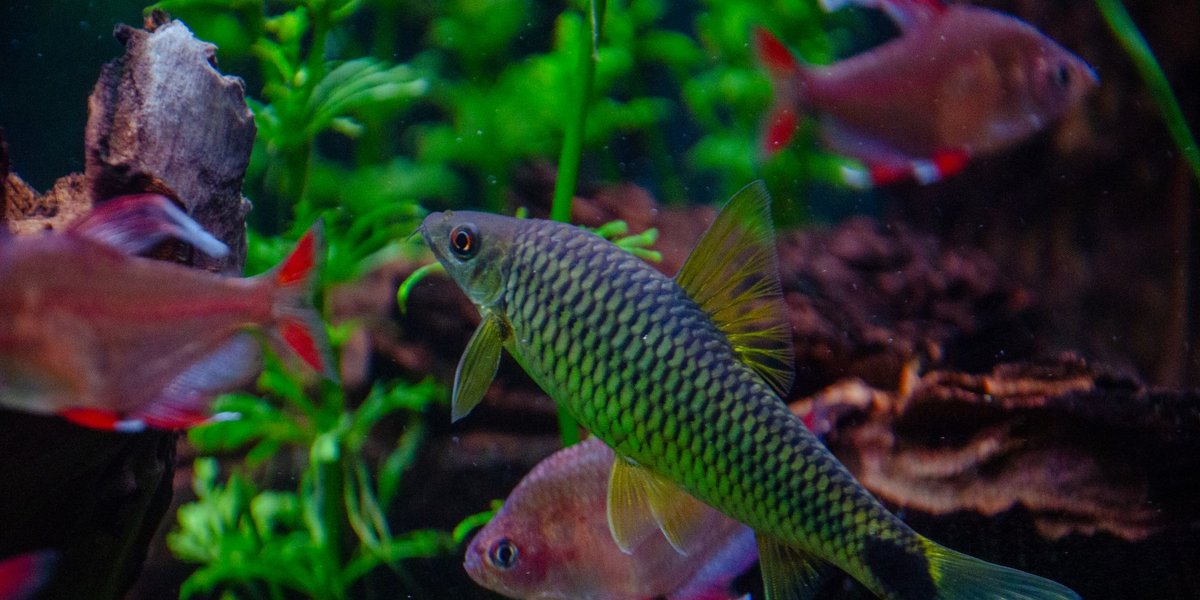
- Cherry barb (Puntius titteya) is a Sri Lankan native. Males turn a deep red in breeding color and females stay paler. The wild population is listed as Endangered, and most aquarium fish are captive-bred.
- Zebra danio (Danio rerio) is from streams in India, Bangladesh and Nepal. It grows to about 5 centimeters and is also one of the most-studied lab animals in the world, used in research on development and genetics.
- Denison barb (Sahyadria denisonii) comes from the fast streams of Kerala and Karnataka, with a red stripe across the eye and a black stripe along the flank. It’s listed as Endangered in the wild, mainly because of over-collection for the aquarium trade.
- Dwarf puffer (Carinotetraodon travancoricus) is a tiny, yellow-green pufferfish about 2.5 centimeters long, native to Kerala. It’s one of the smallest pufferfish in the world and has a taste for snails.
Species at a glance
| Fish | Scientific name | Habitat | Main countries | Known for |
|---|---|---|---|---|
| Catla | Catla catla | Rivers, ponds | India, Bangladesh, Pakistan, Nepal | Huge head, surface feeder |
| Rohu | Labeo rohita | Rivers, ponds | India, Bangladesh, Pakistan, Nepal | Most-eaten carp |
| Mrigal | Cirrhinus cirrhosus | Rivers, ponds | India, Bangladesh, Pakistan, Nepal | Bottom feeder in carp ponds |
| Hilsa | Tenualosa ilisha | Sea and big rivers | Bangladesh, India, Pakistan | National fish of Bangladesh |
| Striped snakehead | Channa striata | Ponds, swamps | Region-wide | Breathes air |
| Walking catfish | Clarias batrachus | Ponds, canals | India, Bangladesh, Sri Lanka | Crosses wet land |
| Golden mahseer | Tor putitora | Himalayan rivers | Pakistan, India, Nepal, Bhutan | Endangered game fish |
| Pearlspot | Etroplus suratensis | Backwaters | India (Kerala), Sri Lanka | State fish of Kerala |
| Silver pomfret | Pampus argenteus | Coastal sea | India, Pakistan, Bangladesh | Prized festive fish |
| Bombay duck | Harpadon nehereus | Estuaries | India, Bangladesh, Pakistan | Dried, strong-smelling |
| Seerfish | Scomberomorus commerson | Open coast | India, Sri Lanka, Pakistan | Steak fish |
| Skipjack tuna | Katsuwonus pelamis | Open ocean | Maldives, Sri Lanka | Pole-and-line fishery |
| Cherry barb | Puntius titteya | Streams | Sri Lanka | Aquarium favorite |
Fish, food and fishing across the region
Fish isn’t equally central everywhere. In Bengal and Bangladesh it’s close to a cultural marker: the Bengali saying maache bhaate Bengali, “fish and rice make a Bengali,” is a statement about identity. In the Maldives, tuna is the economy. In Kerala and coastal Sri Lanka, fish curry is the daily meal. In Nepal’s hills and in Bhutan, where Buddhist beliefs discourage taking life, wild fish are a smaller part of the diet, and most of Bhutan’s fish is imported from India.
Fisheries sit inside a bigger picture too. The FAO tracks aquaculture and capture fisheries around the world, and South Asian countries, especially India and Bangladesh, rank among the largest producers of farmed freshwater fish. Much of that farming is the Indian major carps from earlier in this guide. For species-by-species data like size, range and diet, FishBase is the reference most researchers use.
Threats and conservation
The pressures on the fish of South Asia are consistent from the mountains to the sea:
- Dams and barrages cut off migration routes for hilsa, mahseer and snow trout.
- Overfishing, including of juveniles, has reduced coastal stocks of pomfret and other high-value species.
- Pollution and sand mining degrade spawning grounds in rivers like the Ganges and Cauvery.
- Over-collection for the aquarium trade threatens narrow-range endemics like the Denison barb.
- Invasive species such as the walking catfish and farmed tilapia compete with native fish.
What’s working is mostly local: seasonal hilsa bans in Bangladesh, mahseer catch-and-release programs in Himalayan rivers, and captive breeding of Western Ghats aquarium species. None of it is enough yet, but it’s a better position than most of the world’s river systems.
Pick any river in the region and you’ll find a fish worth knowing. Start with the three big carps, add hilsa and mahseer, and the rest of the fish of South Asia makes a lot more sense.