Wetland omnivores are animals that eat both plants and other animals, and in a marsh or swamp they’re the ones doing the most switching. A sandhill crane digs up tubers in the morning and swallows a frog by afternoon. A snapping turtle clears dead fish and pond weed off the same stretch of mud. Herbivores and carnivores get the textbook diagrams, but omnivores are the reason a wetland food chain behaves more like a web.
Table of Contents
- Why omnivores matter in wetlands
- Birds
- Reptiles
- Mammals
- Amphibians, fish and invertebrates
- Wetland omnivores at a glance
- How omnivores hold the wetland food web together
- FAQ
Why omnivores matter in wetlands
Wetlands are some of the most productive habitats on land. The EPA describes them as places where saturated soil supports plants adapted to wet conditions, and those plants feed an enormous number of insects, snails, crustaceans and small fish. That’s a buffet with two sides: seeds, tubers and shoots on one, invertebrates and small vertebrates on the other.
An animal that can eat from both sides never runs out of options. When water levels drop and the fish disappear, an omnivore eats seeds. When a cold snap kills the plants, it eats whatever’s moving under the ice. That flexibility is the whole story of this list.
Birds
Sandhill crane
Sandhill cranes forage in shallow marsh and wet meadow, probing the mud with their bills for tubers, waste grain, insects, snails, frogs and small rodents. Their diet follows the calendar. In spring and fall they lean heavily on plant matter and grain, while breeding pairs in summer hunt more invertebrates and small animals to feed chicks.
Whooping crane
North America’s tallest bird stands about five feet and eats like a generalist. On the Texas coast in winter, whooping cranes take blue crabs and clams from salt marsh, then switch to acorns and crayfish on inland stopovers. It’s the same bird eating very different menus depending on which wetland it’s standing in.
Mallard
The mallard is the omnivore most people have seen without noticing. Dabbling ducks tip forward to strain seeds, pond weed and aquatic plants from the shallows, but they also eat snails, insects and tadpoles, especially in the breeding season when egg-laying hens need extra protein.
Red-winged blackbird
Listen for the “conk-la-ree” call from the cattails. Red-winged blackbirds eat mostly seeds and grain over the year, then switch to insects, including dragonflies and beetles, while nesting. Males defend patches of cattail marsh and will attack hawks and people who wander too close.
Reptiles
Common snapping turtle
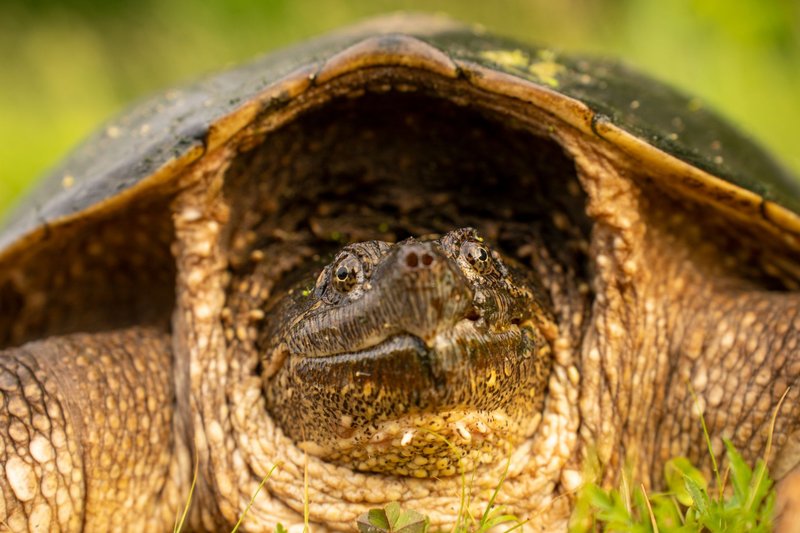
Snapping turtles are the textbook wetland omnivore. They eat aquatic plants, algae, fish, frogs, snakes, ducklings and carrion. Because they scavenge, they remove dead animals from ponds that would otherwise foul the water. They don’t chase prey much; they sit half-buried in mud and wait.
Painted turtle
Young painted turtles are mostly carnivorous, hunting insects, tadpoles and small crustaceans. As they grow, plants take over, and adults eat algae and pond weed alongside the occasional snail. It’s a rare case of an omnivore that changes diet as it ages. Look for them stacked on logs on sunny mornings.
Mammals
Raccoon
Raccoons work wetland edges at night, feeling around in shallow water with their front paws for crayfish, mussels, frogs and insects. They also eat acorns, berries, corn and bird eggs. Their hands have dense touch receptors, which is why they seem to “wash” food: they’re actually feeling it underwater.
Muskrat
Muskrats are usually filed under herbivores because cattails and bulrushes make up most of their diet. But they also eat freshwater mussels, crayfish, frogs and small fish, particularly when plants are scarce in late winter. They build dome-shaped lodges from the same cattails they eat.
Black bear
Black bears in swampy country, such as the cypress and bottomland forests of the Southeast, eat roots, berries, acorns and sedges, then add insects, fish, amphibians and carrion. Most of a black bear’s diet is plant matter, but the meat portion is what gets them through lean weeks.
Wild pig
Feral hogs root up wetland soil for tubers, seeds and invertebrates, and will eat eggs, young turtles and ground-nesting birds. They’re omnivores that wetlands didn’t ask for. Their rooting churns up vegetation and muddies water, and agencies like the U.S. Fish and Wildlife Service list invasive animals as a major pressure on native habitats.
Amphibians, fish and invertebrates
American bullfrog
Bullfrog tadpoles graze algae and plant matter; adults ambush anything that fits in their mouth, including insects, crayfish, smaller frogs, snakes and small birds. The plant-to-predator shift happens at metamorphosis. Outside its native range in eastern North America, the bullfrog has become a problem for local amphibians in the western U.S. and elsewhere.
Common carp
Carp are bottom feeders that eat plant material, seeds, insect larvae, snails and small crustaceans. They’re also invasive across much of North America. As they feed, they uproot plants and stir up sediment, which clouds water and starves submerged vegetation of light. A wetland with heavy carp can flip from clear and weedy to muddy and bare.
Crayfish
Crayfish are the smallest omnivores on this list and some of the most important. They shred fallen leaves, graze algae, and eat snails, insect larvae and carrion. In turn, they’re a primary food for herons, raccoons, bass and turtles. Take them out, and a lot of the animals above lose a meal.
Wetland omnivores at a glance
| Animal | Main foods | Typical wetland |
|---|---|---|
| Sandhill crane | Tubers, grain, insects, frogs | Freshwater marsh, wet meadow |
| Whooping crane | Crabs, clams, acorns, crayfish | Salt marsh, freshwater marsh |
| Mallard | Seeds, aquatic plants, snails, insects | Freshwater marsh, ponds |
| Red-winged blackbird | Seeds, grain, insects | Cattail marsh |
| Snapping turtle | Plants, fish, frogs, carrion | Marsh, swamp, slow rivers |
| Painted turtle | Algae, insects, snails | Ponds, marsh |
| Raccoon | Crayfish, frogs, acorns, berries | Swamp, marsh edge |
| Muskrat | Cattails, mussels, crayfish | Freshwater marsh |
| Black bear | Berries, roots, insects, carrion | Swamp, bottomland forest |
| Wild pig | Tubers, eggs, invertebrates | Swamp, marsh |
| Bullfrog | Algae (tadpole), insects, frogs (adult) | Ponds, marsh |
| Common carp | Plants, larvae, snails | Lakes, marsh, slow rivers |
| Crayfish | Leaves, algae, snails, carrion | All freshwater wetlands |
How omnivores hold the wetland food web together
A simple wetland food chain goes: algae, then snail, then fish, then heron. It’s tidy and mostly wrong. Real wetlands are tangled, and omnivores are the knots.
They do three jobs.
They link levels. A crayfish eats leaf litter and then gets eaten by a raccoon, so it moves energy from dead plant matter straight up to a mammal. Without omnivores, those two levels barely touch.
They buffer shocks. When one food source crashes, a specialist starves. An omnivore shifts. That’s why snapping turtles and raccoons stay common in marshes where specialized species come and go with drought and flood.
They break down waste. Scavengers like turtles and crayfish convert dead fish and rotting plants into usable nutrients before they pollute the water.
The flip side is that a bad omnivore does more damage than a bad specialist. Carp and feral hogs eat everything, so they disrupt plants, invertebrates and nesting animals at once. Research on wetland invertebrates from USGS shows how closely small aquatic animals track habitat condition, which is why changes in omnivore numbers tend to ripple outward fast.
FAQ
What is an omnivore in a wetland?
An animal that regularly eats both plants and animals. In a wetland that can mean a duck eating pond weed and snails, a turtle eating algae and fish, or a bear eating roots and frogs.
Are frogs omnivores?
Tadpoles usually graze on algae and plant material. Adult frogs are mostly carnivores that eat insects and other small animals. Bullfrogs are the exception that eats nearly everything, so they’re often grouped as opportunistic omnivores across their life cycle.
Which wetland animals are herbivores and which are carnivores?
Herbivores include beavers and many geese. Carnivores include herons, otters, alligators and most snakes. Omnivores sit between them and shift their diets by season.
Do wetland omnivores change what they eat through the year?
Yes. Sandhill cranes lean on grain and tubers in cold months and add insects and small animals when breeding. Painted turtles shift from animal prey as juveniles to more plant matter as adults. Seasonal change is the main way omnivores stay fed.
Are any wetland omnivores invasive?
Common carp and feral hogs are the best-known examples in North America. Both damage plants and water quality, and bullfrogs have become a problem outside their native range.