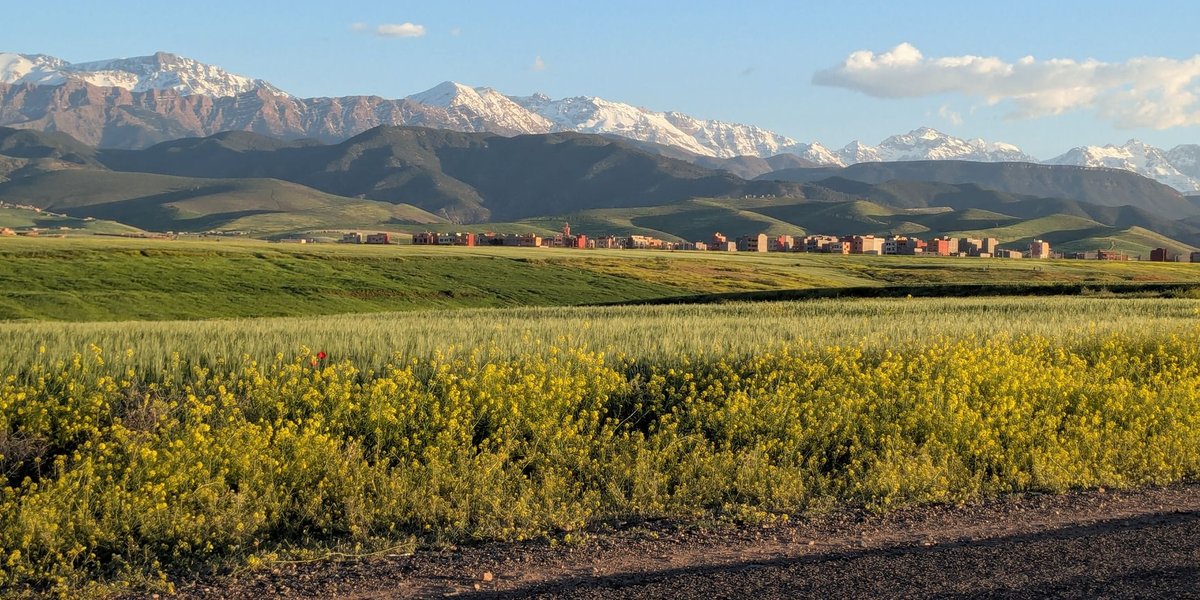
Morocco has roughly 7,000 plant species, and more than 900 of them grow nowhere else on Earth. That’s a lot of botany for a country you can cross in a day’s drive from snow to sand. Four mountain ranges, two coastlines and the northern edge of the Sahara pack Mediterranean scrub, cedar forest, alpine cushion plants and desert shrubs into one map.
This guide covers 11 of the most distinctive native plants, grouped by where they live, with what each one is used for and how it’s holding up.
Table of Contents
- How Morocco Fits So Many Plants In
- Quick Comparison Table
- Lowland and Coastal Natives
- Atlas Mountain Natives
- Steppe, Desert and Oasis Natives
- Where to See Morocco’s Native Plants
- Summary
How Morocco Fits So Many Plants In
Geography does the work. The Atlantic and Mediterranean coasts bring moisture, the Rif and Atlas ranges force it upward, and the Sahara sits just beyond the High Atlas drying everything on its far side. Climate shifts every few hundred meters of elevation, so a plant that thrives at 2,000 meters can’t survive at 200.
The country also sits at a crossing point. Mediterranean species arrived from the north, tropical relics survived in the south-west, and Saharan specialists pushed in from the desert. Isolation in the mountains then produced endemics, plants found only in Morocco or a small slice of North Africa. Plantlife’s work on Morocco’s Important Plant Areas identifies 19 priority sites where this diversity is concentrated and under pressure from grazing, wood-cutting and development.
Quick Comparison Table
| Plant | Scientific name | Habitat | Status | Traditional use |
|---|---|---|---|---|
| Argan | Argania spinosa | Southwest plains | Shrinking range | Oil, fodder |
| Cork oak | Quercus suber | Northwest forests | Degraded forests | Cork, charcoal |
| Thuya | Tetraclinis articulata | Coast and low hills | Widespread, overharvested | Burl woodwork |
| Dwarf palm | Chamaerops humilis | Coast and scrub | Widespread | Weaving, fiber |
| Atlas cedar | Cedrus atlantica | Middle and High Atlas | Endangered (IUCN) | Timber, carving |
| Moroccan cypress | Cupressus atlantica | High Atlas valleys | Critically Endangered (IUCN) | Little used, protected |
| Resin spurge | Euphorbia resinifera | Atlas slopes | Locally common | Resin, medicine |
| Esparto grass | Macrochloa tenacissima | Eastern steppe | Widespread, declining | Rope, paper |
| Atlas pistachio | Pistacia atlantica | Dry Atlas foothills | Slow regeneration | Oil, resin, shade |
| Jujube | Ziziphus lotus | Semi-arid plains | Widespread | Fruit, medicine |
| Ephedra | Ephedra alata | Sahara fringe | Widespread | Herbal tea, medicine |
Lowland and Coastal Natives
Argan (Argania spinosa)
Argan is the one Morocco owns. Its natural range is a patch of the south-west, roughly between Essaouira, Agadir and the Anti-Atlas, and almost nowhere else. A mature tree is gnarled, thorny and deeply rooted, which is how it survives in places that get little rain.
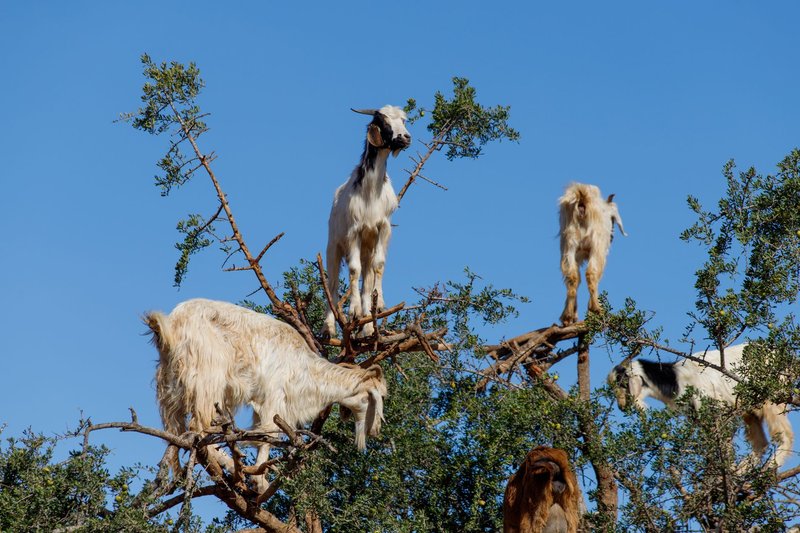
The famous oil comes from the kernel inside a hard nut inside a fleshy fruit. Cooperatives of Amazigh women crack the nuts by hand, and UNESCO recognized the know-how around the argan tree as intangible cultural heritage. Yes, goats do climb the branches to eat the fruit, and yes, that photo is real.
The forest has been shrinking for decades from grazing, firewood and farmland, which is why its protection is tied to the cooperatives that depend on it.
Cork Oak (Quercus suber)
The cork oak forests of the north-west, with the Mamora forest near Rabat the best known, are the Atlantic edge of a Mediterranean tree. The bark regrows after harvest, so a tree can be stripped roughly every nine years without dying. Overgrazing has thinned the Mamora badly, and young oaks struggle to establish where animals eat the seedlings.
Thuya (Tetraclinis articulata)
Thuya is a small evergreen conifer, also called sandarac tree, common on dry hills and coastal slopes. Its value sits underground. The burl, a swollen root mass, is cut into the dark, fragrant, swirling-grain boxes and tabletops sold in Essaouira. That demand has put real pressure on wild stands.
Dwarf Palm (Chamaerops humilis)
Morocco’s native palm doesn’t grow tall. It forms a clumping, fan-leaved shrub across coastal scrub and rocky ground, and it’s one of the few palms native to Europe’s Mediterranean basin. Its leaves are woven into baskets, mats and brooms, and you’ll see them stacked for sale in markets from the north to the Atlantic coast.
Atlas Mountain Natives
Atlas Cedar (Cedrus atlantica)
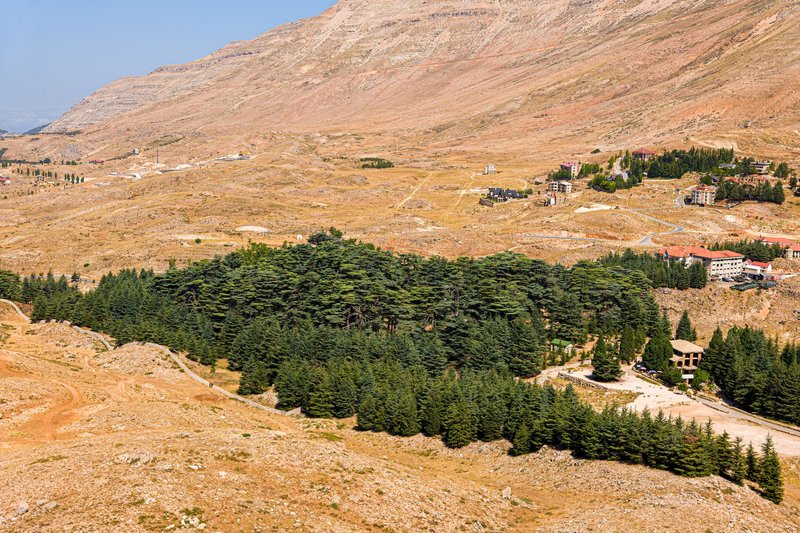
The Middle Atlas around Azrou and Ifrane holds the largest cedar forests, and some individual trees are many centuries old. The wide, flat-topped crowns are home to Barbary macaques, which drop into the clearings in search of tourist snacks. The IUCN lists the species as Endangered, driven by drought, overcutting and slow regeneration. The wood is aromatic and rot-resistant, which is why it ended up in carved ceilings and doors across Moroccan cities.
Moroccan Cypress (Cupressus atlantica)
This is the rare one. Moroccan cypress survives in a few small groves in the High Atlas, notably around the Oued N’Fis valley, with only a few thousand trees left in the wild. The IUCN classes it as Critically Endangered. Fire and grazing have trimmed it back to rocky refuges where goats can’t easily reach. If you see one, you’re looking at a species that has been hanging on since long before anyone drew a conservation map.
Resin Spurge (Euphorbia resinifera)
At first glance, a cactus. It’s not. This is a spurge, a ribbed, spineless-looking clump of four-sided stems that spreads across Atlas slopes in blue-green domes. The milky sap hardens into a resin called euphorbium, long used in traditional medicine and, by some accounts, named after the physician of King Juba II of Mauretania. The sap is also a strong skin and eye irritant, so keep your hands off.
Steppe, Desert and Oasis Natives
Esparto Grass (Macrochloa tenacissima)
Esparto, also called alfa, covers vast tracts of the high plateaus in eastern Morocco. The long, wiry leaves have been twisted into rope, baskets and sandals for centuries and were later pulped for high-quality paper. Its dense tufts also hold soil together, so losing esparto steppe means losing ground to erosion.
Atlas Pistachio (Pistacia atlantica)
Locally called betoum, this broad, drought-tolerant tree stands alone on stony plains where almost nothing else gets tall. Shepherds use it for shade, and the fruit and resin have traditional uses. Slow regeneration is its main problem: the trees live a long time, but seedlings rarely survive grazing.
Jujube (Ziziphus lotus)
Known as sedra, wild jujube grows as a tangled, thorny shrub across semi-arid land, and its small sweet-sour fruit is eaten fresh or dried. Traditional medicine uses its leaves and fruit, and the dense thicket gives cover to small animals in open country.
Ephedra (Ephedra alata)
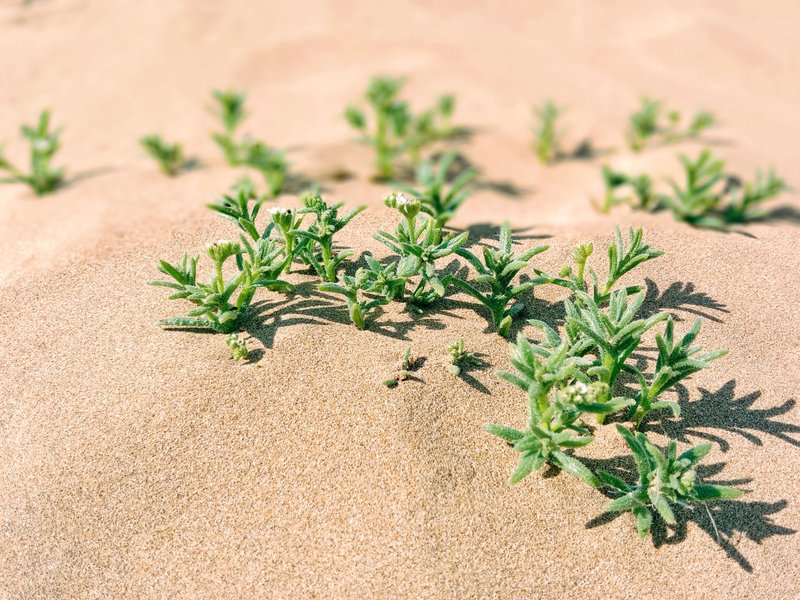
Ephedra is a leafless, jointed green shrub that grows along the Saharan fringe, built to lose as little water as possible. Related ephedras are the original source of ephedrine, a stimulant and decongestant, and local herbal use of the plant is old. It’s not a plant to experiment with at home, because stimulant content makes it a medical question and not a tea question.
Where to See Morocco’s Native Plants
- Argan: drive the road between Essaouira and Agadir and stop at a cooperative.
- Atlas cedar: the forests around Azrou and Ifrane in the Middle Atlas.
- Cork oak: the Mamora forest east of Rabat.
- Thuya products: the workshops in Essaouira’s medina.
- Euphorbia and Atlas pistachio: the lower slopes of the High Atlas south of Marrakech.
- Ephedra and esparto: the semi-arid steppe east and south of the Atlas.
If you want to grow any of these at home, the dwarf palm and jujube are the realistic ones. Cedar needs cold winters and room, and argan needs heat, drainage and years of patience.
Summary
Morocco’s native plants follow its geography: argan, cork oak, thuya and dwarf palm in the lowlands; Atlas cedar, Moroccan cypress and resin spurge on the mountains; esparto, Atlas pistachio, jujube and ephedra where the land dries out. Several of them (argan, cedar, thuya) support whole local economies, which makes protecting them as much about livelihoods as about botany. Of the 11 here, the Moroccan cypress is the closest to the edge, and the Atlas cedar isn’t far behind.