TLDR
Peru holds more than 25,000 native plant species, and roughly 5,354 of them grow nowhere else on Earth. That density comes from geography, not luck — a coastal desert, an Andean spine, and an Amazon basin sit within a few hundred miles of each other, and each has bred its own botany. Below are 12 species worth knowing, grouped by zone, plus a look at which ones are running out of time.
Table of Contents
- Peru’s Botanical Math
- The Coast: Fog Deserts and Ancient Groves
- The Andes: Where Altitude Writes the Rules
- The Amazon: Peru’s Other Half
- Why So Many of These Are Disappearing
Peru’s Botanical Math
Peru is one of the world’s 17 megadiverse countries, and plants are a big part of why. The country contains 84 of the planet’s 103 recognized life zones — a classification system based on temperature, rainfall, and elevation — packed into a landmass smaller than Alaska. You can start a morning in coastal fog desert, spend the afternoon above 4,000 meters in puna grassland, and sleep that night under Amazon canopy, all without crossing a border.
That compression is what produces endemism. A plant adapted to one narrow valley or one specific fog bank often can’t survive anywhere else, so it stays put and, over enough generations, becomes a species found in that spot alone. According to the Missouri Botanical Garden’s Flora of Peru project, the country’s flora inventory has been building for decades precisely because so much of it is still being formally described.
The list below moves from the Pacific inland to the rainforest, because that’s genuinely how the plants change.
The Coast: Fog Deserts and Ancient Groves
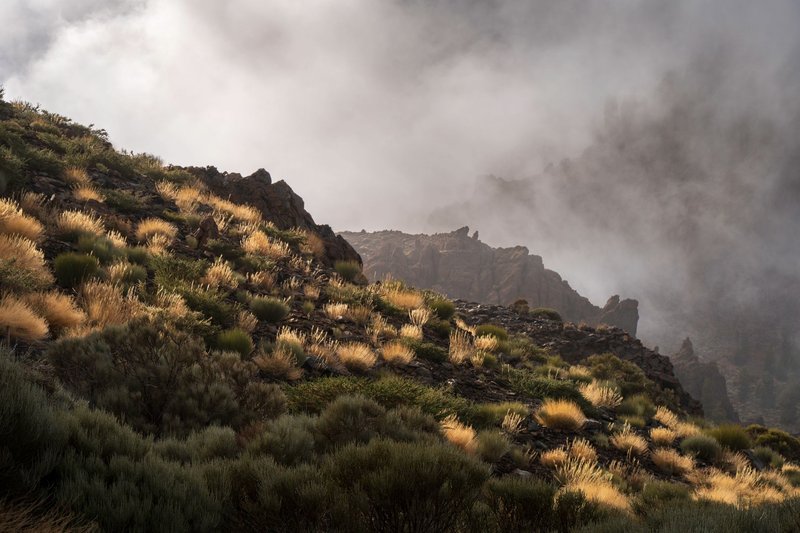
Peru’s coast looks like it should be empty — it’s one of the driest deserts on the planet, watered mostly by winter fog banks called lomas. But those fog banks support their own plant communities found nowhere else.
1. Tara (Caesalpinia spinosa)
A thorny, slow-growing tree scattered across Peru’s dry valleys and coastal hills, tara produces seed pods rich in tannin that Peru has exported since colonial times — first for leather tanning, now increasingly for food-grade thickeners in the gum industry. It’s one of the few native trees that actually thrives in degraded, overgrazed land, which has made it a go-to species for reforestation projects on the coast.
2. Loma Cactus (Neoraimondia arequipensis)
A candelabra-shaped columnar cactus that anchors the lomas fog ecosystems around Lima and further south. It flowers at night, timed to moths rather than bees, and can live for over a century. Because lomas habitat has shrunk under Lima’s urban sprawl, this cactus now grows in a fraction of the range it once had.
3. Algarrobo (Prosopis pallida)
The mesquite of Peru’s north coast, algarrobo forests once covered vast stretches of Piura and Lambayeque. Its pods feed livestock and get ground into a sweet flour used in traditional algarrobina syrup — the base of a cocktail of the same name that’s a Peruvian bar staple. The tree’s roots reach absurd depths, some documented past 50 meters, which is how it survives years without rain.
The Andes: Where Altitude Writes the Rules
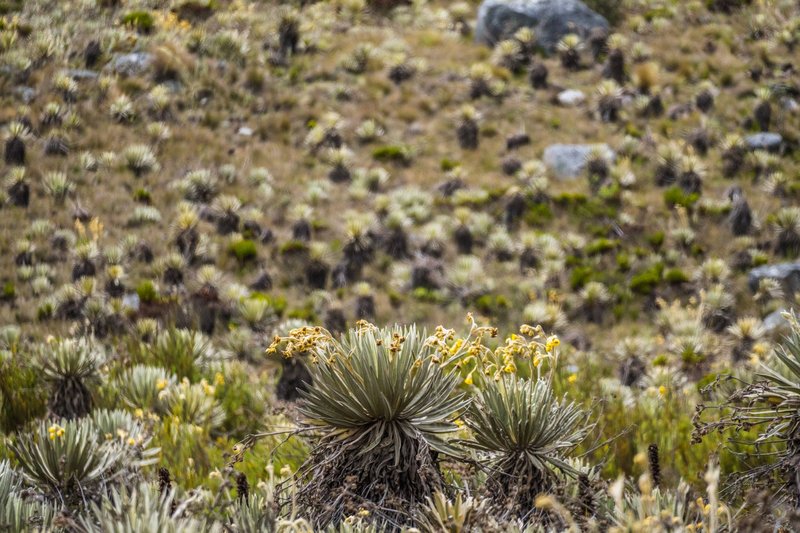
Above 3,000 meters, plants stop trying to grow tall and start trying to survive frost, thin air, and intense UV. The results are strange by lowland standards.
4. Puya Raimondii
The largest bromeliad on Earth, puya raimondii grows a rosette of spiny leaves for up to a century before sending up a single flower spike that can reach 12 meters — then it dies. It’s found only in isolated high-Andean patches in Peru and Bolivia, most famously at Huascarán National Park, and the plant’s odd, decades-long life cycle means a damaged population can take generations to recover. The IUCN Red List classifies it as endangered.
5. Kantuta (Cantua buxifolia)
Peru’s national flower, kantuta produces tubular red, yellow, and purple blooms — the same three colors that appear in Incan textile traditions, which is why some Andean communities still call it the “flower of the Incas.” It grows wild across highland valleys and has been cultivated in Andean gardens long enough that its exact wild origin is debated among botanists. You’ll see it planted deliberately around Cusco and the Sacred Valley, not left to chance.
6. Peruvian Lily (Alstroemeria)
Alstroemeria’s cut-flower version shows up in grocery store bouquets worldwide, but the wild species look rougher and more varied — mottled petals, muted colors, adapted to specific highland microclimates rather than bred for vase life. Peru and Chile share the genus, but a large share of Alstroemeria species are Peruvian endemics, concentrated in the Andes’ seasonally dry valleys.
7. Quinoa (Chenopodium quinoa)
Domesticated in the Andes around Lake Titicaca thousands of years ago, quinoa isn’t a grain botanically — it’s a seed from a plant related to spinach and beets. Andean farmers bred varieties tolerant of frost, drought, and poor soil long before the crop became a global health-food export. NASA has studied it as a candidate crop for long-duration space missions, largely because it’s a rare plant source of all nine essential amino acids.
8. Kiwicha (Amaranthus caudatus)
A tall amaranth with a drooping, blood-red seed head, kiwicha was a staple Incan crop that the Spanish tried to suppress, reportedly linking it to indigenous ceremony. It nearly vanished from cultivation for centuries and has only recently returned to Peruvian markets as a specialty grain, popped like popcorn or ground into flour.
9. Cinchona (Cinchona officinalis)
Peru’s national tree, cinchona bark contains quinine, the first effective treatment for malaria and still used today alongside synthetic alternatives. Andean communities knew its fever-reducing properties long before European naturalists took bark samples out of South America in the 1600s — a transfer that eventually broke Peru’s regional monopoly on the drug. Wild cinchona populations are now fragmented across cloud forest slopes, hit by both habitat loss and historic over-harvesting.
The Amazon: Peru’s Other Half
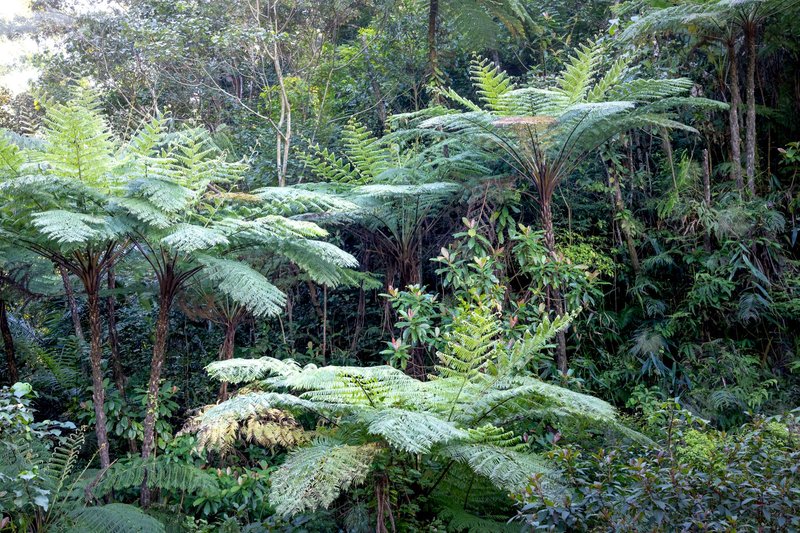
More than 60% of Peru’s territory sits within the Amazon basin, and the plant diversity there dwarfs the coast and highlands combined — a single hectare of Peruvian rainforest can hold more tree species than all of North America.
10. Giant Amazon Water Lily (Victoria amazonica)
Its pads can grow past two meters across and support the weight of a small child, held up by a underside lattice of ribs. It flowers for only two nights: white and female-receptive the first night, pink and pollen-shedding the second, trapping beetles inside overnight to guarantee pollination. Look for it in the oxbow lakes around Iquitos and the Tambopata region.
11. Aguaje Palm (Mauritia flexuosa)
Aguaje forms dense swamp forests across the Peruvian Amazon and produces a reddish-scaled fruit sold by the sackful in Iquitos markets, usually eaten as juice or ice cream. It’s also a keystone species — macaws, tapirs, and fish all depend on its fruit — which makes unsustainable harvesting (cutting the whole palm down instead of climbing it) a documented threat to entire forest sections.
12. Dragon’s Blood Tree (Croton lechleri)
Named for the dark red sap that oozes out when the bark is cut, this Amazon tree has been used in traditional medicine across the region for wound healing and digestive complaints. Modern research has isolated compounds from the sap that show anti-inflammatory activity, and a purified extract has been studied as a treatment for chronic diarrhea, though it isn’t a substitute for medical care.
Why So Many of These Are Disappearing
Puya raimondii, wild cinchona, and the lomas cacti share a problem: narrow ranges plus slow reproduction. A puya raimondii population wiped out by a single wildfire or grazing herd doesn’t recover in a human lifetime — the plant needs up to 100 years just to flower once.
The IUCN tracks several Peruvian endemics as threatened, and the drivers repeat across species: agricultural expansion into cloud forest, unregulated harvesting (cinchona bark, aguaje palms, orchids pulled for the tourist trade), and climate shifts pushing high-Andean species toward mountaintops they can’t retreat past. Peru’s national parks — Huascarán, Manu, Tambopata — protect meaningful chunks of habitat, but a park boundary doesn’t stop a fog bank from failing to form or a frost line from creeping upslope.
None of that makes the numbers at the top of this post less real. Peru’s plant diversity is still staggering by any global standard. It’s just not guaranteed to stay that way, which is arguably the more useful thing to take from a list like this than the species names themselves.