TLDR
Skip the lists that dump a tiger and a clownfish in the same paragraph. Every animal below is realistically small — most under 6 inches, none over a foot — organized by where you’d actually find them: fish, insects, reptiles, amphibians, and a few pocket-sized mammals and birds. Jump to the size comparison table if you just want the numbers.
Table of Contents
- Why So Many Small Animals Are Orange
- Size Comparison Table
- Small Orange Fish
- Small Orange Insects and Bugs
- Small Orange Reptiles
- Small Orange Amphibians
- Small Orange Mammals and Birds
- Which Ones Make Decent Pets
Why So Many Small Animals Are Orange {#why-orange}
Orange shows up disproportionately often in small creatures for three practical reasons, not because nature has a favorite color. It’s a warning signal in insects and amphibians — a bright orange poison dart frog or ladybug is telling a predator “eating me will ruin your afternoon.” It’s camouflage against orange-toned backgrounds like autumn leaf litter, coral, or sandy reef substrate. And in a handful of cases, it’s sexual signaling: male efts and some fish brighten up during breeding season because a saturated orange is expensive to produce and therefore an honest signal of good health.
None of that applies to tigers or orangutans, which is the whole problem with the existing “orange animals” lists — they mix predator-scale warning coloration (which serves totally different purposes at that size) with the small-animal signaling below.
Size Comparison Table {#size-table}
| Animal | Length/Size | Weight | Habitat |
|---|---|---|---|
| Clown anemonefish | 3–4 in | 1 oz | Coral reefs, Indo-Pacific |
| Orange fairy wrasse | 2.5 in | under 1 oz | Coral reefs, Coral Triangle |
| Orange ladybug (multicolored Asian) | 0.25–0.35 in | negligible | Gardens, worldwide |
| Monarch butterfly | 3.5–4 in wingspan | 0.01 oz | Fields, migratory routes |
| Orange assassin bug | 0.5–0.8 in | negligible | Gardens, tropics |
| Fire skink | 8–10 in (tail included) | 2–3 oz | West African forest floor |
| Red-eyed crocodile skink | 7–9 in | 1 oz | Papua New Guinea rainforest |
| Peters’ banded skink | 6–7 in | under 1 oz | East African savanna |
| Fire salamander | 6–9 in | 1–1.5 oz | European deciduous forest |
| Eastern newt (red eft stage) | 3–5 in | under 1 oz | Eastern US woodlands |
| Golden mantella frog | 0.8–1 in | 0.03 oz | Madagascar wetlands |
| Panda ant (velvet ant) | 0.4–0.8 in | negligible | Chilean desert |
| Fire-bellied toad (orange belly) | 1.5–2 in | 0.3 oz | European ponds |
| Orange-bellied parrot | 8.5–9 in | 1.5–2 oz | Coastal Australia |
| American red squirrel | 11–14 in (incl. tail) | 5–9 oz | North American conifer forest |
| Golden lion tamarin | 10–13 in | 1.2–1.6 lbs | Brazilian Atlantic Forest |
| Corn snake (amelanistic/orange morph) | 24–48 in (adult) | up to 2 lbs | Southeastern US farmland |
| Orange tabby (domestic) | 18 in body | 8–12 lbs | Everywhere |
Small Orange Fish {#fish}
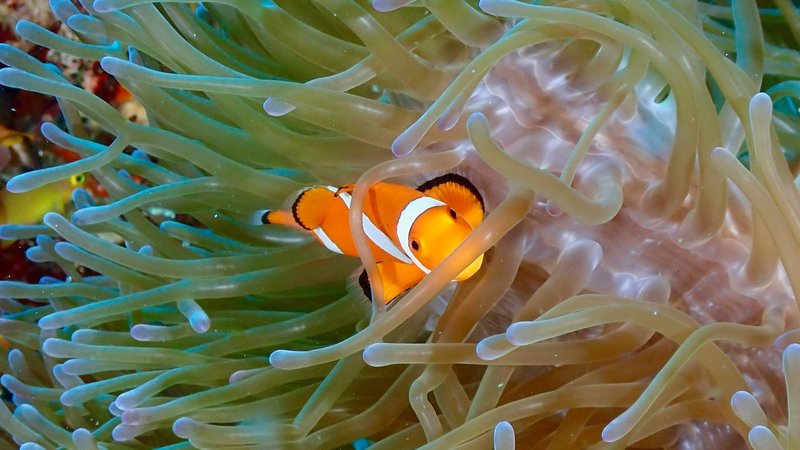
Clown anemonefish — The one everyone pictures, and for good reason: three inches of orange-and-white stripe living inside a sea anemone’s stinging tentacles without getting stung, because a mucus coating on its skin blocks the anemone’s nematocysts. Females run the show in every anemone — if she dies, the dominant male changes sex and takes over, a detail National Geographic has documented across multiple Pacific reef systems.
Orange fairy wrasse — Smaller than the clownfish and far less famous, this reef fish tops out around 2.5 inches. Males flash a deeper, near-fluorescent orange during courtship displays performed in small groups over open reef, a behavior marine biologists call “lekking,” borrowed from the term for grouse and other birds that do the same thing on land.
Small Orange Insects and Bugs {#insects}
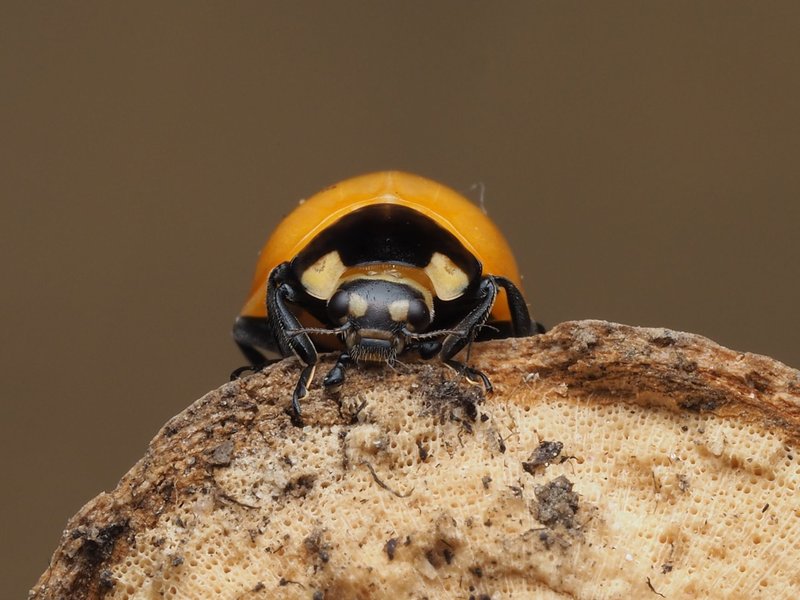
Multicolored Asian lady beetle — Not all ladybugs are red; a huge portion of the population running around North American gardens is solid orange with black spots, sometimes no spots at all. They were deliberately introduced from Asia starting in the 1980s for aphid control and now outcompete native ladybug species in much of the US.
Monarch butterfly — Technically more of an insect than most people count as “small,” but a monarch’s body plus wingspan still fits comfortably in your palm. The orange isn’t decorative — it’s advertising toxicity absorbed from milkweed as a caterpillar, and predators that learn the lesson once tend to avoid orange-and-black patterns for good.
Orange assassin bug — Bright orange nymphs that turn darker as adults, assassin bugs hunt other insects by stabbing them with a modified mouthpart and injecting digestive enzymes. The orange coloration in juveniles functions as a warning, since a bite from this bug is genuinely painful to larger animals that try to eat one.
Panda ant (velvet ant) — Not an ant at all — it’s a wingless wasp, and the females carry one of the more painful stings in the insect world, memorably nicknamed “cow killer.” Orange-and-black fuzzy patterning on a half-inch body reads as an unmistakable warning to anything sharing the Chilean or North American desert floor with it.
Small Orange Reptiles {#reptiles}
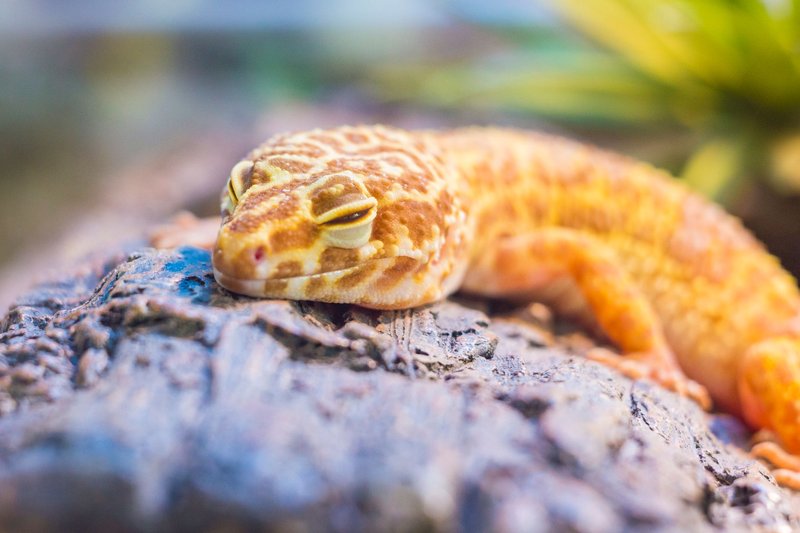
Fire skink — A West African forest-floor lizard with iridescent orange-red bands running down its sides, popular in the pet trade for a calm temperament once it settles into a terrarium. Wild individuals spend most of daylight hours burrowed under leaf litter, only surfacing to hunt insects at dusk.
Red-eyed crocodile skink — Papua New Guinea’s answer to a miniature dragon: bony ridged scales, a spiky tail, and orange rings circling each eye. Unlike most skinks, this species can vocalize a soft squeak when handled, which makes it one of the few lizards that actually “talks back.”
Peters’ banded skink — An East African savanna species with alternating orange and black bands running the length of its body, functioning as disruptive camouflage against dry grass and shadow rather than a warning — this is one case where the orange is about breaking up an outline, not advertising toxicity.
Small Orange Amphibians {#amphibians}
Fire salamander — Europe’s most recognizable amphibian, with bold yellow-orange blotches over jet black skin. It secretes a neurotoxin called samandarin through its skin glands, strong enough that handling one and then touching your eyes is a genuinely bad idea.
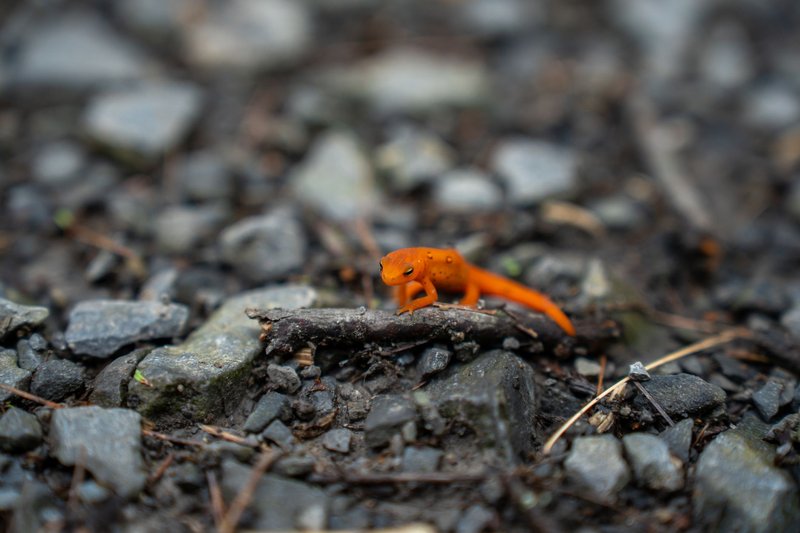
Eastern newt (red eft stage) — The juvenile “red eft” phase of this North American newt spends two to three years wandering forest floors as a solid burnt-orange terrestrial creature before returning to water and turning olive-green as an adult. The eft’s orange is a legitimate poison warning — its skin carries tetrodotoxin, the same neurotoxin found in pufferfish, according to research published through U.S. Geological Survey amphibian monitoring programs.
Golden mantella frog — Barely an inch long, Madagascar’s mantella frogs pack tetrodotoxin-adjacent alkaloids absorbed from their ant-and-mite diet into skin bright enough to see from several feet away. Wild populations are shrinking fast enough that the IUCN lists the species as Critically Endangered, driven mostly by wetland habitat loss.
Oriental fire-bellied toad — Olive-green on top, but flip one over and the belly is a startling orange-and-black mosaic. When threatened, it arches its back and flashes that belly at a predator — a defensive move herpetologists call the “unken reflex,” shared with several other toad species worldwide.
Small Orange Mammals and Birds {#mammals-birds}
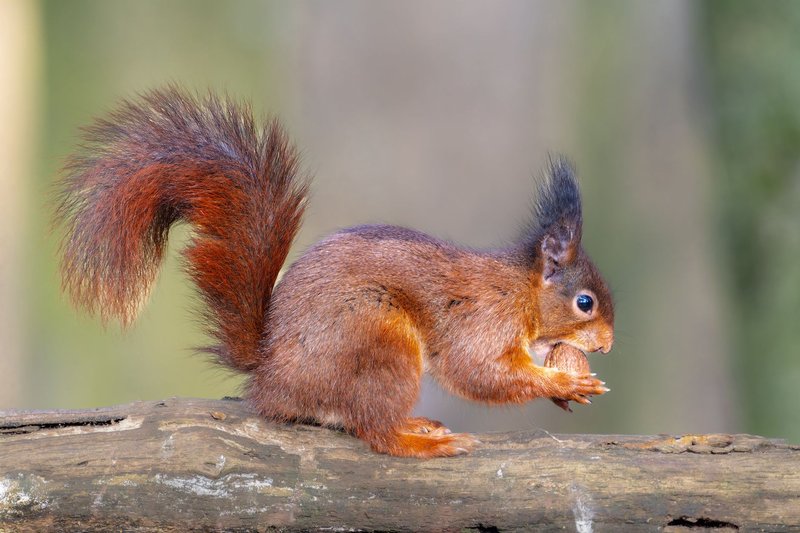
American red squirrel — Smaller and considerably more aggressive than the gray squirrel, with a rusty orange coat and a habit of loudly scolding anything that gets near its conifer-cone cache. A single squirrel will defend a midden of thousands of stripped pine cones as its personal food store through winter.
Golden lion tamarin — A fist-sized primate from Brazil’s Atlantic Forest with a mane of deep orange-gold fur framing its face like a tiny lion. Conservation programs reintroducing zoo-bred tamarins into protected forest fragments have pulled the species back from fewer than 200 individuals in the 1970s to several thousand today.
Orange-bellied parrot — One of the rarest parrots on the planet, breeding only in a sliver of Tasmania’s southwest wilderness and wintering along coastal Australia. Fewer than 50 birds existed in the wild at points over the last decade, making this one of the most acute bird conservation emergencies documented by BirdLife International.
Which Ones Make Decent Pets {#pets}
If the appeal here is something small, orange, and legal to keep at home, three options stand out. Fire skinks tolerate handling reasonably well after acclimating and need a warm, humid terrarium with deep substrate for burrowing. Corn snakes, including amelanistic morphs that read as solid orange and cream, are widely considered one of the easiest snakes for a first-time reptile owner — docile, manageable size, and forgiving of minor husbandry mistakes. Clownfish need a proper marine setup with an anemone host to look and behave naturally, which raises the cost and complexity well past a beginner tank, so treat that one as an intermediate project rather than a starter pet.
Skip the fire salamander and red eft — both carry legitimate skin toxins, and neither does well in captivity long-term regardless of good intentions.