Eritrea doesn’t get the safari-brochure treatment that Kenya or Tanzania does, and that’s exactly why its mammal list is worth a closer look. Squeezed between the Red Sea, the Ethiopian highlands, and one of the hottest deserts on Earth, the country packs an unusual range of habitats into a small footprint — which means an unusual range of animals built to survive in each one.
This isn’t a taxonomic checklist. It’s a working guide to 22 mammals actually documented in Eritrea, organized by where you’d realistically encounter them: the scorched Danakil Depression and Red Sea coast, the wetter Gash-Barka lowlands near the Sudanese border, and the cooler central highlands around Asmara. Each entry gives you what to look for, where it turns up, and how worried you should be about it disappearing.
Table of Contents
- Danakil Depression & Red Sea Coast
- Gash-Barka Lowlands & Western Savanna
- Central Highlands
- Eritrea’s Rarest and Most Threatened Mammals
- Where to Actually See Them
Danakil Depression & Red Sea Coast
The Danakil is one of the most hostile places mammals live anywhere — salt flats, active volcanism, and summer surface temperatures that push past 50°C. Anything out here has traded comfort for survival.
1. African wild ass — The Danakil holds one of the last viable wild populations of this species on the planet, and it’s the direct ancestor of the domestic donkey. Pale grey-fawn coat, a dark dorsal stripe running nose to tail, and faint leg barring that hints at its zebra relatives. The IUCN lists it as Critically Endangered, with fewer than a few hundred individuals estimated to remain in the wild between Eritrea and Ethiopia. Herds move at dawn and dusk near what little water the Danakil offers.
2. Soemmerring’s gazelle — A rangy, pale gazelle with a sharply contrasting white rump patch and lyre-shaped horns on the males. It ranges across the coastal plains and into the Gash-Barka lowlands, grazing on the scrub that other herbivores skip. Populations have fallen hard across its range this century, largely from hunting pressure and habitat conversion.
3. Dorcas gazelle — Smaller and sandier than Soemmerring’s, built for exactly this terrain — it can go long stretches without drinking, pulling most of its water from the vegetation it eats. Look for the faint dark side-stripe separating its tan back from its white belly.
4. Nubian ibex — Found on the steep escarpments where the highlands drop toward the Red Sea. Males carry long, deeply ridged, backward-curving horns that can outlast the animal by decades — herders sometimes find horn sets long after the ibex itself is gone. They’re most active at first light, picking along cliff faces that keep predators at a distance.
5. Hamadryas baboon — The sacred baboon of ancient Egyptian iconography still runs troops of 100 or more across the coastal hills. Males are strikingly silver-maned; females are smaller and brown. They’re loud, visible, and one of the easiest mammals on this list to actually find.
Gash-Barka Lowlands & Western Savanna
Along Eritrea’s western border with Sudan and Ethiopia, the terrain softens into acacia savanna and seasonal riverine woodland — the closest thing the country has to classic East African bush, and where most of its large mammals cluster.
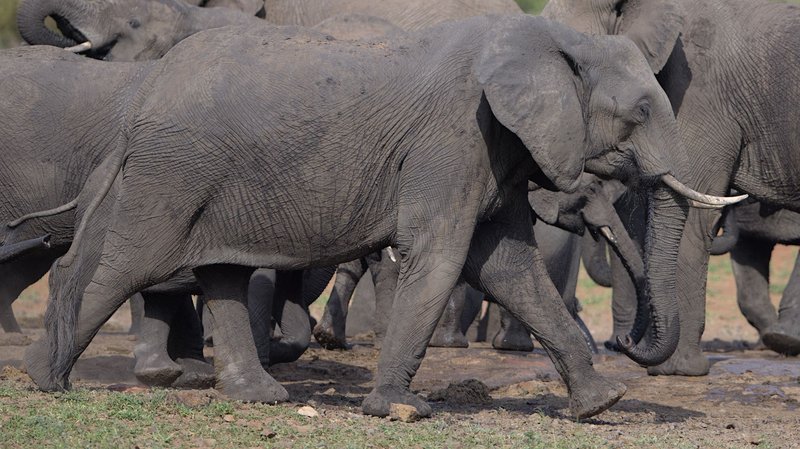
6. African elephant — Eritrea’s elephants are a small, isolated population, remnants of a range that once stretched much further north. They move seasonally between Gash-Barka and adjacent Ethiopian territory, following the rains and the riverine forest that survives along the Gash and Setit rivers.
7. Northeast African cheetah — A genetically distinct, especially imperiled subspecies with a global population estimated at only a few hundred individuals across the entire Horn of Africa. Sightings in Eritrea are rare enough that most come from camera traps rather than direct observation, but the lowland savanna here is considered part of its remaining range.
8. Beisa oryx — Straight-horned, striking, and built like it knows it: a boldly patterned black-and-white face, a black side-stripe, and horns on both sexes that can run past 75 centimeters. It favors open, dry grassland where its coloring actually works as camouflage against heat shimmer.
9. Greater kudu — The males carry some of the most dramatic horns of any African antelope — long, spiraled, and capable of two and a half twists. They’re shy woodland browsers, more often heard crashing through brush than seen standing still.
10. Lesser kudu — A smaller, more strikingly striped cousin of the greater kudu, with up to 14 vertical white stripes over a chestnut coat. It sticks to denser thorn scrub than its larger relative and is correspondingly harder to spot.
11. Warthog — Common, unglamorous, and easy to underestimate: warthogs kneel on calloused front knees to graze, can outrun most predators over short distances, and back into their own burrows tail-first so they’re facing out if something follows them in.
12. Golden jackal — Adaptable and opportunistic, the golden jackal thrives at the edges of settlements as easily as open savanna. Pairs mate for life and hunt cooperatively, taking everything from rodents to gazelle fawns.
13. Striped hyena — Smaller and shaggier than its spotted cousin, with a coarse dorsal mane it raises when threatened to look larger. It’s almost entirely nocturnal and scavenges more than it hunts, which is part of why it’s so rarely photographed despite being fairly widespread.
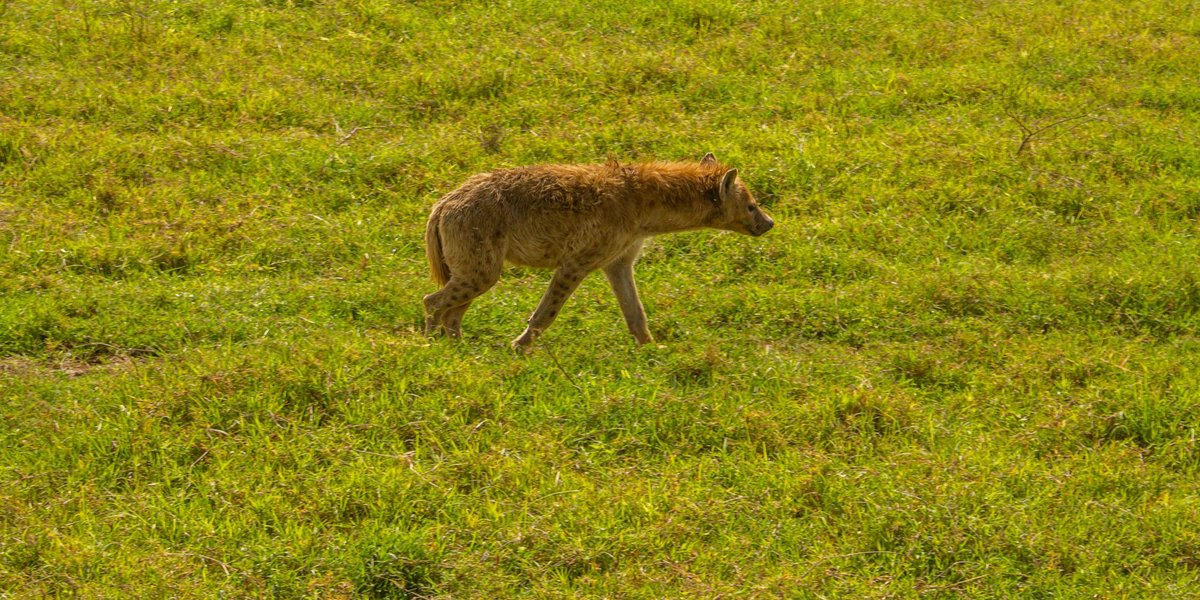
14. Spotted hyena — The more social, more vocal, and considerably more capable predator of the two hyena species present. Clans can number in the dozens, and their whooping calls carry for kilometers across the lowlands at night.
15. African civet — A solitary, cat-sized nocturnal omnivore with a boldly blotched coat and a black mask. Historically trapped for the musky secretion once prized in perfumery — a practice that’s largely faded but explains why the species has a longer human history here than most people realize.
Central Highlands
Around Asmara and the plateau, elevation cools things down and the mammal list shifts toward smaller, more adaptable species that handle proximity to farmland and towns.
16. Leopard — Present but seriously reduced, pushed into escarpment and forest fragments by habitat loss and retaliatory killing over livestock. Leopards here are solitary and largely nocturnal, and confirmed sightings are uncommon enough that most evidence comes from tracks or livestock-kill investigations rather than direct encounters.
17. Caracal — A powerfully built wild cat with tufted black ears and a reddish-tan coat, capable of leaping over two meters vertically to snatch birds out of the air. It’s shy, largely solitary, and mostly active after dark.
18. Common genet — Slim, spotted, and cat-like but not a cat at all — genets are closer to civets. Excellent climbers, they hunt rodents and insects through both farmland edges and remaining forest patches.
19. Rock hyrax — Small, tailless, and rabbit-sized, but its closest living relatives are actually elephants and manatees — a fact that becomes oddly visible in the shape of its teeth and toenails. Colonies bask communally on sun-warmed rock outcrops across the highlands.
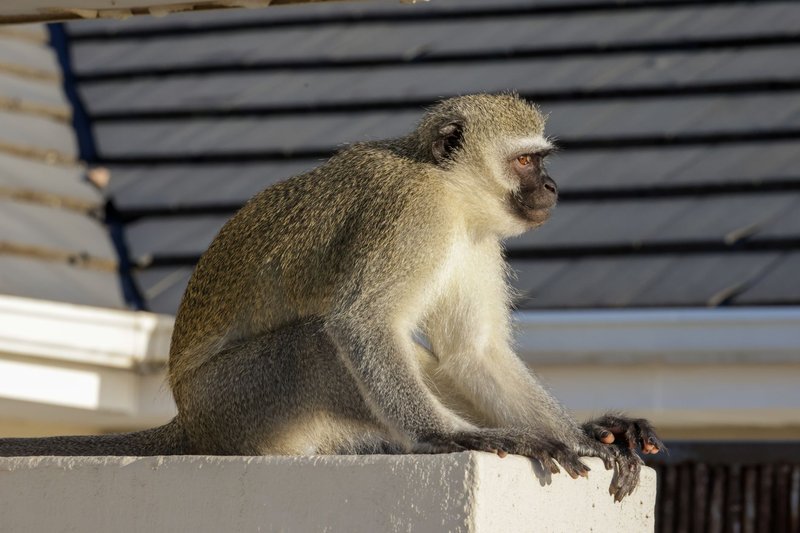
20. Vervet monkey — Grey-coated with a black face and, in males, a strikingly blue scrotum used in social signaling. Highly social troops raid crops and campsites readily, which makes them simultaneously easy to see and unpopular with farmers.
21. Aardvark — Rarely seen anywhere in its range, the aardvark is a solitary, termite-eating burrower with a long snout, tubular ears, and no close living relatives outside its own taxonomic order. It’s nocturnal and reclusive enough that most “sightings” in the region are actually just fresh burrows.
22. Grant’s gazelle — A larger, paler cousin of Thomson’s gazelle found grazing the transition zone between highland edges and lowland scrub. Both sexes carry ringed, lyre-shaped horns, and small herds tend to stick to open ground where they can see predators coming from a distance.
Eritrea’s Rarest and Most Threatened Mammals
Conservation status in most reference lists gets reduced to a letter code — EN, CR, VU — which flattens what’s actually a story about how close some of these animals are to disappearing from the country entirely.
The African wild ass is the starkest case: the Danakil population is one of only two wild strongholds left anywhere, and poaching for traditional medicine plus competition with domestic livestock for scarce water keeps pressure on numbers that were already thin. The Northeast African cheetah faces the opposite problem — not direct persecution so much as a shrinking, fragmented range that makes it hard for the subspecies to maintain genetic diversity at all. Eritrea’s elephants persist as an isolated, cross-border population small enough that a single bad drought year or a closed migration corridor could matter disproportionately.
Lions were historically present across the lowlands and are now considered extirpated from the country — a reminder that “rare” and “gone” are separated by not very much time. The African wild dog sits somewhere in between: historically recorded in Eritrea’s savanna, but confirmed sightings have become so infrequent that its current status here is genuinely uncertain rather than simply “rare.”
Where to Actually See Them
Eritrea’s protected-area system is thinner than its wildlife deserves — there’s no Serengeti-scale infrastructure here, and that’s part of the appeal for anyone who wants animals without the convoy of safari vehicles.
The Gash-Barka lowlands, particularly along the Gash and Setit river systems near the Sudanese border, are the best bet for elephant, kudu, and oryx, especially in the dry season when animals concentrate around remaining water. The Semenawi and Debubawi Bahri escarpment forests northeast of Asmara hold the country’s best remaining leopard and genet habitat, though dense cover makes sightings a matter of patience over probability. For the desert specialists — wild ass, Soemmerring’s gazelle, ibex — the Danakil Depression is the only realistic option, and it demands serious logistical planning given the terrain and heat.
None of this is drive-through wildlife viewing. What you get instead is a country where the animals earned their place on this list by surviving conditions that would eliminate most species elsewhere — which, if you’re the kind of person who reads mammal lists for fun, is the actual point.