Table of Contents
- What Counts as “Small” Here
- 1. Pink Fairy Armadillo
- 2. Pygmy Seahorse
- 3. Axolotl
- 4. Hairy Squat Lobster
- 5. Pink Katydid
- 6. Rosy Maple Moth
- 7. Spanish Shawl Nudibranch
- 8. Naked Mole Rat
- 9. Pink Grasshopper (Chorthippus parallelus, pink morph)
- 10. Pink-Fringed Mantis Shrimp
- 11. Pink Robin Chick (Nestling)
- 12. Elephant Ear Polyp (Zoanthid)
- 13. Pink Sea Slug (Hopkins’ Rose)
- 14. Comb Jelly (Pink Variants)
- 15. Pink Underwing Moth Caterpillar
- 16. Baby Pink Rat (Newborn Rattus norvegicus)
- 17. Pink Anemonefish Egg Cluster Guardian: the Pink Skunk Clownfish
- 18. Pink Cave Salamander (Eurycea species)
- Size Comparison at a Glance
Every “pink animals” list on the internet eventually shows you a flamingo, then a dolphin, then calls it a day. Neither belongs here. A flamingo is five feet tall. A pink river dolphin can hit eight feet and 300 pounds. That’s not small by any definition that means anything.
This list only counts animals you could hold in your palm, tuck into a teaspoon, or in a couple of cases, lose track of on your own fingertip. “Small” means under about 6 inches (15 cm), and most entries here are a fraction of that. If it needs its own zip code, it’s not making the cut.
What Counts as “Small” Here
Anything over 6 inches is out, no exceptions — that’s the line between “small” and “medium,” and it’s where most competing lists quietly stop checking. A few entries below are measured in millimeters, because pink shows up at every scale in nature, not just the ones convenient for a magazine photo spread.
1. Pink Fairy Armadillo
Size: 3.5–4.5 inches (9–11.5 cm) | Habitat: Central Argentina’s sandy plains and dry grasslands
The pink fairy armadillo (Chlamyphora truncata) is the smallest armadillo species on Earth, and its shell isn’t armor in the traditional sense — it’s a thin, rose-colored plate loosely attached along the spine, with soft white fur poking out underneath like an undershirt that doesn’t quite fit. The pink coloring comes from blood vessels close to the shell’s surface, which the animal uses to regulate its body temperature in the desert heat.
It spends almost its entire life underground, using its shovel-like front claws to “swim” through sand rather than dig tunnels the way most burrowers do. Researchers see so few living specimens that most of what’s known about its behavior comes from a handful of captive individuals — the IUCN lists it as Data Deficient precisely because nobody has managed to study a wild population long enough to say much with confidence.
2. Pygmy Seahorse
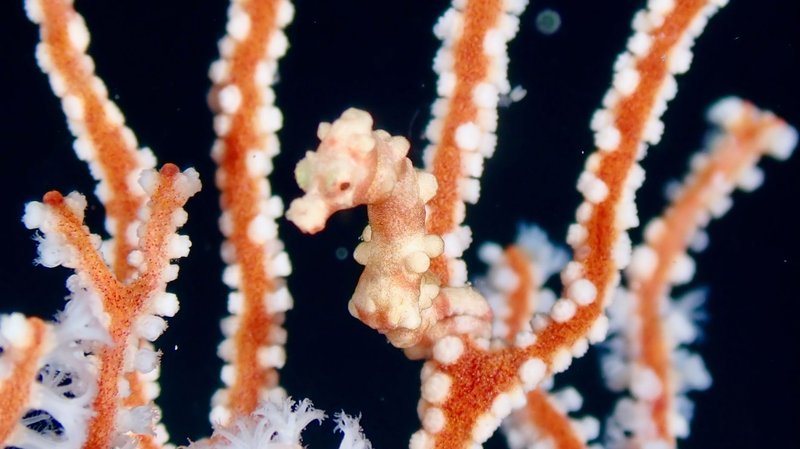
Size: 0.5–0.9 inches (1.4–2.7 cm) | Habitat: Coral reefs of the Coral Triangle, especially around gorgonian sea fans
Bargibant’s pygmy seahorse is smaller than a paperclip and matches its host sea fan so precisely — bumpy skin, coral-pink or purple hue — that the species wasn’t documented until a researcher accidentally brought one home while collecting the coral itself in 1969. It anchors to a single gorgonian fan for essentially its whole life, feeding on passing plankton and tiny crustaceans it snatches with a straw-like snout.
Males carry the fertilized eggs in a brood pouch, a seahorse trait, and can release dozens of fully-formed young at once, each barely large enough to see without a dive light. Their camouflage is so specific to their host coral’s polyp size and color that divers routinely swim within inches of one without noticing it at all.
3. Axolotl
Size: 6–9 inches full-grown, though juveniles run 2–4 inches | Habitat: Lake Xochimilco canals, Mexico City (wild); aquariums worldwide (captive)
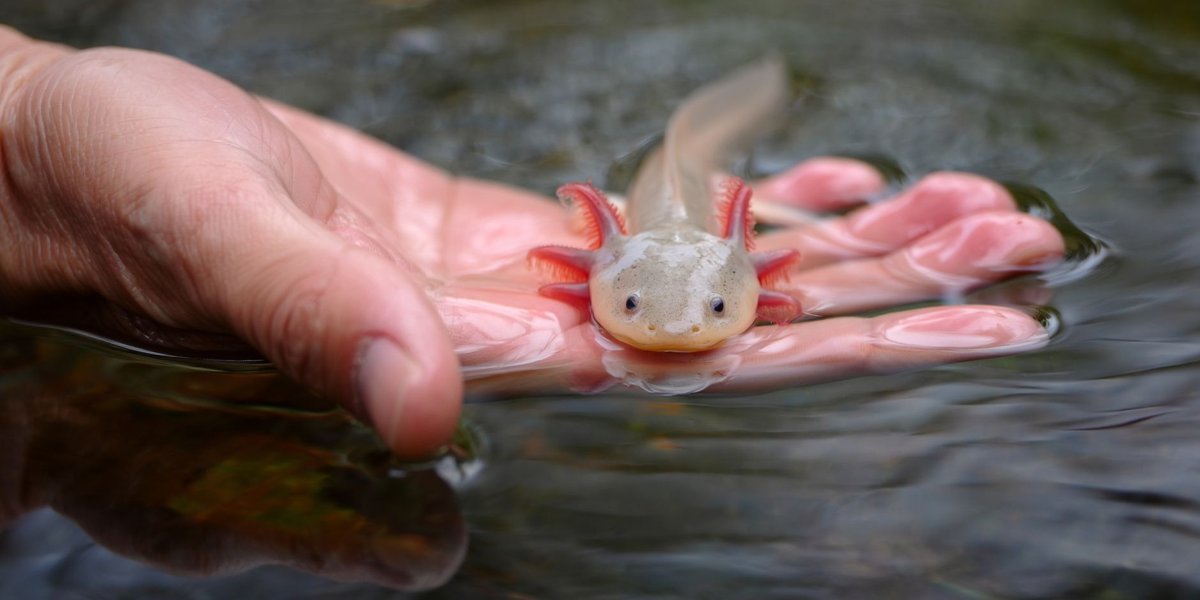
The leucistic axolotl — the pale pink morph most people picture when they hear the name — isn’t actually the wild-type coloring. Wild axolotls are mostly mottled brown or black; the pink, frilled-gill version is a genetic variant that’s become so popular in the pet trade it’s now the default mental image of the species. Their gills, those feathery pink fronds framing the head, are external and absorb oxygen directly from water, which is part of why axolotls never go through full metamorphosis the way most salamanders do.
They’re neotenic, meaning they reach sexual maturity while still in their juvenile, gilled, aquatic form — permanent Peter Pans of the amphibian world. In the wild, they’re critically endangered, with Mexican conservation surveys finding shockingly low numbers left in Xochimilco due to pollution and invasive fish. The captive population, ironically, numbers in the hundreds of thousands.
4. Hairy Squat Lobster
Size: 0.4 inches (1 cm) body length | Habitat: Barrel sponges and coral, Indo-Pacific reefs
This isn’t a lobster and it isn’t hairy in the mammalian sense — it’s a squat lobster (more closely related to hermit crabs) covered in fine, hot-pink setae that make it look like it’s wearing a tiny fur coat dyed to match its host sponge. It lives almost exclusively on the surface of barrel sponges, using its bristled body to blend into the sponge’s own pink or purple tissue.
Divers and underwater macro photographers treat spotting one as a minor trophy, since its entire body could sit comfortably on a fingernail. It feeds by filtering particles out of the water current the sponge itself generates, essentially freeloading off its host’s filtration system rather than hunting.
5. Pink Katydid
Size: 2–2.5 inches (5–6.5 cm) | Habitat: Grasslands and woodlands, eastern North America
Pink katydids are ordinary green katydids (Amblycorypha species) carrying a rare genetic condition called erythrism, which replaces their usual green pigment with bubblegum pink. Estimates put the odds of an individual expressing this trait at roughly 1 in 500, which is rare enough that entomology collections treat confirmed specimens as notable finds rather than routine catches.
The color isn’t camouflage — pink stands out badly against green foliage — so pink katydids in the wild likely face much higher predation than their green counterparts, which may be part of why sightings stay so uncommon despite the underlying genetics not being especially unusual.
6. Rosy Maple Moth
Size: 1.25–2 inches (3–5 cm) wingspan | Habitat: Deciduous forests, eastern and central North America
The rosy maple moth looks like it was designed by committee to be as cute as physically possible — soft pink and yellow wings, a fuzzy pale body, and a face that’s mostly just more fuzz. Its caterpillar stage, the green-striped mapleworm, feeds almost exclusively on maple leaves, which is where the “maple” half of the name comes from.
Adults live only about a week and don’t eat at all in that time, surviving on fat reserves built up during the caterpillar stage. Despite the short adult lifespan, they’re one of the most photographed moths in North America — the pink-and-yellow combination reads as almost artificial next to the moths most people picture. They share deciduous forests with countless other fascinating forest animals that draw far less attention despite being equally odd.
7. Spanish Shawl Nudibranch
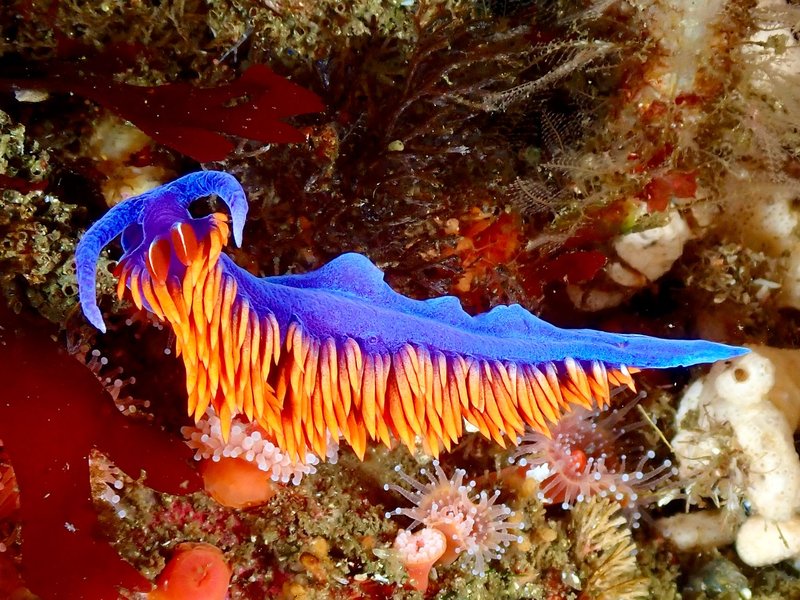
Size: 1.5–2 inches (4–5 cm) | Habitat: Rocky reefs and kelp forests, eastern Pacific from California to Baja
This sea slug’s body runs deep violet-pink with bright orange cerata (the finger-like projections on its back) tipped in matching color, making it look more like a Mardi Gras costume than a mollusk. It gets both its color and, oddly, part of its diet from the hydroids it eats — some nudibranch species can repurpose stinging cells from their prey for their own defense.
It has no shell at any life stage, unlike most of its relatives, and relies entirely on that vivid coloring plus the borrowed stinging cells to warn predators off. Tide pool explorers along the California coast rate it among the easiest nudibranchs to spot precisely because the color has no camouflage value whatsoever against gray rock.
8. Naked Mole Rat
Size: 3–4 inches (7.5–10 cm), excluding tail | Habitat: Underground burrow systems, East Africa (Kenya, Somalia, Ethiopia)
Naked mole rats aren’t pink because of pigment — they’re pink because they have almost no fur and close to no melanin, so the skin’s blood supply shows straight through, the same way human skin looks pinker where it’s thinnest. They’re also nearly blind, cold-blooded for a mammal (their body temperature drifts with the burrow’s), and can survive up to 18 minutes with no oxygen at all by switching their metabolism to run on fructose instead of glucose, a trick otherwise seen mainly in plants.
Colonies function like insect hives, with a single breeding queen and non-reproductive workers, an arrangement called eusociality that’s vanishingly rare among mammals. Naked mole rats also almost never get cancer, a fact that’s made them one of the most studied animals in aging research at institutions from the National Institute on Aging on down.
9. Pink Grasshopper
Size: 0.6–1 inch (1.5–2.5 cm) | Habitat: Meadows and grasslands, UK and continental Europe
Like the pink katydid, the pink meadow grasshopper carries erythrism rather than being a distinct species — it’s the same Chorthippus parallelus found across European meadows, just missing the genes that normally lay green pigment over its base color. British naturalist groups get enough public reports of pink grasshoppers each summer that several wildlife trusts now keep informal sighting logs, treating each one as a small local event.
The trait shows up more often in females than males for reasons that aren’t fully worked out, and pink individuals seem to survive fine despite the obvious visibility problem in green grass — possibly because birds hunt grasshoppers more by movement than color.
10. Pink-Fringed Mantis Shrimp
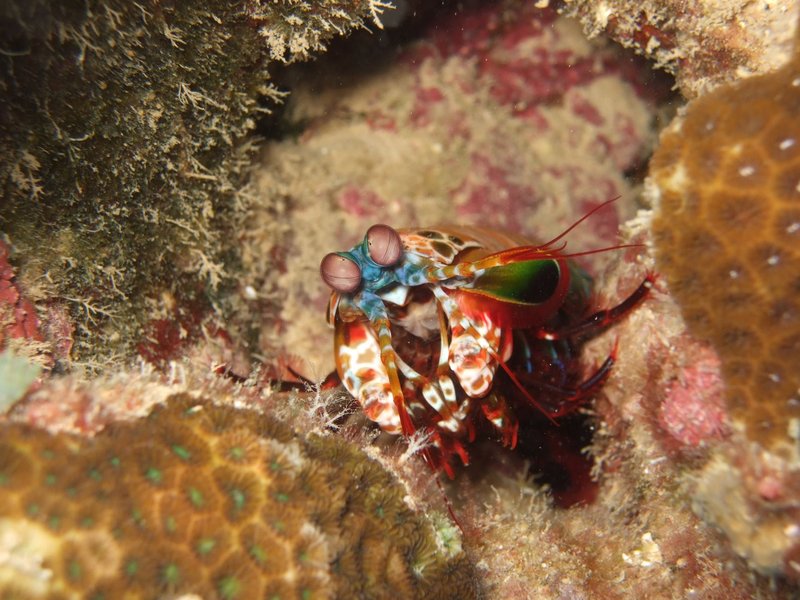
Size: 1.5–3 inches for the smaller pink-marked species | Habitat: Coral rubble and sandy burrows, Indo-Pacific
Mantis shrimp as a group are famous for having the most complex eyes in the animal kingdom — up to 16 photoreceptor types, compared to the human eye’s three — and several of the smaller reef-dwelling species carry pink or magenta banding along their raptorial claws. Those claws strike with enough force to crack aquarium glass, a party trick that’s earned larger mantis shrimp the nickname “thumb-splitter” among divers who’ve been on the receiving end.
The pink-marked smaller species use the coloring in territorial and mating displays rather than camouflage, flashing the claws as a warning before resorting to the strike itself, since that strike costs the animal real energy and risk of injury to deploy.
11. Pink Robin Chick
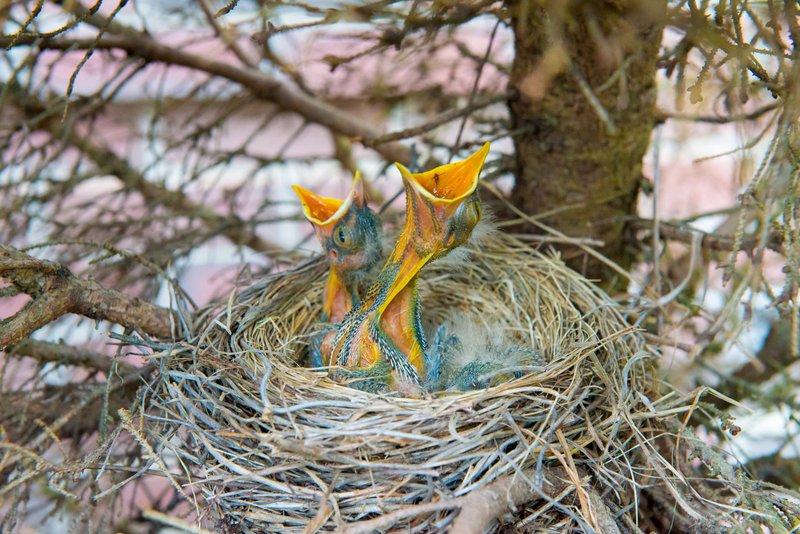
Size: 1–1.5 inches at hatching | Habitat: Backyard nests, North America and Europe (species-dependent)
Nearly every altricial songbird — the kind born blind, featherless, and helpless — hatches pink, because like the naked mole rat, there’s no pigment or feather coverage yet to hide the skin’s blood supply. American robin chicks are a common example: they hatch a raw, translucent pink and don’t develop their recognizable coloring until roughly two weeks later, when feathers come in.
That vulnerable pink stage is exactly why so many backyard bird cameras and nest boxes exist — the transformation from blind pink hatchling to fledged juvenile happens fast enough, usually under two weeks, that it’s one of the more dramatic before-and-afters in common backyard wildlife.
12. Elephant Ear Polyp (Zoanthid)
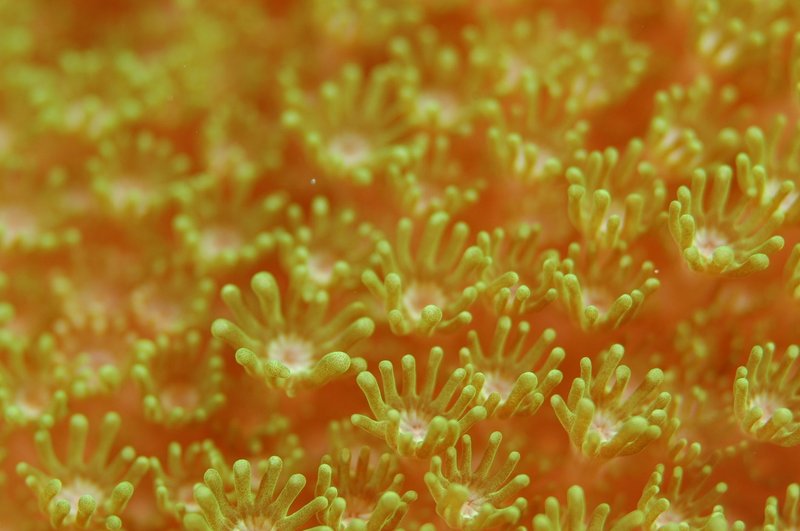
Size: 0.25–0.5 inches (0.6–1.2 cm) per polyp | Habitat: Shallow reef flats, Indo-Pacific
Zoanthids are colonial coral relatives, and several reef-aquarium-popular strains grow in solid pink or pink-rimmed colors that saltwater hobbyists trade like collectible cards, sometimes for surprising sums for a single frag. Each individual polyp is tiny, but they grow in mats of dozens to hundreds of genetically identical clones connected at the base.
In the wild they carry photosynthetic algae inside their tissue, the same symbiotic relationship reef-building corals rely on, which is part of why their color depends heavily on light exposure — the same colony can shift shade depending on how much sun it gets.
13. Pink Sea Slug (Hopkins’ Rose)
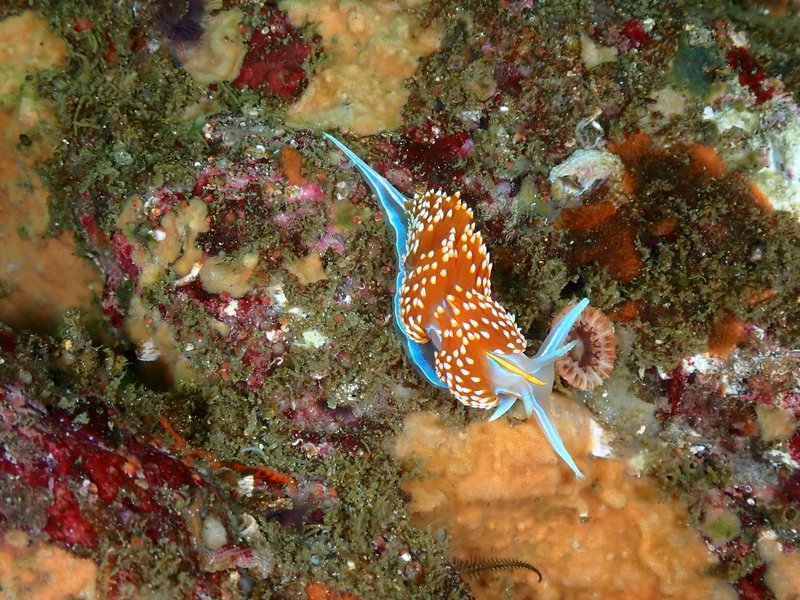
Size: 0.5–1 inch (1.3–2.5 cm) | Habitat: Tide pools and rocky shores, Pacific coast of North America
Hopkins’ rose nudibranch is a near-fluorescent magenta-pink from head to tail, with no other pattern or marking to break it up — a solid wash of color that makes it one of the most recognizable tide pool residents on the West Coast. It feeds on pink bryozoans (tiny colonial invertebrates), and some researchers think it may sequester pigment from that diet, similar to how flamingos get their color from the shrimp and algae they eat.
It’s most commonly spotted in late winter and spring, when population numbers spike along the California coast for reasons tied to bryozoan bloom cycles rather than the slug’s own breeding schedule.
14. Comb Jelly (Pink Variants)
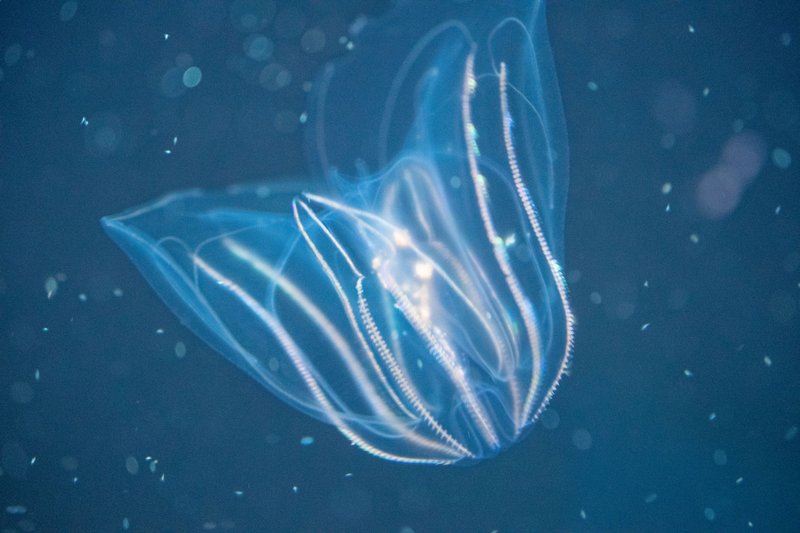
Size: 1–4 inches depending on species | Habitat: Coastal and open ocean waters worldwide
Several comb jelly species take on a rosy pink tint, especially in deeper or colder water, and combine that with rows of cilia that refract light into a rainbow shimmer as they pulse through the water column. Unlike true jellyfish, comb jellies don’t sting — they capture prey with sticky cells called colloblasts instead of nematocysts.
They’re also some of the oldest lineages in the animal kingdom, with genetic studies suggesting ctenophores may have branched off before sponges did, making a creature this delicate-looking one of evolution’s more surprisingly ancient survivors.
15. Pink Underwing Moth Caterpillar
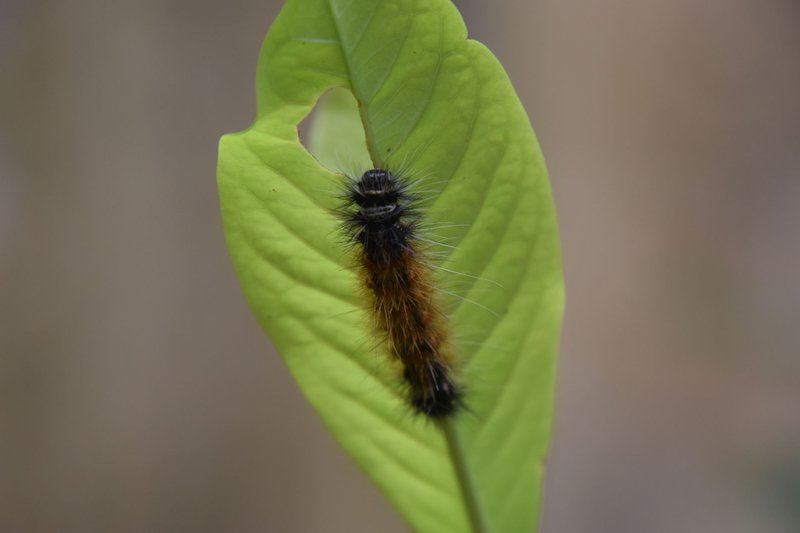
Size: 1.5–2 inches (4–5 cm) | Habitat: Rainforest, subtropical eastern Australia
This caterpillar spends most of its life looking like an unremarkable leaf-mimicking grub, then flips its rear end up to reveal a shocking pink-and-black startle pattern the moment a predator gets too close — a defense mechanism entomologists call a deimatic display. The pink flash is normally hidden, folded away, which is what makes it effective: nothing about the resting caterpillar suggests it.
The adult moth it becomes is drab brown and forest-camouflaged, making the caterpillar’s hidden pink display one of the more dramatic examples of a single species carrying two completely different defensive strategies at two life stages. In the rainforests where this caterpillar lives, such extreme adaptations are routine — tropical rainforest spiders and other creatures constantly evolve hunting and defense strategies just as dramatic.
16. Baby Pink Rat
Size: 1.5–2 inches at birth | Habitat: Wherever adult rats nest — global, urban and rural
Newborn rats, like most altricial mammals, are born hairless, blind, and pink for the same reason as robin chicks and naked mole rats: no fur or fully developed skin pigment yet to mask the blood vessels underneath. Rat pups gain fur within about a week and open their eyes around day 14, a fast developmental clock that’s part of why rat populations can explode so quickly under the right conditions.
Lab and pet-trade “pinkies,” as breeders call this newborn stage, are also a standard feeder size in the reptile trade — one of the more unglamorous but consistent uses of the word “pink animal” that never makes it onto aesthetic listicles.
17. Pink Skunk Clownfish
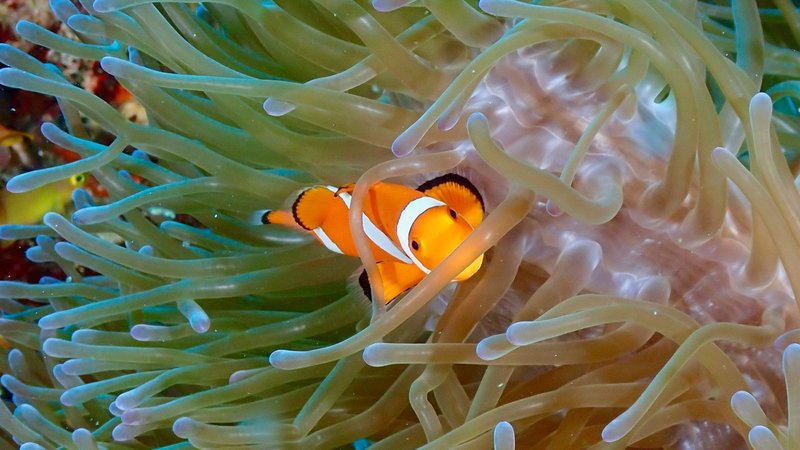
Size: 3–4 inches (7.5–10 cm) | Habitat: Anemones on coral reefs, Indo-Pacific
The pink skunk clownfish is pale salmon-pink rather than the orange-and-white most people picture when they hear “clownfish,” with a single white stripe running down its back like a racing skunk — hence the name. It lives in an obligate partnership with sea anemones, developing immunity to the anemone’s sting through a mucus coating while gaining protection from predators in return.
Clownfish are sequential hermaphrodites: every individual is born male, and the dominant fish in a group’s hierarchy transitions to female, becoming the breeding female of that anemone’s resident group. If she dies, the largest remaining male takes over the role.
18. Pink Cave Salamander
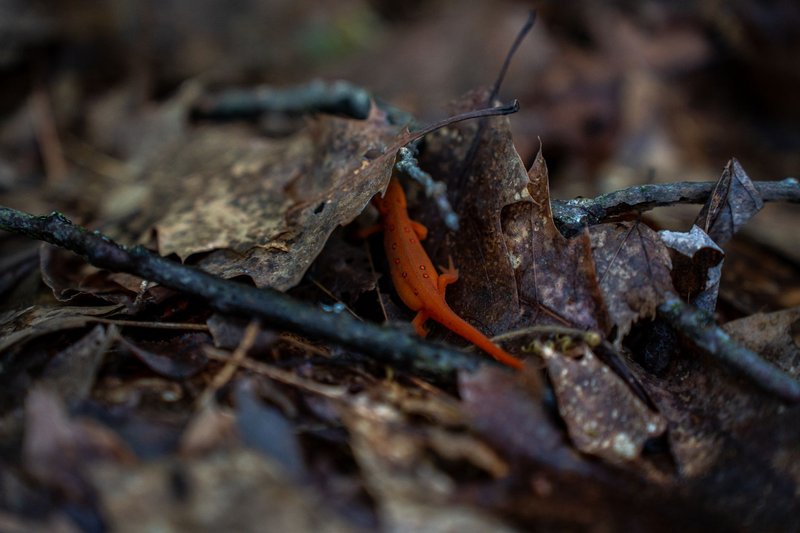
Size: 3–5 inches (7.5–13 cm) | Habitat: Limestone caves and springs, central and southern United States
Several Eurycea salamander species that spend their lives in cave streams and springs lose most pigmentation over generations, leaving skin so thin and translucent it reads as pale pink, with internal organs sometimes faintly visible through the skin along the belly. Living in permanent darkness removes any selective pressure to keep pigment or, in some species, functional eyes at all.
Because these salamanders depend entirely on clean groundwater, they’re used as an early-warning indicator species by hydrologists — a decline in a cave salamander population in a given spring system often shows up before other, more visible signs of groundwater contamination do.
Size Comparison at a Glance
| Animal | Size | Habitat Type |
|---|---|---|
| Pygmy Seahorse | 0.5–0.9 in | Coral reef |
| Elephant Ear Polyp | 0.25–0.5 in | Coral reef |
| Hairy Squat Lobster | 0.4 in | Sponge/coral |
| Hopkins’ Rose Sea Slug | 0.5–1 in | Tide pool |
| Pink Grasshopper | 0.6–1 in | Meadow |
| Rosy Maple Moth | 1.25–2 in (wingspan) | Forest |
| Spanish Shawl Nudibranch | 1.5–2 in | Rocky reef |
| Mantis Shrimp (small species) | 1.5–3 in | Reef rubble |
| Pink Underwing Caterpillar | 1.5–2 in | Rainforest |
| Comb Jelly | 1–4 in | Open ocean |
| Baby Pink Rat | 1.5–2 in | Global |
| Pink Robin Chick | 1–1.5 in | Backyard nest |
| Pink Katydid | 2–2.5 in | Grassland |
| Naked Mole Rat | 3–4 in | Underground burrow |
| Pink Fairy Armadillo | 3.5–4.5 in | Desert sand |
| Pink Skunk Clownfish | 3–4 in | Anemone |
| Pink Cave Salamander | 3–5 in | Limestone cave |
| Axolotl (juvenile) | 2–4 in | Freshwater canal |
Most “pink animals” content treats pink as a single trick — usually diet-based, like flamingos and their shrimp. The truth is messier and more interesting: pink shows up from thin skin over blood vessels, from erythrism flipping a green gene off, from mimicking a coral’s own tissue, from total pigment loss in permanent dark. Eighteen animals, five completely different biological reasons for the same color. That’s the part the bigger, blander lists skip past on their way to another flamingo photo.