Table of Contents
- The scale of it
- The law that’s supposed to stop this
- The plants doing the most damage
- The fish nobody expected
- The animals that hitched a ride
- Where it’s worst
- What you can actually do about it
The scale of it
Portugal has roughly 670 non-native species established outside cultivation or captivity, and about 18% of the country’s flora is now something that didn’t originate here. That’s not a rounding error — it’s one of the higher invasion rates in the European Union, and the EU has flagged the country as a hotspot largely because of a single genus: acacia.
This isn’t an abstract ecology problem. Invasive plants have altered fire behavior in the north, invasive fish have changed what’s left in the rivers, and one invasive tortoise is now common enough in garden centers that most buyers have no idea it’s illegal to release.
Quick version: the worst offenders are a handful of Australian acacias (especially Acacia dealbata, the mimosa), pampas grass, water hyacinth choking waterways, the giant Wels catfish in reservoirs, and the red-eared slider turtle sold in pet shops for decades before anyone banned it. Portugal’s Decree-Law 92/2019 makes owning, selling, or releasing most of these illegal — enforcement is another matter.
The law that’s supposed to stop this
Portugal’s current legal framework, Decree-Law 92/2019, replaced older, patchier rules and now lists species by category: banned outright, restricted to licensed activity, or under active eradication mandate. It covers plants, vertebrates, and invertebrates, and it puts the legal burden on landowners — if an invasive species listed under the decree is spreading on your land and you don’t act, you can be fined.
The gap is enforcement capacity, not the law itself. Portugal has one of the more comprehensive invasive species statutes in southern Europe on paper; on the ground, monitoring a few hundred species across a country with this much rural, unsupervised land is a resourcing problem, not a legal one.
The plants doing the most damage
Plants are where Portugal’s invasion problem is most visible, because they don’t hide — they cover hillsides.
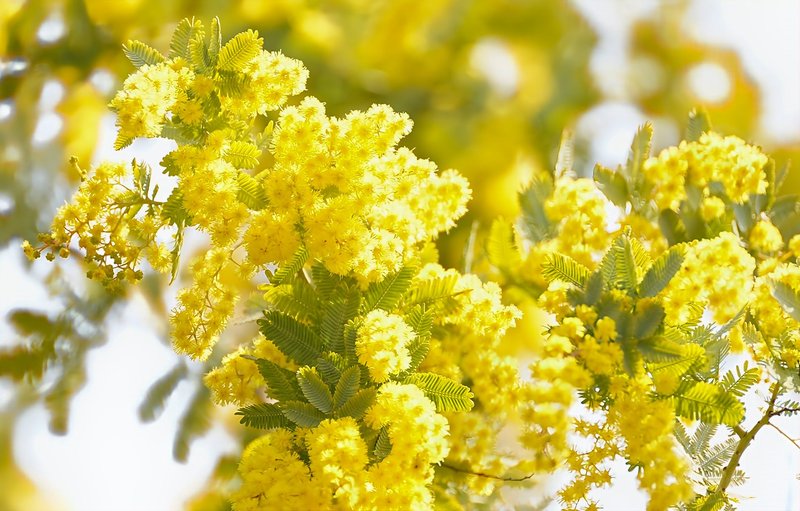
Acacia dealbata (mimosa) is the one everyone notices in late winter, when its yellow flowers turn entire valleys gold. It looks lovely and it’s an ecological wrecking ball: it fixes nitrogen into soils that native Mediterranean scrub isn’t adapted to, it resprouts aggressively after fire, and burned acacia stands come back thicker than before the fire — which means it’s not just spreading, it’s actively rewriting the fire cycle in the areas it colonizes. It arrived as an ornamental and erosion-control planting in the 19th century and has been expanding ever since, particularly through the central and northern river valleys.
Pampas grass (Cortaderia selloana) does the opposite trick — it doesn’t need fire, it needs disturbed ground, and Portugal has plenty: roadside verges, abandoned fields, dune systems. A single mature clump produces a staggering number of wind-dispersed seeds, and because it forms dense clumps that outcompete low native dune and grassland vegetation, it’s become one of the most visible invaders along the coast, not just inland.
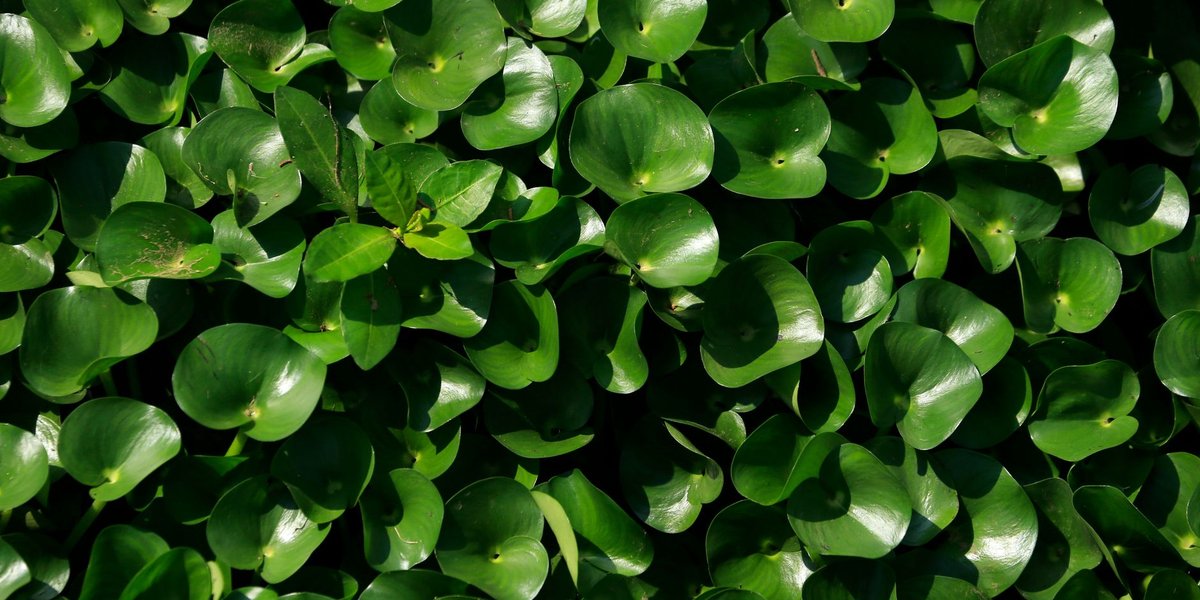
Water hyacinth (Eichhornia crassipes) is the one that makes rivers photogenic and then makes them unusable. It forms floating mats dense enough to block boat traffic and irrigation intakes, and as those mats die back they deoxygenate the water underneath, which is bad news for the fish that were already there before the catfish showed up.
The fish nobody expected
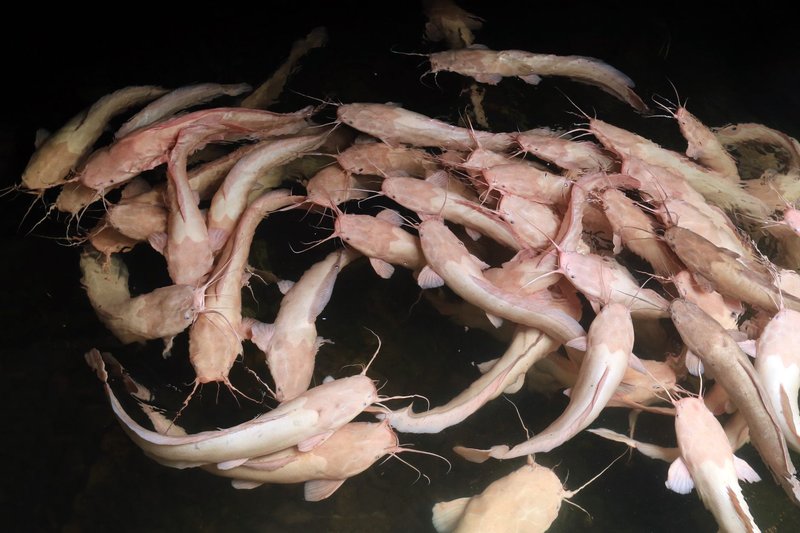
Silurus glanis, the Wels catfish — known locally as siluro — is Portugal’s strangest invasion story, because almost nobody saw it coming from Central Europe. It was introduced to Spanish reservoirs for sport fishing in the 1970s and swam downstream into Portuguese waters via the shared Tagus and Guadiana river systems. It’s now the apex predator in several reservoirs, growing past two meters and feeding on native barbel, eels, and waterfowl chicks.
Researchers at Portugal’s MARE marine and environmental research center have described it as effectively a freshwater equivalent of introducing a lion where there wasn’t one before — there’s no native predator playing that role at that size, and the native fish community hasn’t evolved defenses against it. Anglers love it. The rest of the river ecosystem doesn’t get a vote.
The animals that hitched a ride
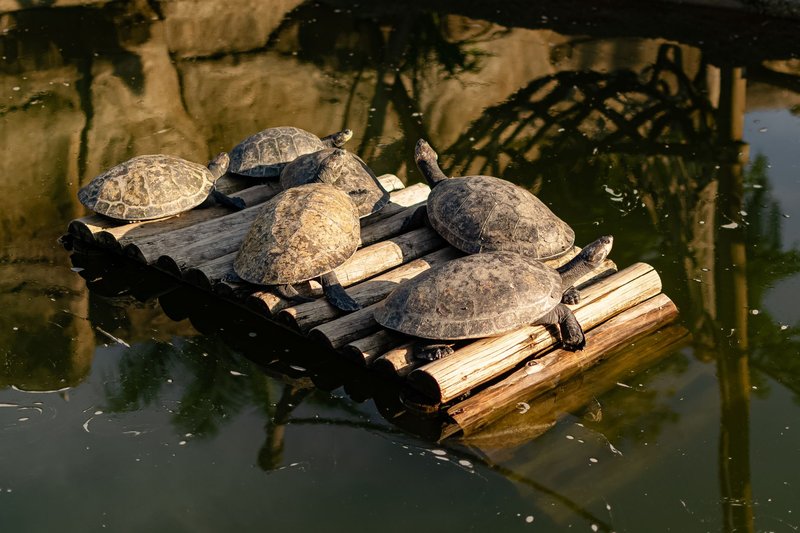
The red-eared slider (Trachemys scripta elegans) is the textbook case of a pet-trade invasion. It was sold cheaply and legally in Portugal for decades as a starter pet turtle before the EU banned the trade in 2016, by which point thousands had already been released into ponds, canals, and slow rivers once owners realized these turtles live 20-plus years and grow far larger than the coin-sized hatchlings sold in shops. They outcompete Portugal’s native European pond turtle for basking spots and food, and because they’re long-lived, the ones already released will keep breeding for years regardless of what happens to the pet trade now.
Beyond the turtle, the country’s invasive vertebrate list includes raccoons and coypu (nutria) established from fur-farm escapes, and a growing list of invasive freshwater fish beyond the catfish — including largemouth bass and pumpkinseed sunfish, both originally stocked for recreational angling.
Where it’s worst
Invasion pressure isn’t evenly spread across Portugal, and that matters if you’re trying to understand — or avoid contributing to — the problem.
The Tagus and Guadiana river basins carry the worst of the aquatic invasions: the catfish, the bass, the water hyacinth mats, largely because these are the rivers that connect to Spain’s reservoir network where many of these species were first introduced.
The Algarve’s dune systems and abandoned agricultural terraces are prime pampas grass and acacia territory — disturbed, sunny ground that native scrub hasn’t reclaimed.
Madeira and the Azores face a different and arguably more severe version of the problem: island ecosystems evolved with almost no competition, so introduced plants and animals face far less resistance than on the mainland, and island endemics have nowhere to retreat to. Madeira’s laurel forest, a UNESCO World Heritage site, is under active pressure from invasive plants encroaching from cultivated land at its margins.
What you can actually do about it
If you’re hiking, gardening, or just living somewhere near one of these hotspots, the actions that actually move the needle are small and unglamorous.
Don’t plant ornamental pampas grass or mimosa, even from a garden center — both are still sold decoratively despite the ecological cost, and both spread from cultivated gardens into wild areas via seed and root fragments.
Clean boots and gear between hikes, especially between wetland or riverside trails, since invasive plant seeds travel in mud on boot treads and bike tires more often than people assume.
Never release a pet into the wild — not a turtle, not an aquarium fish, not anything. If you can’t keep it, contact a wildlife rescue or a local reptile rehoming group instead; a five-minute phone call is the difference between a contained problem and a new breeding population.
Report sightings through invasoras.pt’s citizen submission tool if you spot a species you suspect is invasive, particularly in a new location — early detection is the only stage at which eradication is genuinely cheap.
None of this reverses two centuries of introductions. But Portugal’s invasion trajectory isn’t fixed, and the species still in the early stages of spreading — not the acacia forests that are already established — are exactly where individual choices still make a measurable difference.