Denmark packs roughly 1,500 native plant species into a country you can drive across in a few hours. No alpine peaks, no rainforest — just glacial soil, salt wind, and a coastline that never stops. That constraint is exactly why the flora here is worth learning: every species on this list earned its spot by surviving thin, sandy, or waterlogged ground, not by being showy.
Only about 11% of Denmark is forested, which is low for a European country, but that thin margin of woodland carries an outsized cultural weight — Danish beech forests show up in national identity the way maple does in Canada. Here’s a working list of the native species you’ll actually encounter, organized by where you’d find them.
Table of Contents
- Native Trees
- Wildflowers and Meadow Plants
- Heathland Plants
- Coastal and Wetland Species
- Wild Orchids
- Where to See Them
Native Trees
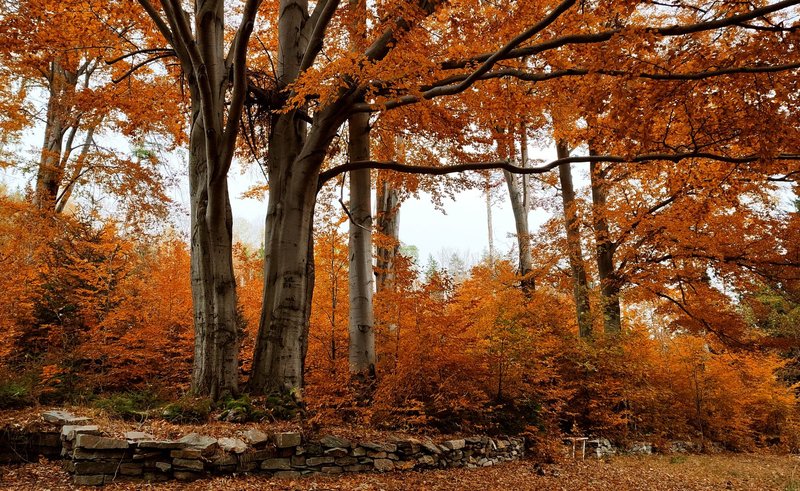
Denmark’s forests skew heavily toward a handful of species, and the beech is the one that defines the look of the country every May.
1. European beech (Fagus sylvatica) — Denmark’s national tree, and for good reason: the smooth grey trunks and the acid-green flush of new leaves in spring are the closest thing the country has to a signature landscape. Beech forests like those at Møns Klint grow right up to chalk cliffs, which is an unusual pairing you won’t see in most beech-dominated countries.
2. Pedunculate oak (Quercus robur) — The oak that shows up in place names and old estate avenues across Zealand and Jutland. It’s slower-growing than beech and was historically prized for ship timber — Denmark’s naval history runs on oak, quite literally.
3. Small-leaved lime / linden (Tilia cordata) — Common as a street and avenue tree in Danish towns, but also native to old-growth forest remnants. Look for the lopsided, heart-shaped leaves; the flowers are strongly scented in June and traditionally dried for tea.
4. Wych elm (Ulmus glabra) — Once far more common before Dutch elm disease swept through in the 20th century. Surviving specimens tend to be isolated trees rather than stands, which makes spotting a mature one feel like finding a holdout.
5. Silver birch (Betula pendula) — The pioneer species that colonizes heath and cleared ground first, recognizable by peeling white bark that darkens and cracks near the base with age.
Wildflowers and Meadow Plants
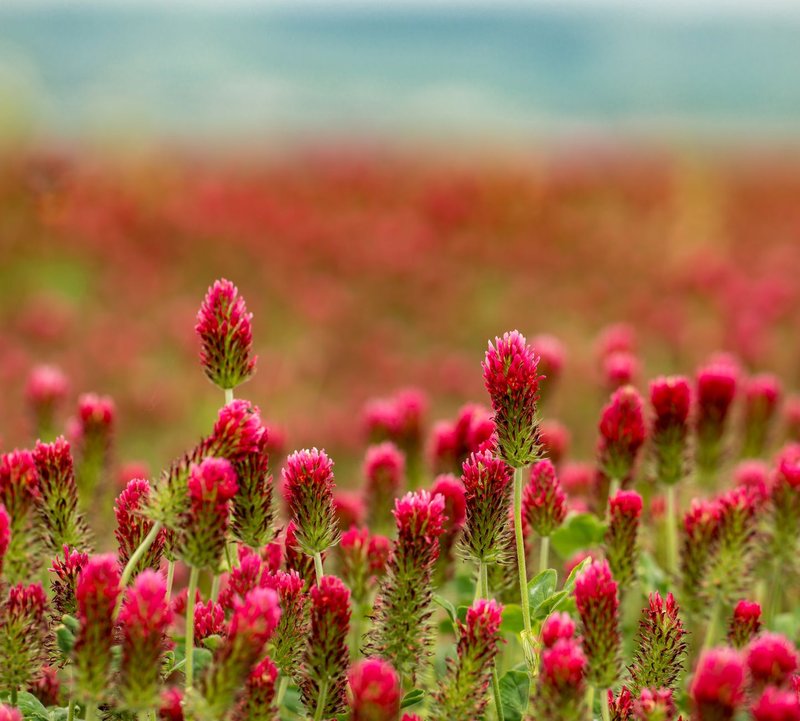
6. Red clover (Trifolium pratense) — Denmark’s official national flower, designated in 1936, chosen for its long history as fodder for Danish livestock rather than for looks. It’s a working plant that happens to be pretty, which fits the practical thread running through a lot of Danish flora choices.
7. Oxeye daisy / marguerite (Leucanthemum vulgare) — Not the official national flower, but the people’s choice: a 1987 magazine poll drew more than 15,000 votes, and the marguerite daisy took over 70% of them. It carpets roadside verges and unmown meadows from May through August.
8. Cowslip (Primula veris) — One of the earliest meadow flowers, blooming in April on chalky, unimproved grassland. Populations declined hard with agricultural intensification, so a thick patch is usually a sign the field hasn’t been sprayed or plowed in decades.
9. Common poppy (Papaver rhoeas) — Shows up in disturbed soil and field margins, the same way it does across the rest of temperate Europe. In Denmark it’s mostly a summer arable-field plant now, since the wildflower meadows it used to favor have shrunk.
10. Harebell (Campanula rotundifolia) — Thin, wiry stems topped with pale blue bells, found on dry banks and dunes. It looks fragile but tolerates poor, sandy soil better than almost anything else on this list.
Heathland Plants
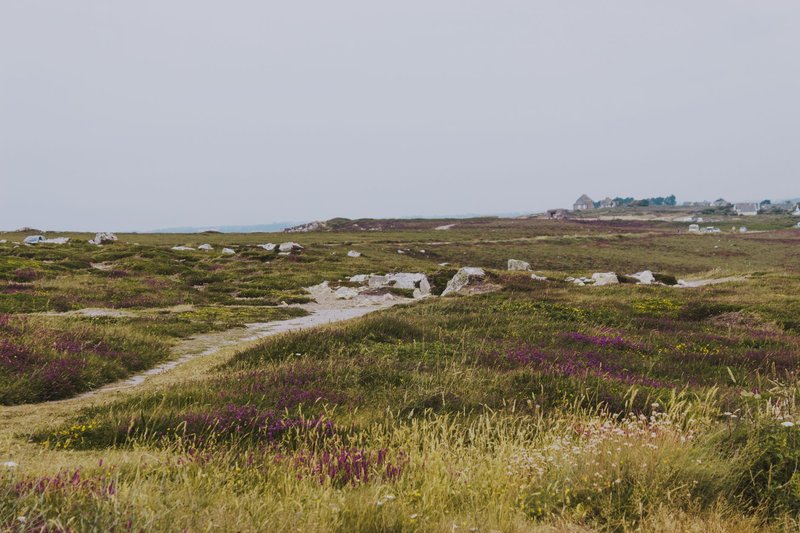
North and central Jutland hold Denmark’s largest surviving heath, a landscape type that used to cover much more of the country before agriculture reclaimed it.
11. Common heather / ling (Calluna vulgaris) — The plant that defines Jutland’s heaths, turning entire hillsides purple-pink in August and September. Rebild Bakker and the moors around Silkeborg are where it still grows at scale.
12. Bell heather (Erica cinerea) — Blooms slightly earlier and in a deeper magenta than common heather, usually on drier, more exposed ground within the same heath systems.
13. Crowberry (Empetrum nigrum) — A low, dark-leaved shrub that produces small black berries edible but bland — historically eaten by grazing sheep and, in lean years, people. It shares ground with heather but tolerates even poorer drainage.
14. Common gorse (Ulex europaeus) — Spiny, yellow-flowered, and one of the few plants that blooms year-round in mild stretches — there’s an old saying that “when gorse is out of bloom, kissing’s out of fashion,” because it rarely fully stops flowering.
Coastal and Wetland Species
With over 7,000 kilometers of coastline, Denmark’s beach and marsh plants do a lot of quiet ecological work holding the country’s edges together.
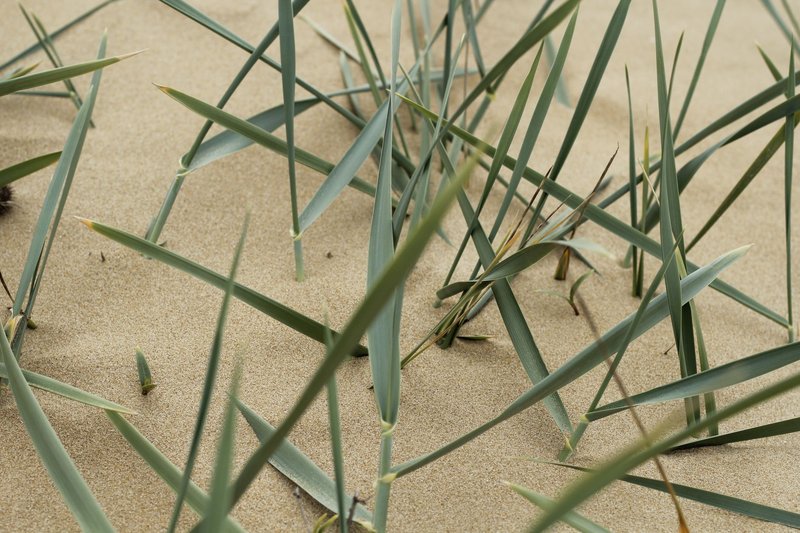
15. Marram grass (Ammophila arenaria) — The dune-stabilizing grass planted deliberately along the west coast of Jutland for over a century to stop sand drift from burying farmland. Its roots can grow a meter or more downward chasing moisture.
16. Sea holly (Eryngium maritimum) — Steel-blue, thistle-like, and startlingly architectural for a dune plant. It’s become rare enough in places that picking it is discouraged, since foot traffic on dunes damages the shallow root systems it depends on.
17. Common reed (Phragmites australis) — Dominates Denmark’s coastal marshes and lake margins, and historically was harvested for thatching roofs — a craft still practiced on some older farmhouses.
18. Sea buckthorn (Hippophae rhamnoides) — A spiny coastal shrub with bright orange berries in autumn, high enough in vitamin C that it’s been foraged commercially for juice and jam in recent years.
Wild Orchids
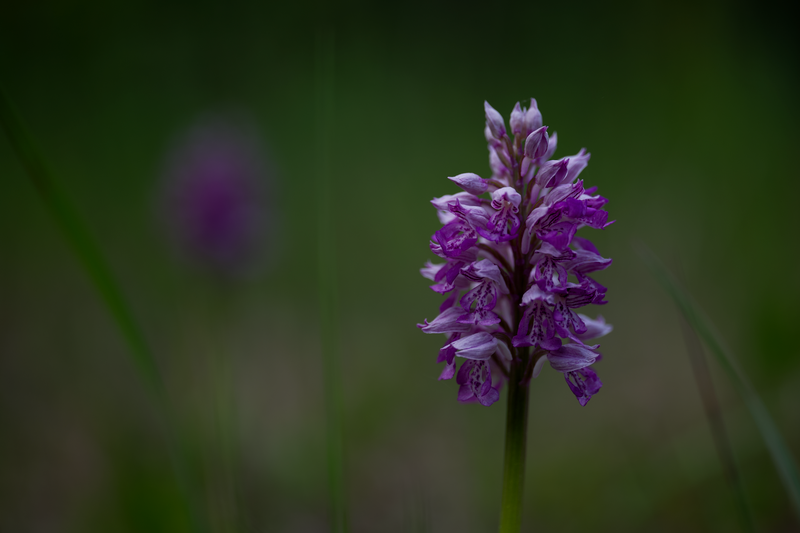
Denmark has roughly 45 wild orchid taxa on record, and Møns Klint alone hosts 18 of them — an unusually high concentration for a country this far north. Many of these species are now listed in the country’s List of Endangered Species in Denmark, reflecting their sensitivity to habitat change.
19. Green-winged orchid (Anacamptis morio) — Found in unimproved grassland at Mols Bjerge National Park, where more than half of all Danish wild plant species grow within a small stretch of hilly terrain.
20. Lady orchid (Orchis purpurea) — A rarity that turns up in isolated pockets like Naturpark Lillebælt, distinguished by its tall spike of purple-hooded flowers resembling tiny figures in dresses — hence the name.
Where to See Them
Copenhagen’s Natural History Museum of Denmark holds the country’s reference herbarium and botanical collections if you want the taxonomic deep end. For something more hands-on, Bangsbo Botaniske Have in Frederikshavn focuses specifically on native Danish flora, organized by habitat type rather than the usual ornamental-garden layout.
For the plants themselves in the wild, Møns Klint delivers the widest orchid diversity in one place, Mols Bjerge covers meadow and grassland species at scale, and the heaths around Rebild and Silkeborg are the reliable bet for heather in late summer. None of it requires a wilderness trek — Denmark’s flora rewards a short walk more than a long one.
Denmark’s flora also has a formal historical record worth knowing about: the Flora Danica project, begun in 1761, aimed to illustrate every wild plant growing in the Danish realm and eventually produced over 3,000 hand-colored copperplate engravings — still referenced today as one of the most complete botanical surveys any country has undertaken of itself.