TLDR
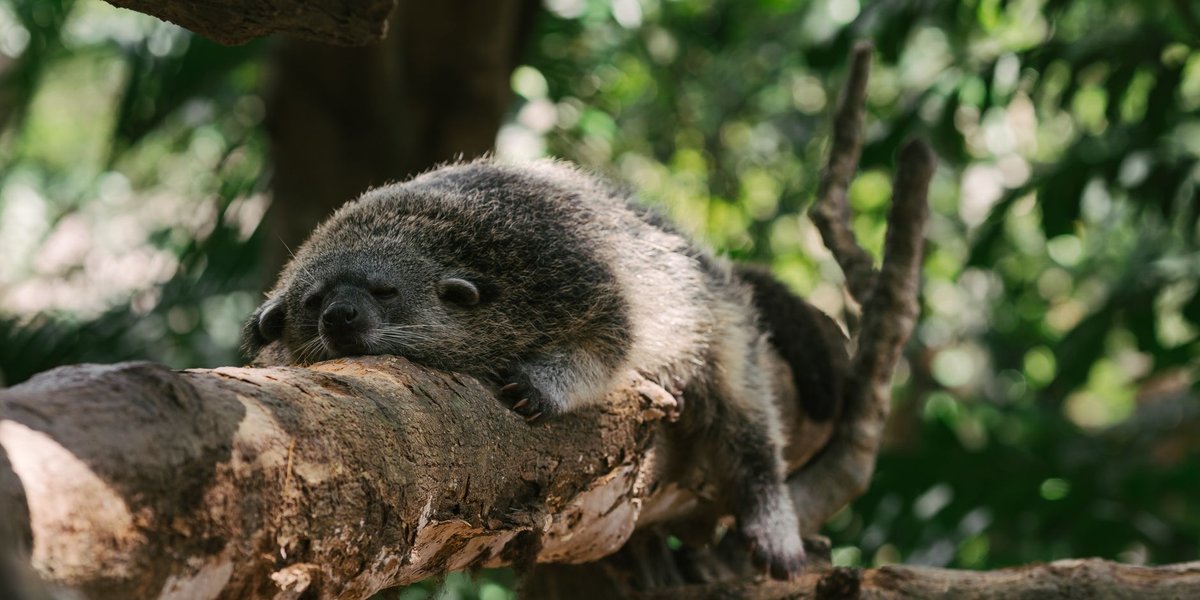
African palm civets (Nandinia binotata) are omnivores that lean hard on fruit — figs, corkwood, Uapaca berries, and oil palm pulp make up roughly 80% of what turns up in their stomachs. The rest is opportunistic hunting: rodents, birds, eggs, insects, lizards, bats, and the occasional raid on a chicken coop. They forage alone, at night, mostly in the trees, and they’re one of the more important seed dispersers in the Central African forest canopy.
Table of Contents
- The Short Answer
- What They Eat in the Wild: The Fruit Half
- What They Eat in the Wild: The Animal Half
- How They Actually Hunt
- Wild Diet vs. Captive Diet
- Why This Diet Matters for the Forest
- Does Diet Change With Age or Season?
The Short Answer {#the-short-answer}
Nandinia binotata is an omnivore, and not in the vague, hedge-your-bets way some species profiles use that word. Researchers who’ve cut open civet stomachs found fruit in nearly all of them, usually filling most of the gut. Animal matter shows up too, but as a supplement, not a staple. If you had to describe the diet in one sentence: mostly fruit, opportunistically meat, whatever’s easiest to catch or reach that night.
That balance is why the species does fine across a huge range, from Senegal to Kenya to Angola. A picky eater doesn’t survive in that many different forest types.
What They Eat in the Wild: The Fruit Half {#the-fruit-half}
The fruit list reads like a tour of the Central African canopy. Wild figs (Ficus species) show up constantly, along with the pulpy fruit of umbrella trees (Musanga), sugar plums (Uapaca), and African corkwood (Myrianthus). Where oil palms grow, civets climb up and strip the fleshy pulp off the fruit clusters, leaving the hard kernel behind — one of the few animals that reliably does this. Papaya turns up near farms and forest edges, since civets don’t distinguish “wild” fruit from what’s growing in someone’s yard.
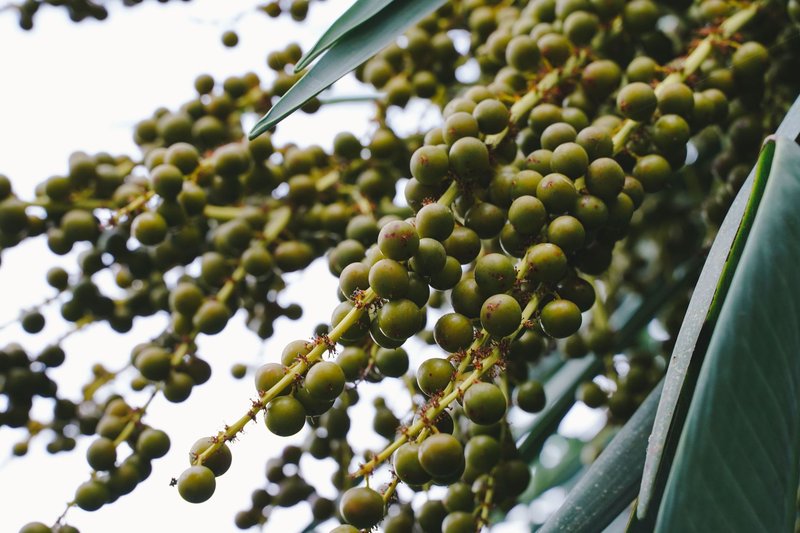
This isn’t an even split across the year. Fruiting in tropical forest is seasonal and patchy — one tree species peaks while another goes bare for months. A civet that only ate one fruit would starve half the year, so it tracks whatever’s ripe and switches trees as the forest calendar moves.
What They Eat in the Wild: The Animal Half {#the-animal-half}
Stomach-content studies back this up with a number: in one commonly cited sample, seven of twenty-two stomachs examined held animal remains — rodents, bird eggs, beetles, caterpillars. Not the main course, but a regular one.
Beyond that sample, field observation and diet accounts point to a wider prey list: small rodents, birds and their eggs, insects, lizards, bats, and occasionally frogs. Carrion gets eaten too, when it’s found. And where civets live close to farms, they’ll raid a hen house for eggs or a chick, the same way a fox would — not because poultry is a natural prey item, but because an easy meal is an easy meal.
How They Actually Hunt {#how-they-hunt}
The palm civet is arboreal by preference, and its hunting style matches. It moves slowly through branches, stops, and pounces on whatever’s within range — a stalk-and-pounce approach rather than a chase. Ground-level foraging happens too, especially when following a fruiting tree’s dropped fruit or hunting rodents in leaf litter, but the canopy is home turf.
Everything happens after dark. Palm civets are strictly nocturnal, with activity peaking in the first few hours after sunset and again just before dawn — the same window when insects are most active and easiest to snatch. They’re also solitary hunters. No group coordination, no cooperative stalking. One civet, one branch, one meal at a time.
That nocturnal, tree-bound lifestyle also explains why they target roosting birds and hen yards rather than adult prey caught in open daylight chases — they’re built for ambush from above, not pursuit across open ground.
Wild Diet vs. Captive Diet {#wild-vs-captive}
Zoos and rescue facilities that house African palm civets can’t replicate a rainforest’s fruiting calendar, so captive diets get standardized. Here’s how the two compare:
| Wild Diet | Captive Diet | |
|---|---|---|
| Base | Wild figs, corkwood, Uapaca, oil palm pulp | Commercial fruit mix, banana, papaya |
| Protein source | Rodents, birds, eggs, insects, lizards, bats, carrion | Prepared meat, mealworms, occasional whole prey (mice) |
| Variety | Shifts with seasonal fruiting and prey availability | Fixed rotation, adjusted for nutrition, not season |
| Foraging effort | Active nightly hunting and tree-to-tree movement | Food placed in enclosure; minimal search required |
| Feeding schedule | Nocturnal, opportunistic | Scheduled, usually once daily in evening |
Facilities that keep the species report civets living up to two decades in captivity — well beyond what most individuals likely see in the wild, where predation, disease, and habitat pressure cut life short.
Why This Diet Matters for the Forest {#why-it-matters}
A civet that eats a fig doesn’t destroy the seed — it passes through the gut intact and gets deposited somewhere else entirely, often far from the parent tree, wrapped in a small dose of fertilizer. Multiply that by every fruit-eating civet in a forest patch, every night, and you get a low-key but constant seed dispersal engine. Species like Ficus and Myrianthus depend on animals like this to colonize new ground; a seed that just drops straight down under its parent competes with that same tree for light and nutrients and rarely makes it.
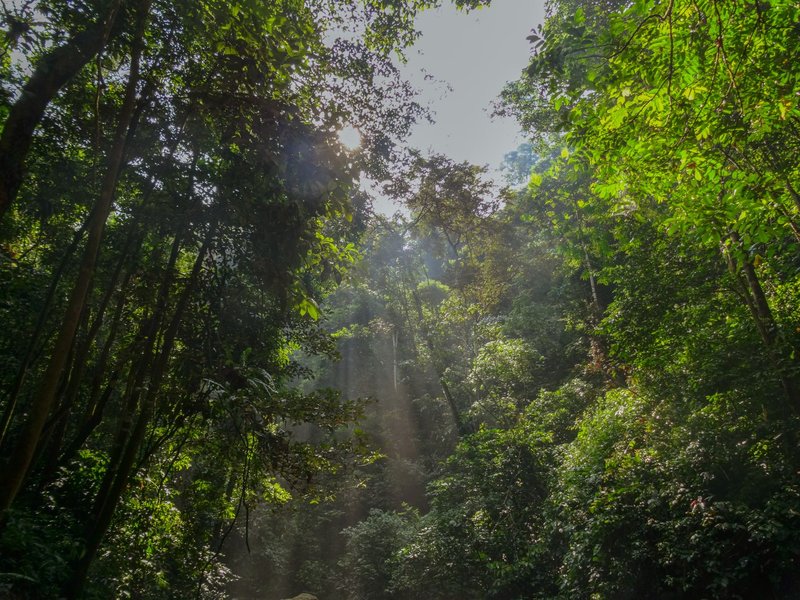
This matters more than it sounds. According to the IUCN Red List, Nandinia binotata is currently assessed as Least Concern, with a wide range and presence in many protected areas keeping the population stable for now. But that status leans on intact forest. Palm oil expansion, logging, and bushmeat hunting are already squeezing the habitat this seed-dispersal relationship depends on, and a “least concern” listing today doesn’t guarantee one in twenty years.
Does Diet Change With Age or Season? {#age-and-season}
Detailed research on juvenile-versus-adult diet in this species is thin — most published diet studies pool stomach contents across age classes rather than splitting them out, which is itself telling: it’s an open question nobody’s fully answered yet. What’s better documented is the seasonal shift. During peak fruiting months, civets eat closer to a pure-fruit diet; during lean months, the animal-prey share climbs because there’s simply less fruit on offer. The Animal Diversity Web account maintained by the University of Michigan Museum of Zoology documents this fruit-dominant baseline in detail and is one of the more thorough species profiles available for a nocturnal forest carnivore that’s genuinely hard to study in the field.
Geographic variation likely plays a role too — a civet in a Gabonese rainforest has access to a different fruiting calendar than one in a drier Kenyan forest edge — but nobody’s published a systematic comparison across the species’ full range. For now, the honest answer is: mostly fruit, supplemented by whatever’s catchable, adjusted for whatever season and forest you’re standing in.
That’s a diet built for flexibility over specialization — which, for an animal holding on in a landscape of fragmenting forest, is probably the whole reason it’s still common enough to be rated Least Concern instead of something worse.