Russia’s vast range of climates and habitats—from the Baltic wetlands and mixed forests to the Far East’s river valleys—creates surprisingly varied conditions for amphibians. Studying their distributions helps reveal regional conservation needs and how species cope with cold winters and short breeding seasons.
There are 31 Amphibians of Russia, ranging from the Alpine newt to the Southern banded newt. For each species you’ll find below Scientific name,Regions (Russia),IUCN status.
Which amphibian species in Russia are most at risk?
Species listed as Vulnerable or Endangered on the IUCN red list tend to be those with restricted ranges, specialized habitat needs, or declining wetlands; consult the IUCN status column in the list to identify them and check regional threats like habitat loss, pollution, and climate change for context.
Where in Russia is amphibian diversity highest?
Diversity is greatest in southern and eastern regions with milder climates and varied wetlands—European Russia’s forest-steppe, the Caucasus, and the Russian Far East—so look to the Regions (Russia) column in the table below to see specific distributions.
Amphibians of Russia
| Name | Scientific name | Regions (Russia) | IUCN status |
|---|---|---|---|
| Common frog | Rana temporaria | European Russia, western Siberia | Least Concern |
| Moor frog | Rana arvalis | European Russia, western and central Siberia | Least Concern |
| Marsh frog | Pelophylax ridibundus | European Russia, North Caucasus, Lower Volga | Least Concern |
| Pool frog | Pelophylax lessonae | Western European Russia (Kaliningrad, Pskov areas) | Least Concern |
| Edible frog | Pelophylax esculentus | Western European Russia (hybrid zones) | Least Concern |
| Amur frog | Rana amurensis | Eastern Siberia, Amur, Khabarovsk, Sakhalin | Least Concern |
| Dybowski’s frog | Rana dybowskii | Primorsky Krai, Sakhalin, Kuril Islands | Least Concern |
| Long-legged wood frog | Rana macrocnemis | North Caucasus, Stavropol, Krasnodar | Least Concern |
| Common toad | Bufo bufo | European Russia, forest zones | Least Concern |
| Green toad | Bufotes viridis | Southern European Russia, Volga region, steppe | Least Concern |
| Radde’s toad | Bufotes raddei | North Caucasus, Dagestan, Krasnodar | Least Concern |
| Asiatic toad | Bufo gargarizans | Russian Far East (Primorye, Amur) | Least Concern |
| European tree frog | Hyla arborea | European Russia, southern and central regions | Least Concern |
| Japanese tree frog | Dryophytes japonicus | Primorsky Krai, Amur region | Least Concern |
| Oriental fire-bellied toad | Bombina orientalis | Primorsky Krai (Far East) | Least Concern |
| European fire-bellied toad | Bombina bombina | Southwest Russia, Lower Volga, Povolzhye | Least Concern |
| Common spadefoot | Pelobates fuscus | European Russia, forest-steppe and meadow zones | Least Concern |
| Eastern spadefoot | Pelobates syriacus | North Caucasus, southern steppe regions | Least Concern |
| Smooth newt | Lissotriton vulgaris | Widespread across European Russia | Least Concern |
| Caucasian smooth newt | Lissotriton lantzi | Western Caucasus (Sochi, Krasnodar) | Least Concern |
| Great crested newt | Triturus cristatus | European Russia, forest ponds and wetlands | Least Concern |
| Alpine newt | Ichthyosaura alpestris | European Russia, Caucasus montane ponds | Least Concern |
| Fire salamander | Salamandra salamandra | North Caucasus (Sochi region), foothills | Least Concern |
| Caucasian salamander | Mertensiella caucasica | Western Caucasus, Krasnodar, Sochi | Least Concern |
| Siberian salamander | Salamandrella keyserlingii | Northern and eastern Siberia, Far East | Least Concern |
| Hynobius leechii | Hynobius leechii | Primorsky Krai, Sikhote-Alin mountains | Least Concern |
| Onychodactylus fischeri | Onychodactylus fischeri | Primorsky Krai, southern Russian Far East | Least Concern |
| Onychodactylus japonicus | Onychodactylus japonicus | Primorye and nearby islands | Least Concern |
| Sakhalin pond frog | Pelophylax porosus | Sakhalin Island, southern Kurils, Primorye | Least Concern |
| Southern banded newt | Ommatotriton vittatus | North Caucasus, Dagestan, Krasnodar | Least Concern |
| Dark-spotted frog | Pelophylax nigromaculatus | Amur region, Primorye, Khabarovsk | Least Concern |
Images and Descriptions
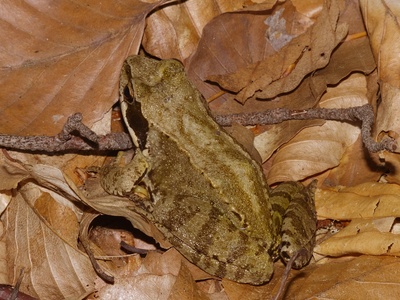
Common frog
A widespread forest and meadow frog with brownish coloration and variable spotting; breeds in ponds and slow waters. Notable for its cold tolerance and early spring emergence, sometimes hopping onto snowmelt pools to breed.
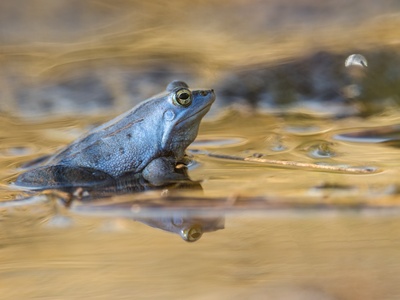
Moor frog
A slender frog of wetlands and wet meadows, usually brown or reddish in breeding males. Known for temporary mass migrations to breeding ponds and a remarkable tolerance for low temperatures during winter.
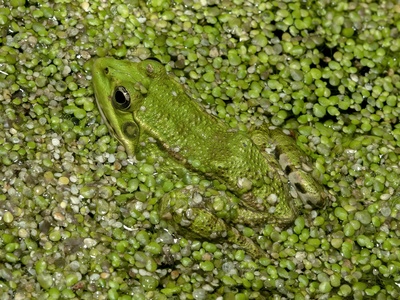
Marsh frog
A large, greenish pond frog common in lowland wetlands, rivers and reedbeds. Males have loud mating calls; it’s a strong swimmer often seen basking at pond edges and tolerates brackish water along coastal areas.
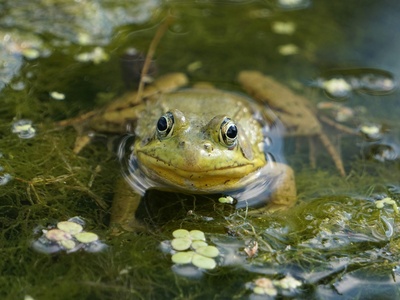
Pool frog
A medium-sized green frog of shallow ponds and ditches in lowland western Russia. Notable as one parent of the edible frog hybrid and for fragmented, localized populations in western Russian provinces.
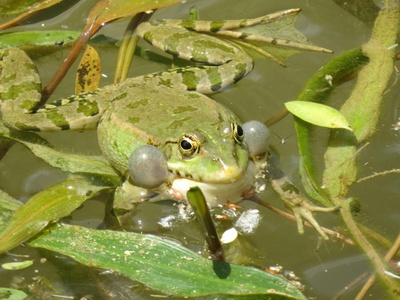
Edible frog
A hybrid between pool and marsh frogs found where both parents occur; common in garden ponds and slow waters. Interesting for its hybrid origins and ability to reproduce clonally in many populations.

Amur frog
A hardy frog of marshes, taiga ponds and floodplain wetlands in eastern Russia. Notable for its cold tolerance and extensive range across boreal wetlands of the Russian Far East.

Dybowski’s frog
A medium-sized frog of forest streams, marshes and wet meadows in the Far East. Recognizable by dorsal markings and important in local food webs, it breeds in slow-moving water and adjacent pools.
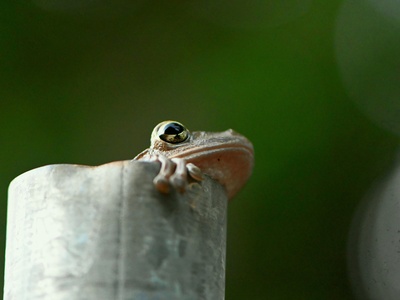
Long-legged wood frog
A robust mountain and foothill frog favoring woodland ponds and streams. Distinguished by relatively long hind limbs; common across the Caucasus where it lives at higher altitudes than many other frogs.
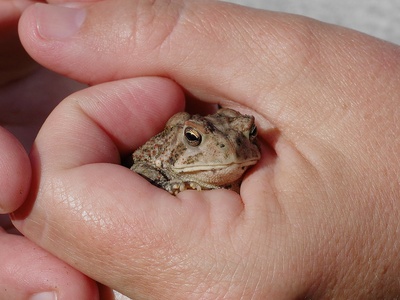
Common toad
A stocky, warty toad of woodlands, gardens and parks that breeds in ponds and slow rivers. Notable for migrating en masse to breeding sites in spring and for its defensive parotoid toxins.
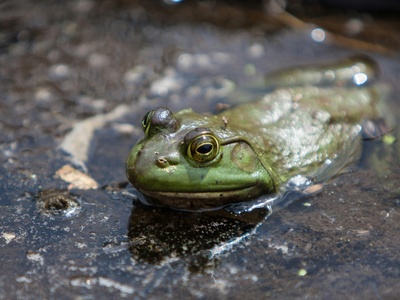
Green toad
A desert- and steppe-adapted toad with green blotches on a pale background. Lives in dry grasslands and anthropogenic habitats; notable for explosive breeding in temporary pools after heavy rains.

Radde’s toad
A toad of lowland and montane steppes and semi-deserts in the Caucasus region. Recognizable by greenish patterning; notable as a regional species tied to rocky foothill habitats and seasonal pools.
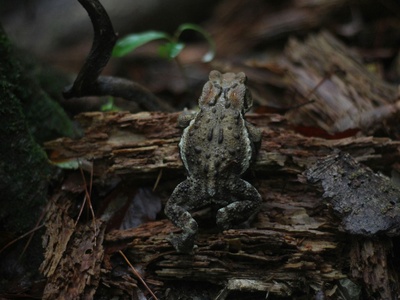
Asiatic toad
A medium-sized East Asian toad occupying forests and river valleys in Primorye and Amur. Distinguished by glandular skin and tolerance for humid forest habitats; culturally significant in parts of its range.
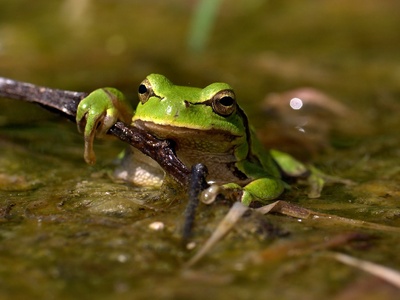
European tree frog
A small bright-green tree frog of reedbeds, garden ponds and shrubs; excellent climber with adhesive toe pads. Notable for its distinctive trilling call and vivid summer coloration in males.
Japanese tree frog
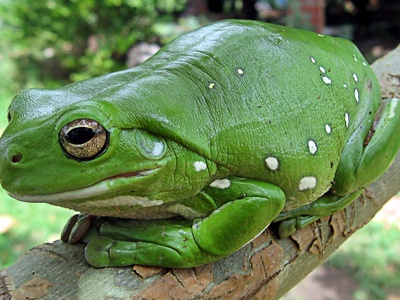
A small arboreal frog of Far Eastern wetlands, marsh edges and gardens. Notable for its adaptability to human-modified habitats and status as one of the few tree frogs reaching Russia’s Pacific coast.
Oriental fire-bellied toad
A small, squat toad of forest ponds and slow streams with bright red belly warning coloration. Known for its unken reflex (arching to show its belly) to deter predators and for local abundance in Primorye.
European fire-bellied toad
A colorful, aquatic toad of lowland marshes and oxbow lakes with a conspicuous red belly used in predator warnings. Notable for being a wetland specialist often found in reed-fringed ponds.
Common spadefoot
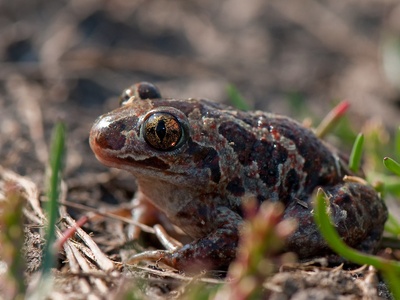
A burrowing frog of sandy soils and open lowlands, active mostly at night and during rains. Notable for its vertical pupil, explosive breeding in temporary pools, and camouflage in sandy habitats.
Eastern spadefoot
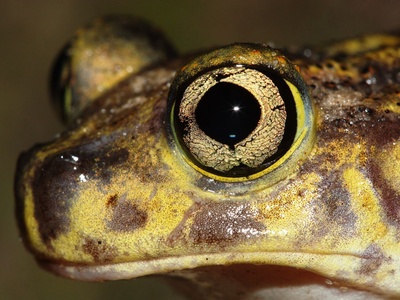
A sand- and steppe-dwelling burrower that emerges for brief breeding events in temporary pools. Recognizable by stocky build and spade-like hind feet used for digging, common in southern Russian lowlands.
Smooth newt
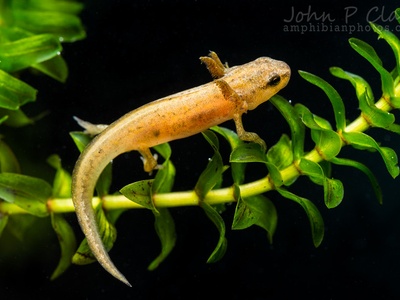
A small newt of garden ponds, ditches and woodland pools with males showing crests in breeding season. Notable for wide distribution across Europe and adaptability to small man-made water bodies in Russia.
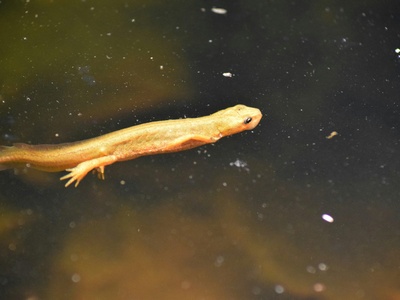
Caucasian smooth newt
A mountain and foothill newt endemic to the Caucasus, favoring cool forest ponds and springs. Notable for its regional endemism and distinct breeding coloration compared with widespread smooth newts.
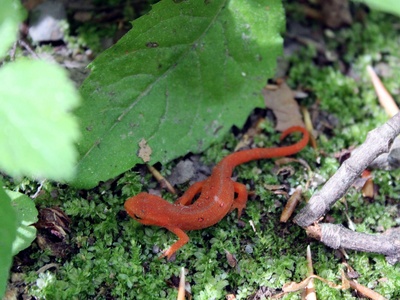
Great crested newt
A large, robust newt with a jagged dorsal crest in breeding males inhabiting ponds and slow waters in forests. Notable for its dramatic swimming crest and protection in some areas due to habitat loss.
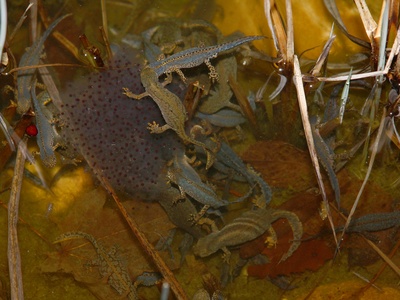
Alpine newt
A medium-sized newt found in upland and montane ponds and forest pools. Males display brilliant blue flanks in breeding season; notable for occupying cooler, higher elevation waters across its range.
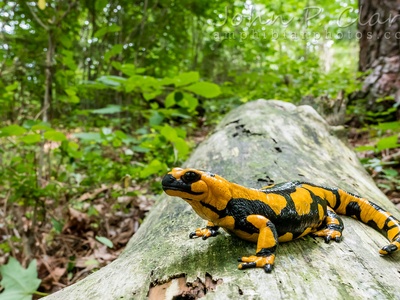
Fire salamander
A conspicuous black-and-yellow woodland salamander that prefers humid, shaded habitats near streams. Notable for producing potent skin toxins and for limited but stable populations in the Caucasus foothills of Russia.
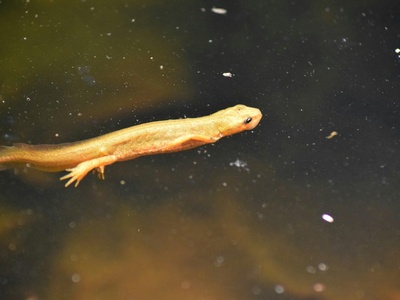
Caucasian salamander
A secretive, lungless salamander of moist mountain forests and limestone outcrops in the Western Caucasus. Notable for its localized range and preference for cool, humid crevices and streamside shelters.
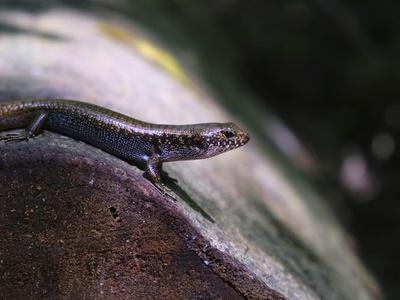
Siberian salamander
A small, cold-adapted salamander dwelling in tundra and taiga wetlands and peat bogs. Remarkably able to survive extreme cold by tolerating partial freezing of body tissues through winter.
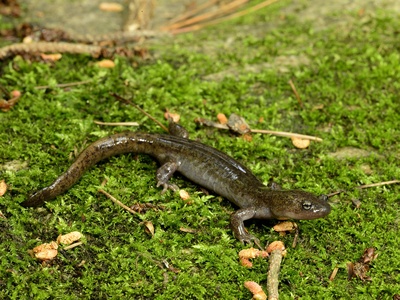
Hynobius leechii
A Asiatic salamander of forest streams and spring-fed pools in the Russian Far East. Notable for slender body, terrestrial adults and aquatic larvae; important component of mountain forest amphibian communities.
Onychodactylus fischeri
A clawed, stream-dwelling salamander of cool mountain forests with webbed feet and a flattened tail. Notable for its secretive, crevice-hiding habits and strong association with clean, fast-flowing streams.
Onychodactylus japonicus
A Far Eastern clawed salamander inhabiting shaded streams and forest slopes. Notable for elongated limbs and toes adapted for gripping rocky streambeds; restricted primarily to Primorye in Russia.
Sakhalin pond frog
A pond frog of coastal wetlands, marshes and flooded meadows on Sakhalin and nearby islands. Notable for island populations and adaptability to brackish and freshwater coastal habitats.
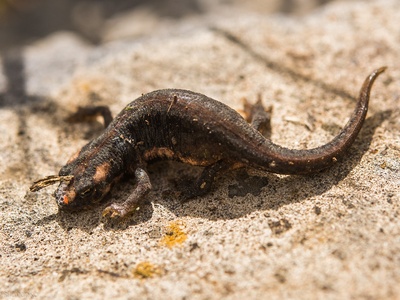
Southern banded newt
A banded newt of lowland and foothill ponds in the Caucasus, showing yellow or orange belly and patterned flanks. Notable for regional populations in marshy pools and importance to local wetland ecosystems.
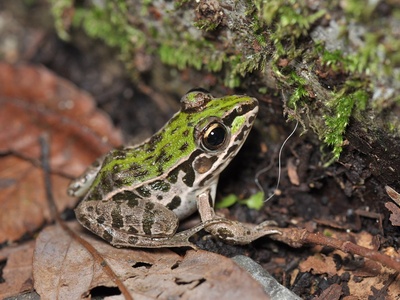
Dark-spotted frog
A common Far Eastern pond frog with dark spotting, inhabiting rice paddies, wetlands and river floodplains. Notable as a widespread amphibian of agricultural landscapes and slow-moving waters in the Russian Far East.