Latvia’s mix of Baltic coastline, broadleaf forests and peat bogs supports a surprising variety of wildlife. Seasonal migrations and protected habitats make the country especially interesting for birdwatchers and naturalists exploring Northern Europe.
There are 64 Animals of Latvia, ranging from Aquatic warbler to Willow warbler. Each entry is listed with basic reference data — Scientific name,Status in Latvia,IUCN status — so you can quickly see conservation notes and taxonomy; examples span common residents to rare migrants, and you’ll find below the full organized list.
How current and reliable is this list?
The list compiles official records and recent surveys where available, and the Status in Latvia column reflects national monitoring while IUCN status shows global risk; check local updates for the latest changes, especially for migratory or recently rediscovered species.
Where in Latvia should I go to see species like the Aquatic warbler or Willow warbler?
Look for wetlands and reedbeds (for Aquatic warbler) and mixed woodlands or parkland (for Willow warbler); visit protected areas such as Kemeri or Gauja National Park during spring and early summer and use local birding guides or observation hides to increase chances of sightings.
Animals of Latvia
| Common name | Scientific name | Status in Latvia | IUCN status |
|---|---|---|---|
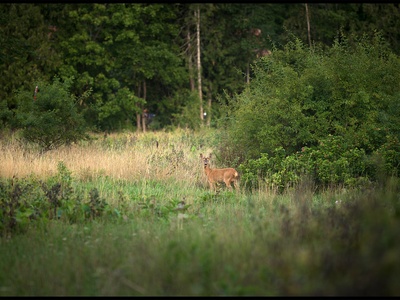
| European roe deer | Capreolus capreolus | Resident | Least Concern |
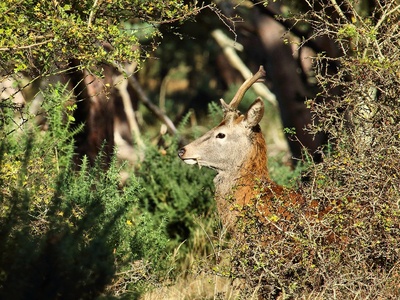
| Red deer | Cervus elaphus | Resident | Least Concern |
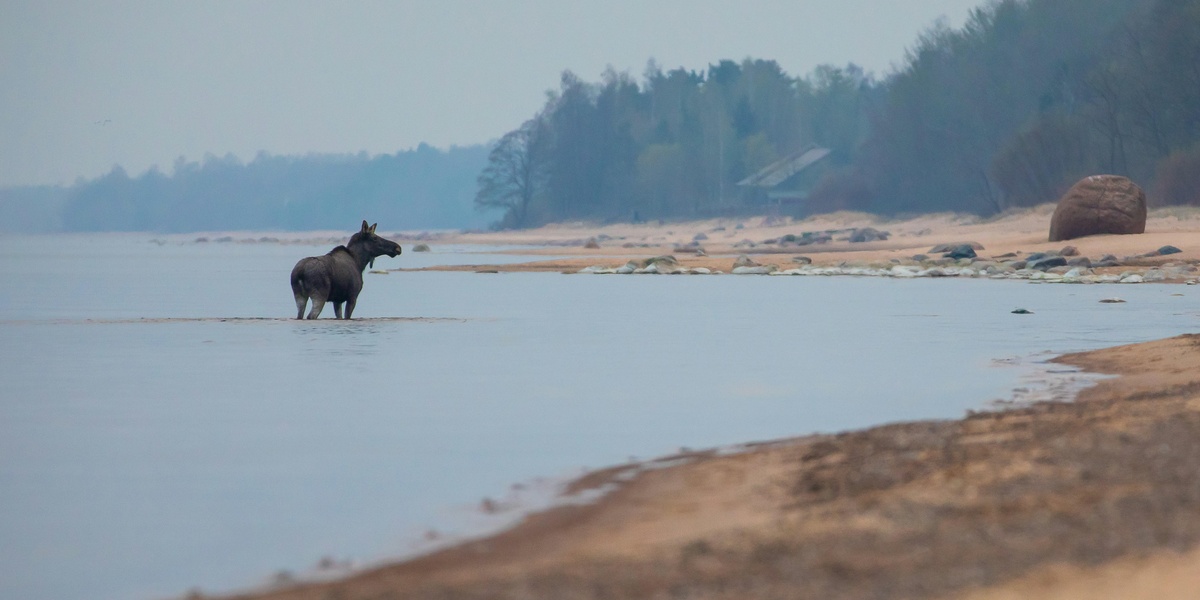
| Moose (Eurasian elk) | Alces alces | Resident | Least Concern |
| Wild boar | Sus scrofa | Resident | Least Concern |
| European beaver | Castor fiber | Resident | Least Concern |
| Eurasian lynx | Lynx lynx | Resident | Least Concern |
| Grey wolf | Canis lupus | Resident | Least Concern |
| Brown bear | Ursus arctos | Regular vagrant | Least Concern |
| Red fox | Vulpes vulpes | Resident | Least Concern |
| European otter | Lutra lutra | Resident | Near Threatened |
| Pine marten | Martes martes | Resident | Least Concern |
| European polecat | Mustela putorius | Resident | Least Concern |
| European hedgehog | Erinaceus europaeus | Resident | Least Concern |
| Harbour porpoise | Phocoena phocoena | Regular vagrant | Vulnerable |
| Grey seal | Halichoerus grypus | Regular vagrant | Least Concern |
| White-tailed eagle | Haliaeetus albicilla | Breeding | Least Concern |
| Osprey | Pandion haliaetus | Breeding | Least Concern |
| Common crane | Grus grus | Breeding | Least Concern |
| Whooper swan | Cygnus cygnus | Migratory | Least Concern |
| Mute swan | Cygnus olor | Resident | Least Concern |
| White stork | Ciconia ciconia | Breeding | Least Concern |
| Black stork | Ciconia nigra | Breeding | Least Concern |
| Aquatic warbler | Acrocephalus paludicola | Breeding | Vulnerable |
| Corncrake | Crex crex | Breeding | Least Concern |
| Capercaillie | Tetrao urogallus | Breeding | Least Concern |
| Black grouse | Lyrurus tetrix | Breeding | Least Concern |
| Eurasian curlew | Numenius arquata | Breeding | Near Threatened |
| Black-tailed godwit | Limosa limosa | Breeding | Near Threatened |
| Common tern | Sterna hirundo | Breeding | Least Concern |
| Great crested grebe | Podiceps cristatus | Breeding | Least Concern |
| Common buzzard | Buteo buteo | Resident | Least Concern |
| Eurasian hobby | Falco subbuteo | Migratory | Least Concern |
| Barn swallow | Hirundo rustica | Migratory | Least Concern |
| Sand martin | Riparia riparia | Migratory | Least Concern |
| Willow warbler | Phylloscopus trochilus | Breeding | Least Concern |
| Eurasian skylark | Alauda arvensis | Breeding | Least Concern |
| Great spotted woodpecker | Dendrocopos major | Resident | Least Concern |
| European robin | Erithacus rubecula | Resident | Least Concern |
| Common frog | Rana temporaria | Breeding | Least Concern |
| Moor frog | Rana arvalis | Breeding | Least Concern |
| Common toad | Bufo bufo | Breeding | Least Concern |
| Smooth newt | Lissotriton vulgaris | Breeding | Least Concern |
| Great crested newt | Triturus cristatus | Breeding | Least Concern |
| Natterjack toad | Epidalea calamita | Breeding | Least Concern |
| Viviparous lizard | Zootoca vivipara | Resident | Least Concern |
| Sand lizard | Lacerta agilis | Breeding | Least Concern |
| Grass snake | Natrix natrix | Resident | Least Concern |
| European adder | Vipera berus | Resident | Least Concern |
| Northern pike | Esox lucius | Resident | Least Concern |
| European perch | Perca fluviatilis | Resident | Least Concern |
| Roach | Rutilus rutilus | Resident | Least Concern |
| Common bream | Abramis brama | Resident | Least Concern |
| European eel | Anguilla anguilla | Migratory | Critically Endangered |
| Atlantic salmon | Salmo salar | Migratory | Least Concern |
| Brown trout | Salmo trutta | Resident | Least Concern |
| Vendace | Coregonus albula | Resident | Least Concern |
| Baltic herring | Clupea harengus | Migratory | Least Concern |
| Common carp | Cyprinus carpio | Introduced | Least Concern |
| European peacock | Aglais io | Breeding | Least Concern |
| Small tortoiseshell | Aglais urticae | Breeding | Least Concern |
| Red admiral | Vanessa atalanta | Migratory | Least Concern |
| Old World swallowtail | Papilio machaon | Breeding | Least Concern |
| Emperor dragonfly | Anax imperator | Breeding | Least Concern |
| Buff-tailed bumblebee | Bombus terrestris | Resident | Least Concern |
Images and Descriptions
European roe deer
Widespread across Latvian forests and agricultural edges, usually 40–60 cm at shoulder; commonly seen at dawn or dusk. Notable for their small size among deer and frequent presence near roadsides and woodlands throughout the country.
Red deer
Large deer found in Latvia’s mixed forests and lowland wetlands, males weighing up to 200 kg. Common in national parks and hunting reserves; males make impressive rutting calls in autumn and form visible herds in winter.
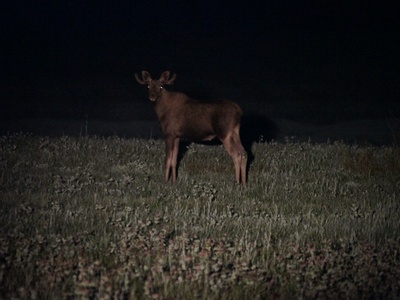
Moose (Eurasian elk)
Tall, solitary browser of swampy forests and river valleys, often over 1.5 m at the shoulder. Seen in eastern and central Latvia; notable for massive antlers on males and tendency to graze along quiet roadsides.
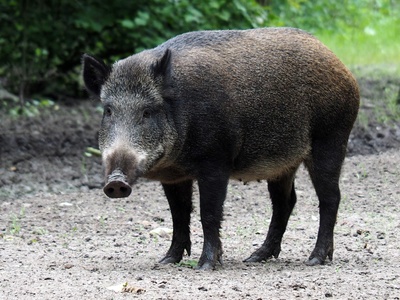
Wild boar
Adaptable and widespread in Latvian woodlands and farmland, often seen rooting for food; groups (sounders) common. Known for rapid population increases and occasional crop damage, boar are a familiar sight in rural areas.
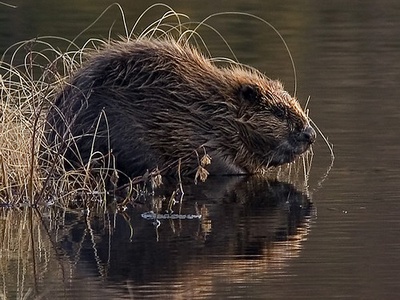
European beaver
Reintroduced species found in rivers and wetlands across Latvia; large, up to 25–30 kg. Builds dams and lodges and plays a key role in creating wetland habitats that benefit many other species.
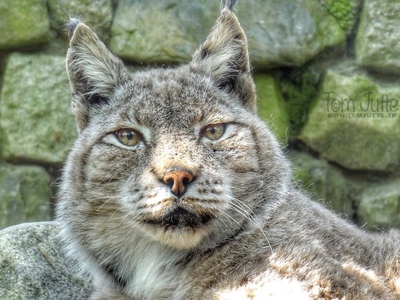
Eurasian lynx
Solitary forest predator present in Latvia’s large woodland areas; medium-large cat with tufted ears. Elusive but steadily present; notable for silent hunting and important role controlling ungulate populations.
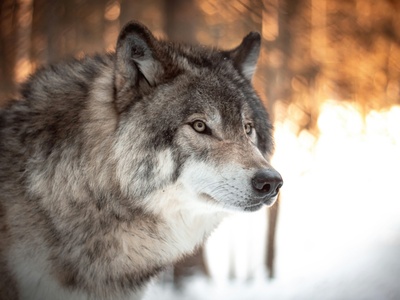
Grey wolf
Widespread in forests and marshes, often in packs. Regularly recorded across Latvia, especially in less populated eastern regions. Important large carnivore with strong cultural significance and occasional livestock conflicts.
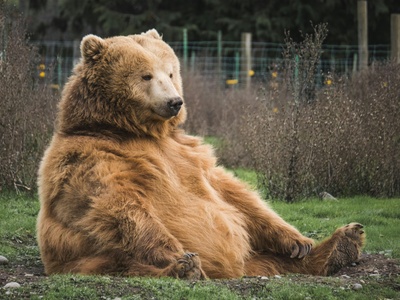
Brown bear
Occasional visitors from neighboring countries, most often in eastern and southeastern Latvia. Large and powerful omnivores; sightings are rare but increase during mast years and migration periods.
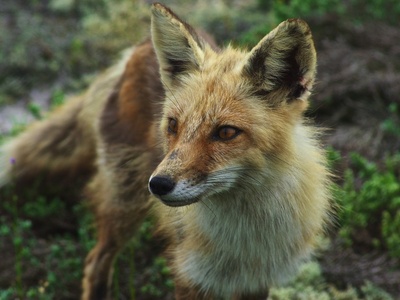
Red fox
Common across Latvia in rural, suburban and some urban areas; small to medium-sized predator about the size of a large cat. Notable for adaptability and being active both day and night in quieter locations.
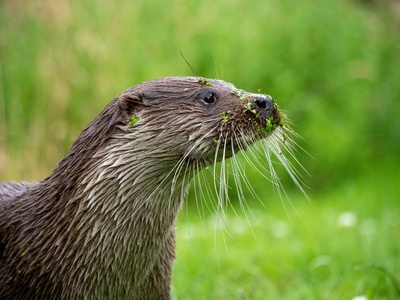
European otter
Found along Latvia’s rivers, lakes and coastal bays; medium-sized aquatic carnivore. Populations have recovered in many areas; otters are indicators of healthy freshwater ecosystems and are secretive yet increasingly recorded.
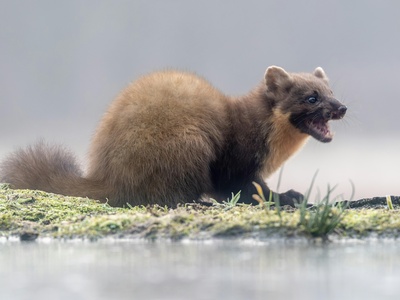
Pine marten
Arboreal carnivore of mature Latvian forests, slender and agile. Often nocturnal or crepuscular; known for feeding on small mammals, birds and fruits and occasionally seen near rural buildings.
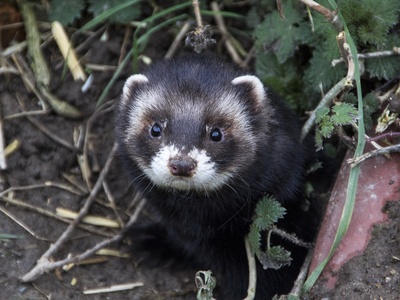
European polecat
Small predator found in forests, wetlands and farmland. Secretive but present across Latvia; notable for its dark mask and adaptable diet including rodents and amphibians.
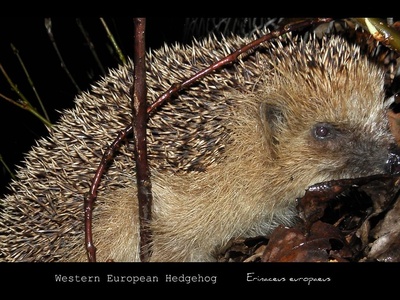
European hedgehog
Common in gardens, meadows and edges of Latvian towns; small spiny mammal up to 1 kg. Often seen at night; notable for hibernating in winter and being familiar to urban residents.

Harbour porpoise
Small cetacean recorded in the Gulf of Riga and Baltic waters; usually shy and rarely seen from shore. Notable for being the only porpoise regularly encountered in Latvian seas and sensitive to bycatch and noise.
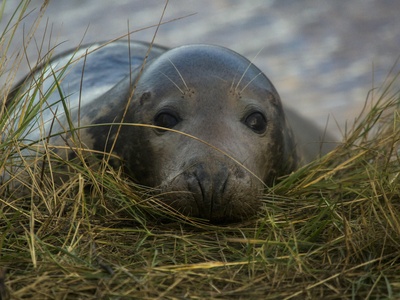
Grey seal
Occasional along Latvia’s coast and islands, especially in autumn–winter. Large pinniped that hauls out on rocky shores and ice; notable for breeding colonies further north but regular sightings in Latvian waters.
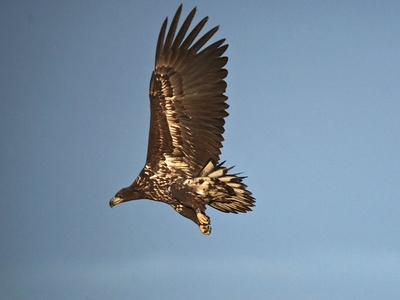
White-tailed eagle
Spectacular large raptor nesting near lakes, rivers and coastlines across Latvia. With a wingspan up to 2.5 m, these eagles are regularly seen soaring and are a conservation success story after past declines.
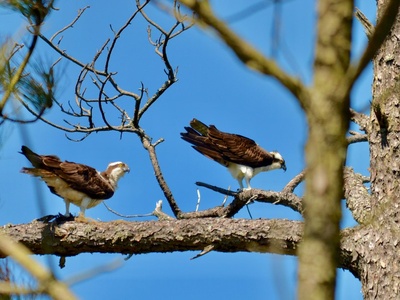
Osprey
Fish-eating raptor that nests on posts and trees near lakes and rivers; migratory but regular breeder. Notable for dramatic dives to catch fish and reliably seen at key wetlands like Lake Engure.
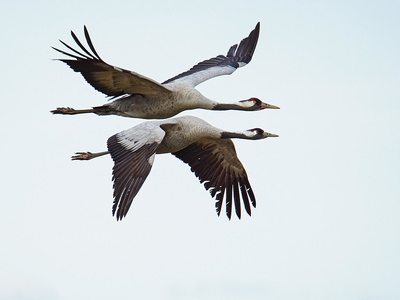
Common crane
Large, long-legged bird found in marshes and meadows, especially in eastern and central Latvia; breeds and migrates through large flocks. Famous for loud trumpeting calls and conspicuous courtship dances in spring.
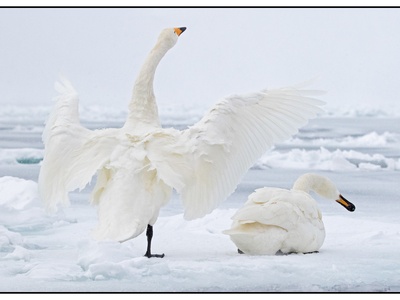
Whooper swan
Large migratory swan seen on lakes, wetlands and coastal areas during migration and winter; striking yellow and black bill. Notable for long migratory flights and communal roosting on shallow waters.
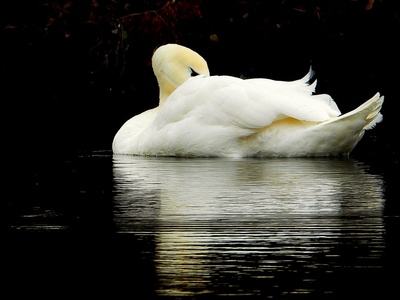
Mute swan
Common on lakes, rivers and park ponds across Latvia; large and easily noticed. Often resident year-round in milder areas; notable for graceful appearance and territorial pairs.
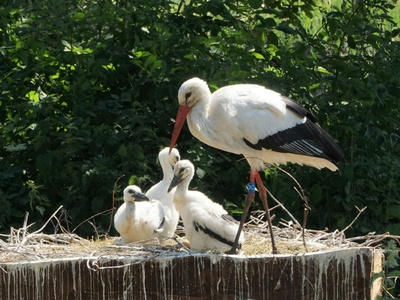
White stork
Familiar in rural Latvia, often nesting on chimneys or poles in villages and farmland. Storks feed on meadows and wetland edges; culturally significant and eagerly watched during spring return.
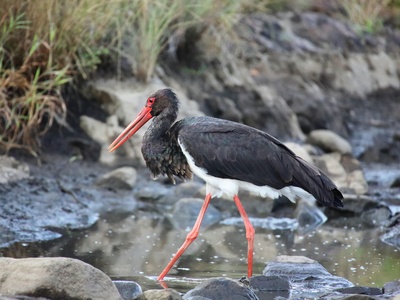
Black stork
Shy woodland stork that breeds in larger forested wetlands and river valleys; less common than the white stork. Notable for secretive nesting and preference for undisturbed wetland forests.
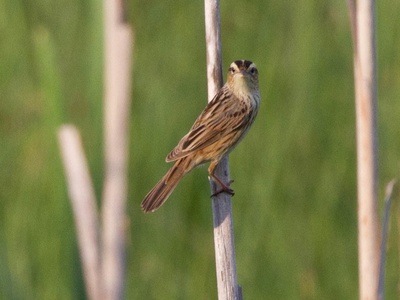
Aquatic warbler
Globally threatened passerine that nests in reedbeds and wet meadows in western Latvia; small and cryptic. Notable as Europe’s rarest migratory songbird, with Latvia an important stronghold for breeding populations.
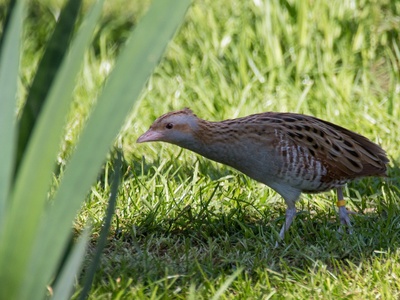
Corncrake
Secretive grassland bird that breeds in hay meadows and tall grasslands; heard more than seen by its rasping call. Populations have declined historically but Latvia remains an important breeding area.
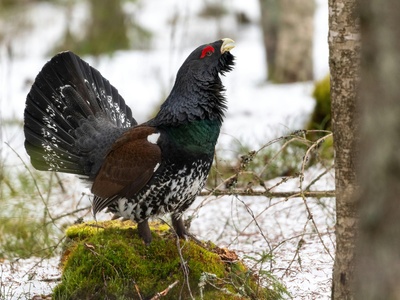
Capercaillie
Large forest grouse of mature pine and mixed woods, mostly in eastern Latvia; notable for dramatic lekking displays in spring. Populations are patchy and sensitive to forestry practices.
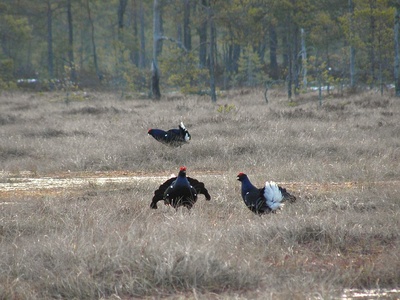
Black grouse
Found in open woodland and moorland edges; males have striking black plumage and perform display flights. Notable for lekking behavior and sensitivity to habitat fragmentation.
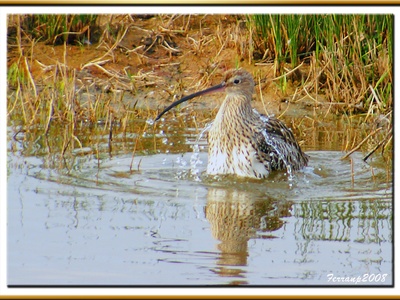
Eurasian curlew
Large, long-billed wader breeding in coastal and inland wetlands; declining but still recorded in Latvia’s marshes and coastal meadows. Notable for its melodic, bubbling call and iconic curved bill.
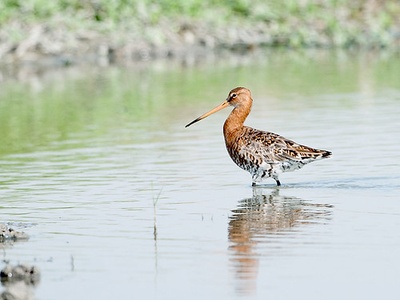
Black-tailed godwit
Wader of marshes and wet meadows; breeds in parts of Latvia and stops during migration. Long-legged and conspicuous; notable for striking breeding plumage and declines from drainage of wetlands.
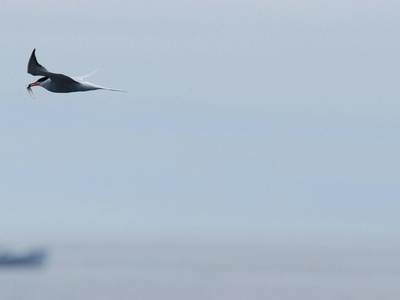
Common tern
Elegant seaside and lakeshore nesting bird seen at coastal colonies and lakes. Notable for plunge-diving to catch small fish and forming dense breeding colonies on islands and gravel shores.
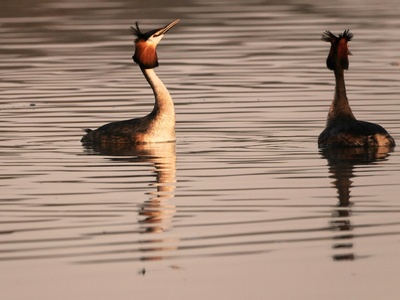
Great crested grebe
Widespread on lakes and larger rivers, noted for ornate breeding plumage and dramatic courtship displays. Relatively common and a favorite species for lakewatchers in Latvia.
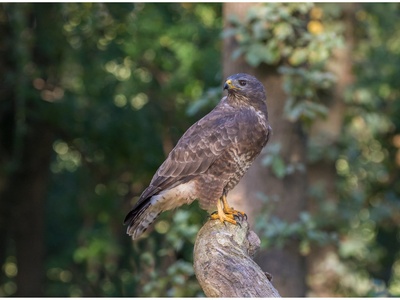
Common buzzard
Widespread raptor soaring over fields and woods; medium-large with variable plumage. Common in Latvian countryside; often perched on posts hunting small mammals and frequently seen gliding overhead.
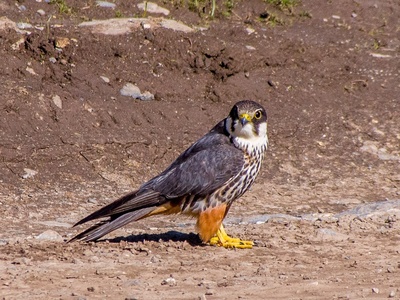
Eurasian hobby
Slim, fast falcon that migrates through Latvia and breeds in wooded areas near open hunting grounds. Notable for agile aerial hunting of swifts and dragonflies during summer evenings.
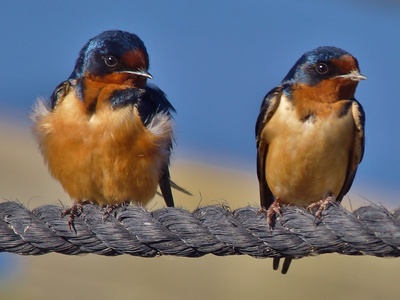
Barn swallow
Common summer visitor that nests on buildings and barns across Latvia; slender with long forked tail. Notable for long migrations and close association with human settlements where it feeds on flying insects.
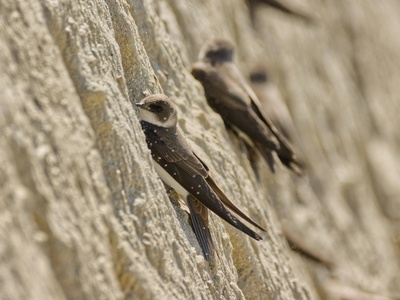
Sand martin
Small migratory swallow that nests in riverbanks and sand cliffs; abundant in summer near rivers and lakes. Notable for colonial nesting in burrows and catching insects over water.
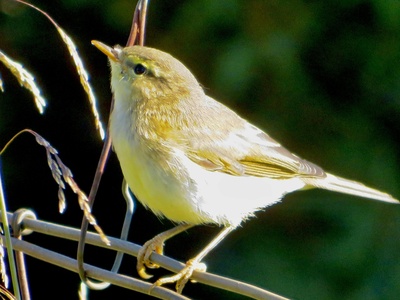
Willow warbler
Tiny migratory songbird that breeds in woodlands and scrub across Latvia; known for sweet descending song. Common in spring and summer, often seen flitting in shrubs and birch woods.
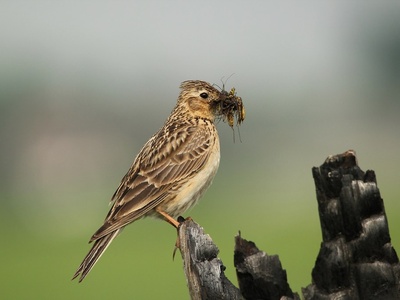
Eurasian skylark
Ground-nesting songbird of open fields and meadows, famous for its ascending song-flight. Once very common; local declines noted but still widespread in rural Latvia’s agricultural landscapes.
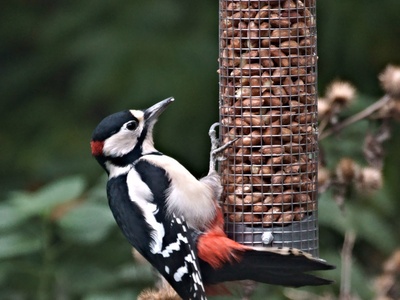
Great spotted woodpecker
Woodland woodpecker found across Latvian forests and parks; medium-sized with striking black-and-white plumage. Drummers on tree trunks year-round; nests in tree cavities and feeds on insects and seeds.
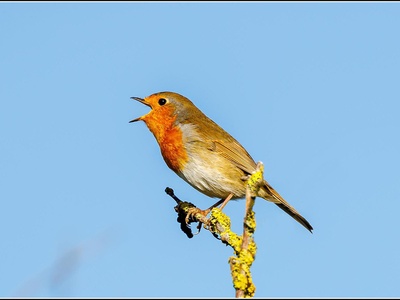
European robin
Small, friendly bird frequenting gardens and woodlands; orange-red breast and bold behavior. Common and year-round resident in Latvia; often one of the first birds people learn to recognize.
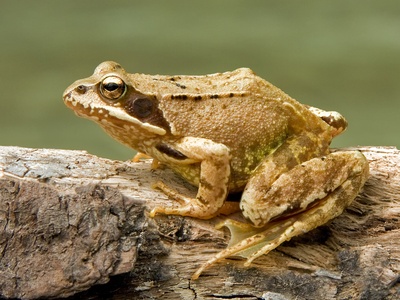
Common frog
Widespread in ponds, ditches and wetlands across Latvia; medium-sized frog active in spring breeding congregations. Notable for early-season appearance and variety of colors from green to brown.
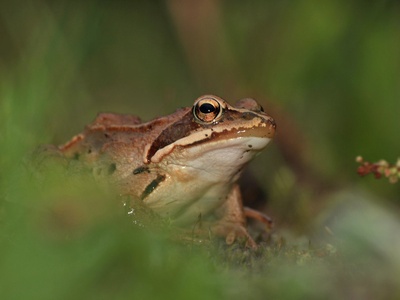
Moor frog
Found in bogs and wet meadows, especially in eastern Latvia; small frog that sometimes changes color during breeding. Notable for explosive spring breeding events in temporary pools.
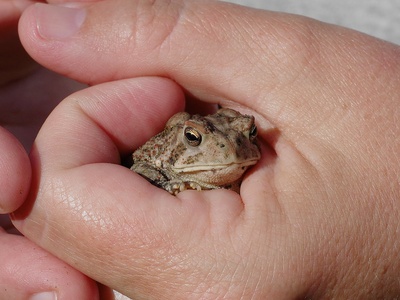
Common toad
Robust amphibian common in gardens, woodlands and wetlands; migrates to ponds to breed in spring. Notable for toxic skin secretions deterring predators and long-distance migration to breeding sites.
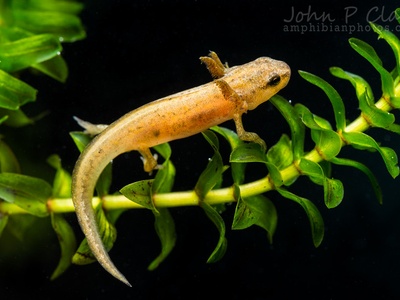
Smooth newt
Small, slender newt widely distributed in Latvian ponds and garden pools; males show ornate crests during breeding. Notable for adaptability to small waterbodies and frequent presence in suburban ponds.
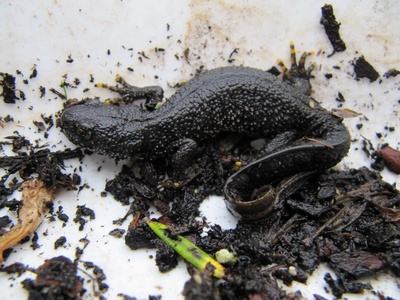
Great crested newt
Larger, conspicuous newt of permanent ponds and wetlands; males have dramatic crests in breeding season. Protected species in many countries and an indicator of healthy pond ecosystems.
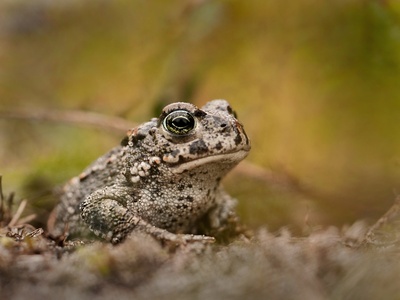
Natterjack toad
Specialist of sandy coastal dunes and dry heath with ephemeral pools in western Latvia; distinctive yellow stripe and loud, far-carrying call. Locally uncommon and a conservation interest in coastal habitats.
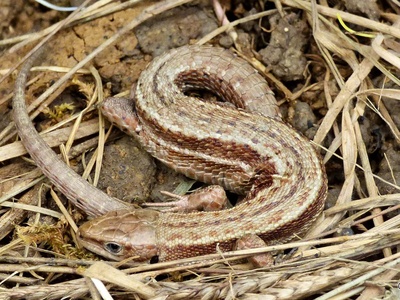
Viviparous lizard
Small lizard common in Latvia’s meadows, heath and forest edges; gives birth to live young rather than laying eggs. Notable for wide tolerance of cool climates and early spring activity.
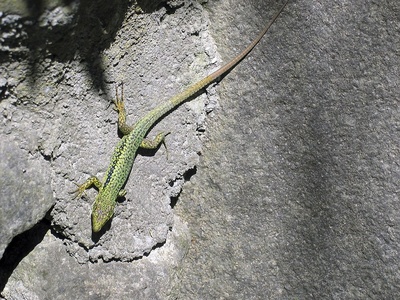
Sand lizard
Colorful lizard of sunny sandy and heath habitats, mainly in coastal dunes and dry inland sites. Males show bright green flanks in spring; local and habitat-dependent but regularly recorded.
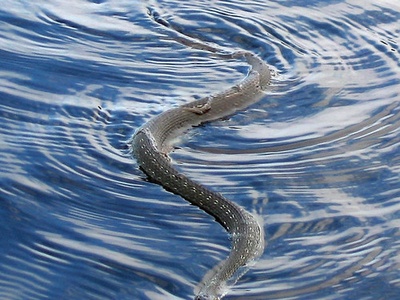
Grass snake
Non-venomous water-loving snake frequently found near lakes, rivers and marshes; can grow over a meter. Notable for feigning death or releasing foul-smelling secretions when threatened.
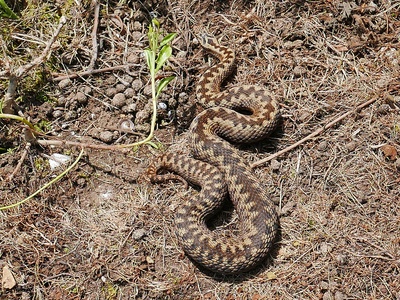
European adder
Latvia’s only venomous snake, found in heath, marsh and forest edges; generally shy and rarely encountered. Recognizable zigzag pattern and important in folklore, but bites are uncommon with medical attention available.
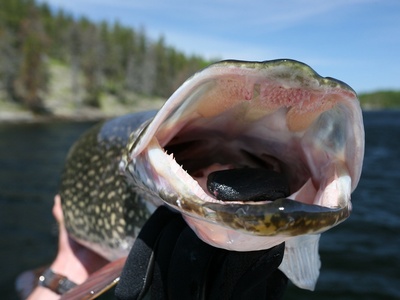
Northern pike
Top freshwater predator in Latvian lakes and rivers; can reach over a meter and is popular with anglers. Notable for ambush hunting behavior among reeds and fallen trees.
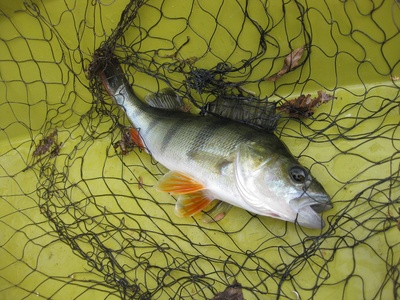
European perch
Common, colorful perch abundant in lakes and rivers; medium-sized schooling fish popular for fishing. Notable for vertical dark bars and spiny dorsal fin and frequent presence near shorelines.
Roach
Abundant small-to-medium cyprinid in lakes, rivers and slow-flowing waters across Latvia. Often forms large shoals; a common fish used in local angling and food catches.
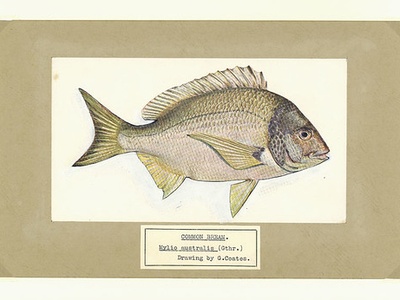
Common bream
Flat-bodied carp-like fish of Latvian rivers and lakes, often forming large shoals. Can grow fairly large and is a familiar sight on muddy-bottomed waterbodies favored by anglers.
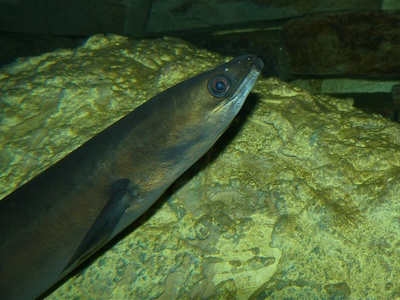
European eel
Once-common migratory fish moving between Latvian freshwaters and the Sargasso Sea; populations have crashed and it is now Critically Endangered. Notable for its complex life cycle and long-distance migrations.
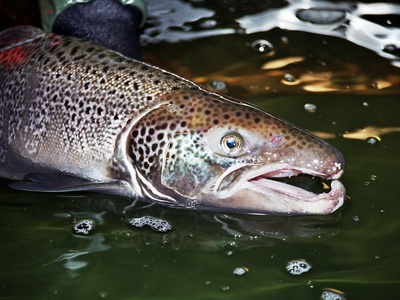
Atlantic salmon
Anadromous fish that migrates into Latvia’s rivers to spawn; prized by anglers. Populations vary regionally; notable for strong upstream migrations and conservation programs to restore runs.
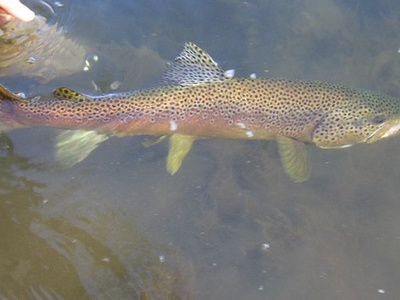
Brown trout
Native stream and lake trout occurring in clear, oxygen-rich waters; prized by anglers. Notable for variable life histories including resident and migratory forms.
Vendace
Small, schooling cold-water whitefish of deep Latvian lakes; important for local fisheries and winter catches. Notable for delicate flesh and importance in traditional lake fishing.
Baltic herring
Small schooling marine fish abundant in the Gulf of Riga and Latvian coastal waters; important commercially and as seabird food. Notable for forming dense shoals and long history in Baltic fisheries.
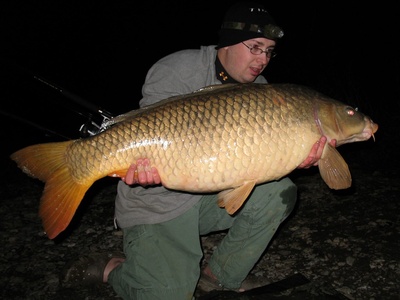
Common carp
Introduced to Latvian waters and now present in many lakes and lowland rivers; large and bottom-feeding. Notable for robust size and popularity in aquaculture and angling, though sometimes impacts native habitats.
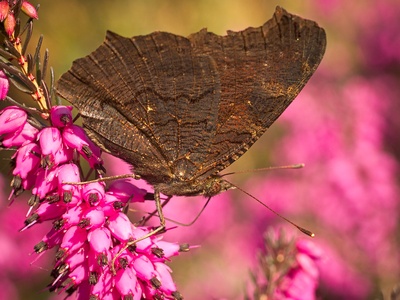
European peacock
Common butterfly in gardens, meadows and forest edges; medium-sized with eye-spotted wings. Notable for dramatic eye-markings that deter predators and frequent visits to nettle host plants for caterpillars.
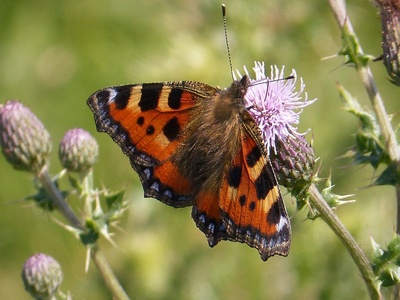
Small tortoiseshell
Familiar, brightly colored butterfly of hedgerows and gardens throughout Latvia; caterpillars feed on nettles. Notable for migratory movements and forming hibernating adults in sheltered spots.
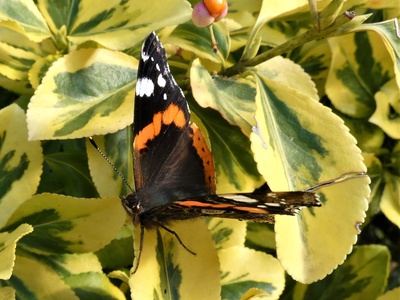
Red admiral
Strong-flying butterfly that breeds in Latvia and also migrates; bold dark wings with red bands. Notable for high mobility and frequent visitation of gardens and flowers throughout summer and autumn.
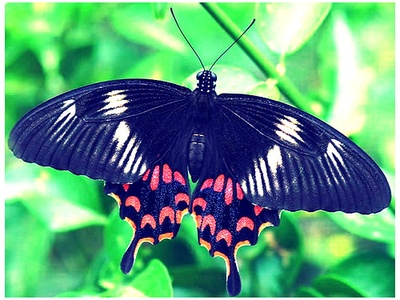
Old World swallowtail
Impressive large butterfly found locally in meadows and coastal areas; striking yellow and black pattern. Notable for its spectacular flight and occasional local abundance in favourable habitats.
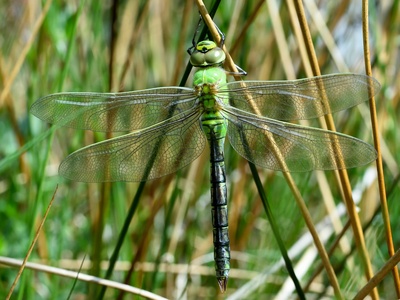
Emperor dragonfly
Large, colorful dragonfly common at lakes and slow rivers in summer; notable for powerful flight and territorial males often seen patrolling open water. Frequently observed by pondwatchers and anglers.
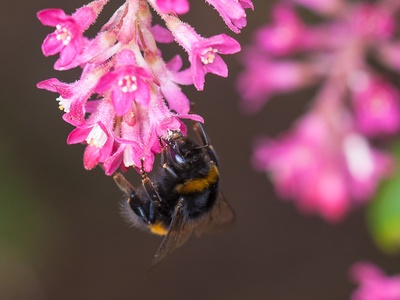
Buff-tailed bumblebee
Common bumblebee visiting gardens, farmland and meadows across Latvia; large and conspicuous. Notable as an important pollinator with robust colonies and visible workers throughout the growing season.