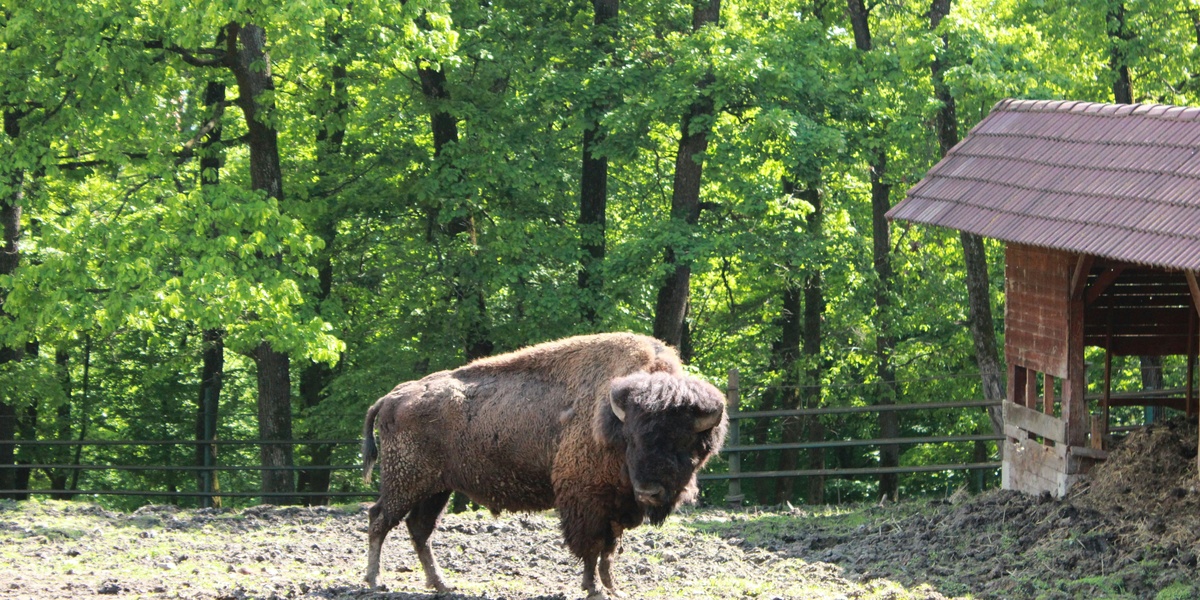
Ukraine’s varied landscapes — from Carpathian peaks and mixed forests to wide steppes, rivers and the Black Sea coast — support a diverse mix of birds, mammals, fish and other wildlife. Seasonal migrations and regional habitats mean species lists tell you where to look as well as what to expect.
There are 40 Animals of Ukraine, ranging from Barn swallow to Zander (pike-perch). For each species you’ll find below Scientific name,Size (cm),Range in Ukraine.
Which species on the list should I watch for because they need protection?
Look at the range and note species with small or fragmented ranges and those listed on Ukraine’s Red Book or the IUCN Red List; those are most likely to need conservation attention. Use the Scientific name column to cross-check official status and local protection measures with conservation groups or government resources before planning visits.
How can I use this list to plan wildlife-watching trips in Ukraine?
Use the Range in Ukraine column to target regions, and Size (cm) plus Scientific name for field identification and equipment choices (binoculars, camera lenses). Check seasonal timing for migrants, respect protected areas and permits, and consider hiring local guides for the best observations and up-to-date site access.
Animals of Ukraine
| Name | Scientific name | Size (cm) | Range in Ukraine |
|---|---|---|---|
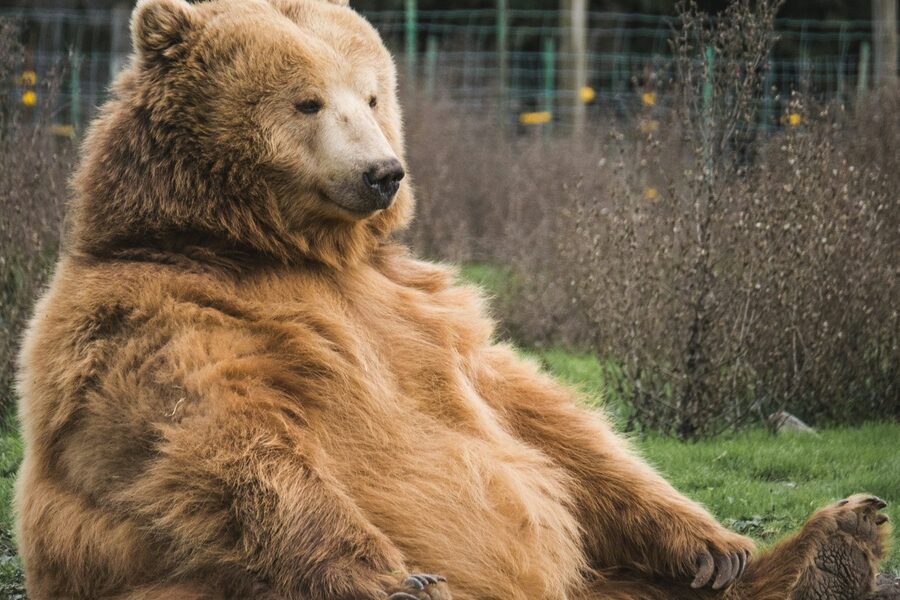
| European brown bear | Ursus arctos | 150–250 cm | Carpathians, dense forests |
| Eurasian lynx | Lynx lynx | 70–130 cm | Carpathians, mixed forests |
| Gray wolf | Canis lupus | 100–160 cm | Carpathians, forests, steppes |
| European otter | Lutra lutra | 60–100 cm | Rivers, lakes, wetlands nationwide |
| Eurasian beaver | Castor fiber | 80–120 cm | Rivers, floodplains, wetlands |
| Wild boar | Sus scrofa | 100–180 cm | Forests, agricultural edges, lowlands |
| Red deer | Cervus elaphus | 150–250 cm | Carpathians, large forests |
| Roe deer | Capreolus capreolus | 90–140 cm | Woodland edges, fields, widespread |
| Red fox | Vulpes vulpes | 50–90 cm | Forests, fields, urban outskirts |
| European hare | Lepus europaeus | 50–70 cm | Open fields, steppe, agricultural land |
| European hedgehog | Erinaceus europaeus | 20–30 cm | Gardens, woodlands, fields |
| Eurasian red squirrel | Sciurus vulgaris | 18–25 cm | Forests, parks, woodlands |
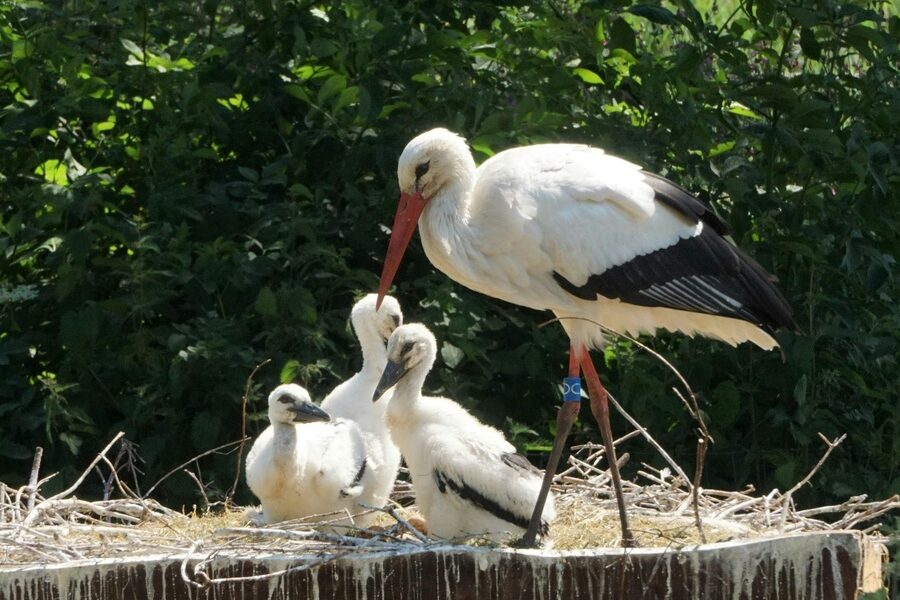
| White stork | Ciconia ciconia | 100–115 cm | Wetlands, farmland, villages |
| Common crane | Grus grus | 100–130 cm | Wetlands, meadows, Danube delta |
| Dalmatian pelican | Pelecanus crispus | 160–180 cm | Danube delta, Black Sea lagoons |
| Pygmy cormorant | Microcarbo pygmaeus | 60–80 cm | Wetlands, rivers, delta areas |
| Great bustard | Otis tarda | 90–115 cm | Steppe, southern grasslands |
| Steppe eagle | Aquila nipalensis | 60–75 cm | Steppe, open landscapes, migration routes |
| Eurasian eagle-owl | Bubo bubo | 60–75 cm | Forests, rocky areas, Carpathians |
| Common buzzard | Buteo buteo | 50–60 cm | Woodlands, farmland, hills |
| Corncrake | Crex crex | 24–30 cm | Meadows, hayfields, wetlands |
| Common nightingale | Luscinia megarhynchos | 14–16 cm | Shrubland, forests, river valleys |
| Barn swallow | Hirundo rustica | 12–17 cm | Open countryside, villages, wetlands |
| Black-headed gull | Chroicocephalus ridibundus | 35–40 cm | Coastlines, lakes, reservoirs |
| Grass snake | Natrix natrix | 70–120 cm | Wetlands, rivers, marshes |
| Dice snake | Natrix tessellata | 80–140 cm | Rivers, lakes, Black Sea coast |
| European adder | Vipera berus | 50–70 cm | Forests, meadows, mountains |
| European pond turtle | Emys orbicularis | 20–30 cm | Wetlands, slow rivers, southern regions |
| European tree frog | Hyla arborea | 3–6 cm | Wooded wetlands, river valleys, south |
| Great crested newt | Triturus cristatus | 11–16 cm | Ponds, forest pools, wetlands |
| Northern pike | Esox lucius | 40–150 cm | Rivers, lakes, reservoirs nationwide |
| Zander (pike-perch) | Sander lucioperca | 40–100 cm | Rivers, reservoirs, Black Sea lagoons |
| European perch | Perca fluviatilis | 20–60 cm | Lakes, rivers, coastal lagoons |
| Common carp | Cyprinus carpio | 30–100 cm | Rivers, lakes, floodplain wetlands |
| Russian sturgeon | Acipenser gueldenstaedtii | 120–260 cm | Danube, Black Sea, river mouths |
| Stellate sturgeon | Acipenser stellatus | 100–200 cm | Black Sea coasts, river deltas |
| Praying mantis | Mantis religiosa | 6–8 cm | Meadows, gardens, warm southern areas |
| Swallowtail butterfly | Papilio machaon | 6–9 cm | Meadows, hills, gardens nationwide |
| Painted lady | Vanessa cardui | 5–6 cm | Open areas, gardens; migratory across country |
| Stag beetle | Lucanus cervus | 3.5–7 cm | Woodlands, old trees, eastern and western regions |
Images and Descriptions
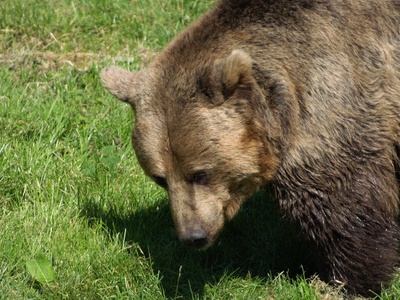
European brown bear
Large omnivorous mammal common in Carpathian forests, 150–250 cm long. Shy yet powerful, feeds on plants and meat, best seen in remote mountain reserves; notable for deep seasonal diets and important role in forest ecosystems.
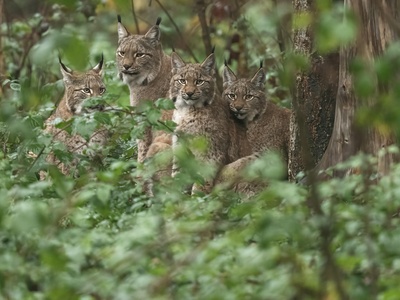
Eurasian lynx
Solitary, secretive forest cat 70–130 cm long found in Carpathian woodlands. Elusive predator of deer and small mammals; notable for tufted ears and silent stalking, sightings often occur on camera traps and protected reserves.
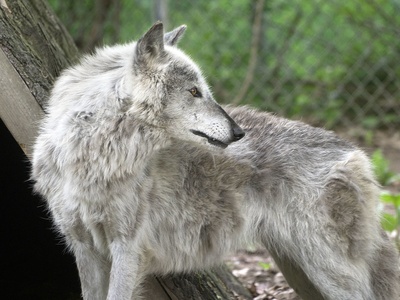
Gray wolf
Social apex predator 100–160 cm long occurring in Carpathians and scattered lowland forests and steppes. Hunts in packs, adaptable diet includes ungulates and smaller prey; notable for complex social structure and recovering populations in some regions.
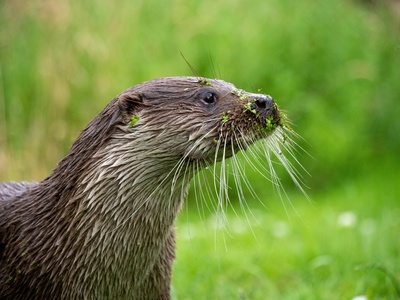
European otter
Streamside semi-aquatic mammal 60–100 cm long found across rivers and wetlands. Fish-eating and crepuscular, uses holts for dens; notable for recovering populations where water quality improves and for being a freshwater ecosystem indicator.
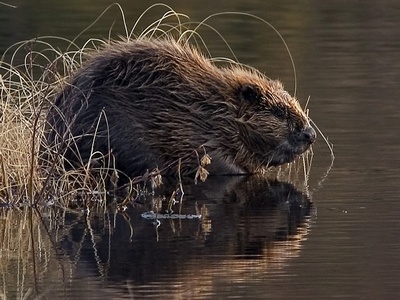
Eurasian beaver
Large rodent 80–120 cm long living along rivers and wetlands. Builds dams and lodges that shape waterways; notable ecosystem engineer that increases wetland biodiversity and has recolonized many Ukrainian river systems.
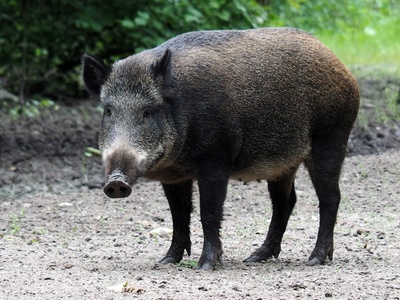
Wild boar
Stout omnivore 100–180 cm long common in woods and farmland edges. Forages at night for roots, crops, and small animals; notable for strong rooting behavior and increasing encounters near villages.
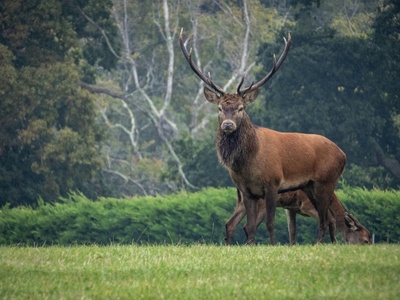
Red deer
Large cervid 150–250 cm long found mainly in Carpathian forests. Grazes and browses in herds, males display impressive antlers in autumn rut; notable for scenic rutting displays and sound of roaring stags.
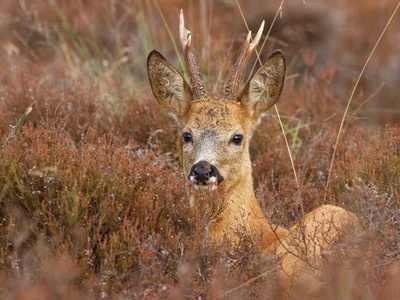
Roe deer
Small, graceful deer 90–140 cm long common across woodlands and fields. Solitary or small groups, browsers on herbs and shoots; notable for being widespread and adapting to human-dominated landscapes.
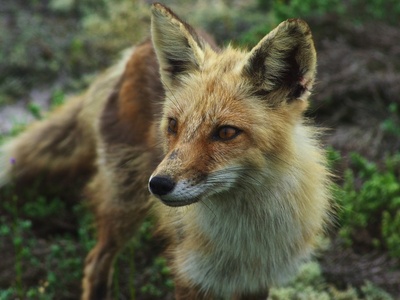
Red fox
Adaptable omnivore 50–90 cm long occurring across habitats including near towns. Hunts rodents and scavenges; notable for clever behavior, distinctive red coat, and success in rural and suburban areas.
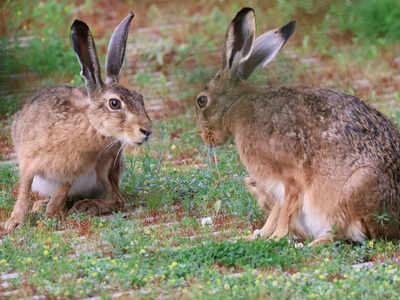
European hare
Fast-running herbivore 50–70 cm long common in open farmland and steppe. Crepuscular with long ears and powerful legs; notable for rapid reproduction and being a key prey species for predators.
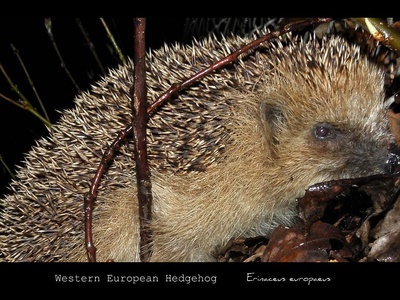
European hedgehog
Small nocturnal insectivore 20–30 cm long found in gardens and hedgerows. Rolls into spiny ball when threatened; notable for feeding on invertebrates and often seen in suburban green spaces.
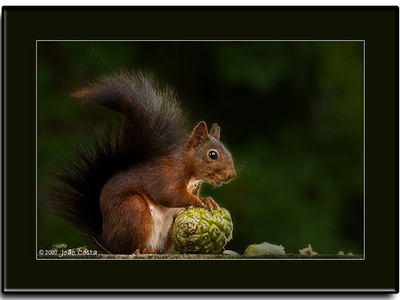
Eurasian red squirrel
Agile arboreal rodent 18–25 cm long common in woodlands and city parks. Feeds on seeds and fungi, caches food for winter; notable for red coat and acrobatic tree behavior.
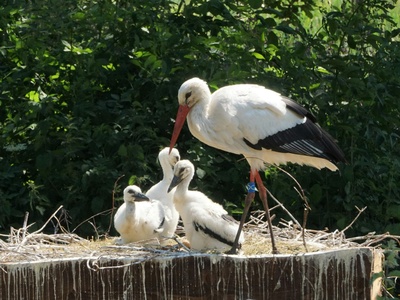
White stork
Tall migratory bird 100–115 cm long nesting on roofs and poles in rural areas and wetlands. Feeds on frogs and insects; notable cultural presence and large summer populations across Ukraine.
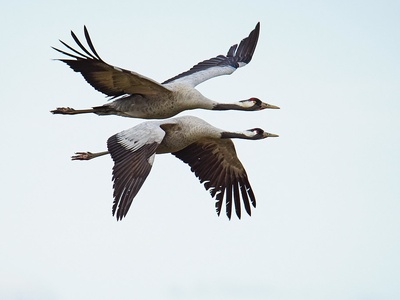
Common crane
Elegant migratory bird 100–130 cm tall found in wetlands and meadows, especially the Danube delta. Forms large flocks during migration; notable for loud trumpeting calls and dramatic courtship dances.
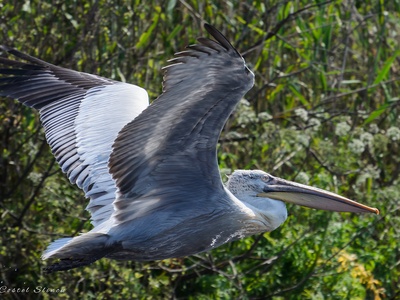
Dalmatian pelican
Massive waterbird 160–180 cm long breeding in Danube delta and coastal lagoons. Feeds by scooping fish in large pouches; notable for huge wingspan and vulnerable conservation status in the region.
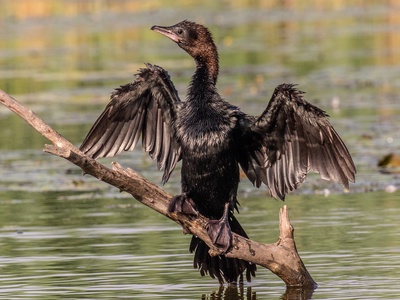
Pygmy cormorant
Smaller cormorant 60–80 cm long found in rivers, marshes, and the Danube delta. Dives for fish and nests in reedbeds; notable for colonial breeding and important wetland indicator species.
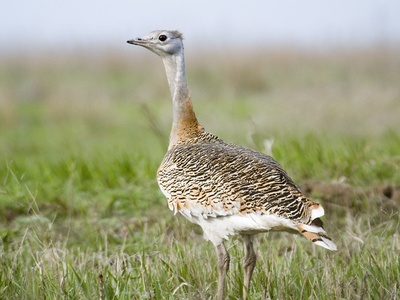
Great bustard
Large steppe bird 90–115 cm long occurring in southern steppe and grasslands. Males are heavy and display elaborate plumage during breeding; notable as a threatened species in steppe habitats.
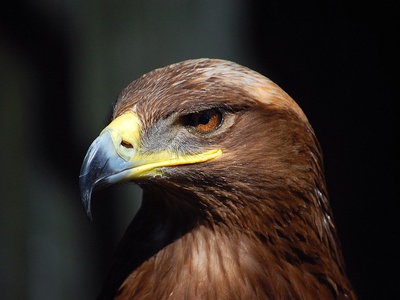
Steppe eagle
Large raptor 60–75 cm long frequenting open steppe and migration corridors. Feeds on carrion and small mammals; notable for long-distance migrations and dependence on intact steppe ecosystems.
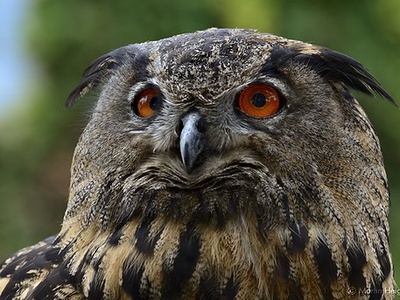
Eurasian eagle-owl
One of the largest owls 60–75 cm long found in mountains and woodlands. Nocturnal predator of mammals and birds; notable for deep booming calls and striking orange eyes.
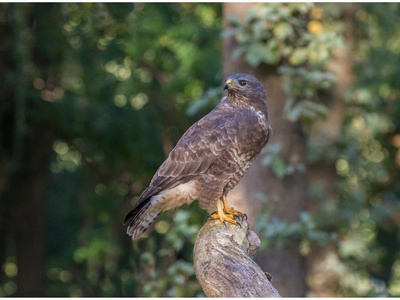
Common buzzard
Widespread raptor 50–60 cm long common in varied habitats like woodlands and farmland. Hunts small mammals and reptiles from perches; notable for adaptable hunting habits and varied plumage.
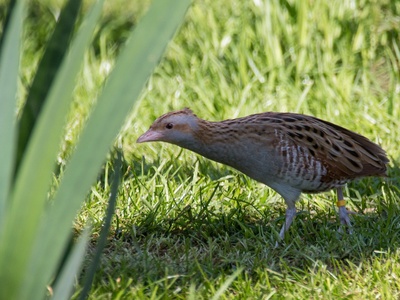
Corncrake
Shy ground-nesting rail 24–30 cm long breeding in tall meadows and hayfields. More often heard than seen due to its rasping call; notable for steep population declines and conservation programs.
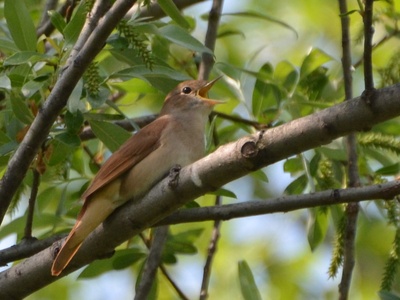
Common nightingale
Small songbird 14–16 cm long common in bushy areas and river valleys. Famous for rich, melodious song delivered from dense cover; notable as a beloved migratory species each spring.
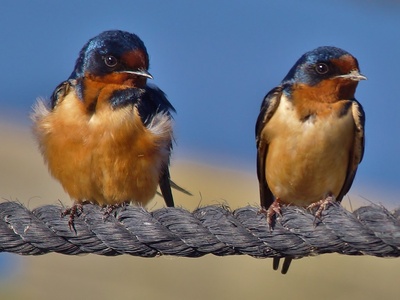
Barn swallow
Acrobatic aerial insectivore 12–17 cm long nesting in barns and bridges. Migratory and common in summer; notable for long-distance migrations between Africa and Ukraine and distinctive forked tail.
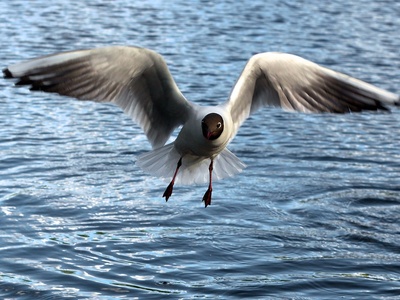
Black-headed gull
Medium-sized gull 35–40 cm long seen around coasts, lakes and urban water bodies. Opportunistic feeder and noisy colony nester; notable for breeding at inland wetlands and coastal colonies.
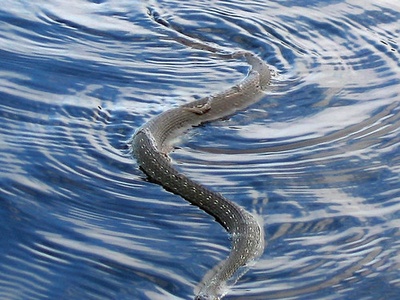
Grass snake
Nonvenomous water-associated snake 70–120 cm long found near ponds and wetlands. Feeds on amphibians and fish, often swims well; notable for yellow neck markings and harmless nature.
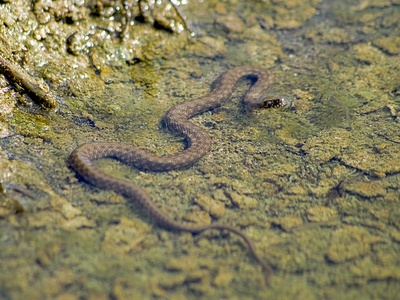
Dice snake
Fish-eating nonvenomous snake 80–140 cm long favoring rivers, reservoirs and coastal lagoons. Excellent swimmer feeding mainly on fish; notable for dense populations along lowland waterways.
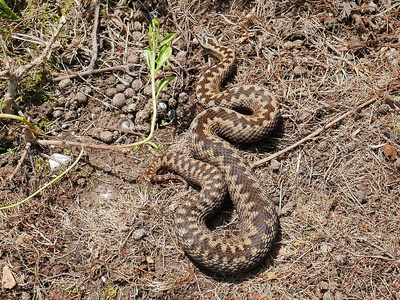
European adder
Small venomous viper 50–70 cm long occupying forests, meadows and mountain slopes. Shy and rarely aggressive, feeds on small mammals and amphibians; notable for distinctive zigzag pattern and cold-tolerant range.
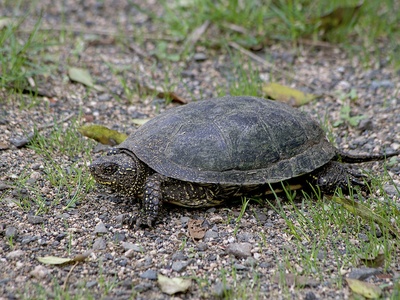
European pond turtle
Freshwater turtle 20–30 cm carapace length found in ponds, marshes and river margins. Basks on logs and feeds on invertebrates; notable for declining populations and protection in many wetlands.
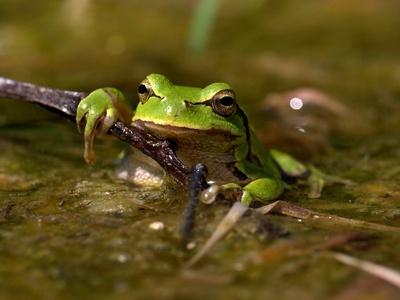
European tree frog
Small green arboreal frog 3–6 cm long living near ponds and shrubs. Climbs vegetation using toe pads and sings in summer evenings; notable for bright calls and striking green coloration.

Great crested newt
Large newt 11–16 cm long breeding in fish-free ponds and forest pools. Males display ornate crests in breeding season; notable for distinctive warty skin and protected status in Europe.
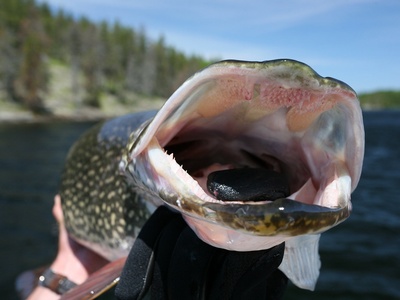
Northern pike
Ambush freshwater predator 40–150 cm long widespread in lakes and rivers. Hunts fish with sudden strikes using toothy jaws; notable for being a top freshwater predator prized by anglers.
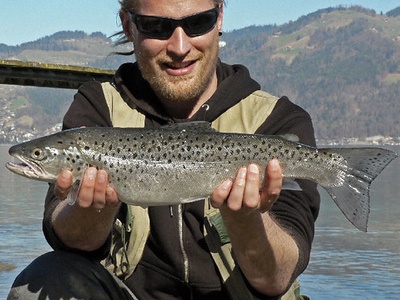
Zander (pike-perch)
Predatory fish 40–100 cm long common in deeper rivers and reservoirs. Nocturnal hunter feeding on smaller fish; notable as an important commercial and sport fish across Ukraine.
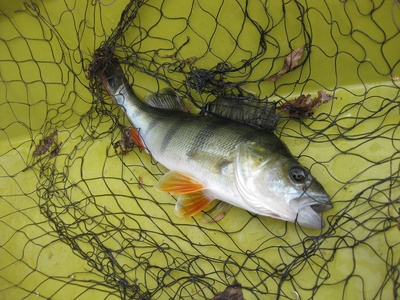
European perch
Striped freshwater fish 20–60 cm long widespread in lakes and rivers. Schooling predator that eats invertebrates and fish; notable for distinctive vertical bars and popularity with anglers.
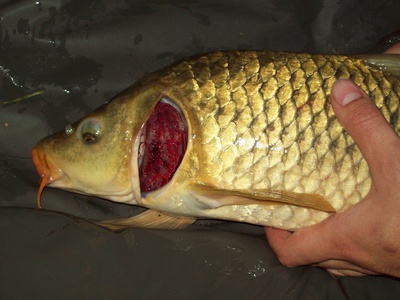
Common carp
Large omnivorous cyprinid 30–100 cm long inhabiting slow rivers, lakes and floodplains. Bottom feeder that can tolerate turbid waters; notable for widespread historical use and importance in fisheries.
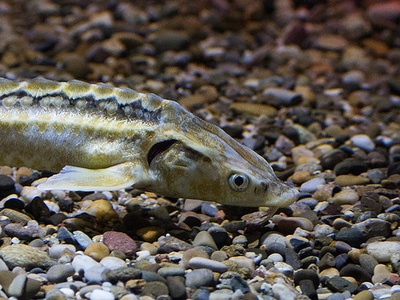
Russian sturgeon
Large ancient fish 120–260 cm long native to Danube and Black Sea waters. Long-lived migratory sturgeon vulnerable from overfishing; notable for caviar production and critical conservation concerns.
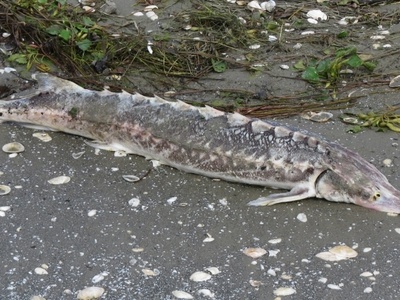
Stellate sturgeon
Slender sturgeon 100–200 cm long found in Black Sea and river deltas. Bottom-feeding migratory fish producing caviar; notable for distinctive star-like scutes and endangered status.
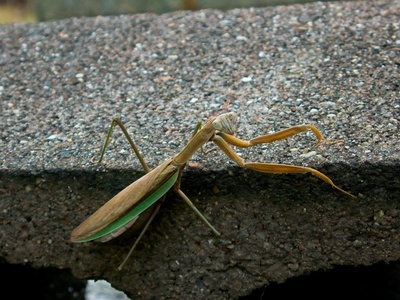
Praying mantis
Predatory insect 6–8 cm long common in sunny meadows and gardens. Ambushes insects with raptorial forelegs; notable for striking posture and role controlling pest insects in summer.
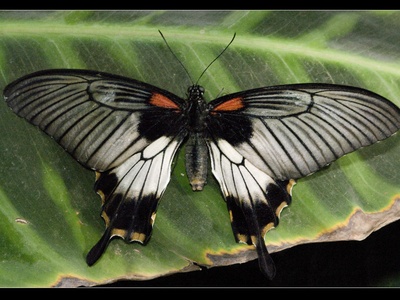
Swallowtail butterfly
Large colorful butterfly with 6–9 cm wingspan frequenting grasslands and gardens. Caterpillars feed on umbellifers; notable for striking tail-like hindwing extensions and being a popular sight for butterfly watchers.
Painted lady
Migratory butterfly 5–6 cm wingspan seen widely during migrations and summer months. Feeds on many flowers and breeds on thistles; notable for astonishing long-distance migrations and seasonal abundance.
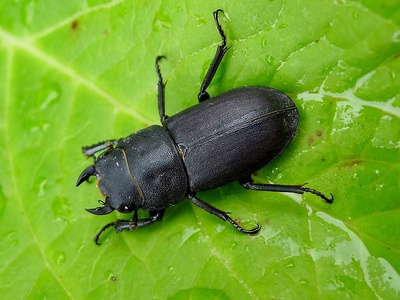
Stag beetle
Large saproxylic beetle 3.5–7 cm long living in old-growth woodlands and parks. Males have impressive mandibles used in contests; notable for dependence on decaying wood and conservation interest.