Coral reefs are a patchwork of habitats — reef crests, lagoons, and slopes — where predators patrol the water column and reef edges. Understanding which animals sit near the top of those food webs helps explain prey dynamics, habitat use, and how reefs respond to stress.
There are 40 coral reef tertiary consumers, ranging from Banded sea krait to Yellowtail barracuda. For each species, you’ll find below the data organized by Scientific name, Size (cm), Diet, Range so you can quickly compare feeding habits and geographic distribution — you’ll find those details below.
How do tertiary consumers affect reef health?
Tertiary consumers regulate populations of smaller predators and herbivores, which can cascade down to influence coral cover and algal growth. Removing or adding these predators often changes prey behavior and abundance, so tracking their status helps indicate broader ecosystem shifts.
What criteria were used to compile this list?
Species were included based on documented diet and trophic position in peer-reviewed studies and field guides, focusing on animals that consistently feed on other predators or large prey in reef habitats; range and typical adult size were added for context.
Coral Reef Tertiary Consumers
| Common name | Scientific name | Size (cm) | Diet | Range |
|---|---|---|---|---|
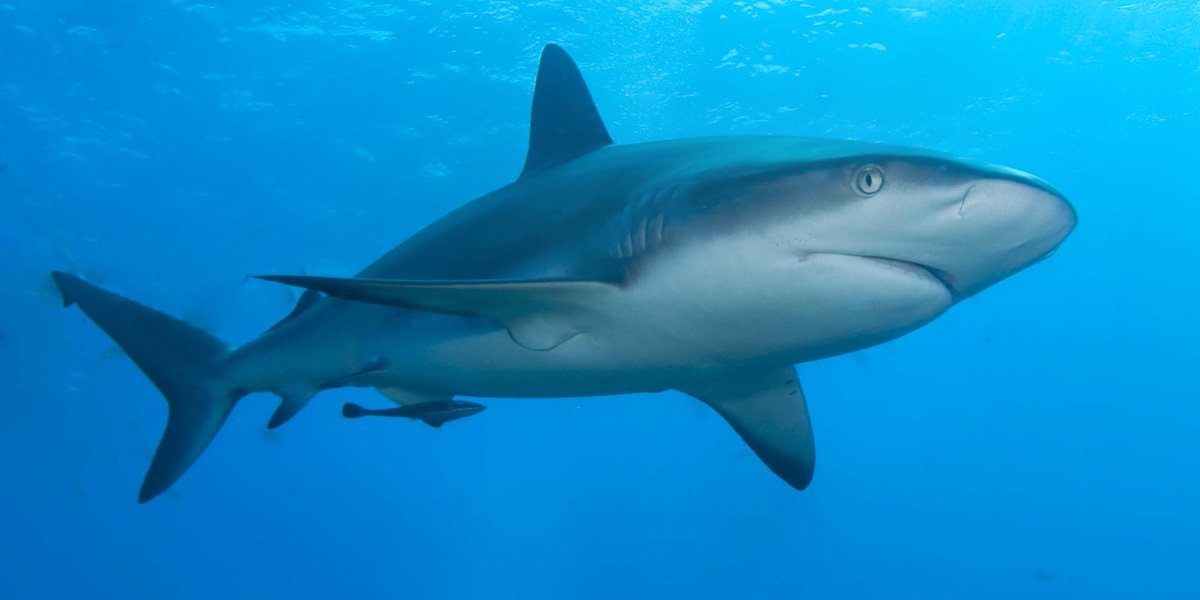
| Grey reef shark | Carcharhinus amblyrhynchos | 200 | Medium-to-large reef fishes, cephalopods, rays | Indo-Pacific reefs |
| Blacktip reef shark | Carcharhinus melanopterus | 150 | Small-to-medium reef fishes, cephalopods | Indo-Pacific lagoons and reefs |
| Whitetip reef shark | Triaenodon obesus | 170 | Nocturnal reef fishes, octopus, crustaceans | Indo-Pacific atolls and reef slopes |
| Caribbean reef shark | Carcharhinus perezi | 200 | Large reef fishes, rays, cephalopods | Caribbean and western Atlantic reefs |
| Silvertip shark | Carcharhinus albimarginatus | 250 | Large reef fishes, sharks, large cephalopods | Indo-Pacific outer reef slopes |
| Bull shark | Carcharhinus leucas | 230 | Large fishes, rays, small sharks | Tropical coastal reefs worldwide |
| Galapagos shark | Carcharhinus galapagensis | 240 | Fishes, cephalopods, small sharks | Island reefs in tropical Pacific |
| Giant grouper | Epinephelus lanceolatus | 270 | Large reef fishes, octopus, crustaceans | Indo-Pacific coral reefs |
| Goliath grouper | Epinephelus itajara | 240 | Fishes, large crustaceans, occasional sharks | Western Atlantic reefs |
| Nassau grouper | Epinephelus striatus | 120 | Reef fishes, crustaceans, cephalopods | Caribbean reefs |
| Camouflage grouper | Epinephelus polyphekadion | 120 | Medium fishes, octopus, crabs | Indo-Pacific reef areas |
| Coral trout | Plectropomus leopardus | 90 | Piscivorous fishes and cephalopods | Great Barrier Reef and Indo-Pacific |
| Black grouper | Mycteroperca bonaci | 150 | Large fishes, octopus | Western Atlantic reefs |
| Dusky grouper | Epinephelus marginatus | 120 | Reef fishes, crustaceans | Eastern Atlantic and Mediterranean reefs |
| Warsaw grouper | Hyporthodus nigritus | 250 | Large fishes, cephalopods | Western Atlantic reef and shelf habitats |
| Cubera snapper | Lutjanus cyanopterus | 150 | Large fishes, cephalopods | Tropical western Atlantic reefs |
| Dog snapper | Lutjanus jocu | 120 | Fishes, octopus, crustaceans | Western Atlantic coral reefs |
| Red snapper | Lutjanus campechanus | 100 | Fishes, large crustaceans | Gulf of Mexico and western Atlantic reefs |
| Mutton snapper | Lutjanus analis | 90 | Fish, cephalopods, crabs | Western Atlantic coral reefs |
| Giant trevally | Caranx ignobilis | 170 | Large reef fishes, octopus | Indo-Pacific reef flats and drop‑offs |
| Bluefin trevally | Caranx melampygus | 100 | Fishes, squid | Indo-Pacific reef slopes and lagoons |
| Bigeye trevally | Caranx sexfasciatus | 90 | Schooling fishes, cephalopods | Indo‑Pacific reefs and atolls |
| Greater amberjack | Seriola dumerili | 150 | Large reef and pelagic fishes | Temperate‑tropical reefs and wrecks worldwide |
| Horse‑eye jack | Caranx latus | 80 | Small fishes, squid | Western Atlantic coral reefs |
| Golden trevally | Gnathanodon speciosus | 120 | Medium fishes, crustaceans | Indo‑Pacific lagoons and reef slopes |
| Great barracuda | Sphyraena barracuda | 180 | Medium-to-large fishes | Tropical and subtropical reefs worldwide |
| Yellowtail barracuda | Sphyraena flavicauda | 120 | Medium fishes | Indo‑Pacific reefs and lagoons |
| Giant moray | Gymnothorax javanicus | 300 | Fishes, octopus, crustaceans | Indo‑Pacific coral reefs |
| Green moray | Gymnothorax funebris | 200 | Fishes, crustaceans | Caribbean reefs and rocky areas |
| Yellowmargin moray | Gymnothorax flavimarginatus | 150 | Fish, cephalopods, crustaceans | Indo‑Pacific reefs |
| Day octopus | Octopus cyanea | 100 | Crabs, fishes, mollusks | Indo‑Pacific coral reefs and lagoons |
| Caribbean reef octopus | Octopus briareus | 120 | Crustaceans, fishes | Caribbean coral reefs |
| Banded sea krait | Laticauda colubrina | 100 | Eels and reef fish | Indo‑Pacific reef zones and coastal islets |
| Cobia | Rachycentron canadum | 200 | Large fishes, crabs | Tropical and subtropical reefs worldwide |
| Spotted wobbegong | Orectolobus maculatus | 250 | Ambushes fishes, cephalopods | Indo‑Pacific rocky and coral reef shelves |
| Peacock hind | Cephalopholis argus | 45 | Small fish, crustaceans | Indo‑Pacific coral reefs |
| Coral hind | Cephalopholis miniata | 40 | Small fishes, crustaceans | Indo‑Pacific reefs |
| Spangled emperor | Lethrinus nebulosus | 70 | Fishes and large invertebrates | Indo‑Pacific reef flats and lagoons |
| Barramundi (Asian sea bass) | Lates calcarifer | 120 | Fish and crustaceans | Indo‑Pacific coastal reefs and estuaries |
| Mangrove snapper | Lutjanus griseus | 80 | Fishes, crustaceans, cephalopods | Western Atlantic and Caribbean reefs |
Images and Descriptions
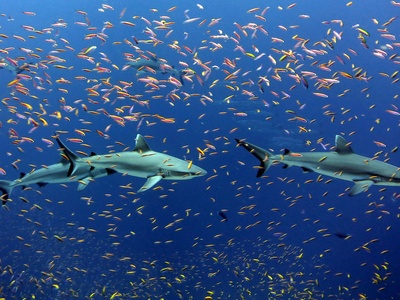
Grey reef shark
A common apex predator on Indo‑Pacific reefs, the grey reef shark reaches about 2 m and hunts reef fish and cephalopods. It helps regulate mesopredator populations and maintain balanced reef fish communities through top‑down control.
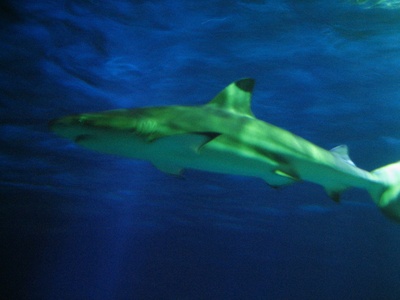
Blacktip reef shark
Blacktip reef sharks are fast, coastal hunters around reef flats and lagoons. At ~1.5 m adults take a range of fishes and squid, influencing schooling fish behavior and local food‑web dynamics.
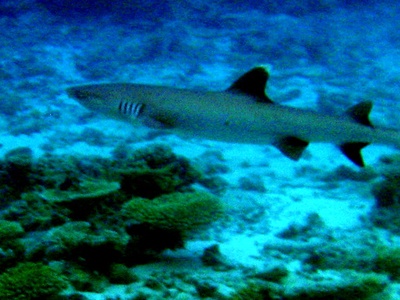
Whitetip reef shark
Whitetip reef sharks are slender, often resting in caves by day and hunting small predators and octopus by night. They are integral reef meso‑apex predators, shaping nocturnal prey communities.
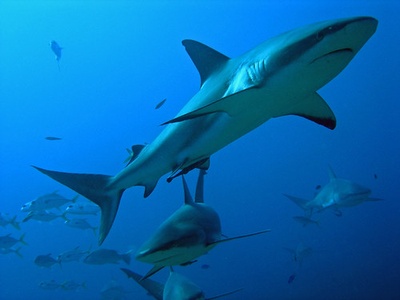
Caribbean reef shark
A familiar top predator on Caribbean reefs, this shark reaches ~2 m and preys on large fishes and rays. It plays a key role in maintaining healthy reef predator-prey balances.
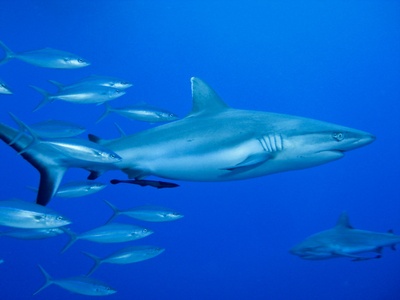
Silvertip shark
Silvertip sharks patrol outer reef edges and drop‑offs. Large and bold, adults take substantial reef fish, other sharks and cephalopods, functioning as important apex consumers on remote reefs.
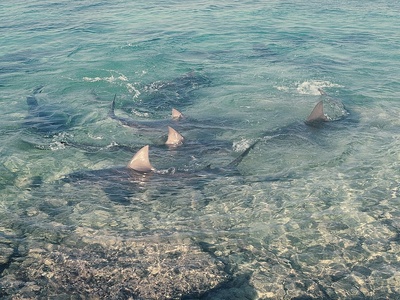
Bull shark
Bull sharks use shallow coastal and near‑reef habitats; adults are powerful predators of large fish and rays. Their presence links reef and coastal food webs and can suppress large fish populations.
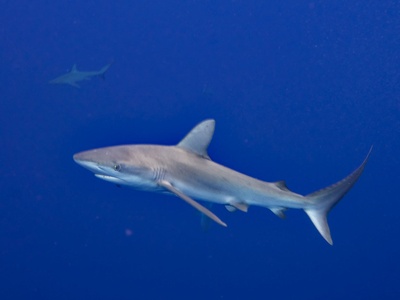
Galapagos shark
Found around oceanic islands and drop‑offs, Galapagos sharks are persistent reef hunters. Adults (~2.4 m) take sizeable fishes and cephalopods and influence prey distributions around isolated reefs.
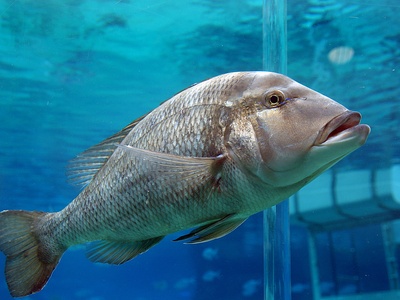
Giant grouper
One of the largest reef fishes, the giant grouper ambushes big fish and cephalopods. At over 2.5 m it’s a top reef predator and ecosystem architect, controlling populations of mid‑sized predators.
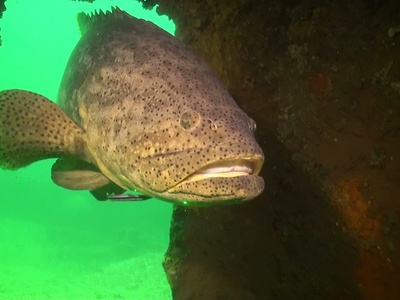
Goliath grouper
Goliath grouper are massive ambush predators on western Atlantic reefs. Adults eat large fishes and crustaceans; their removal has measurable effects on reef fish community structure and shelter dynamics.
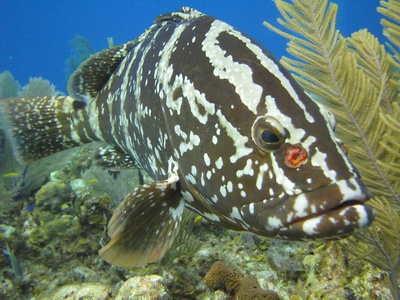
Nassau grouper
Nassau groupers are important Caribbean piscivores that form spawning aggregations. Adults (to ~1.2 m) feed on a variety of fishes and in doing so control smaller predator and prey populations.
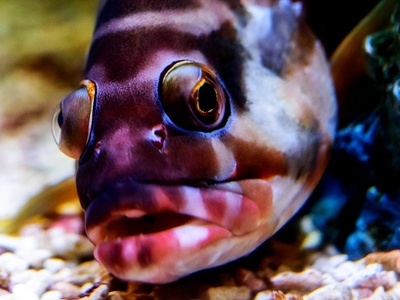
Camouflage grouper
A widespread Indo‑Pacific ambush predator, the camouflage grouper reaches around 1.2 m and consumes a variety of piscivores and cephalopods, helping regulate reef mesopredator abundance.
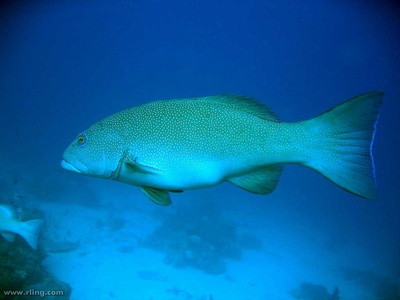
Coral trout
Coral trout are active reef hunters on coral slopes and bommies. At roughly 90 cm adults take mid‑sized fishes and squid, making them important hunters of reef mesopredators.
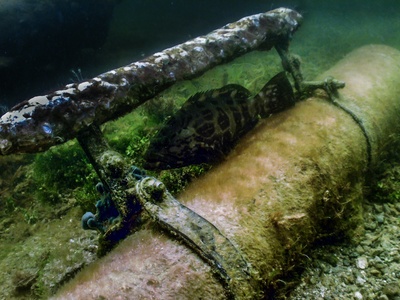
Black grouper
Black grouper are powerful reef predators in western Atlantic systems. Adults (~1.5 m) feed on sizeable fishes and cephalopods, affecting the abundance of mid‑trophic predators on coral reefs.
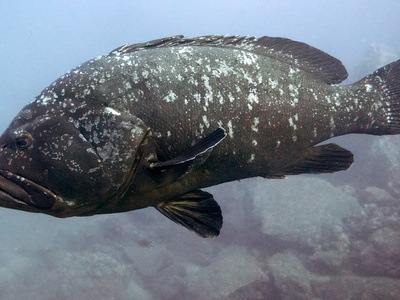
Dusky grouper
Dusky groupers are slow‑moving ambush predators on rocky and coral reefs. Adults eat fishes and larger invertebrates and can suppress local populations of smaller predators.
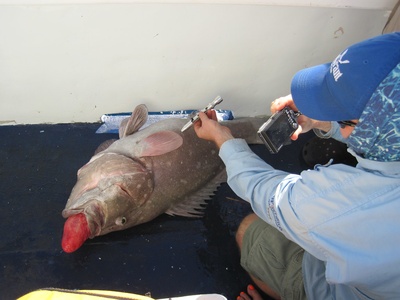
Warsaw grouper
A very large, deep‑reef associated grouper, adults reach large sizes and feed on big reef fishes and cephalopods. They act as long‑lived apex predators on shelf reefs.
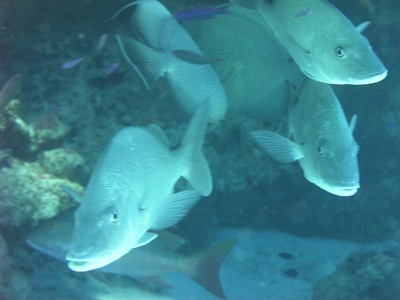
Cubera snapper
Cubera snapper are bulky, reef‑associated predators that ambush large fish and squid. Adults (~1.5 m) are important mid‑shelf predators that influence reef community composition.
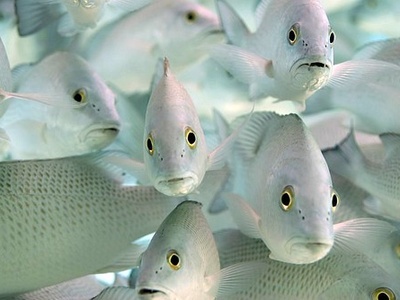
Dog snapper
Dog snapper are nocturnal/crepuscular predators on Caribbean reefs, taking a mix of fishes and cephalopods. Adults help regulate populations of smaller predatory fishes.
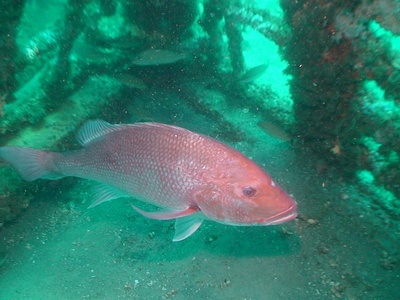
Red snapper
Red snapper inhabit reef structures and slopes; adults feed on fish and crustaceans and are significant predators on reef and near‑reef food webs.
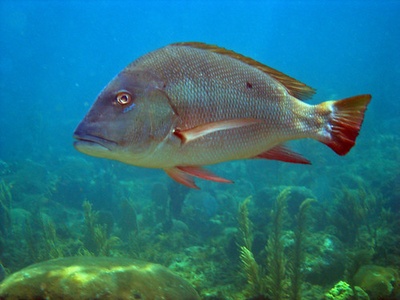
Mutton snapper
Mutton snapper commonly forage along reef edges and seagrass. Adults feed on fishes and squid, linking reef and adjacent habitats through predation on mobile prey.
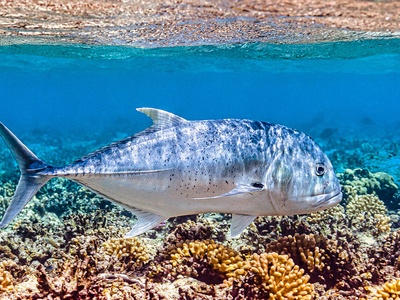
Giant trevally
Giant trevally are bold, fast predators that ambush and chase large reef fishes and cephalopods. As one of the reef’s top teleost predators, they shape schooling fish behavior and local trophic structure.
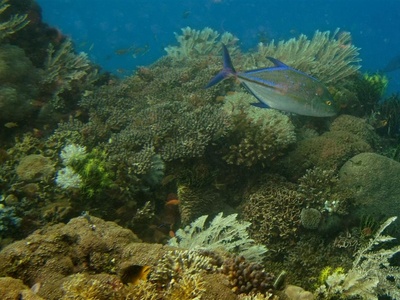
Bluefin trevally
Bluefin trevally hunt in packs or alone, taking mid‑sized fishes and squid. Adults influence the abundance and distribution of smaller predatory and schooling fishes on reefs.

Bigeye trevally
Bigeye trevally specialize on schooling fish and squids around reefs and drop‑offs. Their hunting pressure reshapes fish school behavior and provides top‑down control in reef foraging zones.
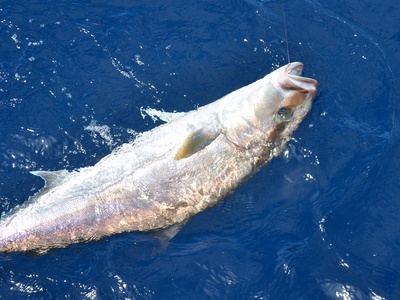
Greater amberjack
Greater amberjack frequent reef edges and deeper structures, preying on substantial reef and pelagic fishes. Adults act as large predators linking offshore and reef ecosystems.
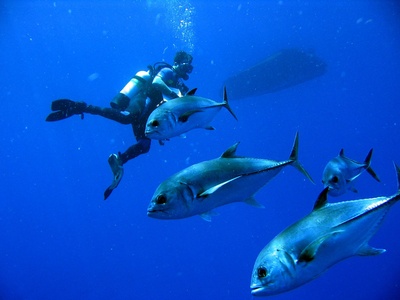
Horse‑eye jack
Horse‑eye jacks are schooling predators on Caribbean reefs, taking small fishes and cephalopods. They can form transient hunting groups that impact local forage‑fish and juvenile predator populations.
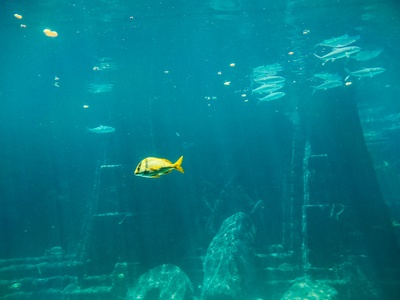
Golden trevally
Golden trevally feed on a variety of fishes and crustaceans along reef margins. Adults are active hunters whose predation influences the distribution of mid‑sized reef prey.
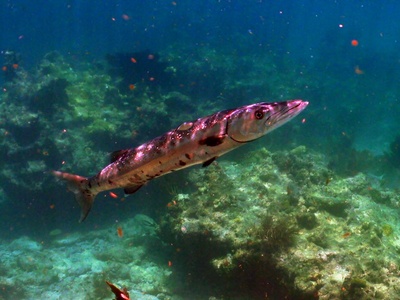
Great barracuda
Great barracudas are fast, opportunistic predators along reef edges. Adults take a wide range of fishes and occasionally other predators, shaping prey schooling and habitat use.
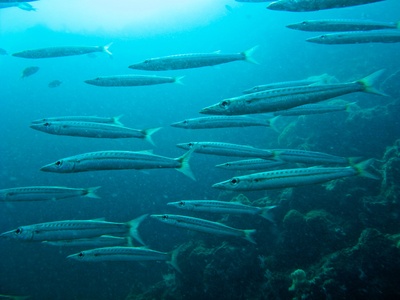
Yellowtail barracuda
Smaller than great barracuda, yellowtail barracudas hunt reef fishes near reef flats and drop‑offs. They are notable ambush predators that pressure small predatory fishes.
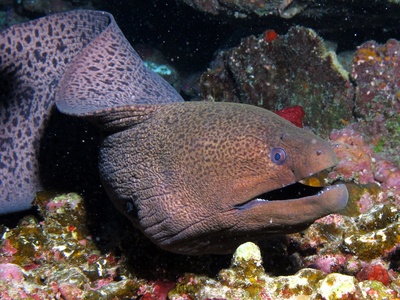
Giant moray
Giant morays are large ambush eels that hunt fishes and cephalopods from reef crevices. Adults (to ~3 m) are significant nocturnal predators, affecting mesopredator and reef fish community dynamics.
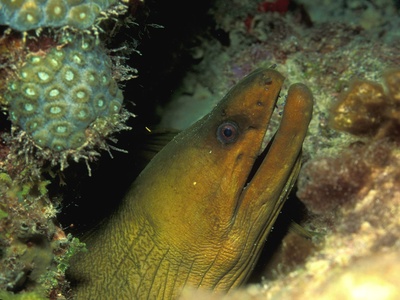
Green moray
Green morays are large Atlantic morays that take sizable reef fishes. As secretive ambush predators, they help regulate populations of smaller predatory fishes and maintain reef trophic balance.
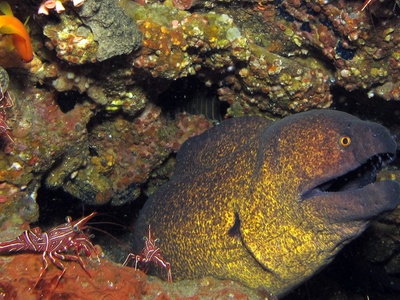
Yellowmargin moray
The yellowmargin moray is a sizable reef eel that feeds on fish and cephalopods. Its nocturnal hunting reduces abundance of small predators and contributes to reef predator diversity.

Day octopus
Octopus cyanea is an active reef predator that takes crustaceans and fishes. Adults use clever hunting and camouflage to prey on mid‑sized predators and in doing so influence reef micro‑food webs.
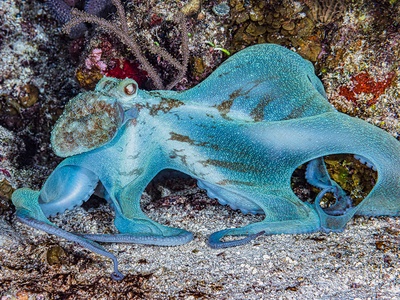
Caribbean reef octopus
This octopus is a crafty reef hunter that captures crabs, reef fishes and mollusks. Adults are important benthic predators, altering local prey populations and habitat use by other predators.
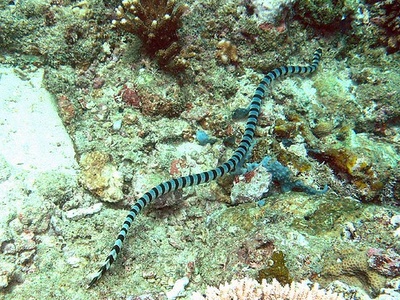
Banded sea krait
Banded sea kraits forage on reef crests for eels and fish before returning to land. Their specialized diet of predatory eels makes them true tertiary consumers on many Indo‑Pacific reefs.
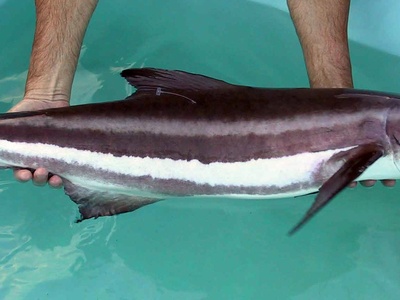
Cobia
Cobia are strong, mobile predators that frequent wrecks and reef structures. Adults take sizeable fish and crustaceans and often follow large predators, acting as important upper‑level consumers.
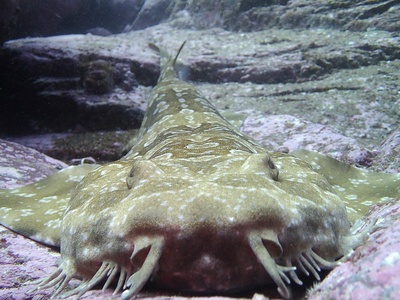
Spotted wobbegong
Wobbegongs are carpet sharks that lie concealed on reefs and ambush large reef fishes and cephalopods. Adults are cryptic apex predators in reef‑associated rocky habitats.
Peacock hind
Peacock hind is a medium-sized grouper that preys on smaller predatory fishes and crustaceans. As an abundant mesopredator, it influences reef community structure through frequent localized predation.
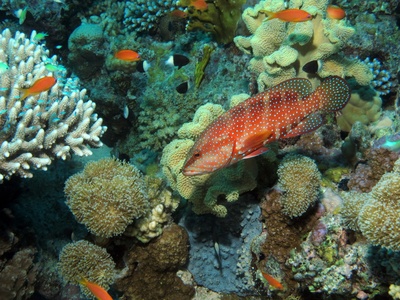
Coral hind
The coral hind is a colorful, reef-dwelling grouper that takes small predatory fishes and crustaceans. Adults help regulate populations of juvenile predators in lagoon and slope habitats.
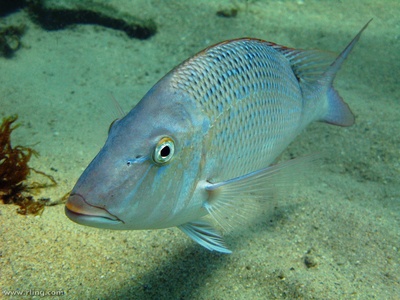
Spangled emperor
Spangled emperors are versatile predators that consume fishes and large invertebrates on reefs. Adults are significant mid‑level predators that link benthic and pelagic prey communities.
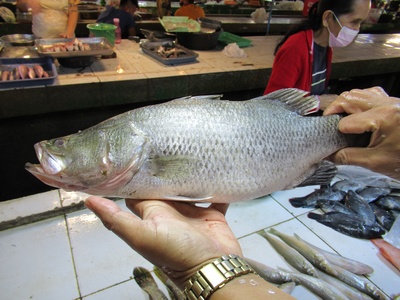
Barramundi (Asian sea bass)
Barramundi are large ambush predators common on inshore reefs and estuaries. Adults take sizeable fishes and crabs and are important connectors between estuarine and reef food webs.
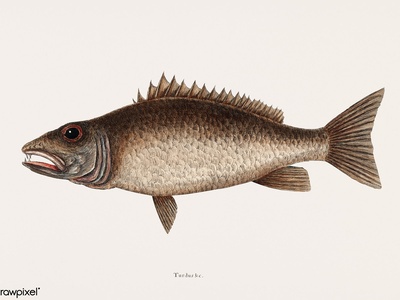
Mangrove snapper
Mangrove snapper are adaptable predators of fish and crustaceans that use reef and mangrove habitats. Adults prey on juvenile predators and mid‑sized fishes, shaping nearshore reef communities.