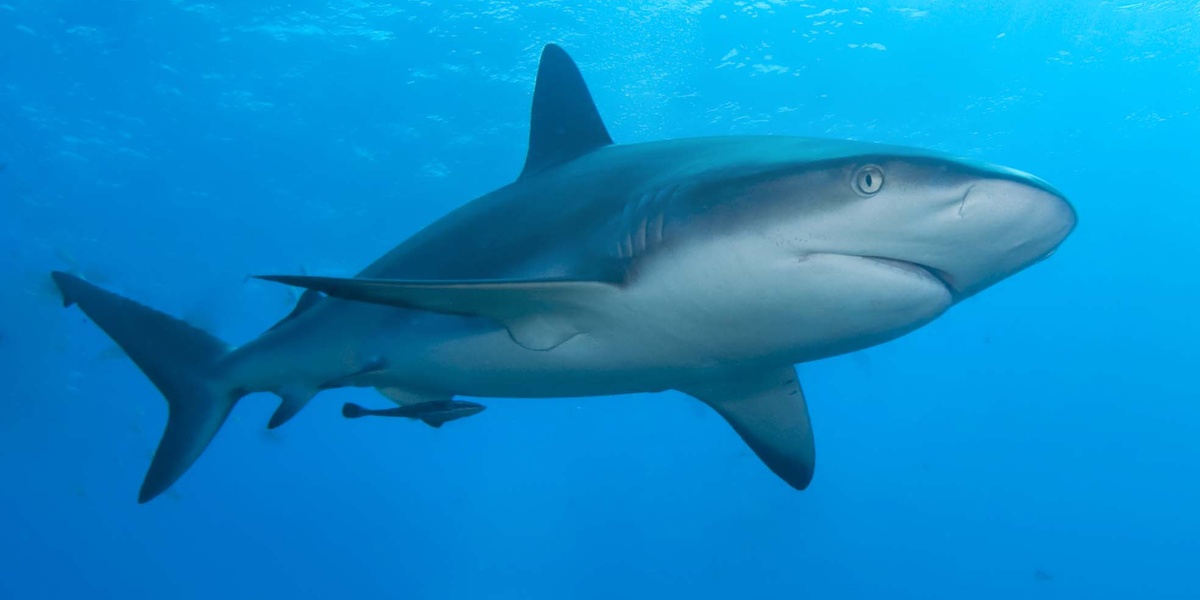
Palau’s islands, lagoons and coral reefs are home to a huge variety of wildlife that shapes daily life for residents and visitors alike. Most animals are harmless if treated with respect, but a few can cause bites, stings or disease when precautions aren’t taken.
There are 18 Dangerous Animals in Palau, ranging from Aedes mosquito to White-tip reef shark. For each species, you’ll find below concise entries organized with Scientific name,Danger,Typical location to help you quickly understand the risk and where it’s most likely to occur — you’ll find below.
How likely am I to encounter these dangerous animals while visiting Palau?
Encounters vary by activity: mosquito exposure is common in populated or forested areas, while most marine species are avoidable if you follow local guidance (avoid dusk/dawn swims, don’t touch wildlife). Use repellent, wear reef-safe protective clothing for water activities, and listen to park or boat guides to minimize risk.
What should I do if bitten or stung in Palau?
Basic first aid helps: clean the wound, control bleeding, remove stingers if present, and monitor for allergic reactions or infection. Seek local medical care promptly for severe symptoms (difficulty breathing, spreading redness, high fever) and report the incident to your guide or local health services.
Dangerous Animals in Palau
| Name | Scientific name | Danger | Typical location |
|---|---|---|---|
| Stonefish | Synanceia verrucosa | High; sting, venom, severe pain, possible systemic effects | Shallow reefs, coral rubble, tide pools |
| Crown-of-thorns starfish | Acanthaster planci | Moderate; puncture, venomous spines, severe pain and infection risk | Coral reefs, outbreak-prone reef slopes |
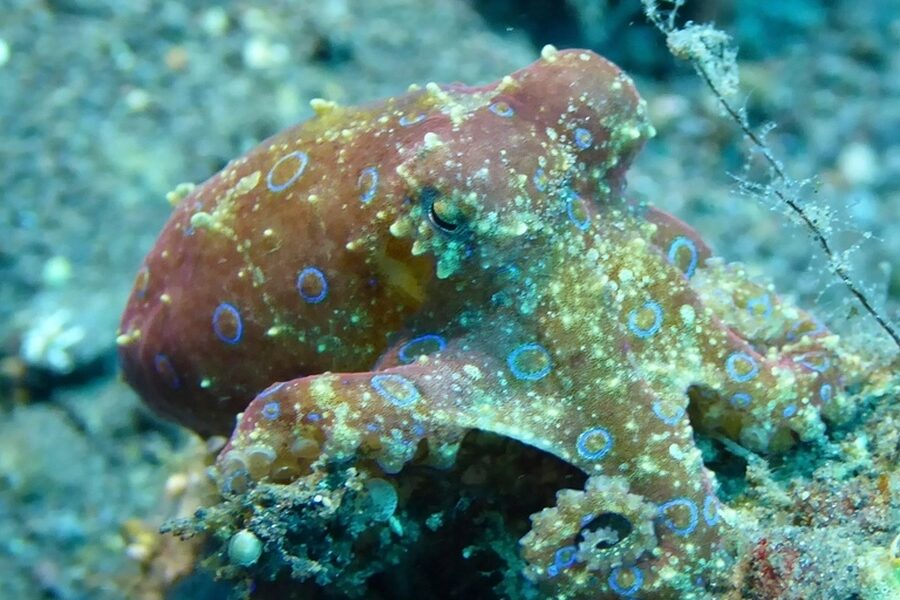
| Blue-ringed octopus | Hapalochlaena lunulata | High; bite, potent neurotoxin (tetrodotoxin), paralysis, respiratory failure | Rock pools, reef crevices, shallow lagoons |
| Geographic cone snail | Conus geographus | High; harpoon sting, neurotoxic venom, potential fatality | Sandy reef margins, coral rubble, shallow lagoons |
| Lionfish | Pterois volitans | Moderate; sting from fin spines, painful envenomation | Reefs, wrecks, lagoons; widespread invasive species |
| Long-spined sea urchin | Diadema setosum | Moderate; puncture wounds, possible envenomation and infection | Shallow reefs, rock pools, reef crests |
| Giant moray eel | Gymnothorax javanicus | Moderate; bite causes deep lacerations, infection risk, aggressive if provoked | Reef crevices, caves, wrecks |
| Blue-spotted stingray | Taeniura lymma | Moderate; sting from tail barb, venom, severe pain and bleeding | Sandy flats, lagoons, nearshore reefs |
| Olive sea snake | Aipysurus laevis | High; bite, potent neurotoxic venom, respiratory paralysis possible | Reefs, lagoons, nearshore waters |
| Tiger shark | Galeocerdo cuvier | High; large-bite trauma, severe injury or death (rare) | Blue Corner, deep channels, outer reefs |
| White-tip reef shark | Triaenodon obesus | Low; bite and laceration risk (rare) | Reefs, channels, lagoon drop-offs; common |
| Fire coral | Millepora spp. | Moderate; contact envenomation, burning pain and rash | Shallow reefs, reef edges, lagoon patches |
| Textile cone | Conus textile | High; harpoon sting, potent neurotoxin, paralysis possible | Coral rubble, sandy patches, shallow reef areas |
| Coconut crab | Birgus latro | Moderate; powerful pinch, crushing injuries, deep cuts | Island forests, coastal areas, near villages |
| Tropical centipede | Scolopendra subspinipes | Moderate; painful venomous bite, local swelling and systemic symptoms | Forest leaf litter, gardens, houses, damp debris |
| Feral pig | Sus scrofa | Moderate; trampling, tusk injuries, zoonotic disease risk | Forest interiors, small islands, village outskirts |
| Aedes mosquito | Aedes aegypti | Moderate; bites transmit dengue and other arboviruses, illness risk | Villages, stagnant water, gardens, mangroves |
| Feral/stray dog | Canis familiaris | Moderate; bites, scratches, infection risk | Villages, islands, tourist areas |
Images and Descriptions
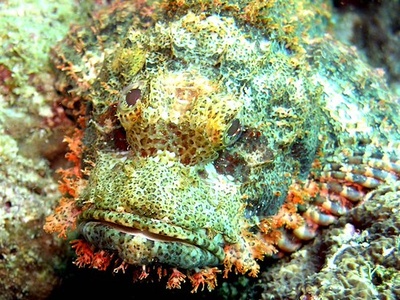
Stonefish
Highly venomous reef fish that looks like a rock; stepping on spines causes intense pain, swelling and sometimes systemic illness. Hot-water immersion and urgent hospital care (antivenom if indicated) are essential; wear reef boots and shuffle feet.
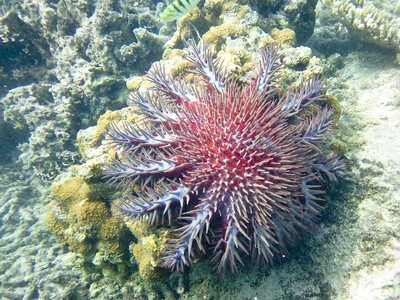
Crown-of-thorns starfish
Large spiny starfish whose sharp venom-coated spines can puncture skin and cause severe pain, swelling and infection. Do not handle; seek hot-water immersion, clean wounds, and medical attention for deep punctures or signs of infection.
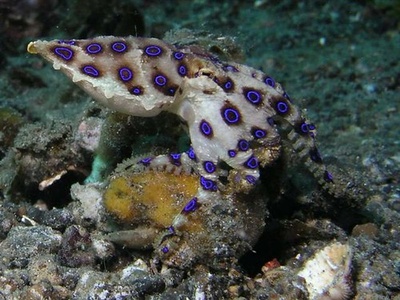
Blue-ringed octopus
Small, vividly marked octopus carrying lethal tetrodotoxin; bites may be painless but can cause rapid paralysis and respiratory arrest. No antivenom—supportive care and immediate evacuation to hospital are critical. Never handle, dead specimens can still be toxic.

Geographic cone snail
Powerful predatory snail that shoots a venomous harpoon; stings can cause paralysis and fatal respiratory failure. Do not pick up live cones; immediate medical care and monitoring of breathing are required if stung.
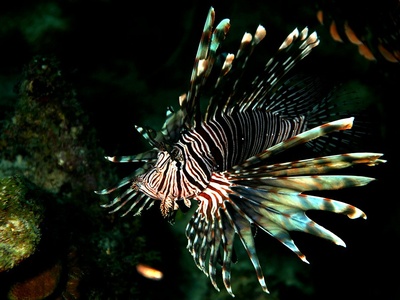
Lionfish
Invasive reef fish with venomous dorsal and pectoral spines. Stings are intensely painful and can swell but are rarely fatal. First aid: hot-water immersion, remove embedded spines carefully, clean wound and seek medical advice for severe reactions.
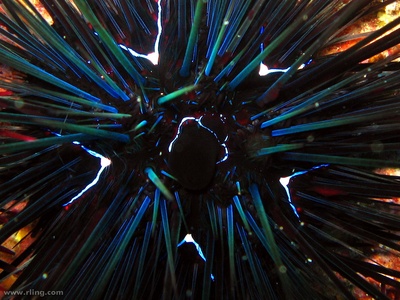
Long-spined sea urchin
Black long-spined urchin whose brittle spines can puncture skin and break off, causing pain and possible infection. Remove visible spines, soak wound in hot water, seek professional removal of deep fragments and tetanus update if needed.
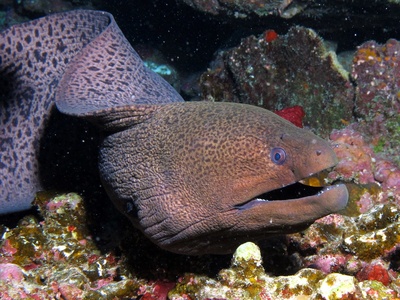
Giant moray eel
Large cryptic eel with a powerful bite that can inflict deep cuts and secondary infections. Avoid reaching into holes, never feed eels, clean and medically assess any bites; tetanus and antibiotics may be required.
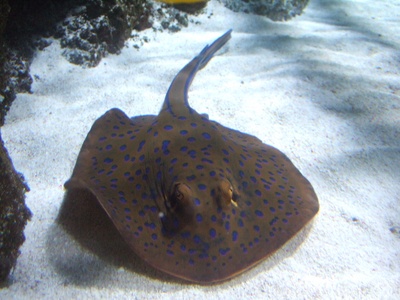
Blue-spotted stingray
Often buried in sand; stepping on a stingray can result in a painful venomous barb wound with bleeding. First aid: hot-water immersion to reduce pain, control bleeding, and seek hospital care for barb removal and infection prevention.
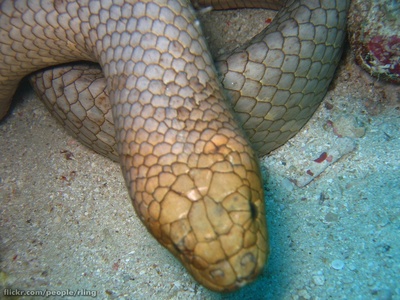
Olive sea snake
Sea snakes are highly venomous but bites are rare. Symptoms can progress to paralysis; immediate evacuation and medical support are essential. Do not attempt to handle or kill sea snakes; common around reefs and dive sites.
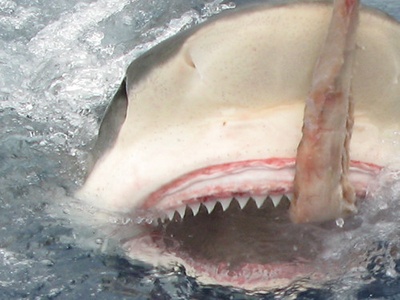
Tiger shark
Large apex predator occasionally found around Palau’s channels and drop-offs. Attacks are rare but can be catastrophic. Follow local advisories, avoid night spearfishing, minimize splashing and dive in groups to reduce risk.
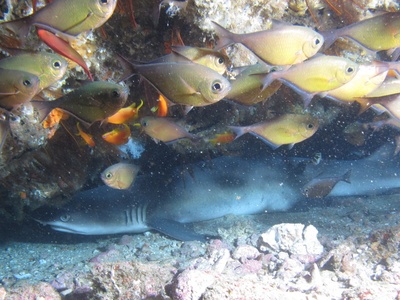
White-tip reef shark
Common reef shark typically not aggressive toward humans but capable of defensive bites if provoked or fed. Give sharks space, avoid hand-feeding, and treat accidental bites promptly to prevent infection.
Fire coral
Not a true coral but a stinging hydrocoral that causes intense burning, rash and welts on contact. Rinse with seawater (avoid fresh water), soak in hot water for pain relief and seek medical care for severe or spreading reactions.
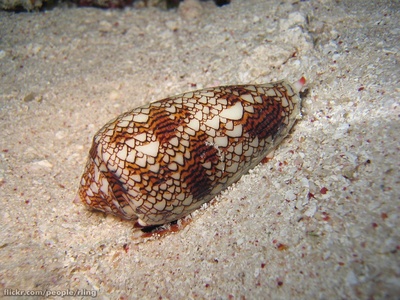
Textile cone
Another highly venomous cone snail species with a fast harpoon-like sting. Stings can cause paralysis and respiratory failure. Never handle live cones; urgent medical attention and airway monitoring are required if stung.
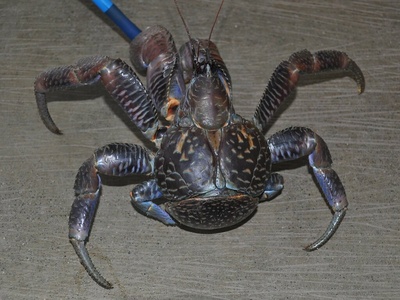
Coconut crab
Largest terrestrial arthropod with strong claws that can deliver crushing pinches and cause serious lacerations. Typically nocturnal and shy—do not corner or attempt to pick them up; supervise children and keep food secured.
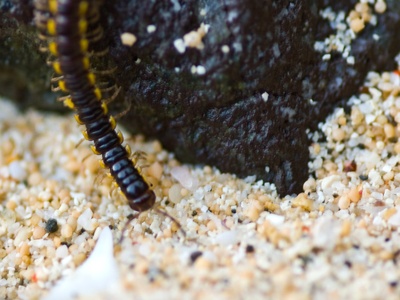
Tropical centipede
Large aggressive centipede found in tropical debris and homes; bites are intensely painful and can cause swelling, fever and malaise. Clean wound, apply cold packs, and seek medical attention for severe reactions or infection.
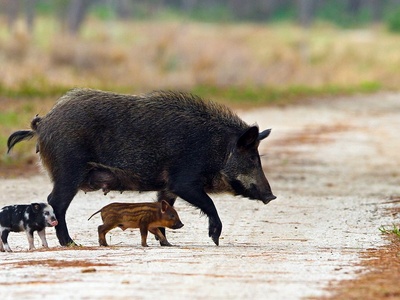
Feral pig
Introduced pigs can become aggressive, especially when cornered or protecting young; they can gore or trample people. Keep distance, avoid feeding, secure campsites, and seek prompt care for wounds to prevent infection.
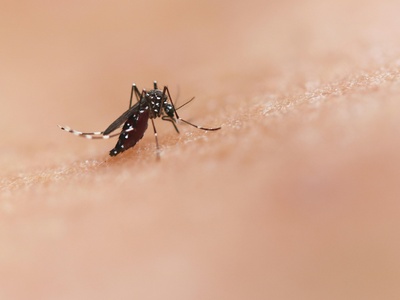
Aedes mosquito
Common day-biting mosquito that transmits dengue and other viruses in Palau. Use DEET/icaridin repellent, wear long sleeves, sleep under screened nets and get prompt medical care for febrile illness.

Feral/stray dog
Stray dogs can bite or behave aggressively, causing lacerations and risk of infection. Avoid approaching or feeding unfamiliar dogs; clean and medically assess all bite wounds promptly for infection prevention.