Let’s settle the headline first: Uruguay is one of the safest countries in South America when it comes to wildlife. No big cats hunting hikers, no swarms of anything famous, and the country’s been free of large dangerous predators for a long time. Most visitors go their entire trip without seeing anything scarier than a capybara dozing by a lagoon.
But “safe” isn’t “harmless.” Uruguay has four venomous snakes, two medically significant spiders, caimans in the northern rivers, and the usual disease-carrying insects. The risk is low, it’s concentrated in specific places and seasons, and almost all of it is avoidable once you know what you’re looking at.
Here’s the honest version: what’s actually dangerous, where you’d run into it, and what to do if things go wrong.
Table of Contents
- How worried should you be?
- 1. Yarará (Bothrops pit vipers)
- 2. South American Rattlesnake (Cascabel)
- 3. Crossed Pit Viper (Yarará Cruzada)
- 4. Coral Snake (Micrurus)
- 5. Brown Recluse (Corner Spider)
- 6. Wheat Spider / Garden Orb-Weaver
- 7. Broad-Snouted Caiman
- 8. Mosquitoes
- Marine hazards: jellyfish and stingrays
- Snake-bite action box
How worried should you be?
Low. Genuinely low. Uruguay records very few serious envenomations a year, and deaths from snakebite are rare — the country has a functioning public health system and produces and stocks antivenom domestically through the Instituto Clemente Estable and regional partners. A bite that gets to a hospital in time is almost always survivable.
The risk profile breaks down cleanly:
- Snakes account for nearly all the serious danger, and almost all bites happen in rural grassland, near rivers, or in rocky scrub — not in Montevideo, Punta del Este, or Colonia.
- Spiders are a real but minor concern, mostly in the warmer northern departments.
- Caimans are shy and confined to the north.
- Insects are the thing you’ll actually deal with daily, and the worst most travelers face is an itchy ankle.
If you’re spending your trip in cities, on beaches, or in wine country, your odds of a dangerous animal encounter are close to zero. If you’re hiking, fishing, or working in the campo during the warm months (roughly October to April), pay attention. That’s the window when snakes and spiders are active.
1. Yarará (Bothrops pit vipers)
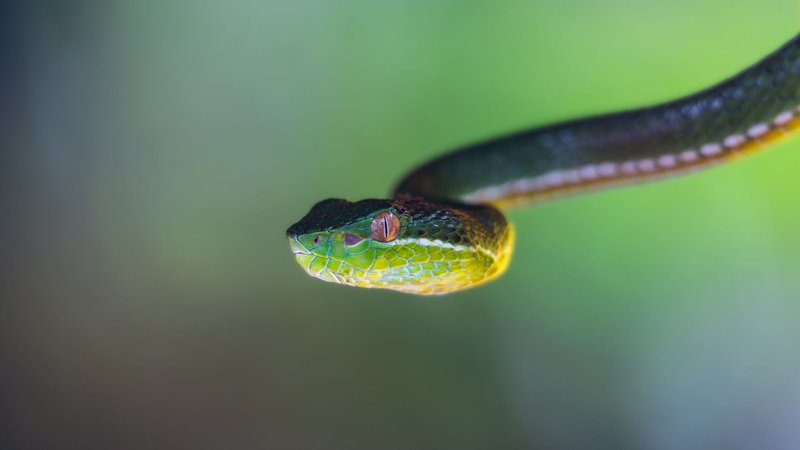
This is the one that matters most. The yarará — Uruguay’s group of Bothrops pit vipers — is responsible for the large majority of medically serious snakebites in the country. Not because it’s especially aggressive, but because it’s common, well camouflaged, and lives exactly where people walk.
You’ll find yarará in grasslands, the edges of cultivated fields, near streams, and in rock piles. It’s a tan-to-brown snake with darker triangular or kidney-shaped markings down its sides, and it blends into dry leaf litter so well that most bites happen because someone stepped too close without seeing it. It’s a sit-and-wait ambush hunter, which means it often won’t move until you’re nearly on top of it.
The venom is hemotoxic — it attacks blood and tissue. A bite causes intense pain, swelling, bruising, and in serious cases bleeding problems and local tissue damage. It is not the kind of bite you wait out. It needs antivenom, and the sooner the better.
The good news: yarará bites are highly preventable. Watch where you put your feet and hands, wear boots and long trousers in tall grass, and never reach blindly into rock crevices or wood piles. Most victims are agricultural workers and hikers, not tourists.
2. South American Rattlesnake (Cascabel)
The cascabel, Crotalus durissus, is Uruguay’s rattlesnake — and its venom is arguably the most dangerous of any snake in the country, even if bites are rarer than yarará. It lives in dry, open grassland and rocky scrub, more common in the north and the rolling cuchilla country than along the coast.
What sets the cascabel apart is the nature of its venom. It’s neurotoxic rather than primarily tissue-destroying, so a serious bite can cause drooping eyelids, blurred or double vision, muscle pain, and in severe cases problems with breathing and kidney function. The local swelling is often less dramatic than a yarará bite, which can fool people into underestimating it. Don’t.
The rattle is your warning, and unlike Hollywood, it doesn’t always sound off before striking — but when you do hear that dry buzz, freeze and locate the snake before you move. Give it room. Cascabels would much rather leave than fight.
3. Crossed Pit Viper (Yarará Cruzada)
The yarará cruzada, Bothrops alternatus, is a close relative of the yarará and shares the same playbook: ambush hunter, hemotoxic venom, excellent camouflage. It’s named for the distinctive crossed or “telephone-handle” markings along its back, which is your best field ID clue.
It tends to prefer damper ground — the margins of wetlands, ditches, and floodplains — so it overlaps with anglers and anyone walking near water. The bite presents like a yarará bite: severe local pain, rapid swelling, bruising, and potential clotting issues. Treatment is the same antivenom protocol.
For practical purposes, you don’t need to tell the two yararás apart in the field. If you’re bitten by a brown, patterned snake near grass or water, treat it as a pit viper emergency and get to a hospital. The antivenom covers both.
4. Coral Snake (Micrurus)
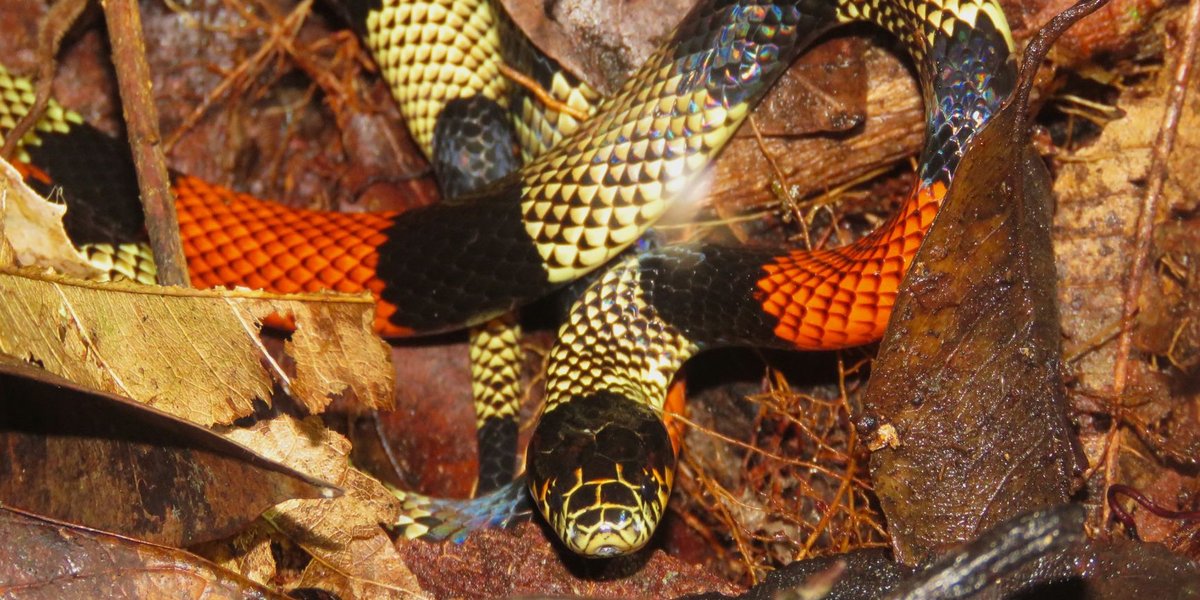
The coral snake, Micrurus, is the most striking and, drop for drop, the most potently venomous snake in Uruguay — but it’s also the one you’re least likely to be bitten by. Its venom is strongly neurotoxic, capable of causing progressive paralysis. The reason it lands low on the worry list is behavior: coral snakes are secretive, mostly nocturnal, spend much of their time underground or under leaf litter, and have small mouths and short fangs that make it hard for them to bite a human effectively. Most bites happen to people who pick the snake up.
The classic ID is the banding: vivid red, black, and white/yellow rings circling the body. Uruguay has the boxing-glove problem of harmless mimics that copy this pattern, and the old North American “red touches yellow” rhymes don’t reliably work for South American species. So the rule here is simpler and safer: don’t handle any banded red-black-and-white snake, period.
A coral snake bite can be deceptive because symptoms may be delayed and the local pain is often mild — then neurological signs creep in. If you’re bitten by anything matching that color pattern, go to a hospital immediately even if you feel fine. Waiting for symptoms is exactly the wrong move with neurotoxic venom.
5. Brown Recluse (Corner Spider)
Uruguay has the brown recluse, Loxosceles, known locally as the araña de los rincones — the corner spider — because it lives in the quiet, undisturbed corners of human spaces: behind furniture, in closets, inside stored shoes and folded laundry, in garages and woodpiles. It’s small, sandy-brown, and unremarkable looking, with long thin legs.
The recluse isn’t aggressive and bites almost only when trapped against skin — which is exactly what happens when you pull on a shirt that’s been hanging in the closet for a month, or slip your foot into a boot the spider crawled into. The bite itself is often painless at first. The problem is the venom, which can cause loxoscelism: a slowly spreading area of dead tissue (necrosis) that can take weeks to heal and occasionally needs medical treatment. A smaller fraction of bites trigger a more dangerous systemic reaction.
Prevention is mundane and effective: shake out clothing and shoes that have been sitting, don’t store firewood against the house, and don’t reach blindly into dark corners. If you develop a bite that turns into a worsening, darkening sore over a day or two, see a doctor and mention the recluse.
6. Wheat Spider / Garden Orb-Weaver
The other spider worth naming is the araña del trigo (wheat spider) and the larger orb-weavers you’ll see strung across garden paths and field edges in summer. These big, leggy spiders look alarming and build impressive webs, and they get blamed for a lot. In reality, most are close to harmless to humans — a bite is comparable to a bee sting: locally painful, swollen, and over within a day for most people.
The reason they make the list at all is that Uruguay also has reports of more medically significant spiders, and people understandably can’t tell a scary-but-harmless orb-weaver from something worse. The practical takeaway is the same regardless: don’t handle spiders, watch where you put your hands in the garden, and if a bite produces severe pain, spreading symptoms, muscle cramps, or sweating beyond the bite site, get it checked rather than guessing at the species.
7. Broad-Snouted Caiman
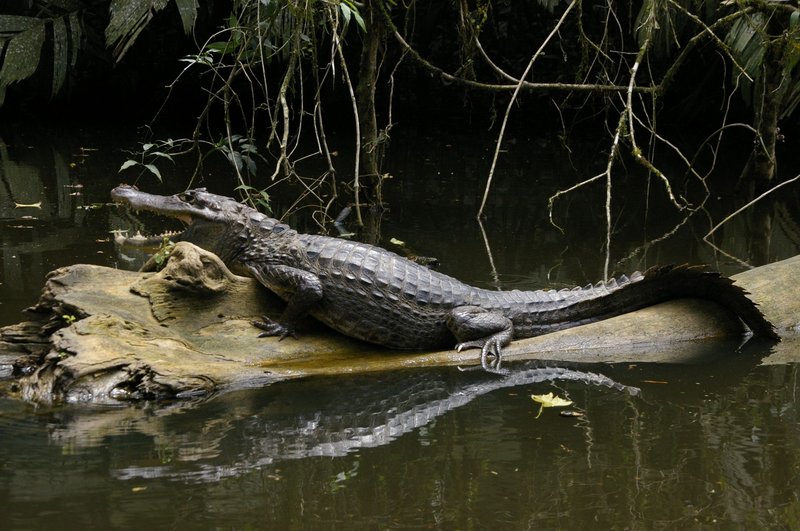
Uruguay’s only crocodilian is the broad-snouted caiman, Caiman latirostris, and it’s confined to the north — the rivers, wetlands, and flooded grasslands of departments like Artigas and the basin near the Brazilian border. You will not encounter one on a Punta del Este beach.
This is a relatively small, shy caiman, typically a couple of meters at most, and it has no interest in people. Attacks on humans are essentially unheard of in Uruguay. The realistic risk is the one that applies to any large reptile with teeth: don’t corner it, don’t feed it, don’t swim right next to it, and keep small dogs away from the water’s edge in caiman country. Give it distance and it gives you a great photo and nothing else.
It’s also a conservation success story — broad-snouted caiman populations recovered after hunting pressure eased, and they’re now a healthy part of the northern wetland ecosystem rather than a threat to it.
8. Mosquitoes
Statistically, the most dangerous animal in Uruguay is the one you’ll swat without thinking. Aedes aegypti mosquitoes are present in the country and are the vector for dengue, and Uruguay has recorded dengue transmission in recent years, mostly in the warm months and concentrated in urban and northern areas. The risk is lower than in tropical neighbors, but it’s not zero.
There’s no specific drug for dengue — treatment is supportive — so prevention is the whole game. The US CDC and WHO both recommend the same basics: use repellent with DEET or picaridin, wear long sleeves at dawn and dusk when Aedes is most active, and stay somewhere with screens or air conditioning. Empty standing water around where you’re staying — that’s where they breed. Boring advice, genuinely effective.
Marine hazards: jellyfish and stingrays
The competitor articles skip the coast, which is odd for a country defined by its beaches. Two things are worth knowing.
Jellyfish occasionally appear along the Atlantic and Río de la Plata coast, especially after certain wind and current conditions push them inshore in summer. Most stings are the standard burning-welt nuisance. Rinse with seawater (not fresh water, which can trigger more stinging cells), remove any tentacle bits without bare hands, and use hot water or a hot pack for pain if the sting is significant. Watch for any signs of a broader allergic reaction.
Stingrays live in the shallow sandy bottoms of the Río de la Plata and Atlantic shallows, and the classic injury is stepping directly on one buried in the sand. The barb drives into your foot and it is, by every account, savagely painful. The fix is immediate hot-water immersion — as hot as you can tolerate without scalding — which breaks down the venom, plus medical attention to clean the wound and check for embedded barb fragments. The prevention is the “stingray shuffle”: slide your feet along the sand instead of stepping down, so any ray feels you coming and bolts.
Snake-bite action box
If you or someone with you is bitten by a snake in Uruguay, this is the short version. Print it, screenshot it, whatever.
Do:
- Get to a hospital immediately. This is the only thing that actually treats envenomation. Uruguay stocks antivenom.
- Keep the person calm and still. Movement speeds venom spread. Sit them down.
- Immobilize the bitten limb at roughly heart level and keep it still, like a splinted fracture.
- Remove rings, watches, and tight clothing near the bite before swelling sets in.
- Note the time of the bite and the snake’s appearance if you saw it — color, pattern, rough size. A photo from a safe distance helps doctors, but don’t chase the snake to get one.
Don’t:
- Don’t cut the wound or try to suck out venom. It doesn’t work and makes things worse.
- Don’t apply a tight tourniquet. It can cost the limb. Firm immobilization, not constriction.
- Don’t use ice, alcohol, or random folk remedies.
- Don’t wait to “see if it’s serious.” With neurotoxic bites (cascabel, coral) symptoms can be delayed, then move fast.
In an emergency in Uruguay, 911 is the national number, and the Centro de Información y Asesoramiento Toxicológico (CIAT) can advise hospitals on envenomation treatment.
The realistic bottom line bears repeating: the vast majority of visitors and residents never have a dangerous encounter. Respect the grass, shake out your boots, watch where you swim, and Uruguay stays exactly as gentle as its reputation.