Search “fish of Germany” and you get two completely different answers wrestling for the top spot. One crowd wants the biology: which species swim in the Rhine, what’s lurking in Lake Constance, the full taxonomic roll call. The other crowd is hungry — they want to know what ends up on a plate in Hamburg, and what to order at a Baltic harbor.
Both are valid. So this covers both. First the living fish, sorted by where they actually live, then the fish of Germany you’ll meet at the dinner table, with their German names so you can read a menu without guessing. There’s a comparison table near the end, plus a note on the species quietly disappearing from German waters.
Table of Contents
- The two meanings of “German fish”
- River fish: the Rhine, the Elbe, and the rest
- Lake fish: Constance, Chiemsee, and the whitefish question
- Saltwater: the North Sea and Baltic catch
- Fish as food: reading a German menu
- Quick-reference species table
- The endangered ones: eel and sturgeon
The two meanings of “German fish”
Germany sits on two seas to the north and is laced with major rivers and big alpine-fed lakes to the south. That geography is why the question splits.
Roughly 277 fish species have been recorded in German waters when you count freshwater and marine together. Most people never need that list. What’s useful is knowing the dozen or so species that matter — the ones an angler targets, a cook buys, or a hiker spots from a bridge over the Isar.
The dividing line that actually helps isn’t scientific family. It’s habitat. A carp and a herring have nothing to do with each other in a German’s daily life, and sorting by where the fish lives keeps the freshwater anglers and the seafood eaters from talking past each other.
River fish: the Rhine, the Elbe, and the rest
German rivers run cold, fast, and gravel-bedded in the uplands, then slow and muddy as they widen toward the North Sea. Different fish own different stretches.
Pike (Hecht) is the ambush predator of slower river sections and backwaters — long, mottled green, all teeth. Anglers love it because it fights hard and shows up in canals and oxbows where you’d least expect a big fish.
Zander (Zander), sometimes called pikeperch in English, hunts in the murkier lower rivers like the Elbe and the lower Rhine. It’s the one German anglers chase most seriously, partly for sport and partly because the fillets are excellent — firm, white, almost no fishiness.
Perch (Barsch) is the striped, spiny-finned fish that nearly every German kid catches first. It schools, it’s aggressive, and it’s everywhere from the Spree in Berlin to small village ponds.
Brown trout (Bachforelle) holds the cold, oxygen-rich upper reaches — the Black Forest streams, the alpine foothill rivers. Clear water, fast current, gravel bottom. If a stream is too warm or too still, trout won’t be there, which makes them a decent indicator of water quality.
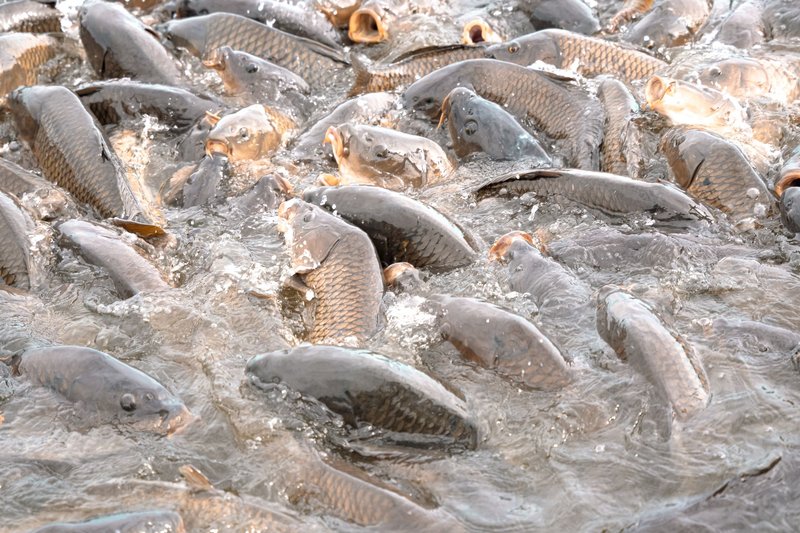
Common carp (Karpfen) deserves its own mention because of monasteries. Medieval monks built carp ponds across Bavaria and Franconia to supply fish for fasting days, and that tradition never died. Aischgründer carp from Franconia even carries a protected geographical status from the EU, the same kind of label that protects Champagne or Parmigiano-Reggiano. The same habit of giving every species its own regional German name shows up across the country’s wildlife, and if you want the dry-land version you can browse Germany’s native animals and their German names the same way you’d learn a fish menu.
Lake fish: Constance, Chiemsee, and the whitefish question
Germany’s big lakes are their own world, and one fish dominates the conversation.
Whitefish (Renke, also called Felchen) is the prize of Lake Constance and the Bavarian lakes like Chiemsee and Starnberger See. It’s a silvery, deep-water member of the salmon family, and around Constance it’s practically a regional identity. Order Felchen in a lakeside restaurant in Lindau and you’re eating something that was likely netted that morning from water you can see from the table.
The naming is genuinely confusing, even for Germans. Renke, Felchen, Maräne, Coregonus — these overlap across regions and there are several closely related forms, some of them endemic to a single lake. Lake Constance alone historically held distinct whitefish types adapted to different depths.
Zander and perch show up in lakes too, not just rivers, and lake-caught perch fillets (“Eglifilet” if you stray into the Swiss-influenced south) are a Lake Constance menu staple.
Stocking matters here. Many German lake fisheries are actively managed — whitefish populations in Constance have swung up and down over decades as nutrient levels in the lake changed. Lake Constance’s water quality is governed by a cross-border commission shared by Germany, Switzerland, and Austria, and the health of the fishery tracks closely with it.
Saltwater: the North Sea and Baltic catch
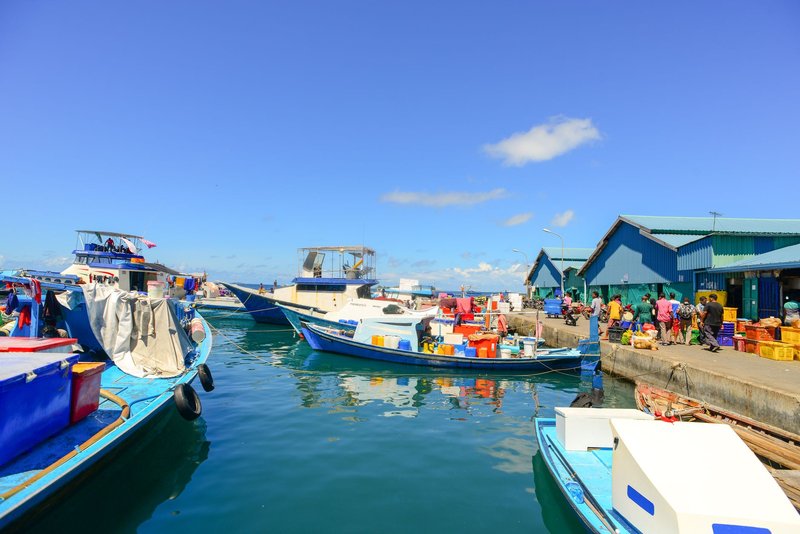
Up north, the fish change entirely. The North Sea is open, salty, and tidal; the Baltic is brackish, cooler, and nearly enclosed. Germany’s fishing fleet works both.
Herring (Hering) is the backbone of German sea fishing culture. Cheap, oily, abundant, and tied to centuries of trade — the Hanseatic League was built partly on salted herring. You’ll meet it pickled (Rollmops), grilled at harbor stalls, or as Matjes, the young, mild salt-cured herring that gets its own season every spring.
Cod (Kabeljau, or Dorsch in the Baltic) is the workhorse whitefish. The name even changes by sea: it’s Kabeljau in the North Sea and Dorsch in the Baltic, same species, different regional habit. Baltic cod stocks have been hit hard, and quotas have tightened sharply in recent years.
Plaice (Scholle) is the flatfish you’ll see whole on a plate, especially the early-summer “Maischolle” (May plaice) season, classically pan-fried with bacon.
North Sea shrimp (Nordseekrabben or Krabben) are the tiny brown shrimp hand-peeled along the East Frisian coast. They go into Krabbenbrötchen, a shrimp roll that’s a genuine regional obsession, and the peeling-by-hand bit is why they’re never cheap.
Mackerel (Makrele) rounds out the common catch — oily, strong-flavored, brilliant smoked. Smoked mackerel from a North Sea harbor stand is one of the more underrated quick meals on the German coast. The same harbors are good spots to watch for the seabirds that shadow the fishing fleet, many of which turn up in the complete list of the birds of Germany.
Fish as food: reading a German menu
If you’re staring at a menu, here’s the translation layer that the species lists never give you.
- Forelle — trout, usually farmed rainbow trout, often served Müllerin (floured and pan-fried) or blau (poached, turns blue-ish).
- Zander — pikeperch, the upscale freshwater choice, firm white fillet.
- Karpfen — carp, a Christmas and New Year’s tradition in much of Catholic southern Germany, often blau or breaded.
- Felchen / Renke — lake whitefish, the southern lakes specialty.
- Hering / Matjes / Rollmops — herring in its many cured forms.
- Kabeljau / Dorsch — cod.
- Scholle — plaice, the classic whole flatfish.
- Lachs — salmon, mostly imported (Norwegian), so not really a “fish of Germany” but everywhere on menus.
One practical tip: freshwater fish dominate menus in the south (Bavaria, Baden-Württemberg, Franconia), and sea fish dominate in the north (Hamburg, Bremen, the coasts). A Fischbrötchen — fish sandwich — is a northern street food, and asking for one in Munich gets you a confused look.
Quick-reference species table
| German name | English | Habitat | Eaten? | Conservation note |
|---|---|---|---|---|
| Hecht | Pike | Rivers, lakes | Yes | Stable |
| Zander | Pikeperch | Rivers, lakes | Yes (prized) | Stable |
| Barsch | Perch | Rivers, lakes | Yes | Stable |
| Bachforelle | Brown trout | Cold streams | Yes | Locally pressured |
| Karpfen | Common carp | Ponds, slow rivers | Yes | Farmed widely |
| Renke / Felchen | Whitefish | Alpine lakes | Yes | Some forms threatened |
| Hering | Herring | North & Baltic Sea | Yes | Stock-dependent |
| Kabeljau / Dorsch | Cod | North & Baltic Sea | Yes | Baltic stock declining |
| Scholle | Plaice | North Sea | Yes | Managed |
| Aal | European eel | Rivers, coasts | Yes | Critically endangered |
| Stör | Sturgeon | Rivers (historic) | Rarely | Critically endangered |
The endangered ones: eel and sturgeon
This is the part the food guides skip, and it’s the part that gives the topic some weight.
The European eel (Aal) is the big one. It’s still eaten — smoked eel is a North German and Spreewald delicacy — but the species is classified as critically endangered by the IUCN. European eel populations have collapsed to a fraction of historic levels, driven by river barriers blocking their absurd migration to the Sargasso Sea, plus overfishing and parasites. Eating eel in Germany is now an ethically loaded choice, and several conservation programs actively restock young eels in German rivers. The eel is far from alone here, and it sits alongside plenty of land and marine species on the broader list of endangered species in Europe.
The sturgeon (Stör) is the ghost story. The European sturgeon once ran up the Rhine, the Elbe, and the Oder in numbers — there are old records of fish over two meters long caught near North Sea river mouths. It’s now functionally extinct in German rivers, with reintroduction projects on the Elbe and Oder trying to rebuild a population from near zero. The native German caviar trade it once supported is gone.
These two are why “fish of Germany” can’t only mean a menu. The waters that produced centuries of carp ponds and herring fleets also lost some of their most striking fish inside a few human lifetimes — and the Baltic cod’s recent troubles suggest that list isn’t closed.
So: the fish of Germany are both a living catalog and a cuisine, and the honest version of the topic holds both at once. Learn the dozen names that matter, sort them by water, and you can read a Bavarian lake menu, identify a fish off a Hamburg harbor bridge, and know which ones to think twice about before ordering.