Ethiopia’s plant life shifts dramatically with altitude and rainfall, from cool highland meadows to dry lowland savannas, so a short trip can expose you to very different flowering communities. Noting where and when species bloom makes it easier to recognize them in the field.
There are 17 Flowers of Ethiopia, ranging from Abyssinian acacia to Umbrella thorn acacia; for each species you’ll find below entries organized as Scientific name,Habitat & range (max 15 words),Bloom season (months) — you’ll find below.
When is the best time to see these flowers across Ethiopia?
Timing depends on elevation and local rains: many highland species bloom during the main rainy season (roughly June–September), while lowland and savanna species often flower after short rains (commonly March–May or September–November); use the bloom-season months in the list to plan visits.
How can I use this list to identify or report species I encounter?
Use the Scientific name to confirm identification, check Habitat & range to see if your location fits, and match bloom months to your sighting; take clear photos, note GPS and habitat, and report records to local herbaria or platforms like iNaturalist to help conservation.
Flowers of Ethiopia
| Common name | Scientific name | Habitat & range (max 15 words) | Bloom season (months) |
|---|---|---|---|
| Giant lobelia | Lobelia rhynchopetalum | Afroalpine moorlands; Simien,Bale (endemic) | Jun–Sep |
| Kosso | Hagenia abyssinica | Afromontane forests; Ethiopian Highlands | Mar–May |
| Abyssinian rose | Rosa abyssinica | Highland hedges and scrub; Ethiopian Highlands | Mar–May |
| Aloe camperi | Aloe camperi | Dry rocky slopes; northern,central Ethiopia | Feb–Apr |
| Flame lily | Gloriosa superba | Moist forest edges; various regions | Jul–Sep |
| Lantana | Lantana camara | Disturbed lowlands; widespread, invasive | Apr–Jun, Sep–Nov |
| Bougainvillea | Bougainvillea glabra | Cultivated gardens and walls; urban areas | Year-round, peaks Mar–May |
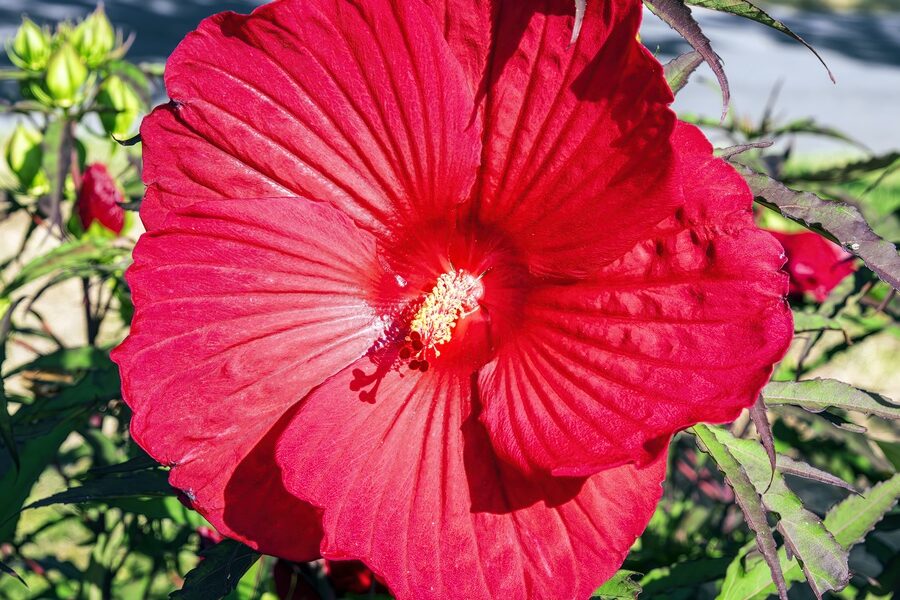
| Hibiscus | Hibiscus rosa-sinensis | Cultivated gardens; urban areas | Year-round, peaks Mar–May |
| Jacaranda | Jacaranda mimosifolia | Cultivated urban streets; highland towns | Apr–Jun |
| Flame tree | Delonix regia | Cultivated streets; lowland towns | Apr–Jun |
| Frangipani | Plumeria rubra | Cultivated gardens; urban areas | Apr–Aug |
| Canna | Canna indica | Moist gardens and riverbanks; widespread cultivation | Jun–Oct |
| Pencil tree | Euphorbia tirucalli | Dry lowlands, hedges; widespread | Year-round |
| St John’s wort | Hypericum revolutum | Afromontane slopes and edges; highlands | Jul–Sep |
| Umbrella thorn acacia | Vachellia tortilis | Dry savanna; lowland regions | Mar–Jun |
| Oleander | Nerium oleander | Cultivated roadsides and gardens; lowlands | May–Sep |
| Abyssinian acacia | Vachellia abyssinica | Montane woodlands; Ethiopian Highlands | Feb–Apr |
Images and Descriptions
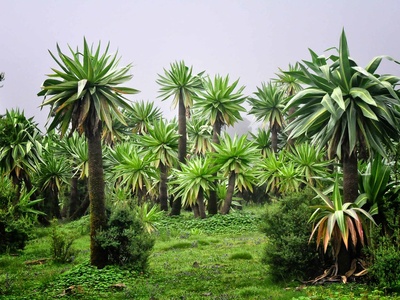
Giant lobelia
Giant lobelia with tall rosettes and blue-purple flowers, iconic on Ethiopian Afroalpine moorlands. See in Simien and Bale Mountains; blooms Jun–Sep. Prefers high-altitude wetlands and soil pockets. Endemic and conservation-important, often a highlight on treks for striking silhouette and seasonal flower spikes.

Kosso
Large Afromontane tree with drooping clusters of red-pink flowers, often called ‘kosso’. Found in Ethiopian Highlands and forest remnants; blooms Mar–May. Used traditionally for medicine and livestock deworming; populations impacted by forest loss, so look in protected highland forests and churchyards.
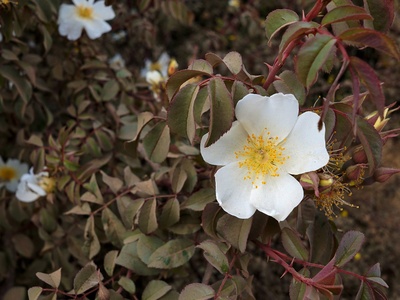
Abyssinian rose
A small wild rose with fragrant pink flowers and red hips common in highland hedges and scrub. See along roadsides and farms in Ethiopian Highlands; blooms Mar–May. Valued for scent and traditional uses, locally common though affected by land-use change.
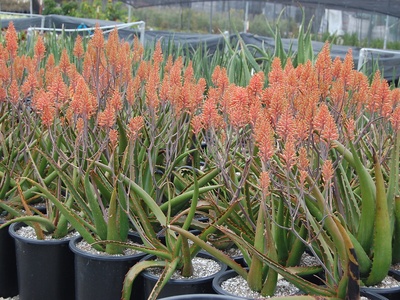
Aloe camperi
Red-orange tubular flowers on short stems distinguish this small aloe, common on dry rocky slopes. Seen around northern and central Ethiopia; blooms Feb–Apr. Useful for garden rockeries and traditional medicine, tolerant of drought and often found in disturbed, sunny places.
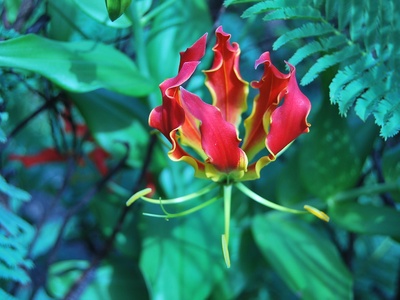
Flame lily
Striking climber with recurved red-yellow petals and long stamens, the flame lily grows on forest edges and hedgerows. Found in various Ethiopian regions; blooms Jul–Sep. Culturally significant but toxic; admired ornamentally and sometimes harvested, so look carefully in wild margins.
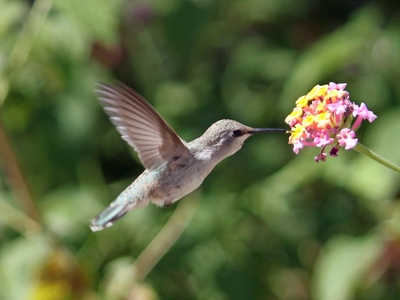
Lantana
Colorful clusters of small tubular flowers in mixed hues, common along roadsides, gardens and disturbed lowlands. Widespread and invasive in Ethiopia; blooms Apr–Jun, Sep–Nov and often year-round. Attractive to butterflies but can form dense thickets, displacing native plants.
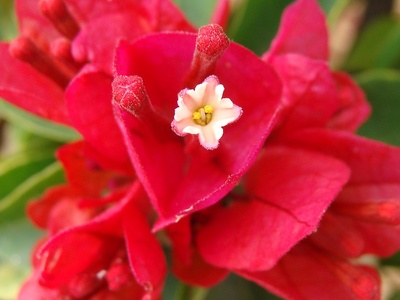
Bougainvillea
Vibrant papery bracts in pink, purple, or white cloak thorny vines grown in gardens and along walls. Common in Ethiopian towns, flowering year-round with bright peaks Mar–May. Low-maintenance ornamental, great for hedges and shade, often seen around homes and streets.
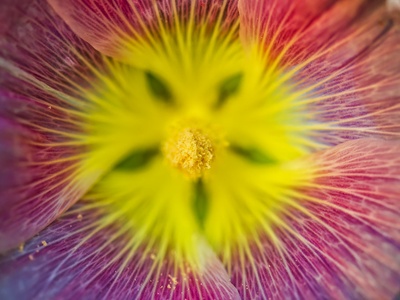
Hibiscus
Large showy single flowers in many colors on shrubs widely planted as hedges and garden specimens. Ubiquitous in Ethiopian gardens and courtyards, flowering year-round with season peaks Mar–May. Used for ornament and folk remedies; easy to recognize by five broad petals and prominent staminal column.
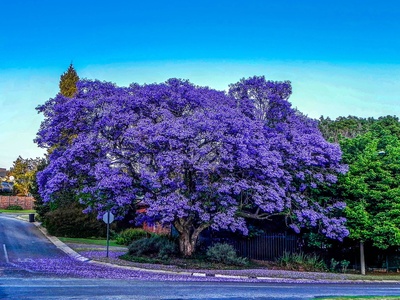
Jacaranda
Medium-sized tree with fern-like leaves and clusters of lilac-blue trumpet flowers, planted in Addis Ababa and other towns. Blooms Apr–Jun, creating vibrant avenues. Popular ornamental providing shade and seasonal color; thrives in well-drained soils and urban parks.
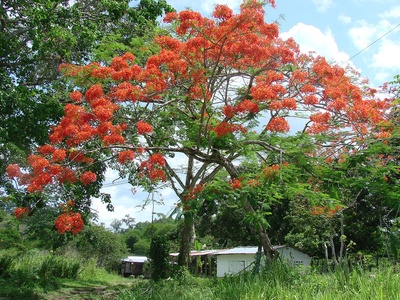
Flame tree
Broad-canopied tree with flamboyant orange-red flower clusters, commonly planted along streets and gardens. Seen in Ethiopian lowland towns; blooms Apr–Jun. A dramatic summer display, drought-tolerant once established, often associated with parks and avenues though not native to Ethiopia.
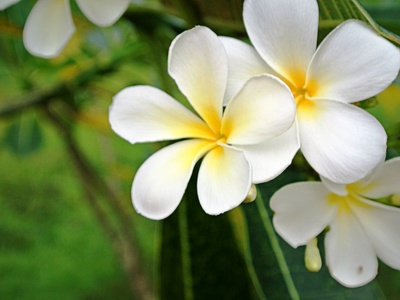
Frangipani
Sweetly scented clusters of waxy white, pink, or yellow flowers on small succulent trees planted near homes and churches. Common in Ethiopian towns; blooms Apr–Aug. Widely used in ceremonial garlands and gardens, admired for fragrance and long-lasting blooms.
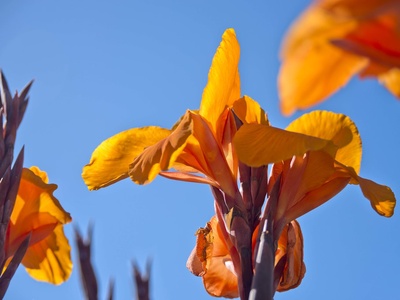
Canna
Tall clump-forming perennial with large tropical leaves and red, orange or yellow lily-like flowers. Planted in home gardens and near water; widespread across Ethiopia; blooms Jun–Oct. Easy to grow, popular for bold foliage and summer color in public and private plantings.
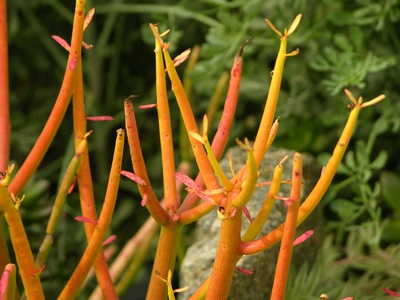
Pencil tree
Leafless succulent shrub with pencil-like branches and tiny yellow-green flowers, common in dry lowlands and as hedges. Widespread in Ethiopia; flowers year-round. Sap is toxic and irritating; used as living fences and for erosion control, often overlooked when not in bloom.
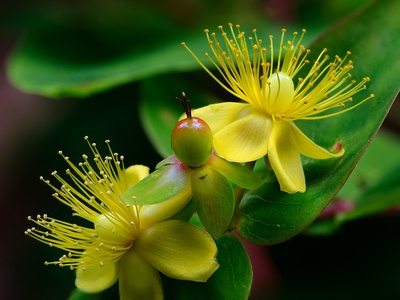
St John’s wort
Shrubby St John’s wort with bright yellow five-petalled flowers on highland slopes and forest edges. Found in Ethiopian Afromontane areas; blooms Jul–Sep. Common in hedgerows and disturbed margins, used medicinally and noticeable for masses of yellow flowers in season.
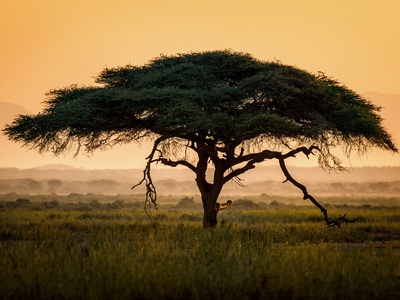
Umbrella thorn acacia
Flat-topped thorny tree with pale cream puffball flowers that attract pollinators. Common in dry savannas and rangelands across Ethiopia’s lowlands; blooms Mar–Jun. Important for shade, livestock forage and traditional uses, tolerant of arid soils and widely observed along roads and grazing areas.
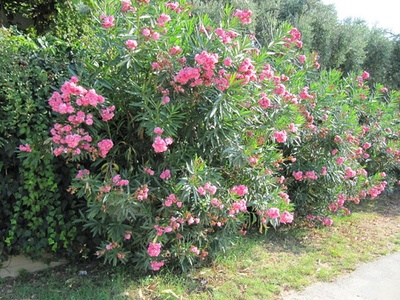
Oleander
Showy clusters of funnel-shaped pink or white flowers on evergreen shrubs lining roads and gardens. Widely planted in Ethiopian lowland towns; blooms May–Sep. Extremely toxic if ingested, often used as decorative hedging and windbreaks near settlements.
Abyssinian acacia
Medium to large acacia with feathery leaves and yellow globular flower heads, found in montane woodlands and forest edges. Present across Ethiopian highlands; blooms Feb–Apr. Important for timber, shade and fodder, often seen in regenerating woodland and rural landscapes.