The tulip you grow in your garden has Uzbek roots. Not Dutch ones. Centuries before Holland built an economy on tulip bulbs, wild tulips were carpeting the foothills of the Tian Shan and Pamir-Alai mountains in what is now Uzbekistan — and they still do, every spring, in colors no breeder ever managed to fake.
That’s the thing most flower guides miss. Uzbekistan isn’t a country you visit for its flowers the way you’d visit the Netherlands. The flowers are wild, scattered across mountain slopes and desert steppe, and they’re gone in a matter of weeks. Catching them takes timing. This guide tells you what blooms, where it grows, and exactly when to be standing on the right hillside.
Table of Contents
- The short version
- The tulip: Uzbekistan’s real claim to fame
- Poppies: the red that follows the snow
- Irises: from desert dwarfs to mountain giants
- Crocuses: the first to show
- Endemic mountain wildflowers
- When to see them: the bloom calendar
- Where to go: regions at a glance
- The flower festivals
The short version {#the-short-version}
If you only remember three things: the wild tulip is the flower to chase, the peak window is late March through mid-May, and the best ground is the mountain foothills around Tashkent, the Chatkal range, and the Nuratau mountains. Lower elevations and deserts bloom first; high slopes hold on into June.
Everything below is the detail — species by species, with the where and when for each.
The tulip: Uzbekistan’s real claim to fame {#the-tulip}
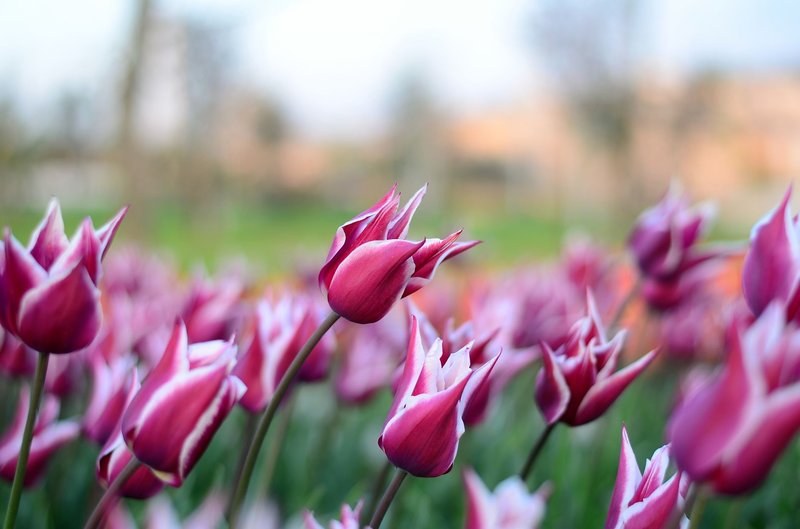
Central Asia is the genetic home of the tulip. The genus Tulipa radiated out of these mountains, and Uzbekistan alone hosts dozens of wild species, many of them endemic — found here and nowhere else on Earth. When you see a tulip on a Tashkent hillside in April, you’re looking at the ancestor of the cultivated flower, not an escaped garden plant.
Two species are worth knowing by name. Tulipa korolkovii is the postcard tulip: a vivid scarlet bloom with a dark, sometimes yellow-edged center, growing low to stony ground in the foothills. Tulipa turkestanica goes the other way — small, star-shaped, cream-white with a yellow heart, often several flowers to a stem, blooming earlier and higher up. One is a single bold cup; the other looks like a scatter of tiny stars. Learn those two and you can read most of what you’ll find.
The tulip is widely treated as Uzbekistan’s unofficial national flower, and the cultural thread runs deep. The spring festival of Navruz — the Persian new year, marked across Central Asia — coincides with the first tulips, and the flower shows up in textiles, tilework, and poetry going back centuries. The wild tulip wasn’t an import to be admired. It was already woven into the place.
A word of caution that matters: several wild tulip species are threatened, and a number appear on the IUCN Red List as vulnerable or worse, squeezed by grazing, bulb collecting, and habitat loss. Look, photograph, don’t dig. The bulbs almost never survive transplanting anyway.
Where: foothills and lower mountain slopes — Tashkent region, the Chatkal and Nuratau ranges. When: late March to early May, depending on elevation.
Poppies: the red that follows the snow {#poppies}
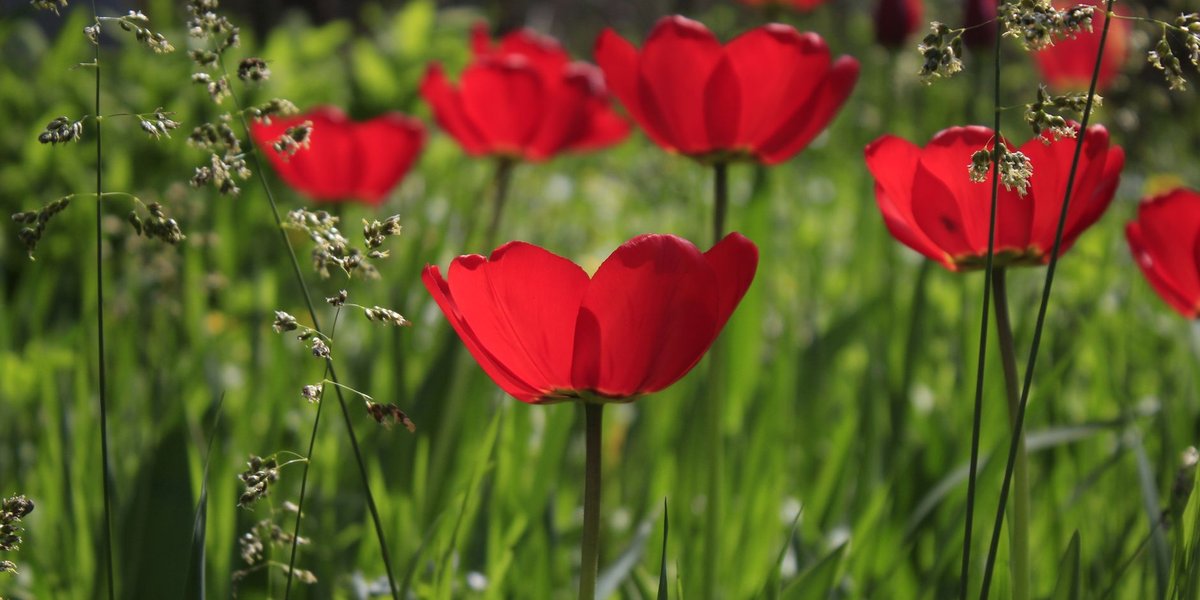
If the tulips are the headline, the poppies are the encore. As spring warms and the tulip window closes, fields and roadside slopes flush red with wild poppies — often the common corn poppy (Papaver rhoeas) and its relatives, the same papery-petaled red that carpets Mediterranean hillsides.
Poppies are the easy win for travelers, because they don’t demand a hike. They turn up along irrigation channels, at the edges of wheat fields, and on disturbed ground near villages. A single plant is unremarkable; a hillside of them moving in the wind is the kind of thing people pull the car over for.
Where: valleys, farmland edges, and lower slopes across much of the country. When: April into June, peaking a few weeks behind the tulips.
Irises: from desert dwarfs to mountain giants {#irises}
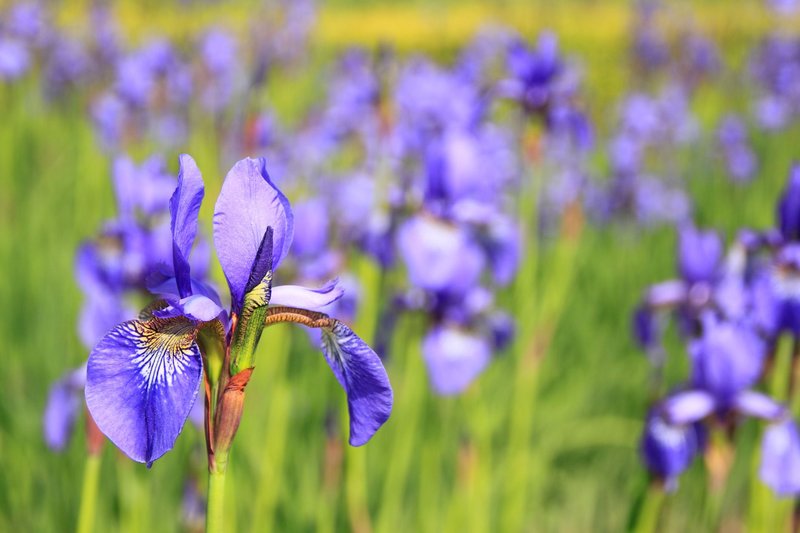
Uzbekistan’s irises split into two very different experiences. Down on the dry steppe and desert margins, you get Iris species in the Juno group — squat, early-blooming plants in pale yellow, blue, and violet, hugging the ground to survive the wind and heat. They flower early, sometimes alongside the first crocuses, and you have to look down to find them.
Up in the mountains, the irises get taller and showier, with the larger flowers you’d recognize from a temperate garden bed. The contrast is the fun of it: the same genus delivering a thumb-high desert survivor and a knee-high mountain bloom within a single country.
Where: desert and steppe for the dwarf Junos; mountain meadows for the larger species. When: March for the early desert irises, April–May higher up.
Crocuses: the first to show {#crocuses}
The crocus is the opening act. As the snow line retreats up the slopes, crocuses and their close relatives the colchicums push up almost immediately behind it — sometimes flowering in ground that still has snow a few meters away. The blooms are small, low, and easy to miss, in whites, lilacs, and yellows.
For a flower hunter, crocuses are a useful signal more than a destination. When they’re up in a given valley, the tulips are usually two to four weeks behind at the same elevation. Read the crocuses and you can plan the rest of the trip.
Where: mid-elevation mountain slopes, right at the melting snow line. When: February to March, earliest of the spring flowers.
Endemic mountain wildflowers {#endemic-mountain-wildflowers}
Beyond the headline species, Uzbekistan’s mountains hold a long tail of endemic and near-endemic plants — flowers that exist in these ranges and almost nowhere else. The country sits at a botanical crossroads, where the floras of Central Asia, the Iranian plateau, and the Himalaya meet, and the isolated mountain valleys act like islands that breed their own species.
You’ll find wild alliums (ornamental onions) sending up purple globes, eremurus — the dramatic “foxtail lily” whose flower spikes can stand taller than a person — and a scatter of yellow and white composites across the high meadows. The eremurus alone is worth the climb: a vertical torch of densely packed small flowers, opening from the bottom up, on slopes most travelers never reach.
The protected areas are where this diversity concentrates. The Chatkal Biosphere Reserve and the slopes of the Nuratau range in particular shelter species that the grazing pressure elsewhere has thinned out. According to UNESCO’s biosphere reserve network, the Chatkal reserve protects a slice of western Tian Shan flora that’s recognized for exactly this kind of endemism.
Where: higher mountain meadows and protected reserves — Chatkal, Nuratau, Hissar ranges. When: May into June, latest of the season as the bloom climbs with the warmth.
When to see them: the bloom calendar {#bloom-calendar}
Spring moves uphill. The single most useful idea for timing a flower trip is that the bloom starts low and early, then climbs the mountains as the weeks pass. Miss the tulips in the foothills? Go higher — they may just be opening a thousand meters up.
| Period | What’s blooming | Where |
|---|---|---|
| February – March | Crocuses, first dwarf irises | Snow line, desert margins |
| Late March – April | Wild tulips (peak), early poppies | Foothills, lower slopes |
| April – May | Poppies (peak), mountain irises, alliums | Valleys, mid-elevation meadows |
| May – June | Eremurus, late tulips, high-meadow endemics | High mountain slopes, reserves |
The headline window is late March to mid-May. If you can only pick one stretch, the back half of April threads the needle — tulips still going, poppies coming on, irises in both zones.
Weather shifts the whole calendar by a week or two each year. A warm February pulls everything forward; a late snow holds it back. Check conditions close to the date rather than trusting a fixed schedule.
Where to go: regions at a glance {#where-to-go}
The mountains (Tashkent region, Chatkal, Hissar). This is the core of it. The ranges east and northeast of Tashkent — within a few hours’ drive of the capital — put tulips, irises, and crocuses within reach of a day trip. Higher up, you trade convenience for the endemic species and the eremurus.
The Nuratau mountains. An isolated range between the Kyzylkum desert and the Zarafshan valley, the Nuratau hills hold their own pocket of wild tulips and endemic flora, and the surrounding villages have grown a small ecotourism scene around it. The same protected slopes are a refuge for some of Uzbekistan’s most distinctive wildlife, including the rare Severtzov sheep, which makes the range good for combining flowers with walking.
The valleys and steppe. Lower, warmer, earlier. The Fergana Valley and the farmland belts are where poppies do their thing and where the season starts. Less dramatic than the peaks, far easier to reach.
The deserts. The Kyzylkum and the desert margins bloom briefly and early — dwarf irises, desert ephemerals, the occasional tulip — then bake. A short window, but a different palette from the mountains.
The flower festivals {#flower-festivals}
Uzbekistan turns the bloom into a party. The best-known is the Gul Bayrami — the “flower festival” — most strongly associated with Namangan in the Fergana Valley, where the city’s long tradition of flower growing turns into a spring celebration of blooms, music, and crafts. It’s the rare event built specifically around flowers rather than treating them as a backdrop.
The bigger cultural anchor is Navruz, the spring equinox new year celebrated across Central Asia on or around March 21. It isn’t a flower festival as such, but it lands exactly as the first tulips and crocuses open, and the symbolism of new growth runs through the whole holiday — sprouted wheat, green tables, the first blooms. Time a trip to Navruz and you get the culture and the opening of the flower season in the same week.
The flowers were here long before the festivals, and long before the gardens of Europe borrowed their best idea. Catch them on a hillside above Tashkent in April, scarlet against grey stone, and the connection makes sense without anyone having to explain it.