The Philippines isn’t just a country with a lot of wildlife. It’s one of the most concentrated bursts of endemism on the planet. Roughly half the land vertebrates here live nowhere else on Earth, the result of thousands of islands that each cooked up their own evolutionary experiments in isolation. A monkey on Palawan, a buffalo on Mindoro, a tarsier on Bohol — same archipelago, completely different animals.
That isolation is also the problem. An animal that lives on one island and nowhere else has nowhere to retreat when the forest gets cut or a typhoon flattens its range. So the Philippines holds two records at once: extraordinary biodiversity, and one of the highest concentrations of threatened species anywhere.
Here are 15 of the rarest, plus where you can actually see them without funding the worst parts of the wildlife tourism industry.
Table of Contents
- Quick comparison table
- The flagship five
- 1. Philippine eagle
- 2. Philippine tarsier
- 3. Tamaraw
- 4. Philippine crocodile
- 5. Visayan spotted deer
- The ones the lists skip
- 6. Visayan warty pig
- 7. Philippine pangolin
- 8. Sulu hornbill
- 9. Golden-crowned flying fox
- 10. Northern Luzon giant cloud rat
- 11. Palawan peacock-pheasant
- 12. Dugong
- 13. Calamian deer
- 14. Philippine forest turtle
- 15. Negros bleeding-heart
- How to see them the right way
Quick comparison table
A note on the labels: endemic means it lives only in the Philippines. Endangered is about how close it is to disappearing. An animal can be one, the other, or both — and the both column is where this country gets scary.
| Animal | Endemic? | IUCN status | Where it lives |
|---|---|---|---|
| Philippine eagle | Yes | Critically Endangered | Luzon, Samar, Leyte, Mindanao |
| Philippine tarsier | Yes | Near Threatened | Bohol, Samar, Leyte, Mindanao |
| Tamaraw | Yes | Critically Endangered | Mindoro |
| Philippine crocodile | Yes | Critically Endangered | Luzon, Mindanao |
| Visayan spotted deer | Yes | Endangered | Negros, Panay |
| Visayan warty pig | Yes | Critically Endangered | Negros, Panay |
| Philippine pangolin | Yes | Critically Endangered | Palawan |
| Sulu hornbill | Yes | Critically Endangered | Tawi-Tawi |
| Golden-crowned flying fox | Yes | Endangered | Forests nationwide |
| N. Luzon giant cloud rat | Yes | Least Concern | Luzon highlands |
| Palawan peacock-pheasant | Yes | Vulnerable | Palawan |
| Dugong | No | Vulnerable | Coastal shallows |
| Calamian deer | Yes | Endangered | Calamian Islands |
| Philippine forest turtle | Yes | Critically Endangered | Palawan |
| Negros bleeding-heart | Yes | Critically Endangered | Negros, Panay |
The flagship five
These are the animals on the posters and the postage stamps. Famous for good reason, but most articles stop here. We won’t.
1. Philippine eagle
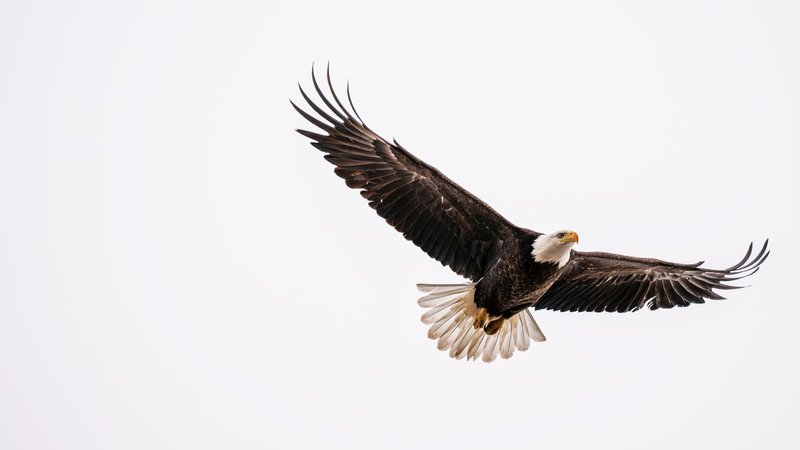
One of the largest and most powerful eagles alive, with a wingspan over two meters and a shaggy crest that flares up like a lion’s mane when the bird is alert. It hunts monkeys, flying lemurs, and hornbills from the canopy, which earned it the old name “monkey-eating eagle.”
The numbers are brutal: the IUCN lists it as Critically Endangered, with an estimated few hundred breeding pairs left. A single pair needs thousands of hectares of forest to raise one chick every two years. That math doesn’t survive much deforestation.
How to see it: The Philippine Eagle Center in Davao on Mindanao houses rescued and captive-bred birds in a forested setting, and your entry fee funds the breeding program. Seeing one wild is a serious birder’s pilgrimage, usually in Mindanao’s remaining old-growth forest.
2. Philippine tarsier
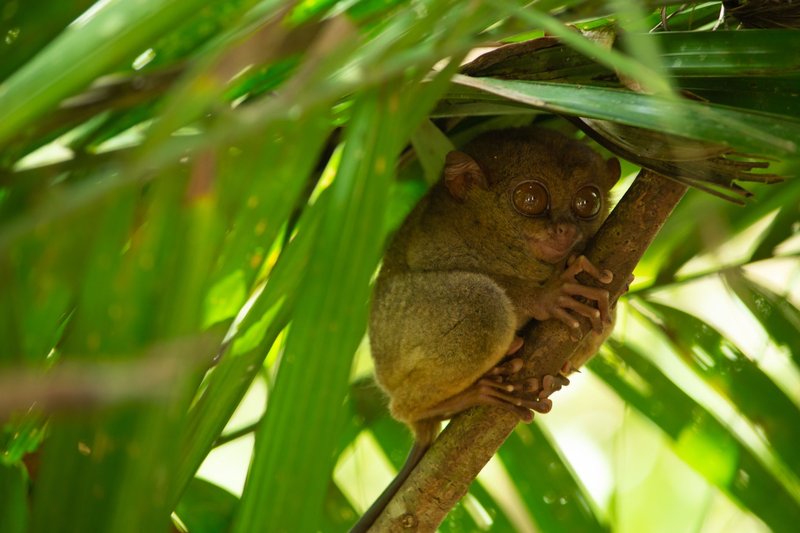
The internet’s favorite tiny primate, and the one most likely to be loved to death. A tarsier fits in your palm, has eyes each bigger than its brain, and can swivel its head almost 180 degrees. Those eyes are fixed in their sockets — the head-spin is how it looks around.
Here’s the part the cute photos leave out: tarsiers are nervous, nocturnal, and prone to stress. Captive ones in cramped roadside attractions have been documented dying from it, sometimes by self-injury. They don’t tolerate handling, flash photography, or crowds.
How to see it: Skip any operation that lets you hold one. The Philippine Tarsier Sanctuary in Corella, Bohol keeps them in a semi-wild forest enclosure where they choose their own perches, and rangers enforce no-flash, no-touch, quiet-voice rules. That’s the ethical version.
3. Tamaraw
A dwarf buffalo found only on the island of Mindoro, stockier and more aggressive than the common carabao, with distinctive V-shaped horns. It once roamed the whole island. Now it’s down to a population counted in the low hundreds, most of them clustered in the highlands of Mounts Iglit-Baco Natural Park.
The tamaraw is the textbook case of single-island vulnerability. Hunting, cattle ranching, and disease pushed it to the brink, and there’s no second island to fall back on. A dedicated government conservation program has stabilized the core herd, which is the only reason the trend isn’t still going straight down.
How to see it: Genuinely hard, by design. Mounts Iglit-Baco offers ranger-guided treks during the dry season, but access is limited to protect the animals. This is a see-it-from-a-distance situation, not a petting one.
4. Philippine crocodile
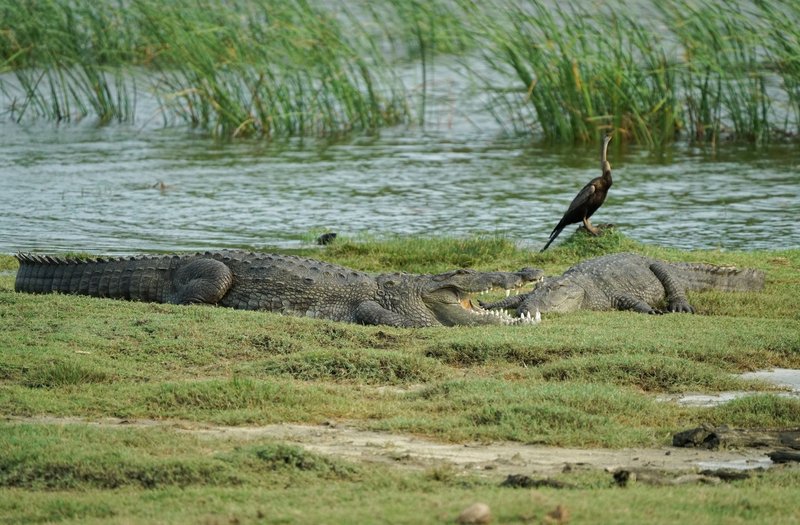
A small freshwater crocodile, rarely over three meters, with a broad snout and, by the standards of the country’s more dangerous animals, a comparatively gentle reputation. It’s also one of the most endangered crocodiles in the world, with perhaps a couple hundred adults left in the wild across scattered wetlands in Luzon and Mindanao.
For decades it was killed on sight as a pest. The turnaround came from communities in places like the municipality of San Mariano in Isabela, where local sanctuaries and education programs reframed the croc as something worth protecting. Conservation breeding has reintroduced animals into protected wetlands.
How to see it: Community-run sanctuaries in Isabela province and breeding facilities in Palawan let you see them up close while supporting the people doing the protecting.
5. Visayan spotted deer
A small, dark forest deer dappled with cream-colored spots, native to the central Visayan islands of Negros and Panay. It lives in the dense rainforest that once blanketed those islands — and there’s the catch, because the Visayas have lost the overwhelming majority of their original forest cover.
That habitat loss is why a deer ends up on an endangered list. It’s not hunted for sport so much as squeezed out of existence acre by acre, then poached for bushmeat in what little forest remains.
How to see it: Captive-breeding centers on Negros, including facilities tied to the Negros Forests and Ecological Foundation in Bacolod, exhibit them alongside other Visayan endemics. Wild sightings are exceptional.
The ones the lists skip
This is where the Philippines gets weird and wonderful, and where most “rare animals” articles run out of steam. These species are just as endemic and often more endangered than the famous five.
6. Visayan warty pig
A shaggy wild pig found only on Negros and Panay, named for the three pairs of fleshy warts on the boar’s face. Breeding males grow a spectacular blond mohawk-like mane that flops over their eyes during the rut. It would be comical if the species weren’t Critically Endangered.
It’s already gone from most of its former range across the central islands. Forest clearance and hunting did it, and the remaining animals cling to the same shrinking Visayan forest as the spotted deer.
How to see it: The same Negros conservation centers that house the spotted deer breed warty pigs, and the mohawk males are a genuine spectacle up close.
7. Philippine pangolin
A scaly, ant-eating mammal found only on Palawan, locally called balintong. When threatened it rolls into an armored ball, which works beautifully against leopards and not at all against a person with a sack. Pangolins are the most trafficked wild mammals on Earth, their scales fed into illegal traditional-medicine markets despite having no proven medicinal value.
The Palawan species is Critically Endangered and notoriously hard to study because it’s nocturnal, secretive, and increasingly rare. Seizures of smuggled pangolins remain depressingly common.
How to see it: Realistically, you don’t — and that’s fine. Wild ones are nearly impossible to find, and there are no ethical petting setups. The Katala Foundation on Palawan does rehabilitation and rescue work worth supporting instead.
8. Sulu hornbill
One of the rarest birds in the world, a black hornbill clinging to existence on the remote island of Tawi-Tawi in the far southwest. Estimates put the wild population at fewer than 40 mature individuals — a number so small that a single bad year could end the species.
It’s lost almost all its forest, and the region’s security situation makes conservation work genuinely dangerous. Few birds sit higher on any list of Asia’s endangered species, and few people have seen one alive in recent years.
How to see it: You almost certainly won’t, and chasing it isn’t advisable. It’s on this list because rarity this extreme deserves to be named while there’s still something to name.
9. Golden-crowned flying fox
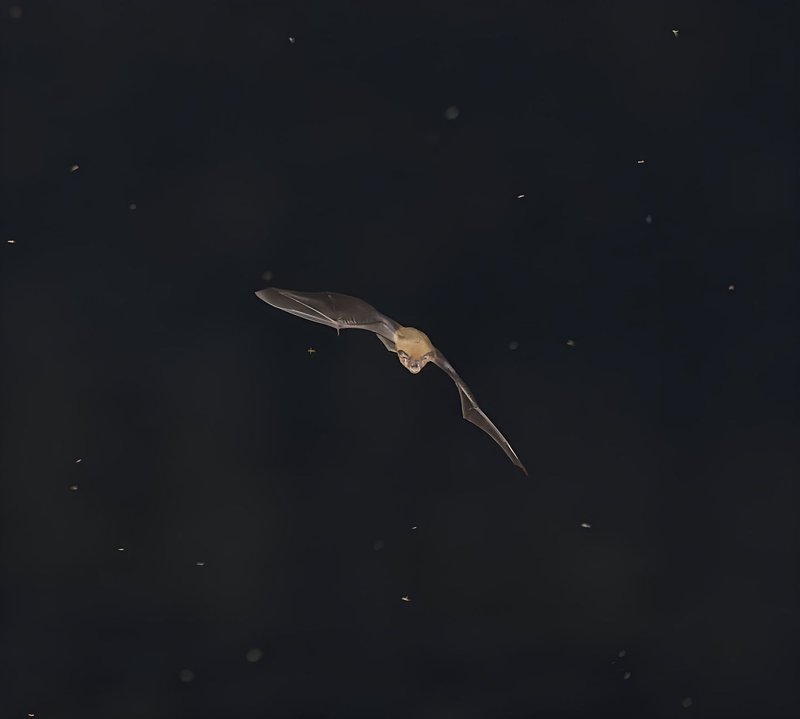
One of the largest bats in the world, an endemic fruit bat with a wingspan that can stretch past 1.5 meters and a golden tuft of fur across its head. It roosts in enormous mixed colonies, sometimes with thousands of bats hanging from a single stand of trees, and it does the unglamorous, essential work of dispersing the seeds that regrow rainforest.
Roosts are easy targets, so hunting and disturbance have hit it hard. It’s now Endangered, with the famous Subic Bay colony among the better-protected populations.
How to see it: Subic Bay’s forest, on Luzon, hosts a protected colony you can watch stream out at dusk. Keep your distance and don’t disturb the roost — a panicked colony drops pups.
10. Northern Luzon giant cloud rat
Forget what the word “rat” did to your expectations. This is a slow, fluffy, tree-dwelling vegetarian the size of a house cat, with a long furry tail and dense gray-brown fur suited to the cool, misty mountain forests of northern Luzon. They’re called cloud rats because they live in the cloud forest, high in the canopy.
This one is actually doing okay — listed as Least Concern — which makes it a rare bit of good news on this list and a reminder that “rat” tells you nothing about how charming an animal can be. Other cloud rat species are far more threatened.
How to see it: Nocturnal and high in the canopy, so wild sightings need a guided night trek in Luzon’s mountain forests, around places like the Cordillera highlands.
11. Palawan peacock-pheasant
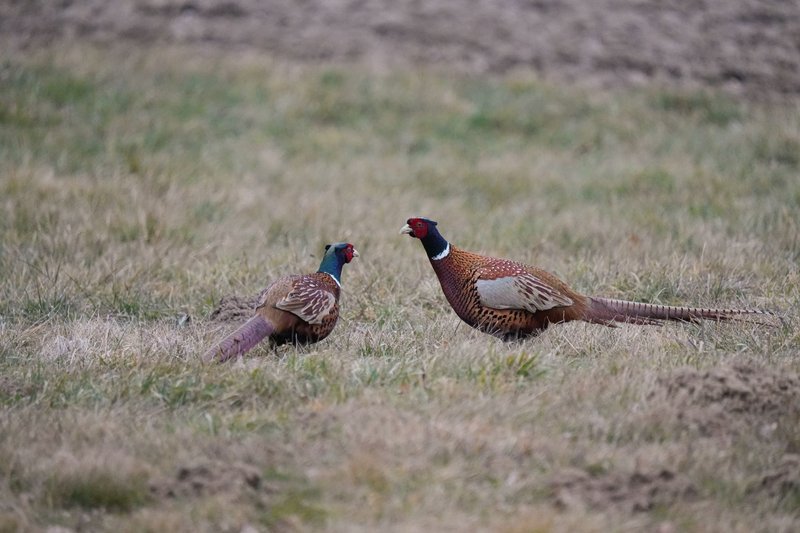
A jewel of a bird endemic to Palawan, where the male sports an iridescent blue-green crest and a fan of ocelli — eye-shaped spots — across metallic wings and tail. During courtship he spreads everything and freezes into a living display case, a smaller, denser version of a peacock’s show.
It’s Vulnerable, pressured by forest loss and trapping for the cage-bird trade. Palawan’s relatively intact forests are the reason it’s hanging on better than some species higher on this list.
How to see it: Patient birders find them in Palawan’s lowland forest, including around the buffer zones of the Puerto Princesa Subterranean River area. A good local guide makes all the difference.
12. Dugong
The only strictly herbivorous marine mammal, a slow-moving relative of the manatee that grazes seagrass meadows in shallow coastal water. It’s the one animal on this list that isn’t endemic — dugongs range across the Indo-Pacific — but Philippine populations are small, scattered, and Vulnerable, and the country is one of the better places left to encounter one.
Dugongs are slow breeders and slow swimmers, a bad combination when boat strikes and net entanglement are your main threats. Seagrass loss does the rest.
How to see it: Community-based dugong-watching operations around Busuanga in the Calamianes have built a model where locals earn more from protecting the animals than from harming them. Boats keep their distance and cut engines near the grazing beds.
13. Calamian deer
Another island specialist, this hog deer lives only in the Calamian Islands north of Palawan. It’s a stocky, short-legged deer that runs with a distinctive low, ducking gait through grassland and scrub rather than dense forest — a different niche from the Visayan spotted deer.
Restricted range plus hunting equals Endangered. With a home that small, every island it disappears from is a permanent loss to the global total.
How to see it: Calauit Island in the Calamianes runs a wildlife sanctuary — originally famous for its imported African animals — where the native Calamian deer is also protected and visible on guided tours.
14. Philippine forest turtle
For years scientists thought this turtle might be extinct, or that it lived on the wrong island entirely — early specimens were mislabeled. It turned out to survive only in the streams and wetlands of northern Palawan, one of the country’s rarest wetland animals hiding in plain sight. Then, in 2015, authorities intercepted a single smuggling haul of thousands of these turtles bound for the illegal pet trade, a gut-punch that showed how fast a rediscovered species can be emptied out.
It’s Critically Endangered, prized by collectors precisely because it’s rare, which is the cruelest possible feedback loop.
How to see it: Don’t go looking, and never buy one. The Katala Foundation on Palawan rehabilitates confiscated turtles, and supporting that work is the meaningful move.
15. Negros bleeding-heart
A ground-dwelling dove with a vivid splash of red across its white breast that looks, unmistakably, like a fresh wound. The illusion is so convincing it gave the whole group of bleeding-heart doves their name. This one is endemic to Negros and Panay and is Critically Endangered, with only a few patches of suitable forest left.
It forages quietly on the forest floor, which makes it vulnerable to ground snares set for other animals. As the Visayan forest shrinks, so does it.
How to see it: Extremely difficult in the wild. Conservation breeding programs, including work linked to West Visayan forest projects, are the main hope, and a few zoos abroad maintain assurance populations.
How to see them the right way
A few rules that hold across every animal on this list:
- No holding, no flash, no bait. If an operator lets you grab a tarsier for a selfie or chums the water to guarantee a sighting, walk away. Stress and habituation kill wild animals slowly.
- Pay the people doing the protecting. Community-run sanctuaries — the Isabela crocodile programs, the Busuanga dugong tours, the Bohol tarsier sanctuary — turn a living animal into local income. That’s the single most powerful conservation tool the Philippines has.
- Manage your expectations. Some of these animals, you simply won’t see, and a guide promising one is lying. The Sulu hornbill, the pangolin, the forest turtle — their rarity is the whole point. Knowing they’re still out there is its own kind of payoff.
The Philippines packed more unique animals into its islands than almost anywhere on Earth, and it’s now racing to keep them. Go see the ones you ethically can. Spend your money where it protects them. That’s how a rare animal stays an animal instead of becoming a fact in a history book.