Walk the shoreline of a stream, pond, or lake and you’ll notice a hidden world of snails, insect larvae, and tiny crustaceans doing important work—breaking down leaves, feeding fish, and shaping water quality. A few minutes of looking into a shallow riffle or behind submerged rocks reveals surprising diversity and useful clues about the ecosystem.
There are 40 Freshwater Invertebrates, ranging from Aquatic Worm to Zebra Mussel. For each entry you’ll find below the Scientific name,Taxon,Size (mm) so you can quickly compare identity, classification, and body size across common and less obvious species; you’ll find the full list below.
How can I identify common freshwater invertebrates in the field?
Start with basic features: size, overall shape, presence of a shell, segmentation, legs or antennae, and how the animal moves. Use a small tray or clear container, a hand lens, and photos; then match observations to the Scientific name,Taxon,Size (mm) columns in the list below. Note habitat (riffle, pool, vegetation) and season, since life stages change appearance.
Which species on the list should I be concerned about or report?
Pay special attention to known invasives like the Zebra Mussel—these can foul equipment and alter ecosystems. Most others are native and harmless, but if you find unexpected or abundant specimens, photograph them, avoid transferring water or material between sites, and follow local reporting guidance.
Freshwater Invertebrates
| Name | Scientific name | Taxon | Size (mm) |
|---|---|---|---|
| Mayfly Nymph | Order Ephemeroptera | Insect | 5-30 |
| Stonefly Nymph | Order Plecoptera | Insect | 10-40 |
| Dragonfly Nymph | Suborder Anisoptera | Insect | 20-50 |
| Damselfly Nymph | Suborder Zygoptera | Insect | 15-30 |
| Caddisfly Larva (Case-maker) | Order Trichoptera | Insect | 5-25 |
| Caddisfly Larva (Net-spinner) | Family Hydropsychidae | Insect | 10-20 |
| Dobsonfly Larva (Hellgrammite) | Corydalus cornutus | Insect | 25-90 |
| Water Strider | Family Gerridae | Insect | 5-20 |
| Backswimmer | Family Notonectidae | Insect | 5-18 |
| Giant Water Bug | Family Belostomatidae | Insect | 20-65 |
| Predaceous Diving Beetle | Family Dytiscidae | Insect | 2-40 |
| Whirligig Beetle | Family Gyrinidae | Insect | 3-15 |
| Mosquito Larva (Wiggler) | Family Culicidae | Insect | 4-14 |
| Midge Larva (Bloodworm) | Family Chironomidae | Insect | 2-20 |
| Black Fly Larva | Family Simuliidae | Insect | 5-15 |
| Crane Fly Larva | Family Tipulidae | Insect | 15-75 |
| Crayfish | Order Decapoda | Crustacean | 50-175 |
| Scud | Order Amphipoda | Crustacean | 5-20 |
| Water Sowbug | Order Isopoda | Crustacean | 5-20 |
| Daphnia (Water Flea) | Genus Daphnia | Crustacean | 0.5-5 |
| Copepod | Subclass Copepoda | Crustacean | 0.5-3 |
| Seed Shrimp | Class Ostracoda | Crustacean | 0.2-3 |
| Fairy Shrimp | Order Anostraca | Crustacean | 6-25 |
| Tadpole Shrimp | Order Notostraca | Crustacean | 10-50 |
| Ramshorn Snail | Family Planorbidae | Mollusk | 5-35 |
| Pond Snail | Family Lymnaeidae | Mollusk | 10-60 |
| Freshwater Limpet | Family Ancylidae | Mollusk | 2-8 |
| Zebra Mussel | Dreissena polymorpha | Mollusk | 10-40 |
| Asian Clam | Corbicula fluminea | Mollusk | 10-50 |
| Fingernail Clam | Family Sphaeriidae | Mollusk | 2-25 |
| Aquatic Worm | Class Oligochaeta | Annelid | 10-100 |
| Leech | Class Hirudinea | Annelid | 10-150 |
| Planarian (Flatworm) | Class Turbellaria | Other | 3-20 |
| Hydra | Genus Hydra | Cnidarian | 5-20 |
| Freshwater Jellyfish | Craspedacusta sowerbii | Cnidarian | 5-25 |
| Freshwater Sponge | Family Spongillidae | Porifera | Varies |
| Bryozoan (Moss Animal) | Phylum Bryozoa | Other | Varies |
| Rotifer (Wheel Animal) | Phylum Rotifera | Rotifer | 0.1-1 |
| Water Bear (Tardigrade) | Phylum Tardigrada | Other | 0.1-1 |
| Nematode (Roundworm) | Phylum Nematoda | Other | 0.5-5 |
Images and Descriptions
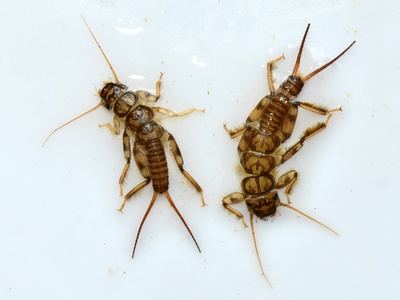
Mayfly Nymph
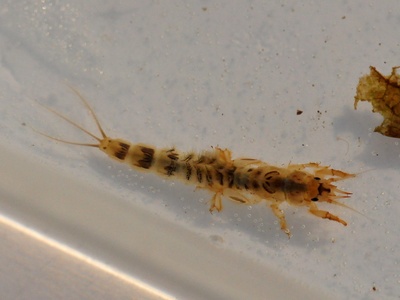
Found in clean streams and ponds, mayfly nymphs have three (or two) long tail filaments and gills along their abdomen. They are a crucial food source for fish and are excellent indicators of good water quality, living for years before a brief adult flight.
Stonefly Nymph
Living under rocks in cool, fast-flowing, well-oxygenated streams, stonefly nymphs are flattened with two long tail filaments. They are sensitive to pollution, making their presence a sign of excellent water health. Most are shredders, breaking down leaves.
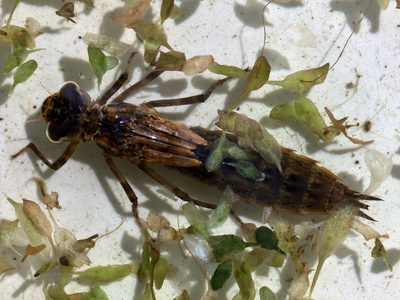
Dragonfly Nymph
These stout-bodied, formidable predators lurk in the sediment of ponds and slow streams. They lack visible gills on their abdomen (unlike mayflies) and hunt small prey using a lightning-fast, extendable lower jaw. They are a vital part of the aquatic food web.
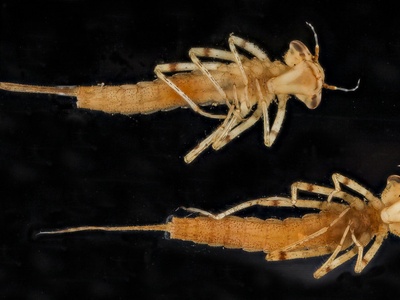
Damselfly Nymph
More slender than dragonfly nymphs, damselfly nymphs are easily identified by the three feather-like gills at the end of their abdomen. They are graceful predators in ponds and slow-moving water, often hiding among aquatic plants to ambush small prey.

Caddisfly Larva (Case-maker)
Famous for building protective cases from silk and materials like sand, pebbles, or twigs. These larvae are found in various freshwater habitats. Their case designs are often specific to their family, making them fascinating subjects for identification. They are important shredders and grazers.

Caddisfly Larva (Net-spinner)
Instead of a portable case, these caddisfly larvae build silken nets on rocks in flowing water to catch drifting food particles. Their presence indicates moving water, and they play a key role as filter feeders, cleaning the water column.

Dobsonfly Larva (Hellgrammite)
A large, intimidating larva found under rocks in swift-flowing rivers. Hellgrammites are fierce predators with powerful jaws, preying on other invertebrates. They are a popular bait for anglers and indicate good water quality due to their need for high oxygen levels.
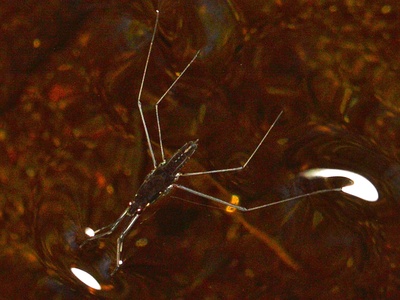
Water Strider
These familiar insects skate effortlessly across the surface of still or slow-moving water, supported by surface tension. They are predators, using their specialized front legs to detect vibrations and snatch insects that fall onto the water’s surface.
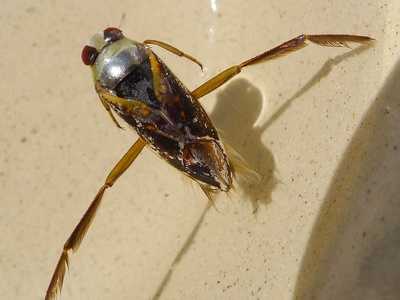
Backswimmer
As their name suggests, backswimmers swim upside down, using their long, oar-like hind legs for propulsion. They are predatory bugs found in ponds and pools, preying on other insects and even small tadpoles or fish. Their bite can be painful.

Giant Water Bug
Among the largest true bugs, these formidable predators inhabit ponds and wetlands. They are ambush hunters, injecting powerful digestive enzymes into prey like insects, snails, and even small fish. Some species are called “toe-biters” due to their painful defensive bite.
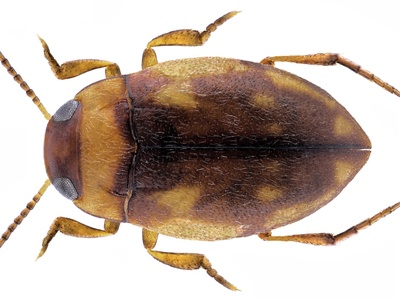
Predaceous Diving Beetle
Sleek and streamlined, these beetles are active predators in ponds and slow streams, both as larvae and adults. They carry a bubble of air under their wing covers to breathe underwater. They hunt everything from other insects to small fish.
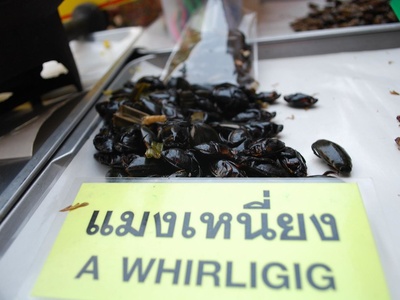
Whirligig Beetle
Often seen spinning in groups on the water’s surface, whirligig beetles have divided eyes that allow them to see both above and below the water simultaneously. They scavenge for dead insects on the surface film and dive to hunt for prey below.
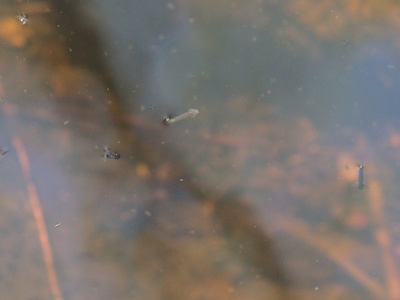
Mosquito Larva (Wiggler)
Common in stagnant water, from ponds to birdbaths, these larvae hang from the surface, breathing through a snorkel-like siphon. They are filter feeders, consuming algae and organic particles, and are a primary food source for many aquatic predators.
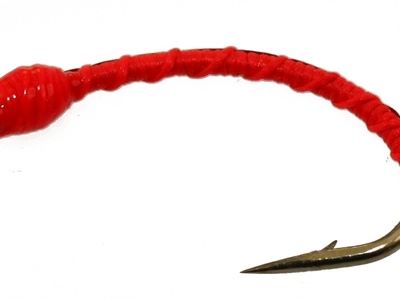
Midge Larva (Bloodworm)
These small, worm-like larvae are abundant in the sediment of most freshwater bodies. Many, called “bloodworms,” are bright red due to hemoglobin, which helps them survive in low-oxygen conditions. They are a critically important food source for fish.
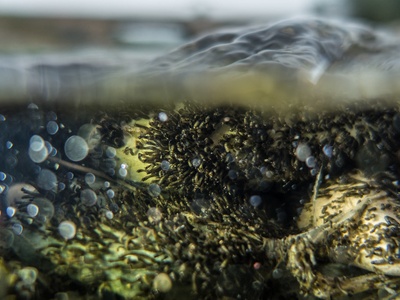
Black Fly Larva
These larvae attach themselves to rocks in fast-flowing streams, using fan-like mouthparts to filter food from the current. They often live in dense colonies and are indicators of running water. The adult females of some species are biting pests.
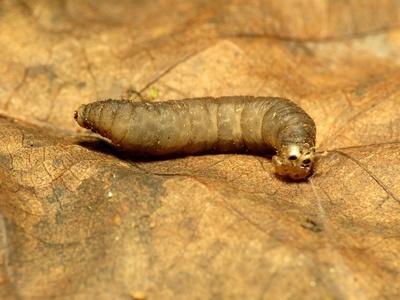
Crane Fly Larva
Often called “leatherjackets,” these thick-skinned, worm-like larvae live in the soft sediment of streams and ponds or in moist soil at the water’s edge. Most species are detritivores, playing a vital role in breaking down decaying plant material.
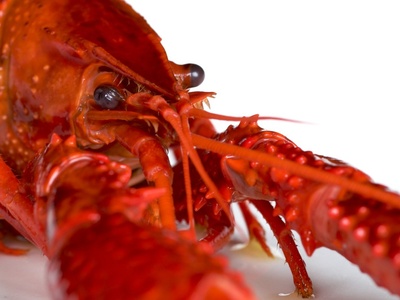
Crayfish
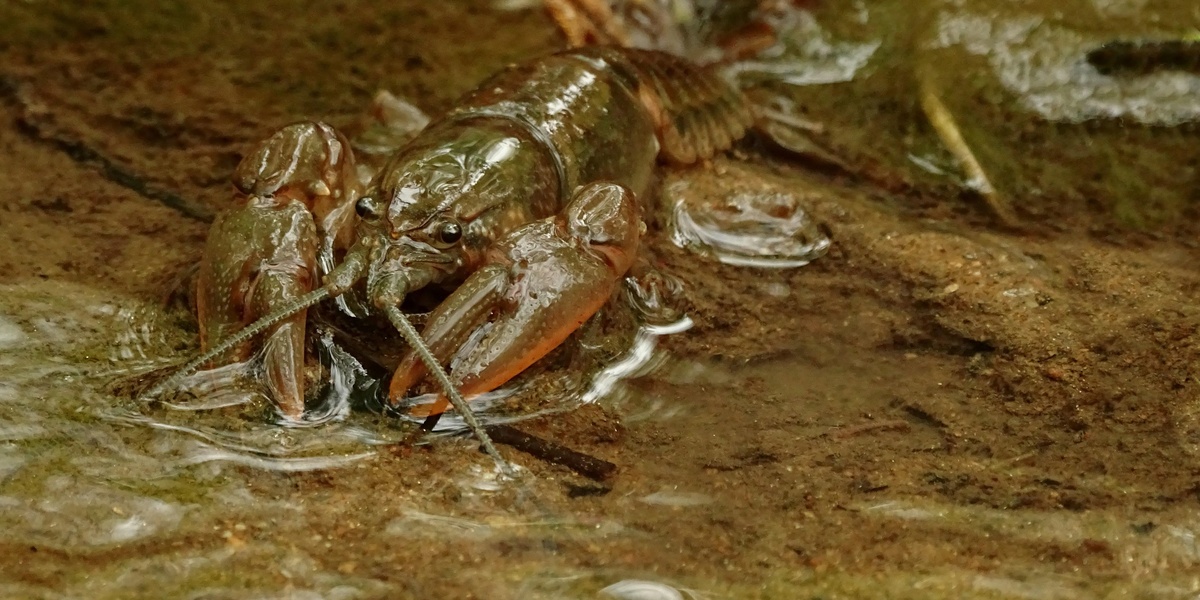
These lobster-like crustaceans are key players in freshwater ecosystems, found in streams, lakes, and marshes. As omnivores, they eat plants and animals, acting as shredders and predators. They are also an important food source for fish, birds, and mammals.
Scud
These small, shrimp-like crustaceans are typically found among vegetation or under rocks in springs, streams, and lakes. They swim on their sides and are essential detritivores, breaking down organic matter and serving as a high-protein food for fish like trout.

Water Sowbug
A flattened, segmented crustacean related to the terrestrial pill bug. Water sowbugs are slow-moving detritivores found crawling on the bottom of springs, ponds, and streams, often in areas with decaying leaves. They are an indicator of nutrient-rich water.
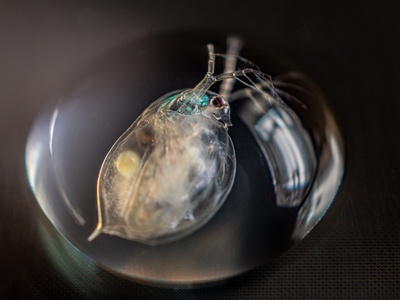
Daphnia (Water Flea)
These tiny, planktonic crustaceans are a cornerstone of still-water food webs, like in ponds and lakes. They are filter feeders, consuming algae and bacteria, and are a primary food source for small fish and predatory invertebrates. Their bodies are transparent.
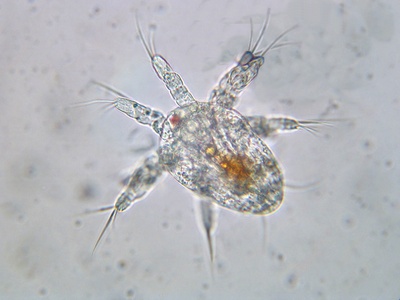
Copepod
Abundant in nearly all freshwater habitats, copepods are tiny crustaceans characterized by a teardrop-shaped body and a single eye. They are a vital link in the food web, feeding on phytoplankton and being eaten by larval fish and other predators.
Seed Shrimp
These minute crustaceans are enclosed in a bean-shaped, bivalved shell, resembling a tiny seed. They are found in a wide range of aquatic habitats, from temporary puddles to lakes, where they scavenge on detritus and algae near the bottom.
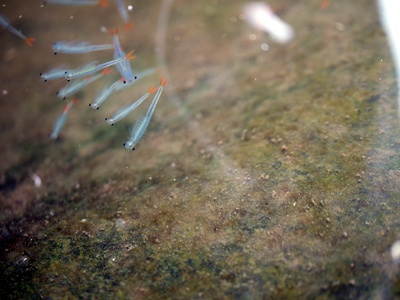
Fairy Shrimp
Delicate crustaceans found in temporary pools and vernal ponds, lacking a carapace. They swim gracefully on their backs, using their feathery legs to filter feed. Their drought-resistant eggs can lie dormant for years, waiting for water to return.
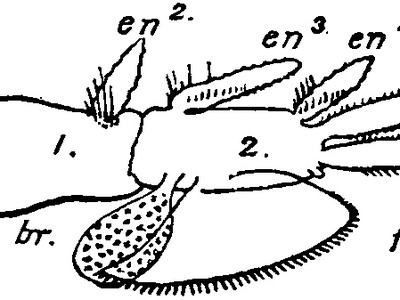
Tadpole Shrimp
These “living fossils” inhabit temporary freshwater pools and have a distinctive shield-like carapace covering their head and thorax. They are benthic omnivores, stirring up sediment to find food. Their eggs are highly resistant to drying and temperature extremes.
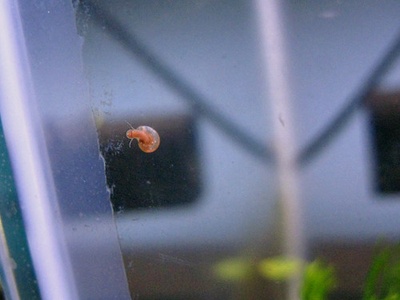
Ramshorn Snail
Easily recognized by their flat, coiled shell that resembles a ram’s horn. These air-breathing snails are common in ponds, marshes, and slow-moving rivers, where they graze on algae and decaying plant matter. Some species have red blood containing hemoglobin.
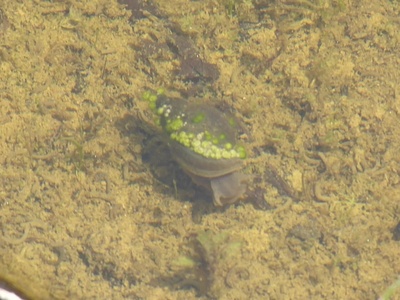
Pond Snail
These common snails have a pointed, right-handed spiral shell and are found in various still or slow-moving freshwater habitats. As voracious grazers of algae and biofilm, they play a significant role in nutrient cycling. They are also intermediate hosts for many parasites.
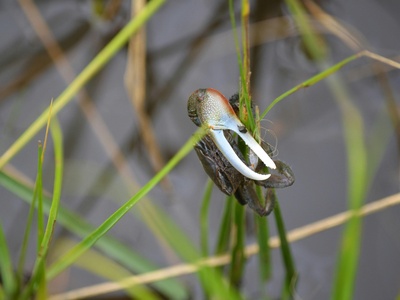
Freshwater Limpet
These small, unassuming snails have a non-spiraled, cap-like shell, resembling a tiny volcano. They cling tightly to rocks and submerged wood in clean, flowing streams and lakes, scraping algae and biofilm from surfaces with their radula.

Zebra Mussel
A highly invasive bivalve native to Eurasia. It attaches to hard surfaces with strong byssal threads, forming dense colonies that clog water intake pipes. As efficient filter feeders, they dramatically increase water clarity but disrupt native food webs.
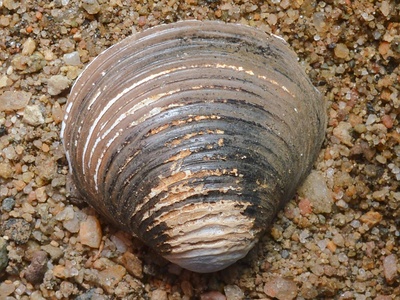
Asian Clam
A small, yellowish-brown clam with concentric ridges on its shell, this invasive species is now widespread in rivers and lakes. It’s a suspension feeder that can reach enormous densities, altering substrate and competing with native mussels for food.
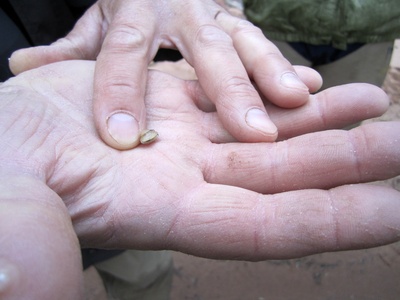
Fingernail Clam
These small, thin-shelled bivalves are common in the soft sediment of ponds, lakes, and rivers. Unlike many mussels, they are hermaphroditic and brood their young internally, releasing miniature clams. They are an important food source for diving ducks and fish.
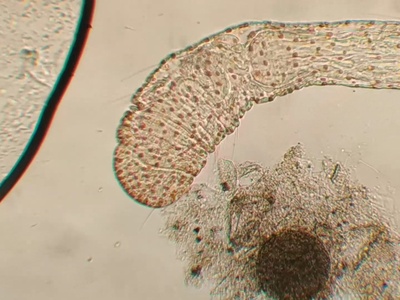
Aquatic Worm
This diverse group includes species like *Tubifex*, which live in the soft mud of ponds and polluted rivers. They often burrow head-down, waving their tails in the water to absorb oxygen. They are decomposers that are tolerant of low-oxygen conditions.
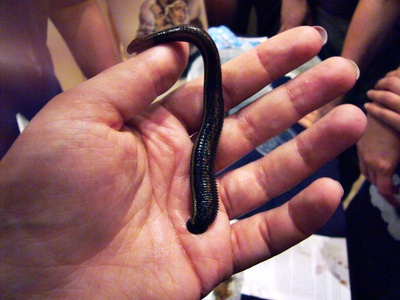
Leech
Often feared but mostly harmless to humans, leeches are segmented worms found in calm, protected waters. While some are parasitic bloodsuckers, many are predators that swallow other small invertebrates like snails and worms whole. They have suckers at both ends.
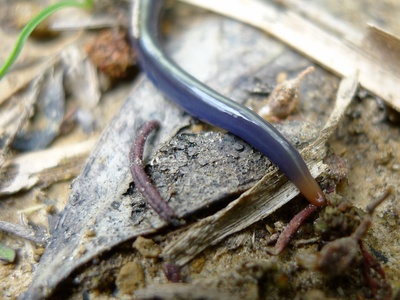
Planarian (Flatworm)
These simple, unsegmented flatworms glide over surfaces in cool streams and ponds. They are predators and scavengers, recognizable by their triangular head with two eyespots that give them a cross-eyed appearance. They have remarkable regenerative abilities.
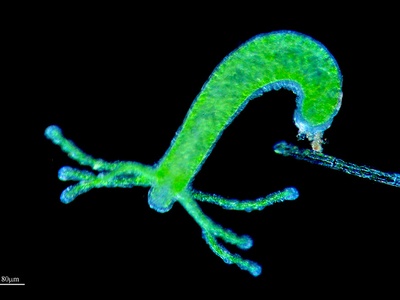
Hydra
A tiny relative of jellyfish and sea anemones, found attached to plants and rocks in clean, still water. Hydras are simple predators, using stinging cells on their tentacles to capture prey like Daphnia. They can reproduce asexually by budding.
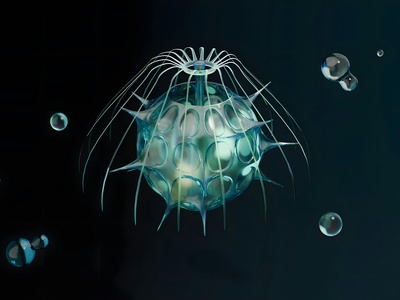
Freshwater Jellyfish
This unique animal spends most of its life as a tiny, inconspicuous polyp. Under certain conditions, it produces small, translucent jellyfish (medusae) that float in calm lakes, ponds, and reservoirs. They are harmless to humans.
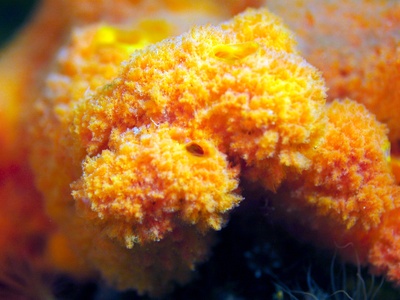
Freshwater Sponge
The only sponges that live in freshwater. They grow as encrusting or branching colonies on submerged logs and rocks. These simple, filter-feeding animals provide habitat for many small invertebrates. They can produce dormant gemmules to survive winter or drought.
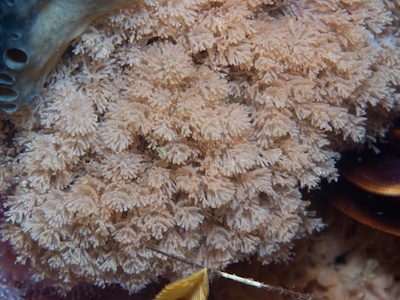
Bryozoan (Moss Animal)
These colonial animals form moss-like or gelatinous masses on submerged surfaces. Each colony consists of thousands of tiny, interconnected individuals called zooids that filter food from the water with a crown of tentacles. The magnificent bryozoan can form large, brain-like blobs.
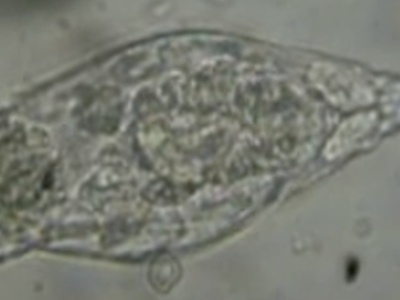
Rotifer (Wheel Animal)
Microscopic invertebrates abundant in most freshwater environments. They are named for the crown of cilia (the corona) around their mouth, which beats in a rotating motion to draw in food and for locomotion. They are a key food source for larger microorganisms.
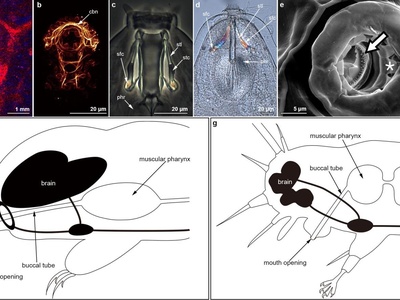
Water Bear (Tardigrade)
These microscopic, eight-legged invertebrates are famous for their extreme resilience. Found in the water film on mosses and lichens at the water’s edge, they can survive dehydration, freezing, and radiation by entering a dormant state called cryptobiosis.
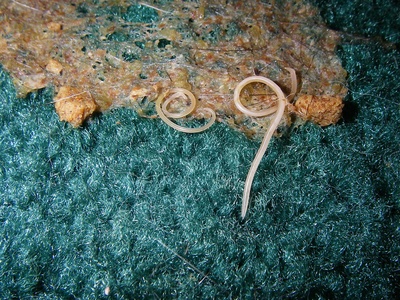
Nematode (Roundworm)
Extremely abundant, unsegmented roundworms are found in virtually all habitats, including the sediment of ponds and streams. Most freshwater species are free-living, playing important roles in decomposition and nutrient cycling by feeding on bacteria, fungi, and detritus.