The Czech Republic’s mix of forests, lowlands and alpine meadows supports a diverse mammal fauna. From urban edges to remote mountain slopes, local habitats shape which species you might encounter on a walk, a field trip, or a targeted survey.
There are 69 Mammals of the Czech Republic, ranging from Alpine marmot (svišť horský) to Yellow-necked mouse (plch žlutohrdlý). For each species the list is organized with Scientific name,Status (IUCN/CZ),Size (kg/cm) so you can compare taxonomy, conservation status and body measurements easily; you’ll find below.
Which species on the list need the most conservation attention in the Czech Republic?
Look at the Status (IUCN/CZ) column: species marked as Vulnerable, Endangered or Critically Endangered globally or on the national red list are highest priority. Many bat species and some larger carnivores show elevated concern locally, so use the status tags to identify which populations require monitoring or protection.
How can I use the scientific names and size data when observing mammals?
Scientific names remove ambiguity across languages and help you match sightings to field guides or databases, while Size (kg/cm) gives a quick check against measurements or photos to rule out similar species. Together with status info, these fields make the list practical for ID, reporting records, or planning follow-up research.
Mammals of the Czech Republic
| Common name | Scientific name | Status (IUCN/CZ) | Size (kg/cm) |
|---|---|---|---|
| European hedgehog (ježek) | Erinaceus europaeus | LC/native | 0.6–1.20 kg / 20–30 cm |
| European mole (krtek) | Talpa europaea | LC/native | 0.07–0.12 kg / 11–16 cm |
| Common shrew (rejsek obecný) | Sorex araneus | LC/native | 0.005–0.014 kg / 5–8 cm |
| Pygmy shrew (rejsek nejmenší) | Sorex minutus | LC/native | 0.003–0.007 kg / 4–6 cm |
| Eurasian water shrew (rejsek vodní) | Neomys fodiens | LC/native | 0.01–0.03 kg / 7–10 cm |
| European beaver (bobr evropský) | Castor fiber | LC/reintroduced | 11–25 kg / 80–120 cm |
| Red squirrel (veverka obecná) | Sciurus vulgaris | LC/native | 0.2–0.35 kg / 20–30 cm |
| Edible dormouse (křeček srstnatý / plch velký) | Glis glis | LC/native | 0.08–0.18 kg / 14–20 cm |
| Hazel dormouse (plch zahradní) | Muscardinus avellanarius | LC/native | 0.03–0.06 kg / 6–9 cm |
| Garden dormouse (plch zahradní / Eliomys) | Eliomys quercinus | NT/native | 0.06–0.12 kg / 12–18 cm |
| Forest dormouse (plch lesní) | Dryomys nitedula | LC/native | 0.02–0.05 kg / 7–11 cm |
| Yellow-necked mouse (plch žlutohrdlý) | Apodemus flavicollis | LC/native | 0.02–0.03 kg / 10–18 cm |
| Wood mouse (myš polní) | Apodemus sylvaticus | LC/native | 0.015–0.04 kg / 8–20 cm |
| Striped field mouse (myš medvědí / Apodemus agrarius) | Apodemus agrarius | LC/native | 0.02–0.03 kg / 9–17 cm |
| House mouse (myš domácí) | Mus musculus | LC/introduced | 0.015–0.05 kg / 6–10 cm |
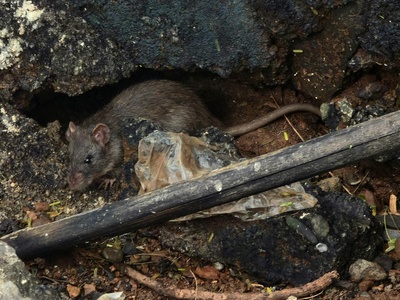
| Brown rat (krysa obecná) | Rattus norvegicus | LC/introduced | 0.2–0.5 kg / 20–25 cm |
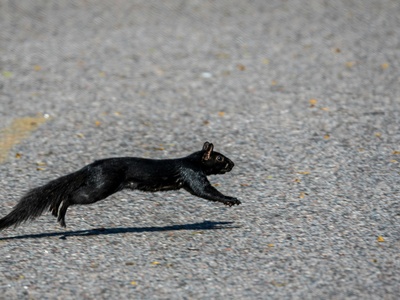
| Black rat (krysa černá) | Rattus rattus | LC/introduced | 0.1–0.3 kg / 15–20 cm |
| Bank vole (plch horský) | Myodes glareolus | LC/native | 0.02–0.05 kg / 9–14 cm |
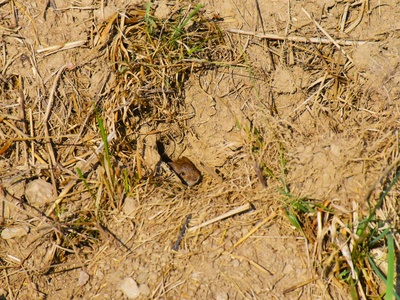
| Field vole (hraboš polní) | Microtus agrestis | LC/native | 0.02–0.05 kg / 8–13 cm |
| Common vole (hraboš obecný) | Microtus arvalis | LC/native | 0.02–0.07 kg / 8–12 cm |
| Water vole (bobr vodní / vloch) | Arvicola amphibius | LC/native | 0.15–0.35 kg / 18–28 cm |
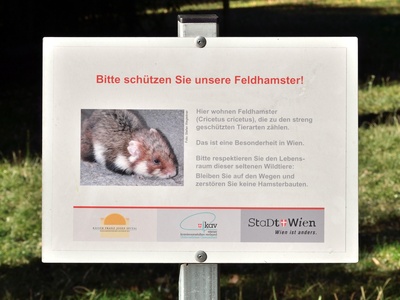
| European hamster (křeček polní) | Cricetus cricetus | VU/native | 0.3–0.6 kg / 20–28 cm |
| European ground squirrel (sysel obecný) | Spermophilus citellus | VU/native | 0.25–0.45 kg / 20–28 cm |
| Muskrat (nutrie) (nutrie) | Ondatra zibethicus | LC/introduced | 0.7–1.5 kg / 30–45 cm |
| European hare (zajíc polní) | Lepus europaeus | LC/native | 2.5–4.5 kg / 55–75 cm |
| European rabbit (králík divoký) | Oryctolagus cuniculus | LC/introduced | 1.0–2.5 kg / 30–45 cm |
| Alpine marmot (svišť horský) | Marmota marmota | LC/introduced | 4.0–7.5 kg / 45–60 cm |
| Roe deer (srnec obecný) | Capreolus capreolus | LC/native | 15–35 kg / 90–130 cm |
| Red deer (jelen evropský) | Cervus elaphus | LC/native | 100–250 kg / 140–250 cm |
| Fallow deer (daněk skvrnitý) | Dama dama | LC/introduced | 40–100 kg / 100–150 cm |
| Sika deer (jelen sika) | Cervus nippon | LC/introduced | 40–80 kg / 90–140 cm |
| Mouflon (muflon) | Ovis orientalis musimon | LC/introduced | 30–60 kg / 90–110 cm |
| Wild boar (prase divoké) | Sus scrofa | LC/native | 50–150 kg / 90–150 cm |
| Moose (los evropský) | Alces alces | LC/vagrant | 200–600 kg / 200–250 cm |
| Gray wolf (vlk obecný) | Canis lupus | LC/recolonizing | 20–40 kg / 90–130 cm |
| Eurasian lynx (rys ostrovid) | Lynx lynx | LC/reintroduced | 18–36 kg / 70–130 cm |
| Eurasian wildcat (kočka divoká) | Felis silvestris | LC/native | 3–8 kg / 40–60 cm |
| Red fox (liška obecná) | Vulpes vulpes | LC/native | 4–8 kg / 60–90 cm |
| Brown bear (medvěd hnědý) | Ursus arctos | LC/vagrant | 80–250 kg / 160–250 cm |
| Raccoon (mýval severní) | Procyon lotor | LC/introduced | 4–9 kg / 40–70 cm |
| Raccoon dog (mývalovitý pes) | Nyctereutes procyonoides | LC/introduced | 4–10 kg / 50–70 cm |
| European badger (jezevec lesní) | Meles meles | LC/native | 8–15 kg / 70–100 cm |
| European otter (vydra říční) | Lutra lutra | NT/native (recovering) | 6–12 kg / 60–100 cm |
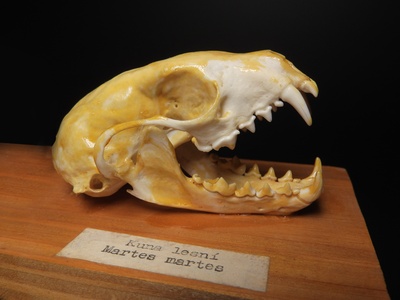
| Pine marten (kuna lesní) | Martes martes | LC/native | 0.8–1.8 kg / 40–60 cm |
| Stone marten (kuna skalní) | Martes foina | LC/native | 0.7–1.5 kg / 40–60 cm |
| European polecat (tchoř)[Mustela putorius] | Mustela putorius | LC/native | 0.5–1.5 kg / 30–50 cm |
| Stoat / Ermine (kuna krátkozobá) | Mustela erminea | LC/native | 0.06–0.3 kg / 17–33 cm |
| Least weasel (hrabošník) | Mustela nivalis | LC/native | 0.02–0.1 kg / 11–20 cm |
| European mink (norek evropský) | Mustela lutreola | CR/extirpated | 0.5–1.0 kg / 30–45 cm |
| Common pipistrelle (netopýr rezavý) | Pipistrellus pipistrellus | LC/native | 0.004–0.008 kg / 3–5 cm |
| Soprano pipistrelle (netopýr rousný) | Pipistrellus pygmaeus | LC/native | 0.004–0.009 kg / 3–5 cm |
| Nathusius’ pipistrelle (netopýr Nathusiův) | Pipistrellus nathusii | LC/native | 0.005–0.009 kg / 3–5 cm |
| Noctule (netopýr velký) | Nyctalus noctula | LC/native | 0.02–0.04 kg / 6–9 cm |
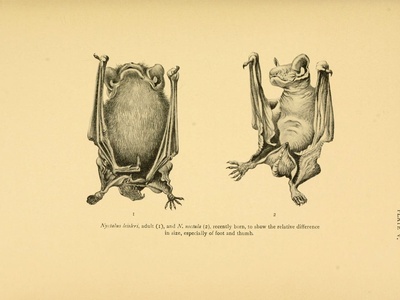
| Leisler’s bat (netopýr Leislerův) | Nyctalus leisleri | LC/native | 0.01–0.03 kg / 5–7 cm |
| Serotine (netopýr žíhaný) | Eptesicus serotinus | LC/native | 0.02–0.04 kg / 6–10 cm |
| Parti-coloured bat (netopýr velkobrvý) | Vespertilio murinus | LC/native | 0.03–0.06 kg / 6–9 cm |
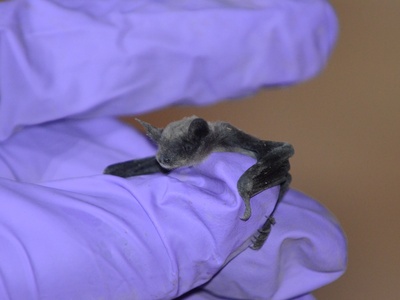
| Greater mouse-eared bat (netopýr velký) | Myotis myotis | LC/native | 0.02–0.04 kg / 6–9 cm |
| Daubenton’s bat (netopýr vodní) | Myotis daubentonii | LC/native | 0.006–0.02 kg / 5–8 cm |
| Natterer’s bat (netopýr Nattererův) | Myotis nattereri | LC/native | 0.005–0.02 kg / 5–8 cm |
| Bechstein’s bat (netopýr Bechsteinův) | Myotis bechsteinii | VU/native | 0.007–0.02 kg / 5–8 cm |
| Brown long-eared bat (netopýr hvízdavý) | Plecotus auritus | LC/native | 0.007–0.02 kg / 6–9 cm |
| Grey long-eared bat (netopýr šedý) | Plecotus austriacus | NT/native | 0.007–0.02 kg / 6–9 cm |
| Barbastelle (netopýr vousatý) | Barbastella barbastellus | NT/native | 0.007–0.02 kg / 6–8 cm |
| Lesser horseshoe bat (podkovář malý) | Rhinolophus hipposideros | NT/native | 0.006–0.014 kg / 4–6 cm |
| Greater horseshoe bat (podkovář velký) | Rhinolophus ferrumequinum | LC/rare | 0.02–0.04 kg / 6–9 cm |
| Harvest mouse (křepelka myš) | Micromys minutus | LC/native | 0.004–0.008 kg / 6–9 cm |
| Common bent-winged bat (netopýr Schreibersův) | Miniopterus schreibersii | NT/occasional | 0.01–0.03 kg / 6–8 cm |
| European wild boar (repeat entry placeholder) | Sus scrofa | LC/native | 50–150 kg / 90–150 cm |
| European mole (repeat placeholder) | Talpa europaea | LC/native | 0.07–0.12 kg / 11–16 cm |
Images and Descriptions
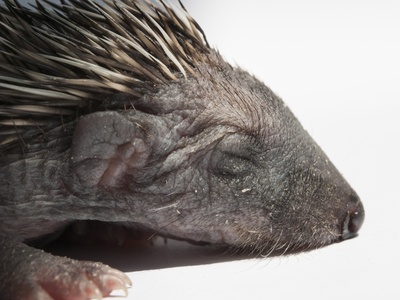
European hedgehog (ježek)
Prickly nocturnal insectivore of gardens, hedgerows and farmland. Common across lowland Czechia; look for rolled spines at day and foraging adults at dusk. Populations declining due to roads and habitat loss.

European mole (krtek)
Fossorial insect-eater that creates conspicuous molehills in lawns, meadows and forests. Widespread and secretive; best spotted by fresh ridges and raised earth in spring and autumn.

Common shrew (rejsek obecný)
Tiny, high-metabolism insectivore of woodlands, hedgerows and grassland. Frequently trapped in pitfall surveys; active day and night and rarely seen alive because of rapid movements.
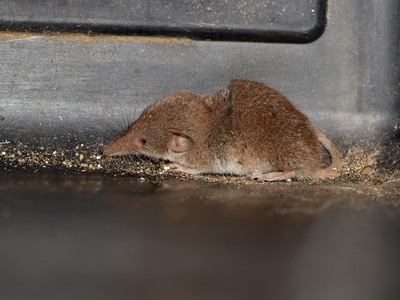
Pygmy shrew (rejsek nejmenší)
Small shrew of damp grassland, scrub and woodland edges. Elusive and insectivorous; informed searches near streams and wet meadows give the best chance to detect sound or traps.
Eurasian water shrew (rejsek vodní)
Semi-aquatic shrew hunting in and beside streams, ditches and ponds. Seen on banks or in mammal trapping; notable for water-repellent fur and swimming ability.
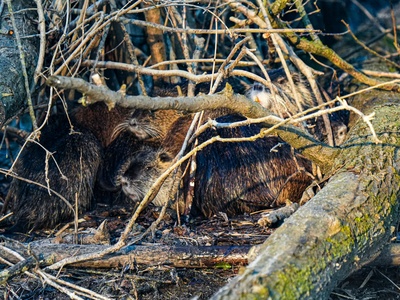
European beaver (bobr evropský)
Reintroduced and expanding in Czech rivers and reservoirs; recognizable by dams, lodges and flat tails. Active at dusk and night; significant ecosystem engineer improving wetland habitats.

Red squirrel (veverka obecná)
Arboreal resident of woodland and parks; flashes red-brown coat and tufted ears in winter. Often seen in conifer forests and gardens feeding on cones, seeds and bird feeders.
Edible dormouse (křeček srstnatý / plch velký)
Nocturnal, tree-dwelling dormouse of mature deciduous woodland and orchards. Known for long hibernation and cheek-pouch food caching; sometimes visits attics and bird-box surveys detect presence.
Hazel dormouse (plch zahradní)
Small arboreal dormouse of hedgerows and mixed woodland; prized by ecologists for its sensitivity to habitat fragmentation. Best found with nest-tube monitoring and nighttime surveys.

Garden dormouse (plch zahradní / Eliomys)
Rare and patchy in Czechia, favouring warm, shrubby habitats and fruiting slopes. Nocturnal and arboreal; notable for long tail with black tip and local conservation concern.
Forest dormouse (plch lesní)
Secretive dormouse of warm, mixed forests and shrubby edges in some southeastern localities. Nocturnal and arboreal; caught occasionally in nest-box checks and targeted surveys.
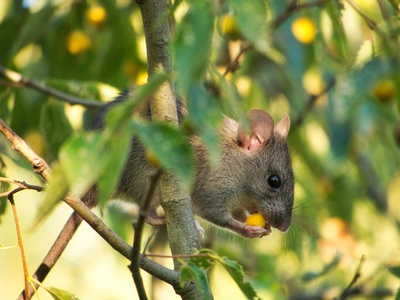
Yellow-necked mouse (plch žlutohrdlý)
Common woodland mouse with pale collar; abundant in forests, gardens and field margins. Often trapped in small-mammal surveys and attracted to nuts and seeds.
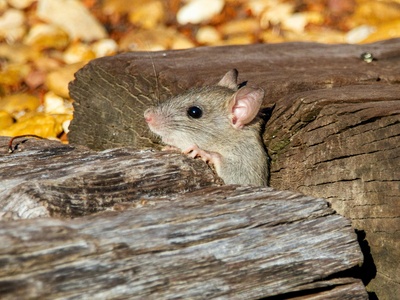
Wood mouse (myš polní)
Adaptable mouse of fields, hedgerows and woodlands; excellent jumper and climber. Commonly seen at night near barns, compost heaps and bird-feeders.
Striped field mouse (myš medvědí / Apodemus agrarius)
Open-country specialist of meadows and riparian scrub with distinctive dorsal stripe; common in lowland and floodplain habitats, especially in eastern Czechia.

House mouse (myš domácí)
Commensal and widespread in buildings, farms and rubbish tips. Small, nocturnal and highly adaptable; commonest small mammal around human settlements.
Brown rat (krysa obecná)
Large commensal rodent of sewers, riverbanks and farms. Often seen near waterways and human habitation; excellent swimmer and burrower, common nationwide.
Black rat (krysa černá)
Less common than brown rat, more arboreal and associating with older buildings, ports and warm cellars. Localized but present in towns and older farmsteads.
Bank vole (plch horský)
Woodland and hedgerow specialist, common in leaf-litter and understory. Frequently caught in small-mammal surveys; important prey for many predators.
Field vole (hraboš polní)
Grassland and meadow vole forming surface runways in lush vegetation. Common in wet meadows and pasture; populations fluctuate seasonally and annually.
Common vole (hraboš obecný)
Widespread in arable land, grassland and embankments. Often causes visible tunnel networks and is key prey for raptors and mustelids.
Water vole (bobr vodní / vloch)
Semi-aquatic rodent of riverbanks and wetlands; creates burrows and surface runs. Historically common, now locally reduced; look for feeding stations and latrine sites.
European hamster (křeček polní)
Large solitary rodent of arable fields and steppe-like grassland. Populations have crashed and species is protected; daytime sightings near burrow systems in remnant populations.
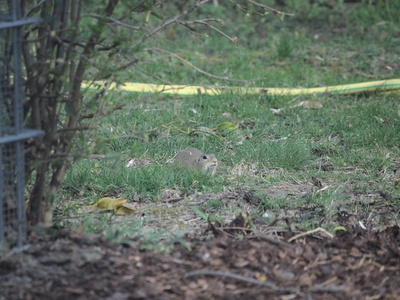
European ground squirrel (sysel obecný)
Grassland and steppe specialist surviving in fragmented colonies, mostly in southern and eastern lowlands. Diurnal and sociable; colonies visible as burrowed patches on slopes.
Muskrat (nutrie) (nutrie)
Introduced semi-aquatic rodent established along rivers and ponds; builds lodges and burrows. Often active at dusk and night, leaving visible feeding signs on banks.
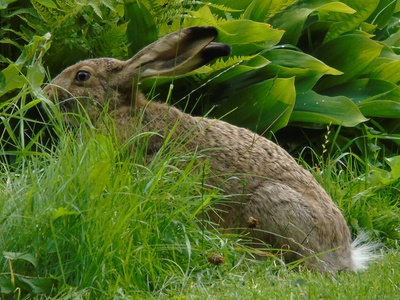
European hare (zajíc polní)
Fast, long-legged lagomorph of arable landscapes and steppe-like habitats. Common across Czech lowlands; best seen at dawn or dusk in open fields and roadside verges.
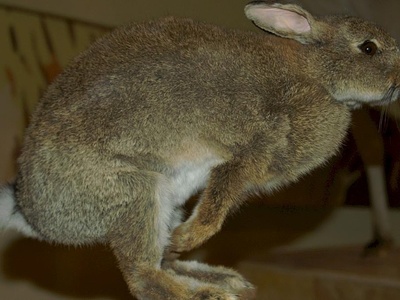
European rabbit (králík divoký)
Introduced and locally naturalized in some dry, warm lowland areas and sand dunes. Forms warrens and is active at dusk; less widespread than the hare.

Alpine marmot (svišť horský)
Introduced into some mountain areas and maintained in alpine reserves; diurnal and easily seen on sunny ridgelines. Lives in social colonies with loud alarm calls.
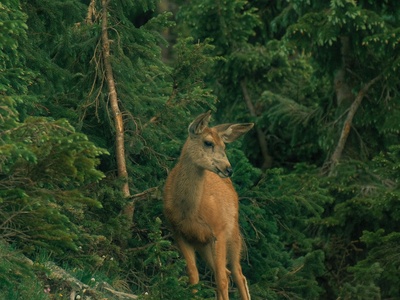
Roe deer (srnec obecný)
Common, elegant deer of woodlands, field edges and peri-urban parks. Often glimpsed at dawn/dusk; bucks display territorial scent markings and small antlers.

Red deer (jelen evropský)
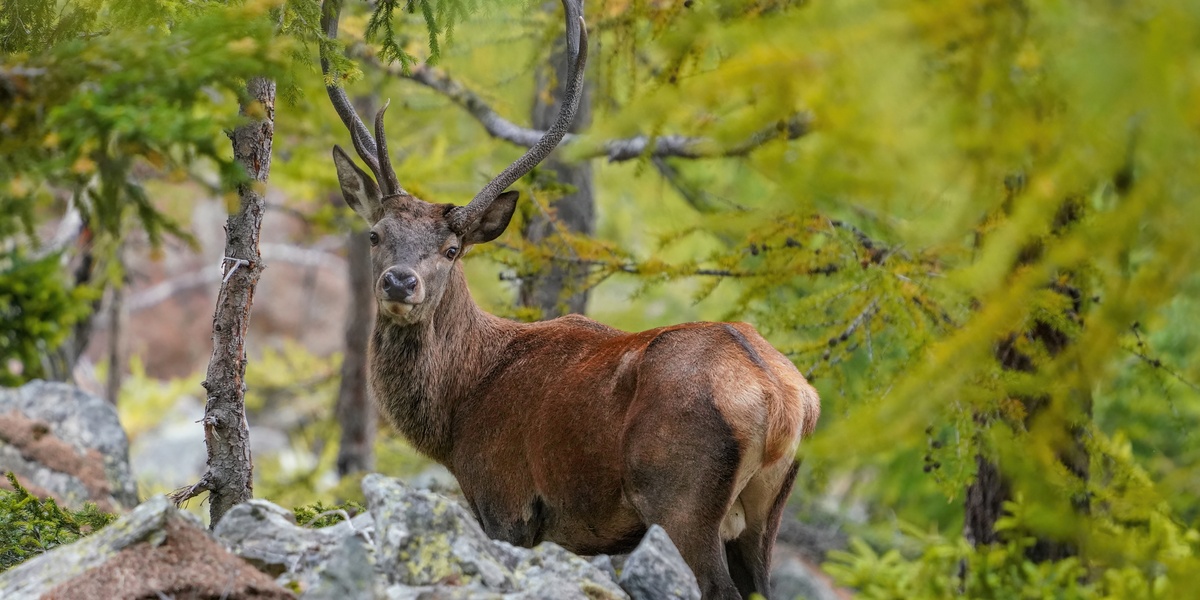
Large deer of forests and open valleys, abundant in larger forest complexes and lowland floodplains. Stags vocalize in autumn rut and are visible from hides or drives.
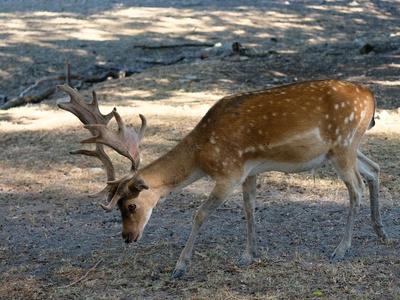
Fallow deer (daněk skvrnitý)
Introduced and semi-naturalized in parks and woodlands; adaptable browsers often seen in managed estates and forest edges.

Sika deer (jelen sika)
Introduced populations exist in parts of Czechia; shy and most often seen at dusk in forested wetlands and reedbeds where they sometimes hybridize with red deer.
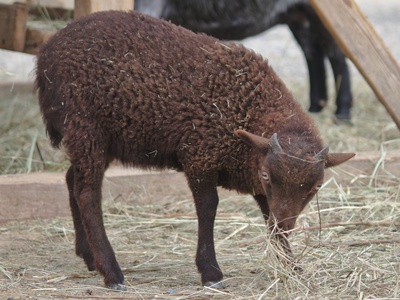
Mouflon (muflon)
Introduced to upland woodlands and rocky outcrops for hunting. Sturdy mountain sheep with curved horns, visible on open slopes and ridge-lines.
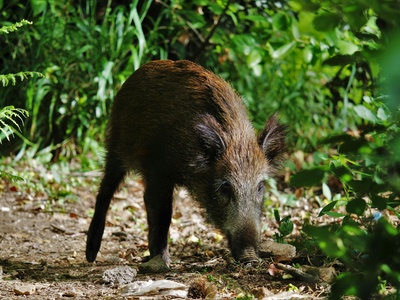
Wild boar (prase divoké)
Widespread, adaptable omnivore of forests, farmland and wetlands. Active at night; signs include rooting patches, tracks and droppings. Populations have increased markedly.
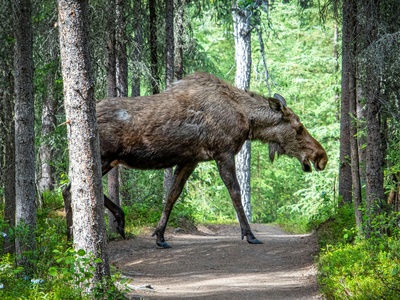
Moose (los evropský)
Historically present, now only occasional vagrants from neighbouring populations. Very large and solitary; sightings are rare but spectacular in forested border areas.
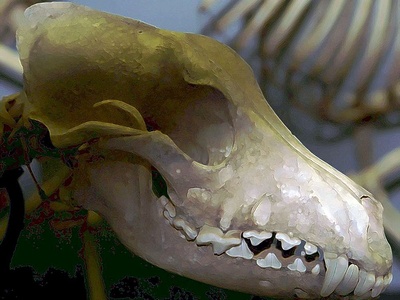
Gray wolf (vlk obecný)
Returning to Czech borderlands from neighbouring populations; packs occasionally pass through or establish territories. Look for tracks, howls and depredation signs in remote forests.
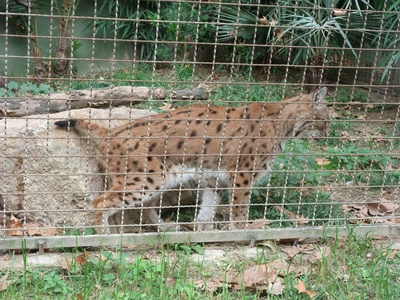
Eurasian lynx (rys ostrovid)
Reintroduced and recovering in mountain forests (Šumava, Beskydy); elusive and primarily nocturnal. Look for paw prints, scratch marks and camera-trap photos in mature woodland.
Eurasian wildcat (kočka divoká)
Secretive forest-dwelling cat avoiding humans; resembles a large domestic tabby but thicker, bushy tail. Found in well-wooded areas and best detected via camera traps.
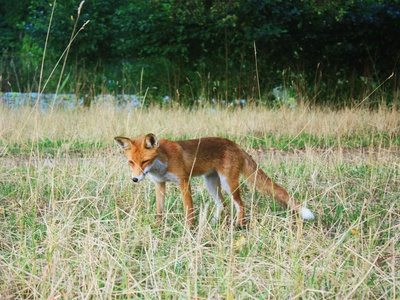
Red fox (liška obecná)
Common, adaptable omnivore in towns, farmland and forests. Often active at night; look for den sites in embankments and characteristic brushy tail.
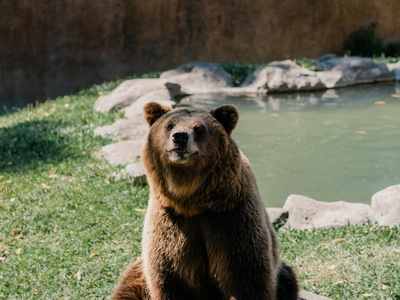
Brown bear (medvěd hnědý)
Historically present but now only occasional vagrants from neighbours; large and solitary. Rare sightings in border regions attract strong public interest and monitoring.
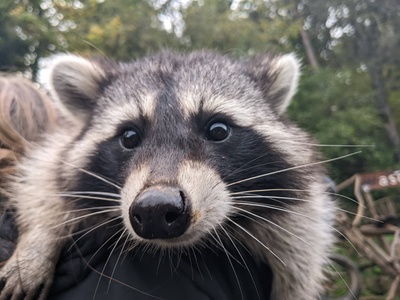
Raccoon (mýval severní)
Introduced, expanding in riverine and suburban habitats. Nocturnal and omnivorous; known for dexterous forepaws, raiding bins and nests and potential to spread disease.
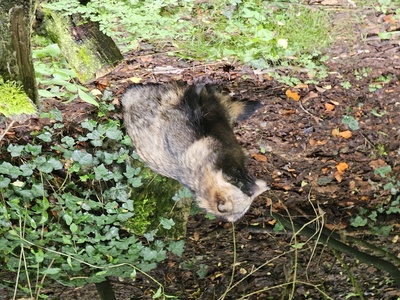
Raccoon dog (mývalovitý pes)
Introduced East Asian species now established in wetlands and reedbeds; travels long distances and is most active at night and twilight.
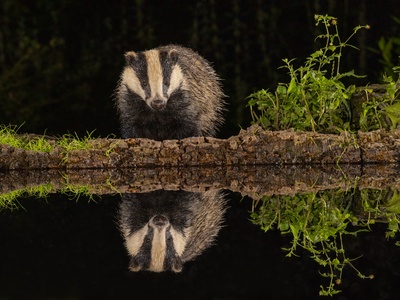
European badger (jezevec lesní)
Nocturnal sett-dweller of woodlands and farmland; social groups live in setts and forage for earthworms. Signs include latrines, tracks and well-worn paths.
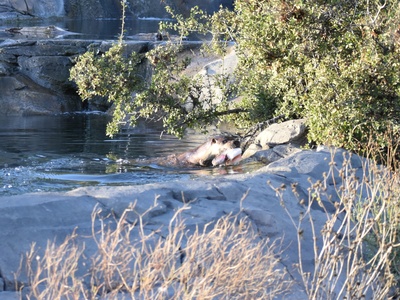
European otter (vydra říční)
Semi-aquatic predator returning to rivers and lakes after conservation measures. Look for spraints on prominent rocks and banks and for activity at dusk along waterways.
Pine marten (kuna lesní)
Arboreal mustelid of mature woodland, often seen in clearings and near dens. Agile climber feeding on small mammals, birds and fruit; occasionally visits attics and barns.

Stone marten (kuna skalní)
Tolerant of human environments, often denning in buildings and farm outbuildings. Common in towns and villages, feeding on birds, eggs and rubbish.
![European polecat (tchoř)[Mustela putorius]](https://florafaunafun.com/wp-content/uploads/2025/12/european_polecat_tchor_mustela_putorius.jpg)
European polecat (tchoř)[Mustela putorius]
Nocturnal and crepuscular predator of farmland and woodland edges; semi-fossorial and often leaves scent at marking sites. Occasionally visits buildings and poultry runs.
Stoat / Ermine (kuna krátkozobá)
Small carnivorous mustelid inhabiting woodlands, meadows and wetlands. Noted for seasonal white winter coat (ermine) in colder areas; active predator of rodents.
Least weasel (hrabošník)
Smallest carnivore in Czechia, preying on mice and voles in fields and edges. Extremely agile and able to follow prey into burrows.
European mink (norek evropský)
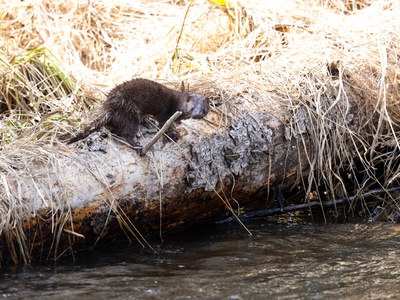
Once present but now extirpated from Czechia; semi-aquatic mustelid found historically along rivers and wetlands. Conservation focus in neighbouring countries.
Common pipistrelle (netopýr rezavý)
Tiny, very common bat of towns, parks and woodlands; forages at streetlamps and along hedgerows. One of the most frequently encountered bat species.
Soprano pipistrelle (netopýr rousný)
Similar to common pipistrelle but prefers riparian habitats and reedbeds. Detectable by echolocation frequency and summer roost surveys.
Nathusius’ pipistrelle (netopýr Nathusiův)
Migratory species using river corridors and lakeshores during transit. Often recorded during autumn migration and at ringing/migration monitoring sites.
Noctule (netopýr velký)
Large, fast-flying bat often seen high over towns and rivers at dusk. Roosts in tree cavities and buildings; migratory behavior in some populations.
Leisler’s bat (netopýr Leislerův)
Medium-sized woodland bat often foraging over clearings and along river corridors; less common than noctule but widespread in suitable habitat.
Serotine (netopýr žíhaný)
Roosts in buildings and tree holes, foraging low over farmland and woodland edges. Often seen at dusk near streetlights.
Parti-coloured bat (netopýr velkobrvý)
Long-distance migrant and aerial insectivore that uses tall buildings and bridges for roosting. Seen flying high over towns at dusk, with pale rump patch.
Greater mouse-eared bat (netopýr velký)
Large Myotis species of caves and old buildings; forages low over open meadows and prey on ground-dwelling insects. Colonies found in hibernation roosts.
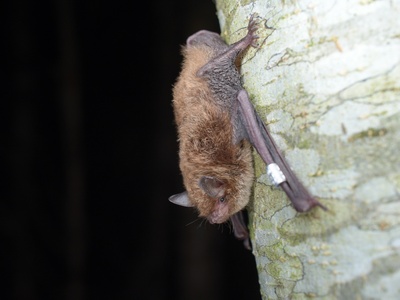
Daubenton’s bat (netopýr vodní)
Specialist of water surfaces, hawking insects just above rivers and lakes. Often seen skimming water at dusk and roosting in bridges and tree cavities.
Natterer’s bat (netopýr Nattererův)
Woodland and cave roosting species that gleans insects from surfaces. Common in mixed forests and recorded in roost counts and bat-box programs.
Bechstein’s bat (netopýr Bechsteinův)
Forest specialist dependent on mature, undisturbed woodlands and tree cavities. Locally threatened by loss of old-growth habitat and sensitive to fragmentation.
Brown long-eared bat (netopýr hvízdavý)
Distinctive very long ears; forages slowly in hedgerows and woodland interior for moths. Roosts in attics and church roofs and easily observed on bat-box checks.
Grey long-eared bat (netopýr šedý)
Similar to brown long-eared but favoring warmer lowland habitats and orchards. Local and conservation-sensitive; monitored at roosts and maternity colonies.
Barbastelle (netopýr vousatý)
Forest-dwelling, crevice-roosting bat with slow flight and preference for old woodland. Rare but widespread in well-structured forests and often targeted by conservation surveys.
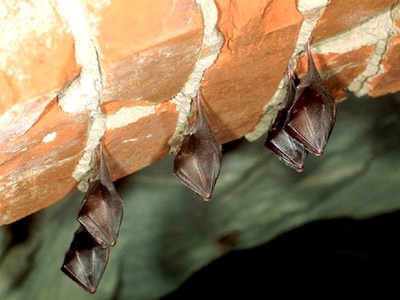
Lesser horseshoe bat (podkovář malý)
Small, face-leafed bat of caves and old buildings in warm valleys. Uses echolocation through nose; colonies are localized and conservation-important.
Greater horseshoe bat (podkovář velký)
Once more widespread, now rare and locally restricted in Czechia; found in warm limestone valleys and historic buildings. Protected and monitored where present.
Harvest mouse (křepelka myš)
Tiny arboreal rodent of tall grasses, reedbeds and hedgerows; builds spherical nests suspended in vegetation. Best detected by careful grassland daytime searches.
Common bent-winged bat (netopýr Schreibersův)
Cave-roosting species recorded occasionally in southern karst areas and caves. Forms large colonies where present and migrates regionally between roosts.
European wild boar (repeat entry placeholder)
(Included above as main wild boar entry; placeholder to keep list consistent.)
European mole (repeat placeholder)
(Duplicate avoided in full inventory; main mole entry above.)