12 Most Important Wetland Birds
Wetlands cover roughly 6% of the Earth’s surface yet support an outsized share of biodiversity — many bird species depend on them for breeding, feeding and migration stopovers. Since the Ramsar Convention was founded in 1971, international attention has grown, partly because an estimated more than 64% of the world’s wetlands have been lost since 1900 (Ramsar Convention Secretariat, Davidson et al.). That loss not only removes habitat for waterbirds but also erodes services people rely on: flood buffering, water filtration, and fisheries.
Wetland birds matter in multiple ways. They provide ecosystem services — from nutrient cycling and pest control to seed dispersal — and many species serve as clear indicators of wetland health. Economically and culturally, waterbirds underpin birdwatching and ecotourism industries, and in some regions support subsistence harvests (BirdLife International, IUCN). This piece profiles 12 species grouped into three categories: ecological roles (predators, foragers, and engineers), indicator and migratory species, and cultural or conservation icons. Each profile explains why the bird matters, cites monitoring or management examples (Ramsar, IUCN, USFWS, BirdLife), and points to conservation actions that help both birds and people.
Ecological Roles: Predators, Foragers, and Engineers
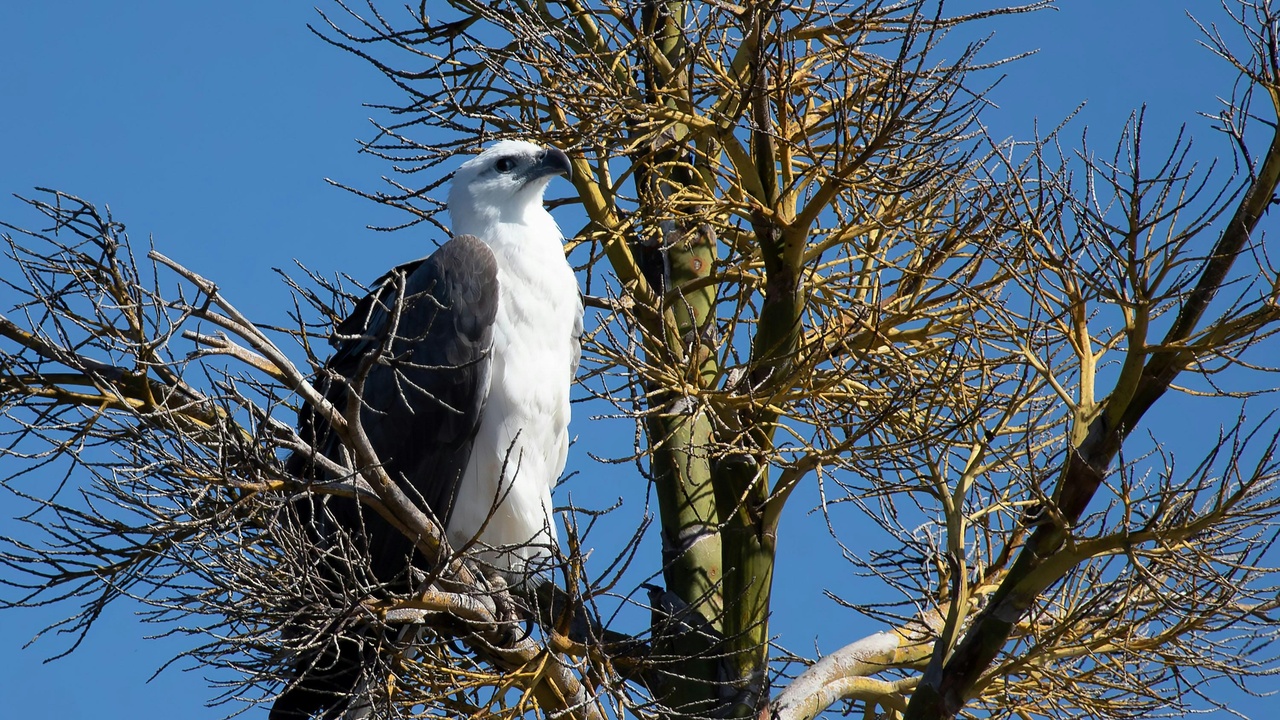
Certain wetland birds literally shape the habitats they use. Top predators and active foragers regulate fish, amphibian and invertebrate populations; colonial nesters move nutrients from water to land; and digging or trampling behaviors can alter sediment and vegetation patterns. Together these functions maintain food-web balance, keep pest outbreaks in check, and influence carbon and nutrient cycling in both freshwater and coastal wetlands (peer-reviewed ecosystem studies; Ramsar Convention reports).
For example, the Chesapeake Bay’s osprey rebound improved local food-web balance by re-establishing a fisheries-linked predator, while heron rookeries concentrate marine-derived nutrients into coastal trees and soils, altering local productivity. Monitoring predators and colonial nesters is therefore a practical gauge of wetland productivity and connectivity.
1. Mallard (Anas platyrhynchos) — The ubiquitous dabbling duck
The Mallard is a common, widespread dabbling duck of freshwater wetlands across much of the Northern Hemisphere and urban parks worldwide. As omnivores, mallards eat seeds, aquatic vegetation and invertebrates, helping disperse plant propagules and recycling nutrients within shallow water bodies (BirdLife International).
In many regions mallards are the most frequently harvested duck in regulated waterfowl seasons; North American waterfowl reports show annual duck harvests in the low millions in recent years (USFWS waterfowl reports). Their abundance in urban ponds and farms makes them useful indicators of habitat alteration and human-wildlife interactions, including conflict and disease monitoring (e.g., avian influenza surveillance led by wildlife agencies).
Practical management lessons include restoring shallow vegetated margins to support feeding and brood-rearing, and managing hybridization risk with domestic ducks in small reserves. For example, regional waterfowl surveys in Europe and North America have long used mallard counts to assess wetland restoration outcomes (national waterbird monitoring programs; BirdLife).
2. Great Blue Heron (Ardea herodias) — A top wetland predator
The Great Blue Heron is a conspicuous mid-to-top-level predator in marshes, estuaries and floodplain lakes, feeding on fish, amphibians and small mammals with a sit-and-strike foraging technique. Individual herons can take prey ranging from small fish under 10 cm to larger amphibians depending on site productivity (regional diet studies).
Heron rookeries (colonial nesting sites) concentrate nutrients from aquatic food webs into terrestrial vegetation through guano deposition; studies show measurable increases in soil nitrogen under heron colonies, which can change plant composition in adjacent woodlands (peer-reviewed rookery studies). Colony size varies widely, from a few pairs to several hundred, and loss of nesting trees or disturbance can force colonies to relocate, signaling broader habitat stress.
Conservation applications include using rookery monitoring as a proxy for wetland productivity and protecting riparian trees during breeding season. Local efforts to fence off nesting islands or protect shoreline trees have successfully maintained rookery sites in several coastal marsh programs (local conservation trusts; state wildlife agencies).
3. Osprey (Pandion haliaetus) — The fish specialist and recovery success
The Osprey is a piscivorous raptor found on rivers, lakes and coasts; by specializing on fish it helps regulate local fish populations and indicates intact aquatic food chains. Ospreys typically forage by hovering or diving to seize fish, and their presence often correlates with healthy forage fish abundance (raptor monitoring studies).
Ospreys suffered dramatic declines during the mid-20th century because of DDT and other contaminants, but populations rebounded after bans on DDT in many countries (the U.S. banned DDT in 1972), recovery aided by nest-platform programs and pollution controls (USFWS, long-term monitoring reports). Community-led platform installation in coastal towns and on reservoirs remains an effective tool for increasing breeding density.
Managers use osprey occupancy and productivity as a simple indicator of fishery health; nesting platform initiatives (nonprofit and municipal programs) documented recolonization of former sites across the Chesapeake Bay and other waterways, illustrating direct conservation success tied to public engagement (local fisheries and conservation agencies).
4. American Bittern (Botaurus lentiginosus) — The secretive marsh specialist
The American Bittern is a secretive marsh bird whose presence signals dense emergent vegetation and relatively intact freshwater marshes. Bitterns forage on fish, amphibians and larger invertebrates using patient stalking and striking behavior within tall reedbeds.
Because they require extensive, undisturbed cattail or bulrush stands and appropriate water levels, bitterns decline rapidly after drainage or conversion of marshes; long-term regional surveys report reduced detections in areas with intensive wetland loss (state monitoring programs). Their vocalizations are also used in call-playback and passive acoustic surveys during breeding season to track population trends.
Restoration practices that benefit bitterns include managing water levels to retain shallow open water with surrounding tall emergent vegetation and preserving undisturbed nesting areas. Several marsh restoration projects have reported increased bittern detections within 2–5 years after rewetting and reedbed management (regional conservation projects).
Indicators of Wetland Health and Long-Distance Migrants
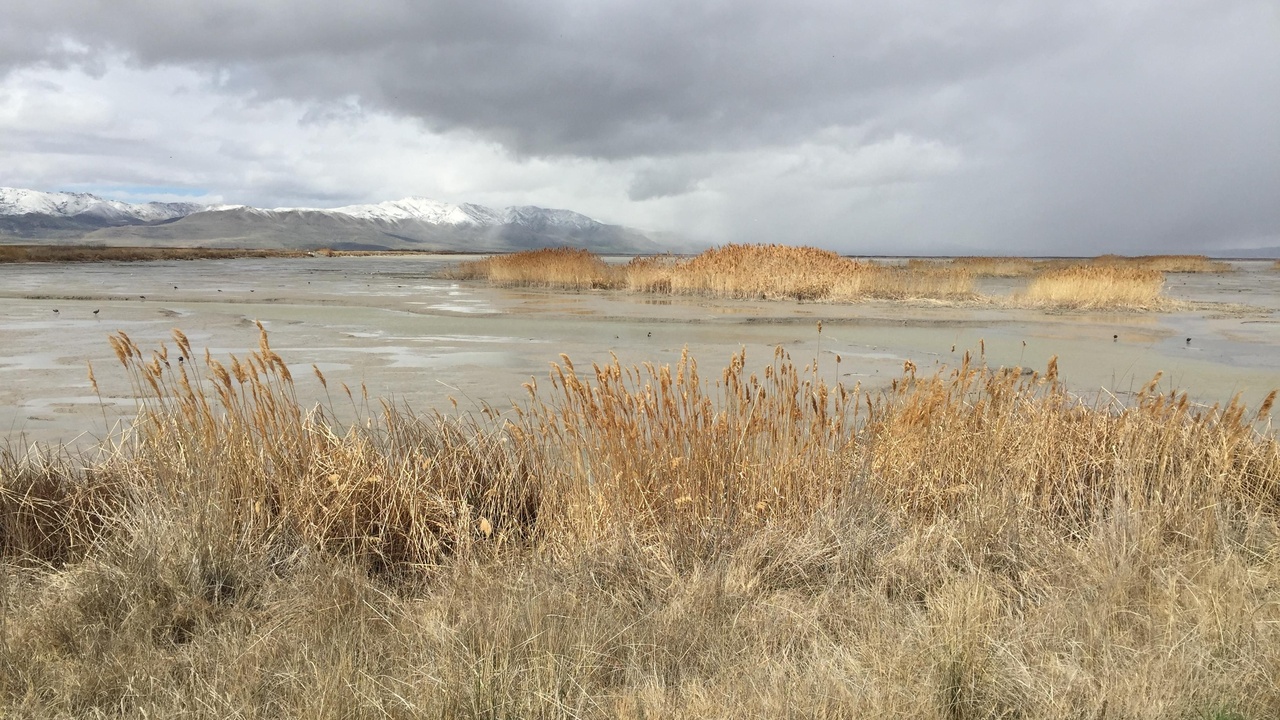
Some wetland birds are especially sensitive to water quality, hydrology and the integrity of migration networks. Long-distance migrants link distant wetlands and can reveal broad-scale threats: declining stopover food resources, climate-driven phenological shifts, and loss of intertidal flats. Monitoring programs — from citizen shorebird counts to IUCN Red List assessments — use these species to guide conservation priorities across flyways.
Two well-known examples illustrate contrasting vulnerabilities: the Red Knot depends on episodic food pulses (horseshoe crab eggs) at Delaware Bay, and small kingfisher species require clear, fish-rich streams. Changes in these species’ trends often prompt targeted management actions that benefit whole wetland complexes.
5. Common Kingfisher (Alcedo atthis) — A small but telling water-quality indicator
The Common Kingfisher is tightly associated with clear, fish-rich waters and hunting perches over slow-flowing streams and small wetlands. Its diet is almost exclusively fish and aquatic invertebrates, and it requires good visibility to hunt effectively (regional river studies).
Studies link kingfisher presence and breeding occupancy to prey abundance and water clarity; one monitoring program found significant increases in local kingfisher detections following riparian restoration that improved turbidity and fish habitat (river restoration project reports). Because they respond quickly to changes in turbidity and riparian cover, kingfisher counts are a practical, low-cost indicator for river restoration monitoring.
Simple survey methods — timed watches from fixed vantage points or nest-box checks where applicable — let community groups track recovery after projects. Several European river restoration cases report kingfisher return within 3–8 years of major habitat improvements (local conservation agency reports).
6. Red Knot (Calidris canutus) — Migratory shorebird tied to critical stopovers
The Red Knot is a long-distance migratory shorebird whose survival hinges on a few critical stopover sites where pulse food resources occur. During northbound migration, Red Knots concentrate at Delaware Bay to feed on spawning horseshoe crab eggs, building the energy stores needed for Arctic breeding (USFWS, BirdLife).
Disruption of horseshoe crab spawning and coastal habitat has been linked to steep Red Knot declines; monitoring reports document reported declines of about 75% between the 1980s and 2014 at some stopover-linked populations (BirdLife International, USFWS). That decline prompted harvest restrictions on horseshoe crabs and protective measures at Delaware Bay, illustrating how a single trophic-link can drive flyway-wide conservation action.
Conservation responses include seasonal closures, restrictions on crab bait harvests, and protection of intertidal flats. International flyway agreements and targeted management at key stopovers remain essential because loss at one site can ripple across the species’ entire migration network.
7. Eurasian Coot (Fulica atra) — A marsh resident that reflects habitat condition
The Eurasian Coot is a common freshwater marsh bird that feeds on aquatic vegetation and invertebrates and forms large social flocks. Because coots rely on specific vegetation structure and water-level regimes for nesting, their abundance and nesting success respond quickly to habitat changes.
National waterbird monitoring programs often use coot breeding counts as a rapid assessment metric: increases or declines can indicate water-level mismanagement, eutrophication-driven vegetation shifts, or disturbance (national monitoring reports; BirdLife). For instance, managed water-level regimes that restore seasonal shallow flooding often lead to improved coot nesting success within a few breeding seasons.
Practically, coot data can inform adaptive water management: monthly or seasonal counts guide managers on when to raise or lower water levels to favor emergent vegetation and breeding success in managed wetlands.
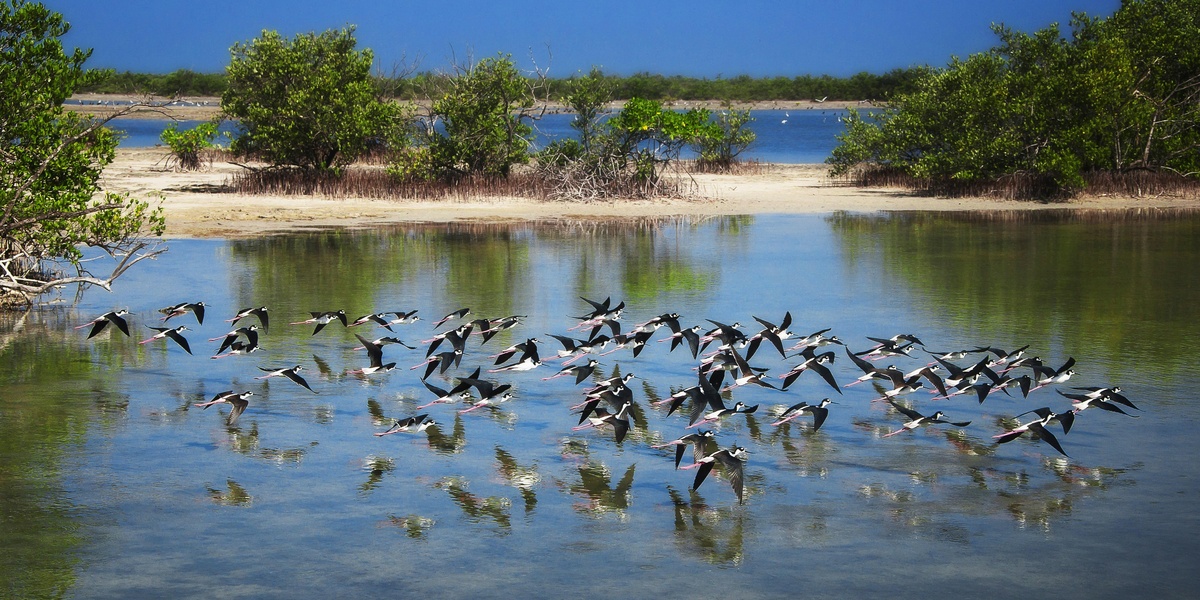
8. Black-winged Stilt (Himantopus himantopus) — Shorebird of shallow wetlands
The Black-winged Stilt is a long-legged wader specialized for shallow mudflats, saltpans and saline marshes, probing for invertebrates in very shallow water. Its foraging style makes it sensitive to the availability of shallow-water feeding habitats and to salinity regimes.
Stilt numbers can respond rapidly to hydrological management; saltpan and managed lagoon restoration projects in Mediterranean and African wetlands have reported increases in stilt counts following the re-establishment of seasonal shallow pans (local conservation project reports). Because stilts avoid deep or highly saline water, their presence helps managers assess whether restoration has restored appropriate microhabitats for a suite of shorebird species.
Coastal wetland managers use controlled inundation schedules and salinity management (in managed pans) to create seasonal feeding areas for stilts and other waders, generating measurable biodiversity gains and, in some places, supporting local ecotourism.
Cultural, Economic, and Conservation Icons
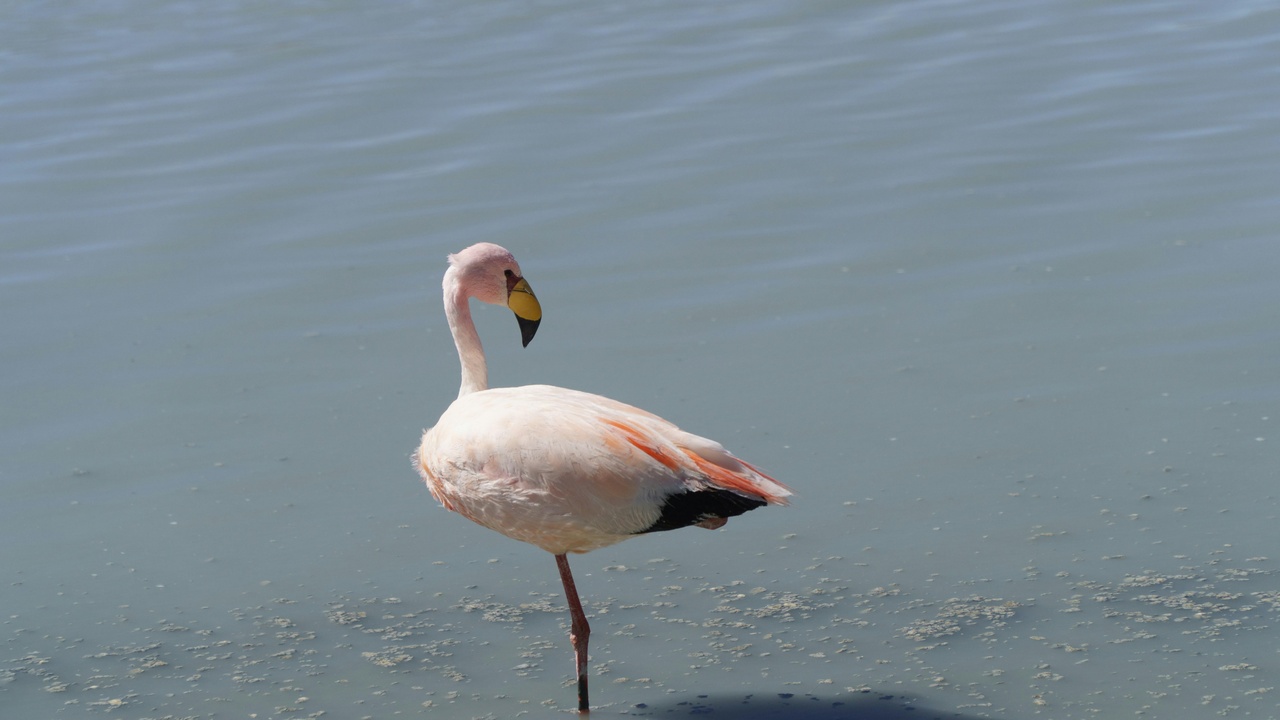
Some wetland birds become symbols — cultural icons, tourism magnets or flagship species around which conservation campaigns coalesce. Charismatic waterbirds draw attention and funding, catalyzing habitat protection that benefits broader wetland communities. Whooping Crane reintroduction, flamingo-centered tourism, and pelican colony protection are examples where a single species helped secure larger wetland conservation outcomes.
Flagship species campaigns can succeed when paired with science-based habitat management and community engagement: the bird provides a relatable face for restoration projects, while managers use ecological criteria to guide interventions that help many co-occurring species.
9. Whooping Crane (Grus americana) — An endangered symbol of wetland recovery
The Whooping Crane is an iconic, endangered wetland bird that depends on large wetland complexes for breeding and wintering (notably the Wood Buffalo–Aransas system). Its dramatic near-extinction and subsequent recovery efforts have made it a flagship for international wetland conservation.
Whooping Cranes declined to as few as 21 wild birds in 1941, but decades of captive breeding, translocations and habitat protection have grown the population substantially; current tallies are in the several hundreds to around ~800 individuals globally (USFWS; Canadian Wildlife Service — verify current totals with IUCN/BirdLife). The Aransas–Wood Buffalo partnership is a prominent international conservation effort that links breeding and wintering ground protection.
Whooping Crane conservation shows how long-term investment, cross-border cooperation and public engagement (education, fundraising) can recover a species while protecting large wetland landscapes used by many other species.
10. Greater Flamingo (Phoenicopterus roseus) — A tourism magnet and ecosystem engineer
The Greater Flamingo is visually striking and draws tourists to saline lakes and coastal flats, where large flocks concentrate while filter-feeding on brine shrimp and algae. By stirring sediments and selectively grazing, flamingos can influence nutrient cycling and microalgal communities, effectively engineering parts of hypersaline wetlands.
Flamingo-driven tourism generates local income in places like Lake Nakuru (Kenya), the Rann of Kutch (India) and parts of Spain; periodic flamingo counts are used by park authorities to monitor population trends and inform water-level management (local park agencies; BirdLife). Flamingo census figures vary by site and year, but counts of tens to hundreds of thousands at some East African lakes demonstrate their economic and ecological importance during mass congregations.
Protecting freshwater inflows, regulating water abstraction and maintaining saline-flats are practical conservation measures that keep flamingo foraging and breeding sites viable, with knock-on benefits for other saline-lake specialists.
11. American White Pelican (Pelecanus erythrorhynchos) — Communal feeders and fisheries interfaces
The American White Pelican feeds communally in lakes and estuaries, herding fish into shallow areas where groups can scoop them up; these behaviors influence local fish distributions and interact with human fisheries. Pelican colonies can alter shoreline vegetation through nesting activities, and they’re often focal points for public education and wildlife tourism.
Colony monitoring helps managers balance pelican conservation with fisheries interests. In some inland lakes, managers have established protected roosting islands to reduce disturbance and allow nesting without impacting shoreline fisheries, a strategy documented in state wildlife agency reports. Adaptive management and stakeholder engagement reduce conflicts while preserving colony sites.
Because pelicans are large and visible, they’re effective species for outreach: nest-site protection measures and interpretive programs often secure local support for broader wetland restoration efforts.
12. Eurasian Spoonbill (Platalea leucorodia) — A specialist with cultural resonance
The Eurasian Spoonbill uses shallow estuaries, tidal flats and lagoons, feeding by sweeping its specialized bill through shallow water to capture fish and invertebrates. Its feeding technique and breeding colonies make it sensitive to hydrological changes and human disturbance.
Spoonbill colonies often occur in protected estuaries and managed wetlands; conservation programs in Europe and parts of Asia use spoonbill breeding success and colony occupancy to justify wetland protection and disturbance controls (Ramsar sites and national reserves). Because spoonbills are culturally valued in some regions, they can serve as local flagship species for estuary protection campaigns.
Management actions that stabilize shallow feeding areas and protect breeding islands from disturbance (seasonal access restrictions, predator control where needed) have improved colony persistence in several managed estuaries, demonstrating the practical value of spoonbills as conservation symbols.
Summary
- Wetlands cover a small fraction of Earth’s surface (~6%) but deliver outsized biodiversity and services; protecting them is essential for both people and waterbirds (Ramsar).
- The 12 species profiled here illustrate three complementary values: ecological function (predators and engineers), sentinel value (indicator and migratory species), and cultural/economic importance (flagships that drive protection).
- Practical conservation actions that work include protecting and restoring hydrology, establishing nesting platforms and protected islands, managing harvests at key stopovers (e.g., horseshoe crabs at Delaware Bay), and supporting international flyway agreements (USFWS, BirdLife, Ramsar).
- You can help: join local bird counts (citizen science), support Ramsar-listed sites and NGOs working on wetland restoration, and advocate for sustainable water management in your region to benefit people and waterbirds alike.