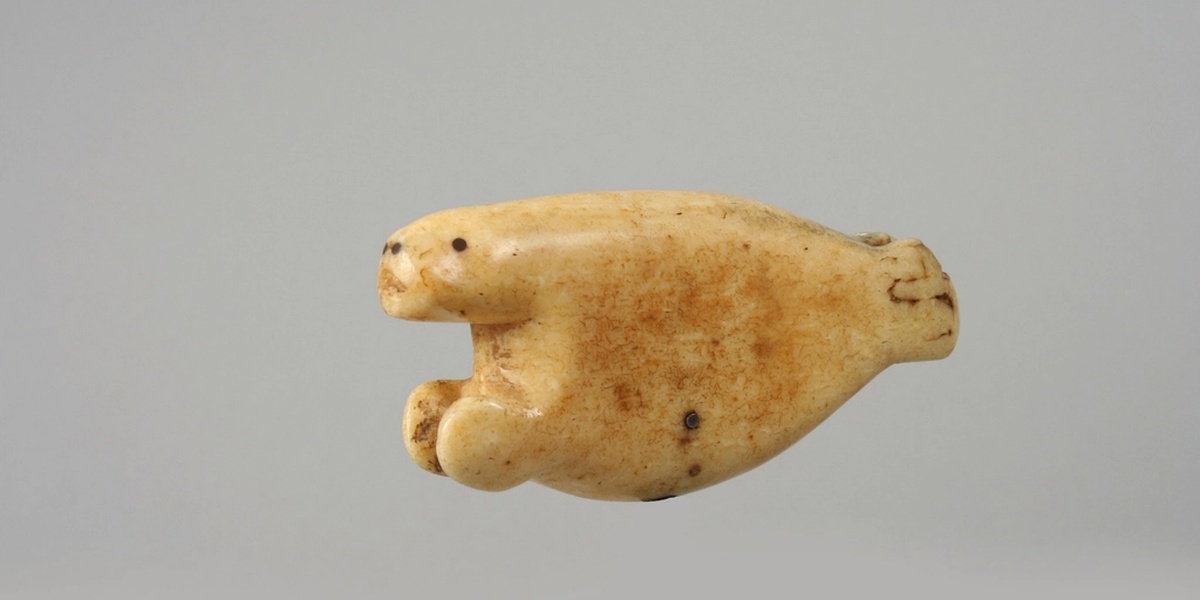
In the 19th century, commercial sealing and walrus hunts reshaped Arctic communities and coastal economies — and they left enduring myths about how similar all pinnipeds are.
Comparing these animals matters: their bodies and behaviors link to fisheries, climate impacts, and the cultural lifeways of Indigenous Arctic peoples. A pinniped is simply a fin-footed marine mammal — the group that includes true seals (phocids), fur seals and sea lions (otariids), and the lone walrus, Odobenus rosmarus.
The differences between true seals and walruses show why they occupy different niches and why people care about them in different ways. We’ll look at five clear contrasts across anatomy, locomotion and feeding, behavior and ecology, and human interactions. Short, useful, and evidence-based. Important stuff.
Physical and anatomical differences
Body shape and teeth tell you a lot about how an animal lives. Both seals and walruses are pinnipeds, but evolution pushed them toward very different body plans that match their diets, the ice they use, and how they move on land.
Below are two concrete anatomical contrasts — size and tusks, then flippers and locomotion — that explain a lot about ecology and human interactions.
1. Body size and tusks
Walruses are dramatically larger than most true seals. Adult male walruses can reach roughly 3 meters in length and weigh up to about 1,700 kg, while a common example of a small-to-medium seal, the harbor seal (Phoca vitulina), typically measures 1.5–1.9 m and weighs 60–170 kg.
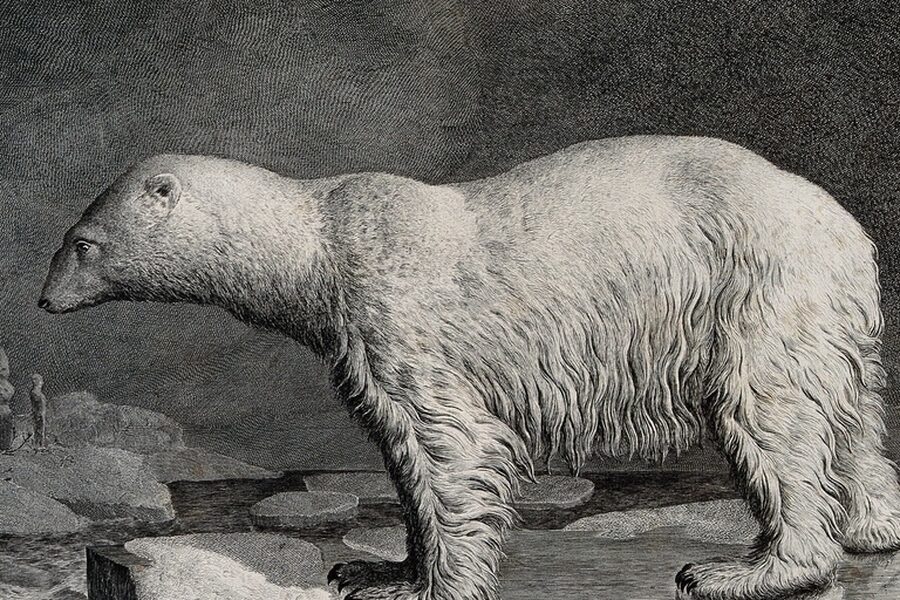
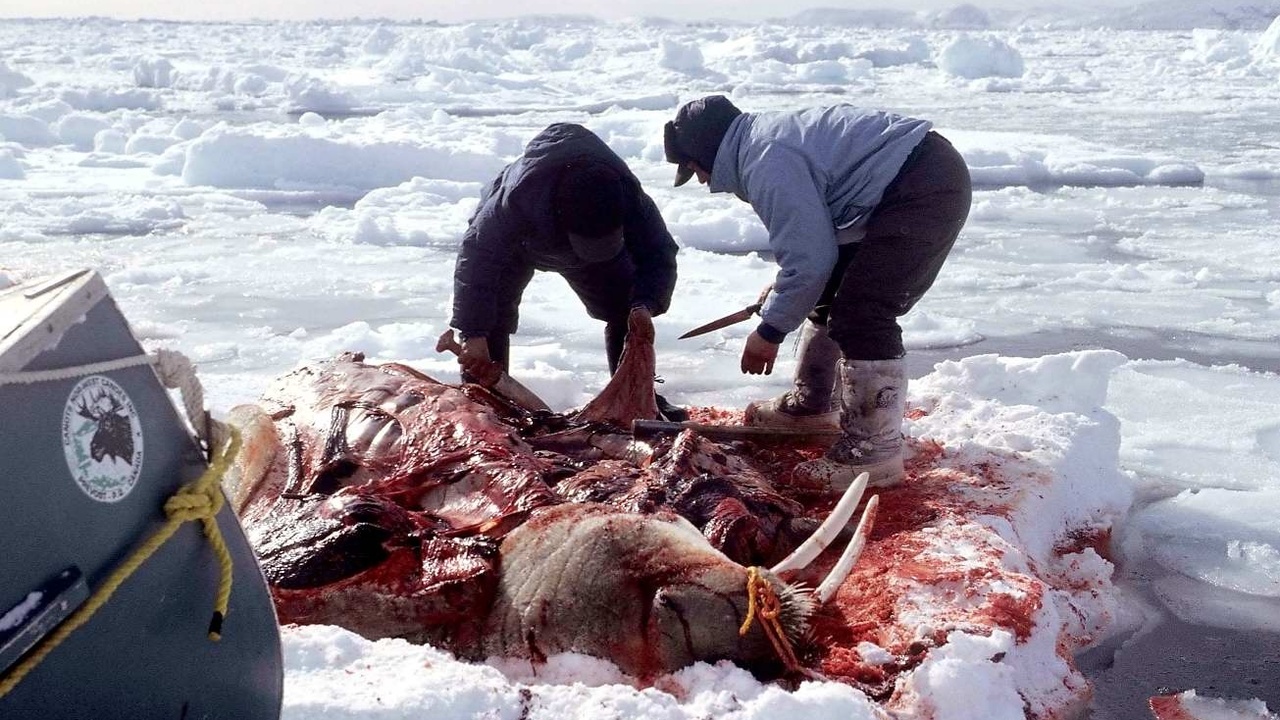
Walrus tusks often exceed 1 meter and are elongated upper canine teeth. They’re used for social signaling and dominance displays, and to help haul the bulk of the body onto ice or rock. Those tusks are also culturally significant: Alaska Native carvers have long worked walrus ivory and bone, and today subsistence harvests are legally regulated (see NOAA and local management guides).
The practical upshot? A walrus is harder to approach by small boats, and its ivory has different regulatory and cultural weight than a seal pelt. Contrast that with very large seals like the northern elephant seal (Mirounga angustirostris), which show that even within ‘seals’ there’s a big size range.
2. Flippers, locomotion, and hauling out
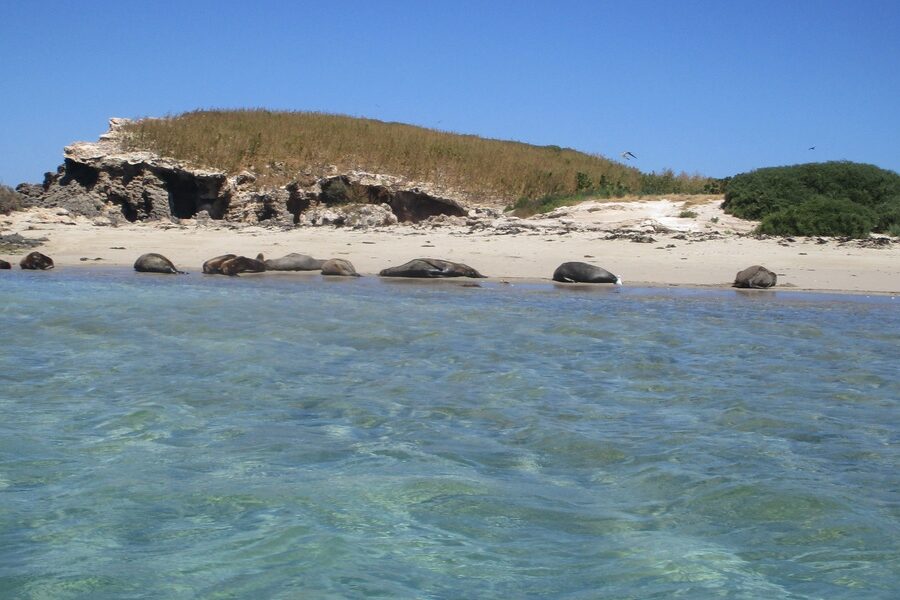
Flipper anatomy shapes how these animals get around on land and in water. True seals (phocids) can’t rotate their hind flippers under the body, so they “wriggle” or undulate when hauled out. That makes them less mobile on land but very streamlined in the water.
Walruses can rotate their hind flippers to some degree and use powerful foreflippers plus their tusks to push themselves up. They’re bulkier and built for steady, slow-powered swimming and bottom feeding rather than high-speed chases.
In practice you can see a walrus hauling onto sea ice and pushing its weight up with tusks and flippers, while a harbor seal slips sideways onto a rocky ledge. Those differences influence haul-out choices and vulnerability: species that depend on stable sea ice or particular beaches are affected differently as ice and shorelines change (see NOAA).
Behavior, diet, and ecological roles
What an animal eats and how it behaves determine its role in the ecosystem. Feeding strategy, social structure, and reproductive timing all shape population dynamics and ecosystem effects.
3. Diet and feeding strategies
Walruses are primarily benthic feeders. They use sensitive whiskers (vibrissae) to detect prey and powerful suction to extract clams and other infaunal bivalves from soft sediment. Foraging often means long bouts on the seafloor over shallow continental shelves.
Many seal species are piscivorous or opportunistic. Harbor seals eat fish and squid; leopard seals hunt penguins and other vertebrates; northern elephant seals routinely make deep dives lasting many minutes and can reach several hundred meters to access prey.
Ecologically, walrus benthic predation can rearrange seabed communities and resuspend nutrients, while piscivorous seals exert top-down pressure on fish populations and food webs. For both groups, changes in prey availability ripple through coastal and polar ecosystems (see marine ecology studies and summaries at IUCN and NOAA).
4. Social behavior and reproduction
Walruses are highly gregarious at haul-outs and breeding areas, often forming aggregations that can number in the hundreds or thousands. Males compete for access to females in these dense groups, and social hierarchies are visible in tusk size and behavior.
Seals vary: some breed in large colonies (think certain fur seals and sea lions), others are more solitary or form smaller groups. Many seals have intense but brief breeding seasons during which females give concentrated maternal care before pups are weaned.
Social structure matters for disease spread, disturbance sensitivity, and recovery potential. Recently, large walrus haul-outs—attributable in part to reduced sea ice—have drawn attention because crowded beaches increase injury risk and human-wildlife conflict (see IUCN reports).
Human interactions and conservation
People have long hunted both seals and walruses for food, materials, and trade. Commercial sealing in the 1800s devastated many populations, and walrus hunting has deep cultural roots among Arctic Indigenous peoples.
5. Conservation status and human uses
Today conservation contexts differ. Major threats across species include climate change (notably sea-ice loss — Arctic summer sea-ice minimum has declined roughly 40% since 1979), historical over-harvest, fisheries bycatch, and disturbance from increased shipping and tourism.
Walruses remain central to subsistence, art, and identity for many Arctic communities, so regulations balance conservation with cultural rights (see management pages at NOAA and regional authorities). Seal protections vary by species and region; some recoveries are notable after legal protections, but others still face local threats.
When thinking about seals vs walruses, remember lifespans and life histories differ: walruses commonly live 20–30 years, while seal species range widely and some also reach around 30 years. Practical ways to help include supporting reputable organizations (WWF, IUCN), following responsible wildlife-viewing guidelines, and backing Indigenous-led conservation efforts.
Summary
- Walruses and true seals are both pinnipeds but differ sharply in size and skull/teeth anatomy — walrus tusks and mass are defining features with cultural and management implications.
- Flipper design drives movement: true seals are more streamlined swimmers that wriggle on land, while walruses use rotated flippers, powerful forelimbs, and tusks to haul out and feed on the seafloor.
- Diet and feeding modes differ: walruses are mainly benthic suction feeders on clams, while many seals pursue fish, squid, or even other marine mammals, producing distinct ecosystem effects.
- Social systems shape risk: walrus haul-outs can be massive and sensitive to disturbance, whereas seal sociality ranges from solitary to colonial with varied management needs.
- Conservation ties link anatomy and culture to policy — sea-ice loss, bycatch, and historical hunts matter. Learn more through NOAA, IUCN, and WWF, and consider supporting Indigenous-led conservation and responsible wildlife viewing.