A giant anteater can flick its tongue up to 150 times per minute and consume as many as 30,000 insects in a single day, while some sloths descend to the forest floor only once a week to defecate. Those two facts capture how differently these slow-moving tree browsers and specialized insect-eaters live, and why comparing them matters for ecology, conservation, and sheer public fascination.
Although both groups evolved in South and Central America and belong to the superorder Xenarthra, they represent two very different survival strategies. This piece lays out eight clear differences between them across four categories: taxonomy and evolution; physical traits and feeding; behavior, locomotion and physiology; and ecology, reproduction and conservation.
Expect succinct species counts, fossil highlights, concrete measurements (tongue lengths, speeds, gestation times), and practical conservation implications that show how anatomy follows diet and lifestyle. For readability I use short paragraphs and specific examples like the giant anteater and the three‑toed sloths.
Taxonomy & Evolution
Both sloths and anteaters belong to Xenarthra, a distinctive South American mammal group, but they split into different suborders and followed divergent evolutionary paths. Taxonomy helps explain why their bodies and behaviors look so unlike one another.
1. Taxonomic placement and species counts
Plainly: sloths and anteaters are distant cousins. Sloths sit in suborder Folivora with roughly six living species across two genera: Bradypus (three‑toed sloths) and Choloepus (two‑toed sloths). Anteaters are in Vermilingua, about four living species across three genera, including Myrmecophaga, Tamandua, and Cyclopes.
Those counts come from standard mammal references and conservation listings (see IUCN Red List and Mammal Species of the World). The taxonomy aligns with diet and form: folivores have digestive specializations and slower lifestyles, while vermilinguans show morphological adaptations for ant and termite feeding.
2. Evolutionary history and fossil record
Their evolutionary paths diverged early. Sloths once included giant ground sloths like Megatherium, some of which reached elephant size and dominated Pleistocene ecosystems until roughly 10,000 years ago.
Anteater ancestors, by contrast, show an early and steady trend toward extreme mouth and tongue specialization: elongated rostra, reduced dentition, and sticky tongues for myrmecophagy. Those different pressures—browsing on leaves versus specializing on social insects—shaped modern body plans and ecological roles.
Physical Traits & Feeding Adaptations
Feeding ecology drives a lot of anatomy. Leaves and insect colonies place very different demands on teeth, tongues, claws, and gut structure, so sloths and anteaters evolved contrasting toolkits to get food.
3. Dentition, tongue and feeding mechanics
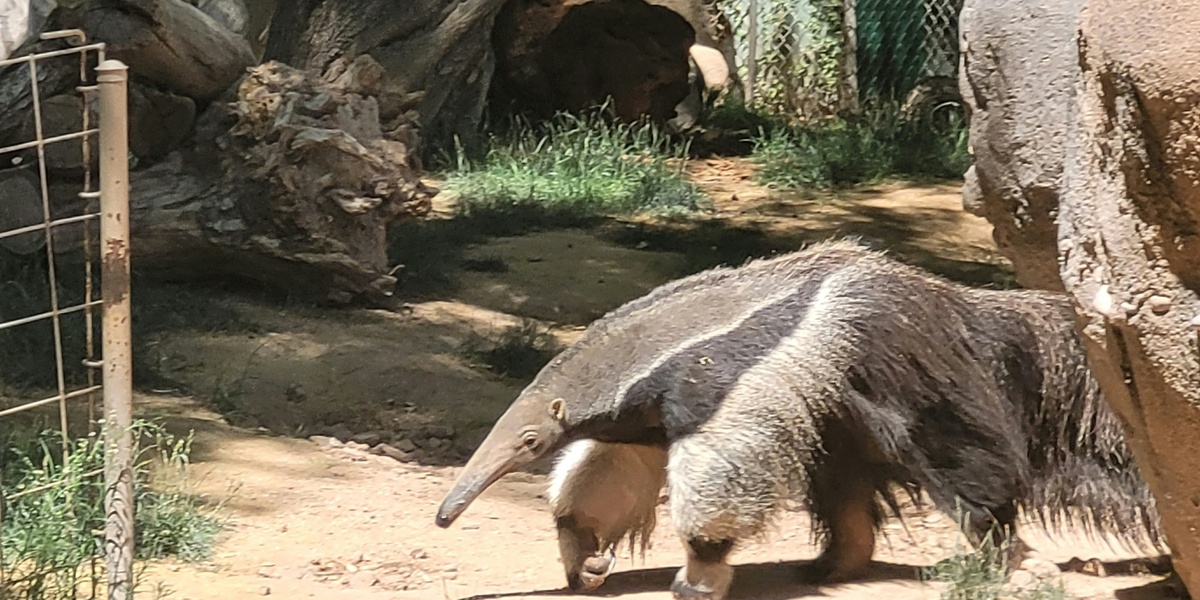
Anteaters have no teeth. The giant anteater uses a long, sticky tongue—reported up to about 60 cm—to lap up ants and termites rapidly (up to 150 flicks per minute), allowing individuals to consume tens of thousands of insects in a single day.
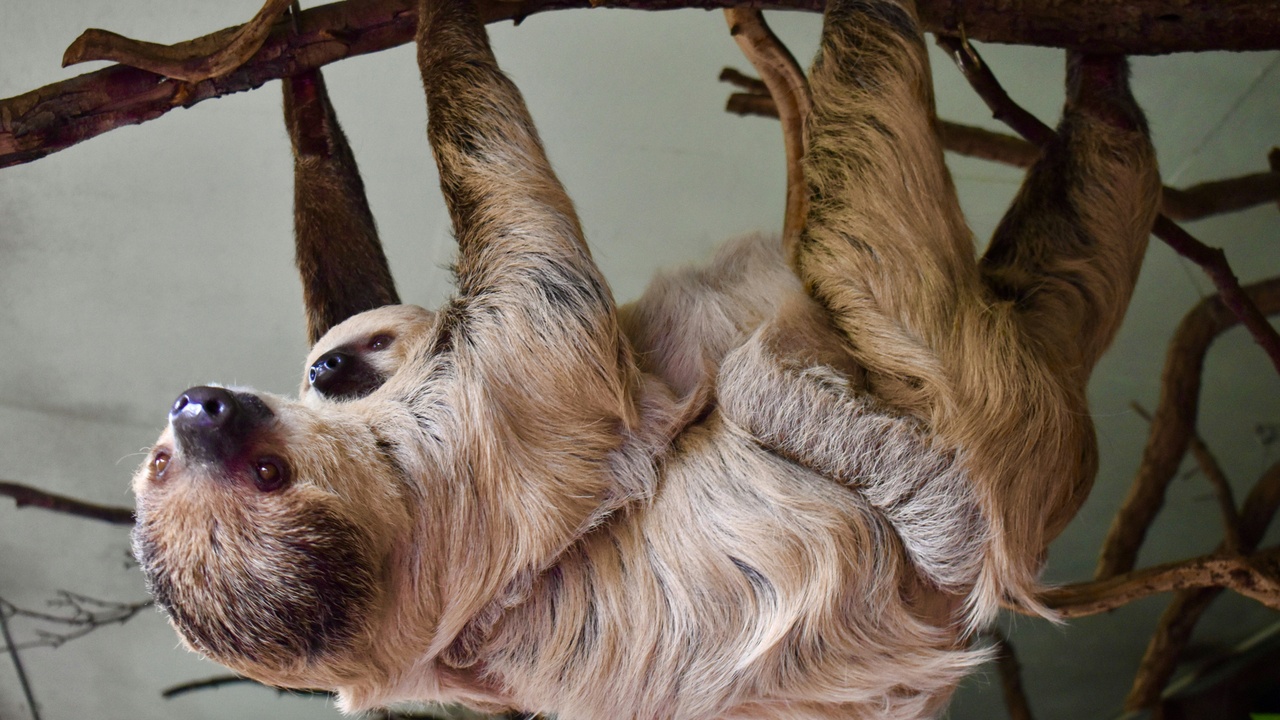
Sloths have small, peg‑like teeth without enamel suited to shearing leaves rather than grinding. Their stomachs are multi‑chambered and ferment plant material slowly; gut transit times can run to weeks for some leaves, enabling them to extract nutrients from low‑quality foliage.
4. Limbs, claws and body plan
Sloths are built for suspension. Long limbs and strongly curved claws hook around branches and support a hanging posture for long periods. Their center of mass is arranged for hanging rather than sprinting.
Anteaters have powerful forelimbs with large, flattened claws used to tear open termite mounds and ant nests. Giant anteaters will stand on their hind legs to use foreclaws defensively. Limb proportions reflect a ground‑foraging, excavating lifestyle rather than continuous arboreal suspension.
Behavior, Locomotion & Physiology
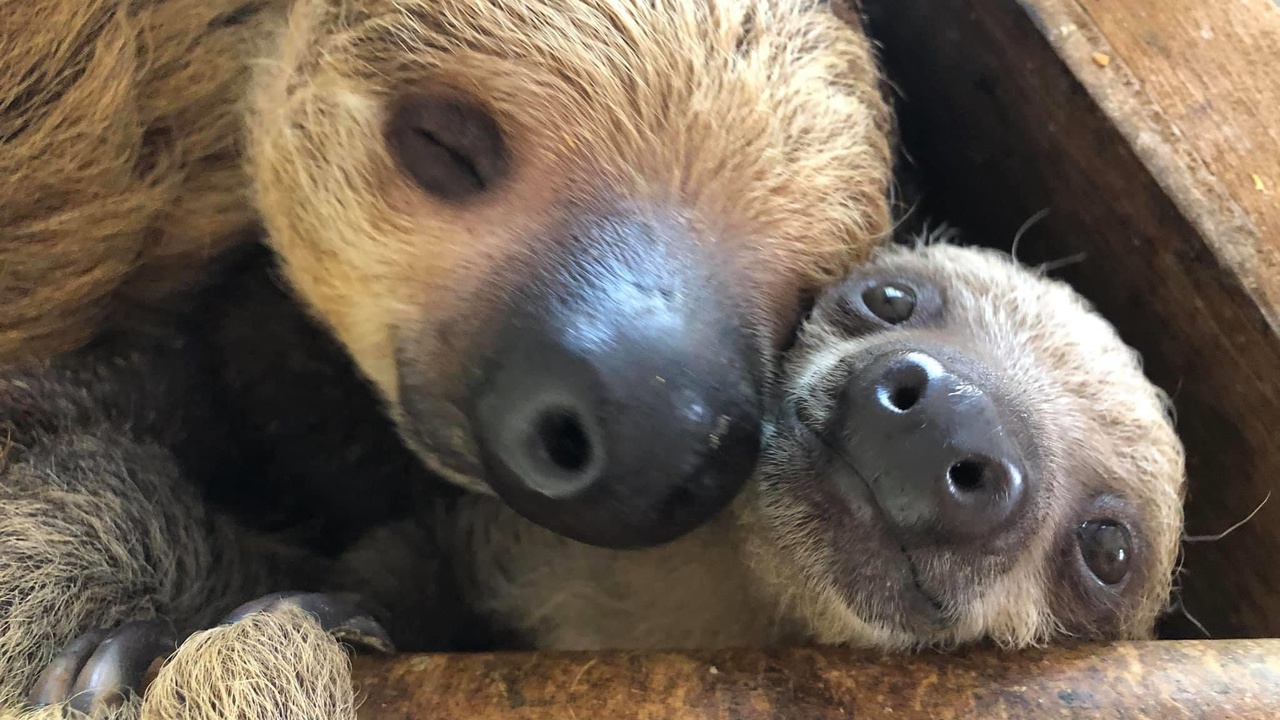
Behavioral strategies and physiology reflect what each animal eats and where it lives. Sloths conserve energy and stay arboreal; anteaters remain active, move over larger areas, and process food quickly.
5. Movement speed and locomotion style
Sloths are extremely slow. When they move through the canopy they average about 0.24 km/h, and they minimize travel to conserve energy. Descents to the ground are rare—roughly once a week for a bathroom break in some species.
Anteaters are more mobile and often terrestrial. Giant anteaters can cover kilometers while foraging, and tamanduas combine climbing with ground travel. That mobility changes how they avoid predators and how they use fragmented landscapes.
6. Metabolism, digestion and symbioses
Sloths have very low metabolic rates and long digestive retention to break down tough leaves. Their pelage also hosts algae and a community of arthropods—moths, beetles—that together form a tiny mobile ecosystem on the animal.
Anteaters process protein‑rich insect meals quickly; their digestive tracts are adapted for rapid throughput rather than long fermentation. The contrast is stark: slow, fermentative folivores versus efficient, insect‑processing specialists.
Ecology, Reproduction & Conservation
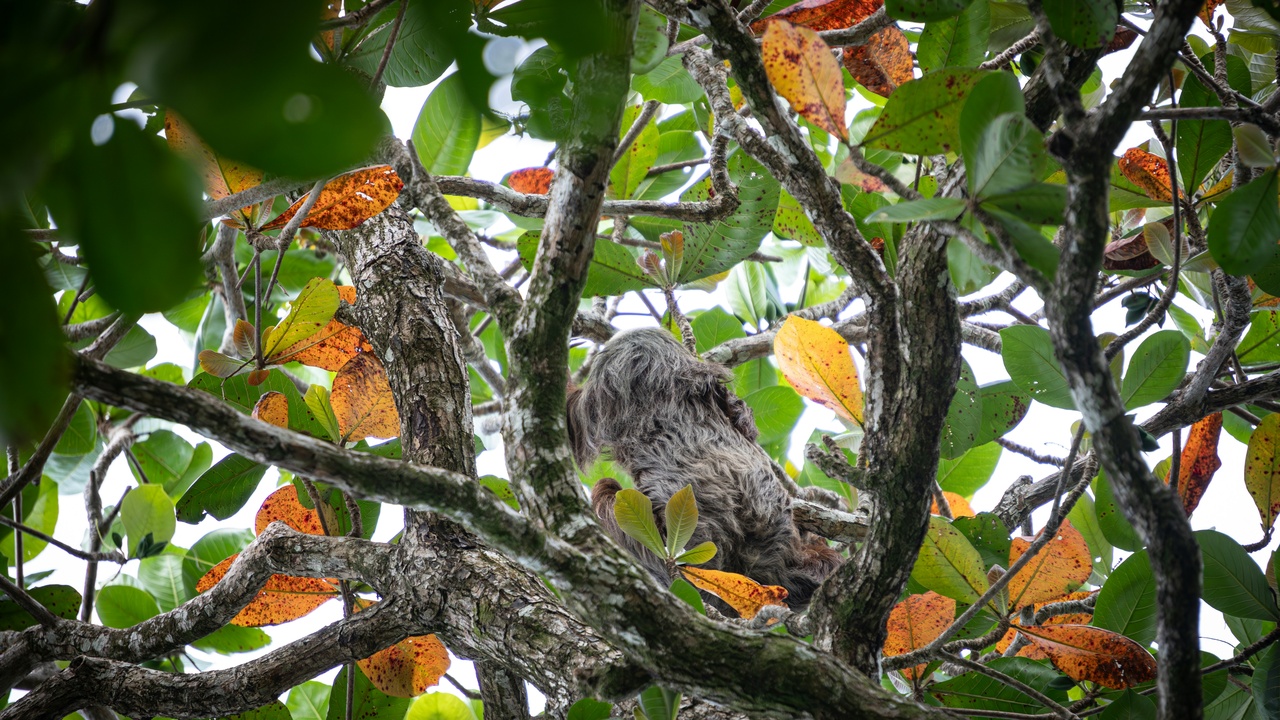
Life history traits influence vulnerability. Arboreal dependence, home range size, and reproductive timing all shape how species respond to deforestation, roads, and hunting, so conservation actions must be tailored to each group’s needs.
7. Habitat, range and ecological roles
Sloths are obligate canopy dwellers in tropical forests and rely on continuous tree cover. Some species, like the silky anteater and the silky sloth counterparts, show strict arboreal habits, but generally sloths act as browsers and mobile microhabitats for algae and arthropods.
Anteaters occupy a broader suite of habitats—tropical forest, savanna, and grassland depending on species. They function as regulators of ant and termite populations and often move across open ground, so landscape permeability matters more for them than canopy connectivity does.
8. Reproduction, lifespan and conservation status
Both groups usually produce a single offspring per birth. Gestation varies by species—giant anteater around 190 days, three‑toed sloths roughly 180 days—while lifespans also differ: sloths can live into their twenties or longer under good conditions; giant anteaters often reach a decade or more.
Conservation status varies. The giant anteater (Myrmecophaga tridactyla) is listed as Vulnerable on the IUCN Red List, while the pygmy three‑toed sloth (Bradypus pygmaeus) is Critically Endangered. Threats include deforestation and canopy fragmentation for sloths, and road mortality, habitat loss, and hunting for anteaters.
Conservation actions must match biology: protected canopy corridors and reforestation aid sloth survival, while road mitigation, protected foraging areas, and community outreach help anteater populations recover.
Summary
- Taxonomy: both are xenarthrans but occupy different suborders—Folivora (about six sloth species) versus Vermilingua (around four anteater species).
- Feeding anatomy: sloths have peg‑like teeth and fermentative guts; anteaters are toothless with long sticky tongues (up to ~60 cm) for eating thousands of insects daily.
- Movement and physiology: sloths are ultra‑slow, arboreal folivores with low metabolic rates; anteaters are more active, often terrestrial, and cover larger foraging ranges.
- Conservation needs differ: canopy connectivity and habitat protection for sloths; road mitigation, protected foraging landscapes, and anti‑hunting measures for anteaters (e.g., giant anteater Vulnerable; pygmy three‑toed sloth Critically Endangered).
- Practical takeaway: understanding these differences—from dentition to dispersal—helps direct effective conservation actions and explains why a quick comparison like sloths vs anteaters reveals such contrasting life histories.