Roughly a third of Bulgaria is forest, and most “trees of Bulgaria” pages you’ll find are either a 150-name Latin database or a folklore essay that never tells you what a tree actually looks like. This is the middle ground: 20 species you’ll genuinely meet, with the leaf-bark-shape cues to name them, where in the country they grow, and which individual trees are old enough to have watched the Ottomans come and go.
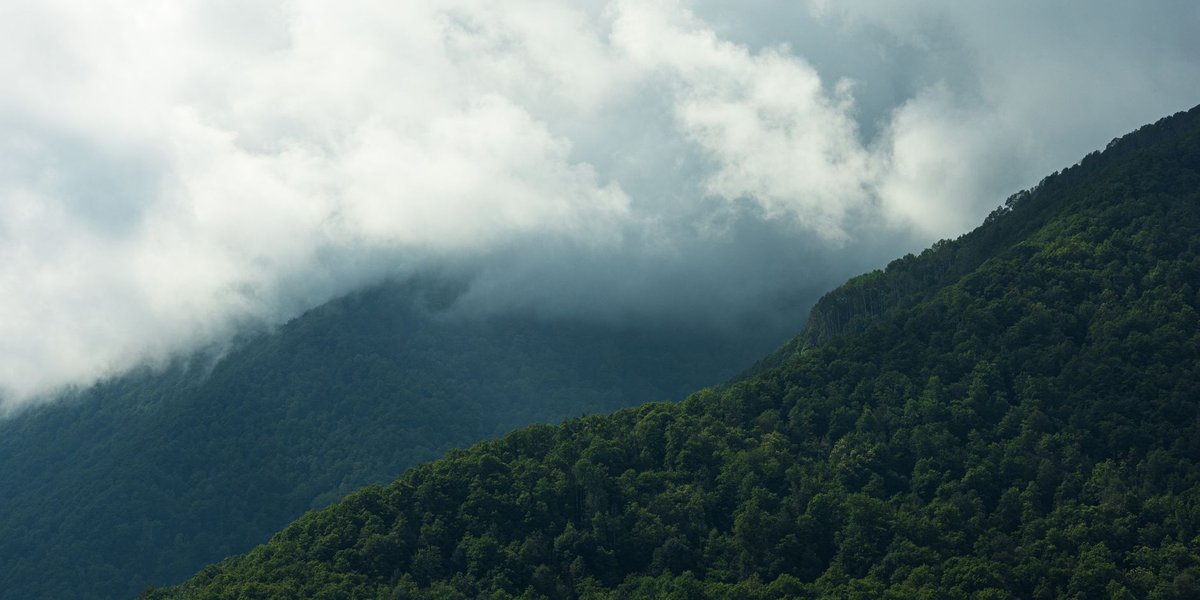
Bulgaria packs an unusual range into a small space. You go from Black Sea coast through oak-covered plains up into the Rila and Pirin highlands, where conifers take over and a few species grow nowhere else in the world. The oaks here routinely pass 500 years. One plane tree near Sliven is pushing 1,700.
Table of Contents
- How to use this guide
- Conifers (needle-bearing)
- Broadleaves (deciduous)
- The ancient and sacred trees worth a detour
How to use this guide
Three things name almost any tree: the leaf (shape, edge, whether it’s a needle), the bark (smooth, plated, peeling, fissured), and the overall silhouette. We’ve split the 20 into conifers and broadleaves because that’s the first fork your eye makes anyway — needles or flat leaves. Elevation matters too. If you’re above 1,500 meters in Rila or Pirin, you’re almost certainly looking at a conifer; down on the Thracian plain, it’s oaks and hornbeams.
Conifers (needle-bearing)
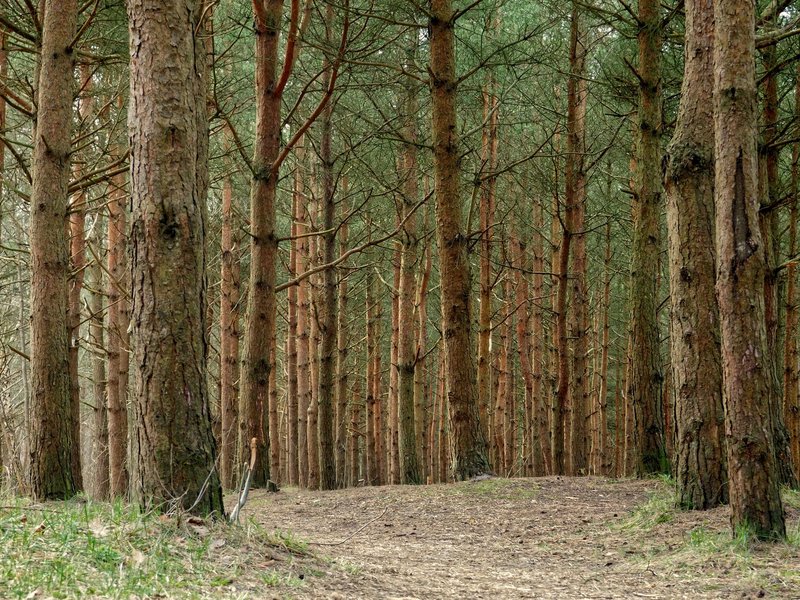
Bulgaria’s conifers cluster in the high southwest — Rila, Pirin, the Rhodopes. This is also where the country hides its botanical celebrities, including two pines that grow naturally almost nowhere else.
1. Scots Pine (Pinus sylvestris)
The default mountain pine. Look up: the upper trunk and branches glow a distinct orange-pink where the bark flakes into papery scales, while the base stays grey and plated. Needles come in pairs, blue-green, twisted, about 4–7 cm. It’s the workhorse of Bulgarian reforestation and you’ll see it across the Rhodopes and Rila up to the treeline.
2. Macedonian Pine (Pinus peuce)
A Balkan endemic — Pirin and the southern Rila are among the few places on Earth it grows wild. Needles come in bundles of five (Scots pine has two), soft and dense, giving the tree a plush, rounded look. The cones are long, curved, and drip with resin. If you’re hiking Pirin and the pine looks too lush and tidy to be Scots pine, this is it.
3. Bosnian Pine (Pinus heldreichii)
The survivor of the high limestone. It grows on bare Pirin crags where almost nothing else holds on, which is exactly why the oldest trees in Bulgaria are this species — see Baikushev’s Pine below. Needles in pairs, stiff and sharp; bark breaks into pale grey-white plates that look like cracked ceramic. Twisted, sculptural shapes are common where wind has worked them for centuries.
4. Norway Spruce (Picea abies)
The classic dark Christmas-tree silhouette that blankets Rila and the western Rhodopes. Needles are short, square in cross-section (roll one between your fingers — it rolls), and attached singly all around the twig. Cones hang down and stay whole when they fall. Bark is reddish-brown and scaly. Above about 1,200 meters, the dense spruce stands are usually this.
5. Silver Fir (Abies alba)
Often mixed in with spruce but easy to separate once you know the trick. Fir needles are flat, soft, blunt-tipped, with two white stripes underneath, and they lie in two flat rows like a comb. The cones stand up like candles and disintegrate on the tree rather than dropping whole. Smooth grey bark when young. According to Europe’s IUCN Red List assessment, it’s of least concern continent-wide, and Bulgaria’s mixed beech-fir forests are some of its healthiest.
6. Common Juniper (Juniperus communis)
Less a tree, more a sprawling shrub that creeps above the treeline where pines give up. Sharp, prickly needles in whorls of three, each with a single white band on top. The “berries” are actually tiny cones — green the first year, blue-black and dusty the second, and the flavoring in gin. You’ll brush past it on high Rila ridges.
Broadleaves (deciduous)
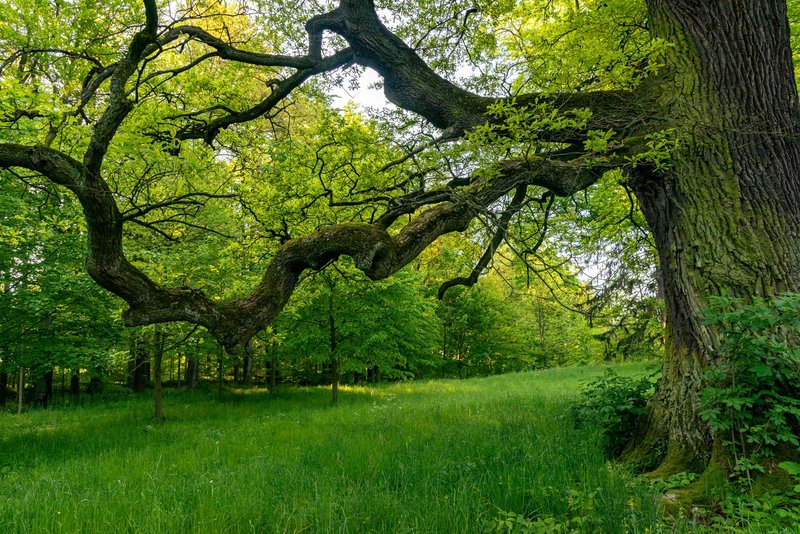
This is where most Bulgarians actually live among trees. The plains and low hills are oak country, with beech taking the cooler middle elevations and a supporting cast of hornbeam, lime, and maple filling in the gaps.
7. Sessile Oak (Quercus petraea)
One of the two oaks you’ll meet most. Leaves have rounded lobes and a long stalk; the acorns sit almost directly on the twig (stalkless — “sessile”). Prefers slightly higher, well-drained slopes than its cousin. Bark is grey and deeply furrowed. The 500-plus-year-old oaks Bulgaria is known for are usually this or the next species.
8. Pedunculate Oak (Quercus robur)
The mirror image: leaves are nearly stalkless and clasp the twig, while the acorns dangle on long stalks (peduncles). Loves the deep, damp soils of river valleys and the Danube plain. Massive, spreading crown when it has room. Between these two oaks you’ve covered most of lowland Bulgaria’s forest canopy.
9. Hungarian Oak (Quercus frainetto)
The southern, sun-loving oak of the Thracian plain and the foothills. Big, deeply and regularly lobed leaves — almost ornamental — clustered at the branch tips. Forms warm, open woodland across southern Bulgaria where the other oaks thin out.
10. European Beech (Fagus sylvatica)
The smooth-skinned giant of the middle mountains. Bark is a clean, elephant-grey that stays smooth for life — carved initials never fade, which is why old beech trunks read like a guestbook. Leaves are oval, wavy-edged, glossy, with a fringe of fine hairs when young. Beech forms vast shady stands between roughly 800 and 1,500 meters; the UNESCO-listed Central Balkan beech forests are part of a Europe-wide World Heritage site for exactly this old-growth.
11. Oriental Hornbeam (Carpinus orientalis)
A small, scrubby tree of dry southern slopes, often dismissed but everywhere once you spot it. Leaves are small, oval, sharply double-toothed, with deeply etched parallel veins. The trunk is fluted and muscular — it looks like it’s been flexing. Common in the warm karst hills of the south.
12. Common Hornbeam (Carpinus betulus)
The taller cousin, found in cooler beech-and-oak forests. Same muscular, sinewy grey trunk that looks like tensed tendons, same toothed leaves, but bigger. The seeds hang in distinctive three-lobed papery wings. Easy to confuse with beech until you check the bark: hornbeam is rippled and ridged, beech is smooth.
13. Silver Birch (Betula pendula)
Unmistakable. White, papery bark with black diamond-shaped scars, peeling in horizontal strips. Small triangular leaves with toothed edges that flutter on the slightest breeze, and drooping branch tips. A pioneer that colonizes clearings and burnt ground, scattered through the mountains.
14. Small-leaved Lime (Tilia cordata)
The fragrant one. Heart-shaped leaves with a tuft of rusty hairs in the vein-angles underneath. In June it throws out clouds of pale, intensely sweet-smelling flowers — the source of Bulgaria’s beloved lipov chai (linden tea), one of the most-picked wild teas in the country. Each flower cluster hangs from a pale, strap-like bract.
15. Field Maple (Acer campestre)
A modest maple of hedgerows and woodland edges. Small five-lobed leaves with rounded, blunt tips that turn buttery yellow in autumn. Young twigs often grow corky ridges. The winged seeds (samaras) spread out in a near-straight line, almost 180 degrees.
16. Norway Maple (Acer platanoides)
Bigger, bolder leaves than field maple — five sharply pointed lobes with a few long teeth, the classic “maple leaf” shape. Snap a leaf stalk and it bleeds milky white sap, which separates it from the sycamore it resembles. Brilliant gold autumn color across the mid mountains.
17. European Ash (Fraxinus excelsior)
Tall and straight, with leaves divided into 7–13 paired leaflets along a central stalk. The dead giveaway in winter is the buds: matte, sooty black, set against pale grey twigs — no other Bulgarian tree has them. Ash holds a quiet place in Balkan folk belief as a protective tree.
18. Cornelian Cherry (Cornus mas)
Small but culturally huge. It flowers absurdly early — bare branches covered in fizzy yellow blooms in February or March, before almost anything else wakes up. By autumn it carries oblong, tart red fruits used for jam and rakia. Known in Bulgaria as dryan, it’s the tree behind the survakane New Year ritual, where decorated cornel branches are tapped on shoulders for health and long life. The wood is famously dense — it sinks in water.
19. London Plane / Oriental Plane (Platanus orientalis)
The riverside monarch of southern Bulgaria. Enormous maple-like leaves with deep, finger-like lobes, and bark that flakes away in camouflage patches of cream, olive, and grey. Round, spiky seed-balls dangle on long stalks through winter. The plane reaches its greatest age and girth here — see the Baba Plane below.
20. Wild Service Tree (Sorbus torminalis)
The rare connoisseur’s tree, scattered thinly through warm oak woods. Leaves look almost maple-like but with sharper, forward-pointing lobes that shrink toward the tip. Clusters of small white spring flowers give way to speckled brown berries (brekina), edible only when overripe and historically used to flavor spirits. Spotting one feels like a small reward.
The ancient and sacred trees worth a detour
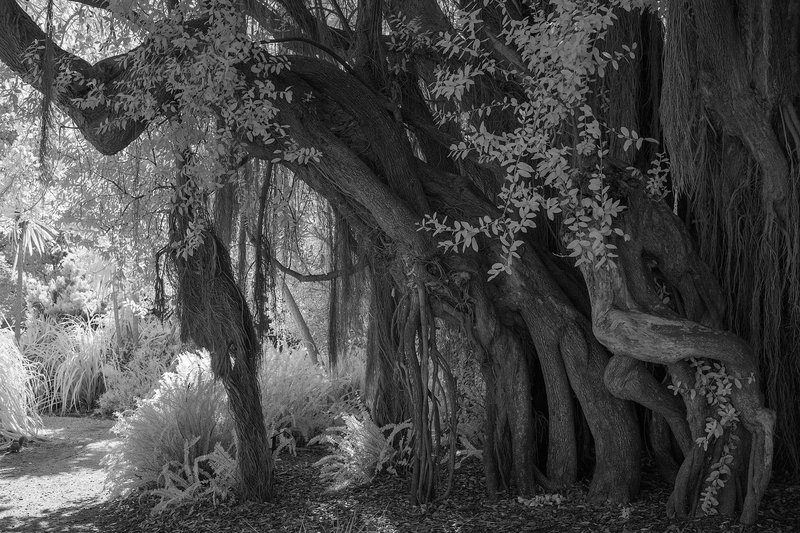
Bulgaria’s individual veteran trees are destinations in their own right, and they’re scattered around the country if you know where to look.
Baikushev’s Pine (Pirin). A Bosnian pine near the Banderitsa hut above Bansko, estimated at around 1,300 years old — roughly contemporary with the founding of the Bulgarian state in 681. It’s named for the forester who dated it and stands fenced and protected on the slopes of Vihren.
The Baba (Granny) Plane of Sliven. An Oriental plane in the town’s center thought to be some 1,700 years old, with a hollow trunk wide enough to stand inside. It’s a national monument and a working town landmark, not a remote curiosity.
The Granit oaks (Stara Zagora region). A grove of pedunculate oaks near the village of Granit, several over 500 years old, with the eldest estimated past 1,000. They’re the kind of trees that put the 500-year oak reputation on solid ground.
The pattern across Bulgarian folk tradition is consistent: the venerated trees are rarely the tallest, but the oldest and the useful — the cornel that opens spring, the lime that scents June, the ash and plane that shade a village square for forty generations. Learn the 20 above and you’ll read a Bulgarian hillside the way locals do: not as a green blur, but as a cast of characters, some of them older than the country itself.