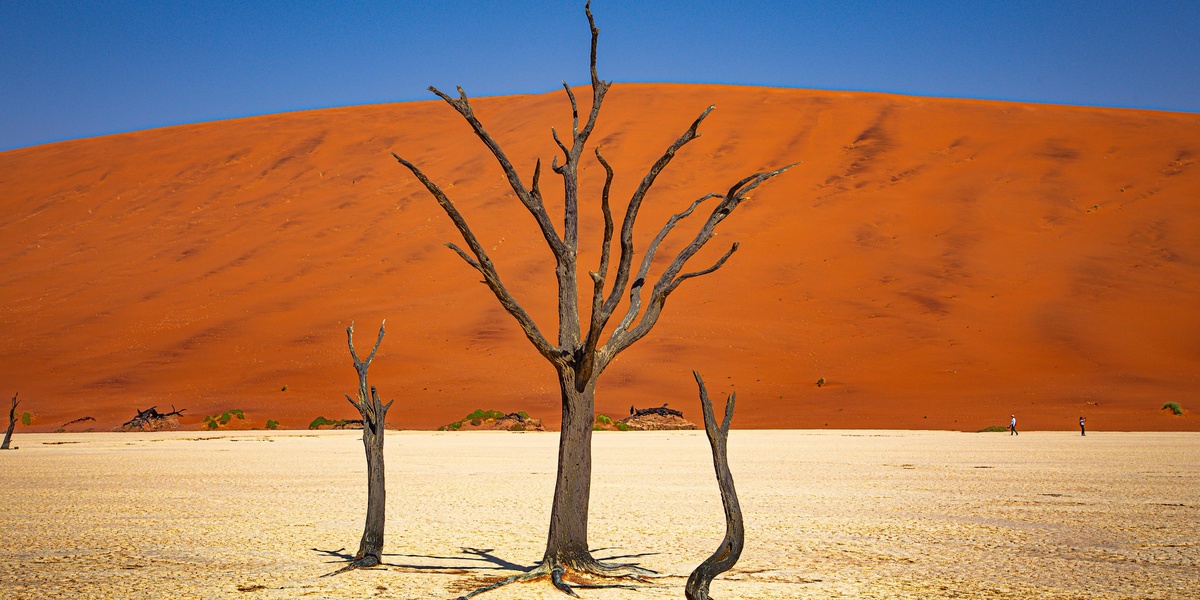
Namibia’s landscapes—from the coastal fog belts to the dry savannas and riparian strips—support a surprising variety of trees that shape local ecosystems and livelihoods. Studying them helps you understand water use, shade patterns, and which species thrive in harsh, variable conditions.
There are 15 Trees of Namibia, ranging from African teak (Kiaat) to Umbrella thorn. For each species we list Scientific name, Typical height (m), Range & habitat — details you’ll find below.
How were these 15 trees chosen?
The list focuses on species that are common, ecologically important, or characteristic of different Namibian regions (coastal, savanna, riverine, and dry woodlands). Selection balances native dominance, cultural or economic use, and representation across habitats so the list is useful for identification and basic ecological context.
How can I identify these trees in the field?
Look for key features like leaf shape, seed pods or fruits, bark texture, and presence of thorns or distinctive canopy form; note habitat and typical height. Use a local field guide, a plant ID app with photos, or a knowledgeable guide, and pay attention to seasonal changes (flowers/fruit) that aid identification.
Trees of Namibia
| Common name | Scientific name | Typical height (m) | Range & habitat |
|---|---|---|---|
| Camelthorn | Vachellia erioloba | 6-12 | Central & southern Namibia; dry riverbeds, Kalahari |
| Umbrella thorn | Vachellia tortilis | 6-15 | Widespread Namibia; savanna plains, dry riverbeds |
| Shepherd’s tree | Boscia albitrunca | 6-10 | Kalahari, central savanna, dry plains |
| Mopane | Colophospermum mopane | 8-18 | Northern Namibia; hot lowland woodlands and riverbanks |
| Marula | Sclerocarya birrea | 7-12 | Northern and central woodlands, dry riverine areas |
| Leadwood | Combretum imberbe | 8-20 | Dry woodlands, north and central regions |
| Tamboti | Spirostachys africana | 6-12 | Northern Namibia; woodlands and riverine fringes |
| Ana tree | Faidherbia albida | 10-18 | Seasonal floodplains, riverbanks in northern regions |
| Fever tree | Vachellia xanthophloea | 6-15 | Wet flats, springs, riverine pans (northern Namibia) |
| Red bushwillow | Combretum apiculatum | 4-10 | Woodlands and savanna, widespread in Namibia |
| Buffalo thorn | Ziziphus mucronata | 3-10 | Savanna and riverine areas across Namibia |
| Sycamore fig | Ficus sycomorus | 8-20 | Riverbanks and galleries in northern regions |
| Sausage tree | Kigelia africana | 8-15 | Riverine woodlands and floodplains, northern Namibia |
| Jackalberry | Diospyros mespiliformis | 10-20 | Riverine and Mopane woodlands, northern regions |
| African teak (Kiaat) | Pterocarpus angolensis | 8-20 | Northern and north-central woodlands |
Images and Descriptions

Camelthorn
Iconic desert tree with a deep taproot and broad, umbrella crown. Produces long pods eaten by wildlife; highly drought-tolerant and culturally important for shade, fodder and woodworking in arid Namibian landscapes.

Umbrella thorn
Variable, flat-topped acacia commonly seen across Etosha and open plains. Recognizable by its twisted branches and small bipinnate leaves; shelters livestock and wildlife and shades campsites in dry areas.
Shepherd’s tree
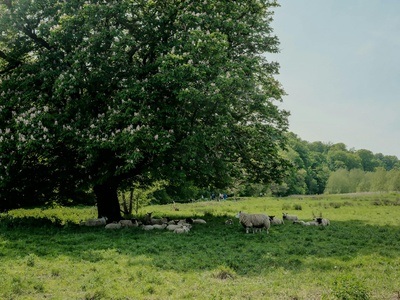
Hardy tree with a massive taproot that reaches deep groundwater. Known as a dependable shade and nesting site, it has smooth grey bark and small leathery leaves; vital for fauna during droughts.
Mopane
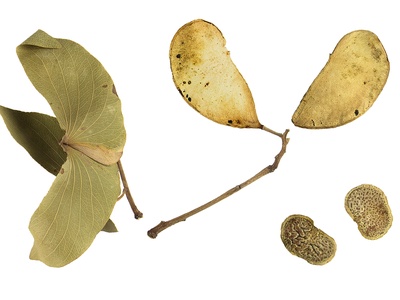
Dominant species of mopane woodland with distinctive butterfly-shaped leaves. Provides dense shade and nutritious leaves for mopane worms (a seasonal food), and forms extensive single-species stands on heavy clay soils.

Marula
Widely loved for its sweet, hard-shelled fruit used locally for food and fermented drinks. Medium-sized tree with spreading crown, important to elephants and people; indigenous across southern Africa including Namibia.
Leadwood
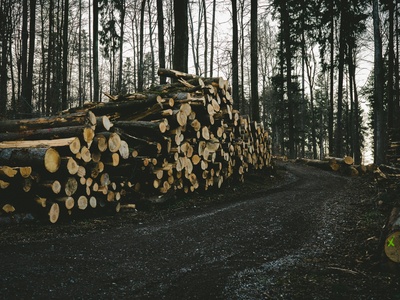
Very slow-growing, long-lived tree with extremely dense, durable timber. Recognisable by its flaking bark and winged fruits; often found as isolated giants in dry savanna and valued for traditional uses.
Tamboti
A fragrant tree producing toxic sap and hard timber used for furniture. Leaves are glossy; fruits and bark are distinctive. Historically used for timber and fencing, but sap can irritate skin.
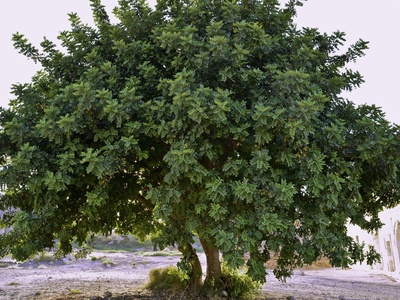
Ana tree
Deciduous tree notable for reverse phenology—leafing in the dry season—beneficial to cropping and grazing systems. Deep-rooted and nitrogen-fixing, common along ephemeral rivers and valley bottoms.
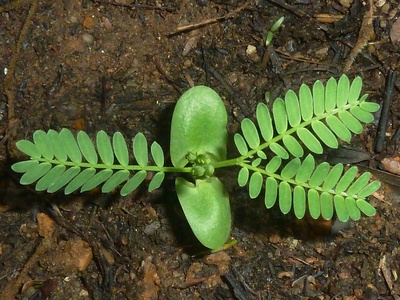
Fever tree
Named for its yellow-green, powdery bark. Prefers waterlogged or seasonally wet soils and is striking in shallow pans and marshy places; forms stately trees that attract birds and insects.
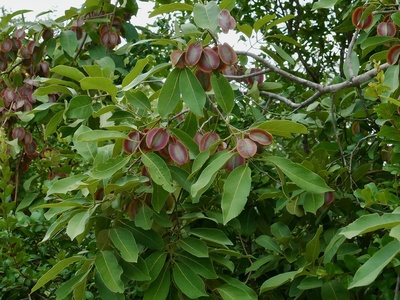
Red bushwillow
Medium tree with attractive autumn foliage and small winged fruits. Often forms part of mixed woodland, provides browse for browsers and is noticeable for its flaky bark and clustered flowers.
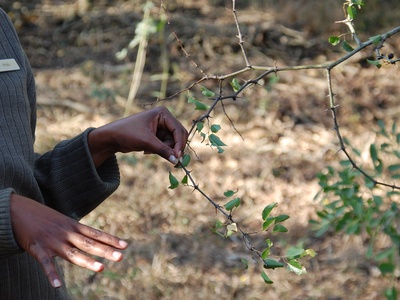
Buffalo thorn
A thorny, multi-branched tree with hooked spines and sweet edible drupes. Common along watercourses and open woodlands, it provides important food for birds and mammals and is used in traditional medicine.
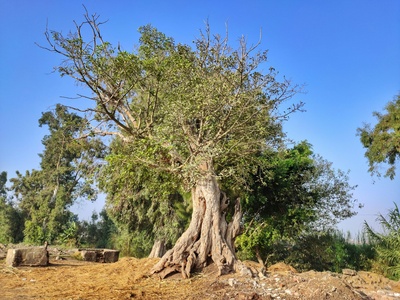
Sycamore fig
Large fig with broad canopy and massed aerial roots when near water. Produces abundant figs that feed birds, bats and primates; often found in riverine forests and human settlements near perennial water.
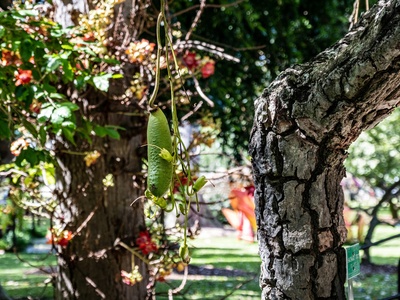
Sausage tree
Showy tree with large hanging sausage-like fruits and clusters of crimson flowers. Often found near watercourses; flowers attract bats and insects while the fruits are used locally after processing.

Jackalberry
Large, glossy-leaved tree providing sweet fruit eaten by people and wildlife. Prefers moister sites along rivers and pans; valued for shade, timber and as a fruit source in rural communities.
African teak (Kiaat)
Highly prized hardwood tree with spreading crown and papery seed pods. Makes high-quality timber, supports savanna biodiversity, and is culturally important; occurs in well-drained soils of Namibia’s woodlands.