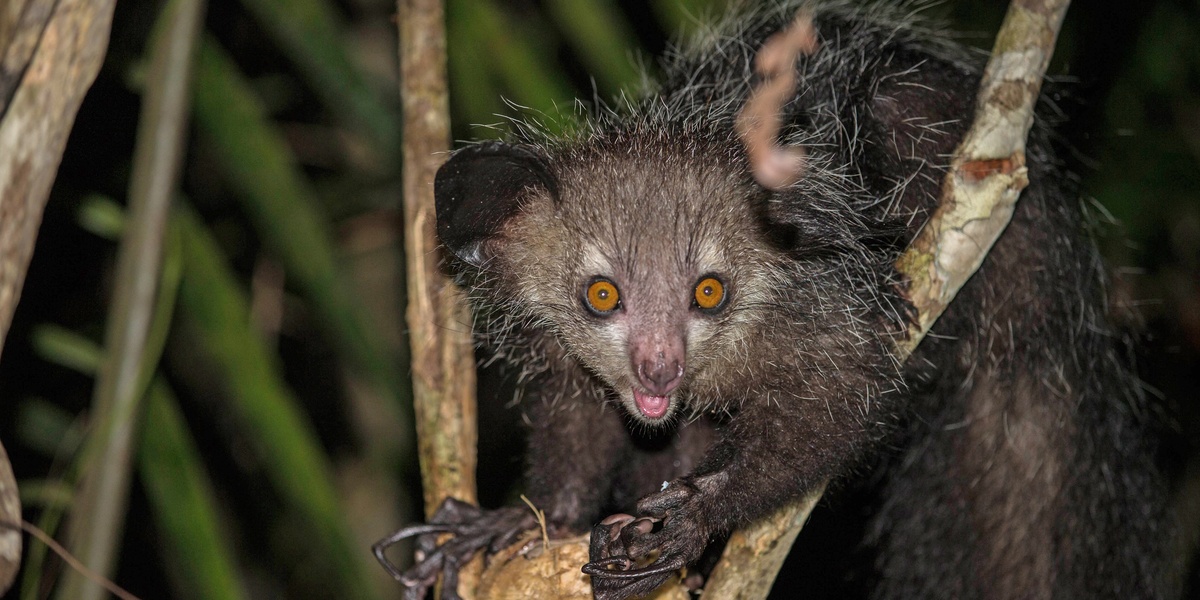
Forests hide more than trees and trails — they’re places where evolution experiments, producing odd behaviors and strange body plans. Walk the canopy, sift leaf litter, or listen at night and you’ll encounter species that look or act unlike the animals most people expect.
There are 37 weird forest animals, ranging from Aye-aye to White-bellied pangolin; for each, you’ll find below the Scientific name, Range (countries/regions), and Notable oddity (max 15 words).
Are any of these species dangerous to people?
Most are not actively dangerous and tend to avoid humans; a few can bite or carry parasites if handled, and defensive behaviors (like spines or strong jaws) can cause injury, so observe from a distance and follow local wildlife guidance.
How reliable are the range and oddity notes in the list below?
Ranges are general and based on broad country/region records, while the “Notable oddity” is a concise identifier; for precise distribution, behavior details, or conservation status consult field guides or recent research papers.
Weird Forest Animals
| Common name | Scientific name | Range (countries/regions) | Notable oddity (max 15 words) |
|---|---|---|---|
| Aye-aye | Daubentonia madagascariensis | Madagascar rainforests | Percussive foraging with elongated middle finger |
| Hoatzin | Opisthocomus hoazin | Amazon Basin (Colombia,Venezuela,Brazil,Ecuador) | Foregut fermenter; chicks have clawed wings |
| Kakapo | Strigops habroptilus | New Zealand forest remnants | Flightless nocturnal parrot that booms to attract mates |
| Okapi | Okapia johnstoni | Ituri Forest, Democratic Republic of Congo | Giraffe relative with zebra-striped legs |
| Saola | Pseudoryx nghetinhensis | Annamite Range, Vietnam-Laos | Extremely rare, recently discovered bovid |
| Binturong | Arctictis binturong | Southeast Asian rainforests | Smells like buttered popcorn; prehensile tail in carnivore |
| Sunda colugo | Galeopterus variegatus | Southeast Asian forests (Malaysia,Indonesia,Thailand) | Glides long distances on wing-like membranes |
| Hairy frog | Trichobatrachus robustus | Central African rainforests | Breaks its own toe bones to form claws |
| Surinam toad | Pipa pipa | Amazon Basin | Mother carries developing young embedded in back skin |
| Vampire bat | Desmodus rotundus | Neotropical forests (Mexico to Argentina) | Feeds on blood using anticoagulants and heat-sensing |
| Platypus | Ornithorhynchus anatinus | Eastern Australian forests and waterways | Monotreme with duck bill and electroreception |
| Short-beaked echidna | Tachyglossus aculeatus | Australian forests and woodlands | Egg-laying spiny mammal that eats ants and termites |
| Tree kangaroo | Dendrolagus spp. | New Guinea and northeastern Australian rainforests | Arboreal kangaroo with powerful forelimbs and tail |
| Oilbird | Steatornis caripensis | Northern South American forests and caves | Nocturnal frugivore that uses echolocation |
| Common potoo | Nyctibius griseus | Neotropical forests | Exceptional cryptic perch camouflage; wide gaping mouth |
| Superb lyrebird | Menura novaehollandiae | Australian temperate forests | Masterful mimic of other bird and human-made sounds |
| Fleischmann’s glass frog | Hyalinobatrachium fleischmanni | Central American rainforests | Transparent belly revealing organs |
| Wallace’s flying frog | Rhacophorus nigropalmatus | Southeast Asian rainforests | Glides using extensive webbing between toes |
| Goliath birdeater | Theraphosa blondi | Amazon rainforest | One of the world’s largest tarantulas by mass |
| Leafcutter ant | Atta cephalotes | Neotropical rainforests | Farms fungus by cutting leaves and cultivating gardens |
| Three-toed sloth | Bradypus variegatus | Central and South American rainforests | Extremely slow arboreal mammal with algae-covered fur |
| Giant armadillo | Priodontes maximus | Amazon and adjacent forests | Massive armor and enormous digging claws |
| Giant anteater | Myrmecophaga tridactyla | Central and South American forests and savannas | Long snout and exceptionally long tongue for ants |
| White-bellied pangolin | Phataginus tricuspis | Central African rainforests | Scaly mammal that curls into protective ball |
| Chinese pangolin | Manis pentadactyla | South and Southeast Asian forests | Scaly, nocturnal ant-eating mammal under intense poaching pressure |
| Proboscis monkey | Nasalis larvatus | Borneo mangrove and lowland forests | Large pendulous nose and strong swimming ability |
| Eyelash viper | Bothriechis schlegelii | Central and South American rainforests | Colorful arboreal viper with lachrymiform scales above eyes |
| Coconut crab | Birgus latro | Tropical island forests and coastal woods | Largest terrestrial crustacean climbs trees to crack coconuts |
| Chinese giant salamander | Andrias davidianus | Forest streams in central and southern China | World’s largest amphibian; ancient lineage and critically endangered |
| Philippine tarsier | Carlito syrichta | Philippine forest patches | Huge eyes relative to body; powerful vertical leaper |
| Orchid mantis | Hymenopus coronatus | Southeast Asian rainforests | Mimics orchid flowers to ambush pollinators |
| Hercules beetle | Dynastes hercules | Neotropical rainforests | Massive male horns used in combat; among largest beetles |
| Giant leaf insect | Phyllium giganteum | Southeast Asian forests | Near-perfect leaf mimicry including veins and edges |
| Margay | Leopardus wiedii | Central and South American forests | Arboreal cat that can rotate ankles to climb headfirst |
| Philippine eagle | Pithecophaga jefferyi | Philippine rainforests | Massive forest raptor with extremely low reproductive rate |
| Helmeted hornbill | Rhinoplax vigil | Southeast Asian lowland forests | Solid casque used in aerial “boxing” displays; prized as “ivory” |
| Glasswing butterfly | Greta oto | Central American rainforests | Transparent wings make it nearly invisible in flight |
Images and Descriptions
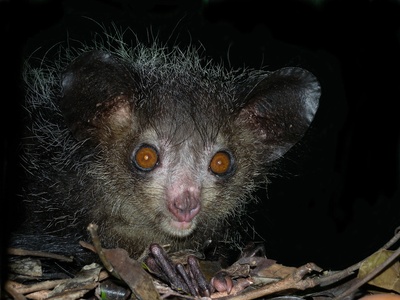
Aye-aye
Nocturnal lemur about 40–50 cm long that taps wood to find grubs and extracts them with a thin, extended middle finger. Rare and culturally misunderstood; conservation depends on habitat protection across Madagascar.
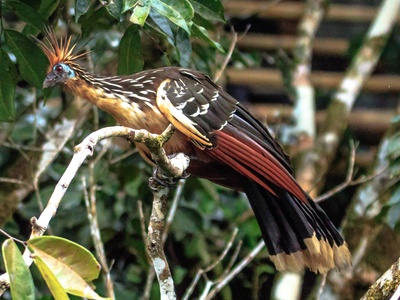
Hoatzin
Leaf-eating bird about 65 cm long that ferments foliage in an enlarged crop, smells like manure; chicks possess clawed wing digits for climbing. Vulnerable to habitat loss in riverine Amazon forests.
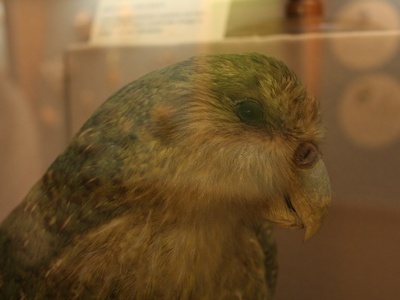
Kakapo
A heavy, ground-dwelling parrot up to 4 kg that glows with mossy plumage, walks and climbs instead of flying. Critically endangered; intensive island conservation and predator control maintain tiny populations.
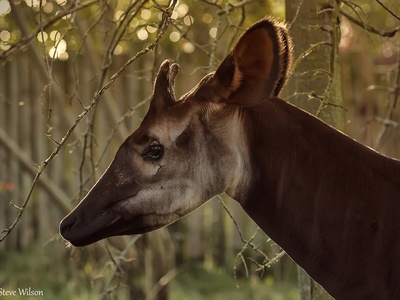
Okapi
Solitary forest ungulate standing about 1.5–2 m tall at the shoulder with a long tongue for browsing. Elusive and restricted to Congo rainforests, threatened by habitat loss and hunting.
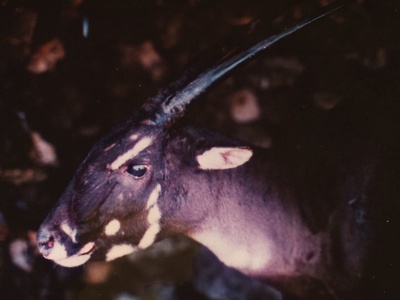
Saola
Large, secretive forest mammal sometimes called the “Asian unicorn.” Very few confirmed sightings since its 1992 discovery; critically endangered by snaring and habitat fragmentation.
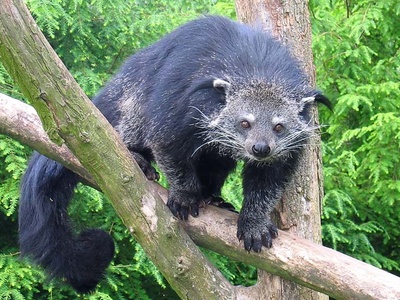
Binturong
Arboreal mammal with coarse fur, weighs up to 14 kg and uses a grasping tail. Omnivorous and slow-moving; vulnerable from deforestation and illegal trade.
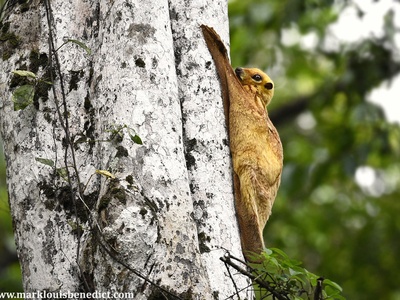
Sunda colugo
Medium-sized gliding mammal that can travel over 100 m between trees using a large patagium. Nocturnal folivore of tropical forests, often overlooked despite wide range.

Hairy frog
Robust frog about 10–13 cm long that forces bony claws through toe skin when threatened. Lives in forest streams; shocking defensive adaptation and vulnerable to habitat loss.
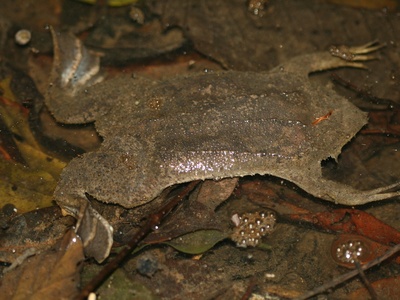
Surinam toad
Flat, aquatic toad that incubates eggs in pockets on the female’s back until froglets emerge. Unique reproductive strategy found in slow-moving rainforest waters.
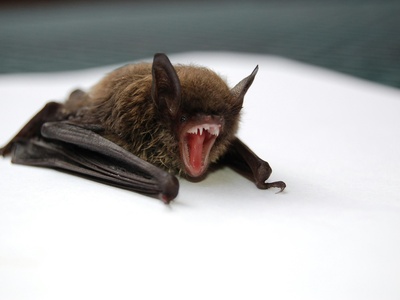
Vampire bat
Small nocturnal bat that drinks mammal blood, uses heat sensors near its nose, and has a complex social system with food sharing. Common in tropical forests and sometimes conflicts with livestock.
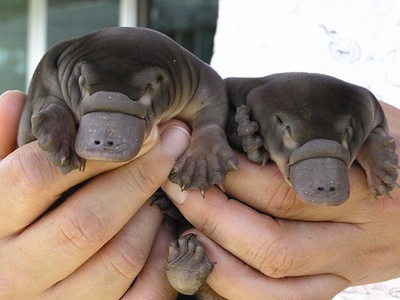
Platypus
Semi-aquatic egg-laying mammal with webbed feet, a leathery bill that detects electric fields, and males with venomous spurs. Lives in forested streams and is protected but sensitive to water quality.
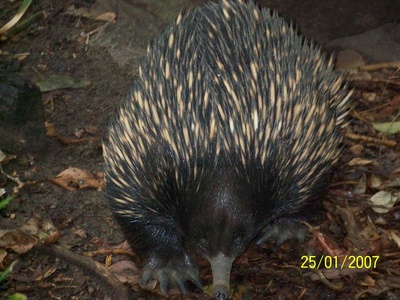
Short-beaked echidna
Small monotreme covered in spines that digs for ants with a sticky tongue and lays a single leathery egg. Widespread but affected by habitat change in some regions.
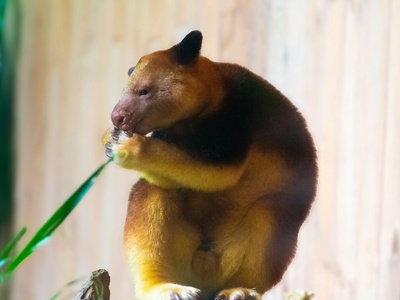
Tree kangaroo
Adapted to life in forest canopy, these macropods leap among branches rather than hopping on the ground. Many species are endangered from hunting and deforestation.
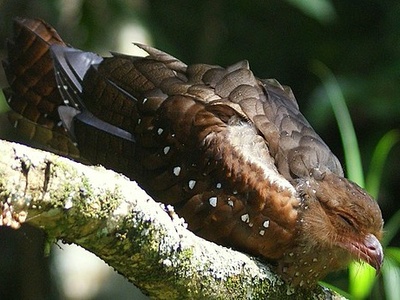
Oilbird
Cave-roosting, fruit-eating bird that navigates dark caves by echolocation clicks. Feeds on palm fruits at night and disperses seeds across rainforest landscapes.
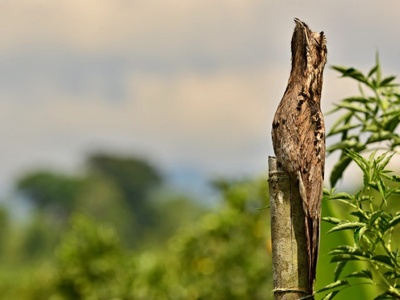
Common potoo
Nocturnal insectivore that sits motionless on branches by day, resembling a broken stump. Emits eerie calls at night; relies on camouflage and forest habitat.
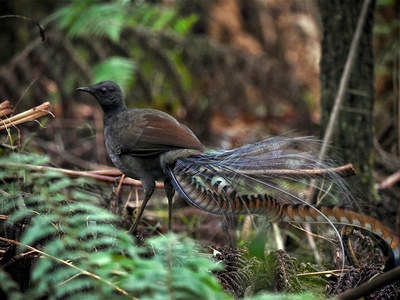
Superb lyrebird
Ground-dwelling passerine about 1 m long known for incredible vocal mimicry and dramatic tail displays. Territorial and dependent on forest understory; culturally famous.
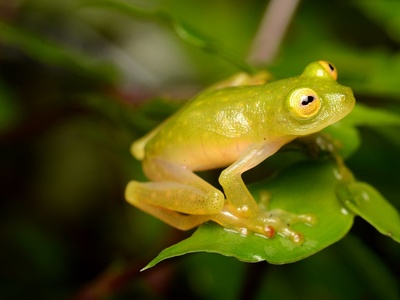
Fleischmann’s glass frog
Small tree frog with translucent ventral skin that shows internal organs, laying eggs on leaves overhanging streams. Sensitive to water and forest quality; intriguing for biology and ecotourism.

Wallace’s flying frog
Large arboreal frog with webbed feet and skin flaps enabling aerial gliding between trees. Breeds in water-filled tree holes and depends on intact forest canopy.
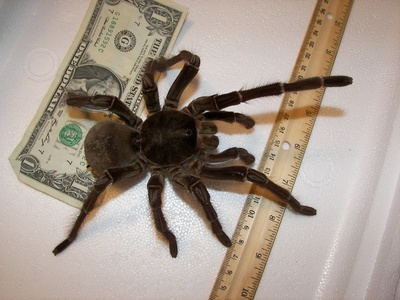
Goliath birdeater
Tropical ground-dwelling spider reaching legspans over 25 cm, eats invertebrates and small vertebrates. Striking but generally nonaggressive; prized and threatened locally by collection.
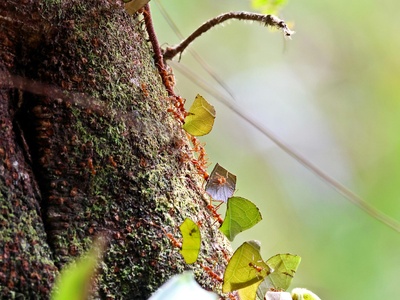
Leafcutter ant
Social insect that defoliates plants to grow fungal crops underground. Complex colonies with division of labor shape forest ecology and nutrient cycling.
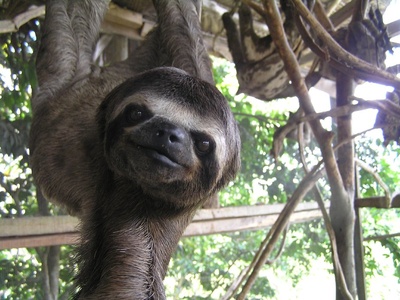
Three-toed sloth
Lives upside down in canopy, moving inches per minute. Its fur hosts algae and insects, providing camouflage; vulnerable where forests are fragmented.
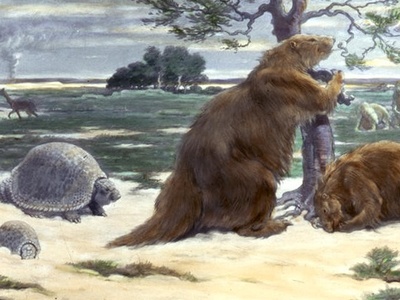
Giant armadillo
Largest armadillo up to 1.5 m when stretched, digs deep burrows and forages for termites. Secretive and declining due to habitat loss and hunting.
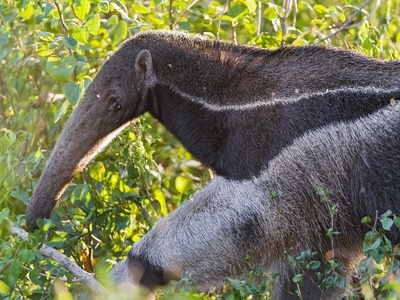
Giant anteater
Large insectivore with a 60 cm tongue and powerful foreclaws used to open nests. Uses smell more than sight and is vulnerable to habitat fragmentation.
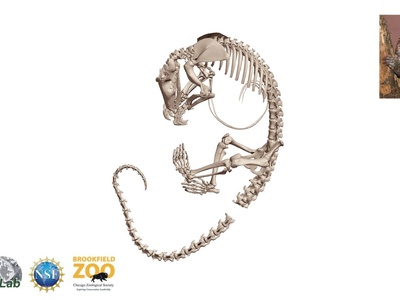
White-bellied pangolin
Arboreal insectivore covered in keratin scales, uses long sticky tongue to eat ants. Highly threatened by poaching for scales and meat and by forest loss.
Chinese pangolin
Small forest pangolin that forages at night for ants and termites. Critically endangered from illegal trade and habitat conversion across Asia.
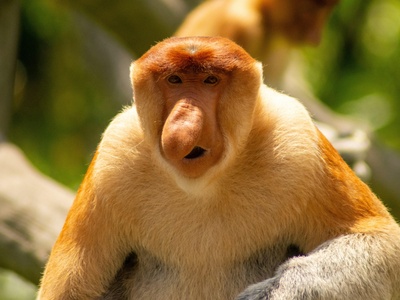
Proboscis monkey
Distinctive primate with male noses over 10 cm long, webbed feet, and a fondness for riverine forests. Populations decline from habitat loss and hunting.
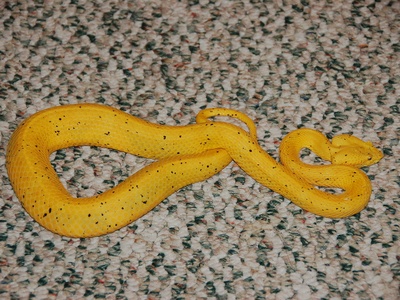
Eyelash viper
Small, highly camouflaged tree-dwelling venomous snake that ambushes prey from vegetation. Exhibits many color morphs and depends on intact forest understory.
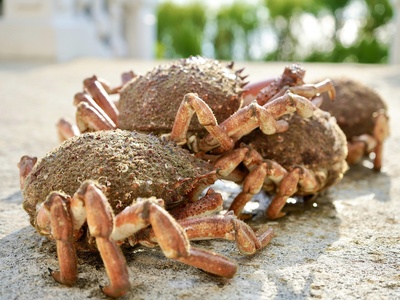
Coconut crab
Huge land crab weighing up to 4 kg that forages on land, climbs trees, and has powerful pincers. Vulnerable on many islands from overharvesting and habitat loss.
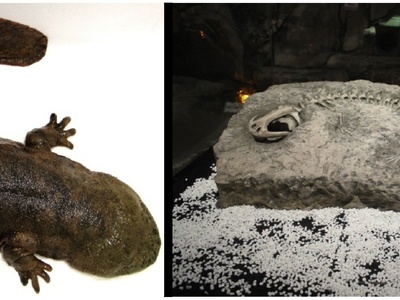
Chinese giant salamander
Aquatic salamander reaching over 1.5 m in the past, now critically endangered due to overharvest and river degradation. Lives in cool forest streams.
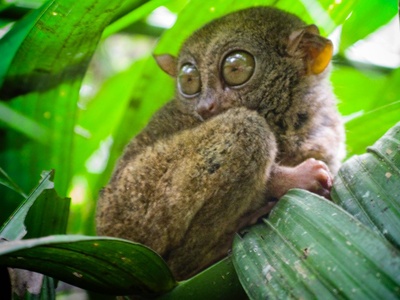
Philippine tarsier
Tiny primate with 100+ g body weight and enormous eyes adapted to nocturnal hunting. Clings to trunks and leaps between branches; threatened by habitat fragmentation.

Orchid mantis
Flower-mimicking praying mantis roughly 5–6 cm that lures pollinating insects by resembling petals. Incredible camouflage makes it a master ambush predator in understory vegetation.
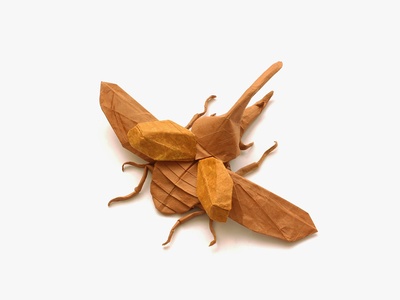
Hercules beetle
Large rhinoceros beetle with males sporting long horns up to 17 cm overall. Larvae develop in decaying wood; iconic rainforest insect facing habitat pressure.
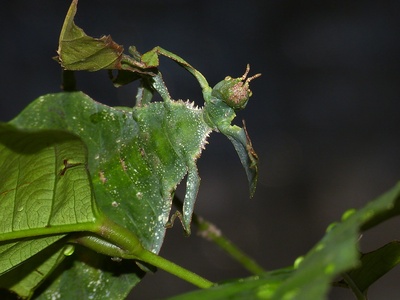
Giant leaf insect
Large herbivorous insect that resembles a leaf even when moving. Lives in understory vegetation, uses camouflage to avoid predators and mate.
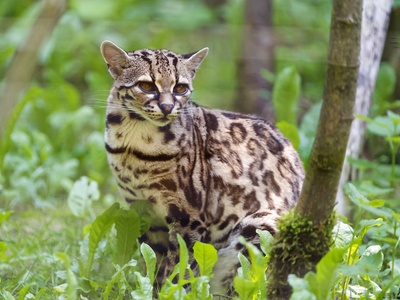
Margay
Small spotted cat that hunts in canopy, can turn hind feet 180 degrees, and pursues birds and monkeys. Vulnerable from deforestation and the pet trade.
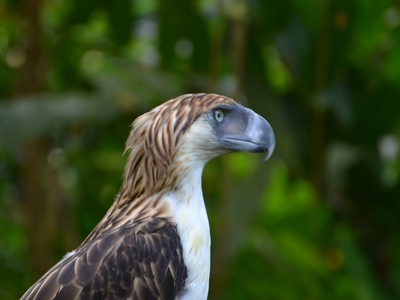
Philippine eagle
One of the world’s largest eagles with a wingspan over 2 m, dependent on large tracts of primary forest. Critically endangered due to logging and hunting.
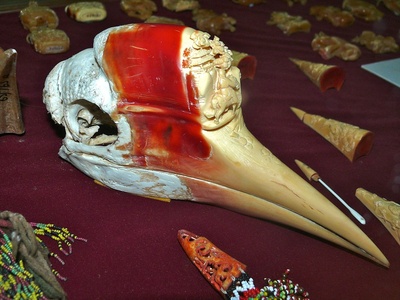
Helmeted hornbill
Large forest-dwelling hornbill that uses a solid red casque for display and combat. Decimated by poaching for its casque and loss of habitat.
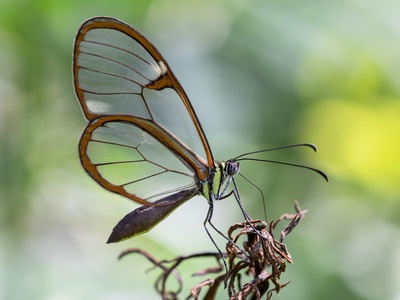
Glasswing butterfly
Delicate butterfly with clear wing panels and subtle markings that flies in forest edges. Uses transparency as camouflage and feeds on nectar and host plants.