The Philippines is a megadiverse archipelago of 7,641 islands and is recognized as one of the world’s biodiversity hotspots, home to hundreds of endemic species found nowhere else on Earth. For centuries its forests, rivers, coral reefs and seagrasses have supported cultures, fisheries and livelihoods across the islands.
But those ecosystems are under pressure: rapid deforestation and agricultural expansion, hunting and wildlife trade, coastal degradation and the increasing impacts of climate change are driving declines for many species. This piece spotlights 12 emblematic animals—grouped into four categories—that illustrate ecological roles, current conservation status and real-world actions helping them survive.
Across forest, freshwater and marine habitats these examples show why protecting native wildlife matters for people and places alike.
Iconic Endemics: Raptors, Primates, and Large Mammals
Endemic forest species carry outsized ecological and cultural value in the Philippines. High rates of endemism mean these animals perform unique roles—apex predators that shape prey communities, seed predators and dispersers that influence tree composition, and charismatic species that anchor national conservation identity.
Old-growth forest remnants are especially important: they provide nesting sites, stable prey populations and the intact habitat mosaic these species need. Many conservation groups—such as the Philippine Eagle Foundation and Haribon Foundation—focus on protecting those core forests and working with local communities to reduce threats.
1. Philippine Eagle (Pithecophaga jefferyi)
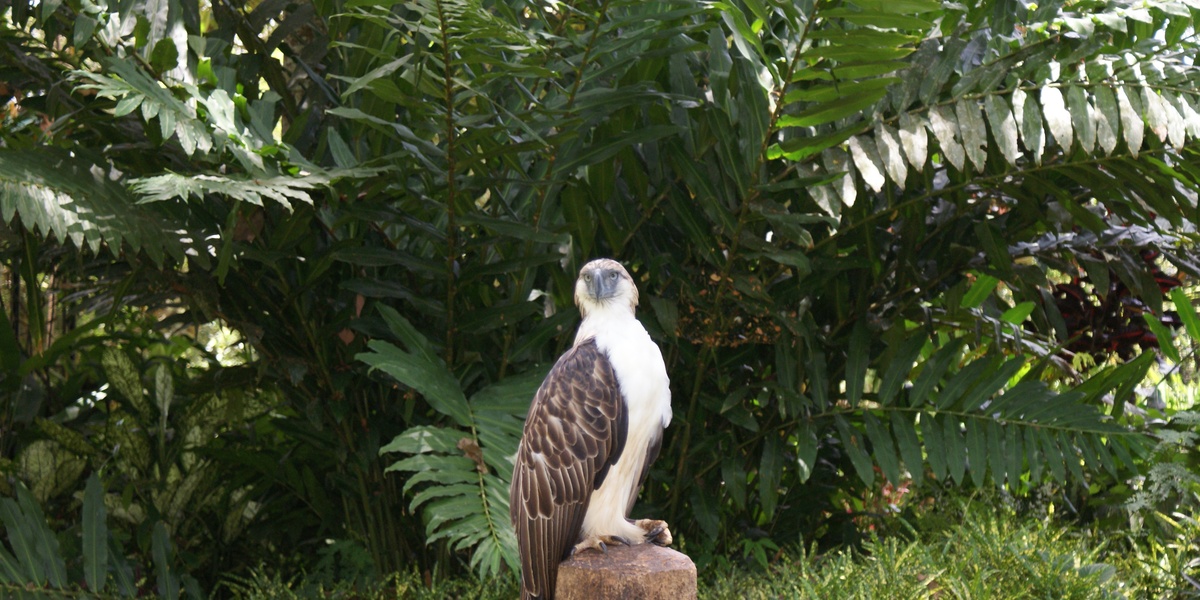
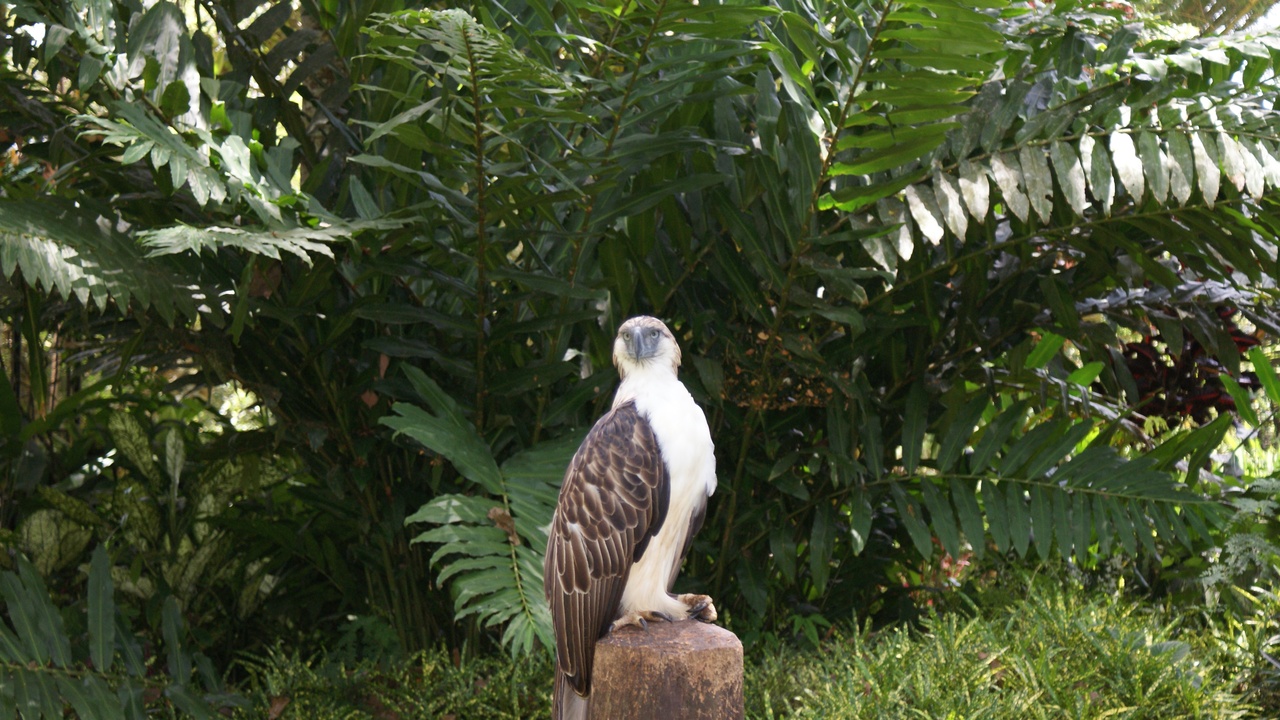
The Philippine Eagle is the country’s national bird and a global conservation icon. The species is listed as Critically Endangered on the IUCN Red List (assessment year 2015) and population estimates most often cited by conservation groups place the number of mature individuals at several hundred (commonly referenced estimates are around 400 birds).
As an apex predator, the eagle helps maintain healthy forest food webs by regulating medium-sized mammals and birds. Its presence indicates intact forest structure and relatively large contiguous habitat—qualities lost where logging and conversion are heavy.
Real-world conservation is practical and hands-on: the Philippine Eagle Foundation runs nest monitoring and captive-breeding programs, rehabilitates injured birds and supports community outreach. Monitoring teams in places like Mount Kitanglad and parts of the Sierra Madre now track dozens of active nests annually, helping inform protection and anti-logging patrols.
2. Philippine Tarsier (Carlito syrichta)
The Philippine tarsier is a tiny, nocturnal primate endemic to a few islands—chiefly Bohol, Leyte and parts of Mindanao—and a long-standing tourism draw. The species is currently assessed as Near Threatened on the IUCN Red List, with populations fragmented and subject to local declines from habitat loss and disturbance.
Tarsiers play a practical ecological role by keeping insect populations in check; they are also indicators of intact secondary and primary forest patches. Because they’re easily stressed by handling and close human contact, sanctuaries (for example, those around Corella and Loboc in Bohol) enforce strict viewing rules.
Visitor protocols often limit group sizes to small numbers (typically 4–6 people per viewing session) and ask watchers to stay quiet and maintain a minimum distance. Those rules help protect local eco-tourism economies while reducing stress on animals that weigh only about 80–150 grams and rely on insect prey at night.
3. Tamaraw (Bubalus mindorensis)
The tamaraw is a small, island-endemic buffalo found only on Mindoro and is listed as Critically Endangered by the IUCN. Recent government and NGO censuses report population counts in the low hundreds in protected strongholds, with Mount Iglit-Baco National Park serving as the most important site for long-term monitoring.
As a large herbivore, the tamaraw shapes grassland vegetation and nutrient cycling; its grazing helps maintain open habitats that other species rely on. Loss of these animals can shift grassland composition and reduce habitat heterogeneity.
Conservation work combines protected-area management with community-based patrols and anti-poaching enforcement. Mount Iglit-Baco counts reported during the 2010s and into the early 2020s recorded several hundred individuals, and ongoing monitoring aims to improve those trends through stricter protection and local stewardship.
Forest Birds, Bats, and Pollinators
Birds and bats are the engines of forest regeneration: they move seeds and pollen across the landscape and link fragmented patches. When these species decline, forest recovery slows, commercial and subsistence tree species fail to regenerate properly, and local livelihoods suffer.
Protecting nesting trees, roost sites and flight corridors is therefore central to conserving a wide range of forest functions, which is why many community-managed forests and local NGOs prioritize large old trees and communal roost protection.
4. Palawan Peacock-Pheasant (Polyplectron napoleonis)
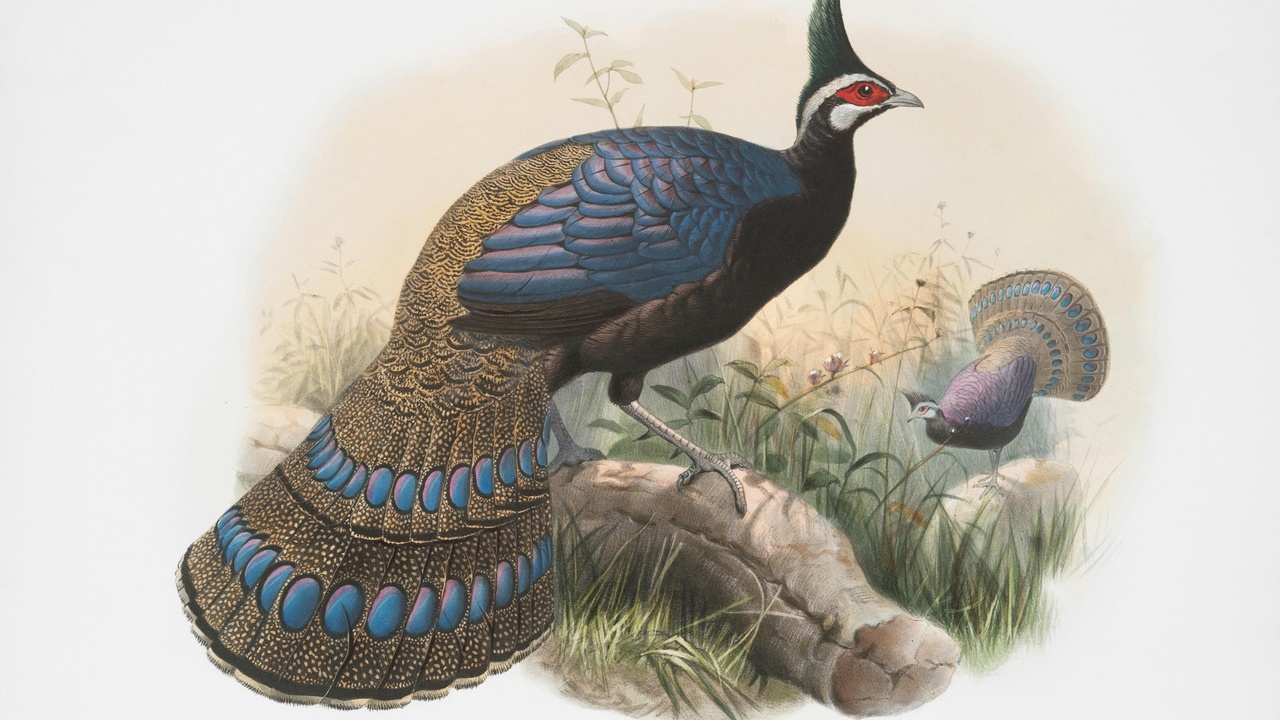
The Palawan peacock-pheasant is endemic to Palawan and a provincial symbol. The species is listed as Near Threatened on the IUCN Red List and survives in remaining lowland and foothill forests across the island—habitats that have been reduced by logging and agricultural clearing.
Protecting lowland forest matters for this bird because it relies on dense understory and fallen fruit for food and nesting cover. Conserving those areas also benefits many lesser-known endemics that share the same habitat.
Local government measures and community forest initiatives in Palawan help secure key tracts of habitat. Estimates of remaining suitable lowland forest vary by study, but conservation groups point to a few thousand square kilometers of fragmented habitat as critical for long-term survival.
5. Visayan Hornbill (Penelopides panini)
The Visayan hornbill is an important seed disperser in the central Philippine islands and is assessed as Vulnerable on the IUCN Red List, with populations restricted to Panay, Negros and small nearby islands. Loss of nesting trees and forest fragmentation are the largest threats.
Hornbills move large seeds that many other birds can’t, so their decline reduces regeneration of big-seeded trees and alters forest composition. Protecting old, cavity-bearing trees and preventing illegal logging are therefore direct investments in ecosystem resilience.
On Panay and Negros, community-based nest protection programs—often run with local NGOs such as Haribon—identify and guard known nest trees. In some areas remaining forest cover is down to single-digit percentages, making nest protection and reforestation urgent priorities.
6. Giant Golden-Crowned Flying Fox (Acerodon jubatus)
The giant golden-crowned flying fox is among the world’s largest bats and is endemic to the Philippines. Listed as Endangered by the IUCN, it forms roosts that can number in the thousands and plays a vital role in long-distance seed dispersal for forest trees.
Documented colonies in the past decade have included roosts of several thousand individuals—some surveys reported colonies of 2,000–6,000 bats at specific sites—though many roosts have shrunk due to disturbance and hunting.
Conservation focuses on protecting roost sites, halting hunting and educating communities about bats’ value for forest recovery. When roosts are secured, seedlings and fruit-tree regeneration in adjacent areas improves, helping both biodiversity and local agroforestry systems.
Small Endemics and Freshwater Species

Smaller or less-famous species—freshwater turtles, crocs and endemic pigs—are often the first to feel intense local pressures. Yet they perform essential jobs: controlling prey, engineering soils and recycling nutrients in streams and wetlands.
Conservation for these animals is frequently grassroots: community patrolling, captive-breeding and local enforcement produce measurable recoveries when properly supported by agencies such as DENR and partners like WWF-Philippines.
7. Philippine Crocodile (Crocodylus mindorensis)
The Philippine crocodile is a freshwater endemic listed as Critically Endangered by the IUCN. Once widespread across lowland rivers and marshes, remnant populations are now restricted to scattered localities in Mindoro, Luzon and parts of Mindanao and Palawan.
Conservation programs combining captive-breeding and carefully managed releases have been implemented in recent decades. For example, coordinated efforts by DENR and NGOs have recorded several dozen released or translocated individuals across established sites to bolster wild populations.
Protecting freshwater habitat for crocodiles also benefits water quality and fisheries that local communities depend on, creating a clear incentive for joint conservation and sustainable management of riverine landscapes.
8. Visayan Warty Pig (Sus cebifrons)
The Visayan warty pig is an endemic suid of Panay and Negros and is listed as Critically Endangered on the IUCN Red List in many assessments due to severe fragmentation and hunting pressure. Wild subpopulations are small and isolated across remaining forest patches.
These pigs are ecosystem engineers: rooting and wallowing behavior helps mix soils, disperse seeds and create microhabitats for plants and invertebrates. Losing them reduces these processes and can lead to denser understory that favors different species assemblages.
Captive-breeding programs and translocations have been attempted to prevent extinction, and protected areas combined with stricter anti-poaching enforcement are central to recovery. Local laws and community-based measures are often the deciding factor for remaining subpopulations.
9. Philippine Forest Turtle (Siebenrockiella leytensis)
The Philippine forest turtle is highly range-restricted and Critically Endangered, largely because of collection for the international pet trade and continued habitat loss. Seizures reported by agencies like DENR and partner NGOs over the past decade have underscored the scale of illegal demand.
Repopulation efforts rely heavily on captive-breeding and repatriation programs run by zoos and conservation organizations, with documented repatriation events and controlled releases helping rebuild tiny local populations.
Protecting shaded stream habitat and enforcing trade bans reduce pressure on wild turtles, and community monitoring programs—paired with public awareness campaigns—have shown tangible reductions in poaching at some sites.
Marine and Coastal Icons
The Philippines’ marine ecosystems—extensive coral reefs, seagrass meadows and migration corridors—support fisheries, tourism and coastal protection. Marine megafauna are both cultural assets and ecological engineers whose recovery benefits many coastal communities.
Sustainable tourism, protected areas and fishery regulations are among the interventions that can reduce bycatch, prevent habitat loss and help populations rebound when enforced alongside community livelihoods programs.
10. Whale Shark (Rhincodon typus)
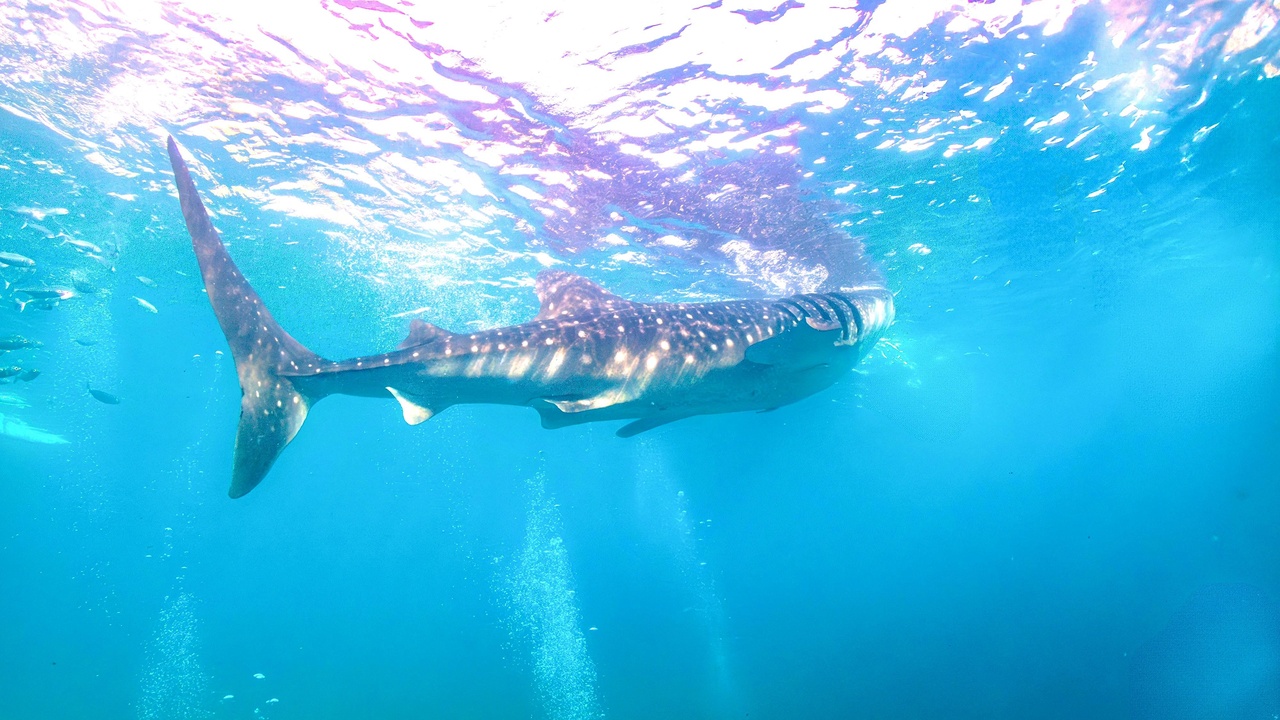
The whale shark is the world’s largest fish and a seasonal visitor to Philippine waters, forming predictable aggregations off places such as Donsol (Sorsogon) and Oslob (Cebu). It is listed as Vulnerable on the IUCN Red List.
Donsol’s regulated viewing program has been cited as a model for community-based whale shark tourism, with local counts often documenting hundreds of encounters across a season. By contrast, other sites have struggled with unregulated practices that include feeding and close-contact tours, creating management trade-offs.
Tagging studies by research groups have involved dozens to a few hundred individuals across the region in recent years, providing data on movements and helping managers set vessel-speed limits, no-approach zones and permit systems to reduce disturbance and vessel strikes.
11. Dugong (Dugong dugon)
The dugong is a seagrass specialist with small, scattered populations in Philippine waters and is assessed as Vulnerable globally. Known habitats include seagrass beds around Palawan and areas within the Sulu–Sulawesi corridor, where sightings recorded by monitoring projects are used to guide local protection.
Because dugongs depend on healthy seagrass meadows, protecting hundreds to thousands of hectares of seagrass (through MPAs and community mapping) benefits dugongs and the fisheries and carbon-storage services seagrasses provide.
Community-led seagrass mapping and restoration projects in parts of Palawan and the Visayas have recorded regular dugong sightings during monitoring seasons, reinforcing the link between habitat protection and sightings data used in management plans.
12. Hawksbill Turtle (Eretmochelys imbricata)
The hawksbill turtle is Critically Endangered and nests on beaches across the Philippines, including sites in Palawan and parts of the Visayas. Conservation programs track nest counts and run beach patrols and hatcheries to boost survival of eggs and hatchlings.
Hawksbills play an unusual ecological role as spongivores on reefs, shaping competition among sessile organisms and indirectly supporting coral health. Protecting nesting beaches therefore has cascading benefits for reef ecosystems and local tourism.
Community-based hatcheries regularly report nest protection and hatchling release numbers (from dozens to hundreds per season at active sites), and DENR enforcement actions against illegal trade help reduce poaching pressure on nesting beaches.
Summary
- The Philippines’ extraordinary endemism means these 12 species—across forests, freshwater and seas—are essential to the country’s ecosystems and cultural identity.
- Recurring threats—habitat loss, hunting and illegal trade, bycatch and coastal development, plus climate impacts—undermine species recovery unless addressed together.
- Conservation wins exist: nest and roost protection, captive-breeding and reintroduction, community patrolling and regulated eco-tourism (for example programs run by the Philippine Eagle Foundation, WWF-Philippines and Haribon) show what works on the ground.
- Support local groups, choose responsible wildlife tourism, back stronger habitat protections and engage with policy efforts to make a difference for the wildlife of the Philippines and the people who depend on healthy ecosystems.