Honduras sits at the crossroads of Mesoamerica, with coastal mangroves, Caribbean reefs, cloud forests and lowland rainforests creating a patchwork of habitats. That variety supports mammals, birds, reptiles and amphibians found nowhere else in the region, making wildlife exploration rewarding whether you’re hiking or birdwatching.
There are 42 Animals of Honduras, ranging from the American crocodile to the White-tailed deer; for each species the columns are Scientific name,Size (cm),Honduran region & habitat — details you’ll find below.
Which species are most commonly seen by visitors in Honduras?
Visitors often spot white-tailed deer, green iguanas, howler monkeys and many toucans or hummingbirds in protected areas and reserves; coastal sites are good for sea turtles and coastal birds, while lowland forests and trails raise your chances of seeing small mammals and reptiles—visit local parks or guided tours for the best sightings.
Are any of these animals dangerous or legally protected?
Yes — some animals like the American crocodile can be dangerous if approached and several species are protected under national or international law; always keep distance, follow park rules, and report rare sightings to local conservation groups to both stay safe and support protection efforts.
Animals of Honduras
| Common name | Scientific name | Size (cm) | Honduran region & habitat |
|---|---|---|---|
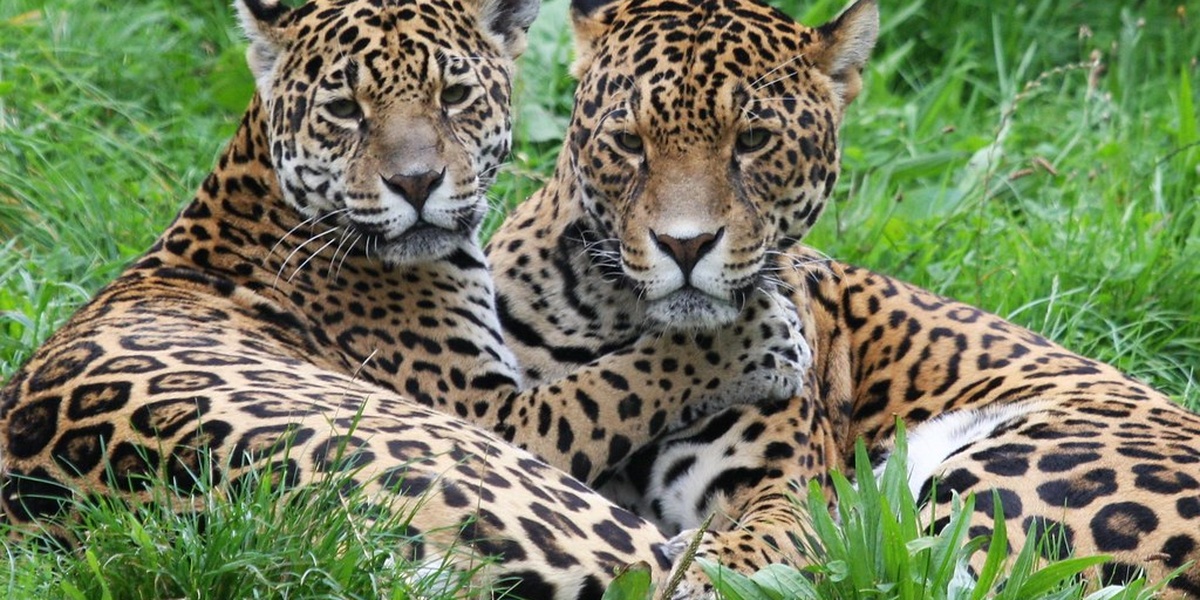
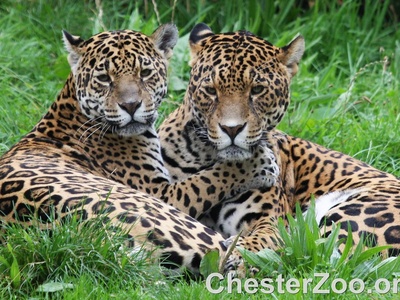
| Jaguar | Panthera onca | 150-190 cm | Lowland rainforests, Río Plátano biosphere |
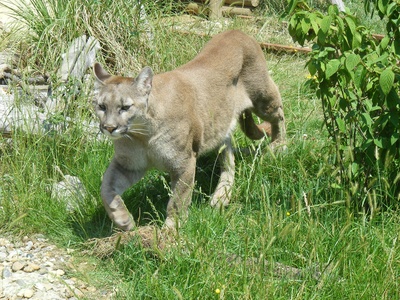
| Puma | Puma concolor | 100-140 cm | Montane forests, dry forests, widespread |
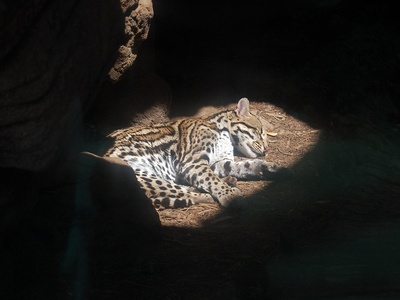
| Ocelot | Leopardus pardalis | 55-100 cm | Lowland forest, mangroves, agricultural edges |
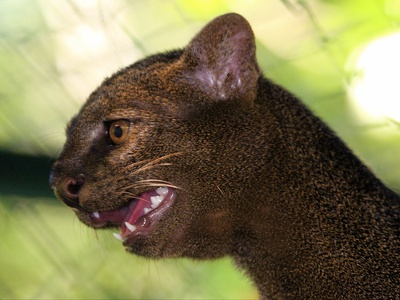
| Jaguarundi | Herpailurus yagouaroundi | 60-90 cm | Scrub, dry forest, lowland areas |
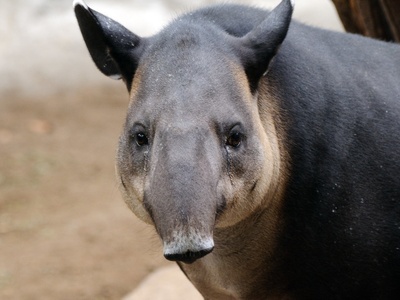
| Baird’s tapir | Tapirus bairdii | 180-250 cm | Cloud forest, humid lowland forest |
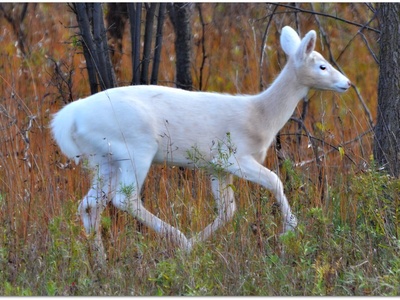
| White-tailed deer | Odocoileus virginianus | 100-150 cm | Dry forest, savanna, agricultural edges |
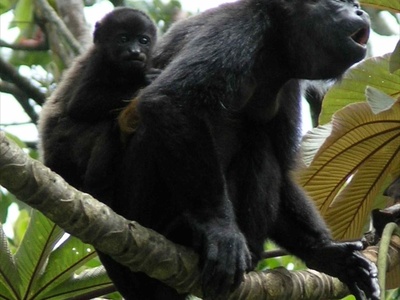
| Mantled howler | Alouatta palliata | 50-70 cm | Lowland rainforest, gallery forest |
| Geoffroy’s spider monkey | Ateles geoffroyi | 50-65 cm | Primary rainforest canopy, Bay Islands |
| Hoffmann’s two-toed sloth | Choloepus hoffmanni | 50-70 cm | Rainforest canopy, lowland and montane forest |
| Brown-throated three-toed sloth | Bradypus variegatus | 40-60 cm | Lowland rainforest, secondary forest |
| West Indian manatee | Trichechus manatus | 250-300 cm | Coastal lagoons, mangroves, rivers |
| Honduran white bat | Ectophylla alba | 3.5-4.5 cm | Lowland rainforests, understory |
| Central American agouti | Dasyprocta punctata | 40-60 cm | Lowland forest, secondary growth |
| Kinkajou | Potos flavus | 45-60 cm | Lowland rainforest canopy |
| Scarlet macaw | Ara macao | 80-90 cm | Caribbean lowland forest, Río Plátano |
| Honduran emerald | Amazilia luciae | 9-10 cm | Northern Caribbean lowlands, dry forest patches |
| Resplendent quetzal | Pharomachrus mocinno | 36-40 cm | Cloud forests, western highlands |
| Keel-billed toucan | Ramphastos sulfuratus | 40-55 cm | Lowland rainforest, gallery forest |
| Turquoise-browed motmot | Eumomota superciliosa | 34-38 cm | Dry forest, edges, Pacific slopes |
| Great curassow | Crax rubra | 75-90 cm | Lowland rainforest, protected areas |
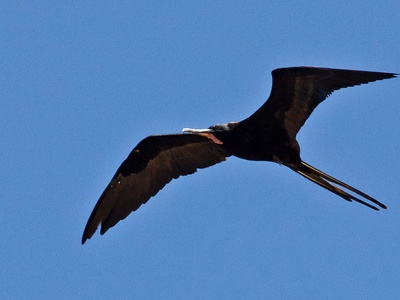
| Magnificent frigatebird | Fregata magnificens | 200-220 cm | Coastal islands, mangroves, bays |
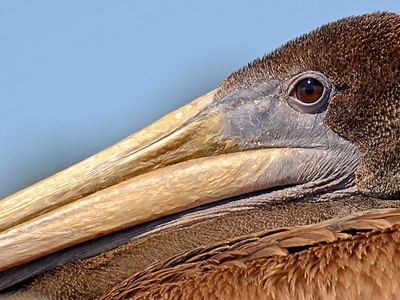
| Brown pelican | Pelecanus occidentalis | 150-180 cm | Coastal waters, estuaries, mangroves |
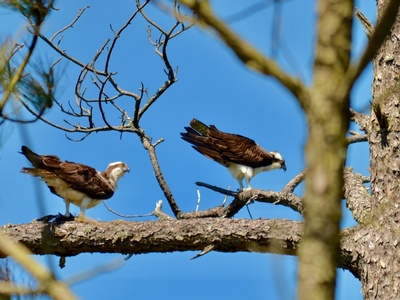
| Osprey | Pandion haliaetus | 90-100 cm | Coastal waters, rivers, wetlands |
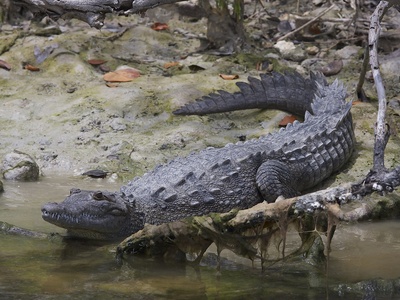
| American crocodile | Crocodylus acutus | 200-400 cm | Coastal lagoons, estuaries, mangroves |
| Spectacled caiman | Caiman crocodilus | 150-200 cm | Freshwater rivers, lagoons, wetlands |
| Green iguana | Iguana iguana | 120-200 cm | Lowland forest, river edges, farms |
| Common basilisk | Basiliscus vittatus | 40-65 cm | Riverbanks, lowland forest, secondary growth |
| Green sea turtle | Chelonia mydas | 80-110 cm | Coral reefs, seagrass beds, nesting beaches |
| Hawksbill turtle | Eretmochelys imbricata | 60-90 cm | Coral reefs, rocky coasts, nesting beaches |
| Leatherback turtle | Dermochelys coriacea | 150-200 cm | Open ocean, nesting on beaches |
| Olive ridley turtle | Lepidochelys olivacea | 60-70 cm | Beaches, coastal waters, Gulf of Fonseca |
| Red-eyed tree frog | Agalychnis callidryas | 5-7 cm | Lowland rainforest, riparian vegetation |
| Glass frog | Hyalinobatrachium fleischmanni | 2.5-4.5 cm | Cloud forest streams, humid forests |
| Cane toad | Rhinella marina | 10-25 cm | Disturbed areas, lowland forests, farms |
| Tarpon | Megalops atlanticus | 120-200 cm | Coastal lagoons, estuaries, bays |
| Bonefish | Albula vulpes | 60-90 cm | Shallow flats, bays, Caribbean coast |
| Nassau grouper | Epinephelus striatus | 60-100 cm | Coral reefs, rocky outcrops, Cayos Cochinos |
| Bull shark | Carcharhinus leucas | 200-350 cm | Coastal waters, estuaries, rivers |
| Blue morpho butterfly | Morpho peleides | 12-20 cm wingspan | Lowland rainforest, forest edges |
| Bullet ant | Paraponera clavata | 1.8-3.0 cm | Lowland rainforest, undergrowth |
| Leafcutter ant | Atta cephalotes | 0.5-3.0 cm | Lowland forest, disturbed areas |
| Elkhorn coral | Acropora palmata | 20-100 cm colony branches | Shallow Caribbean reefs, reef crests |
Images and Descriptions
Jaguar
Powerful big cat of Central America, the jaguar prefers dense lowland rainforest and riverine areas in eastern Honduras. Notable for its strong bite, it can crush turtle shells and is a top predator maintaining ecosystem balance.
Puma
Adaptable large cat found across Honduran mountains and forests. Solitary and secretive, pumas help control deer and peccary populations; they tolerate fragmented habitats better than jaguars but still need large territories.
Ocelot
Beautifully spotted medium-sized wild cat that hunts small mammals and birds. Ocelots are nocturnal and crepuscular; their striking coat made them historically sought by fur traders.
Jaguarundi
Sleek, weasel-like felid that lives in varied habitats including dry forests of Honduras. Diurnal and agile, jaguarundis eat birds and small mammals and are less dependent on dense forest than other cats.
Baird’s tapir
Largest land mammal in Honduras, the Baird’s tapir is shy and mostly nocturnal. It disperses seeds through its browsing; sadly it’s endangered due to habitat loss and hunting.
White-tailed deer
Common and familiar ungulate across Honduras, often seen near forest edges and farms. Agile and alert, white-tailed deer are important prey for large predators and adapt well to mixed landscapes.
Mantled howler
Loud-calling primate known for deep howls audible for kilometers. Howler monkeys are folivores with a slow lifestyle; in Honduras their vocal groups mark territory in canopy forests.
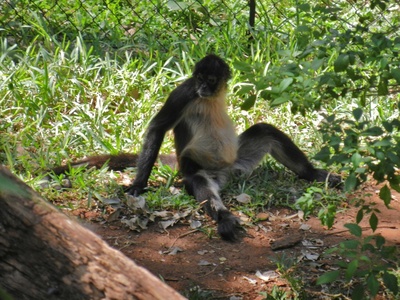
Geoffroy’s spider monkey
Highly arboreal primate with a prehensile tail used as a fifth limb. Spider monkeys are critical seed dispersers but are vulnerable to hunting and habitat fragmentation in Honduras.
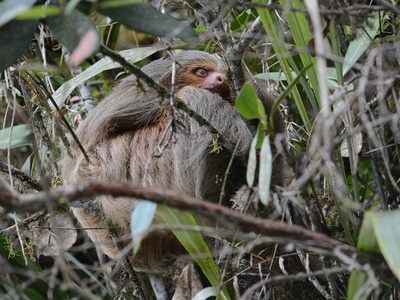
Hoffmann’s two-toed sloth
Slow-moving tree-dweller with a two-toed forelimb; it hosts algae and insects in its fur. Hoffmann’s sloth sleeps and moves slowly to conserve energy and avoid predators.
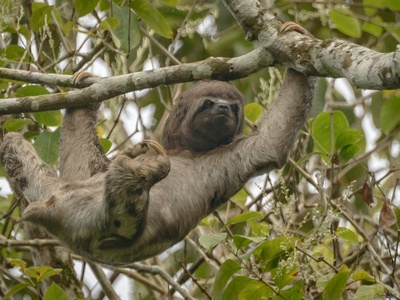
Brown-throated three-toed sloth
Common three-toed sloth with a specialized slow metabolism and symbiotic algae in its fur. It descends to the ground roughly once a week to defecate, a risky but regular behavior.
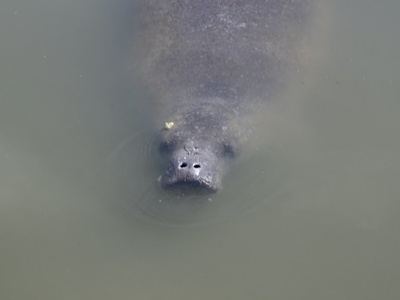
West Indian manatee
Gentle marine herbivore visiting Honduran coasts and estuaries. Manatees graze seagrasses and mangrove leaves; they are vulnerable to boat strikes and habitat loss, receiving conservation attention.
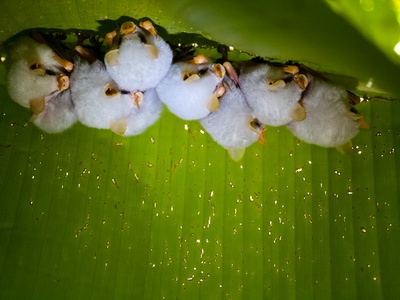
Honduran white bat
Small, white furred bat that constructs tent-like roosts by cutting leaves. Its bright color and unique leaf tents make it one of Central America’s most charismatic bats.
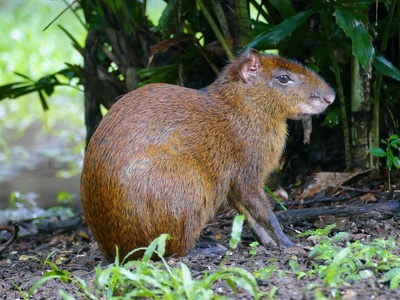
Central American agouti
Diurnal rodent that clips seeds and buries them, acting as an important seed disperser for trees, including Brazil nut relatives. Agoutis are often seen near forest edges.

Kinkajou
Nocturnal, fruit-eating mammal with a long prehensile tail; kinkajous are sometimes called “honey bears” for their love of nectar. They move nimbly through the canopy feeding on fruits and flowers.
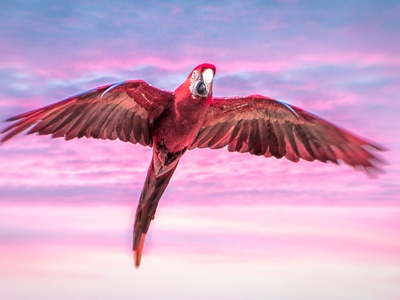
Scarlet macaw
Vibrant red, yellow and blue parrot found in Honduran tropical forests. Social and long-lived, scarlet macaws form strong pair bonds and are a flagship species for rainforest conservation.
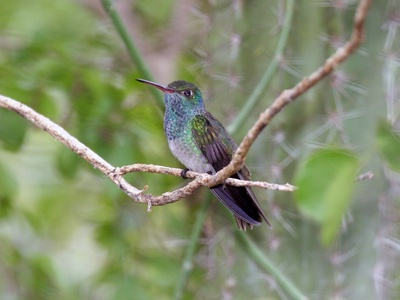
Honduran emerald
Tiny, striking hummingbird endemic to northern Honduras. The Honduran emerald is globally threatened; its bright green and blue plumage fuels conservation efforts in remnant dry forests.
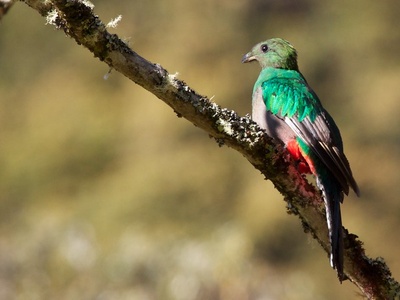
Resplendent quetzal
Iconic, colorful bird of montane cloud forests with iridescent plumage and long tail streamers. Quetzals feed on fruits and are culturally significant across Mesoamerica.
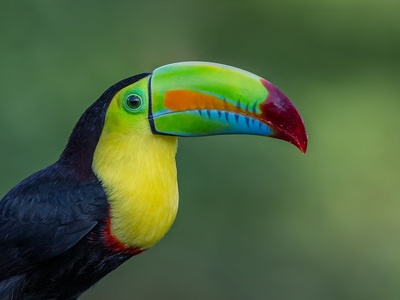
Keel-billed toucan
Famous for its large, multicolored bill, this social bird nests in tree cavities and eats fruit and small animals, helping seed dispersal in Honduran forests.
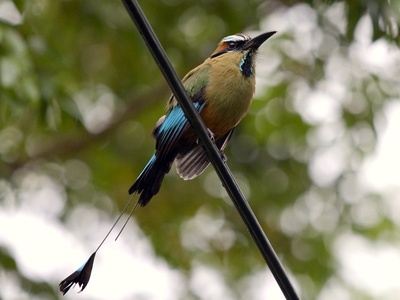
Turquoise-browed motmot
Striking Central American bird with racketed tail feathers and turquoise brow. Motmots sit motionless in open perches and are common in drier Honduran habitats.
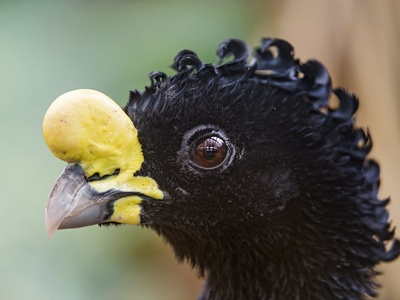
Great curassow
Large, turkey-like forest bird that forages on fruits and seeds. Great curassows are noisy and conspicuous; they’re vulnerable to hunting but persist in protected Honduran parks.
Magnificent frigatebird
Soaring seabird with a huge wingspan and forked tail; males display a red gular pouch. Frigatebirds are kleptoparasitic at times and nest on Bay Islands and mainland coasts.
Brown pelican
Common coastal seabird that plunges to catch fish and nests on islands. Brown pelicans are a familiar sight around Honduran shores and marine reserves.
Osprey
Fish-eating raptor seen near coasts and rivers across Honduras. Ospreys hover and plunge-dives to catch fish, often nesting on human-made structures.
American crocodile
Large coastal crocodilian inhabiting Honduran mangroves and estuaries. American crocodiles tolerate saltwater and are important apex predators in coastal ecosystems.
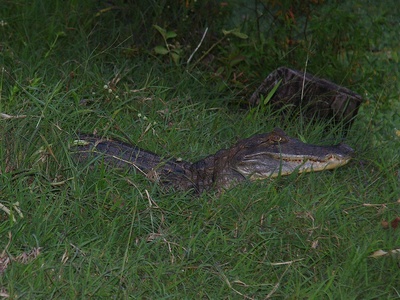
Spectacled caiman
Widespread freshwater crocodilian that uses rivers and floodplain lakes. Spectacled caimans are smaller than American crocodiles and are common in varied freshwater habitats.
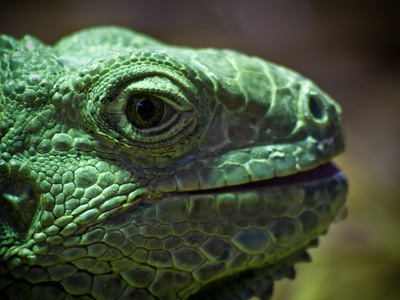
Green iguana
Large arboreal lizard often seen basking near water. Green iguanas are herbivorous and excellent swimmers; juveniles are more brightly colored than adults.

Common basilisk
Known as the “Jesus lizard” for running on water, basilisks are fast and often seen near streams. Males display tall crests during courtship and territorial fights.
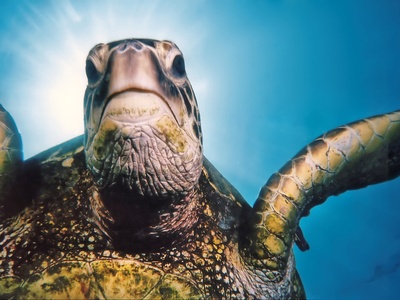
Green sea turtle
Large herbivorous sea turtle that forages on seagrass and nests on Honduran Caribbean beaches. Green turtles are endangered and benefit from nesting beach protection programs.
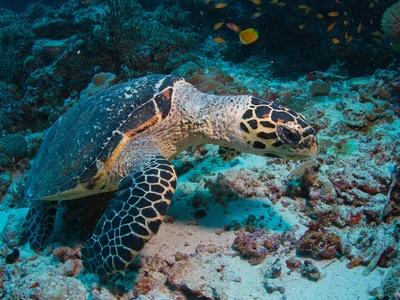
Hawksbill turtle
Distinctively patterned reef turtle feeding on sponges; hawksbills nest on Honduras’s Caribbean islands and are critically endangered due to shell trade and habitat loss.
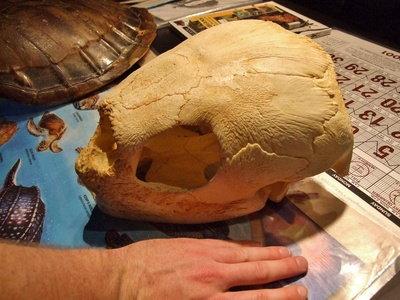
Leatherback turtle
Largest sea turtle species with leathery carapace; leatherbacks feed on jellyfish and make rare but important nesting visits to Honduran coasts. They are critically endangered globally.
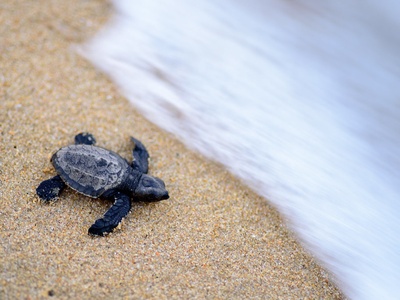
Olive ridley turtle
Small, gregarious sea turtle that nests in arribadas (mass nestings) in some Central American beaches. Olive ridleys visit Honduras’s Pacific coast and are vulnerable to bycatch.
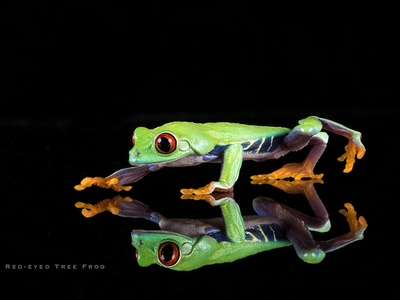
Red-eyed tree frog
Iconic brightly colored tree frog with red eyes and sticky toe pads. Red-eyed tree frogs are nocturnal and rely on wet forest vegetation for breeding.
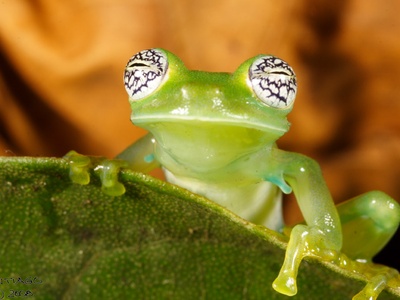
Glass frog
Small translucent-bellied frog found on streamside vegetation; internal organs are visible through the belly. Glass frogs lay eggs on leaves above streams so tadpoles drop into water.
Cane toad
Large, hardy toad introduced widely across the Neotropics and common in altered habitats. Cane toads have toxic skin glands that deter many predators and can impact native wildlife.
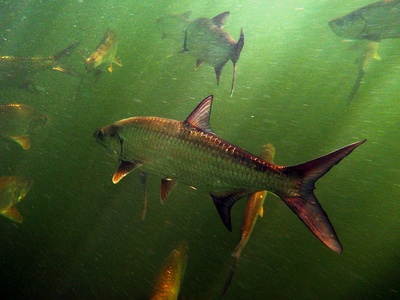
Tarpon
Powerful gamefish prized by anglers on Honduras’s Caribbean coast and Bay Islands. Tarpon can make spectacular leaps and migrate between coastal and estuarine habitats.
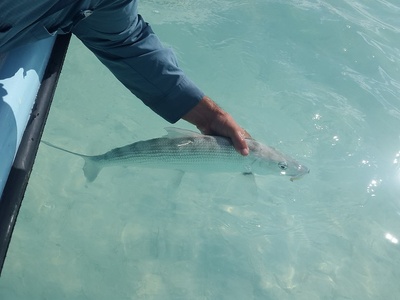
Bonefish
Silver flats fish sought by anglers for its speed and wariness. Bonefish are common around mangrove-lined flats and islands like the Bay Islands.
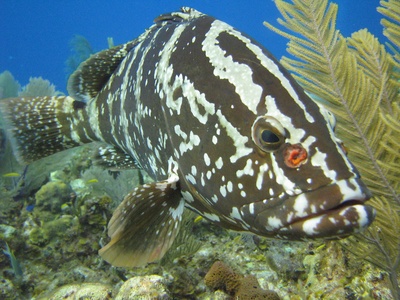
Nassau grouper
Large reef fish that forms predictable spawning aggregations; Nassau groupers in Honduras are threatened and protected during breeding to aid recovery.
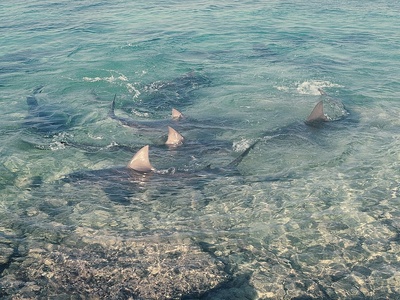
Bull shark
Robust shark that tolerates freshwater and is known to enter rivers and bays, including Honduran waters. Bull sharks are apex predators with broad diets and strong swimming ability.
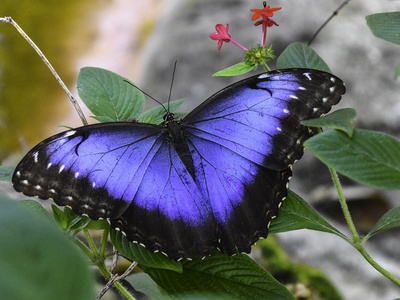
Blue morpho butterfly
Large iridescent blue butterfly often seen in Honduran forests. Males flash bright blue wings to startle predators; their undersides are camouflaged brown.
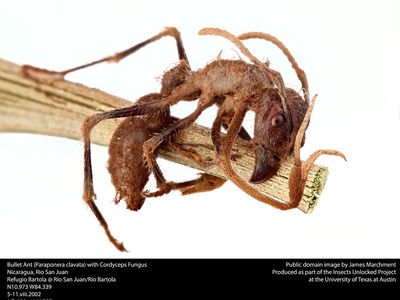
Bullet ant
Large, powerful-stinging ant famous for a notoriously painful sting described as intensely burning. Bullet ants live in tropical forests and forage on the forest floor.
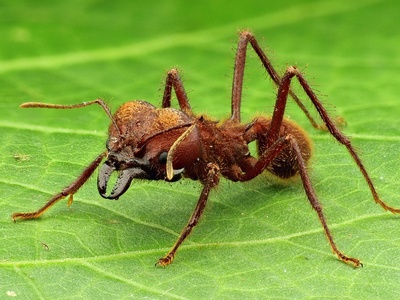
Leafcutter ant
Social ant known for cutting leaves and farming fungus in underground gardens. Leafcutter colonies are ecosystem engineers, processing large amounts of vegetation in Honduran forests.
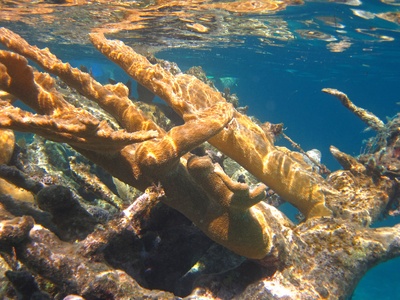
Elkhorn coral
Fast-growing branching coral that forms important reef structures in Honduras. Elkhorn coral is critically endangered from bleaching and disease; it provides habitat for many reef fish.