Sri Lanka’s landscapes—from lowland rainforests and wetlands to montane cloud forests—support a high share of endemic wildlife. Decades of land use change and fragmentation have concentrated conservation concern on a small set of species found across those habitats.
There are 9 Endangered Species in Sri Lanka, ranging from the Asian elephant to the Sri Lanka whistling-thrush. For each species you’ll find the columns Scientific name, IUCN status, Range (Sri Lanka), with concise notes on threats and protection—details you’ll find below.
Which areas of Sri Lanka are most important for these endangered species?
Lowland rainforests (like Sinharaja), the central highlands and selected wetlands are the main strongholds: montane forests host many endemic birds and amphibians, while large mammals rely on lowland corridors and buffer zones. Prioritizing habitat protection and connectivity in these regions reduces extinction risk.
What practical steps can people take to help protect these species?
Support and follow responsible tourism and park rules, avoid buying wildlife products, and contribute to or volunteer with local conservation groups. Reporting sightings to citizen science platforms and reducing plastic and habitat disturbance also make a measurable difference.
Endangered Species in Sri Lanka
| Common name | Scientific name | IUCN status | Range (Sri Lanka) |
|---|---|---|---|
| Asian elephant | Elephas maximus | Endangered (EN) | Lowland and dry-zone forests, national parks (Yala, Minneriya) |
| Indian pangolin | Manis crassicaudata | Endangered (EN) | Dry zone forests, scrublands, lowland areas across island |
| Red slender loris | Loris tardigradus | Endangered (EN) | Wet-zone forests, home gardens in southwest Sri Lanka |
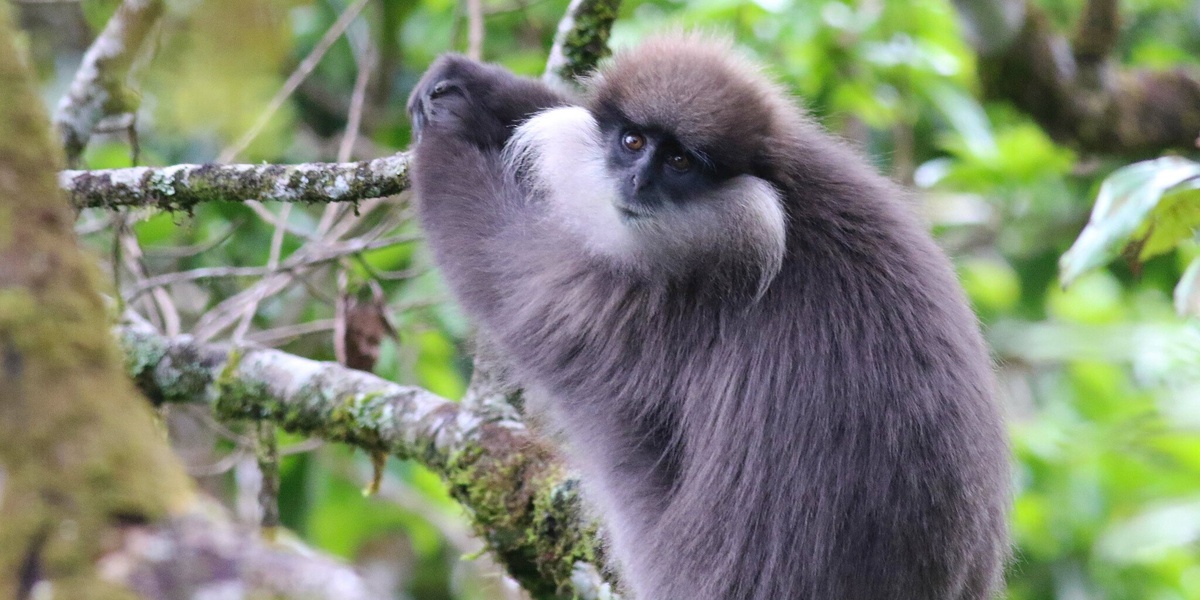
| Purple-faced langur | Trachypithecus vetulus | Endangered (EN) | Wet-zone forests, fragmented forest patches and urban edges |
| Sri Lanka blue magpie | Urocissa ornata | Endangered (EN) | Lowland and foothill rainforests of southwest wet zone |
| Sri Lanka whistling-thrush | Myophonus blighi | Endangered (EN) | Hill and montane wet-zone forests in southwest Sri Lanka |
| Green sea turtle | Chelonia mydas | Endangered (EN) | Coastal beaches, bays and foraging grounds around island |
| Green-billed coucal | Centropus chlororhynchos | Endangered (EN) | Southwest wet-zone lowland rainforests |
| Serendib scops-owl | Otus thilohoffmanni | Endangered (EN) | Lowland and submontane rainforests in southwest Sri Lanka |
Images and Descriptions
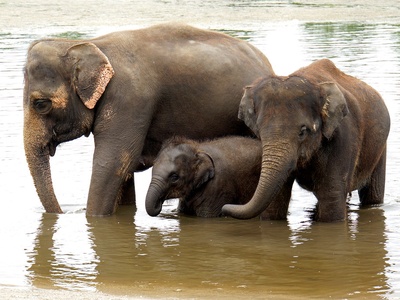
Asian elephant
Large-bodied, culturally iconic mammal with a declining population from habitat loss, fragmentation and human–elephant conflict. Poaching for ivory remains a threat; conservation focuses on corridors, protected areas and conflict mitigation.
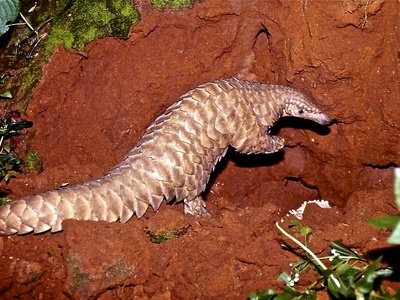
Indian pangolin
Nocturnal, solitary anteater facing steep declines from illegal wildlife trade and habitat loss. Often found in burrows and forest edges; major threats are poaching for scales and land conversion; rescued individuals need specialized care.
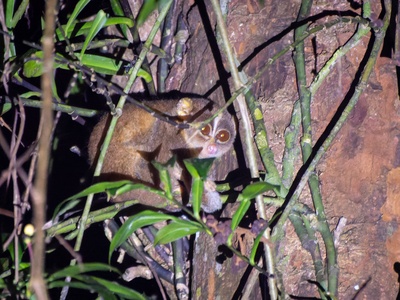
Red slender loris
Small nocturnal primate with a fragmented, decreasing population due to forest clearance, pet trade and road mortality. Lives among trees and shrubs; conservation targets habitat protection, community outreach and anti‑poaching measures.
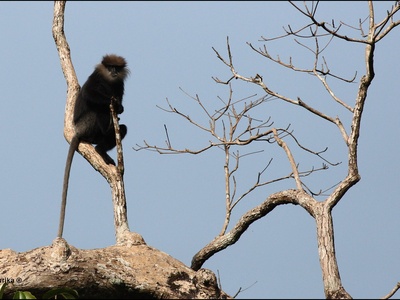
Purple-faced langur
Endemic leaf-eating primate suffering severe fragmentation and population declines from deforestation and human conflict. Often forced into small forest fragments and urban areas; conservation needs habitat restoration and conflict reduction.
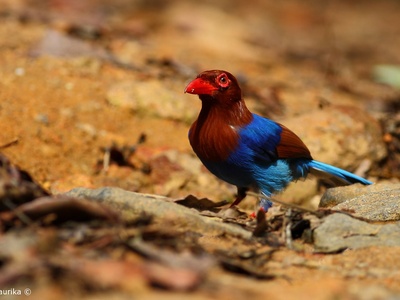
Sri Lanka blue magpie
Striking, endemic corvid restricted to remaining wet forests; population falling from logging and habitat fragmentation. Notable for long tail and loud calls; flagship species for rainforest conservation in Sri Lanka.
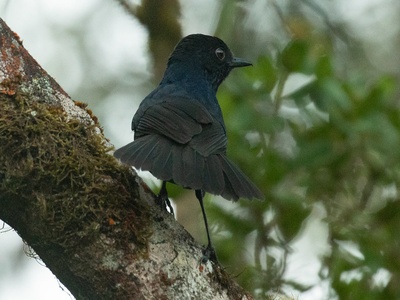
Sri Lanka whistling-thrush
Rare, localized songbird with small, declining populations due to forest loss and degradation. Secretive forest specialist; conservation focuses on protecting remnant montane and hill forest tracts.
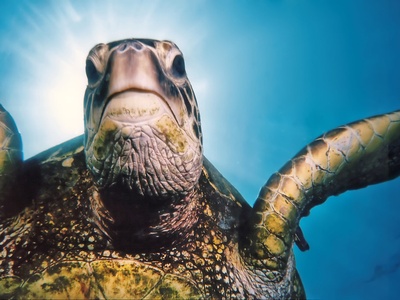
Green sea turtle
Marine turtle that nests on Sri Lankan beaches and forages in seagrass beds; threatened by egg poaching, bycatch, coastal development and pollution. Conservation includes beach protection, bycatch reduction and community nesting programs.
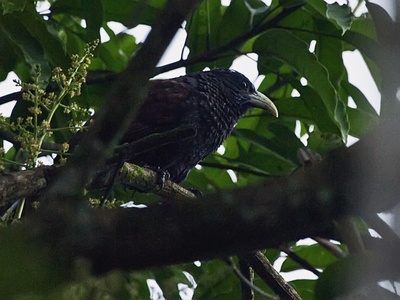
Green-billed coucal
Endemic, secretive ground- and understorey bird restricted to shrinking lowland rainforests; declining because of logging, fragmentation and predation. Conservation priority: protect remaining lowland forest and reduce disturbance.
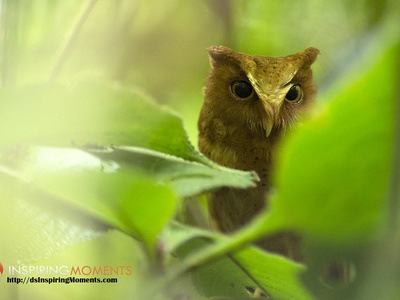
Serendib scops-owl
Recently described, small-range owl with very limited population threatened by habitat loss and degradation. Elusive nocturnal predator; protection of remaining wet-zone forest is critical for its survival.