Tropical rainforests brim with life at every level, and caterpillars are often the quiet drivers of those ecosystems—eating, growing, and feeding birds and insects that depend on them. From canopy corridors to understory shrubs, these larvae show a surprising variety of shapes, sizes and habits across different regions.
There are 20 Rainforest Caterpillars, ranging from Assassin caterpillar (Lonomia) to Urania moth. The list below is organized with columns for Scientific name, Size (cm), Range & host plants so you can compare species quickly and spot likely candidates in the field, which you’ll find below.
Are any rainforest caterpillars on this list dangerous to people or pets?
Yes—some species can deliver painful stings or toxic reactions; the Assassin caterpillar (Lonomia) is a notable example linked to severe envenomation. Treat unfamiliar caterpillars with caution, avoid handling hairy or brightly colored specimens, and seek medical advice if stung.
How should I use the columns (Scientific name, Size (cm), Range & host plants) for identification?
Start by noting size and host plant—many caterpillars are host-specific—then check the scientific name and geographic range to narrow possibilities; combine these data with photos from trusted field guides or local experts for reliable ID.
Rainforest Caterpillars
| Name | Scientific name | Size (cm) | Range & host plants |
|---|---|---|---|
| Blue Morpho | Morpho peleides | 5 | Central & South America; Fabaceae, Bignoniaceae |
| Owl butterfly | Caligo eurilochus | 7 | Neotropics (Amazon to Central America); Musa, Heliconia |
| Postman butterfly | Heliconius melpomene | 3 | Central & South America; Passiflora (passionflowers) |
| Urania moth | Urania leilus | 3 | Amazon Basin; Omphalea species (Euphorbiaceae) |
| Assassin caterpillar (Lonomia) | Lonomia obliqua | 8 | Southern Amazon, Atlantic Forest (Brazil); various trees |
| Giant sphinx | Cocytius antaeus | 10 | Neotropics (Mexico to Amazon); Annona, Rollinia (Annonaceae) |
| Glasswing butterfly | Greta oto | 2 | Central & South America; Solanaceae (Cestrum, etc.) |
| Atlas moth | Attacus atlas | 12 | Southeast Asia rainforests; Citrus, Cinnamomum, guava |
| Ulysses swallowtail | Papilio ulysses | 5 | New Guinea, NE Australia rainforests; Rutaceae (citrus relatives) |
| Common Birdwing | Ornithoptera priamus | 6 | Australasian rainforests; Aristolochiaceae (Aristolochia) |
| Owl moth (Caligula-like) | Brassolis astyra | 9 | Amazon & Central America; Arecaceae (palms) |
| Tiger longwing | Heliconius ismenius | 3 | Neotropical rainforests; Passiflora (passionflowers) |
| Owl moth (Caligo memnon) | Caligo memnon | 7 | Central & South America; Musa, Heliconia, Araceae |
| Day-flying uraniid | Urapteritra orophila | 4 | African rainforests; Omphalea-like hosts (Euphorbiaceae) |
| Tailed jay | Graphium agamemnon | 4 | Southeast Asian rainforests; Annonaceae, Lauraceae |
| Oleander hawk-moth | Daphnis nerii | 8 | Tropical Africa, Asia; Rubiaceae, Apocynaceae |
| Moth of paradise (Saturniid) | Rothschildia lebeau | 9 | Central & South America; various trees (Fabaceae, Lauraceae) |
| Blue Mormon (Papilionidae) | Papilio ulyssides | 5 | Borneo, Philippines rainforests; Rutaceae |
| Giant oak silk moth (Neotropical) | Citheronia sepulcralis | 11 | Neotropical rainforests; Fabaceae, Annonaceae |
| Glasswing mimic (ithomiine) | Mechanitis polymnia | 3 | Neotropical rainforests; Solanaceae, Apocynaceae |
Images and Descriptions
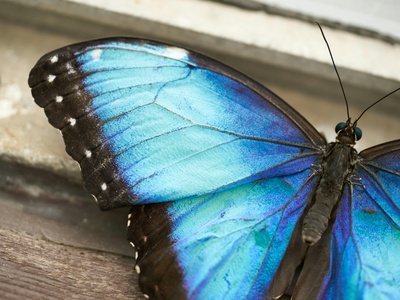
Blue Morpho
Large green-brown or reddish-brown caterpillar when mature, stout and covered with fine setae. Found on understory leaves. ID by association with adults. Eats legumes and vines; harmless to people, common in lowland rainforest.
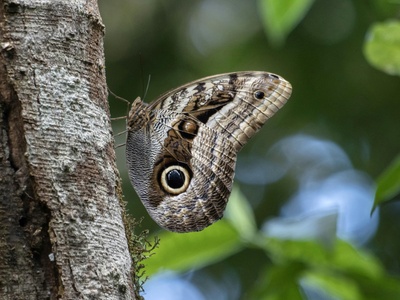
Owl butterfly
Thick, greenish caterpillar often with dorsal spines and broad body. Grows large on banana/Heliconia leaves in shaded forest. Slow-moving, well-camouflaged; not poisonous but can regurgitate to deter predators.
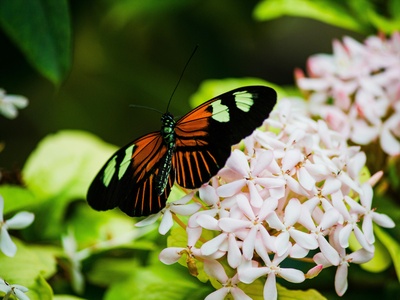
Postman butterfly
Bright, banded or spotted orange-and-black caterpillar with soft spines. Feed gregariously on passionflower vines, sequestering toxins for defense. Useful ID: small size, clubbed head; usually non-lethal to humans.
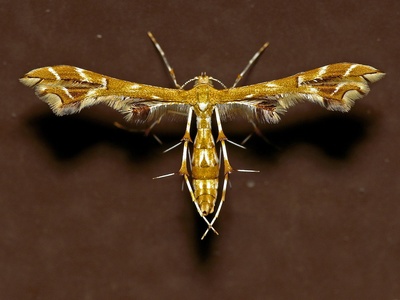
Urania moth
Striped, slug-like caterpillar that feeds on toxic Omphalea plants, becoming distasteful to predators. Found on riverine rainforest slopes. Warning colors develop in adults; caterpillars are not dangerous to people.

Assassin caterpillar (Lonomia)
Large, densely spined brown-green caterpillar capable of delivering lethal venom. ID by clustered gregarious masses and horned appearance. Dangerous; causes hemorrhagic syndrome in humans. Avoid handling.

Giant sphinx
Very large, smooth-bodied hawk-moth caterpillar with horn on posterior. Feeds on custard-apple relatives in rainforest canopy. Easily recognized by size and slow, looping movement; not venomous.
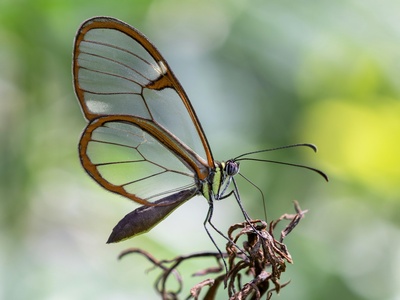
Glasswing butterfly
Small, chunky caterpillar often orange or black with tubercles. Feeds on toxic Solanaceae, sequestering chemicals for adult defense. Found on forest edges and understory vines; harmless to touch but unpalatable to predators.
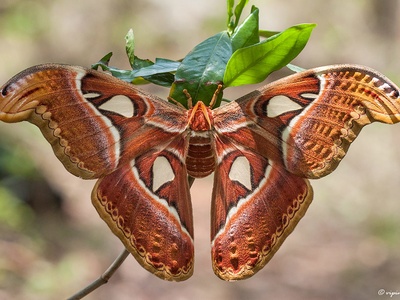
Atlas moth
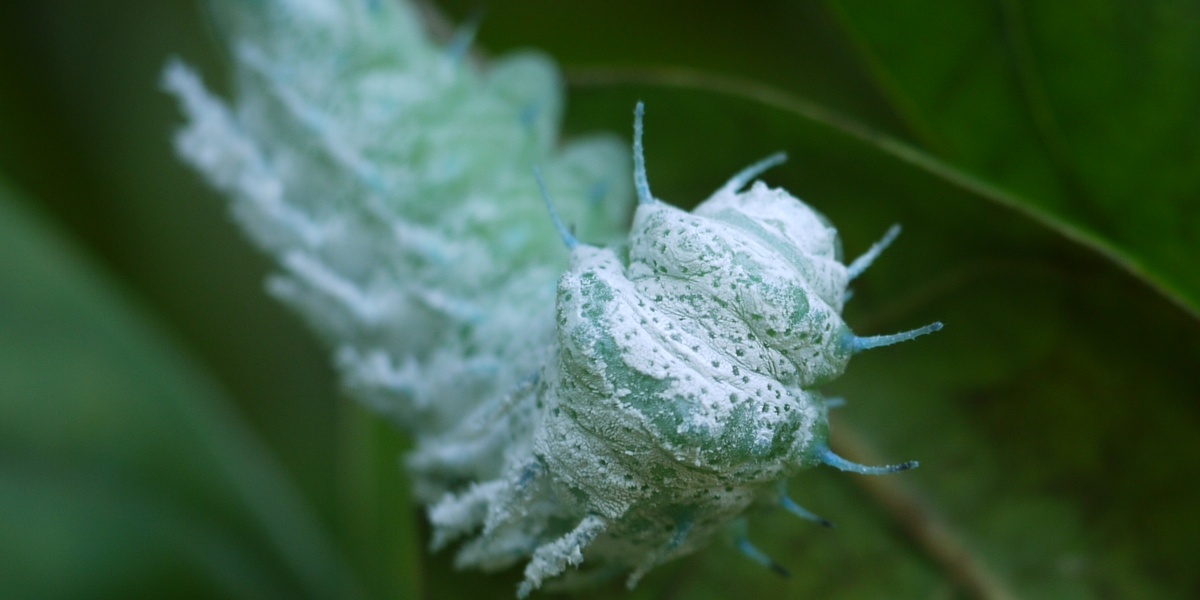
Huge, velvety caterpillar that forms silken cocoons in tree foliage. Bulky green body with faint tubercles. Common in primary and secondary rainforest; harmless to humans, prized for dramatic adult wings.
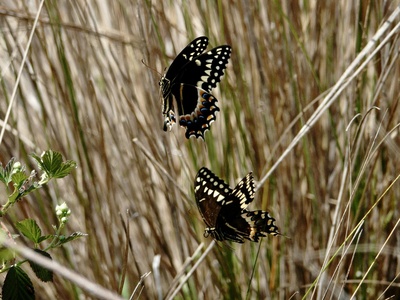
Ulysses swallowtail
Spiny, green-and-black larva mimicking bird droppings when young, later smooth green with eye-like markings. Feeds on citrus relatives in canopy and edges; non-venomous and often conspicuous near riverine forest.
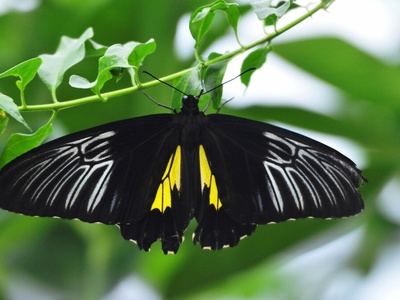
Common Birdwing
Chunky, greenish caterpillar with a segmented appearance. Feeds on pipevine relatives, sequestering toxic aristolochic acids. Large and slow-moving; warning colors in adults reflect larval chemistry.
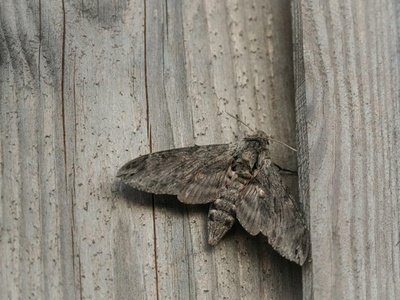
Owl moth (Caligula-like)
Robust, solitary caterpillar that bores into palm fronds and rolls leaves for shelter. Thick-bodied, often brown or green. Important palm herbivore in lowland rainforest; not venomous.
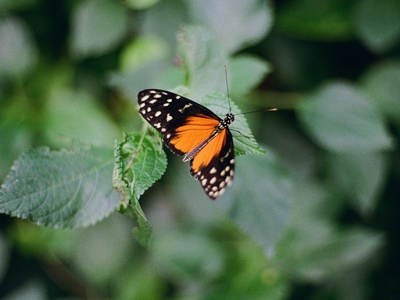
Tiger longwing
Small, fuzzy orange caterpillar with black spines feeding in groups on passionflower vines. Sequesters toxins for defense; bright coloration warns predators. Common in understory and forest edges.
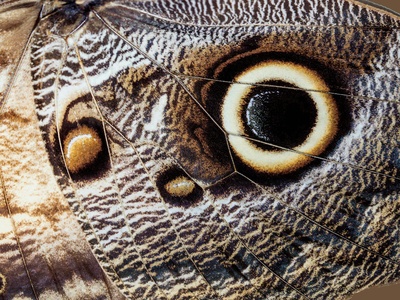
Owl moth (Caligo memnon)
Large, pale green caterpillar with fine setae and faint dorsal striping. Lives on banana and heliconia leaves in shaded rainforest. Not dangerous but can defoliate small plants in captivity.
Day-flying uraniid
Striped, flattened caterpillar of day-flying uraniids feeding on toxic plants. Often bright or banded, with sluggish behavior and toxin sequestration. Found on understory trees; not harmful to humans.
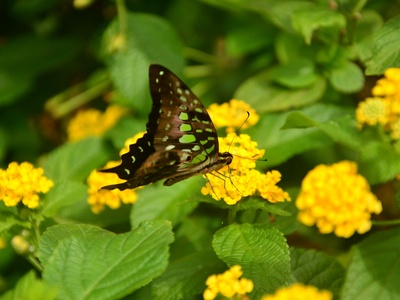
Tailed jay
Green, smooth caterpillar with faint markings; feeds on custard-apple and cinnamon relatives. Camouflaged on young shoots of rainforest trees. Non-venomous and often found in canopy gaps.
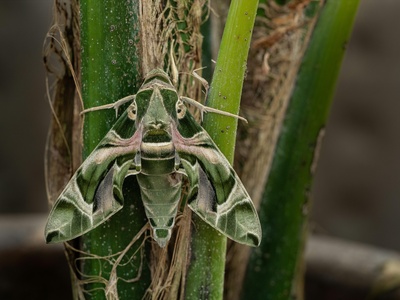
Oleander hawk-moth
Powerful, thick-bodied sphingid caterpillar with eye-like spots when mature. Feeds on Apocynaceae and related hosts in forest clearings. Not venomous; notable for dramatic color changes and large size.
Moth of paradise (Saturniid)
Large saturniid caterpillar, often gregarious when young, pale green with tubercles. Builds cocoons among canopy leaves. Harmless to people; a striking component of rainforest moth fauna.
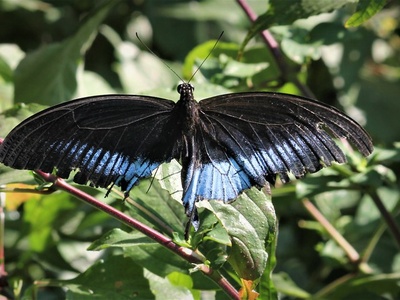
Blue Mormon (Papilionidae)
Stout, bird-dropping-mimicking early instar then green later; feeds on citrus relatives in rainforests. Non-venomous, often on canopy-edge trees. (Note: common names vary locally.)
Giant oak silk moth (Neotropical)
Very large, solitary caterpillar with knobbed thoracic segments and hornless posterior. Feeds on canopy trees and understory shrubs. Impressive size makes it easy to spot; harmless to humans.
Glasswing mimic (ithomiine)
Small, often gregarious caterpillar with spines or tubercles; feeds on poisonous vines and retains toxins. Larvae are host-specific and often found on dense passionflower-like vines in understory. Not dangerous to people.