Crowned lemurs are frugivores: fruit makes up roughly 80–90% of everything they eat. Figs, tamarind, and the nectar of kapok flowers do most of the heavy lifting, with leaves, flowers, pollen, and the occasional insect filling in the gaps. They eat soil too, which sounds odd until you understand why.
That’s the short version. The longer one is more interesting, because the crowned lemur’s diet shifts with the seasons, drives the regeneration of its forest, and looks very different in a zoo than it does in the dry deciduous forests of northern Madagascar where these animals actually live.
Table of Contents
- The quick answer
- Are crowned lemurs frugivores, herbivores, or omnivores?
- The fruits they actually prefer
- Wet season vs dry season diet
- Why do crowned lemurs eat soil?
- Seed dispersers and pollinators
- What crowned lemurs eat in captivity
- Frequently asked questions
The quick answer
The crowned lemur (Eulemur coronatus) is a fruit specialist. Field studies in the forests around Madagascar’s northern tip — places like Ankarana and Analamerana — put fruit at 80–90% of the diet by volume. The rest is a mix of young leaves, flowers, nectar, pollen, bark, and a small amount of animal matter: beetles, caterpillars, spiders, sometimes a bit of soil eaten on purpose.
They forage in groups, usually 5 to 15 animals, and they cover a lot of vertical space — feeding high in the canopy and dropping to the forest floor when the fruit supply thins out. That floor-foraging habit is unusual for an Eulemur and tells you something about how seriously they take the search for food when the season turns against them.
Are crowned lemurs frugivores, herbivores, or omnivores?
Technically, crowned lemurs are omnivores — they eat both plant and animal matter. But that label undersells how lopsided the diet is. Calling them omnivores is like calling a person who eats one slice of bacon a year a carnivore.
The accurate term is frugivore: an animal whose diet is dominated by fruit. The insects and spiders they pick off bark are real, and during lean stretches the protein matters, but they’re a rounding error next to the fruit. So if you’re filling in a homework answer, “frugivore” is the precise call, and “omnivore” is the technically-true-but-misleading one.
What they are not is a folivore — a leaf-eater like the closely related common brown lemur, which leans harder on foliage. Crowned lemurs eat young leaves opportunistically, but they don’t build a diet around them.
The fruits they actually prefer
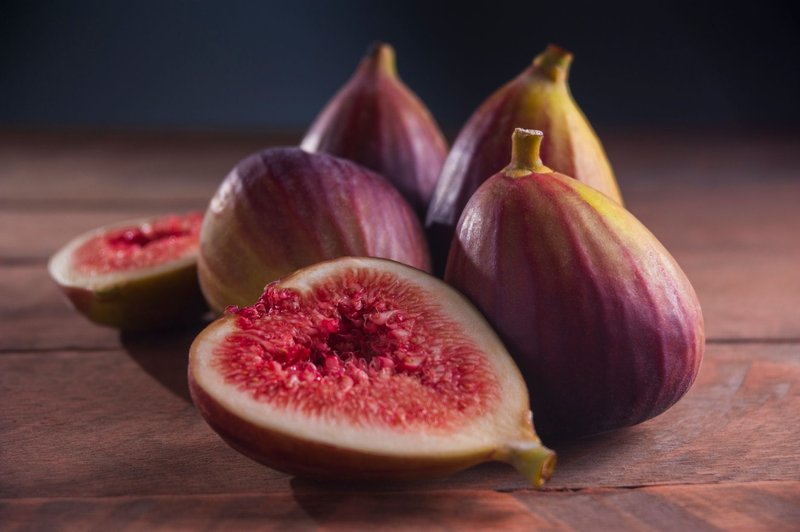
Most species profiles stop at the word “fruit.” Here’s what’s actually on the menu in the dry forests of the far north:
- Figs (Ficus species) — the backbone of the diet. Figs fruit asynchronously, meaning different trees produce at different times, so there’s usually a fig somewhere even when other trees are bare. For a frugivore in a seasonal forest, that’s the difference between feast and famine.
- Tamarind (Tamarindus indica) — the pulp inside the pods is sugary and energy-dense, a reliable food source when it’s in season.
- Kapok (Ceiba pentandra) nectar and flowers — when the kapok trees bloom, crowned lemurs drink the nectar and eat the flowers, picking up pollen on their faces in the process.
- Mango and other seasonal forest fruits — wherever ripe fruit is available, they’ll work it into the rotation.
The common thread is sugar and availability. Crowned lemurs are not picky in the sense of refusing food, but they are selective in the sense of going where the ripe fruit is and following it through the forest as different trees come into season.
Wet season vs dry season diet
Northern Madagascar runs on two seasons, and the crowned lemur’s diet is a direct reflection of which one it is. The wet season (roughly November to April) is the easy time — fruit is everywhere, and the lemurs lean into it. The dry season (May to October) is the squeeze, and that’s when the diet broadens out of necessity.
| Wet season | Dry season | |
|---|---|---|
| Fruit | Abundant, dominant — close to 90% of intake | Scarcer; lemurs travel farther to find it |
| Leaves & flowers | Eaten opportunistically | More important as fruit thins out |
| Pollen & nectar | Available from blooming trees | Targeted when flowering trees are in bloom |
| Insects & animal matter | Minor supplement | Slightly more important for protein |
| Foraging behavior | Mostly canopy | Drops to the forest floor more often |
| Water | From fruit and free water | Seeks out cave pools and standing water |
That last row matters more than it looks. In the dry season, crowned lemurs in the Ankarana region have been recorded going into caves and limestone crevices to drink from underground water — a behavior almost no other lemur shows, and one driven entirely by the seasonal scarcity that also reshapes their food.
Why do crowned lemurs eat soil?
This is the detail most articles skip. Crowned lemurs practice geophagy — they deliberately eat soil, often from termite mounds or specific patches of ground.
It looks strange, but it’s a known strategy across a lot of primates and other animals. The leading explanations:
- Mineral supplementation. Soil and clay contain sodium and other minerals that a fruit-heavy diet runs short on. Fruit is fantastic for sugar and lousy for sodium.
- Detoxification. Clay particles can bind to plant toxins and tannins, especially from leaves and unripe fruit, easing them through the gut. Think of it as a natural antacid for a diet that occasionally includes mildly toxic plant material.
- Digestive aid. The clay may help settle the gut when the diet shifts toward harder-to-process foods in the dry season.
So the soil-eating isn’t a quirk or a mistake. It’s a frugivore patching the nutritional holes that a fruit diet leaves behind.
Seed dispersers and pollinators
Here’s where the diet stops being just trivia and starts mattering to the whole forest.
When a crowned lemur eats a fig, it swallows the seeds, moves through its home range, and deposits those seeds — already packaged in fertilizer — far from the parent tree. That’s seed dispersal, and for many tree species in Madagascar’s dry forests, fruit-eating lemurs are among the main animals doing it. Lose the lemur and you slow the spread of the tree.
The kapok flowers add a second job. As the lemurs push their faces into blooms to drink nectar, pollen sticks to their fur and gets carried to the next flower. They’re acting as pollinators for the same trees they feed on.
It’s a tidy loop: the forest feeds the lemur, and the lemur, in eating, helps the forest reproduce. Conservation groups like the IUCN list the crowned lemur as Endangered, and this ecological role is a big part of why that listing isn’t just about losing one charismatic animal — it’s about losing a working part of the forest’s machinery. Their northern Madagascar habitat is documented in detail by research collections such as the Duke Lemur Center.
What crowned lemurs eat in captivity
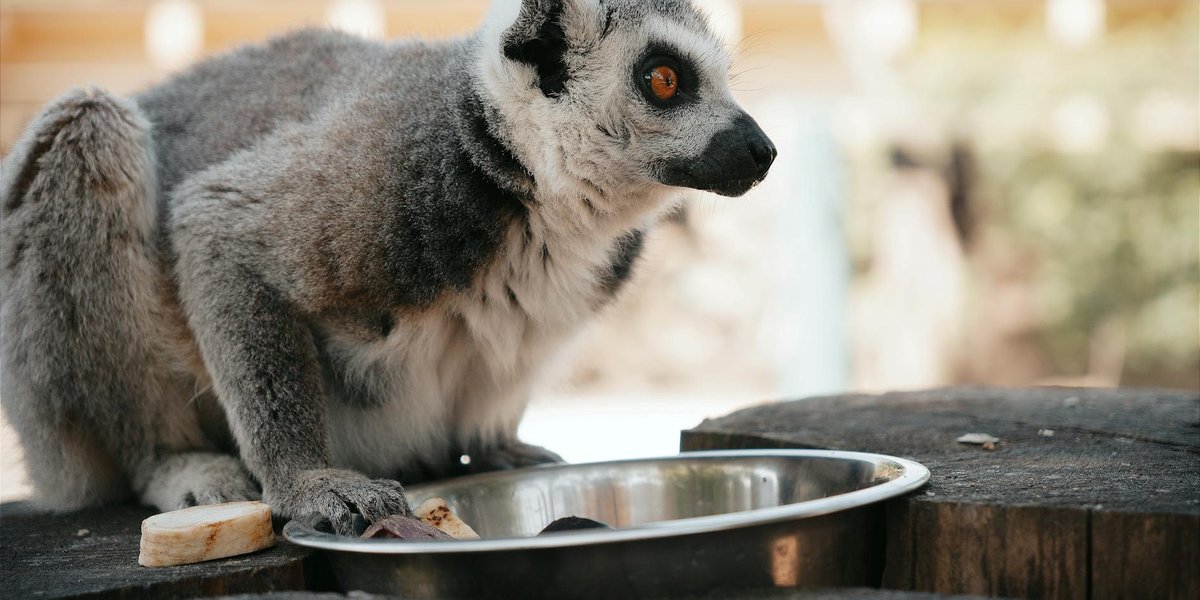
A zoo can’t grow Madagascan figs on tap, so captive diets approximate the wild one rather than copy it. In facilities like Zoo Atlanta and other accredited institutions, a crowned lemur’s daily menu usually looks like:
- Leafy greens and vegetables — kale, romaine, sweet potato, green beans
- Fruit in controlled amounts — apple, banana, melon, and similar, kept modest because cultivated fruit is far sweeter than wild fruit and too much causes obesity and dental problems
- Primate biscuits (leaf-eater or omnivore formula) — nutritionally complete pellets that cover the vitamins and minerals fresh produce misses
- Browse — fresh leaves and branches for foraging enrichment
- Occasional protein — insects like mealworms or crickets, plus the protein built into the biscuits
The single biggest difference from the wild: zoos limit fruit, while in nature fruit is the whole point. Cultivated fruit has been bred for sugar far beyond anything in a Madagascan forest, so handing a captive lemur unlimited fruit would be closer to feeding it candy than feeding it figs. The diet is built to deliver the nutrition of a wild frugivore without the sugar overload — and without the soil, which a balanced captive diet makes unnecessary.
Frequently asked questions
Do crowned lemurs eat meat? Only in tiny amounts. They eat insects, spiders, and other small invertebrates, mostly during the dry season when fruit is scarce and the extra protein helps. They’re not hunters of anything larger.
What is a crowned lemur’s favorite food? Figs. Multiple Ficus species are the dietary backbone because they fruit at different times of year, giving the lemurs a near-constant supply when other trees are bare.
Are crowned lemurs herbivores? Not strictly — they eat insects too, so they’re technically omnivores. But the diet is so fruit-dominated that “frugivore” is the most accurate single word.
Why do crowned lemurs eat dirt? For minerals (especially sodium that fruit lacks) and to bind plant toxins in the gut. The behavior is called geophagy and it’s common among fruit-eating primates.
How do crowned lemurs get water in the dry season? Mostly from the fruit they eat, but in dry regions like Ankarana they also enter caves and limestone crevices to drink from standing or underground water — a rare behavior among lemurs.
Where do crowned lemurs live? Only in the dry deciduous and semi-evergreen forests at the northern tip of Madagascar, including protected areas like Ankarana and Analamerana. Their diet is shaped entirely by what those specific forests produce season to season.