Fiji has roughly 179 bird species, and about 31 of them live nowhere else on Earth. That second number is the one that matters. You can see a Pacific Reef Heron from a beach in a dozen countries, but the Silktail, the Kadavu Shining Parrot, and the Orange Fruit Dove are Fiji-only birds — and a few of them are confined to a single island within Fiji.
That’s the catch with planning a Fiji birding trip. The checklist pages tell you what exists; they don’t tell you which boat to get on. This guide does both: the endemics worth chasing, and the specific islands where each one actually lives.
Table of Contents
- Fiji birds at a glance
- The national bird: the Collared Lory
- The must-see endemics
- Where to see them: island by island
- Conservation: rats, mongooses, and habitat loss
- Practical birding tips
Fiji Birds at a Glance
Fiji sits in the South Pacific as an archipelago of more than 300 islands, though only about a third are inhabited. Two big islands — Viti Levu and Vanua Levu — hold most of the land area, and a scatter of smaller islands like Taveuni and Kadavu hold some of the rarest birds.
The headline numbers: around 179 recorded species, roughly 31 endemics, and a handful of species that have already gone extinct since humans arrived. The endemics skew toward fruit doves, parrotfinches, honeyeaters, and a couple of genuinely strange one-off species with no close relatives anywhere. Fiji’s avifauna belongs to the wider birds of Oceania, and seeing how its endemics fit into that regional picture makes the local rarities stand out even more.
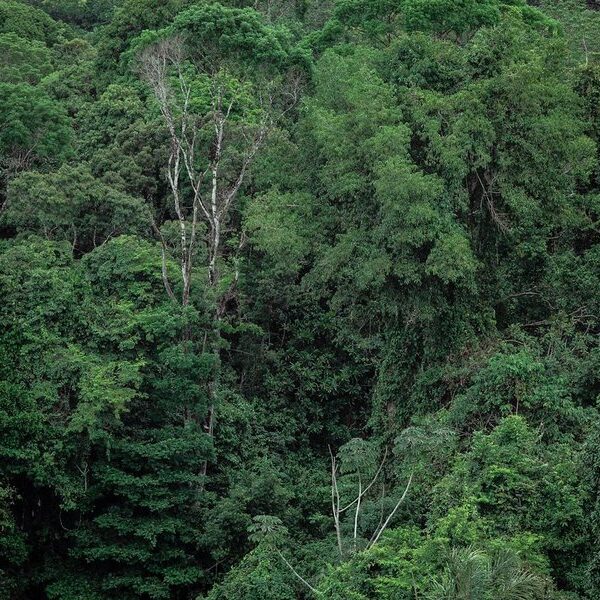
Most of these birds are forest dwellers. Fiji’s rainforest sits in the wet, windward interiors and on the higher islands, which is exactly why the best birding lines up with specific places rather than “anywhere green.” Lowland coconut plantations and resort gardens will give you lorikeets and doves; the real endemics want intact forest.
The National Bird: the Collared Lory
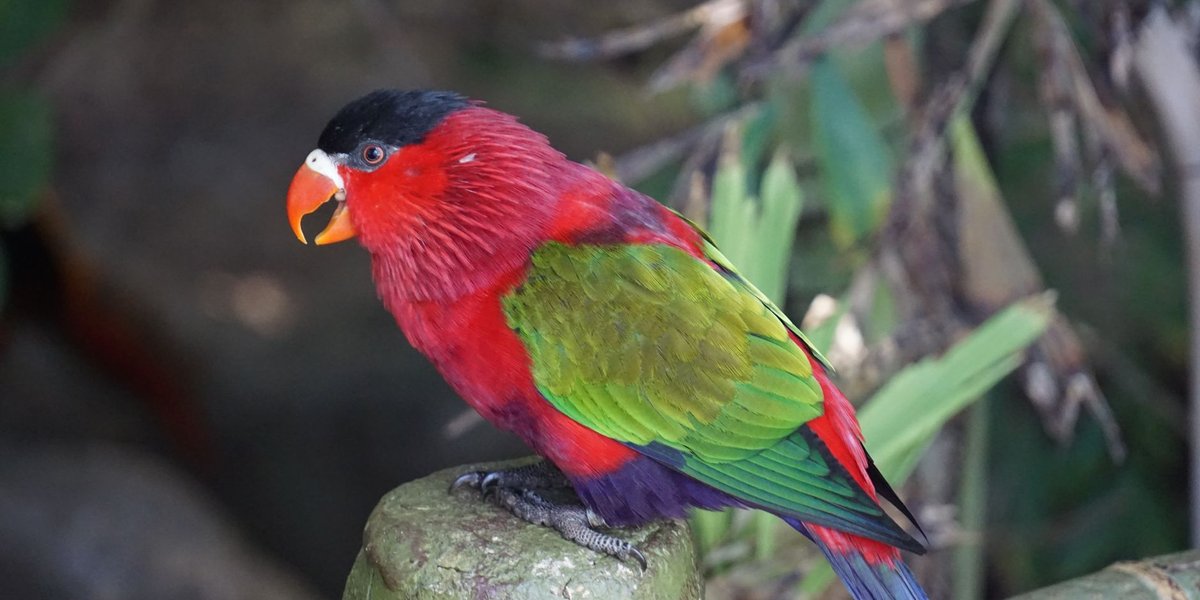
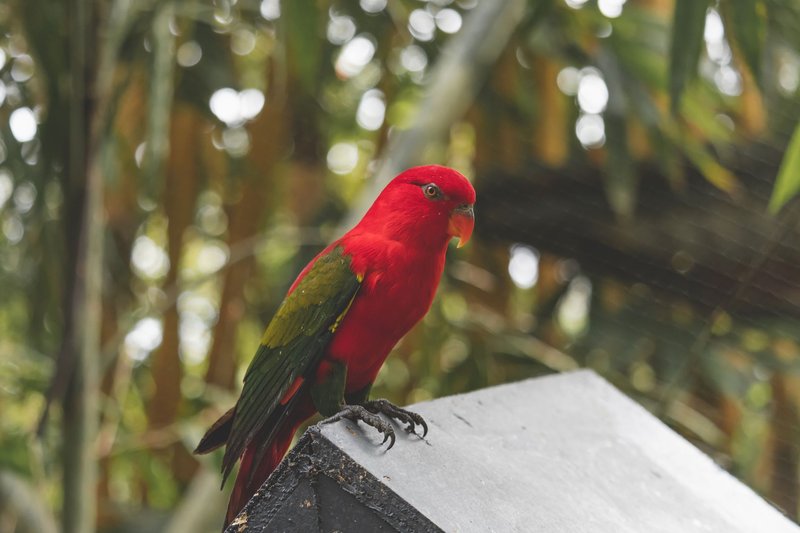
The Collared Lory (Phigys solitarius), known locally as the kula, is Fiji’s national bird and the easiest endemic to tick. It’s a small parrot drenched in scarlet, with a green belly, a purple cap, and bright orange beak and feet. Loud, fast, and almost cartoonishly colorful.
What makes the kula unusually accessible is that it adapted to human landscapes instead of fleeing them. It feeds heavily on coconut palm blossoms and flowering trees, so you’ll find it in town parks, plantation edges, and resort grounds across the main islands — not just deep forest. If you see a red parrot screaming overhead on your first morning in Fiji, that’s almost certainly the kula.
Historically its feathers were trade goods, carried as far as Tonga and Samoa for ceremonial decoration. The bird’s range maps neatly onto the larger Fijian islands, and it’s one of the few endemics you can reliably see without a guide or a hike.
The Must-See Endemics
These are the species birders actually fly to Fiji for. Each one is endemic, each has a particular island where your odds are best, and a few are single-island specialists you cannot see anywhere else.
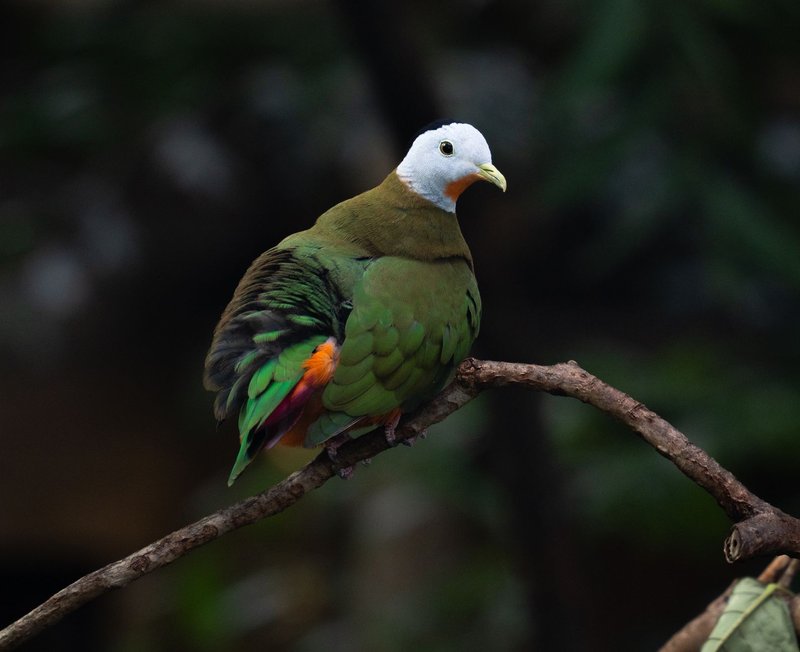
| Bird | Scientific name | Where to find it | Why it’s special |
|---|---|---|---|
| Silktail | Lamprolia victoriae | Taveuni (and Vanua Levu) | A jet-black bird with an iridescent blue-green forehead and a brilliant white rump that flashes when it fans its tail. Taxonomically baffling — long argued over, now placed near fantails. |
| Kadavu Shining Parrot | Prosopeia splendens | Kadavu only | A large crimson-and-green parrot found on a single island. Loud, conspicuous, and one of the best reasons to visit Kadavu. |
| Orange Fruit Dove | Ptilinopus victor | Taveuni, Vanua Levu | The male is an almost unreal blaze of fiery orange with an olive-green head. Tiny — about the size of a tennis ball — and surprisingly easy to overlook until it moves. |
| Fiji Goshawk | Accipiter rufitorques | Viti Levu, Vanua Levu, Taveuni | A pinkish-grey raptor with a rufous collar. Hunts in forest and gardens; the most likely bird of prey you’ll see. |
| Fiji Parrotfinch | Erythrura pealii | Viti Levu and other main islands | A small finch in grass-green with a red face and tail. Favors grassy clearings, roadsides, and forest edges. |
| Golden Dove | Chrysoenas luteovirens | Viti Levu, Vanua Levu, Kadavu | The male glows metallic gold-green with shaggy, hair-like body feathers. One of the most distinctive doves in the Pacific. |
A few notes from the field. The Silktail is the trophy bird — it’s the species most international birders prioritize, and Taveuni’s forest is the place to look. The Orange Fruit Dove sounds like a knocking or “tok” call, which is how you find it before you see it, because it sits motionless in fruiting trees. And the Kadavu Shining Parrot has a sibling situation worth knowing: a related shining parrot, the Red Shining Parrot, lives on Taveuni and Vanua Levu, so the genus is split across islands.
If your trip is short, the realistic high-value targets are the Silktail and Orange Fruit Dove on Taveuni, plus the Kadavu Shining Parrot if you can add a Kadavu leg.
Where to See Them: Island by Island
This is the part the checklist sites skip. The endemics aren’t spread evenly — they’re tied to particular islands, and a couple are single-island birds. Plan the islands, not just the species.
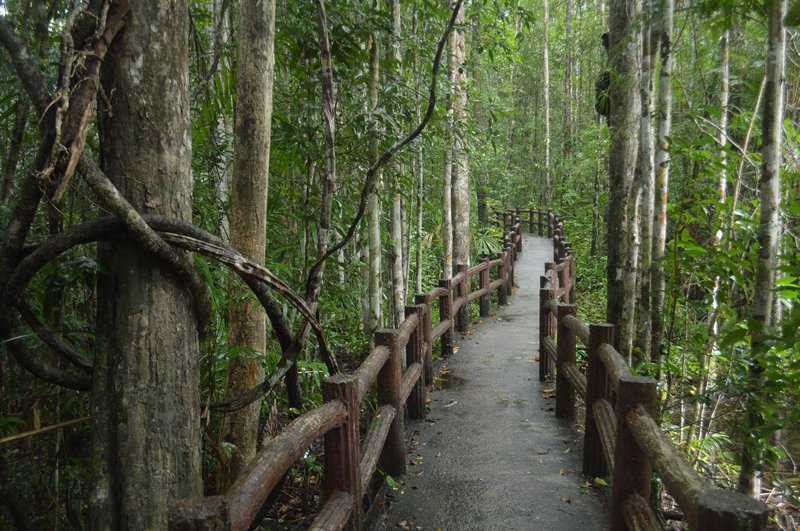
Taveuni — the Garden Island
Taveuni is the birding heart of Fiji and the single best base if you only have time for one island. Bouma National Heritage Park and the Lavena Coastal Walk protect large tracts of rainforest, and the island holds the Silktail, the Orange Fruit Dove, the Fiji Goshawk, and a strong supporting cast of doves and honeyeaters.
The Des Voeux Peak road is the classic route — a track climbing into cloud forest where the Silktail and Orange Fruit Dove are both findable. Early morning, before the cloud rolls in, is the window. The same wet forest that holds the endemics is also rich in the plants of Fiji, and knowing the fruiting trees that doves favor will sharpen your eye for the birds.
Kadavu — the parrot island
Go to Kadavu for one bird above all: the Kadavu Shining Parrot, which exists nowhere else. The island also has its own honeyeater and fantail forms, making it a worthwhile endemic-rich stop. It’s harder to reach than Taveuni and has fewer facilities, but for a serious lister it’s non-negotiable.
Viti Levu — the main island
Most travelers land at Nadi on Viti Levu, so you’ll likely bird here whether you plan to or not. Colo-i-Suva Forest Park near Suva is the convenient option — a patch of rainforest with trails where you can pick up the Fiji Goshawk, the Golden Dove, parrotfinches, and the kula without leaving the main island. It’s the easiest “real forest” birding you’ll do in Fiji.
Vanua Levu — the second island
Fiji’s second-largest island, often reached via Savusavu, shares many of Taveuni’s endemics including the Silktail and Orange Fruit Dove, plus the Red Shining Parrot. It gets less birding traffic than Taveuni, which can mean quieter trails.
For the official rundown of access points and tour options, Fiji’s tourism board lists birdwatching hotspots by island, which is useful for the logistics the species guides leave out.
Conservation: Rats, Mongooses, and Habitat Loss
Fiji’s birds face the same pressures that have hammered island birds across the Pacific. Forest clearing for agriculture and logging shrinks the habitat the endemics depend on, and the higher, wetter forests that hold the rarest species are the ones under the most pressure.
Then there are the invaders. Rats raid nests and eat eggs and chicks, and the small Indian mongoose, introduced to control rats in cane fields, instead became a predator of ground-nesting and low-nesting birds. Several of Fiji’s most threatened species — including the critically endangered Fiji Petrel, a seabird known from almost no confirmed sightings — sit on knife-edge populations partly because of introduced predators. The same forces threaten the country’s other endemic wildlife too, from iguanas to bats, as a survey of the rare animals in Fiji makes clear.
The IUCN Red List tracks the status of Fijian birds, and a number of the endemics are listed as near-threatened or worse. The single-island species are the most exposed: when a bird lives only on Kadavu or only in Taveuni’s highlands, one bad cyclone season or one new predator can move the needle fast. Visiting the national parks and using local guides puts money into exactly the protection these forests need.
Practical Birding Tips
A few things that make a Fiji birding trip go better:
- Bird early. Activity drops hard by mid-morning, and on the high islands cloud and rain move in. Be on the trail at first light.
- Hire a local guide on Taveuni and Kadavu. The Silktail and the single-island specialists are far easier with someone who knows the calls and the fruiting trees. It’s worth it.
- Learn the calls first. The Orange Fruit Dove and many of the doves are heard long before they’re seen. The fruit doves’ knocking and cooing calls are your main locator.
- Plan around the islands, not just the list. You cannot see the Kadavu Shining Parrot on Taveuni or the full Silktail population on Viti Levu. Match your itinerary to your target birds.
- Mind the season. The drier months (roughly May to October) are easier for forest trails and bring less cyclone risk; the wet season is hot and the high-island roads turn rough.
- Pack for wet forest. Even in the dry season, the windward rainforest is humid and muddy. Good footwear and rain protection beat fancy optics you can’t keep dry.
Fiji rewards the birder who treats it as an island-hopping puzzle rather than a single destination. Start on Taveuni for the Silktail and the Orange Fruit Dove, add Kadavu for its lone shining parrot, and you’ll have seen the birds of Fiji that no other country on the planet can offer.