Two volcanic islands in the Gulf of Guinea, together smaller than Maui, hold more endemic birds than most entire countries. São Tomé and Príncipe have been called the “Galápagos of Africa,” and the math backs it up: roughly 28 bird species exist nowhere else on Earth, packed into about 1,000 square kilometers of rainforest, crater rims, and cocoa plantation gone wild.
The islands never connected to the African mainland. Everything that lives here arrived by accident — blown across the ocean, rafted on debris — and then evolved in isolation for millions of years. The result is a roster of animals that are genuinely rare in the truest sense: small populations, tiny ranges, and in a few cases, fewer than a thousand individuals left.
Here are the twelve worth knowing, ranked roughly by how hard they are to find and how close to the edge they sit.
Table of Contents
- Quick Reference Table
- 1. São Tomé Grosbeak
- 2. Príncipe Scops-Owl
- 3. Dwarf Olive Ibis
- 4. Giant Sunbird
- 5. São Tomé Fiscal
- 6. São Tomé Shrew
- 7. Cobra-Bobo Caecilian
- 8. Obô Giant Snail
- 9. São Tomé Short-Tail
- 10. Newton’s Fiscal Habitat Companion: The Maroon Pigeon
- 11. São Tomé Giant Treefrog
- 12. Príncipe Glass Frog Relative: The São Tomé Spinytail
- Where to Actually See Them
Quick Reference Table
| Species | Island | IUCN Status |
|---|---|---|
| São Tomé grosbeak | São Tomé | Critically Endangered |
| Príncipe scops-owl | Príncipe | Critically Endangered |
| Dwarf olive ibis | São Tomé | Critically Endangered |
| Giant sunbird | São Tomé | Vulnerable |
| São Tomé fiscal | São Tomé | Critically Endangered |
| São Tomé shrew | São Tomé | Vulnerable |
| Cobra-bobo (caecilian) | São Tomé | Least Concern (endemic) |
| Obô giant snail | São Tomé | Data Deficient |
| São Tomé short-tail | São Tomé | Vulnerable |
| Maroon pigeon | Both islands | Vulnerable |
| São Tomé giant treefrog | São Tomé | Endemic |
| São Tomé spinytail | São Tomé | Vulnerable |
1. São Tomé Grosbeak
This is the headline act. The São Tomé grosbeak (Crithagra concolor) is one of the rarest birds in all of Africa, and for over a century scientists assumed it was extinct. Described in 1888, then not seen again until 1991 — a 103-year gap where the only evidence it had ever existed was three museum specimens.
It’s a stocky, dark chocolate-brown finch with a comically oversized bill, the kind built for crushing hard seeds. The best current estimates put the population at fewer than 250 mature individuals, all confined to lowland primary forest in the island’s southwest. The IUCN lists it as Critically Endangered, and it remains so poorly studied that ornithologists only confirmed its nest and eggs within the last decade.
If you see one, you’re among a very small club. Most visiting birders never do.
2. Príncipe Scops-Owl
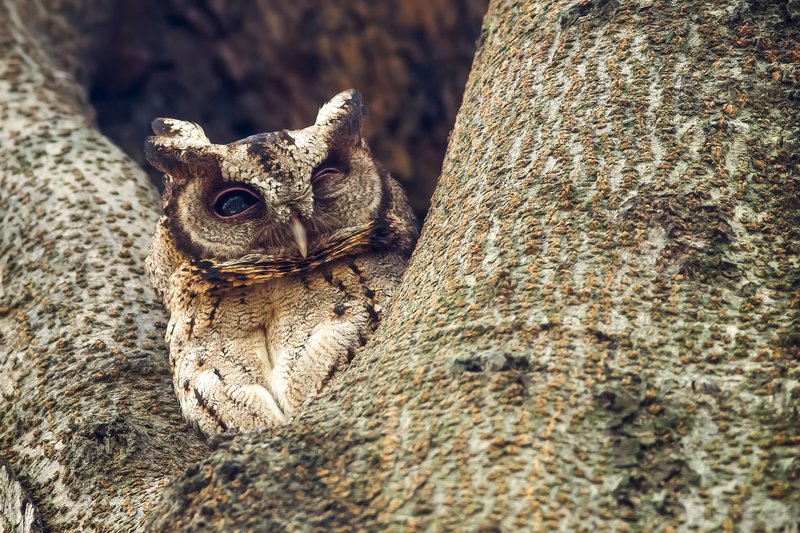
The newest arrival on this list — not because it’s young, but because science only formally described it in 2016. The Príncipe scops-owl (Otus bikegila) was hiding in plain sight, known to locals for generations but unconfirmed by ornithologists until a dedicated survey tracked down its distinctive call in the remote southern forests of Príncipe.
Its scientific name honors Ceciliano do Bom Jesus, nicknamed Bikegila, a former parrot-harvester turned ranger who helped find it. The owl is tiny, rusty-brown, and gives a fast insect-like “tuu” note repeated several times a second. Population estimates sit at around 1,000 to 1,500 birds, all in one unbroken block of old-growth forest, which is exactly why it’s classified as Critically Endangered. One bad cyclone season or one logging concession could erase it.
3. Dwarf Olive Ibis
This is the world’s smallest ibis, and one of its rarest. The dwarf olive ibis (Bostrychia bocagei) is a drab, olive-brown wading bird about the size of a chicken, which sounds unremarkable until you learn there are likely fewer than 300 left.
It haunts the forest floor of São Tomé’s southern lowlands, probing leaf litter for earthworms and insects rather than wading in marshes like most ibises. It’s hunted for food, which combined with habitat loss keeps it pinned at Critically Endangered. The bird is so secretive that researchers go years between confirmed sightings, and its breeding behavior was a near-total mystery until recent fieldwork.
4. Giant Sunbird
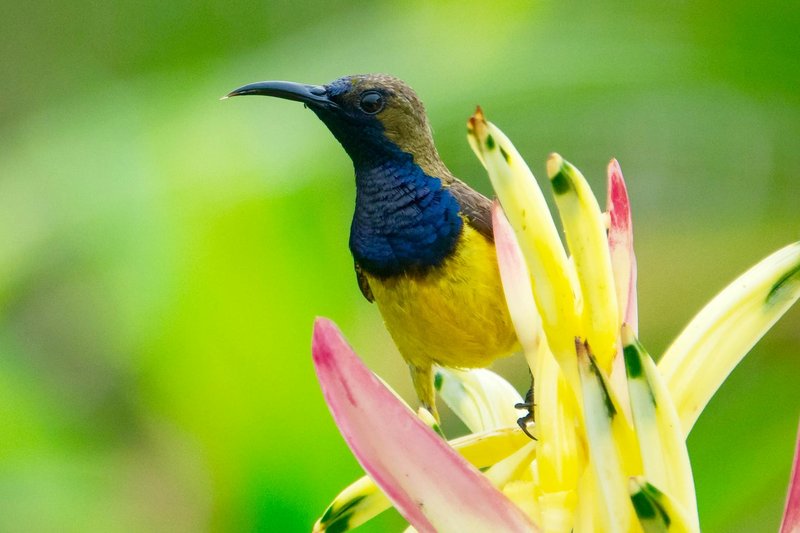
Sunbirds are usually thumbnail-sized jewels that hover at flowers. The giant sunbird (Dreptes thomensis) didn’t get the memo. At up to 23 centimeters and nearly 30 grams, it’s the largest sunbird on the planet — roughly four times the weight of a typical species.
It’s dark, almost dusky compared to the iridescent flash of its smaller cousins, with a long heavy bill it uses to probe bromeliads and tear into rotting wood for invertebrates. It sticks to mid- and high-altitude primary forest on São Tomé, which keeps it off most casual visitors’ lists. The IUCN rates it Vulnerable. Its restricted range and dependence on undisturbed forest make it a reliable barometer for the island’s forest health.
5. São Tomé Fiscal
The São Tomé fiscal (Lanius newtoni) is a small black-and-white shrike that vanished for 70 years before rediscovery in 1990. Like the grosbeak, it lived only in textbooks and a handful of specimens for most of the 20th century.
It clings to a sliver of lowland primary forest in the southwest, the same shrinking stronghold that protects so many of these birds. The population is estimated at fewer than 50 mature individuals — possibly the rarest bird on either island — which is why conservationists treat its forest patch as some of the most irreplaceable real estate in the Gulf of Guinea. It’s Critically Endangered, and arguably the single most endangered animal in the entire archipelago.
6. São Tomé Shrew
Here’s a fact that surprises people: São Tomé and Príncipe have almost no native land mammals. No native rodents, no monkeys, no antelope. The only native non-flying land mammal is a single shrew.
The São Tomé shrew (Crocidura thomensis) is a small insectivore found across forested parts of the island, listed as Vulnerable. Everything else with four legs and fur — the civets, the weasels, the rats, the monkeys you might glimpse — was introduced by humans. That one shrew, plus a few bat species, is the entire native mammal fauna. It’s a stark illustration of just how isolated these islands have always been.
7. Cobra-Bobo Caecilian
The cobra-bobo (Schistometopum thomense) looks like a fat yellow worm or a small snake, but it’s neither — it’s a caecilian, a limbless burrowing amphibian. And it’s the easiest “rare” animal on this list to actually encounter, because it turns up in gardens and cocoa plantations across the island.
It’s a vivid banana-yellow, sometimes with dark speckling, and grows to about 30 centimeters. Locals long believed it was venomous; it isn’t, though it secretes mildly toxic skin compounds as a defense. As an endemic species found nowhere else, it’s a genuine São Tomé original even if it isn’t formally endangered. Turn over a damp log in the right plantation and you may meet one.
8. Obô Giant Snail
The Obô giant snail (Archachatina bicarinata) is one of the largest land snails in the world, with a shell that can exceed 12 centimeters. It’s named for the Obô region that dominates the islands’ interior, now protected as Obô Natural Park.
Once abundant and harvested locally as food, it has declined sharply, partly outcompeted by an introduced giant snail species. Data on its current numbers is thin enough that the IUCN flags it as Data Deficient, but local accounts of how much harder it has become to find suggest a real decline. It’s a reminder that “rare” isn’t only about charismatic birds.
9. São Tomé Short-Tail
The São Tomé short-tail (Amaurocichla bocagii) is a tiny, warbler-like bird with a stub of a tail, found along forest streams in the island’s interior. It’s one of those endemics that birders chase specifically because it’s both range-restricted and genuinely hard to lay eyes on.
It forages low, near running water, flicking through ferns and mossy banks for insects. Rated Vulnerable, it depends entirely on intact stream-side forest, which makes it sensitive to any logging or agricultural creep into the highlands. Most checklists from the island that include it come with a note about how long the group waited by the water to see one.
10. The Maroon Pigeon
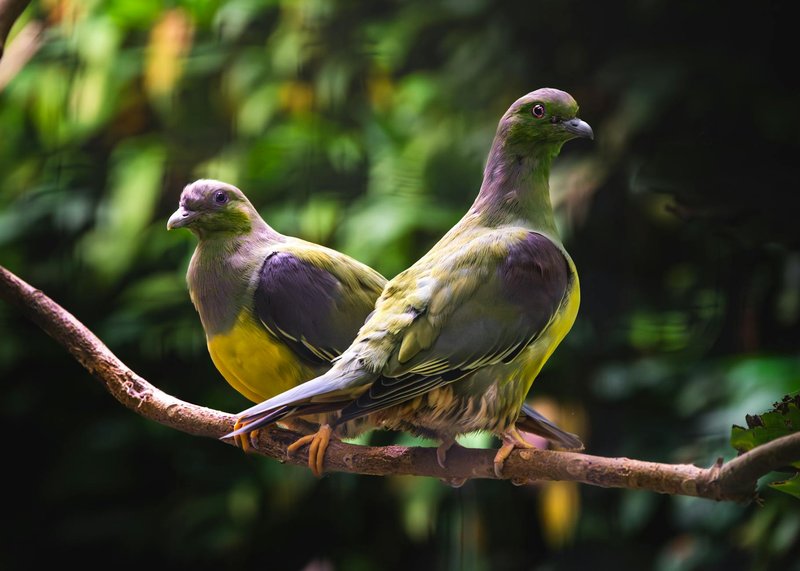
The maroon pigeon (Columba thomensis) is a large, deep chestnut-and-grey forest pigeon found on both São Tomé and Príncipe — one of the few endemics shared across both islands. It favors the canopy of montane forest, where it feeds on fruit and stays frustratingly out of sight.
Hunting pressure and habitat loss keep it on the Vulnerable list. It’s bigger and heavier than the introduced pigeons you’ll see around town, and its low, resonant call carries through the forest long before you spot the bird itself. Where it still thrives, the forest is usually in good shape.
11. São Tomé Giant Treefrog
São Tomé’s amphibians are as endemic as its birds. The giant treefrog (Hyperolius thomensis) is a large reed frog found only on this island, typically tied to water-holding plants and forest pools in the highlands.
It’s a striking species with variable coloration, and like many island amphibians it has a restricted altitudinal range that makes it vulnerable to habitat change and disease. The island hosts several endemic frogs found nowhere else, but this one stands out for its size and its dependence on undisturbed humid forest. Night surveys in the wet season are the way to find it.
12. The São Tomé Spinytail
Rounding out the list is the São Tomé spinytail (Zoonavena thomensis), a small endemic swift that hawks insects over the forest canopy, often near clearings and forest edges. Spinytails get their name from the stiff, spine-tipped tail feathers that help them cling to vertical surfaces when roosting.
It’s listed as Vulnerable, with a population tied to the health of the island’s forests and the insect life they support. You’ll spot it by its rapid, fluttering flight high overhead — easy to overlook among the more common swifts, which is exactly why it makes a satisfying find for anyone working through the island’s endemics.
Where to Actually See Them
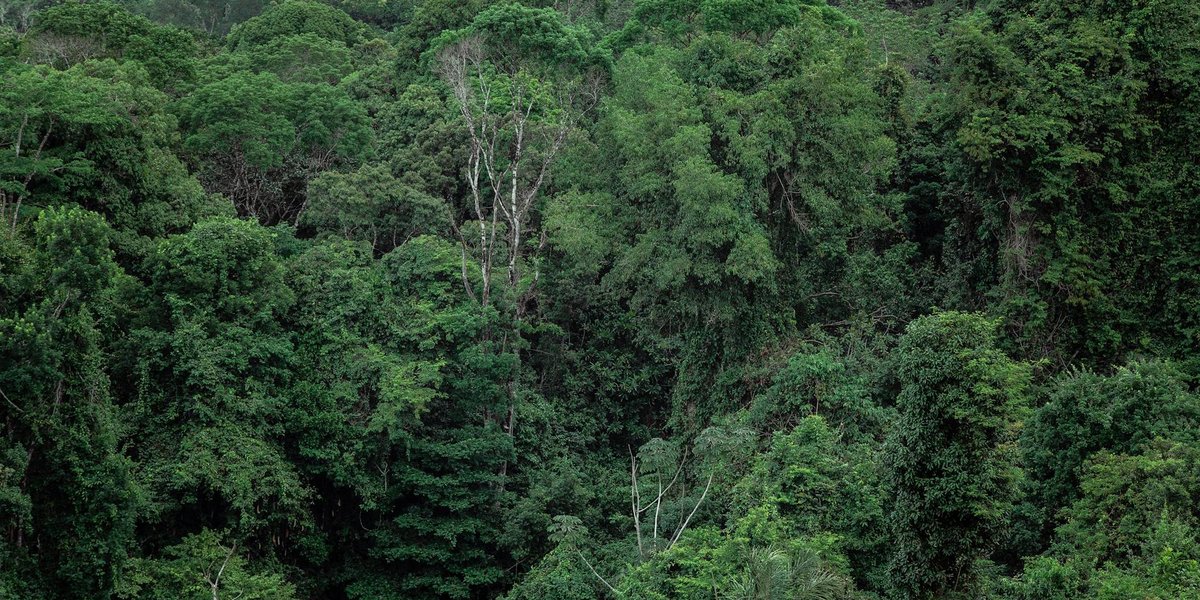
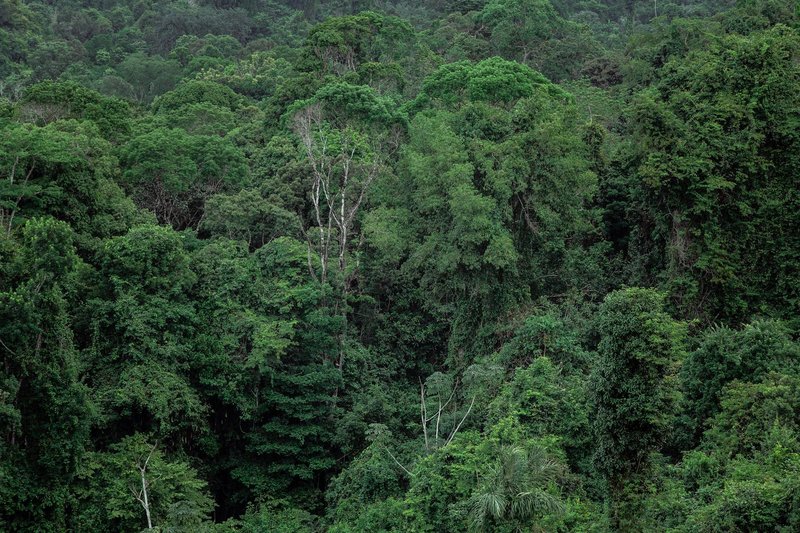
The southwest lowland primary forest of São Tomé is the single most important place on Earth for these animals. The grosbeak, the fiscal, and the dwarf olive ibis are all concentrated in this shrinking block of old-growth forest, much of it inside or bordering Obô Natural Park, which covers a large share of both islands’ interiors. Getting there usually means a guided multi-day trek into the Xufexufe or Io Grande river valleys with a local ranger.
On Príncipe, the scops-owl lives in the remote southern forest, reachable only on foot and best located after dark by its call.
The accessible wins are the caecilian and the maroon pigeon — the cobra-bobo turns up in plantations near the lowlands, and the pigeon ranges into more visited montane areas. Conservation work here is coordinated by groups including BirdLife International, which has flagged São Tomé and Príncipe as one of the most important and threatened endemic bird areas in Africa.
Twelve animals, two islands, and a window that’s narrowing. Several of these species number in the low hundreds, hanging on in forest that fits inside a single river valley. Rare here isn’t a marketing word. It’s a countdown.