Here’s the honest truth most listicles won’t tell you: the Gambia has almost no animals found nowhere else on Earth. The country is a thin ribbon of land wrapped around a single river, surrounded on three sides by Senegal, sharing nearly every species across an invisible border. True endemics? You can count them on one hand, and most are insects you’ll never see.
But that’s not really what you came here for. You want to know which animals make the Gambia the Gambia — the ones a guide will stop the jeep for, the ones on the national crest, the birds that pull birdwatchers here every dry season. So this piece does both. First the real endemics, told straight. Then the signature species: spotted hyenas, six kinds of primate, and some of the densest birdlife in West Africa.
Table of Contents
- Quick answer: what’s actually unique to the Gambia
- The true endemics (such as they are)
- The national animal: spotted hyena
- The six primates of the Gambia
- The birds: where the Gambia actually wins
- Big mammals and reptiles worth the trip
- Where to see them
Quick answer: what’s actually unique to the Gambia {#quick-answer}
If you mean strictly endemic — living only within the Gambia’s borders and nowhere else — the list is tiny and unglamorous: a couple of leafminer moths, a marine snail or two, and a famously dubious blind snake. That’s it. The Gambia is too small and too biologically continuous with Senegal to have evolved its own animal cast.
If you mean signature — iconic, emblematic, the species that define the place — then the list opens right up: the spotted hyena (the national animal), the western red colobus and five other primates, over 560 recorded bird species, plus hippos, manatees, crocodiles, and the rare clawless otter. Those are the animals worth flying for.
The true endemics (such as they are) {#true-endemics}
Let’s clear the endemism question first, because every other page either ignores it or buries it in an academic checklist.
A handful of leafminer moths in the genus Phyllonorycter have been described from Gambian specimens and aren’t recorded elsewhere — but these are millimetre-scale insects whose larvae tunnel between the layers of a single leaf. Nobody books a safari for them.
Then there’s the Gambia blind snake, a worm-like burrowing snake known from very few records. Its status as a genuine endemic is shaky; taxonomists suspect it ranges into neighbouring Senegal and was simply collected here first. The same caveat applies to a couple of coastal marine snails sometimes listed as Gambian endemics.
The pattern is consistent: the Gambia’s “unique” animals are obscure invertebrates and burrowers, often endemic only on paper because that’s where the type specimen happened to be caught. For mammals, birds, and reptiles, the country shares essentially everything with the surrounding animals of West Africa across the Sahel and Guinean savanna. That’s not a knock on the place. It’s just geography — a country barely 50 kilometres wide can’t grow its own megafauna.
So the interesting question isn’t “what’s endemic” but “what’s emblematic.” That’s the rest of this article.
The national animal: spotted hyena {#spotted-hyena}
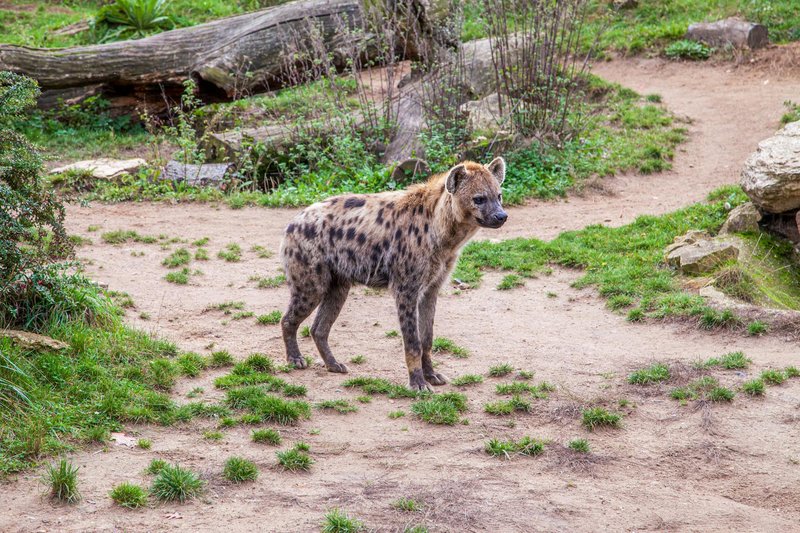
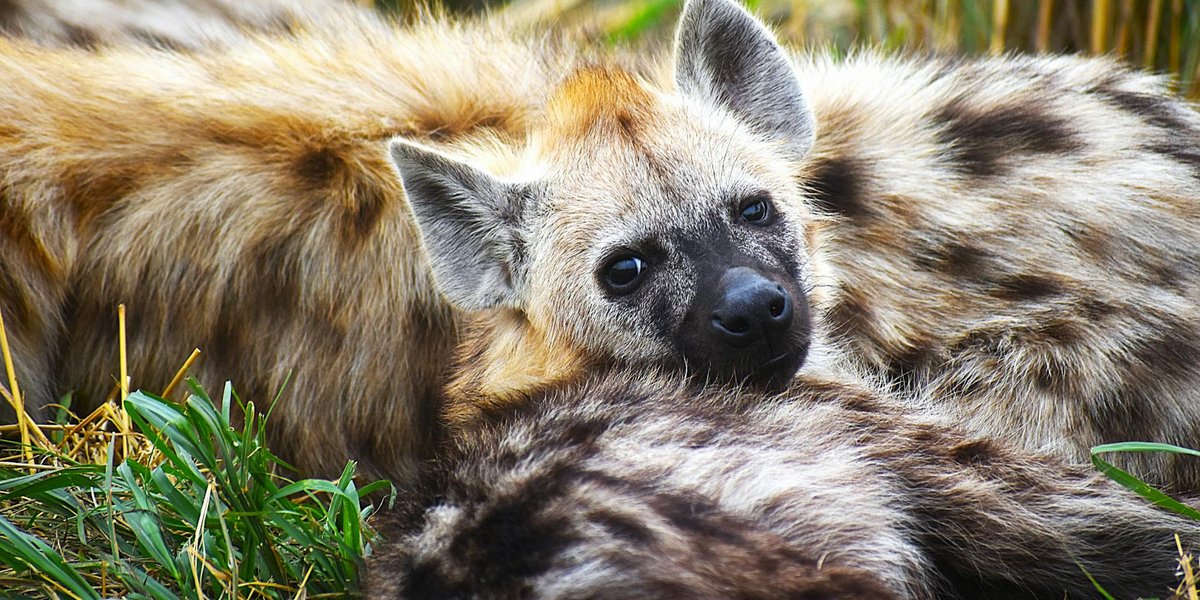
The Gambia picked the spotted hyena (Crocuta crocuta) as its national animal, and it’s a telling choice — most countries reach for something prettier. The animal appears on the national coat of arms, a nod to resilience over glamour.
Forget the cackling-scavenger cartoon. Spotted hyenas are formidable hunters that kill most of their own food, with jaws that generate some of the highest bite forces of any land mammal — enough to crack and digest bone that other predators leave behind. Their clans are matriarchal, run by dominant females that outweigh the males, and their “laugh” is a genuine social signal tied to status and stress.
In the Gambia they’re elusive and largely nocturnal, hanging on in protected pockets like Kiang West National Park and the River Gambia floodplains. You’re far more likely to hear one after dark than to see it in daylight. The IUCN Red List rates the species as Least Concern globally, but in West Africa specifically, populations are thin and shrinking as habitat gives way to farmland.
The six primates of the Gambia {#primates}
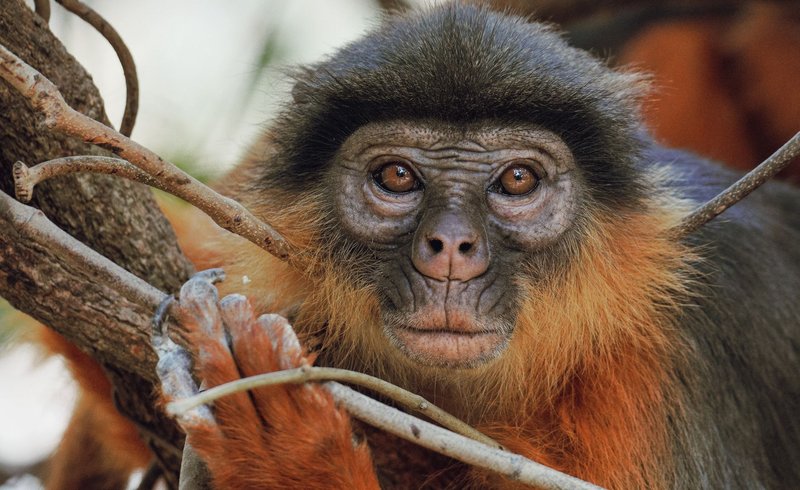
Six primate species share this small country, which is a genuinely high count for the land area. This is the Gambia’s quiet superpower.
Western red colobus (Piliocolobus badius) is the standout — a leaf-eating monkey with a chestnut-red back and a long, lanky build, and it’s classified as Endangered by the IUCN. Abuko Nature Reserve is one of the more reliable places in West Africa to watch them move through the gallery-forest canopy.
Western chimpanzee (Pan troglodytes verus) is the Gambia’s most famous primate story. Chimps went locally extinct here, but since the 1970s a rehabilitation project has reintroduced them onto the Baboon Islands in River Gambia National Park. They’re a Critically Endangered subspecies, and the island population is one of conservation’s genuine wins — though you can only view them from the water, not on foot.
The other four are easier to spot and more relaxed about people:
- Guinea baboon (Papio papio) — troops of these stocky, pinkish baboons are common along the riverbanks and in Kiang West.
- Green (vervet) monkey (Chlorocebus sabaeus) — the cheeky generalists you’ll see in lodges, mangroves, and town edges.
- Patas monkey (Erythrocebus patas) — the fastest primate on the ground, sprinting across open savanna on long legs; sparse and shy here.
- Senegal bushbaby (Galago senegalensis) — a tiny, wide-eyed nocturnal primate you’ll find by torchlight, given away by the headlamp shine of its eyes.
Six primates in a country smaller than the US state of Connecticut is the kind of stat that makes the Gambia matter to anyone serious about African wildlife.
The birds: where the Gambia actually wins {#birds}
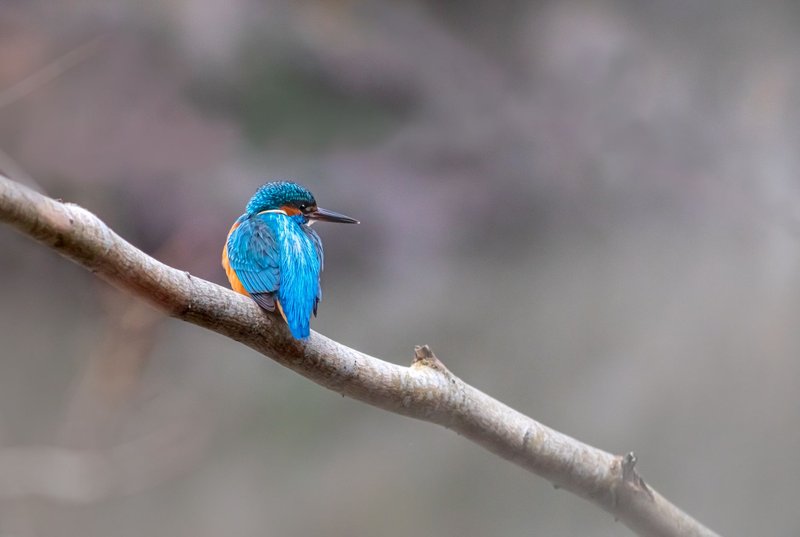
If the Gambia has a true claim to fame, it’s feathers. More than 560 bird species have been recorded in this sliver of a country, and serious birders routinely rack up 100-plus species in a single day during the dry season. The combination of mangrove, savanna, gallery forest, and the river itself packs an enormous variety into a small, easy-to-travel area.
The headliners read like a wish list. The Egyptian plover — the legendary “crocodile bird” of old natural-history lore — is one of the Gambia’s most-wanted sightings, found on sandbars upriver. The carmine bee-eater, the Abyssinian roller, and a parade of kingfishers (pied, malachite, giant, blue-breasted) supply the colour. Raptors are everywhere: African fish eagles calling over the water, palm-nut vultures, and bateleurs riding the thermals.
The dry season from November to March is the window, when European migrants pile in on top of the resident species and the bush thins out enough to actually see things. According to BirdLife International, the country’s small size is exactly what makes it work — you can sample mangrove, forest, and savanna birds within a single morning’s drive, which is why it punches so far above its weight as a birding destination.
Big mammals and reptiles worth the trip {#big-mammals}
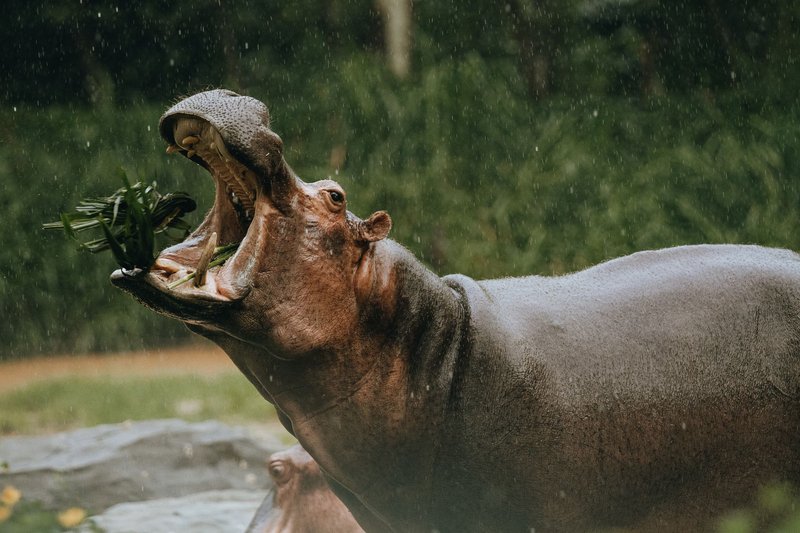
The Gambia missed out on the classic safari “Big Five” — no lions, elephants, rhinos, or buffalo roam here anymore, and that’s worth saying plainly so you arrive with the right expectations. What it does have is a river full of large, charismatic wildlife.
Hippopotamus (Hippopotamus amphibius) live in the upper reaches of the River Gambia, especially around the national park. They’re the country’s heavyweight, and a boat trip is the way to see them surface and yawn between the mangroves.
West African manatee (Trichechus senegalensis) is the ghost of Gambian rivers — a Vulnerable, slow-moving sea cow that drifts through brackish creeks and is genuinely hard to catch sight of. Spotting one is a serious birder-level prize for mammal fans.
Nile crocodile (Crocodylus niloticus) shows up across the river system, and the Kachikally sacred crocodile pool in Bakau has turned a population of habituated crocs into one of the country’s best-known attractions, where they’re treated as a fertility shrine rather than a hazard. The crocs are just the headline act, too — for the monitors, geckos, and snakes that round out the country’s cold-blooded cast, it’s worth digging into the wider reptiles of the Gambia before you travel.
Round it out with African clawless otters, warthogs, bushbucks, several mongoose species, and the spotted hyenas from earlier, and you’ve got a respectable mammal list — just one that rewards patience and a boat over big open-plains drama.
Where to see them {#where-to-see}
The Gambia’s compact geography is the practical payoff. You can hit most of the signature species in a week without long transfers.
- Abuko Nature Reserve — gallery forest just outside the coast; the most reliable spot for red colobus, vervets, bushbucks, and forest birds.
- Kiang West National Park — the largest protected area, savanna and mangrove; baboons, warthogs, and a shot at hyena sign.
- River Gambia National Park (Baboon Islands) — the reintroduced chimpanzees, hippos, and manatees, all viewed from a boat.
- Tanji Bird Reserve and the coastal lagoons — concentrated birdlife near the resorts, ideal for a first-morning warm-up.
- Kachikally Crocodile Pool, Bakau — the close-up crocodile experience, easy from the coast.
The Gambia won’t give you a continent-spanning checklist of animals that exist nowhere else, because almost none do. What it gives you instead is density: six primates, hundreds of birds, hippos and crocs and the occasional hyena’s laugh in the dark — all packed into a country you can cross in an afternoon. For most travellers, that turns out to be the better deal.