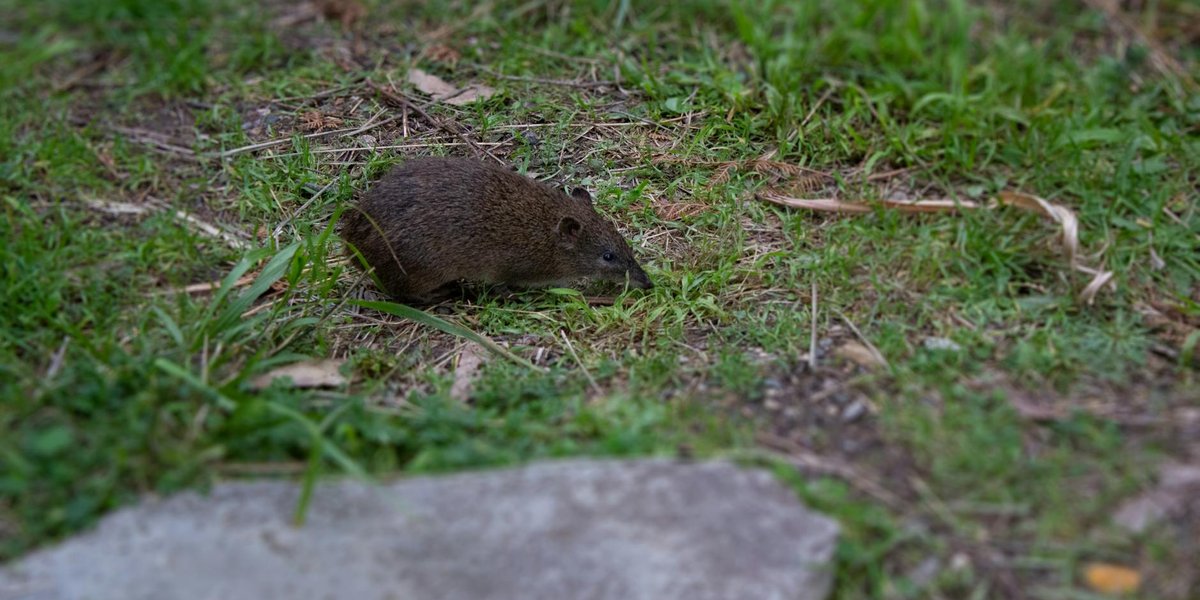
Raffray’s bandicoot is an insectivorous omnivore — it eats mostly insects and their larvae, plus worms, small vertebrates, fungi, roots, and fruit, with a particular soft spot for figs. That’s the short answer. The longer answer is more interesting, because almost nothing online actually spells out what this Papua New Guinea marsupial puts in its mouth.
Peroryctes raffrayana lives on the forest floor of New Guinea and a few surrounding islands, and like most bandicoots it makes its living by digging. If you’ve ever watched a bandicoot work a patch of dirt, the diet starts to make sense before you read a single fact about it.
The quick diet table
| Food type | Examples | Notes |
|---|---|---|
| Insects & larvae | Beetles, grubs, ground-dwelling bugs | The dietary staple |
| Invertebrates | Earthworms, other soil creatures | Dug from leaf litter and soil |
| Small vertebrates | Tiny lizards, small prey | Opportunistic, not a main course |
| Fungi | Forest-floor and underground fungi | Common in New Guinea bandicoots |
| Plant matter | Roots, tubers, vegetation | Rounds out the omnivore label |
| Fruit | Fig fruit (Ficus) | A noted favorite |
What “insectivorous omnivore” actually means here
The label gets thrown around for a lot of small mammals, but for Raffray’s bandicoot it’s precise. The bulk of the diet is animal protein in the form of insects and other invertebrates. The Animal Diversity Web account describes the species as largely insectivorous and omnivorous, taking small vertebrates, invertebrates, and vegetation.
So it’s not a strict insect-eater like an anteater, and it’s not a fruit specialist like a flying fox. It’s the generalist in the middle: if it’s small, soft, and reachable with a few seconds of digging, it’s probably food.
Figs deserve a special mention. Among the plant material it eats, fig fruit stands out as a preferred item — which tracks, because figs litter the New Guinea forest floor year-round and are one of the most reliable food sources in the tropics. Worth a look at how central fig trees are to forest food webs; a huge slice of rainforest wildlife leans on them, and Raffray’s bandicoot is one more name on that list.
How it actually finds food
This is where the diet and the animal’s anatomy meet. Raffray’s bandicoot is crepuscular to nocturnal — most active in the low-light hours, with feeding observations peaking around 7 to 9 p.m. It spends the day tucked away and comes out as the forest cools.
The foraging method is straightforward: it pushes its long, pointed snout into the soil and leaf litter and roots around for whatever’s hiding there. Grubs, worms, beetle larvae, and underground fungi all turn up this way. The conical pits bandicoots leave behind — small, snout-shaped holes punched into the dirt — are a giveaway that one has been working an area.
That digging style explains why the diet leans the way it does. An animal built to probe soil is going to eat a lot of soil-dwelling invertebrates and a lot of buried fungi and roots, almost by default. The figs and fallen fruit are the easy bonus on top.
Where it eats: habitat shapes the menu
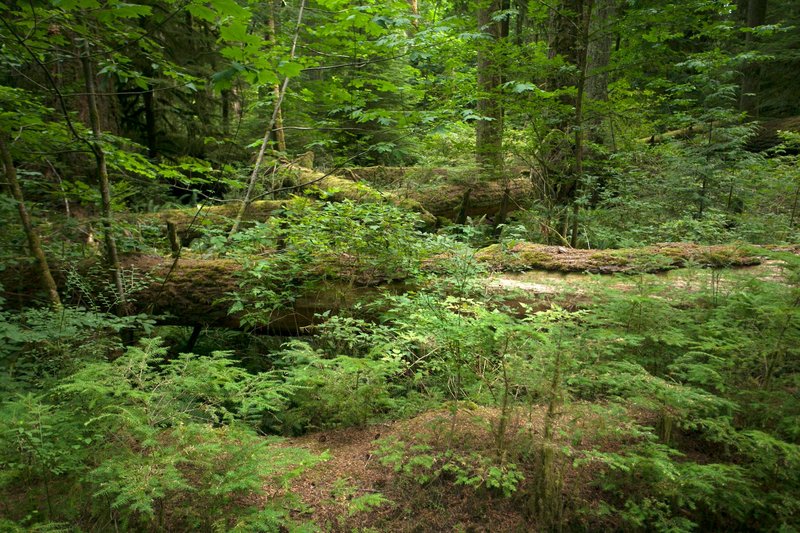
Raffray’s bandicoot ranges across lowland tropical forest up into montane forest, sometimes at surprising elevation. The forest floor is its dining room top to bottom. Damp, decomposing leaf litter is exactly the environment that produces a steady supply of worms, insect larvae, and fungi — so the habitat and the diet reinforce each other.
The animal doesn’t need open ground or water margins the way some foragers do. Closed-canopy forest with a thick litter layer is enough, and that’s most of where it lives. New Guinea’s forests are some of the most biodiverse on the planet, cataloged in detail by groups like the IUCN, and that diversity means a varied, year-round buffet of small prey.
How it compares to other New Guinea bandicoots
New Guinea is bandicoot country, and the diets rhyme without being identical. The kalubu or spiny bandicoot (Echymipera kalubu), a common neighbor, is also an omnivore that digs for insects, worms, and fruit — the same broad playbook. The main differences come down to body size, snout shape, and which microhabitats each species works hardest.
The pattern across the group is consistent: ground-dwelling, snout-digging, dusk-and-dark foragers that eat a protein-heavy mix of invertebrates rounded out with fungi, roots, and fruit. Raffray’s bandicoot fits the mold cleanly. If you know what one New Guinea bandicoot eats, you’re most of the way to knowing what they all eat — the figs and the late-evening digging are the through-line.
The bottom-line diet
- Mostly: insects, larvae, and other invertebrates dug from soil and leaf litter
- Regularly: fungi, roots, and forest vegetation
- Opportunistically: small vertebrates
- Favorite treat: fig fruit
- When: dusk into night, peaking around 7–9 p.m.
- How: rooting through soil and litter with its pointed snout
For an obscure marsupial that most species databases shrug at, the answer turns out to be clear: Raffray’s bandicoot is a forest-floor generalist that eats whatever a digging snout can turn up after dark, with figs as the reliable favorite.