A cat that handles a Minnesota winter and a cat that shivers at the first October cold snap are often the same species — the difference is the coat, and a few thousand years of where the breed came from. The cats that thrive in cold weather didn’t get there by accident. Norwegian Forest Cats spent centuries on Viking ships and Scandinavian farms. Siberians evolved in a country where -40°F is a normal Tuesday. Their bodies are the result of the cold doing the selecting.
This is a list of 12 breeds that earn the “cold-hardy” label, including a few short-haired ones that everyone forgets about. There’s a comparison table so you can scan coat type and grooming load at a glance, and a winter-care section at the end — because owning a cold-tolerant breed and leaving it outside in a deep freeze are two very different things. No cat is a furnace. More on that below.
Table of Contents
- The Quick List
- What Actually Makes a Cat Cold-Hardy
- Coat & Care Comparison Table
- The 12 Cold Weather Cat Breeds
- Winter Care: Keeping Any Cat Safe in the Cold
- How Cold Is Too Cold?
The Quick List
If you want the cold-climate heavyweights without scrolling: Siberian, Norwegian Forest Cat, and Maine Coon are the big three — triple-coated, large-bodied, and genuinely built for snow. For a short-haired cat that still handles cold surprisingly well, the Russian Blue and Chartreux are the dark horses most lists skip.
The rest of the twelve fill in the range: from the curly-coated Selkirk Rex to the desert-origin-but-densely-coated Turkish Van. Full profiles below, plus the part everyone forgets — even a Siberian has a limit.
What Actually Makes a Cat Cold-Hardy
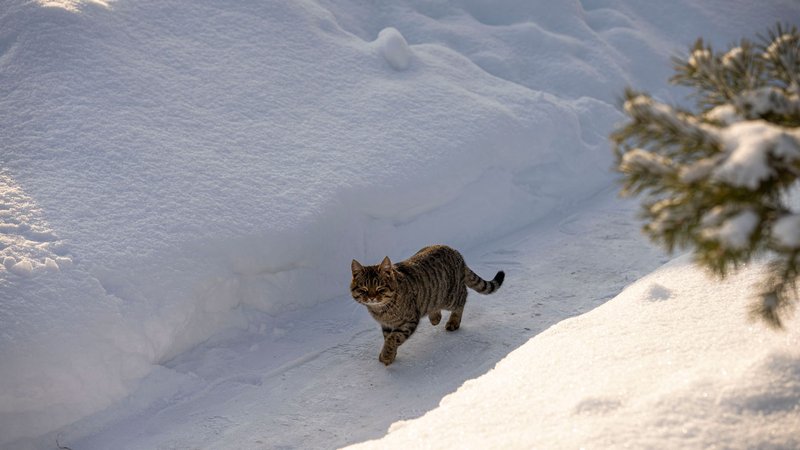
Cold tolerance in cats comes down to four physical traits, and the toughest breeds stack all of them.
A double or triple coat. Most cats have a topcoat of guard hairs over a softer undercoat. Cold-weather breeds add a third layer — a dense, downy layer underneath that traps body heat like insulation in a wall. The Siberian and Maine Coon are the classic triple-coated examples. That trapped air, not the fur itself, is what keeps the cat warm.
Water-resistant guard hairs. Wet fur is useless fur — it stops trapping air and starts wicking heat away. Breeds from snowy regions developed slightly oily, water-resistant topcoats so snow sits on the surface and shakes off instead of soaking through to the skin. It’s the reason a Norwegian Forest Cat can come in from a snow flurry looking dry.
Tufted paws and ears. The hair sprouting between the toes works like a built-in snowshoe and adds insulation to the part of the cat in constant contact with frozen ground. Ear tufts (sometimes called “lynx tips”) and the thick neck ruff protect the spots that lose heat fastest.
Body size. Bigger animals have less surface area relative to their volume, so they shed heat more slowly — a principle called Bergmann’s rule that shows up across cold-climate mammals. It’s not a coincidence that the snow specialists — Maine Coon, Siberian, Norwegian Forest — are also among the largest domestic cats.
A short-haired breed can still be cold-hardy if it nails the coat density, which is exactly why the Russian Blue and Chartreux made this list despite not having a dramatic fluffy mane.
Coat & Care Comparison Table
| Breed | Coat Type | Grooming Need | Temperament | Cold Tolerance |
|---|---|---|---|---|
| Siberian | Triple, water-resistant | High | Affectionate, playful | Excellent |
| Norwegian Forest Cat | Double, water-resistant | Medium-High | Gentle, independent | Excellent |
| Maine Coon | Triple, shaggy | High | Friendly, dog-like | Excellent |
| Russian Blue | Dense double, short | Low | Reserved, loyal | Good |
| Chartreux | Dense double, short-medium | Medium | Quiet, easygoing | Good |
| Ragdoll | Plush double | Medium | Docile, mellow | Good |
| Turkish Angora | Single-to-double, silky | Medium | Active, social | Moderate-Good |
| Turkish Van | Semi-long, water-resistant | Medium | Energetic, swimmer | Good |
| Selkirk Rex | Curly double | Medium | Patient, cuddly | Good |
| Birman | Silky single-to-medium | Low-Medium | Calm, gentle | Moderate-Good |
| Himalayan | Long double | High | Sweet, sedate | Good |
| British Longhair | Dense double | Medium-High | Calm, dignified | Good |
The 12 Cold Weather Cat Breeds
1. Siberian
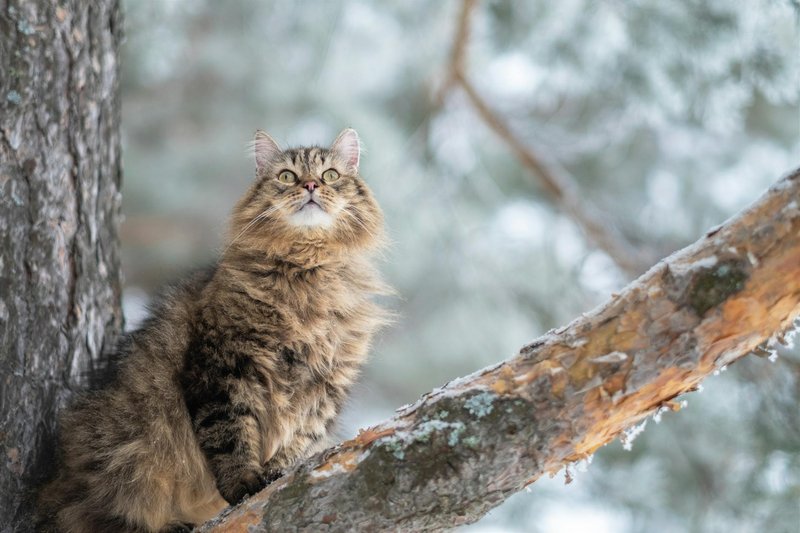
The Siberian is the benchmark. It comes from the taiga forests of Russia, where it lived as a working farm and forest cat through winters that bottom out around -40°F. The coat is a true triple layer — guard hairs, an awn layer, and a dense down undercoat — and it’s water-resistant enough that snow beads up rather than soaks in. In winter the coat thickens into a full ruff and “britches” on the hind legs, then sheds dramatically come spring.
Despite the rugged backstory, Siberians are notably warm and dog-like — they’ll follow you room to room and many genuinely like water. They’re also slow to mature, taking up to five years to reach full size, which can hit 17 pounds for a big male. Grooming is real work: brush a few times a week, daily during the spring “coat blow.”
2. Norwegian Forest Cat
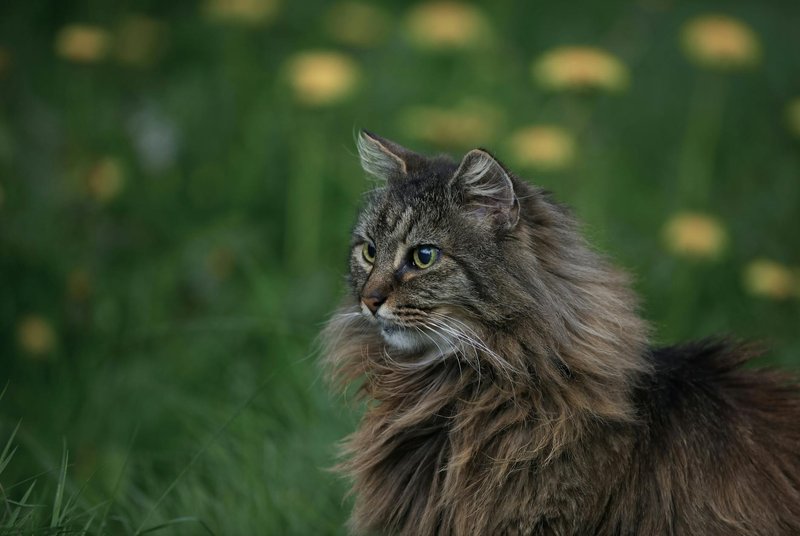
Norse legend wove the “Wegie” into mythology — it’s supposedly the cat that pulled the goddess Freya’s chariot — and the breed earned the folklore honestly on Scandinavian farms, sharing its forests with the same hardy Nordic wildlife of Sweden that adapted to those long, snowbound winters. The double coat pairs a woolly undercoat with a glossy, water-shedding topcoat, finished with a lion-like neck ruff and tufted toes that work like snowshoes.
Norwegian Forest Cats are strong, athletic climbers — they’ll scale a tree trunk headfirst and come down the same way. Temperament-wise they’re more independent than the clingy Siberian: friendly and people-oriented, but content to do their own thing. Expect heavy seasonal shedding and one of the longest, most rugged coats in the cat world.
3. Maine Coon
The Maine Coon is America’s homegrown cold specialist, developed in the harsh winters of New England where it worked as a barn cat and rodent hunter. Everything about it is oversized: it’s one of the largest domestic breeds, with males regularly topping 18 pounds, and a shaggy, water-resistant coat that’s longer on the belly and ruff to keep the cat warm when it’s lying on frozen ground.
The bushy raccoon-like tail isn’t just for show — Maine Coons wrap it around themselves like a scarf for extra warmth. They’re famously friendly and chatty, communicating in chirps and trills rather than standard meows. The trade-off is grooming: that long coat mats if you skip more than a few days. If the fluffy look is what drew you here, it’s worth seeing how the Maine Coon stacks up against the rest of the long-haired cat breeds, since not all of them carry the same cold tolerance.
4. Russian Blue
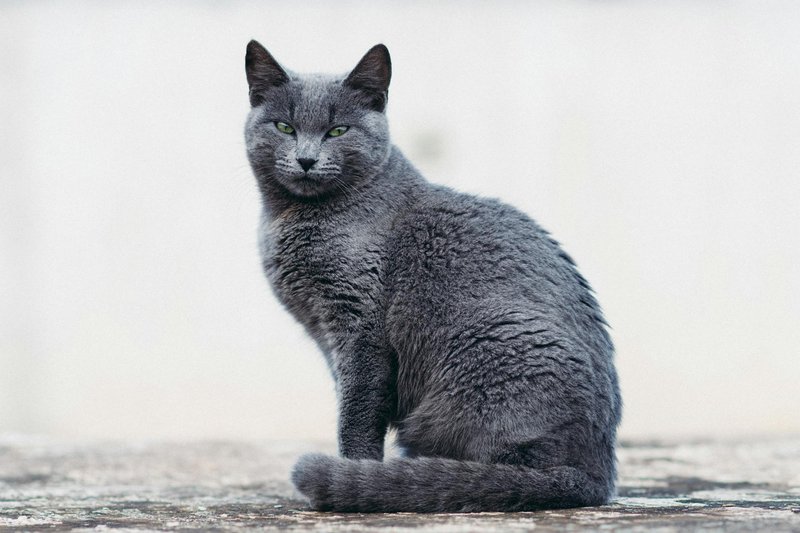
Here’s the short-haired breed that proves length isn’t everything. The Russian Blue’s coat is short but extraordinarily dense — the guard hairs and undercoat grow at the same length, standing out from the body and creating a plush double layer that traps heat far better than the short fur suggests. The breed traces to the port city of Arkhangelsk in northern Russia, where that insulation earned its keep.
Russian Blues are reserved with strangers and devoted to their own people — quiet, gentle, and routine-loving. Bonus for allergy sufferers: they produce relatively low levels of the Fel d 1 protein. The dense coat needs only light weekly grooming, which makes this one of the lowest-maintenance cold-hardy options.
5. Chartreux
The Chartreux is France’s contribution to cold-hardy cats, a sturdy blue-grey breed with a woolly, water-repellent double coat that’s noticeably thicker than your average short-haired cat. The texture is often described as resembling sheep’s wool — dense enough that it slightly resists your fingers when you part it.
Chartreux are quiet to the point of near-silence; many rarely vocalize at all. They’re easygoing, attach strongly to one person, and have a reputation as skilled hunters, a holdover from their working-cat history. Grooming is moderate — that wooly coat can mat if neglected, but a weekly comb usually does it.
6. Ragdoll
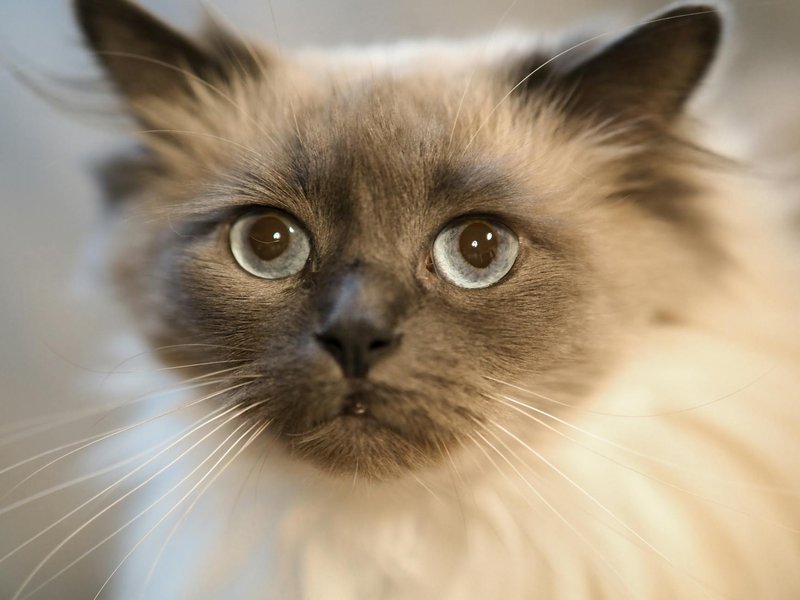
Ragdolls land in the “good, with caveats” tier. The semi-long coat is plush and double-layered, which provides solid insulation, and their large frame helps them hold heat. They tolerate cold homes and chilly weather well as indoor cats. What they don’t have is the water-resistant outer coat of the true snow breeds, so wet cold is their weakness.
The name comes from their signature trait: many go limp and relaxed when picked up, like a child’s rag doll. They’re among the most docile, low-energy breeds, happy to be carried around. Keep this one inside in winter — it’s a cold-tolerant companion, not an outdoor snow cat.
7. Turkish Angora
The Turkish Angora developed in the cold, mountainous central plateau of Turkey, around the city of Ankara, where winters are genuinely harsh. The coat is silky and fine rather than woolly, ranging from single to double depending on the cat and the season — it thickens up considerably in winter, then sheds back to a sleeker summer look.
Angoras are athletic, intelligent, and busy — they want to be in the middle of whatever you’re doing. The finer coat means moderate grooming and somewhat less raw cold tolerance than the triple-coated breeds, so they’re best suited to cold homes rather than snowy yards.
8. Turkish Van
The Turkish Van earned the nickname “swimming cat” for an unusual love of water, and its semi-long coat has a cashmere-like texture with a water-resistant quality that lets it shake off wet. It comes from the rugged region around Lake Van in eastern Turkey — high-altitude, snowy, and cold for much of the year.
Vans are large, powerfully built, and relentlessly energetic — they climb, they fetch, and yes, some will join you in the bathtub. The coat famously lacks an undercoat in the conventional sense, which actually makes grooming easier than its length suggests, though winter brings a denser growth.
9. Selkirk Rex
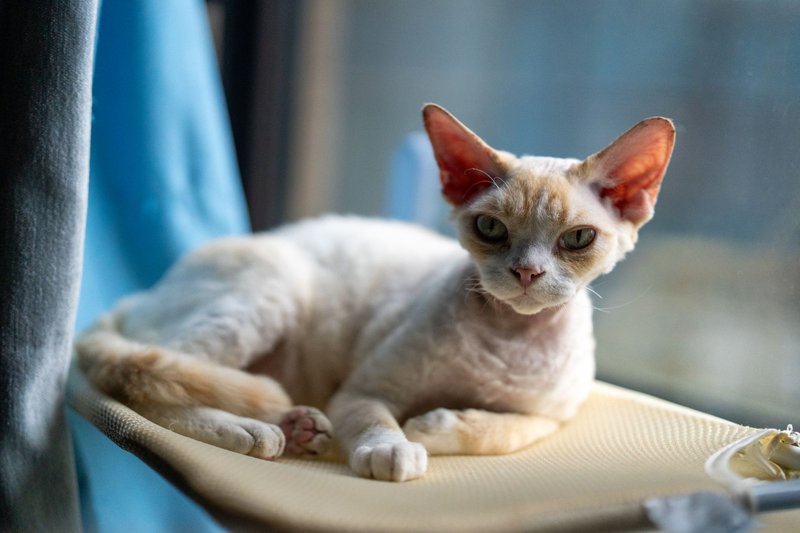
The Selkirk Rex is the curly-coated entry, and that curl is doing real work. The breed has a thick double coat where both layers are curled, creating a dense, plush insulation that handles cold well — it’s been called the “cat in sheep’s clothing” for good reason. The curls are most pronounced around the neck and belly.
Originating from a single curly-coated kitten found in Montana in 1987, the Selkirk Rex is patient, tolerant, and cuddly, with the laid-back temperament of the British Shorthair in its lineage. The curly coat needs gentle grooming — over-brushing relaxes the curl, so a light hand is best.
10. Birman
The Birman, the “Sacred Cat of Burma,” carries a silky semi-long coat with a key advantage for cold homes: it has little to no undercoat, which sounds counterintuitive, but the lack of undercoat means it resists matting while the silky guard hairs still provide warmth. It’s a moderate cold performer — comfortable in a cool house, not built for a snowbank.
Birmans are gentle, quiet, and people-focused, known for their deep blue eyes and white “gloved” paws. The low-undercoat coat is one of the easier semi-longhairs to maintain, needing only a couple of brushings a week to stay sleek.
11. Himalayan
The Himalayan combines Persian and Siamese ancestry, and it inherited the Persian’s long, dense double coat — one of the most insulating coats of any breed. That coat keeps Himalayans comfortably warm indoors through winter, and their sedate, low-energy nature means they’re happy to spend the cold months curled in the warmest spot in the house.
The catch is maintenance: this is a daily-grooming breed. The thick coat mats fast without consistent brushing, and the flat Persian-style face means some Himalayans need help with eye cleaning. Gorgeous and warm, but not a low-effort choice.
12. British Longhair
The British Longhair is the plush-coated cousin of the British Shorthair, and it brings a dense, water-resistant double coat with a notably thick undercoat. Combined with a stocky, muscular build, it’s well-equipped for cold weather — these cats handle a chilly home with total indifference.
Temperament is classic British: calm, dignified, and undemanding, content to be near you without needing to be on you. The dense coat needs more attention than the shorthair version — two or three brushings a week to prevent matting, more during seasonal sheds.
Winter Care: Keeping Any Cat Safe in the Cold
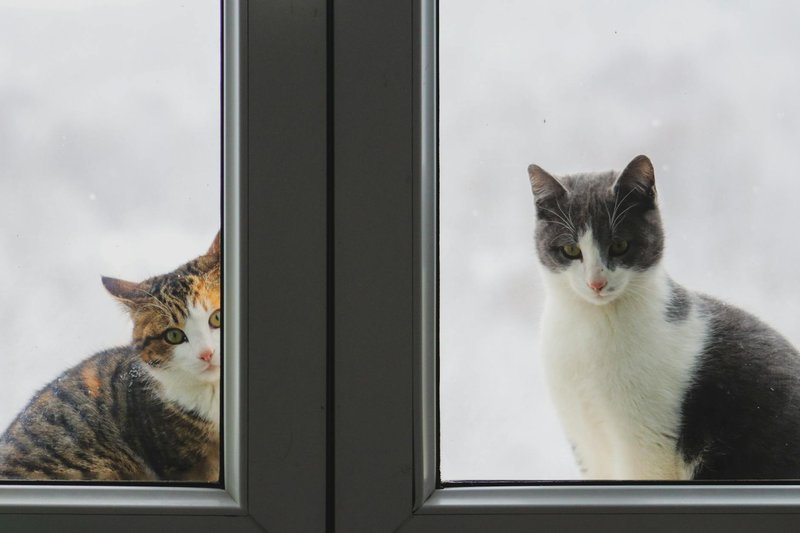
A cold-hardy breed has a head start, not a free pass. The coat helps, but winter still demands a few adjustments — and outdoor or indoor-outdoor cats need real attention.
Shelter that actually holds heat. If a cat spends time outside, it needs an insulated, dry, wind-blocked shelter raised off the ground. Straw — not blankets, which absorb moisture and freeze — is the standard insulation. A small entrance keeps warmth in.
More calories. Cats burn extra energy staying warm. Outdoor and active cats in winter often need a measurable increase in food, and warm (not hot) wet food helps. Talk to your vet about adjusting portions for the season.
Hydration that isn’t frozen. Water bowls freeze, and a dehydrated cat is a cat in trouble. Heated water bowls solve this outdoors; indoors, just keep fresh water flowing.
Paw protection. Road salt and chemical de-icers irritate paw pads and are toxic if a cat licks them off. Wipe paws after any outdoor time.
Watch for trouble signs. Frostbite hits the extremities first — ears, tail tip, paws. Look for pale, grey, or hardened skin that may later redden, swell, or blister. Hypothermia signs include intense shivering, lethargy, weakness, and a body that feels cold to the touch. Both are emergencies: get the cat warm and to a vet. The Cornell Feline Health Center is a solid resource for recognizing cold-weather emergencies in cats.
How Cold Is Too Cold?
Here’s the honest part most breed lists skip: no cat is safe in extreme cold, no matter how thick the coat.
The general rule from veterinary sources is that temperatures below 45°F (7°C) start to become uncomfortable for cats, and anything below freezing (32°F / 0°C) is dangerous for extended outdoor exposure. At those temperatures, frostbite and hypothermia become real risks within hours — faster for kittens, seniors, thin or sick cats, and any cat that gets wet. A Siberian buys you margin. It does not buy you immunity.
The practical takeaway: cold-hardy breeds are wonderful for cold homes and short, supervised outdoor time in winter. They are not animals you leave outside through a deep freeze and assume their genetics will handle it. When it drops below freezing, every cat — Norwegian Forest Cat included — belongs inside with a warm spot and fresh water. The coat evolved to survive the cold, not to make the cold safe.