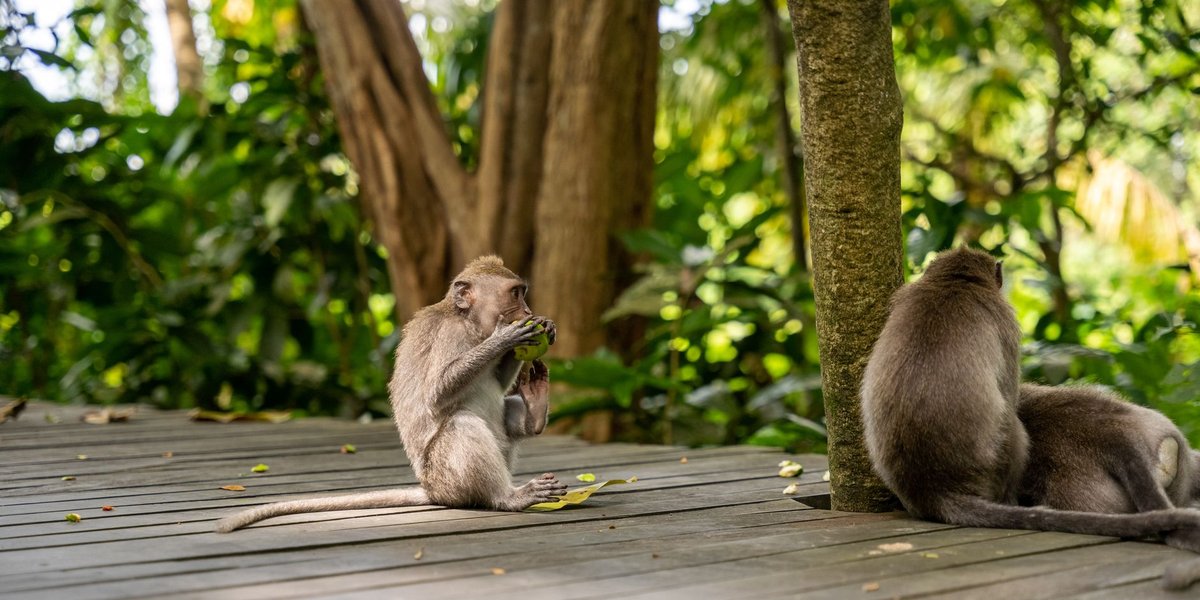
First, the disambiguation, because Google is confused too: this is the drill monkey (Mandrillus leucophaeus), not a power tool and not the snail that bores holes in oyster shells. It’s a stocky, olive-brown primate from the rainforests of Cameroon, southeastern Nigeria, and the island of Bioko — and it’s one of the most endangered monkeys in Africa.
So what does it actually eat? Short version: almost everything, with a heavy bias toward fruit and a peculiar talent for cracking seeds that would defeat most animals.
Table of Contents
- The Quick Answer
- Fruit First: The Frugivore Core
- The Seed Specialist Adaptation
- Protein on the Menu
- How the Diet Shifts by Season
- Diet by Habitat: Mainland vs. Bioko
- The Weird One: Mushrooms
- Drill vs. Mandrill: Same Plate?
- Seasonal Diet at a Glance
The Quick Answer
Drills are omnivores, but the word “omnivore” undersells how much they lean on plants. Roughly 80 to 90 percent of a lowland drill’s diet is fruit and seeds. The rest is a mix of leaves, grasses, tree pith, fungi, and animal protein — ants, beetles, snails, and the occasional land crab.
Think of it as a fruit-forward diet with a protein side dish and a seed-cracking superpower bolted on. That superpower is the part most articles skip, and it’s the most interesting thing about how drills eat.
Fruit First: The Frugivore Core
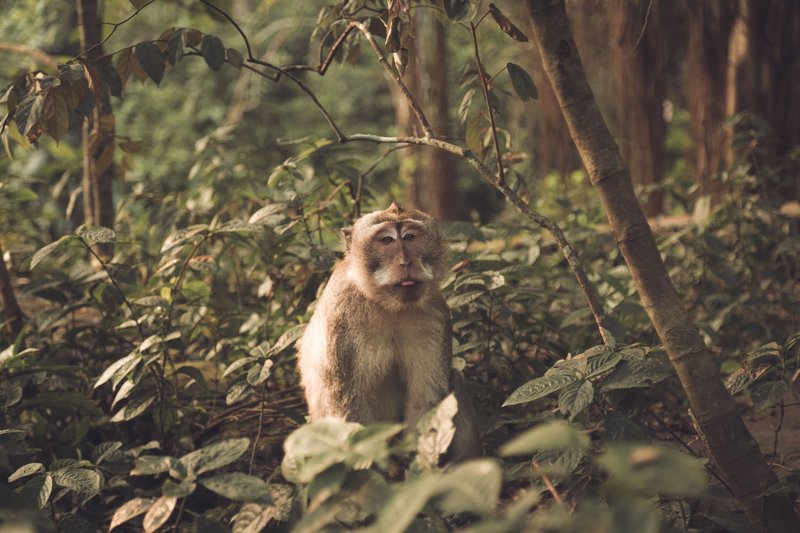
When fruit is available, drills are frugivores in the truest sense. They move through the lowland forest understory and floor pulling down whatever’s ripe, and their staples read like a who’s-who of West African rainforest flora.
The fiddle-leaf fig (Ficus lyrata) is a reliable favorite — figs are the rainforest’s vending machine, fruiting at staggered times so something is usually ripe somewhere. Drills also work over the fruit of cola palms and the seeds of the African corkwood tree (Musanga cecropioides), a fast-growing pioneer species that colonizes forest gaps.
What makes this more than a grocery list is where they feed. Drills are largely terrestrial, foraging on the ground far more than the canopy-loving guenons they share the forest with. That puts fallen fruit, ground-level shrubs, and the leaf litter squarely in their feeding range — and it’s part of why they end up eating things other monkeys can’t reach or won’t bother with.
The Seed Specialist Adaptation
Here’s the detail that separates drills from your average fruit-eating monkey. They don’t just eat the soft pulp around a seed and spit the pit. They crack and eat the seeds themselves — including hard, woody seeds that act as a locked pantry most animals can’t open.
This works because of the jaw. Drills, like their close relatives the mandrills and the mangabeys, have powerful jaw muscles and broad, thick-enameled molars built for crushing. Primatologists call animals with this kit “hard-object feeders” or sclerocarp foragers — they specialize in the durable seeds and nuts that stay available when soft fruit runs out. The IUCN’s primate specialists group drills with mandrills as exactly this type of robust-jawed feeder.
The payoff is seasonal insurance. When ripe fruit disappears in the dry months, a drill can fall back on hard seeds and unripe pods that competitors physically can’t process. The mangabey angle is telling: those monkeys evolved the same crushing dentition independently, and they overlap with drills in the same forests. When two unrelated primates converge on the same heavy-duty molars, it tells you hard seeds are a prize worth specializing for.
Protein on the Menu
Fruit and seeds keep the lights on, but drills need protein too, and they’re not picky about its source.
Insects are the main supply: ants, beetles, and beetle larvae picked out of rotting wood and leaf litter. Because drills spend so much time on the forest floor, they’re well positioned to flip logs and dig through debris for whatever’s crawling underneath. Termite mounds and ant nests are reliable, calorie-dense targets.
Then there’s the bigger stuff. Drills eat snails, and in some areas they take land crabs — a protein source that points to how willing they are to exploit damp, ground-level microhabitats. There are also reports of drills eating small vertebrates opportunistically. None of this makes them hunters in any serious sense; it makes them thorough. If it’s edible, slow, and underfoot, a drill will eat it. That mix-and-match approach is the hallmark of forest omnivores generally, from black bears to wild boar — animals that thrive precisely because they refuse to commit to one food group.
How the Diet Shifts by Season
The drill’s year splits cleanly into wet and dry, and so does its plate.
In the rainy season, fruit floods the forest. This is the frugivore’s golden age — drills gorge on ripe figs, palm fruit, and the soft pulpy stuff that’s energy-rich and easy to digest. Fruit can make up the overwhelming majority of intake.
In the dry season, the buffet thins out. Ripe fruit gets scarce, and drills pivot hard toward fallback foods: leaves, grasses, tree pith, and the hard seeds their molars are built to crack. Pith — the spongy inner tissue of certain stems and shoots — is a classic lean-season filler: low in calories, but available when nothing else is. This is the moment the seed-cracking adaptation earns its keep, unlocking food that’s invisible to monkeys without the jaws for it.
It’s a smart strategy. Specialize on fruit when it’s abundant, switch to durable backup foods when it’s not, and never be locked out of a resource by anatomy.
Diet by Habitat: Mainland vs. Bioko
Drills don’t all eat the same way, and geography is the reason.
On the mainland — the lowland forests of Cameroon and Nigeria — drills behave like committed frugivores, with fruit reaching as high as 90 percent of the diet in good seasons. These are rich, wet forests with diverse fruiting trees, so there’s simply more soft fruit to specialize on.
On Bioko, the island off the Cameroonian coast, the picture changes. Bioko’s drill population lives in a more constrained, sometimes higher-elevation environment, and field observations there point to a broader reliance on the fallback foods — more leaves, pith, and tougher plant material relative to mainland populations. Same species, same toolkit, different ratios on the plate, dictated by what the local forest actually offers. It’s a clean example of why “what do drills eat” doesn’t have one universal answer — it depends which forest you’re standing in.
The Weird One: Mushrooms
Most diet rundowns stop at fruit, seeds, and bugs. But drills also eat fungi — mushrooms and other fungal growths pulled from the damp forest floor.
It’s an unusual entry for a primate. Mushroom-eating (mycophagy) shows up here and there across mammals, but it’s not a headline food for most monkeys. For a ground-foraging animal already turning over leaf litter and rotting logs, though, fungi are right there — a small but real part of the diet that fits the drill’s whole pattern of mining the forest floor for everything it’s got.
Drill vs. Mandrill: Same Plate?
People constantly mix up drills and mandrills, and for diet, the confusion is mostly fair. The two are the only members of the genus Mandrillus, they share the same hard-object dentition, and both are terrestrial omnivores leaning heavily on fruit and seeds.
The differences are matters of degree and place. Mandrills range across Gabon, Congo, and southern Cameroon; drills sit just north of them. Both crack seeds, both eat insects, both fall back on tougher plant matter when fruit is scarce. If you understand the drill’s diet, you basically understand the mandrill’s — the seed-cracking, fruit-forward, eat-what’s-underfoot playbook is a family trait.
Seasonal Diet at a Glance
| Food category | Examples | Rainy season | Dry season |
|---|---|---|---|
| Fruit | Fiddle-leaf figs, cola palm fruit | Dominant (up to ~90%) | Reduced, scarce |
| Seeds & nuts | African corkwood seeds, hard woody seeds | Eaten | Critical fallback (cracked with molars) |
| Leaves & grasses | Forest understory foliage | Minor | Increased |
| Tree pith | Inner stem tissue | Rare | Common filler |
| Insects | Ants, beetles, larvae | Year-round | Year-round |
| Other animal protein | Snails, land crabs, small vertebrates | Opportunistic | Opportunistic |
| Fungi | Forest-floor mushrooms | Occasional | Occasional |
The drill’s diet is a study in flexibility built on a single hard-won advantage. Fruit when it’s there, seeds when it isn’t, protein and fungi scavenged from the ground year-round — all held together by a jaw strong enough to open food nobody else can. That combination is exactly what lets a 50-pound monkey survive in a forest where the menu changes with every season. The tragedy is that the drill is critically endangered from hunting and habitat loss, so the forests that built this remarkable eater are the same ones it’s running out of.