Type “poisonous invertebrates” into a search bar and you’ll get a pile of jellyfish, octopuses, and cone snails. Every one of them is venomous, not poisonous. They inject toxin through a stinger, harpoon, or bite. A poisonous animal does the opposite: it just sits there, and the toxin only reaches you if you eat it, lick it, or crush it against broken skin. Nobody bothers to separate the two, which is how a monarch caterpillar and a box jellyfish end up on the same list like they’re the same kind of threat.
They’re not. And once you know which is which, the whole subject gets a lot more interesting.
Table of Contents
- The Difference That Actually Matters
- The Truly Poisonous Invertebrates
- Venomous Invertebrates Everyone Calls “Poisonous”
- What Happens If You Touch or Eat One
- Staying Safe Around Both
TLDR
Real poisonous invertebrates — the kind that only hurt you if you eat or handle them — are a short list: monarch and cinnabar moth caterpillars, blister beetles, sea cucumbers, hammerhead flatworms, and rove beetles. Everything else people call “poisonous” — blue-ringed octopuses, box jellyfish, cone snails, bullet ants — is venomous. It bites, stings, or harpoons. Both categories can hurt you badly. Only one of them chases.
The Difference That Actually Matters
Poison is passive. An animal is poisonous if it becomes dangerous only when something else initiates contact — you step on it, eat it, or handle it and then touch your eyes. The animal isn’t doing anything to you. You’re doing something to it.
Venom is active. A venomous animal has a delivery system — fangs, a stinger, a barbed radula — built specifically to inject toxin into another creature, usually to hunt or defend itself in real time.
The distinction sounds academic until you realize how few invertebrates are actually poisonous by this definition. Most of the “danger noodle” energy in the invertebrate world — the octopuses, jellyfish, snails, and centipedes people fear — comes from venom. Poison, in the strict sense, is the quieter and rarer trait, usually borrowed secondhand from a plant or bacteria the animal fed on as a larva.
The Truly Poisonous Invertebrates
Monarch Butterflies and Caterpillars
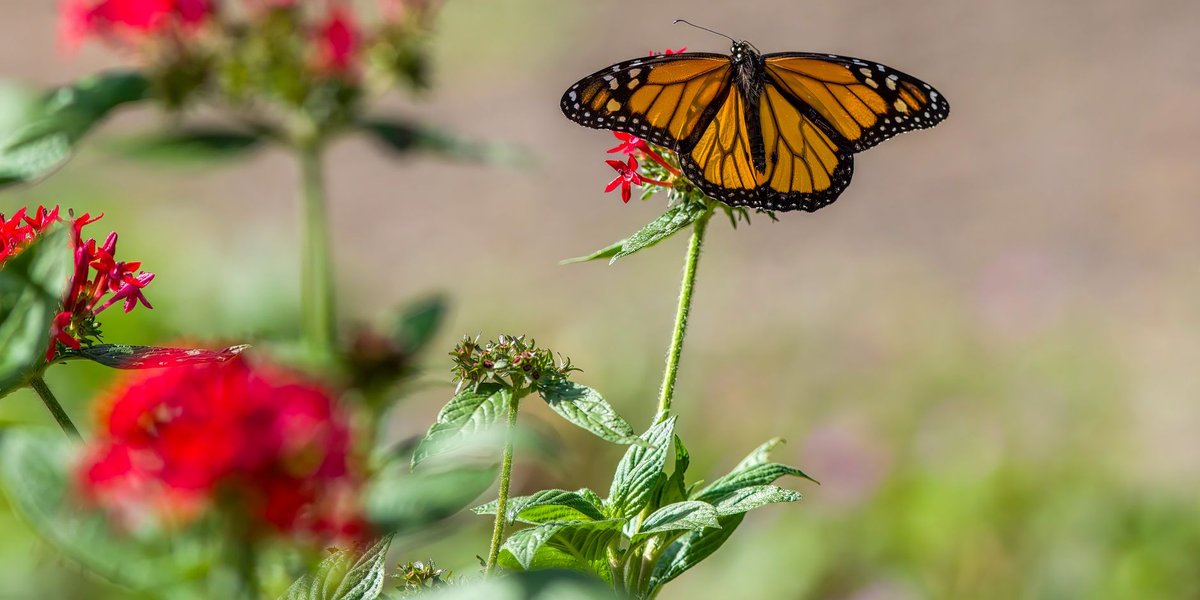
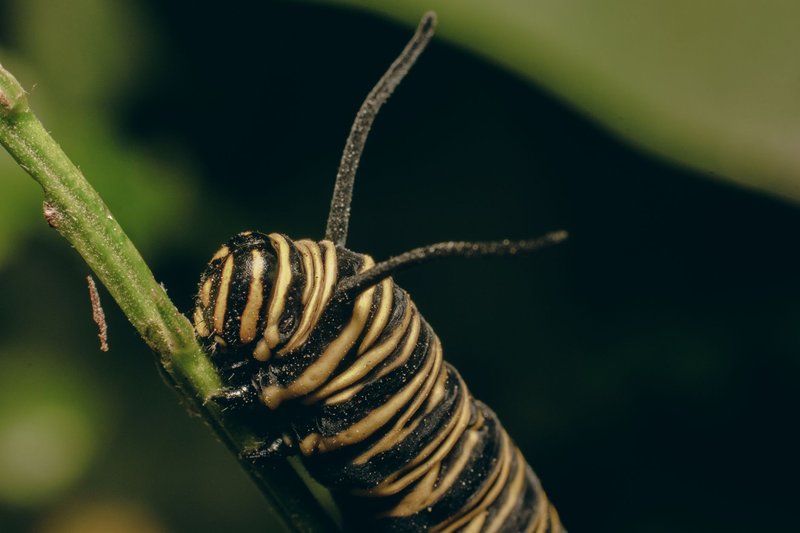
Monarch caterpillars eat almost nothing but milkweed, and milkweed is loaded with cardenolides — compounds that mess with heart function in vertebrates. The caterpillar stores them in its own tissue instead of breaking them down, and the toxin carries through metamorphosis into the adult butterfly. A bird that eats one usually vomits within minutes and remembers the lesson for life; that’s why monarchs fly around in bright orange with zero attempt to hide. The color is the warning label.
Cinnabar Moth Caterpillars
Same trick, different plant. Cinnabar caterpillars feed on ragwort and concentrate its pyrrolizidine alkaloids, chemicals that damage the liver in mammals over repeated exposure. The caterpillars are striped black and orange like a hazard sign, for the same reason monarchs are — predators that survive one bite don’t try a second.
Blister Beetles
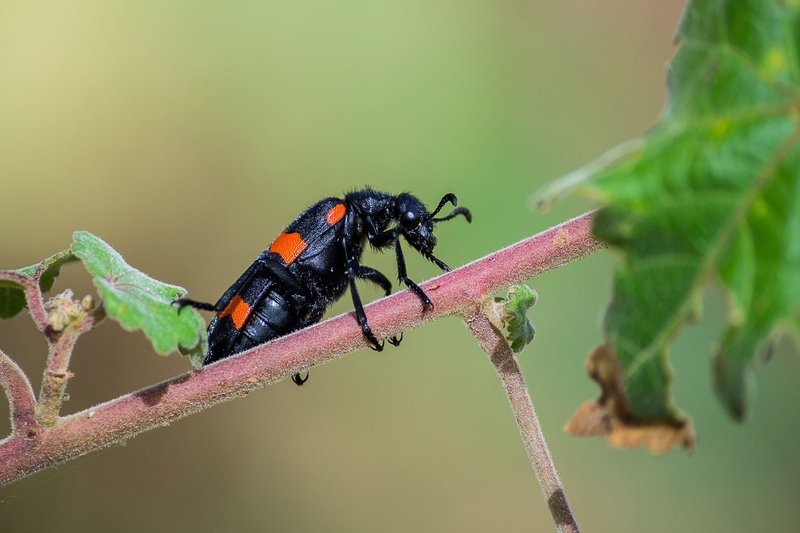
Blister beetles secrete cantharidin, an oily toxin that raises blistering welts on skin within hours of contact — no bite required, just a squashed beetle against your arm. Ranchers dread them for a different reason: a horse that eats a few crushed beetles baled into hay can die from gastrointestinal and urinary tract damage. Cantharidin has a strange medical afterlife too — dermatologists still use it, in controlled doses, to burn off warts.
Sea Cucumbers
Most sea cucumbers spend their whole life looking like an inert lump on the seafloor, which is largely true — until you squeeze one. Under threat, many species eject sticky white Cuvierian tubules packed with a toxin called holothurin. It’s mainly a fish deterrent, but human contact with the eyes has caused temporary blindness. Reef guides tell divers one rule about sea cucumbers: look, never squeeze.
Hammerhead Flatworms
An invasive, foot-long land flatworm now spreading through the southern U.S. and parts of Europe, the hammerhead flatworm carries tetrodotoxin — the same nerve toxin found in pufferfish — in its skin. It’s not going to kill an adult human through casual contact, but it’s potent enough that pets have gotten sick after mouthing one, and gardeners are told to remove them with gloves or a bag, never bare hands.
Rove Beetles
Paederus rove beetles look like slim, fast-moving ants and don’t bite or sting. The danger is entirely defensive: crush one against your skin and it releases pederin, a toxin that causes a chemical burn resembling a linear blister — nicknamed “spider lightning” in parts of Southeast Asia and India, where seasonal outbreaks send people to clinics after they’ve slapped one off their neck in the dark.
Venomous Invertebrates Everyone Calls “Poisonous”
These are the animals search engines actually mean when people type “poisonous invertebrates.” They’re worth covering, because the confusion is universal — but every one of them earns its danger through injection, not contact.
Blue-Ringed Octopus
Barely the size of a golf ball, this Indo-Pacific octopus carries tetrodotoxin in its saliva — potent enough, by some estimates, to be lethal to more than two dozen adults in a single dose. The bite itself is often painless, which is the actual danger: victims don’t realize anything happened until numbness spreads and breathing gets difficult. There’s no antivenom. Survival depends entirely on getting artificial respiration started before paralysis reaches the lungs.
Box Jellyfish
The Australian box jellyfish is routinely cited as the most venomous marine animal on Earth, with tentacle-borne toxins that can trigger cardiac arrest within minutes of a serious sting. Standard field treatment is counterintuitive: flush the sting with vinegar to stop unfired nematocysts from firing, then get to a hospital immediately if the sting is extensive — antivenom exists, but timing matters more than almost anything else.
Cone Snails
A cone snail hunts by firing a hollow, harpoon-like tooth loaded with a venom cocktail of dozens of distinct conotoxins, each one tuned to jam a specific nerve channel. The geography cone has killed divers who picked up an attractively patterned shell without realizing the animal inside was still very much alive. The same precision that makes the venom deadly has made it valuable in medicine — researchers have isolated cone snail peptides into a non-addictive painkiller roughly a thousand times more potent than morphine.
Bullet Ants
Named for a sting that’s been compared to being shot, the bullet ant of Central and South American rainforests delivers venom containing poneratoxin, a compound that jams sodium channels in nerve cells and produces waves of burning pain lasting up to 24 hours. It tops the Schmidt Sting Pain Index — the closest thing entomology has to an official ranking of “how bad does this hurt.”
Giant Desert Centipedes
These can grow past eight inches, and the first pair of legs behind the head has evolved into venom-injecting claws called forcipules rather than fangs. A bite from a large adult causes intense localized pain and swelling that can persist for days. Rarely fatal to a healthy adult, but genuinely miserable — reptile keepers who’ve been bitten while cleaning enclosures describe it as the worst pain they’ve experienced from an animal.
What Happens If You Touch or Eat One
With poison, the timeline depends entirely on the route of exposure. Skin contact with a blister beetle or rove beetle usually causes localized blistering that shows up hours later, not instantly — which is why people are often confused about what caused it. Ingestion is more serious: pets and livestock that eat blister beetles or handle toxic caterpillars can face organ damage, and it’s why grazing animals near alfalfa fields are a real veterinary concern during blister beetle season.
With venom, the timeline is immediate by design — that’s the entire evolutionary point. Pain, swelling, or numbness typically starts within seconds to minutes. Severity scales with the amount of venom delivered and the size of the person bitten or stung, which is why children and pets are disproportionately at risk from stings that a healthy adult would shrug off.
Staying Safe Around Both
For poisonous species, the rule is simple: don’t handle, don’t squeeze, don’t eat anything you can’t positively identify, and wash your hands after any invertebrate contact before touching your face. Hammerhead flatworms and blister beetles are both best removed with a tool or gloves, not fingers.
For venomous species, prevention beats treatment. Shuffle your feet in sandy shallows where cone snails and stingrays hide, never pick up an attractive shell you haven’t identified, and treat any unprovoked marine sting as a reason to leave the water and seek care rather than wait it out. If you’re diving or hiking somewhere known for box jellyfish, bullet ants, or centipedes, local guides usually know the season and the terrain better than any packing list — ask before you go, not after you’re stung.
Most invertebrates, poisonous or venomous, aren’t hunting you. They’re defending a body with no bones to protect it, using the only tools evolution gave them. Respect the tool, and the animal mostly leaves you alone.