TLDR: The Key Facts
- Armenia packs roughly 3,200 plant species into a country smaller than Maryland. Sources disagree by a few hundred, so treat every figure as approximate.
- About 126 of those species are endemic, meaning they grow nowhere else.
- Armenia’s national Red Book lists 452 plant species as rare or threatened.
- Where you stand decides what you see: semi-desert on the Ararat plain, beech forest around Dilijan, shoreline scrub at Lake Sevan, alpine meadows in Zangezur and on Aragats.
- Peak wildflower season runs from May in the lowlands to July in the high meadows.
Contents
- Why Armenia Has So Many Plants
- Symbols and Trees You’ll Notice First
- Wildflowers by Habitat
- Edible Plants and Herbs
- Medicinal Plants
- Poisonous Plants to Leave Alone
- Quick Reference Table
- What’s in Bloom: A Seasonal Calendar
- Conservation and Picking Rules
- The Field Guide to Carry
Why Armenia Has So Many Plants
The numbers come from elevation. Armenia drops to about 375 meters in the Debed canyon and climbs to 4,090 meters on Mount Aragats. Between those two points you cross semi-desert, steppe, oak and beech forest, subalpine grassland and alpine turf. Each band has its own plants, and a day’s drive can take you through four of them.
The country also sits where Caucasian, Anatolian, Iranian and Mediterranean floras meet. That mix explains the endemics, and it explains why botanists care about the place. The wild relatives of wheat grow here. Triticum urartu, one of the ancestors of modern bread wheat, was first collected in the Ararat valley, and the Erebuni reserve on the edge of Yerevan protects wild cereal relatives.
Plant names in this guide give the common name first and the Latin name in italics, so you can check them against a reference such as Plants of the World Online from Kew.
Symbols and Trees You’ll Notice First
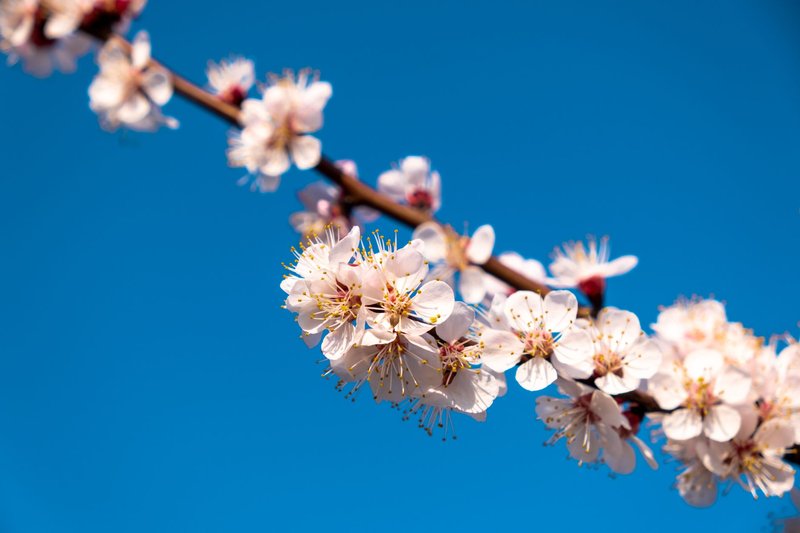
Apricot (Prunus armeniaca). The species name means “Armenian,” and Armenians treat the fruit as a national emblem. Orchards fill the Ararat plain, and the trees flower in late March or April, often before the leaves appear. The dried fruit and the fresh June crop are everywhere in Yerevan markets.
Pomegranate (Punica granatum). It shows up in carpets, paintings, wine labels and wedding customs. The fruit ripens in September and October in the warm southern valleys, and it’s sold by the roadside with the juice squeezed on demand.
Oriental beech (Fagus orientalis) and hornbeam (Carpinus betulus). These dominate the damp forests of Dilijan National Park in the north. Mixed in are oaks, including the Caucasian oak (Quercus macranthera). The forest floor is the place for spring snowdrops (Galanthus), which flower as the snow melts, usually in March.
Eastern plane (Platanus orientalis). The Shikahogh reserve in the far south protects a grove of these big, mottled-barked trees, one of the more unusual forest types in the country.
Juniper (Juniperus polycarpos). Open juniper woodland grows on dry, rocky slopes in places such as the Khosrov Forest reserve. The trees are slow, twisted and easy to mistake for shrubs from a distance.
Wildflowers by Habitat
Wildflower watching in Armenia works best when you plan by elevation, not by date. Here’s how the four main zones break down.
Ararat Plain: Semi-Desert (about 800 to 1,200 m)
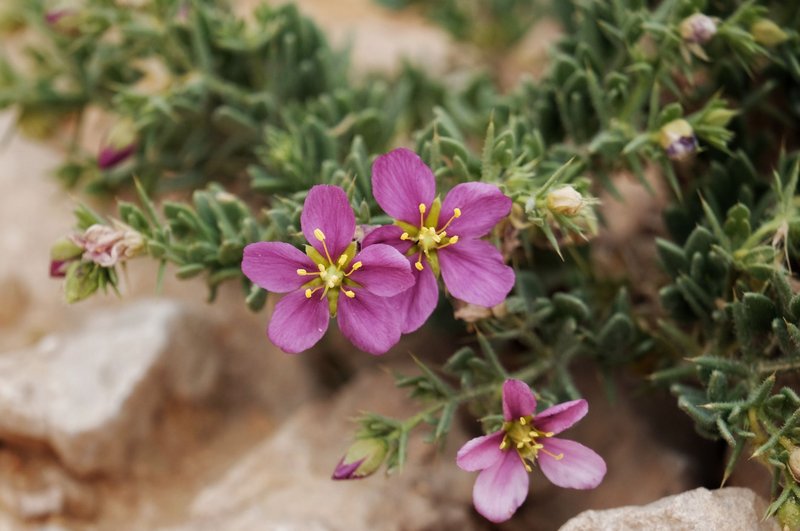
This is the hottest, driest part of the country, and it looks like it: gray-green shrubs, bare clay and sudden bursts of spring color. Wormwoods (Artemisia) and saltworts (Salsola) hold the ground. Tulips and other bulbs flower in April and early May, then the heat shuts everything down by June. If you want this zone, go early.
The Armenian fritillary (Fritillaria armena) belongs to this foothill world, with nodding, checkered-looking bells in spring. Look on dry slopes, not in the flat plain.
Lake Sevan: Shoreline and Steppe (about 1,900 m)
Sevan is one of the highest large freshwater lakes in Eurasia, and the climate is cool and windy. Sea buckthorn (Hippophae rhamnoides) grows in thickets along the shore, and its orange berries ripen in late summer. Steppe grasses and low, scented herbs cover the surrounding slopes, so flowers are small but numerous in June.
Dilijan and the Northern Forests (about 1,000 to 2,000 m)
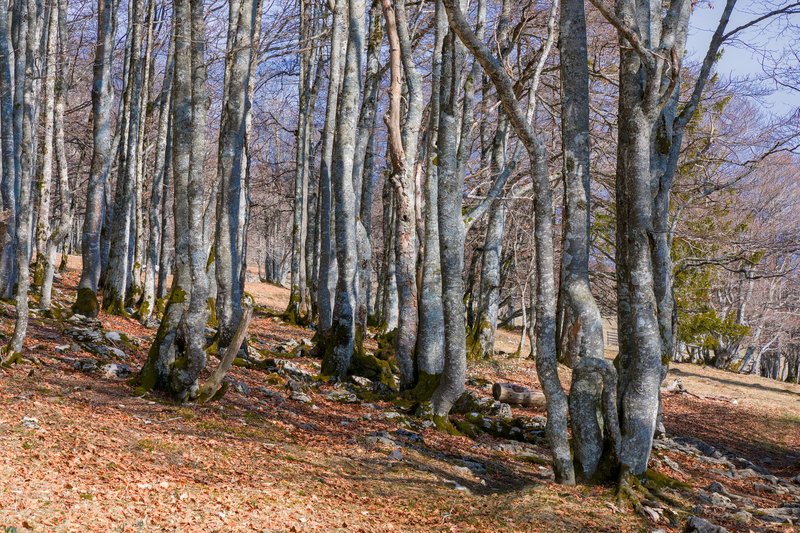
Moist air from the north keeps these forests green when the rest of the country has turned brown. Spring brings snowdrops and other woodland bulbs. Summer brings shade-loving ferns and tall herbs. October is the real season here, when beech and hornbeam go gold and copper and the trails fill with leaf litter.
Zangezur, Aragats and the Alpine Meadows (above 2,200 m)
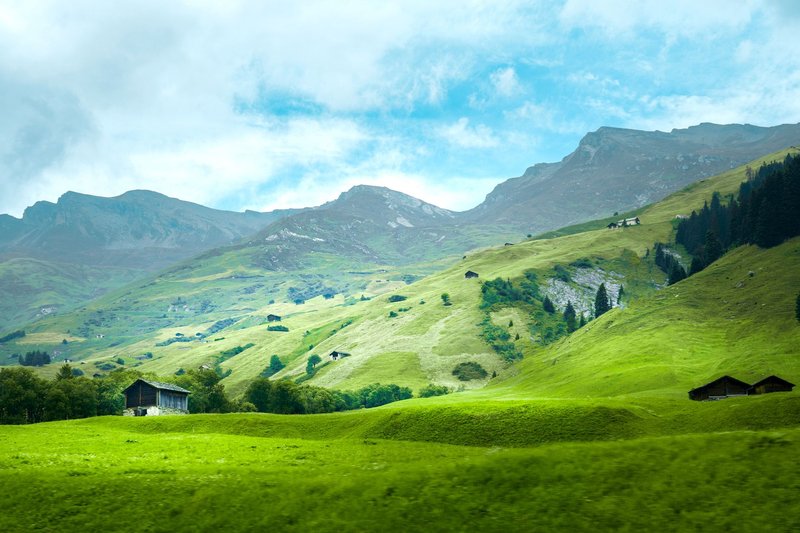
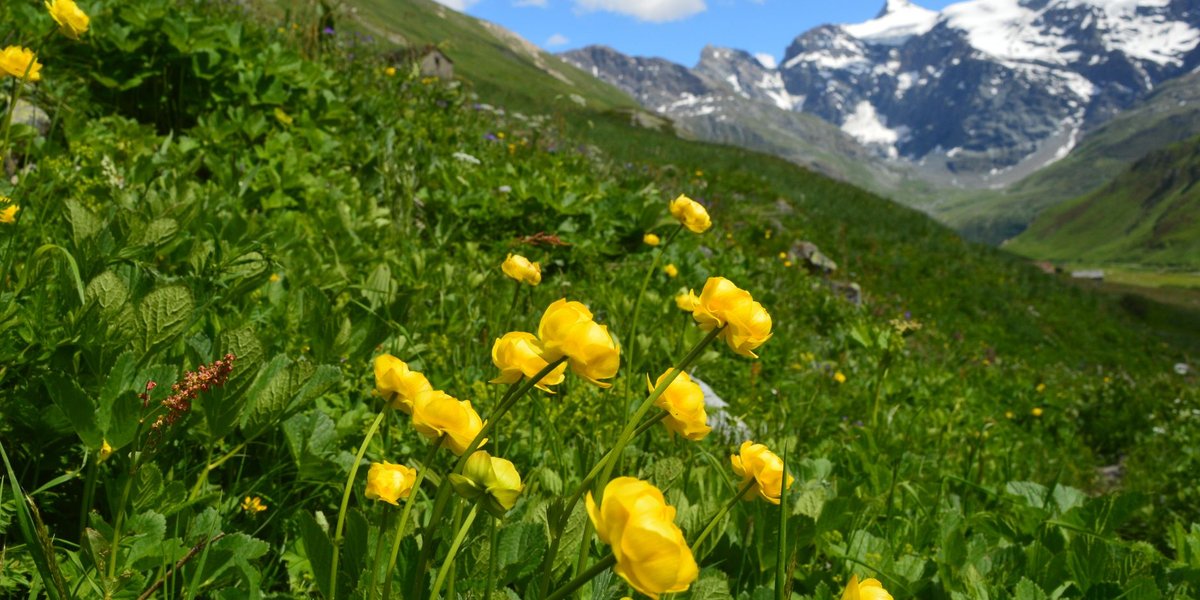
This is the best wildflower country, and also the shortest season. Snow clears in June, and from late June to July the meadows fill with bellflowers (Campanula), primroses such as Primula algida, gentians and cushion-forming alpines. Many of the endemic and near-endemic species live in this belt, because isolated peaks keep populations apart. Aragats, the Vardenis ridge and the mountains of Syunik are the standard stops.
Bring a hand lens. Alpine flowers here are often the size of a fingernail.
Edible Plants and Herbs
Armenian food is plant-heavy in a way that visitors tend to miss. A standard table has a plate of fresh herbs on it, eaten by hand alongside cheese and lavash.
Tarragon (Artemisia dracunculus). It’s called tarkhun in Armenian and goes into a bright green soda, as well as plates of herbs. It also grows wild on dry hillsides.
Wild sorrel (Rumex confertus). Called aveluk, it’s picked in spring and braided into long strands to dry for winter. Rehydrated, it makes a soup with a sharp, spinach-like taste and a bitter edge. The braids hang in markets all year.
Cornelian cherry (Cornus mas). Hon in Armenian. The tart red fruit is used for jam and a fruit vodka, and it ripens in late summer.
Thyme (Thymus) and mountain mint (Mentha). Gathered on the slopes and dried for tea. The thyme is stronger than the supermarket kind.
Basil, cilantro, chives and parsley. Cultivated, not wild, but they define the table. Expect a handful of each on the plate at lunch.
A caution on foraging: tarragon, sorrel and mint are easy to identify, but wild greens in the same patch can be toxic. Don’t eat what you can’t name with certainty.
Medicinal Plants
Folk medicine in Armenia leans on teas. Pharmacies and market stalls sell dried bundles labeled by use, and many families still collect their own on summer trips to the mountains.
- St John’s wort (Hypericum perforatum). Brewed for stomach and mood complaints. It interacts with a long list of medications, so check before taking it.
- Chamomile (Matricaria chamomilla). Sleep and digestion tea, picked from fields in early summer.
- Hawthorn (Crataegus). Fruit and flowers go into tonics for the heart in traditional use.
- Sea buckthorn (Hippophae rhamnoides). The berries are rich in vitamin C and sold as oil and juice around Sevan.
- Rose hip (Rosa canina). Dried and steeped in autumn and winter for vitamin C.
These are traditional uses, not medical advice. Talk to a doctor before treating anything with them.
Poisonous Plants to Leave Alone
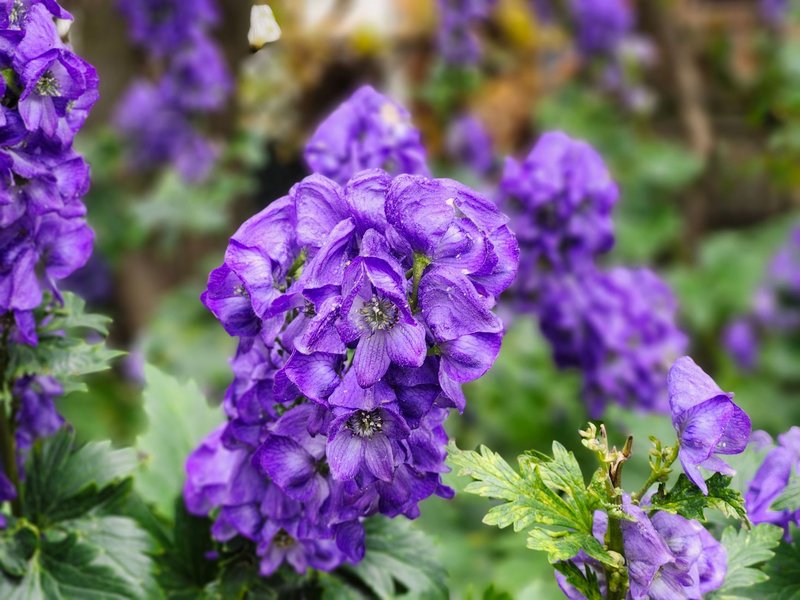
Hikers pick flowers. Here are the three to avoid touching or tasting.
Monkshood (Aconitum). Tall, hooded purple flowers in alpine meadows. Every part is toxic, and the roots are the worst.
Giant hogweed (Heracleum). Several large species grow in the Caucasus. The sap makes skin hypersensitive to sunlight and causes blistering burns. If you touch it, wash the area and keep it covered from the sun.
Autumn crocus (Colchicum). The pale pink flowers appear in autumn, without leaves, and the plant is dangerously toxic if eaten. It looks like a crocus, which is the problem.
Quick Reference Table
| Plant | Latin name | Where to look | Best time |
|---|---|---|---|
| Apricot | Prunus armeniaca | Ararat plain orchards | Late March to April (bloom); June to July (fruit) |
| Pomegranate | Punica granatum | Southern valleys, markets | September to October |
| Snowdrop | Galanthus | Dilijan forests | March |
| Oriental beech | Fagus orientalis | Dilijan, northern forests | October (color) |
| Armenian fritillary | Fritillaria armena | Dry foothill slopes | April to May |
| Sea buckthorn | Hippophae rhamnoides | Lake Sevan shore | August to September |
| Bellflowers | Campanula | Alpine meadows | Late June to July |
| Wild sorrel | Rumex confertus | Meadows, markets | Spring |
| Monkshood | Aconitum | Alpine meadows | July to August |
| Autumn crocus | Colchicum | Meadows, hillsides | September to October |
What’s in Bloom: A Seasonal Calendar
March to April. Snowdrops in the northern forests, apricot blossom on the Ararat plain, early bulbs on the lower slopes.
May. Peak for the foothills and mid-elevation steppe. This is the best month if you only have one.
June. Sevan steppe flowers and the first alpine blooms as snow retreats. Lowlands are drying out.
July. Alpine meadows at full strength on Aragats and in Syunik.
August to September. Late meadow plants, ripening sea buckthorn, and the first autumn crocus.
October. Pomegranates, colchicum and autumn color in Dilijan.
November to February. Not a flower season. Quiet, brown and cold at altitude.
Conservation and Picking Rules
The national Red Book lists 452 plant species as threatened or rare. Global status for individual species is tracked separately by the IUCN Red List, so check there if you want to know where a plant stands worldwide.
Practical rules for visitors:
- Don’t pick anything in a national park or state reserve. Collecting is restricted there.
- Never dig up bulbs, including common-looking tulips and fritillaries. They take years to flower again.
- Stay on trails in alpine meadows. Turf at 2,500 meters recovers slowly.
- Photograph rare plants instead of taking them.
Grazing, mining, construction and over-collection of medicinal herbs are the main pressures on wild populations.
The Field Guide to Carry
One book covers this topic properly: Tamar Galstyan’s A Field Guide to the Plants of Armenia. The North American Rock Garden Society featured it as a book of the month, and a review in Pacific Horticulture covers it from a gardener’s angle. Both write for people who grow plants, so expect an emphasis on species that suit a rock garden.
For travelers, the useful part is the photographs and range notes. Pair the book with the elevation bands above and you’ll know which plants to expect before you reach the trailhead.
If you’re planning a trip, start with a clear idea of the zone and month, then match it to the table. That’s the fastest way to turn a country of 3,200 plant species into a list you can actually find.